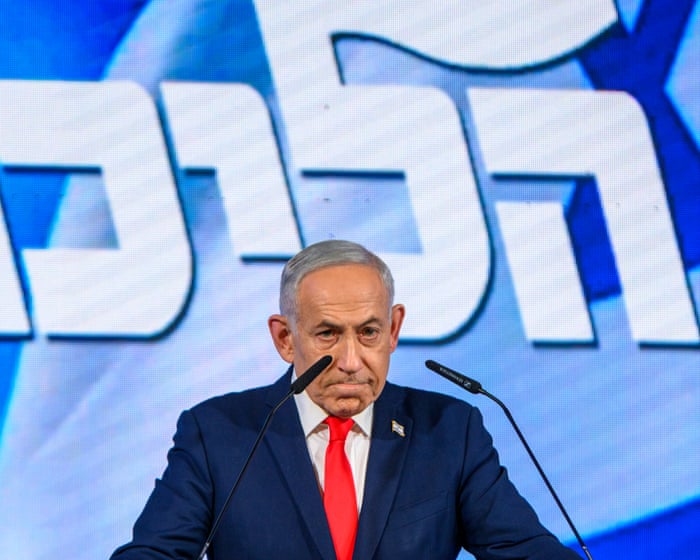
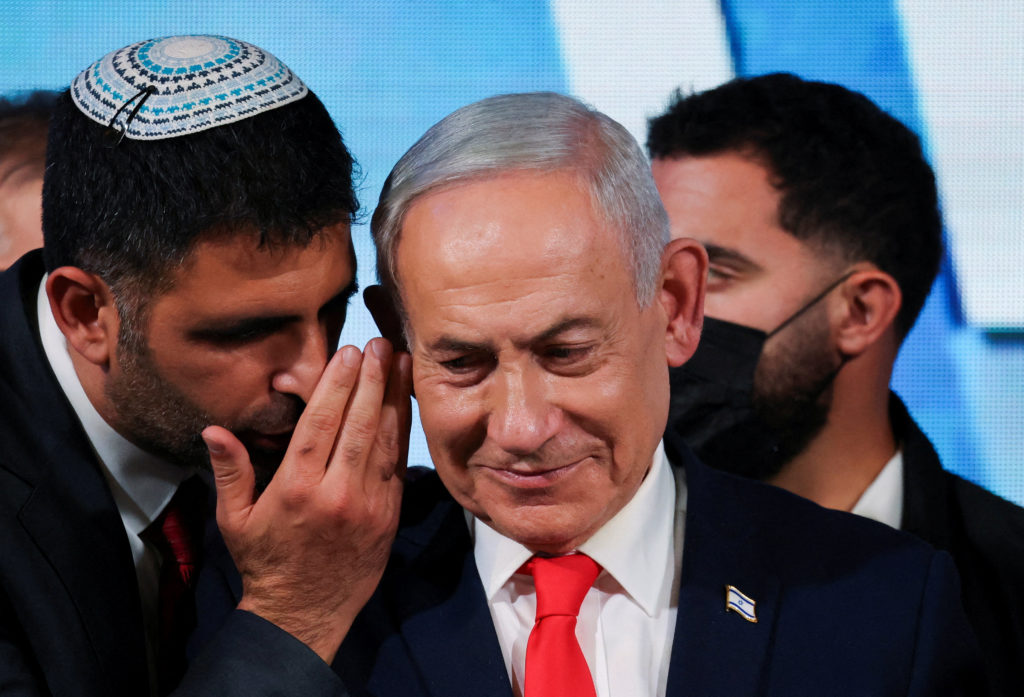
Israel's final election results confirmed Prime Minister Benjamin Netanyahu and his allies lost their parliamentary majority and that weeks of difficult negotiations among very different parties, from ultra-Orthodox Jewish to secular to Arab-led, lie ahead.
The opposition can’t win unless they join forces with Arab parties. Benjamin Netanyahu knows this, and will use every ruse to stay in power
It’s less an election result than a philosophical puzzle: what happens when a win contains a loss, a loss contains a win and the two collide? That’s the question posed by the confused and confusing outcome of this week’s Israeli election, one that, despite its murky uncertainty, offers clear, sharp lessons – both for that country and for those locked in combat with nationalist populists across the globe.
Start with the result that has simultaneously handed Benjamin Netanyahu a devastating defeat and a strong chance of staying on as prime minister, extending a run that has seen him lead Israel, on and off, for more than 19 of the past 30 years. The defeat is clear enough. At a stroke, his parliamentary majority was wiped out. Before Tuesday, the parties that together comprised his ruling coalition controlled 68 of the Knesset’s 120 seats: that tally has now shrunk to just 53, far short of the 61 seats needed for power. That’s a loss in anybody’s language.
The leading contenders, Prime Minister Benjamin Netanyahu and Gadi Eisenkot, aren’t substantially different in their approach to Israel’s security or in their opposition to a Palestinian state.
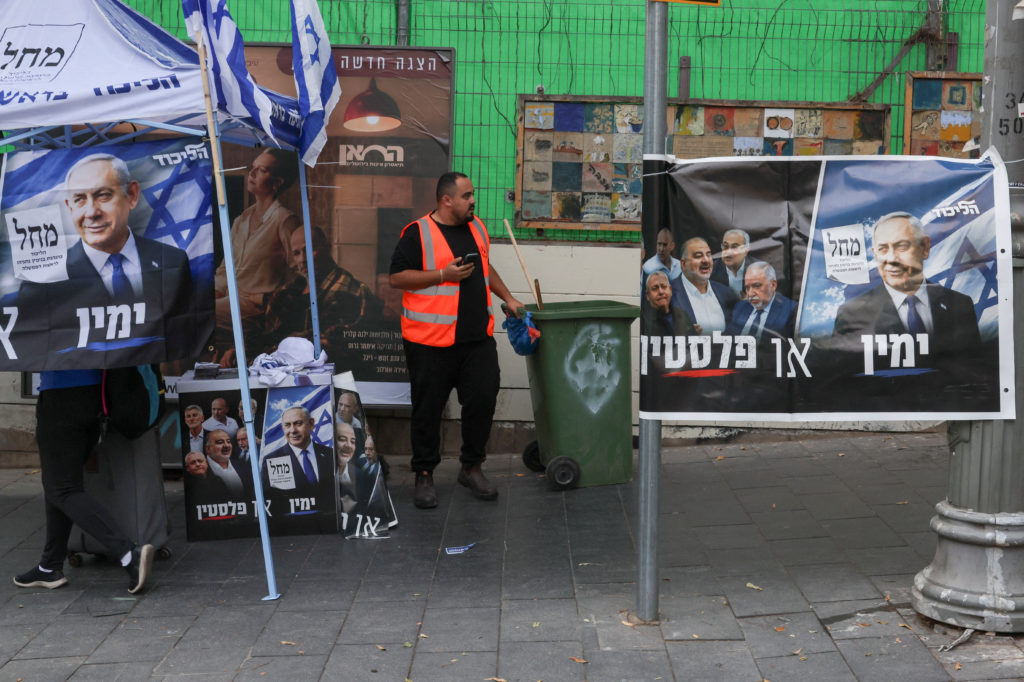
Campaign posters for Prime Minister Benjamin Netanyahu and the Likud party, and Gadi Eisenkot, leader of the Yashar party, in Hadera, Israel, on Tuesday.
Gains for Arab-led parties have electrified Taibe, in central Israel, even as voters elsewhere in Israel say they have no place in any future government.
Ahmad Tibi, a leader of the Joint List party, with supporters on Tuesday outside a polling station in Taibe, Israel, a predominantly Arab town. “We’re ready to swallow frogs to take down Netanyahu’s government,” he said.
In today’s newsletter: Benjamin Netanyahu has been left without a majority, now it is up to the coalition to find out whether the desire for change will prove to be a defining political moment
Good morning. It was described by many Israelis as the most consequential election in their country’s history. And, as the final votes were tallied, it has delivered a result that presents Israel with a significant dilemma.
Benjamin Netanyahu’s far-right coalition has lost its mandate while the opposition has a clear majority: but only if the Jewish Israeli opposition bloc, led by retired general Gadi Eisenkot, is prepared to make a governing pact with Palestinian Israeli parties, which have secured a historic result.
UK politics | John Healey has backed away from cutting the cost of welfare this parliament, amid dire warnings his first budget could lead to brutal spending cuts because of a £28bn shortfall in public finances.
Patrick Stewart | The acclaimed British stage and screen actor renowned for both Shakespeare and sci-fi, died at his home in Los Angeles after “a brief and poignant journey with Alzheimer’s disease and Lewy body dementia”, his longtime spokesperson said.
Environment | One of the most ambitious nature recovery projects ever undertaken in England can go ahead after campaigners announced they had raised £30m to buy an estate in Northumberland.
Europe | Spain began three days of mourning on Thursday for at least 69 people who died in a high-speed rail collision, as hospitals continued to treat dozens of injured passengers and train drivers went on strike to urge more investment in railway safety.
US news | The Trump administration has opened a criminal investigation in California over claims that thousands of noncitizens are registered to vote in the state, and has begun subpoenaing election officials.
Elections are never enough by themselves, but the stunning results from Serbia, Brazil and Hungary have given us hope in dark times
It is undoubtedly too early to declare victory, but the recent electoral defeats of Viktor Orbán, Aleksandar Vučić and Flávio Bolsonaro make me wonder: is 2026 turning out to be the year democracy slowly, but surely, fought back?
Even in Israel, prime minister Benjamin Netanyahu’s reigning bloc lost its parliamentary majority and saw the spectacular rise of Arab parties. Though the opposition may not be able to form a government yet, it does have the larger parliamentary bloc.
David Van Reybrouck is a Belgian author and philosopher laureate for the Low Countries. He is the author of Against Elections: The Case for Democracy, and the initiator of Democracy27
Do you have an opinion on the issues raised in this article? If you would like to submit a response of up to 300 words by email to be considered for publication in our letters section, please click here.
Results released by election officials on Thursday showed Netanyahu's bloc winning 53 seats in the 120-member assembly, well below the 68 seats it had controlled at its peak in the previous parliament.
Prime Minister Benjamin Netanyahu’s party and its allies won 53 seats in Parliament, falling short of the outright majority needed to form a government. The main opposition bloc, led by Gadi Eisenkot, won 48.
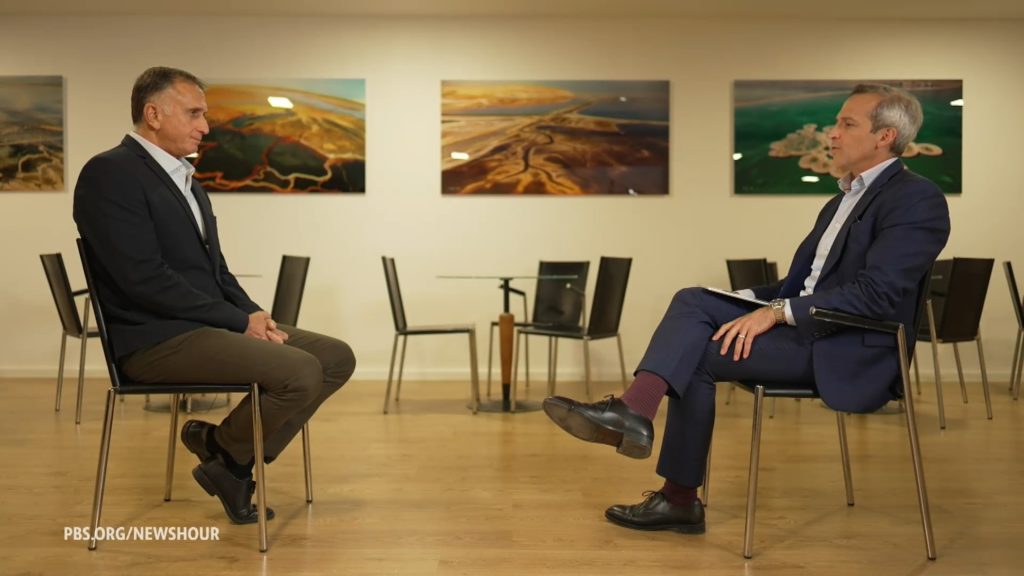
Israel is facing political uncertainty after an election that produced no clear governing majority. But what do the results reveal about how Israelis want leaders to confront the country's challenges? Nick Schifrin discussed that with Tamir Hayman, former chief of Israeli military intelligence and current executive director of the Institute for National Security Studies.
 Login