Reading view

Caregiver creep: how helping elderly relatives can snowball into a full-time job

Assisting an ageing loved one can start with small tasks but may lead to full-time caregiving that requires more support

Helping an ageing parent or loved one often begins with easy-to-field requests: Pick up a prescription. Drive them to a doctor’s appointment. Grab groceries.

However, light tasks – just “helping out” here and there – may eventually snowball into the avalanche of full-time caregiving, a phenomenon becoming known as “caregiver creep”. Like “caregiver burnout”, it’s not a formal term, but there is growing awareness about this slow build among healthcare providers and experts.

Continue reading...

© Illustration: Jordan Bohannon/The Guardian

© Illustration: Jordan Bohannon/The Guardian

© Illustration: Jordan Bohannon/The Guardian


  •  

‘Superhuman’ AI tool spots heart disease in less than 2 seconds

Technology trained on millions of routine ECGs could fast-track high-risk patients for treatment

Doctors have developed a “superhuman” AI tool that can spot heart disease in less than two seconds.

The groundbreaking technology has been trained on millions of patients and works by extracting more information from a routine electrocardiogram (ECG) than the human eye can typically see.

Continue reading...

© Photograph: alengo/Getty Images

© Photograph: alengo/Getty Images

© Photograph: alengo/Getty Images

  •  

‘Superhuman’ AI tool spots heart disease in less than 2 seconds

Technology trained on millions of routine ECGs could fast-track high-risk patients for treatment

Doctors have developed a “superhuman” AI tool that can spot heart disease in less than two seconds.

The groundbreaking technology has been trained on millions of patients and works by extracting more information from a routine electrocardiogram (ECG) than the human eye can typically see.

Continue reading...

© Photograph: alengo/Getty Images

© Photograph: alengo/Getty Images

© Photograph: alengo/Getty Images

  •  

UK social mobility watchdog could be axed as ministers plan shake-up

Exclusive: Labour MPs believe Gordon Brown-era SMC has become ineffective and its work ‘should be a core function of government’

Ministers are considering a shake-up of the government’s social mobility watchdog that could range from giving it more teeth to abolishing it outright.

The move comes amid concerns that the Social Mobility Commission (SMC) – originally conceived under Gordon Brown’s government in 2010 – has become ineffective.

Continue reading...

© Photograph: WIktor Szymanowicz/NurPhoto/Shutterstock

© Photograph: WIktor Szymanowicz/NurPhoto/Shutterstock

© Photograph: WIktor Szymanowicz/NurPhoto/Shutterstock

  •  

Do you have a bespoke ‘dirty zone’? | Emma Beddington

Apparently a dedicated mud room will make you less stressed. But I have a very different approach

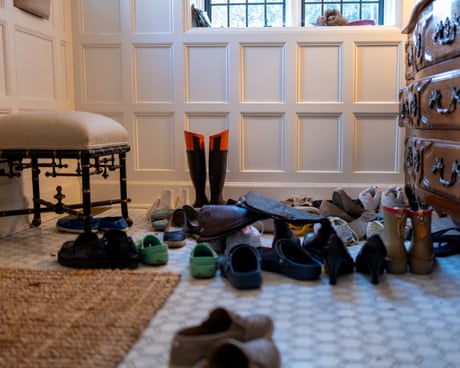
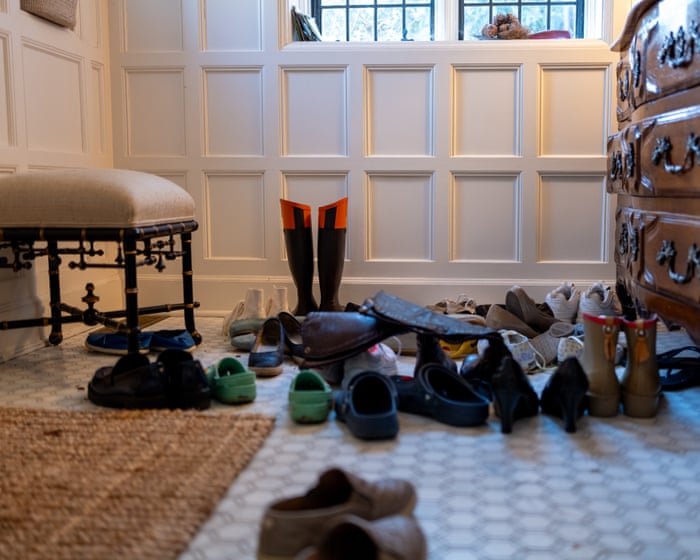
I was excited to learn that the latest interiors essential, according to the Washington Post, is a “dirty zone”. I’m ahead of the curve – I’ve already got a dirty zone by each main door (and also one directly outside the back door, where, rudely, a mystery animal has defecated). The fridge drawers are dirty zones thanks to the windfall apples I thought I would cook, but predictably left to liquefy. There’s a dirty zone next to the washing machine and a mildewy one inside it. There’s the festering compost bin I’m too chicken to tackle post-heatwave, plus the cupboard under the stairs, which we don’t talk about. Good luck finding a clean zone, basically.

Does this make me kinda chic? Unfortunately not: the Post is actually preaching the benefits of confining the sordid ephemera of life to carefully delineated and hidden areas: storage benches, monogrammed totes or even a “mud room” (for coats, shoes, skis, lacrosse sticks and dog-washing sinks – I think posh Britons call it a boot room). A 2021 study in the Netherlands found that participants who did chores in chaotic environments had higher levels of the stress marker salivary alpha-amylase. I always wonder what’s brewing in my mouth as I fall over piles of filthy shoes yet again while running to answer the door.

Continue reading...

© Photograph: Catherine McQueen/Getty Images

© Photograph: Catherine McQueen/Getty Images

© Photograph: Catherine McQueen/Getty Images

  •  

‘We want to find a better future’: teenage girls on why they risked their lives to reach Spain

More than two dozen teenagers stuck in the Spanish territory of Ceuta shared their reasons for joining the treacherous mass crossing in July

For Fatin, one of the teenage girls now living in limbo in a makeshift camp in the Spanish city of Ceuta, the decision to leave her home in Morocco began to form when she had to give up school.

She wanted to continue studying, she says, but at home she was expected to take responsibility for the housework instead. As classes and learning gave way to domestic chores, the future she had imagined for herself began to feel increasingly distant.

Continue reading...

© Composite: Soraya Aybar Laafou

© Composite: Soraya Aybar Laafou

© Composite: Soraya Aybar Laafou

  •  

NHS to offer free high-street cholesterol tests in England

Checks at pharmacies for people aged 40 to 84 are aimed at identifying those at risk of heart attack or stroke

The NHS in England is to offer free finger-prick blood tests for cholesterol on the high street for the first time under plans to reduce heart disease and stroke deaths by a quarter within the next decade.

The seven-minute tests will be available at participating pharmacies as part of a national rollout to spot “ticking timebombs” earlier.

Continue reading...

© Photograph: Sara Sadler/Alamy

© Photograph: Sara Sadler/Alamy

© Photograph: Sara Sadler/Alamy

  •  

Rejoining the EU, Burnham’s donors and the bedroom tax: Politics Weekly answers your questions – podcast

Will the UK ever rejoin the EU? Who is funding Andy Burnham? And will the bedroom tax be scrapped? In a special episode, Kiran Stacey and Peter Walker answer some of your questions

Please keep sending your comments and questions to Pippa and Kiran at politicsweeklyuk@theguardian.com

Continue reading...

© Photograph: WPA/Getty Images

© Photograph: WPA/Getty Images

© Photograph: WPA/Getty Images

  •  

The sadistic online groomers targeting victims around the world – and a mother’s struggle to keep her daughter safe

This month a predator with ties to the online extortion group known as 764 was sentenced to decades in prison. The mother of one of his victims wants parents to know the truth about this ‘harrowing’ global trend

“My beautiful, kind, intelligent, trusting daughter had the misfortune of stumbling across a link in a Discord server that led her to your evil and cruel group.

“The grooming of her started immediately, and what followed was unimaginably harrowing and traumatic. You were just one of the group members who abused her, who made her do things that no young person should ever be made to do.”

Continue reading...

© Illustration: Avinash Weerasekera/The Guardian

© Illustration: Avinash Weerasekera/The Guardian

© Illustration: Avinash Weerasekera/The Guardian

  •  

The datacenter backlash is bringing the entire political spectrum together – against big tech billionaires

The movement against datacenters is uniting Americans because they perfectly illustrate how a few individuals hold all the power to control decisions that affect our lives

Bryce Gustafson has been knocking on doors in Indiana for more than a decade. The lead organizer with Citizens Action Coalition (CAC), a consumer and environmental organization, he usually encounters a mix of reactions when he’s out canvassing; whatever issue he’s talking about, there’s always at least a few people on the other side. But at a recent festival in the rural town of Monrovia, Indiana, he was struck by an unusual spirit of unity.

He was there about a proposed datacenter, a 550-acre (222-hectare) Google project in this small town of 1,600 people. “I had 50 people I talked to,” Gustafson told me. “Nobody wanted that datacenter in their community. And at least a half a dozen people came up to me to say, ‘Hey, I voted for Trump. What the heck’s he doing, supporting these things?’”

Continue reading...

© Illustration: Ben Hickey/The Guardian

© Illustration: Ben Hickey/The Guardian

© Illustration: Ben Hickey/The Guardian
  •  

Andy Burnham pledge to end indefinite prison terms ‘a step towards healing’

Campaigners welcome plan to bring IPP sentences to a close but say the move is long overdue

Campaigners have hailed Andy Burnham’s pledge to bring an end to indefinite jail terms as “a day that thousands of families have spent years fighting for”.

The prime minister has said he will “end the injustice” of imprisonment for public protection (IPP) sentences during this parliament, meaning people will no longer be trapped indefinitely under a sentence abolished more than a decade ago.

Continue reading...

© Photograph: Alecsandra Raluca Drăgoi/The Guardian
© Photograph: Alecsandra Raluca Drăgoi/The Guardian

© Photograph: Alecsandra Raluca Drăgoi/The Guardian

  •  

Nurture not nature? How young women can learn to better wield economic power | Heather Stewart

Project in Zambia shows how teaching young women to negotiate better can have a long-term impact on their prospects

Women making their way in patriarchal societies down the ages have always had to wield their meagre economic power deftly. New evidence from a fascinating research project in Zambia suggests that’s a skill that can be learned.

A team of female US academics have been gathering data for more than a decade, which shows that teaching young women to negotiate better can have a long-term impact on their prospects.

Continue reading...

© Photograph: MBI/Alamy

© Photograph: MBI/Alamy

© Photograph: MBI/Alamy

  •  

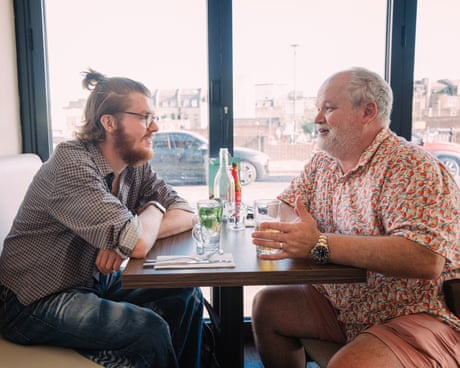
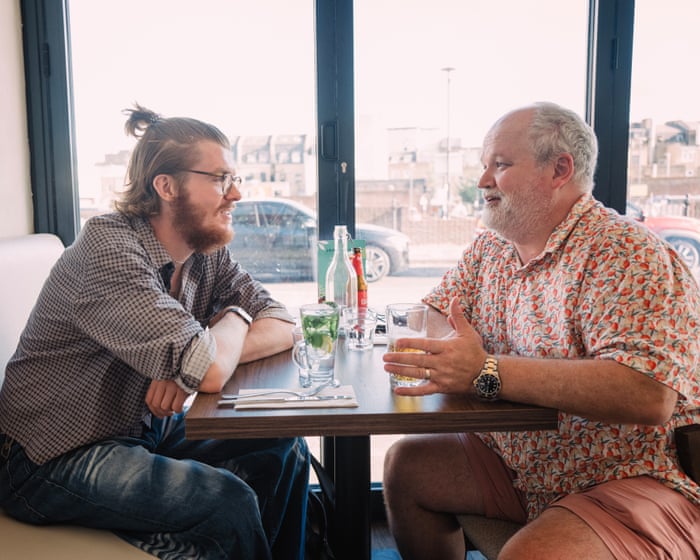
Dining across the divide: ‘He says he feels pride about being English, but I don’t’

A retired software engineer and a planetary scientist disagreed about putting up flags and nationalising private companies, but were they worlds apart on legalising drugs?

• Want to meet someone from across the divide? Click here to find out how

Finley, 23, London

Occupation Planetary scientist

Continue reading...

© Photograph: Sarah Lee/The Guardian

© Photograph: Sarah Lee/The Guardian

© Photograph: Sarah Lee/The Guardian

  •  

Statins can reduce dementia risk by up to 15%, long-term study suggests

The cholesterol-busting drugs are more effective the earlier in life they are taken, 15-year research project indicates

Statins can lower the risk of dementia by 15%, and the earlier in life they are taken the higher the chances of avoiding the disease, a 15-year study suggests.

The number of people living with dementia globally is forecast to nearly triple to 153 million by 2050. But experts believe almost half of dementia cases could be prevented or delayed.

Continue reading...

© Photograph: Joe Giddens/PA

© Photograph: Joe Giddens/PA

© Photograph: Joe Giddens/PA

  •  

AI vaginas, customisable personalities and fake bruises: the sex doll market is booming. Does it matter how the dolls are treated?

As the sex doll industry grows and AI changes the products available, what does it mean to engage in any kind of relationship with a woman-shaped thing?

Two weeks ago, two distressed citizens stumbled across what they assumed was the mangled corpse of a woman, stuffed into a suitcase in a small town about three hours south of Sydney. They called the local police, who in turn issued a statement that a body in a suitcase had been found. The wider public waited sombrely for Australia’s tally of dead women to tick up by one.

But instead, a day later, after forensic analysis, it was determined that the woman in question wasn’t a woman at all. The “body” was that of a sex doll, marked with fake bruises, left to rot on a lonely dirt road. In Australia, as in the UK and some other European countries, it is not illegal to own a sex doll unless it resembles a child. Given the doll’s seemingly mature presentation, police investigations were called off.

Continue reading...

© Photograph: Getty Images

© Photograph: Getty Images

© Photograph: Getty Images

  •  

Cells for arrested offenders may run out without early prison release, says Labour

Bridget Phillipson says government would not have to consider releasing prisoners early if Tories had created more capacity

Cells to hold newly arrested people could run out without the early prison release scheme, a minister has said.

Bridget Phillipson defended the plan to address the prison capacity crisis in England and Wales by releasing thousands of prisoners early, which has been criticised by domestic abuse charities, bereaved families and probation officers among others.

Continue reading...

© Photograph: Finnbarr Webster Editorial/Alamy

© Photograph: Finnbarr Webster Editorial/Alamy

© Photograph: Finnbarr Webster Editorial/Alamy

  •  

‘It gives Shein’: how did polyester become the world’s most-hated material?

Due to its ubiquity in fast fashion, gen Z are pushing back against the synthetic material and using it as an insult

In 2015, Kate Moss called an easyJet pilot a “basic bitch” and a catchy new insult meaning obvious and uncool hit the mainstream. Had it happened in 2026, Moss might have used the word “polyester”, reportedly gen Z’s new favorite diss, levied at cheap-looking videos on TikTok, and sometimes at other users’ taste.

But its use as a figurative insult also echoes a literal backlash against polyester, now the most-produced synthetic fibre on the planet.

Continue reading...

© Photograph: luanateutzi/Getty Images/iStockphoto

© Photograph: luanateutzi/Getty Images/iStockphoto

© Photograph: luanateutzi/Getty Images/iStockphoto

  •  

‘In walked this big bundle of energy’: the day Dolly Parton came to Rotherham

Country star came to South Yorkshire town in 2007 for UK launch of the Imagination Library, her book donation scheme

Shane Jarman was up a ladder decorating a Christmas tree at the school where he was deputy headteacher when he got a call asking him to come to Rotherham hospital ASAP. It was December 2007 and Jarman’s wife, Claire, had given birth the previous day to their first child, a girl called Emma, so of course he rushed to the phone. All was well, he was told, but that “everything would become clear” when he got to the hospital.

Once there, his wife told him – somewhat unexpectedly – that they were going to meet Dolly Parton. “And literally within what felt like five minutes,” he recalled, “there were great camera flashes, lots of noise, lots of clicking and in walked this real big bundle of energy.”

Continue reading...

© Photograph: The Rotherham NHS Foundation Trust

© Photograph: The Rotherham NHS Foundation Trust

© Photograph: The Rotherham NHS Foundation Trust

  •  

The battle over RAF Barnham: how ominous anti-asylum protests engulfed a small Norfolk town

Thetford has a welcoming history. So why have there been so many demonstrations this summer over plans to house asylum seekers at a nearby military base – as well as nights of violent disorder?

‘I don’t talk to mainstream media,” says a young man in an Arsenal shirt. I’ve just asked what brought him to the latest protest against the housing of asylum seekers in Thetford, Norfolk, and his disdain is clear as he goes to warn other protesters of the Guardian’s presence. This isn’t exactly the unity promised by the flyer advertising today’s march: “Everyone welcome: families, friends, dogs. Including the media.”

The protest is planned as a two-mile march from Thetford’s market square to RAF Barnham, a site just over the border in Suffolk, which is due to house asylum seekers while they progress through the system. It is the latest part of a campaign that has lasted the whole summer. Banners line the square, the largest succinctly describing why people are gathering here today: “Thetford and Barnham says no to asylum seekers.”

Continue reading...

© Photograph: Harry Murray/The Guardian

© Photograph: Harry Murray/The Guardian

© Photograph: Harry Murray/The Guardian

  •  
❌