Trump’s Operation Economic Outcast is expected to push many Iranians into deeper poverty as food inflation soars
For many Iranians, the new US sanctions campaign, called Operation Economic Outcast, seems superfluous given the grim economic situation in their country.
Iranians are facing runaway food inflation, closed petrol stations and a seemingly never-ending depreciation of the nation’s currency caused by a lack of foreign exchange reserves.
Trump’s Operation Economic Outcast is expected to push many Iranians into deeper poverty as food inflation soars
For many Iranians, the new US sanctions campaign, called Operation Economic Outcast, seems superfluous given the grim economic situation in their country.
Iranians are facing runaway food inflation, closed petrol stations and a seemingly never-ending depreciation of the nation’s currency caused by a lack of foreign exchange reserves.
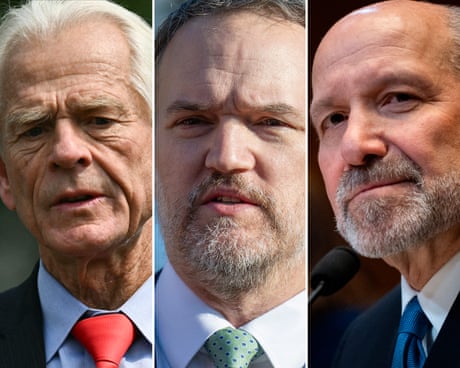
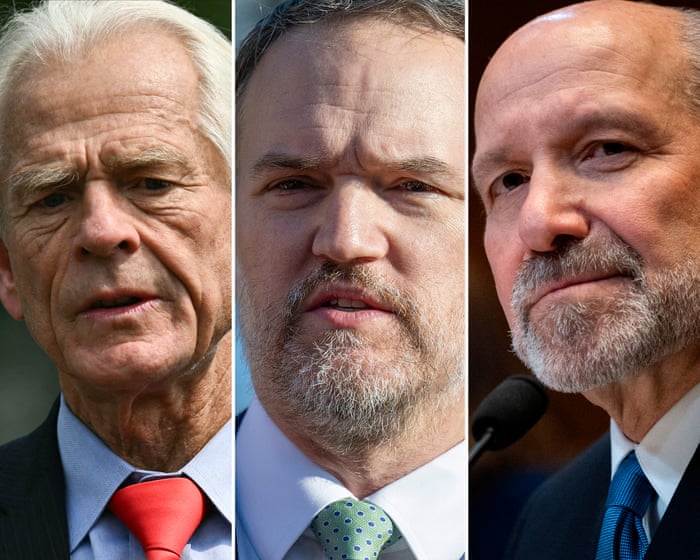
US trade representative Jamieson Greer has a level-headed reputation but commerce secretary Howard Lutnick and White House adviser Peter Navarro also have key roles
Having reportedly read Victor Hugo’s Les Misérables, in French, during a military tour of duty in Iraq, Jamieson Greer considered himself an unlikely target for accusations of francophobia.
But Donald Trump’s US trade representative, hitherto one of the president’s less high-profile cabinet members, found himself in that uncomfortable position amid the acrimonious collapse of bilateral trade talks with Canada that now threatens to degenerate into an all-out trade war between the two close trading partners whose economies are tightly intertwined.
With traditional goals such as stability and home ownership feeling out of reach, young people are focused on the present
By now, we all know the shape of financial nihilism: the throw-your-money-at-anything reaction to the dissolution of the slow, linear path to wealth; the prediction markets, meme stocks, cryptocurrencies and microluxuries growing in its place. We’re left in an economic no man’s land. But financial nihilism only describes where we put our money. What about how we earn it in the first place?
The modern economy has long relied on our need for stable employment – to pay the mortgage, to keep our kids fed, or, for some, to chase prestige and power – to generate the work ethic that keeps the wheel of production turning. None of this is going well for young people. Our jobs are insecure, we can’t afford houses, we’re deferring having kids (if we have them at all), and only 6% of us say a leadership position is our primary career goal. Hope is one of the economy’s most productive inputs, powering our willingness to endure long hours. When the production function of income – the mechanism that turns hard work into a stable salary, then a mortgage, then a pension – breaks down, so does our relationship with the input. I call this production nihilism: my generation’s growing indifference to the kinds of work we’re willing to participate in, and where we’re willing to earn.
Global crises are tightly linked to how we treat each other at the local level, argues this optimistic book
In times of crisis, there is one person to whom the left still turns for guidance.
More than a decade and a half after leaving government, Gordon Brown has mellowed into the Labour party’s favourite wise elder; one who has never disappointed the faithful by going off to make a ton of money, remaining quietly committed to public service and deeply engaged with the world’s knottier problems. Having successfully led the global response to the financial crash of 2008, and advocated powerfully during the pandemic for global cooperation against the virus, he was never going to simply sit back and shrug as the world spiralled into conflict and chaos under Donald Trump.
Andrew Bailey, in role as financial stability watchdog chief, warns advanced models risk destabilising system
The Bank of England’s governor, Andrew Bailey, has joined the throng of figures warning about the global risks posed by the most advanced artificial intelligence technology.
In a two-page letter sent to international finance ministers and central bank governors as part of his role as chair of the international Financial Stability Board (FSB), Bailey said “frontier” AI models were “showing increasingly sophisticated autonomy and problem-solving abilities, as well as threat capabilities”.
Centre for Economics and Business Research calculates effect of inflation and wage stagnation to end of 2027
UK households will have suffered a £2,400 financial hit, on average, from the Iran war by the end of 2027, new analysis shows.
The Centre for Economics and Business Research (CEBR) has calculated that the jump in inflation since the conflict began, and weaker wage growth, will knock £1,100 off the real income of the average UK household in 2026, and by a further £1,300 in 2027.

 Login
Login