Court documents reveal staff considered ways to ‘get academic community to disavow’ influential US author
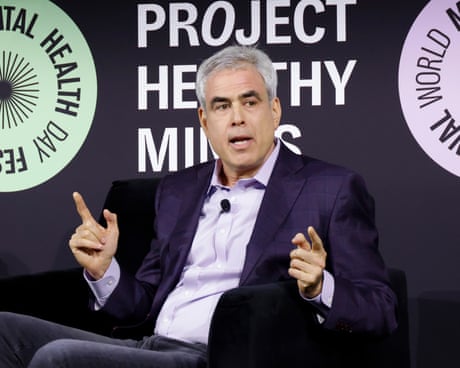
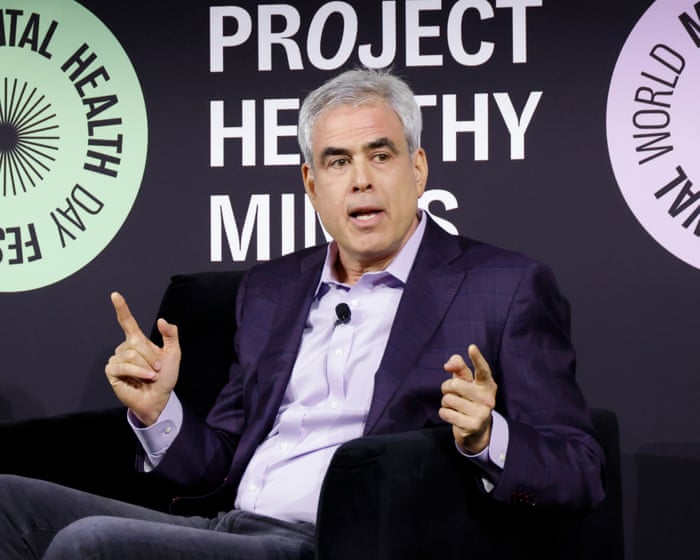
Meta staff discussed deploying a “whisper strategy” to undermine the influential US academic whose work has inspired a global social media crackdown, according to court documents.
Employees at the parent group of Facebook and Instagram sought to discredit Jonathan Haidt, the social psychologist and author of The Anxious Generation, a book that helped tip the debate about online safety towards more stringent measures such as the under-16 ban in Australia.
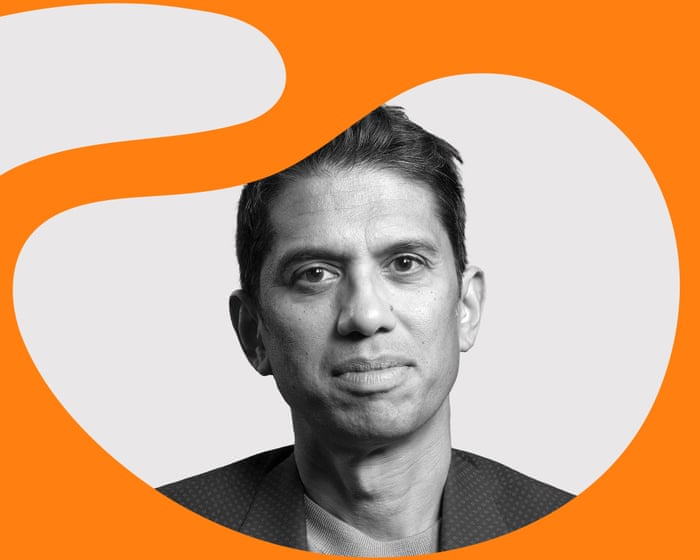
Guardian columnist, senior economics commentator and host of the new Radical Thinking podcast Aditya Chakrabortty is answering your questions on the big ideas around economics, society and democracy, and his new podcast
thegreatfatsby asks: Do you think the fact that Gabriel Zucman, who is a recognised authority on wealth tax is given more respect, time and attention by the mainstream media than Gary Stevenson, who has worked eloquently and tirelessly to spread the debate about the terrible consequences of inequality and whose ideas and analysis are almost identical is because of our cultural fixation on class prejudice?
Aditya says: I’ve followed Gabriel Zucman (and Emmanuel Saez and Thomas Piketty) for a long time, and find his work rigorous and thought provoking. I don’t always agree, but I appreciate their acceptance that taxes on wealth are part of the fight against ever-increasing inequality.
I think Gary Stevenson is eloquent and compelling and is fighting a good fight. His book tells a story very well. But I don’t accept the insistence on a ‘wealth tax’ (as opposed to taxes on wealth) as being the only way we fight everything from inequality to the far right. We have to look at workers’ rights, housing, public ownership, greater democracy in economics and politics as well.
In the age of algorithm, simple, strong messages cut through. But the truth is often more complex.
Aditya says: What a nice question, Marija. I try to read a lot and write a diary. Unfortunately, I have the handwriting of a GP so I can’t read old entries. The other thing is I try to shirk my mobile phone.
Guardian columnist, senior economics commentator and host of the new Radical Thinking podcast Aditya Chakrabortty answered your questions on the big ideas around economics, society and democracy, and his new podcast
thegreatfatsby asks: Do you think the fact that Gabriel Zucman, who is a recognised authority on wealth tax is given more respect, time and attention by the mainstream media than Gary Stevenson, who has worked eloquently and tirelessly to spread the debate about the terrible consequences of inequality and whose ideas and analysis are almost identical is because of our cultural fixation on class prejudice?
Aditya says: I’ve followed Gabriel Zucman (and Emmanuel Saez and Thomas Piketty) for a long time, and find his work rigorous and thought provoking. I don’t always agree, but I appreciate their acceptance that taxes on wealth are part of the fight against ever-increasing inequality.
I think Gary Stevenson is eloquent and compelling and is fighting a good fight. His book tells a story very well. But I don’t accept the insistence on a ‘wealth tax’ (as opposed to taxes on wealth) as being the only way we fight everything from inequality to the far right. We have to look at workers’ rights, housing, public ownership, greater democracy in economics and politics as well.
In the age of algorithm, simple, strong messages cut through. But the truth is often more complex.
Aditya says: What a nice question, Marija. I try to read a lot and write a diary. Unfortunately, I have the handwriting of a GP so I can’t read old entries. The other thing is I try to shirk my mobile phone.
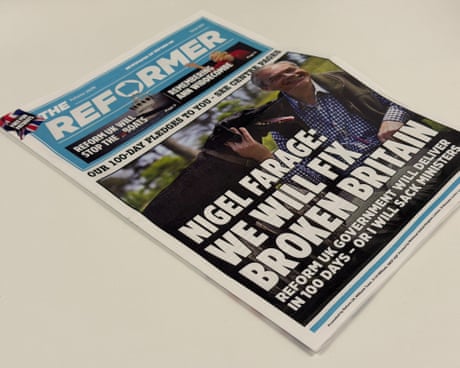
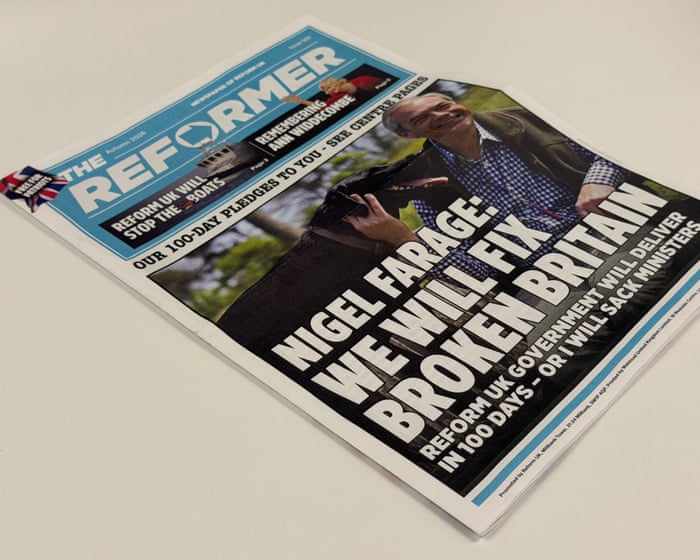
Reform UK has launched what it is calling a newspaper, featuring large pictures of Nigel Farage, which the party hopes will replace mainstream media for its supporters.
Though the party is hiring qualified journalists to write its newspapers, the only “reporter” credited with writing articles is Farage, the party leader.
Watchdog says under-16 ban may affect older teenagers without passport or licence, and that ‘motivated children’ will skirt restrictions
More than 100,000 British teenagers risk being locked out of social media if they do not have a passport or driving licence when an under-16 ban is introduced next year.
Ofcom, the UK’s online watchdog, said about 150,000 16- to 17-year-olds do not own a passport or driving licence, which are likely to be needed to access age-restricted platforms.
Ifeanyi Ifediba usually creates videos about sports, anime and campus life. But he recently agreed to make a political ad to support the billionaire tax.
Sanrio ends association with TV drama Vivant after China says portrayal of ruthless Chinese agents is ‘deliberate smear’
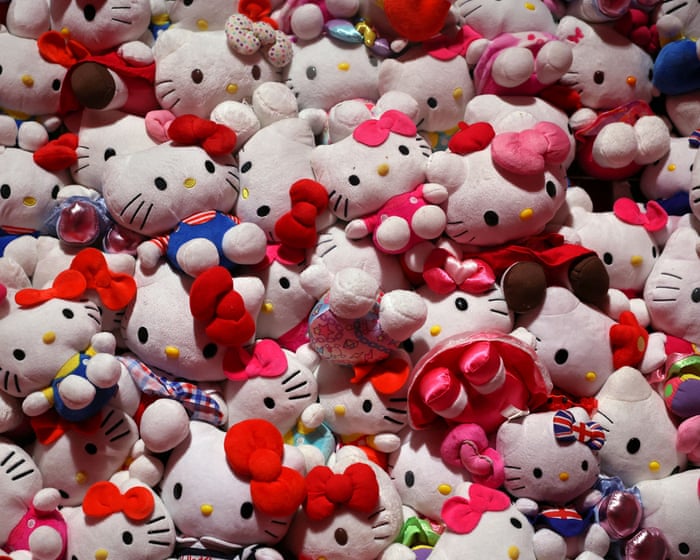
The company behind the successful Hello Kitty franchise has apologised and ended its commercial tie-up with a Japanese TV drama after Chinese state media and netizens condemned the show’s “deliberate smears” against China.
Sanrio, a Japanese firm whose characters are popular around the world, said in a post on the Chinese social media site Weibo that it had decided to end its association with the TV drama Vivant after concluding that it “contained elements inconsistent with Sanrio’s core values”.
The secretary of the defence department approved a senior official’s controversial idea to tell a Senate hearing that footage of public servants giving evidence should not be shared on social media because it could invite online bullying and raise national security concerns.
Emails obtained by Guardian Australia under freedom of information reveal deputy secretary Celia Perkins’ planned request to the parliamentary inquiry was flagged with the offices of deputy prime minister Richard Marles and assistant defence minister Peter Khalil, and received the backing of department secretary Meghan Quinn.
The White House has been rocked by turnover and anxiety over the midterms. The president, who is tightening his inner circle, has lashed out at critics, held meandering rallies and feasted on a diet of news clips and “A.I. slop,” as one aide put it.
The Brazilian congressman André Janones created a digital “army” by setting up WhatsApp groups and posting on Instagram, which helped mobilized the vote for the reelection of President Luiz Inácio Lula da Silva.
CBS News editor-in-chief sidesteps viewership concerns and says flagship show doing ‘tremendously well’
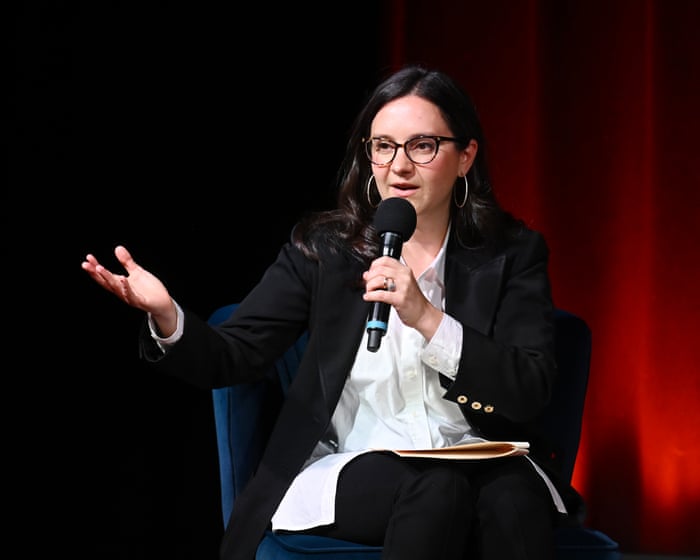
CBS News editor-in-chief Bari Weiss has spoken publicly for the first time about the ratings challenges the network has experienced under her year-long tenure, sidestepping concerns about diminished viewership at the Sunday show 60 Minutes by saying it was not her top priority.
“I could never build anything if I were focused on the precise number of people that happen to tune in to the second feature on 60 Minutes on a given Sunday,” she said at an industry conference on Wednesday organized by the tech publication the Information. The news organization did not offer press credentials.
Columnist’s relations with some senior editorial figures said to be strained over subjects she raised in her columns
The controversial Daily Telegraph columnist Allison Pearson is understood to be in negotiations about leaving the broadsheet as the newspaper’s new owner makes significant newsroom cuts.
Sources told the Guardian that Pearson – firmly on the right of the Telegraph’s roster – is preparing to announce her exit imminently and is crafting a statement about her future plans.
Mohamed Amersi is suing over Panorama episode that made claims of his suspected involvement in corruption
A Conservative and Reform UK donor lost out on a knighthood and a peerage amid claims of his involvement in corruption, the high court has heard at the start of his defamation case against the BBC.
An episode of Panorama in 2021 and a BBC article caused “very serious harm” to Mohamed Amersi, his barrister, Oliver Powell, said on Wednesday.
Judge says he will consider all options when sentencing far-right activist who trial heard deployed ‘bullyboy, intimidatory tactics’
Tommy Robinson faces up to 10 years in prison after being found guilty of harassing two journalists to the point it caused them fear of violence.
Journalists from the Daily Mail and their family members fled their homes after “bullyboy, intimidatory tactics” were deployed by the far-right activist, whose real name is Stephen Yaxley-Lennon, his trial was told.
Warnings of escalating clampdown on press freedom come after Cairo court convicts Attalah of managing an unlicensed website
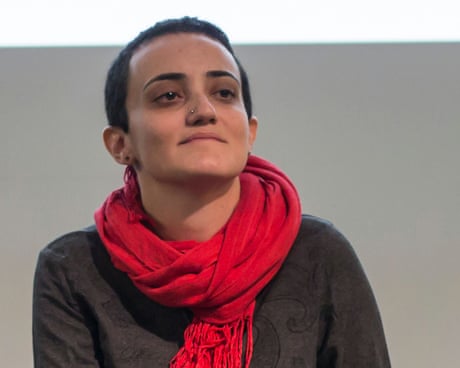
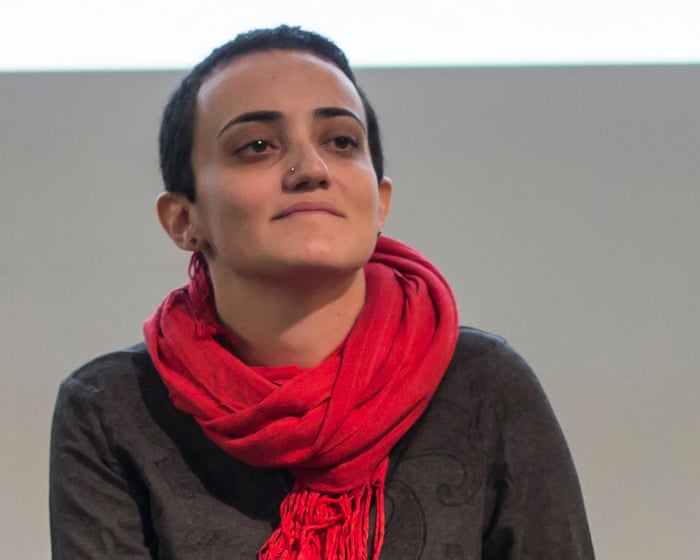
Lina Attalah, a prominent Egyptian journalist and the editor-in-chief of the news outlet Mada Masr, has been released from detention by Egypt’s authorities and had her website ordered to be shut down by a court amid an intensifying crackdown on independent media in the country.
Attalah was taken briefly into custody after a Cairo court convicted her of managing an unlicensed website, prompting fresh international concerns over press freedom in Egypt.
It feels like the skies above our AI-frenzied world have darkened in the past month. Employees at Anthropic and Google startedquitting, citing fears that the AI was spiraling out of control. After a string of agents started hacking websites, researchers used AI to discover vulnerabilities in critical systems, leading to large swaths of the web going dark last week and giving rise to a scary term: Black October. At the same time, as it continued to ramp up AI spending, Microsoft offered buyouts to 60,000 employees — over a quarter of its workforce — and economists once againwarned of a bubble.
It’s hard to reconcile the incongruity between the recent bad news and good news. For most of us, the state of AI is anxiety-inducing — especially when it comes to our livelihoods. According to a Pew Research Center study published in August, 71 percent of Americans think AI will lead to fewer jobs in the next two decades. That figure is up 7 percentage points from where it was two years ago. Sure, in the best-case scenarios, AI could erase inefficiencies at work, streamline our daily lives, cure diseases, and generally improve the human condition.
But what if you are the “inefficiency” at work that gets erased?
That tension is at the heart of Ethan Mollick’s latest book Co-Existence: The Next Phase of AI. If there is such a thing as an AI sage, it would be Mollick, an associate professor at the Wharton School and faculty director of its Generative AI Labs. To the nearly half a million subscribers to his Substack newsletter, One Useful Thing, he delivers semiweekly updates from the jagged frontier of the technology’s development. His message in any medium is resoundingly clear: You need to use AI in order to understand it. And to get the most out of using it, he argues that you have to accept that AI is not going away; it’s only going to become more important.
That ethos doesn’t make the existential threats of AI any less daunting, but that’s not the point. Unless you’re an early Anthropic employee or a United States senator, there’s probably not much you can do directly to rein in AI’s potential harms. But you can, according to Mollick’s worldview, decide how the technology could fit into your life and think about how you fit into an AI-dominated future.
I recently spoke with Mollick about his new book, what life and work might look like in the agentic AI era, and what it means to be an artisan when even knowledge is industrialized. His theories about living with AI are meant to help you navigate the future, regardless of the latest forecast. This interview has been lightly edited for length and clarity.
We’re entering a new era for AI, and the vibes are different. AI agents are something that many of us will encounter, interact with, and maybe even embrace. I’ve always known you as someone who jumps on the cutting edge of this technology to figure out what it can do. What do you think most people don’t understand about the next generation of AI?
I really think people haven’t internalized what agents do. Agents mean many things, and we can talk about personal agents, like Muse. But the fact that the problems that plagued working with AI agents before — you had to guide them each step of the way, they made mistakes, hallucinated constantly — that’s kind of gone. You can regularly get hours, days, weeks of work out of a system.
It’s not just a theoretical thing anymore. I talk to coders all the time who are a hundred times or more productive than they were before. And in other fields, we’ve kind of moved past the theoretical discussion about AI being, “This is going to be a big deal,” to, “It’s here.” From a whole kind of co-intelligence perspective, we’ve gone from, “Here’s how we use AI and work with a chatbot back and forth,” to, “These systems are now doing real work in ways that matter to real people and are reshaping real fields for better or worse.” And if you’re used to using AI a year ago, if you’re not paying for one of these systems, it’s really easy to have lost track of what’s going on.
What about the practical, everyday ways that AI is disrupting our lives? And what do you think are the limits of that disruption?
So outside of the job world and homework cheating, I think life has changed only a little bit for people, partially because these systems were kind of complicated to use and you had to decide what you were using them for. But I think the advent of personal agents, like Muse and Dot, are going to lead to a very rapid change in a lot of ways.
Most people I know who aren’t experts who use these systems, like my parents, are using these things spontaneously. They’re finding that once you know how to prompt the AI to do something, it can do things spontaneously and come back to you because it has your email and everything else. Just as one example, I was unable to figure out how to cancel my standing $8-a-month wifi subscription from my airline, and I was like, figure this out. And it went to customer service, joined chats, then I have no idea what it did, but now I don’t have a subscription to wifi anymore, thank goodness.
“I deeply worry that if I de-skill myself entirely, I won’t even know how computers work.”
So there is this sort of lowering friction piece that’s super interesting, with good and bad elements to it. The bad side of lowering friction is both that every article gets written by AI, so there’s no human thinking in it anymore, and that companies don’t want 10,000 customer service agents coming to them demanding new things. So I think we’re just on the edge of seeing the mass change in everyday life. Right now, AI is a really good second opinion on everything. As agents become more popular, they start to take action.
How do you know when to let AI do the work, though? We know that offloading certain tasks to AI can make you worse at doing those kinds of tasks in the future. How do you take advantage of AI’s ability to do drudgery but also hold onto your own expertise?
If there’s a personal theme underlying Co-Existence, it’s that one. That is an incredibly hard choice to make, and we’re historically very bad at making it.
Students are the No. 1 case because they’re willing to offload homework because homework sucks and because the incentives for doing any piece of homework are terrible. But overall we need to do it to learn. So people offload that, but even if you’re trying to do the right kind of thing, like using AI only to help you learn and not to replace learning, it turns out that when chatbots are in assistant mode, as opposed to using them as a tutor, it feels like you’re learning even though you’re not. You feel like you’re in the loop even though you’re not. And so that assumes that we both know we want to offload and we do it intelligently and that we do it in a way that helps our long-term gain.
I am worried about us being able to do that. You have to draw lines for yourself about what skills matter to you or not, and you have to be thoughtful, in a way that we’re usually not, about what we’re giving up and what we’re not. Technology’s designed for us to give up stuff. We don’t walk 50 miles a day anymore in forced marches. I don’t know how to weave clothes. There’s a lot of stuff I’m very happy to not know: how to maintain my computer in some ways, even though that’s dangerous. I let Codex scan for security issues because it does a better job than me faster. But I deeply worry that if I de-skill myself entirely, I won’t even know how computers work.
So I don’t have an easy answer, but I think that that will be the defining question for most people in their career paths right now and their lives: What do I give up? I think we can be too sentimental about things that we’re giving up. It’s okay, but we don’t know the full chain of consequences. I think that struggle is going to be central to a lot of people’s experience. I wish I had an easy answer, but now that AI can do so many things, de-skilling is a real problem at this point.
We’re living through a huge transformation. That’s increasingly clear. Besides losing their jobs, a lot of people are scared of losing the sense of what makes them human and what makes them valuable. How do people hold onto that in the years to come?
There’s a transformation happening, and for some people, the work will get more satisfying. There’s a lot of coders who did not like writing lines of code, but they did like summoning software and figuring out what they wanted to build. Their lives are much better because the AI does all the tedious work. They can command things to be built, and it’s so much more exciting than it was before. It lets people who didn’t code start to do incredible coding projects. So on one hand, that’s deeply freeing of the kinds of work that we did. On the other hand, there are people who love writing those lines of code and that’s gone now. You’re a hand-weaver in a world of power looms. Your stuff might be elegant and beautiful, but it is not going to last in a world where industrialization happens.
Industrialization versus craft is a way to think about this. There’s a lot of craft that we’ve grown to really appreciate, like the handcrafted sentence. Those things will be under threat from the logic of industrialization, which is that we need to do more of it. I think that there’s going to be a shift. There’s satisfying work to do, but I think a lot of what was satisfying human work will be under pressure to disappear, because you took pleasure in something that was not automatable, but now is.
We’ve been through this in industrial revolutions before. This is happening at a very large scale to intellectual work, where craft was a very important part of what we did. Mathematics was craft, software engineering was craft. I think that we’ll be under pressure to produce more of it, which is what industrialization’s about, even if that destroys the value of doing this as a person. You get paid to do it now, but you’re not getting the same value you did before.
“We’re no longer in a place where AI is going away.”
I think we’re going to find lots of crises of meaning. Some people are going to find huge amounts more meaning in their work, either because the work itself is now much more interesting. Work is a lot of crap, too. We can say great things about it, but people spend a quarter of their work life saying they’re bored. It’s not like this was a great job for everybody. So some people will have much more excitement in craft. Some people will have it extracted out of their job, and it’s all going to be happening at once. I know it’s not a satisfying answer, but that’s what’s happening.
Forgive me for saying so, but that was an anxiety-inducing answer. It’s an anxiety-inducing time. I wonder what advice you have for us anxious people?
I think anxiety is real, and there’s different levels of anxiety. We’re going through a wrenching change, or we will be going through one that we’re on the edges of now. There is also existential risk about whether AI will kill us all, where we clearly need more regulation. The answers are unclear. Smart people seem to think that that’s a real danger. It’s hard to know. But leaving that aside, there’s anxiety about our own transformation, our jobs. I mean, the industrial revolutions worked out great in the end, but during it, [that] was the time of Marx and anarchists and Dickens writing about London. There’s a transition we have to go through here.
I don’t think we can pretend it’s not happening, and I see a lot of people taking comfort in the idea that maybe this all will collapse and AI will go away. Even if there was a bubble financially, we’re no longer in a place where AI is going away or stopping development. I worry a lot about people doing that. Once you face that, though, I find people often reconstruct meaning in very exciting ways. Thinking about what more you can do and where you find joy in this is actually quite exciting. So I think that anxious optimism is a reasonable place to be.
What I worry about is sticking your head in the sand saying, “I’m not going to learn AI. This will go away. I’m going to pretend it’s not happening.” I mean, I wish I could give you that option. I think there’s a lot of people who wish we could slow things down or turn a dial down, but there’s also a lot of exciting things. There’s a lot of hard problems in the world that are unsolved.
If you lean into the positive pieces, you can ask how we mitigate risk but also think about how we can build a better world. Part of what makes me nervous is people sitting out that second question and just filling up with anxiety rather than believing we have a tool that can rebuild things. How do we rebuild a better world for journalism or for nonprofits or whatever it is? I think it’s a reasonable question to ask, and I worry it’s asked too little.
More than a dozen news organizations have asked a federal judge to unseal documents related to a search warrant executed at Ms. Omar’s home this month.

 Login