Gas reservation policy set for lower house vote today
Australia’s domestic gas reservation is set to be debated and voted on in the lower house today.
Rather than international base companies, determining through algorithms what Australians receive, it empowers people themselves to determine what you receive on your devices, so that you should have that control.
This isn’t about government having a greater role. It’s about people having a greater role, having more control themselves, and it’s deserving of support of this parliament.
The U.S. Department of Health and Human Services (HHS) will not take action against licensed pharmacists who dispense certain unapproved peptides to consumers, according to a new policy published Oct. 28 in the Federal Register.
Peptides are short chains of amino acids that people inject into their bodies. HHS Secretary Robert F. Kennedy Jr. has said in the past that he is a “big fan” of the unapproved drugs, whose benefits are largely scientifically unproven.
The U.S. Food and Drug Administration (FDA) essentially banned peptides in 2023 because of safety concerns. But an FDA committee met in July to review the evidence on peptides and recommend whether or not to take the highly unusual step of allowing pharmacies to dispense them absent scientific review. The committee was made up of new appointees who consulted with or were employed by companies that were interested in promoting or dispensing peptides; it recommended allowing specialty pharmacies to dispense six peptides, despite FDA staff advising against the move.
The new policy—which was signed by Kennedy—says that after the July meetings, HHS believed there was “significant interest” in the use of obtaining these peptides from compounding pharmacies. “Therefore, to expand and improve patient access, HHS does not intend to take enforcement action against a State-licensed pharmacy, Federal facility, or licensed physician compounding a drug product using a peptide bulk drug substance found in Appendix A,” the notice said. The policy said that it was going to be published in the Federal Register on Oct. 30. The peptides listed in Appendix A were BPC-157, Epitalon, KPV, MOTS-c, Semax, and TB-500—the same ones the committee recommended allowing this summer.
A separate document posted on the HHS website says that after reviewing the recommendations of the committee that met in July, “the Secretary has determined that the policy advances patient choice and freedom while appropriately protecting patient safety.”
The decision to allow the compounding of peptides is a boon for companies like Hims & Hers, which had reportedly been preparing to offer peptides in 2026. Analysts have said the market for peptides could be as high as $3.3 billion. Hims stock shot up 5% after the Oct. 28 announcement.
The move “represents a vital step toward eliminating the unsafe gray and black markets, restoring safe patient access through legitimate, physician-supervised care,” said Lee Rosebush, chair of the American Academy of Peptide Medicine, a new advocacy group, in a statement.
Other public-health professionals raised alarm about the decision, which they say allows compounding pharmacies to dispense these medications absent scientific evidence. “American consumers should not be treated like guinea pigs,” said Fred Mills, chief policy officer for Americans for Safe and Effective Medicines, in a statement. “It is possible to advance both patient safety and access to legitimate medicines, but this is not it.”
At the July hearings, consumer advocacy groups including the Center for Science in the Public Interest had argued that allowing peptides to skip a rigorous evidence-based FDA approval process would be unprecedented and dangerous to consumers.
Many physicians have spoken up against allowing peptides to be compounded. “The peptides under consideration here are untested and poorly characterized experimental drugs that should not be allowed in compounded products,” said Dr. Adriane Fugh-Berman, a professor of pharmacology and physiology at Georgetown University Medical Center, at the public comment portion of the July meeting, reminding the committee that two women had required emergency treatment after receiving peptides at a Las Vegas festival.
Critics also expressed concern that people were turning to compounding pharmacies for untested drugs. Compounding pharmacies are often used to fill specific prescriptions from a doctor, but in recent years, they have mass-produced drugs like GLP-1s for patients looking to save money. The peptide boom will put even more pressure on compounding pharmacies to quickly make drugs for telehealth sites, said Annie Lambert, a pharmacist and clinical program manager for compliance solutions at Wolters Kluwer Health.
"Compounding can and should play a legitimate clinical role, from hospitals to home infusion to filling gaps during drug shortages. But it is not a substitute for FDA-approved manufacturing, and that distinction is where a lot of today's risk sits,” she said in a statement. “My concern is that pharmacies rushing into this space will move to make a dollar faster rather than make sure they meet every requirement, from ingredient sourcing and facilities to staff training and sterility testing.”
Shortly after the new notice was published, a number of telehealth websites were already marketing the six peptides, each for a price of anywhere from $199 to $249 a month.
Effort to loosen rules on unproven peptide drugs, favored by RFK Jr, faced fierce pushback from agency scientists
A plan to give people in the United States easier access to unproven peptide drugs favored by the US health secretary, Robert F Kennedy Jr, was opposed by most Food and Drug Administration scientific staff members, who had limited input in drafting the policy, according to six people familiar with its development.
The document posted online on Wednesday by Kennedy’s Department of Health and Human Services (HHS) covers a handful of injectable peptides promoted within the wellness industry for building muscle, healing injuries and boosting energy.
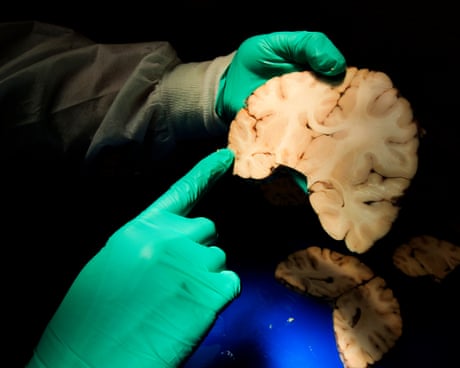
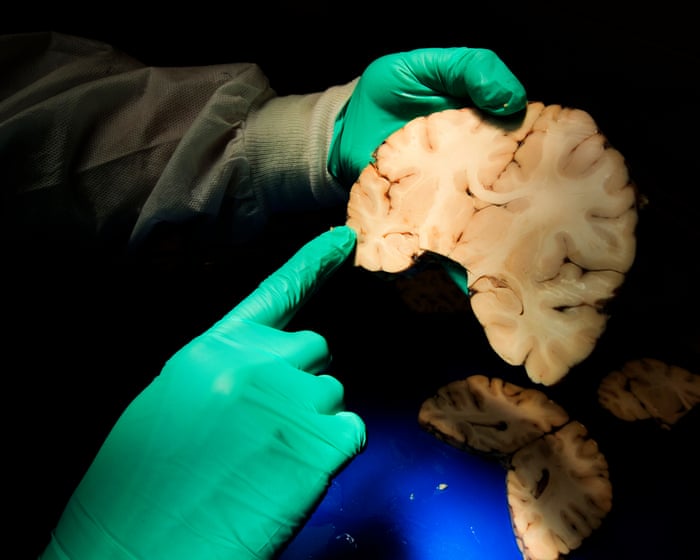
Research looked at prevalence of chronic traumatic encephalopathy in 2,362 players who died in 2008-2023
A new study published on Wednesday estimates that about 75% of former NFL players who died over a 15-year period had evidence of chronic traumatic encephalopathy (CTE).
The research, published in Jama Network Open and conducted by a Boston-based team, examined the estimated prevalence of the degenerative brain disease among NFL players who died from 2008 through 2023. Researchers found that the estimated rate of CTE among these players was substantially higher than the rates observed in brain samples collected from the general population.
—Photo-Illustration by TIME (Source Image: Deagreez/Getty Images)
Have you ever had a disturbing thought pop into your head out of nowhere—something you'd never consider actually doing?
Intrusive thoughts are unwanted thoughts, images, or urges that can feel upsetting, confusing, or wildly out of character. They're more common in people with obsessive-compulsive disorder (OCD) but can happen to anyone, and they can involve everything from violence and sex to religion, relationships, and the fear of having done something wrong.
Many people are able to brush off the occasional intrusive thought and move on quickly. People with OCD, on the other hand, can get stuck trying to figure out what the thought means—and whether they might act on it. “We stop and we treat that thought as super important and meaningful,” says Alissa Jerud, a clinical psychologist and clinical assistant professor of psychiatry at the University of Pennsylvania.
Intrusive thoughts can feel especially disturbing because they often involve someone or something the person cherishes. “We tend to have intrusive thoughts about the things we care most about,” Jerud says.
Some of Jerud’s patients have kept their intrusive thoughts to themselves for 20 years before telling her. They might be thinking: “Why am I having these thoughts? What does it say about me? Maybe I’m a monster,” she says.
A calm, compassionate response can make it easier to keep talking. “It can help them feel like there’s hope,” Jerud says. “Maybe I don’t have to beat myself up for having these thoughts in the first place.”
Here’s what to say if a loved one tells you they’re having intrusive thoughts.
Start with, “I’m so glad you shared this with me”
Start by thanking your friend for trusting you. Skip responses like “How could you think that?” or “Don’t say that,” which can reinforce the shame they’re already feeling.
It’s helpful, too, to make it clear that what they told you won’t affect your relationship: “This doesn’t change how I think about you,” suggests Madeline Thompson Smith, an Atlanta-based licensed professional counselor who specializes in OCD. Then acknowledge how upsetting the thoughts sound: “That sounds really scary to have stuck in your head.”
Pay attention to how you sound and look, too. A warm invitation to explain more can feel like judgment if you’re staring intensely or using a sharp tone. If you look startled, acknowledge it instead of hoping they didn’t notice. Kimberly Leonte, a psychologist in Boston who specializes in OCD, suggests wording it like this: “I guess I wasn’t expecting that, but I want to hear more.”
Offer support without repeatedly reassuring them
When someone you love is distressed by an intrusive thought, reassuring them can feel like the kindest thing to do. But if they keep coming back with the same question, answering it again and again can become part of the OCD cycle.
Say your partner keeps asking whether an unwanted thought means they’re dangerous. You reassure them, they feel better, and you both get back to your evening. Until another question arrives: But what if you’re wrong? What if they didn’t explain the thought accurately enough? Next thing you know, they’re asking for reassurance again.
A single reassuring response isn’t necessarily a problem, Thompson Smith says. The concern is when seeking reassurance becomes a compulsion—a behavior someone feels driven to repeat to relieve their distress. Each answer briefly helps them feel better, but it leaves them needing another answer when the doubt returns.
Instead of debating what the thought means, acknowledge how they’re feeling and express confidence in their ability to get through the discomfort. Thompson Smith suggests: “I know this feels really uncomfortable right now. I’m not going to help you go down the rabbit hole, but I’m happy to sit with you while it’s hard.”
If reassurance has become a routine between you, talk about changing it together, ideally with guidance from their therapist. Abruptly refusing to answer can leave your loved one wondering what happened. “It’s tough if the person’s used to getting reassurance, and you just stop giving it and they don’t know why,” Leonte says. Instead, discuss how you’ll respond the next time they ask—and make sure you both understand why you’re trying something different.
Meanwhile, aim to avoid suggestions like “Just stop thinking about it” or “Replace it with a happy thought.” Besides being considerably easier said than done, trying to force an intrusive thought away can keep someone preoccupied with whether it’s gone yet.
Ask whether they want you to listen or help
Find out what your loved one wants from the conversation. They might be seeking support in taking a step toward getting mental-health help, or they may simply want you to know what they’ve been going through.
“Do you want me to just listen, or do you want help figuring out what to do next?” Thompson Smith suggests asking. If this is the first time they’ve said their intrusive thoughts out loud, they might not be ready to discuss next steps.
If they’re already in therapy, ask how you can support what they’re learning: “What would your therapist recommend trying right now?” Leonte suggests asking. If they’re interested in learning more about intrusive thoughts but feel overwhelmed, you could offer to read about them together.
Sometimes, they simply want someone to listen. Your loved one might be telling you because “they just don’t want to be alone in this, and you can help them hold it,” Thompson Smith says. Or they may need to know “you’re not gonna judge me or people aren’t gonna run away if I start trying to be open and get help.”
Know when intrusive thoughts call for professional help
If unwanted thoughts are causing significant distress or interfering with daily life, offer to help your loved one find a therapist. Keep it low-pressure: “If you ever want me to help you find a therapist, I’d be happy to do so,” Jerud suggests saying.
For OCD, look for a therapist trained in exposure and response prevention, or ERP, Jerud suggests. It helps people learn to tolerate intrusive thoughts without turning to rituals like repeated reassurance. The International OCD Foundation maintains a directory to help people find one.
There’s also an important distinction between an unwanted thought about harm and wanting or intending to act. Don’t assume that every disturbing thought is benign, Thompson Smith says. If you’re unsure what someone means, ask calmly and directly: “Is this a thought that scares you, or something you want to do?” If they describe wanting to act, ask about plans and help them get professional support right away.
Keep being the friend you’ve always been
After someone opens up about their intrusive thoughts, keep treating them like you always have. Send the ridiculous meme, ask whether they’re still coming to dinner, and keep including them in the things you usually do together.
People often fear that sharing their intrusive thoughts will change how others see them, Thompson Smith says. Pulling away—or asking about their mental health every time you talk—can leave them wishing they’d kept quiet.
You might get frustrated or struggle to find the right words, Leonte says. If you react in a way you regret, apologize and let them know you’re still there for them. “No one’s perfect,” she says. “The goal isn’t to be perfect, it’s just to be supportive.”
In just 7 days, TechCrunch Founder Summit takes over Boston’s SoWa Power Station on November 4. Your chance to save up to $100 on tickets is running out, and the opportunity to learn and connect directly with experienced founders, investors, and startup leaders is almost here.
Increase will add strain on healthcare system already struggling amid cuts by Trump administration, experts say
The number of people with dementia in the United States is projected to increase dramatically over the next 25 years, which will place increasing strain on a healthcare system already struggling to help them amid cuts by the Trump administration, experts say.
According to a new study in Jama Neurology, the annual incidence of new dementia cases globally will more than double, from 11.4m in 2023 to 24.7m in 2050. In the United States, the number of adults diagnosed with dementia each year will increase from 514,000 in 2020 to 1m by 2060, according to a Jama study published in 2024.
Jean Kaseya, of the Africa CDC, warns of the illness spreading like Covid unless more funding is secured to increase preparedness and possible treatment
The “unprecedented” spread of the Ebola outbreak means it could reach the UK and other countries, according to one of Africa’s top health officials.
As the current outbreak reached 10,000 cases, with almost 5,000 deaths, Dr Jean Kaseya, director general of the Africa Centres for Disease Control and Prevention (CDC), compared the outbreak to the Covid pandemic, which first took hold in China before spreading to countries across the world, claiming millions of lives, and ravaging health systems and economies.
Exclusive: Health secretary to extend role of watchdog, which backers say helps hold service in England to account
Yvette Cooper has abandoned plans to abolish the NHS’s independent patient champion after an outcry from MPs across the political spectrum.
The health secretary has decided to keep and extend the role of Healthwatch England, which was due to be axed as part of the government’s reorganisation of the health service in England.
axe the Health Services Safety Investigations Body.
end councils’ automatic representation on the boards of ICBs.
remove the requirement for a nurse on every NHS foundation trust board.
Experts say symptoms such as dark circles under the eyes, grey skin, cracked lips and hair loss can be a warning sign – but there are other factors too
TikTok is rife with influencers warning of “ferritin face”, a term they use to describe the pallor, dark circles, dry skin, and hair loss claimed to indicate low iron stores. But is this based on fact or fiction, and when is it time to head to the GP?
It involves the fracturing of a patient’s ribs, before they spend three months laced into a corset. Some of those who have had this cosmetic procedure say it is like being ‘hit by a bus’. Why is it becoming more popular?
Daniela Cesin was 14 when she began thinking about her looks. “I was a little bit chubby and I started to work out at home and lose weight. I saw the difference in my body: my abs, the muscles in my arms, and I started liking it,” she says. By 31, she had the slim, toned body she had hoped for, but something was still missing. “I wanted to have that guitar hourglass shape.”
In August, Cesin travelled from Miami, where she has lived for the past 15 years, to her native Venezuela for liposuction and a fat transfer to her hips. She met her cosmetic surgeon for the first time the day before the procedure, and he realised she didn’t have enough fat to go ahead with it. Instead, he offered to perform RibXcar: a rib remodelling surgery that would involve fracturing three of her lower ribs on each side and binding them in a corset for three months, to set the ribs in a new position and give her a wasplike waist.
A close-up image shows a bowl of blue M&M candies. | Peter Macdiarmid/Getty Images
If you were anything like me as a kid, trick-or-treating meant one, maybe two, pillowcases full of candy every Halloween.
And as fun as collecting all that candy could be, the real fun began when I got home and dumped my winnings onto my bedroom floor. That’s when the sorting began.
I had some very specific rules: The usual suspects — think Smarties, Tootsie Rolls, and Dum Dums — went into one pile. Fun-size chocolates, like Snickers, Reese’s Peanut Butter Cups, and Baby Ruths, went into another. And then there was my prized pile: Skittles, Warheads, Starbursts, and Sour Patch Kids. Those were meant to be eaten slowly throughout November. The rest was fair game.
The ways we sort and eat our Halloween candy are decided by some very particular, personal rules. But Health and Human Services Secretary Robert F. Kennedy Jr. would like to add another distinction: Which candies are made with artificial dyes?
Kennedy’s ire for synthetic food dyes is years old, and they’ve become a major target of his Make America Healthy Again movement. Last year, he announced a plan to remove “petroleum-based synthetic dyes” from foods, arguing that companies “shouldn’t be feeding it to the rest of us.”
That plan has become a multimillion-dollar problem for Mars, the maker of M&Ms, which promised customers last year that they would create an all-natural version of their tasty chocolatey treats. As the Wall Street Journal reported this summer, however, its latest offering is missing one of the most iconic colored M&Ms — the blue M&M.
M&Ms aren’t the only snack food in Kennedy’s crosshairs: He has called out Doritos, Cheez-Its, Cap’n Crunch, and gummy bears, saying their ingredients include “a lot of poisons.” On Fox News, he described what children eat as “food-like substances” and also said that “some of it was made in petroleum refineries.”
In reality, the evidence is more complicated, because the Food and Drug Administration has long considered many of these approved synthetic dyes to be safe under its rules, while acknowledging that some children may be sensitive to them. Kennedy’s sweeping accusations go much further.
Still, pressure from Kennedy and those in the MAHA movement has led many companies to rethink the recipes of your favorite snacks. But producing those alternatives isn’t easy or cheap, as the story of the blue M&M illustrates.
Jesse Newman, a food reporter for the Wall Street Journal, went inside a Mars factory in Topeka, Kansas, to see the process for herself. She spoke with Today, Explained co-host Noel King about why blue is so difficult to produce naturally, and what changing a candy’s color actually accomplishes.
Below is an excerpt of their conversation, edited for length and clarity. There’s much more in the full podcast, so listen to Today, Explained wherever you get your podcasts, including Apple Podcasts, Pandora, and Spotify.
The Secretary of Health and Human Services, RFK Jr., has some issues with the blue M&M. What, what exactly happened? How did it draw his attention?
He is not a fan of any sort of chemical. He’s really concerned about toxins in our food. And Blue 1, which is the food dye that makes blue M&Ms blue, is a synthetic chemical.
He really takes issue with artificial dyes. He believes that they cause hyperactivity in kids, some neurological challenges. He thinks artificial dyes are linked to cancer.
As a member of the Trump administration, he formally set out to get them removed, didn’t he?
Oh yeah. He’s been putting a lot of pressure on the industry to strip artificial dyes from all kinds of products.
What do we know factually about artificial dyes? We hear that they’re bad for us. We hear that a lot of things are bad for us. We’re all still alive and kicking. Are artificial dyes really detrimental to our health?
The FDA for decades has said that there are nine artificial dyes approved for use in food. And they said that those artificial dyes are safe and have said so for years and years and years, as have other global bodies, so long as they’re used in accordance with some of the standards that the FDA laid out.
A California state agency has found that dyes are linked again to hyperactivity in children. And the FDA itself has said, ‘Okay, we think that these dyes are safe for the vast majority of kids, but some kids might be more sensitive to them than others.’
So I think the real issue is that it’s a chemical doing it. They’re purely cosmetic. They don’t do anything except color food. There is no nutritional benefit that you are getting from these dyes. And so do we need them? Absolutely not.
I think one of the issues is that if you’re looking at the ways our food contributes to health problems, artificial dyes are probably pretty low on the list.
You went inside a factory where they make M&Ms, and you looked at how they’re trying to make this happen. Tell me everything.
I went to this plant in Topeka, Kansas, to see how they were made. And it’s a massive industrial food plant, where they mix these colors and spray them onto these small chocolate orbs, which they refer to as lentils.
The M&Ms move through the plant, and they arrive at these massive [machines] that they call pans, but they look like big tumble dryers. And the M&Ms just tumble around in these pans, and the color is sprayed on. It’s a very, very industrial process, millions of M&Ms a day. And the challenge that Mars has now is making that happen with a natural dye instead of an artificial one.
A blue natural dye is the challenge. What are the problems?
They’ve been working on this for years. And they went with a product called spirulina, which is made from algae. But spirulina comes with a host of problems that they are now dealing with.
Blue 1, which is the artificial dye, arrives at the factories as a liquid. And they pour it into these mixers and they mix it up with this sugary syrup and it’s pretty easy to handle. Spirulina arrives as a powder. So now you’re mixing a powder into this same mixture, into the same recipe, and that is very different.
Because spirulina is a protein, the resulting mixture becomes a lot thicker. What they found was that the mixture containing spirulina would really clog up the piping. It was getting stuck. It moved less smoothly through the pipes.
Also because it is a protein, it was starting to coat and build up on the inside of the machinery. And when that happens, it’s a food safety hazard. It can mold; it can cause problems. For many reasons, it was a challenge to handle.
How much did this all cost?
I should say it’s not done. Mars wouldn’t give me an official figure for how much they spent. But they said that they are spending millions and millions of dollars.
They’re having to retrofit their plants, essentially. Mars said that they’re having to change about 300 types of machinery in their plants. It’s a real investment. And at the end of the day, it all comes down to cost.
What did they actually end up getting done? What was the outcome here?
Mars said what they committed to was that they were going to release a new version of their M&Ms and a few other of their products this year that were made with natural dyes instead of artificial dyes.
They didn’t come out and say we’re eliminating artificial dyes. And so folks should be really clear about that: Their artificially dyed M&Ms aren’t going anywhere. They are still on shelves.
What they said is that they’re going to come out with an option that is naturally dyed. So they tried to do that. And what they found was that they couldn’t do it at a cost that was acceptable to them. With the blue and with the spirulina, it would have been far too expensive to make it work at scale. We’re talking millions and millions and millions of M&Ms per day.
They had problems making the green, the blue, and the brown M&M because, if you go back to your elementary school color theory, they needed blue to make all of those M&Ms. Ultimately they said, “Okay, we can do green. There’s little enough spirulina in the green to make the green M&M.” But blue and brown, they are not able to get there yet due to the amount of spirulina that those colors require.
And so earlier this year, they launched their naturally dyed version of M&Ms with red, orange, yellow, and green M&Ms. And if you take a look at this bag, my colleague referred to these as autumnal. They look very autumnal.
They look sort of muted.
You know, it really isn’t the same. It looks like a mature person’s M&M.
At the end of the day, what are the changes to the M&Ms? Let’s say I go online and get the natural dyed ones. What does that mean for my health? Am I now a healthy and virtuous person if I’m eating the autumnal M&Ms?
It means very little.
I would say you are, hopefully, still enjoying that sugary treat and the pick-me-up in the afternoon as you’re starting to tire. But you’re still eating candy; you’re still eating sugar. It really hasn’t changed very much.
Online hate is spilling into the real world, AFP warns
AFP Commissioner KrissyBarrett began her late-night appearance at the Senate estimates hearing noting “a heaviness that hangs across Australia” after the alleged attack on independent MP HelenHaines.
Lone actors are being motivated by a convergence of personal grievances, mental health vulnerabilities and ideological concerns …
What helped keep us safe in recent times, such as our geography, analogue systems and far away criminals, has been impacted by fully integrated technology, social media and artificial intelligence.
We hear about the devastating impacts of racism from communities every day. But many experiences go unreported or uncounted, and our systems often do not capture the full picture.
This is not about collecting more data to prove racism exists. We already know it does. It is about making inequality visible, holding institutions to account and giving communities greater agency over their data to drive real change.
Lindsey Hall’s boyfriend was asleep on her shoulder when she accidentally discovered what he’d been telling ChatGPT about her.
Her phone had died, so she picked up his to look up something for work. Then she noticed a chat titled “Relationship Issues and Uncertainty.” Inside, she says, were complaints about her appearance, doubts about his attraction to her, and a sentence she still remembers verbatim: “I’m just not proud of her.”
While he peacefully snoozed beside her, she learned that ChatGPT had issued a verdict on the state of their relationship: Her boyfriend needed to end it.
When she first saw the chat title, Hall figured it was about a familiar disagreement: She loved her three cats; he wasn’t an animal person. “This is probably about the cats,” she remembers thinking. She hadn’t expected a list of complaints about her. “Nothing was positive,” she says. “Not one thing.”
Hall got up, collected her toothbrush and charger, and slipped out the front door. “I just had nothing to say,” she says. “I had nothing but rage at that point.”
Couples have long had ways to discover things they weren’t supposed to know about each other: rifling through a journal, stealing a glance at incoming texts, poking around in Instagram or Snapchat DMs. Now, there’s another place to look—and plenty to wish you hadn’t seen. Therapists say they’re working with couples who have discovered their partners asking AI whether they should break up, sharing sexual fantasies, or contemplating how to bring up something they were too nervous to say out loud.
Why a partner’s AI chats can feel like a betrayal
Reading the chats doesn’t necessarily tell you what the other person meant. Was your partner venting after a fight or seriously considering leaving you? Were they asking for help talking to you—or finding a way to avoid it? And who owes whom an apology: the person who read the chats, or the one who shared intimate details about their partner with a chatbot?
When Ilana Grines, a licensed marriage and family therapist in Los Angeles, works with couples, her first question is now: “What have you told AI?” She wants to know if and how both people are using it, what they’re sharing, and whether they’ve discussed any of that with each other. Most haven’t, she says.
“We don’t have a language around our conversations with AI,” Grines says. Couples may understand that a journal is private without having discussed whether the same goes for a chatbot conversation. When someone discovers their partner’s chats, “it creates this huge rupture where one person accessed the other person’s history,” Grines says. “And then it’s nuclear.”
One couple Grines worked with paid for a single AI subscription. The wife, a teacher, used it to grade papers. Her husband used it to explore sexual fantasies, apparently without realizing that conversations from his computer would be visible through their shared account, Grines says. His wife discovered the topic in the platform’s sidebar.
“We know about a third person entering our relationship,” Grines says. “But we don’t know about this third space that we’re creating.”
Sometimes, one partner doesn’t even know that space exists. They might be aware their partner asks AI for help with work or vacation planning—not that they’re also discussing their sex life or wondering whether to stay together. Hall used chatbots herself, but discussing her relationship with one hadn’t occurred to her. “I just didn’t think of it as a tool for that,” she says.
Part of what stings is realizing your partner talked to a chatbot about something they felt like they couldn’t bring up with you, says Shemiah Derrick, a relationship therapist in Chicago. You might also wonder how long they’ve been feeling this way—and whether you would have known if you hadn’t read the chats.
Derrick has seen couples finally talk through a problem—only to start fighting when one person admits they used AI to figure out what to say. The other person’s reaction, as she describes it: “You had to go to chat for us to do that?”
In those cases, Derrick points out that the person turned to AI because their usual way of bringing up problems wasn’t working. They wanted to get through a tough conversation without having the same old fight. “They were trying to do something different,” she says.
What AI chats can reveal about relationships
Giulia P. Davis, a licensed marriage and family therapist in San Francisco, recalls working with a couple after one partner read the other’s AI chats without permission and found complaints and doubts about their relationship. The person who wrote them was still sorting out how they felt. Their partner assumed they’d already made up their mind.
“The partner didn’t find a straightforward confession or plan to leave the relationship,” Davis says.
Davis helped them distinguish “what you really think” from “what you might think about.” Someone might complain to a chatbot after a fight or ask what would happen if they broke up, for example, but not feel that way once they’ve cooled down.
If you find these types of messages, you should ask your partner how they’re feeling, Davis suggests—not assume everything they typed is something they’ve been hiding from you. “A person can have private thoughts without being deceptive,” she says. “Couples need boundaries around private digital spaces just as they do around journals, therapy, or conversations with trusted friends.”
A chatbot also does something a journal doesn’t: It answers. But remember that it’s getting only one side of the story, says Shayce Johnston, a licensed mental health counselor in Gainesville, Fla., and the founder of Human AI Dynamics, which explores how people form emotional and relational bonds with AI. If your partner complains about you and the chatbot agrees, they may feel that someone else has confirmed you’re in the wrong. Johnston describes the reaction this way: “Even the AI agrees with me.” That doesn’t make it true.
How to set boundaries around AI in a relationship
Don’t assume you and your partner agree on what should stay private, says Tammy Nelson, a psychotherapist in Los Angeles and author of Open Monogamy: A Guide to Co-Creating Your Ideal Relationship Agreement. You might think nothing of opening their ChatGPT account; they might consider it the equivalent of reading their journal. Talk about that before you’re staring at something you wish you hadn’t seen.
“What parts are private?” Nelson asks. Keeping a password to yourself, for example, doesn’t automatically mean you’re concealing something that would hurt your partner. “I really do think that it’s important to revisit that conversation pretty often,” she says.
Reading the chats is only part of the issue. What’s OK to put into them? Johnston works with couples in which one person uses AI enthusiastically while the other has privacy, ethical, or environmental concerns. Your partner might be fine with you asking for date-night ideas but uncomfortable with you pasting in their texts or describing your sex life.
Grines suggests starting with a question: “Can you share something you’ve asked AI about our relationship?” You can also ask whether there are subjects they find easier to discuss with a chatbot than with you. The answers can help you get specific about what you’re both comfortable with: using AI to prepare for a difficult conversation, for example, or talking through an argument afterward. Discuss whether those exchanges will stay private or whether you’d like to share what came out of them.
If you’re tempted to skip the conversation and start scrolling through your partner’s chat history, Nelson suggests asking yourself why. Has something happened that makes you distrust them, or are you feeling anxious and hoping what you find will reassure you?
As Davis puts it: “What gets in the way of asking your partner directly?”
What to do after reading your partner’s AI chats
If you’ve read something upsetting, ask your partner what it meant before assuming you know. Davis encourages couples to wait until they’re calm enough to have that conversation. The person who used AI can explain what they were working through; the person who read the chats can explain what hurt.
Johnston wants couples to stop treating the chat history as a verdict on their relationship. Instead, she helps them understand “what the need was, what the fear is, and where the disconnection was that led to the conversation in the first place.” That means making room for both people’s feelings: You can be hurt by what your partner wrote, and they can be upset that you read it without permission.
There may still be a useful role for AI in the relationship. Grines has worked with couples who use their therapy notes to ask a chatbot for questions they can discuss together at home, for example. Johnston sometimes encourages clients to rehearse a difficult conversation with AI before having it with their partner.
“I don’t think AI is inherently anti-relationship,” Grines says. But she wants couples to consider whether it’s helping them talk to each other—or becoming the only place they’re willing to be honest. “AI can be a bridge into communication,” she says, “or it can be a place where communication goes to die.”
For Hall, finding out how her boyfriend used AI made her question conversations she’d once felt good about. Before meeting in person, they’d spent months messaging. He’d seemed warm over text, she says, but could be colder face-to-face. She’d wondered: “What am I doing wrong?”
His chat history offered a possible explanation. When they’d discussed serious or emotional subjects, she says, he’d pasted her messages into ChatGPT and asked it to help him respond. She remembers his instruction: “Placate her.”
“It’s horrifying,” she says now.
She still wonders whether he would have spoken so harshly about her to another person, or whether something about talking to AI encouraged him. “Would you have said all those things to a person in that way?” she asks.
After she left his house, he began texting her. She turned off her phone. When he later came to her home, she told him she’d read the chats. By then, she says, she felt there was little left to discuss: “I just read exactly how you feel.”
A microbiological culture of the yeast Candida auris. —TopMicrobialStock/Getty Images
In the winter of 2015, Dr. Tom Chiller received a call from public-health officials in Britain.
They were panicking. A new fungus was causing devastating infections at a large London hospital. “They weren’t able to get rid of it,” says Chiller, who was then chief of the fungal-diseases branch at the U.S. Centers for Disease Control and Prevention (CDC). “They didn’t know what to do.”
The British officials said the fungus—a kind of yeast called Candida auris—appeared to be spreading from patient to patient. The officials said they were going to shut down parts of the hospital to curb its transmission. “That was just mind-boggling,” Chiller says.
At first he was more confused than alarmed. Candida is a kind of yeast that causes some of the most common fungal conditions, including thrush and vaginal yeast infections. Some species can cause severe illnesses, including bloodstream infections. But Chiller knew of no Candida species—indeed, no life-threatening fungus of any kind—that could spread so easily among people.
“I’ll never forget that call,” he says. “At first, I didn’t really believe it. Suddenly we have a yeast acting like a bacteria? It was weird.”
First discovered by doctors in 2009 in the ear of a patient in Japan, Candida auris behaves differently from most other fungi. It can survive at higher temperatures and in saltier environments, making nooks like a human ear, armpit, and groin ideal places to grow. It is exceptionally sticky and clings doggedly to people’s skin and hair follicles, and to surfaces—including slick ones, like hospital floors and beds, that are designed to repel germs. It is highly resistant to antifungal drugs, hard to kill with standard disinfectants, and can cause terrible, often deadly illnesses. Also, as British officials were starting to notice in 2015, it spreads easily through physical contact between people and via contaminated surfaces.
At the time of the call, though, much about Candida auris remained unknown. A few countries had reported a smattering of infections, but it hadn’t seemed like a big deal. No cases had yet been reported in the U.S. “It was a wake-up call,” Chiller says now. “We realized that, huh, maybe this little ear fungus isn’t just a little ear fungus anymore.”
In the decade since that phone call, that realization has cemented. When about 200 people—mostly doctors and researchers—attended a three-day conference about fungal diseases near Denver in September, Candida auris was the first topic on the agenda. To a nonscientist, the talks were dry, technical presentations on the pathogenesis and epidemiology of the disease, but to the attendees—and “almost everyone who works in mycology is here,” said Dr. Luis Ostrosky-Zeichner, an infectious-disease specialist at UTHealth Houston—they were red flags we should all be taking seriously.
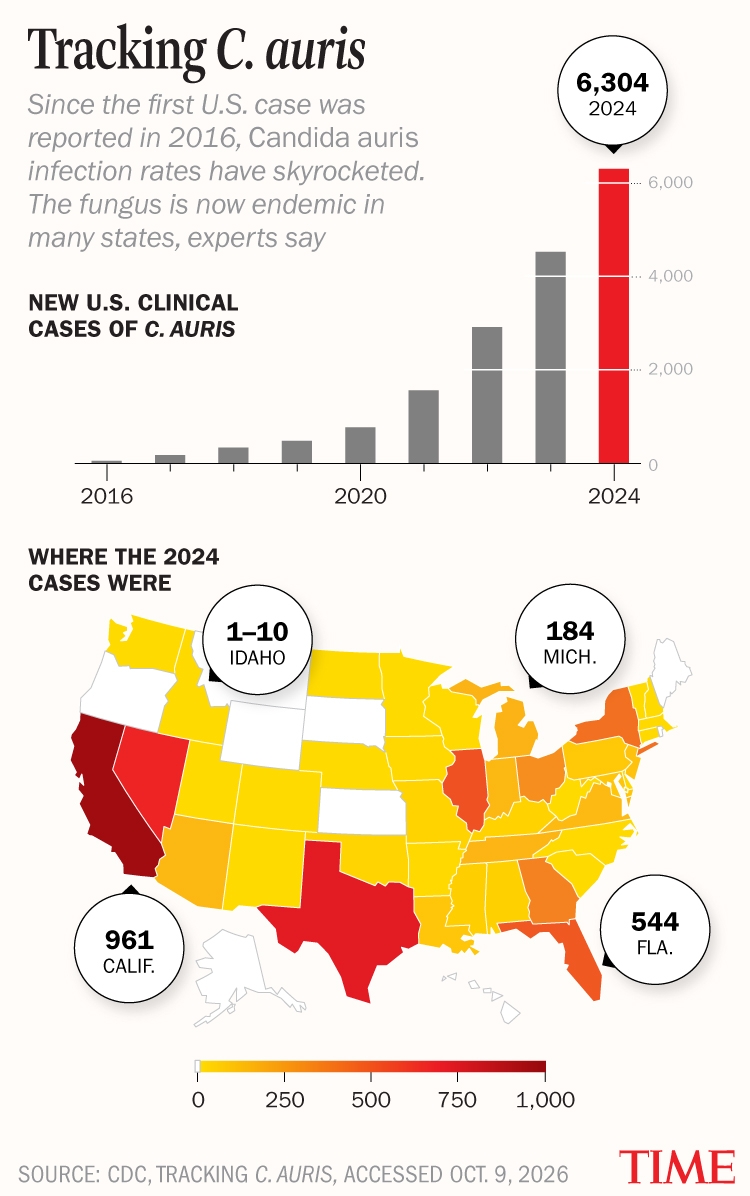
Candida auris has rapidly gained ground since 2015. It has sickened tens of thousands of people in over 80 countries and six continents. The World Health Organization (WHO) has designated it one of the world’s highest-priority fungal threats. The CDC on Oct. 27 listed Candida auris as one of four top-priority drug-resistant pathogens that require "urgent and aggressive action." Thousands of cases are now reported in the U.S. every year. The CDC said this summer that the fungus had already infected more than 3,000 people this year in 27 states. Up to 60% of people who are infected die.
“In some U.S. states, it’s just endemic now. It’s there to stay,” Chiller says.
Deadly fungal diseases were once considered very rare, but the proliferation of Candida auris points to a troubling trend: dangerous fungi are increasingly finding new opportunities to infect us, and human activity is spurring them on.
From the climate we’re warming to the medical treatments we use, we are creating conditions that allow fungal pathogens to thrive, infectious-disease experts say. Rising global temperatures, they say, likely led to the emergence of Candida auris and are driving the evolution of other fungal pathogens never seen before. Changing weather patterns are pushing some fungi to expand their geographic range, and the overuse of antifungals in medicine, agriculture, and livestock farming has driven them to develop resistance to these drugs.
“We are creating an environment that is favoring pathogenic fungi and drug resistance,” says Dr. Andrej Spec, a fungal-disease specialist at Washington University School of Medicine in St. Louis. “That means they are likely becoming better at infecting us, and also at evading our treatments. That’s a bad combination.”
Fungi are ubiquitous organisms. They live in, on, and all around us. Every day, we inhale thousands—if not millions—of fungal spores. There are an estimated 6 million species of fungi on the planet, but only about 300 of them cause diseases in people. “We are protected by our temperature and our immunity,” says Dr. Arturo Casadevall, chair of microbiology and immunology at the Johns Hopkins School of Public Health. The human body is too hot for most fungi to thrive, but as the earth warms, fungi are adapting.
Researchers think Candida auris, which likely originated in marine ecosystems, evolved a tolerance to salty conditions and high temperatures over time. The yeast can now survive at 107°F.
Candida auris is not the only threat finding hot new hosts. A new fungal pathogen is disfiguring cats and people in South America, and certain molds, which once infected only plants, are now sickening people too. Spec published a report in 2021 describing the first case of a person infected by a mold that had previously been known to damage only trees. Since then, two more people in the U.S. have been infected, Spec says. “It’s gone from never causing human disease in the history of medicine to three new cases of it in the last five years,” he says.
In October, the CDC said that cases of a different mold—a brain-attacking variety—have jumped fourfold in the past two years. “This is a nasty pathogen,” Spec says. It infects even healthy people and causes brain abscesses that in up to 70% of cases are fatal.
“We’re seeing a lot of these molds that were once rare pathogens becoming more common,” Spec says. “A lot of us are leaning toward the idea that this is probably being driven by climate change.”
Spec and other doctors are working with public-health officials, patient advocates, and drug developers to try to stem the rise of threatening fungi. They’ve made some progress in recent years: raising awareness, doing more surveillance, and developing new drugs and tests, but the challenge is formidable.
As fungi develop mechanisms to better infect us, more people are becoming vulnerable to serious fungal diseases—because of advancements in medicine. Today, to fight autoimmune conditions and diseases like cancer, millions of people take drugs that suppress their immune systems. But immunocompromised people are at higher risk of contracting severe fungal infections. Thanks in part to those therapies, the growing population of immunocompromised people in the U.S. is now estimated to number at least 7 million.
“We have people who have immune conditions like multiple sclerosis, Crohn’s disease, and rheumatoid arthritis who might have died from these diseases in the past but aren’t dead thanks to these therapies. But they’re also immunosuppressed, so we have a bigger pool of people who are at risk,” Spec says.
More people are also being kept alive by invasive medical devices, such as heart-lung machines and ventilators, which can create pathways for germs including fungi to enter the body. “We’re making all this medical progress,” Casadevall says, “but that progress comes at a cost.”
Ryan Zwick, a healthy 22-year-old, had just graduated from nursing school when COVID nearly struck him dead in December 2023. The virus, which research shows increases the risk of cardiovascular disease, severely damaged his heart.
Zwick spent a week in an intensive-care unit in Las Vegas before he was airlifted to a hospital in San Diego to receive more advanced care. He was intubated and sedated; his lungs, kidneys, and heart had all started to fail.
He was attached to a heart-lung machine, a life-support device that pumps a patient’s blood outside the body, via tubes placed into his sternum. “His chest was basically open for like a week,” his wife Emmy remembers.
Candida auris took advantage.
When Zwick finally woke up more than a month after being admitted to the hospital, doctors told him he had a severe Candida auris infection. The yeast, they said, likely sneaked into his body through the tubes in his chest. “It got into my bloodstream and kept causing a lot of issues throughout my body,” he says.
He was treated aggressively with antifungal drugs, which kept the infection under control. But the fungus lingered.
Zwick was discharged from the hospital in April 2024, but he returned to the emergency room a couple of weeks later because blisters had appeared at the incision site on his chest. He soon learned that the Candida auris infection was causing osteomyelitis, a serious and painful condition in which bone tissue becomes inflamed. “They took out a bunch of bone and stuff, and put me on more antifungals,” he says.
More than two years later, Zwick, who works as a nurse in New Hampshire, continues to receive weekly infusions of a potent antifungal drug to manage his infection. His doctors have warned him that he will likely have to take them for life. “It’s basically chronic now,” says Zwick, who still sometimes has swelling and blistering at the incision site.
Zwick worries that available antifungal drugs could one day lose their sting. Candida auris is highly resistant to many antifungals; a growing number of infections are “pan-resistant,” which means no medicines are effective against them. “I just hope these drugs keep working for me,” Zwick says.
When Candida auris first emerged in the U.S. a decade ago, it was a very rare and often severe disease whose victims were usually sick, elderly, and immunocompromised people in hospitals and nursing homes. But the yeast has been expanding its reach: not just infecting more people, but a broader range of them, and causing a wider variety of illnesses too.
“Ten years ago, we’d maybe see one Candida auris patient every few months,” says UTHealth’s Ostrosky-Zeichner. “Now, we have several cases per day in Houston.” Texas, New York, Nevada, Florida, and California are among the U.S. states with the highest number of cases.
More young people, like Zwick, and people who aren’t immunocompromised are getting infected, doctors say. The yeast is also starting to cause new types of hard-to-treat infections. Spec says that this year, for the first time, he treated a woman with a vaginal yeast infection caused by Candida auris. She had diabetes that was well-controlled and was otherwise healthy, says Spec.
The woman had come to see him after getting recurrent yeast infections that hadn’t responded to standard treatments, he says. She recovered only after being treated for several days with an IV antifungal drug more powerful than what is usually used to treat such infections, Spec says.
Vaginal yeast infections are very common, with an estimated 3 in 4 women having at least one in their lifetime. A class of antifungals known as azoles are typically used to treat such infections, either as a cream, suppository, or oral pill, but Candida auris is more than 90% resistant to azole drugs. “It’s no joke when you have to tell a woman that she has a vaginal yeast infection for which you usually take one pill and move on, but in her case, she needs to get on IV medication,” Spec says.
Doctors say Candida auris is also emerging as the cause of another common disease: urinary tract infections (UTIs), which roughly half of women will experience at least once. Doctors have known that Candida auris can cause UTIs in people with catheters, but they are now seeing cases of people with tough-to-treat infections who don’t have any medical devices or major health complications.
Public-health experts worry that the fungus could become as widespread as pathogens like MRSA: methicillin-resistant Staphylococcus aureus, a superbug bacteria.
“Initially, we tried to stomp it out, but we realized early on that Candida auris was here to stay. It was going to be more like MRSA,” says Chiller. “MRSA used to be hospital-only, and now it’s on every skin boil on the high school wrestling team.”
Self-described ‘fun-guy’ Tom Chiller tosses a mushroom plushie in his Atlanta home —Irina Rozovsky for TIME
After Chiller got off the phone with his British counterparts in 2015, he went on a quest to better understand the fungus that he suspected would soon invade the U.S. He first wanted to know if Candida auris was already on U.S. soil but doctors had just missed it. Under his direction, the CDC sent out an alert to hospitals and researchers, asking them to test samples of unidentified fungal pathogens in their repositories going back decades. “We didn’t find Candida auris historically,” he says.
The CDC also collaborated with public-health officials in parts of Asia, Africa, and South America, where Candida auris cases had been detected. Together, they studied samples of the fungus in an attempt to understand how it emerged. They discovered something remarkable: at least three distinct strains of Candida auris appeared nearly simultaneously, over the course of a few years, but separately—in different corners of the globe.
Many fungal-disease specialists and researchers now think climate change likely drove the yeast’s transformation from non-threatening environmental fungus to deadly pathogen. “It’s hard to explain the emergence of Candida auris simultaneously on all these continents and not include climate change as part of it. It just has to be. There’s no other good explanation,” says Dr. Peter Pappas, an infectious-disease doctor at the University of Alabama at Birmingham.
Fungi are sensitive to heat, but they are also very adaptable to rising temperatures. In laboratory experiments, researchers have put different fungi in incubators and, by steadily raising the temperature, have spawned fungi that are more tolerant to higher heat.
“It’s actually not that hard,” says Casadevall, who studies how fungi cause disease and was the first to publish the theory that global warming spurred Candida auris’ rise. “The slower you raise the temperature, the more the fungi can tolerate it. It doesn’t take a lot of mutations,” he says.
A study he published with colleagues last year showed how different microclimates within the same city can trigger changes in fungi. “We went to Baltimore and looked for fungi on the sidewalk in a cool part of town, where they had nice trees and it’s shaded, and then the same fungus in a warm part of town,” Casadevall says. “We found that even within one city, just two miles away, the fungi from the warm neighborhood grow at higher temperatures. So, it’s happening.”
Fungi are already a major threat to many plants, insects, and cold-blooded animals. Frogs everywhere are being wiped out by a fungal disease; rice and banana crops have been decimated by fungi; and millions of bats, which drop their body temperature when they hibernate, have recently died in North America because of a deadly fungus. Until now, however, most mammals have been protected by our high body temperatures.
The emergence of Candida auris is a “shot across the bow of humanity that these things can happen,” Casadevall says. “We can have an organism come out of nowhere, and begin causing disease.”
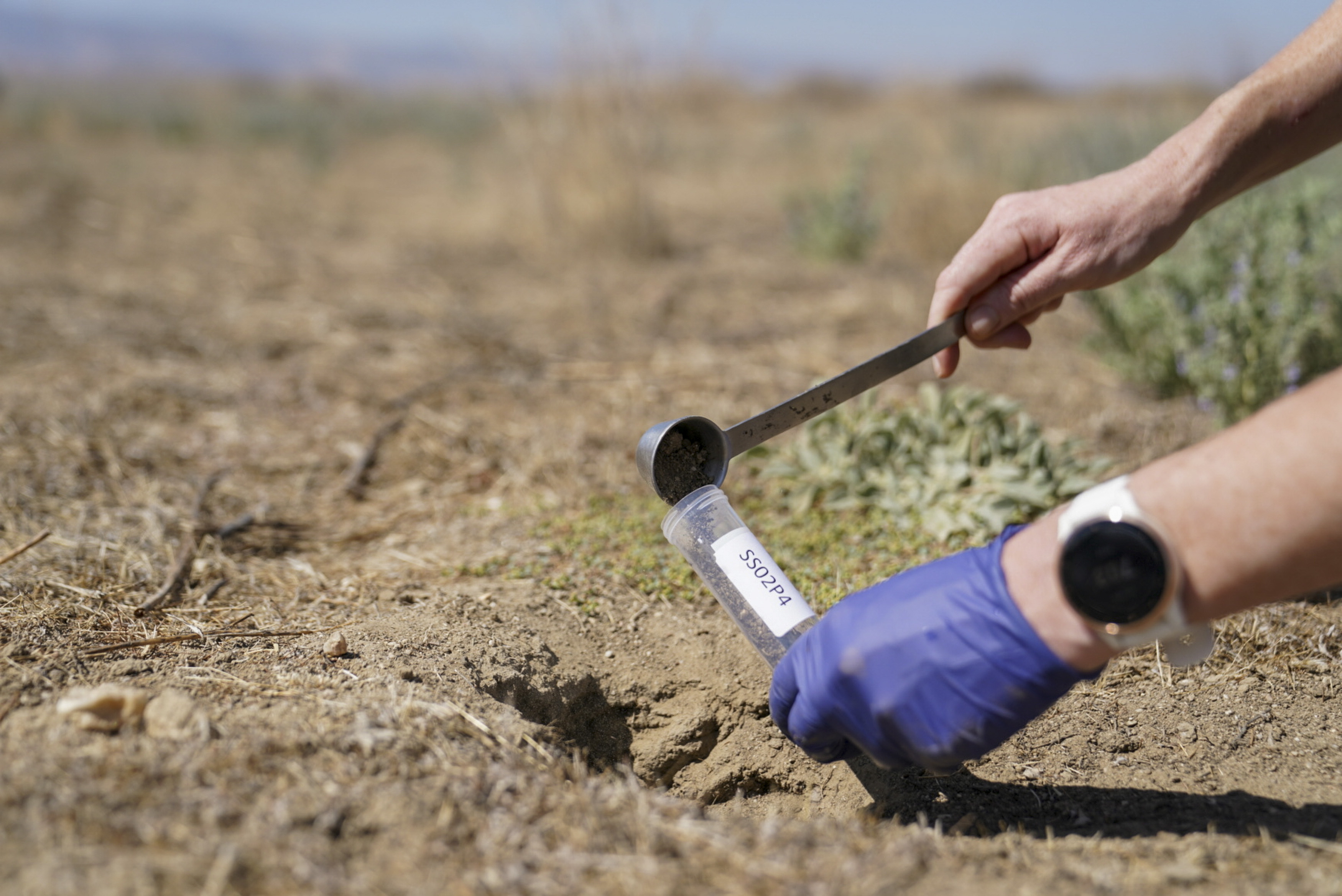
A sample test for Valley Fever in the Carrizo Plain National Monument in Santa Margarita, Calif. —Carolyn Van Houten—The Washington Post/Getty Images
Many other fungi are changing in ways that are worrying and, in some cases, dumbfounding doctors. As temperatures rise and rainfall patterns shift, some are spreading to new places. The soil-dwelling fungus Histoplasma, which had historically been confined in the U.S. to central and southern regions, has been steadily moving northward, eastward, and westward. U.S. cases have increased twofold in the past decade.
Valley fever, caused by inhaling microscopic fungal spores, is estimated to sicken up to 360,000 people in the U.S. yearly. The fungus was primarily found in the arid American Southwest until about a decade or two ago, when it began spreading to states like Washington, once considered too wet or cold for it.
Even fungal diseases considered mundane and easily treated, like ringworm, are evolving in alarming ways, doctors say. A new species of ringworm that can be resistant to all antifungal drugs has been spreading from the Indian subcontinent to the Middle East, Europe, and the U.S. in recent years. This new ringworm, which is highly contagious, causes chronic, inflamed, and itchy skin plaques all over the body.
“Think of athlete’s foot, but it’s now athlete’s body, and it’s untreatable,” Chiller says. He predicts this new disease, which experts think evolved in response to the overuse of over-the-counter antifungal medications, will become the predominant ringworm found globally in the next decade.
In Brazil and South America, outbreaks of a fungus that causes a disfiguring and sometimes fatal skin disease have been sickening cats, dogs, and people. Like Candida auris, the pathogen has mysterious origins. The fungus was first identified as a threat in 1998 after an outbreak in Rio de Janeiro. First, cats started showing up to the city’s clinics very sick and covered with lesions. Then, people and dogs did too. Infectious-disease doctors identified the culprit of these illnesses as a type of Sporothrix fungus. Infected cats were spreading the disease to dogs and humans through scratches, bites, and even sneezes.
That explanation didn’t seem to make any sense at first, says Dallas Smith, a fungal-diseases scientist at CDC who tracks emerging pathogens including Sporothrix.
A species of Sporothrix fungus called Sporothrix schenckii had long been known to doctors and scientists. The pathogen causes what is often referred to as “rose gardener’s disease” because the fungus, which lives in the environment, typically infects people who work with dirt and plants. “Gardeners would get pricked by a rose thorn, and that would provide the opening for the fungus to enter,” Smith says.
The fungus was known to infect cats, but that was exceedingly uncommon. The disease itself was also very rare. At the largest hospital for infectious diseases in Rio de Janeiro, the Evandro Chagas National Institute of Infectious Diseases, doctors typically saw two to three cases a year before 1998, says Dr. Dayvison Freitas, an infectious-dermatology researcher at the hospital.
But seemingly out of nowhere, something incited the emergence of a more virulent Sporothrix species spread by cats and not plants. It isn’t clear what pushed it to evolve to so effectively infect cats. “Is it because of climate change or environmental change or some other pressures that we don’t understand?” Smith says.
Sporothrix brasiliensis was named as a separate species in 2007. Infections caused by the fungus can result in multiple lesions in people, sometimes all over the body and face. It almost always leaves lasting scars, which are often dark and raised, says Freitas.
In up to 10% of cases, usually involving elderly or immunocompromised people, the fungus can enter the bloodstream and cause destructive illnesses. “The fungus can affect any organ or system, including the bones, joints, lungs, throat, brain. It can cause a kind of meningitis,” Freitas says. “If this happens, it is very, very severe, and the death rate is high.”
Brazil has seen an explosion of the fungus in recent years. “Cats are spreading this disease among themselves, but also to humans at an alarmingly high rate,” Smith says.
From 1998 to 2001, fewer than 180 people, concentrated around Rio de Janeiro, fell sick with the disease. In recent years, thousands of people across the country are infected annually, Smith says.
The disease is now even infecting people in remote villages in the Amazon, Freitas says, and has emerged in other countries too. Cases of Sporothrix brasiliensis have been steadily sprouting up across South America in countries including Argentina, Paraguay, and Chile. Uruguay experienced its first outbreak of the disease in 2025, and Peru reported its first case this year, Smith says. “It’s just a matter of time before it ends up in the United States” and beyond, he says.
Sporothrix, says Chiller, is one of a growing number of fungi that are “dramatically changing our understanding of how we think fungi are supposed to act.”
At the Denverconference, a line of scientists followed Chiller wherever he went. Everyone there wanted to bend his ear. Chiller was decked out in his usual professional attire: a well-cut jacket with a colorful, bespoke fungi-print lining and a matching pocket square. (Chiller, whose grandfather was a tailor, has about 15 fungi-themed custom jackets.)
“In every generation, there tends to be a few people who are a force multiplier,” says Spec. “They change the field. In the case of mycology, the success that exists is often due to Tom Chiller.”
Chiller has been working for decades to draw the world’s attention to fungi’s gathering threat. He was the deputy director of the CDC’s fungal-diseases branch for about 10 years and its chief for another decade. Under his leadership, the department doubled in size to about 45 people and expanded its work to include surveillance of priority fungal diseases, including Candida auris, and research into emerging pathogens, as well as new treatments and diagnostic tools.
He was instrumental in the development and widespread use of a cheap, simple, and accurate test, using just a pinprick of blood, for Cryptococcus—an environmental fungus that can cause meningitis. “It’s definitely saved tens of thousands of lives,” Chiller says. “I’m very proud of that.”
Chiller left the CDC last year after 25 years at the agency, months after Robert F. Kennedy Jr. was named head of the U.S. Department of Health and Human Services. Chiller says he had been growing increasingly disenchanted at the agency since COVID. “During the pandemic, it was turmoil for everybody. CDC took a big hit reputationally,” he says. Then Kennedy took the helm, and Chiller’s team was cut by about a quarter, he says. “We had to prioritize what we could do.”
Chiller says he felt “handcuffed” by restrictions imposed on CDC staff in the spring of 2025. “They cut all our travel, they canceled all meetings. We didn’t really have budgets,” he recalls. “I thought to myself, If this is the future, it’s not for me.” Chiller is now chief medical officer at IMMY, a company that develops tests for fungal diseases. He’s also a board member of the nonprofit Global Action Fund for Fungal Infections and of MyCARE, a fungal-disease patient-advocacy organization. Now, he gets to do what he loves most: advocating for fungal-disease awareness.
In September, he attended a roundtable discussion about fungal diseases with Kennedy and other U.S. health officials. Chiller, who helped coordinate the meeting, says it was the first time in his career that he had been in a room with a U.S. Health Secretary to talk only about fungus. That felt like progress, he says.
Chiller knows just how critical it is for health leaders and professionals to be familiar with fungi. “Think Fungus” was the catchphrase of the CDC’s first Fungal Disease Awareness Week, which Chiller helped launch in 2017. Doctors often miss fungal diseases because they fail to think of them, research shows.
Though the spread of fungi in a warming world may seem like an impossible foe, there is hope in the fact that diagnosing fungal infections early makes it much more likely that a patient will survive—and researchers, including Chiller, are working to help patients take advantage of that edge.
They’ve got a long way to go: a 2019 paper showed that almost half of some 270 patients in Arizona with valley fever—a fungal disease Chiller studied as a young doctor—weren’t diagnosed correctly for a month or more.
Justin John at the hospital with his mother where he was being treated for Valley fever. —Courtesy of Justin John
Justin John lived that nightmare. The 27-year-old software engineer from Arizona was wrongly diagnosed with COVID, the common cold, and irritable bowel syndrome before doctors realized—more than six months later—that he was sick with valley fever.
There were “lesions literally everywhere inside my body,” he says. After lumps caused by the fungus started appearing on his forehead and neck, doctors discovered that the fungus had eaten holes through parts of his spine and skull. He underwent two surgeries to insert a metal plate into his forehead, and replace a part of his vertebrae with a metal disc. “The vertebra was so dissolved, they couldn’t save any of it,” he says.
John says he was healthy, active, and had no underlying medical conditions before he got sick. “It’s in the dirt. You can get it anywhere at any time,” he says. “I could have gotten it when I was walking to Walmart.”
Blood tests are currently used to diagnose valley fever, but false negative results are common, causing many missed diagnoses. IMMY is developing a new rapid urine test for the disease that it says will be easier to administer and more accurate. “So many patients, even here in Arizona where this disease is endemic, get missed,” says Dr. Fariba Donovan, a valley fever specialist at the University of Arizona who treated John. “This test could really decrease that delay in diagnosis.”
These are steps in the right direction, but Chiller says we need to take greater strides if we want to win in the race against fungi. Many decades ago, after encountering very sick and dying valley fever patients, Chiller says he “learned a lot about how devastating and complex fungal diseases can be.” He’s still waiting for the rest of us to catch up.

 Login