❌

Reading view

Coalition MP ejected from question time after swearing at PM – as it happened

Online hate is spilling into the real world, AFP warns

AFP Commissioner Krissy Barrett began her late-night appearance at the Senate estimates hearing noting “a heaviness that hangs across Australia” after the alleged attack on independent MP Helen Haines.

Lone actors are being motivated by a convergence of personal grievances, mental health vulnerabilities and ideological concerns …

What helped keep us safe in recent times, such as our geography, analogue systems and far away criminals, has been impacted by fully integrated technology, social media and artificial intelligence.

We hear about the devastating impacts of racism from communities every day. But many experiences go unreported or uncounted, and our systems often do not capture the full picture.

This is not about collecting more data to prove racism exists. We already know it does. It is about making inequality visible, holding institutions to account and giving communities greater agency over their data to drive real change.

Continue reading...

© Photograph: Mick Tsikas/AAP

© Photograph: Mick Tsikas/AAP

© Photograph: Mick Tsikas/AAP

  •  

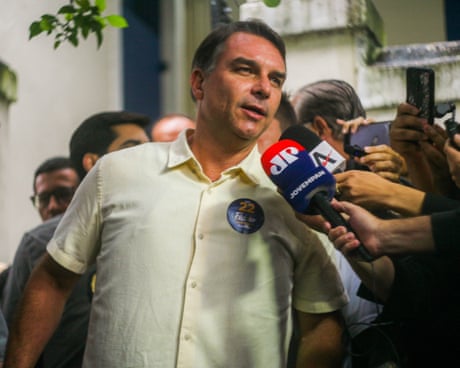
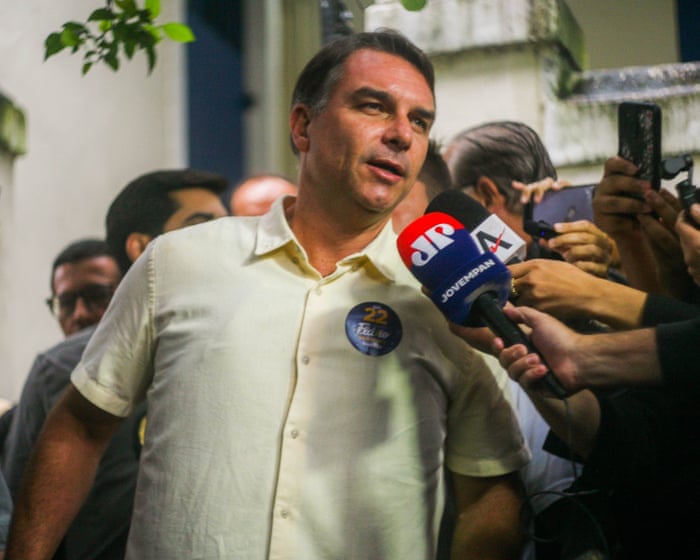
Flávio Bolsonaro flees Brazil after presidential election loss, reports say

Far-right senator and his family boarded private plane to Ecuador after crossing border to Argentina, Argentina’s government confirms

The far-right senator Flávio Bolsonaro has reportedly fled Brazil and is on his way to the United States after losing Sunday’s presidential election to the leftwing incumbent, Luiz Inácio Lula da Silva, who called the act “shameful”.

A report by the news website Metrópoles, citing people close to the politician’s family, said he was en route to the US. “The plane is in flight,” Metrópoles reported, without making clear where it had departed from.

Continue reading...

© Photograph: Lucas Neves/NurPhoto/Shutterstock

© Photograph: Lucas Neves/NurPhoto/Shutterstock

© Photograph: Lucas Neves/NurPhoto/Shutterstock

  •  

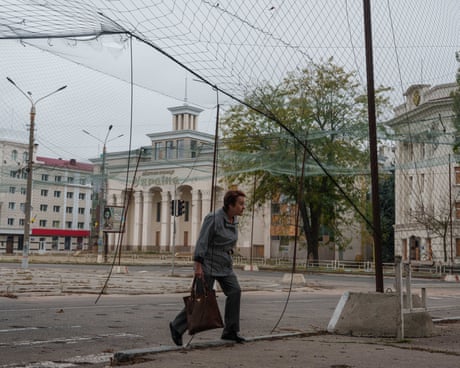
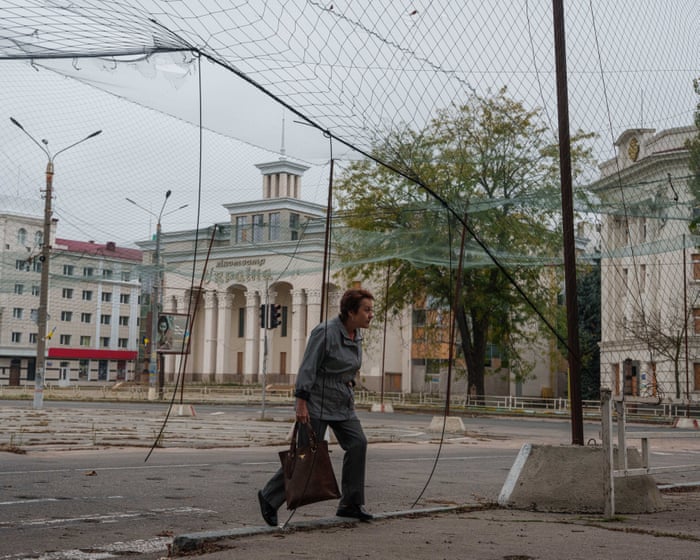
Oleshky truce appears to hold as two European leaders have ‘frank’ call with Putin

Frontline near Russian-occupied city in southern Ukraine quiet for first time in years ahead of planned evacuation

A local ceasefire in a southern Ukrainian city under Russian occupation appeared to be holding on Tuesday, with both sides ceasing drone attacks ahead of an apparent evacuation of about 2,000 trapped and desperate civilians.

The temporary truce began at 3am in Russian-controlled Oleshky. The city sits on the Dnipro River and is about 3 miles (5km) from Kherson, a larger city on the opposite bank. Ukrainian troops recaptured Kherson in autumn 2022.

Continue reading...

© Photograph: Evgeniy Maloletka/AP

© Photograph: Evgeniy Maloletka/AP

© Photograph: Evgeniy Maloletka/AP

  •  

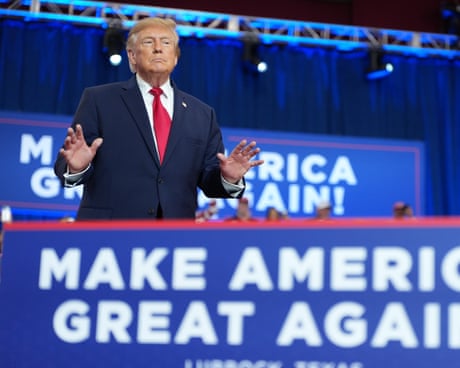
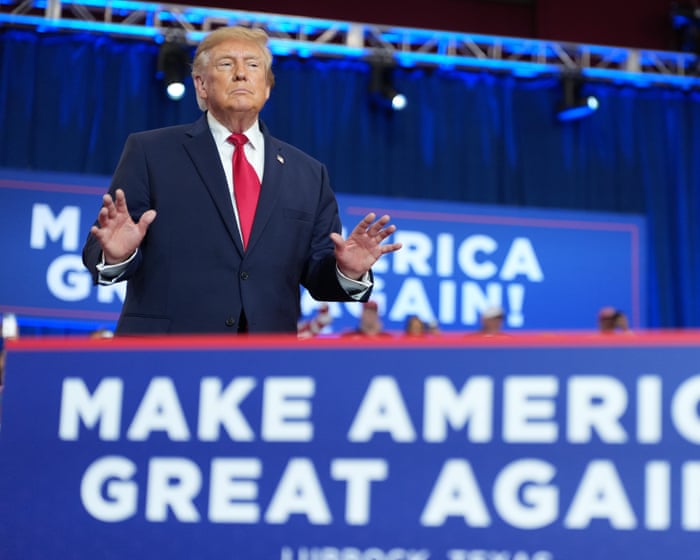
Trump tells Texas campaign rally crowd he’s rolling back environmental rules to curb methane pollution – as it happened

This live blog is now closed.

Speaking to reporters on the tarmac before departing for a campaign event in Michigan, JD Vance responded to a question about President Trump’s remarks branding Democratic Senate candidate Abdul El-Sayed as a “jihadist.”

Vance, who has sparred with the progressive El-Sayed repeatedly on the campaign trail, took a somewhat softer tone. But he didn’t walk away from Trump’s remarks.

Continue reading...

© Photograph: Alex Brandon/AP

© Photograph: Alex Brandon/AP

© Photograph: Alex Brandon/AP

  •  

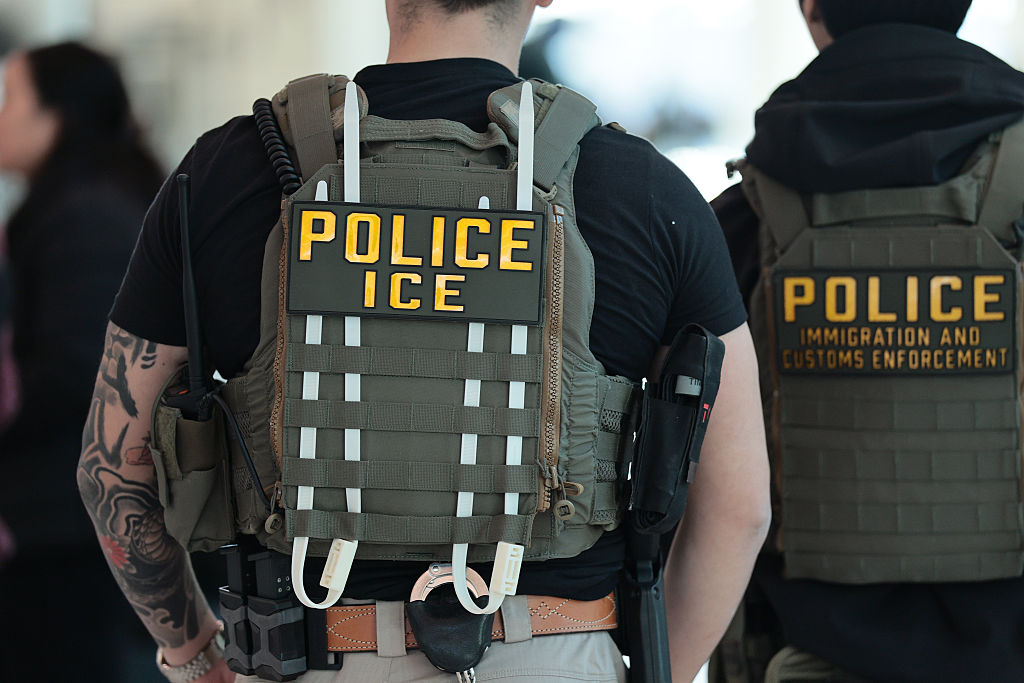
ICE Does Not Belong at the Polls

Immigration and Customs Enforcement (ICE) agents on March 24, 2026 in New York, New York. —Michael M. Santiago—Getty Images

During the presidential election of 1863, at the height of the Civil War, federal troops reportedly descended on polling places in Delaware, Kentucky, Maryland, and Missouri and prevented people they deemed disloyal from voting. This prompted a fierce national debate that culminated in Congress passing an 1865 law barring federal “troops or armed men” from “any place” where an election is being held. The central goal of this law, according to its proponents, was “to prevent the President and his officers from interfering in elections,” which are run by the states. Keeping armed federal officers away from the polls, they argued, was necessary to preserve democracy, even in the midst of civil war. 

This has been the clear law, and the respected policy of every presidential administration, for over a century.

Until now. 

Ahead of the midterms, top Trump Administration officials have publicly refused to rule out the possibility of sending federal agents to the polls. In September, Department of Homeland Security Secretary Markwayne Mullin claimed that immigration officers could be sent to polling places to “serve a warrant” as part of immigration enforcement operations or if “there is a threat” to those polling places, adding “we’ll be where we need to be.” 

“ICE isn’t there to patrol the polling places,” hedged Mullin. “We’re there to enforce specific threats.”

Federal Bureau of Investigation Director Kash Patel similarly said, “If there’s a reason to go there because there’s been a violation, we will, otherwise we won’t.”

It is clear to us, and to legal experts, that barring extreme circumstances, sending ICE or FBI agents to the polls would be flatly illegal under the 1865 law, and several others. As Daniel Caine, Chair of the Joint Chiefs of Staff, pointedly said this August, any request to send military troops to election sites would be an “unlawful order.” The same holds true for any other armed federal agents.

The only exception to the prohibition is to “repel armed enemies of the United States.” The Congress of 1865 originally included a second exception, allowing armed federal agents to “keep the peace at the polls.” But Congress repealed that exception in 1909 because lawmakers feared that federal authorities could point to any kind of disturbance as a pretext to deploy federal forces. 

In other words, unless a hostile foreign power attacks voting sites using weapons, it is a crime for any armed federal agents to go to those sites, even to quell a disruption. And they are certainly not allowed to show up for routine policing or immigration actions. 

If sending ICE to the polls is so plainly illegal, then why do top administration officials keep refusing to rule it out? Context is important. The federal government has been conducting indiscriminate and often violent immigration enforcement actions in communities across the country. At the same time, the administration has been peddling conspiracy theories about widespread illegal voting, often targeting communities of color. The administration has redirected thousands of homeland security agents away from critical transnational security threats to hunt for elusive noncitizen voters. 

These efforts are not uncovering any significant problems. Federal and state law already bar noncitizens from voting in federal and state elections, and our election system does a terrific job of ensuring that only eligible citizens vote, with vanishingly rare exceptions—as dozens of studies, election reviews, and painstaking investigations have already confirmed. 

This intimidation campaign is taking a toll. According to a University of California, San Diego poll conducted last month, a staggering 40% of voting-age American citizens expect ICE agents to be at the polls this November. Black, Hispanic, and Asian American voters are three to four times more likely than white voters to worry that they will be questioned by ICE at polls or that members of their racial or ethnic groups will face intimidation at the polls. This fear is real.

But despite all the administration’s threats, voters should not be intimidated. The law protecting election sites from federal forces is ironclad. Anyone who violates that would be committing a federal crime. Federal and state laws also prohibit any effort to intimidate voters, wherever it occurs. A broad array of civil rights groups and labor unions have already filed lawsuits to hold the federal government accountable for its intimidation efforts—including The Brennan Center, where we work. Other lawyers across the country are poised to run to court to protect elections if federal agents do unlawfully show up to polls.

Outside court, election officials, state government officials, law enforcement, and voter protection organizations are prepared to respond to any instance of voter intimidation. That includes de-escalation and backup plans, including changing voting sites if needed, to ensure that all Americans can continue to vote safely. Voters are determined and undeterred, as millions so far have already cast their ballots by voting early and by mail.

Our advice to concerned voters: make a plan to vote as early as you can. Voters have multiple options to vote with confidence. In addition to voting at the polls on election day, they can vote early in person or vote by mail ballot, dropping it off in secure ballot drop boxes, at an election office, or by mail. You can also go vote with a trusted group of loved ones or neighbors. 

It is an outrage that the federal government has refused to rule out the idea of federal agents at the polls. In our view, it is part of a campaign to intimidate voters and undermine our elections. 

The only way it will succeed is if voters don’t show up.

  •  

Remote Work Was Supposed to Make Parenting Easier. Why Are Parents Still Struggling?

A mother works from home while her toddler son plays and her daughter works on a laptop Hastings on Hudson, N.Y. on Sept. 8, 2020. —Tiffany Hagler-Geard—Bloomberg via Getty Images

Recently, one of us learned that her five-year-old was forgotten at school. The teenage neighbor who usually walks him home got distracted and forgot to collect him. Luckily, it was easy enough while working from home to dash out, stop at school, and then return to the laptop as he constructed a “dino-chicken-car” with some Legos. The crisis became a non-issue thanks to remote work.

Juggling parenthood and work is tough, and it shows up in our stress levels. The American Psychological Association reports that 48% of parents say that on most days their stress is completely overwhelming—around twice as many as other adults.

Remote work seems to offer a solution. Parents can put dinner in the oven between meetings so that food is ready before kids’ hangry tantrums arrive. A youngster with a virus can sleep through it while Dad takes calls over Zoom, so what would have been a sick day turns into a mostly-productive day. The time-bind that made it feel impossible to show up for one’s kids and for one’s career can seem less, well, binding.

But, weirdly, the rise of remote work hasn’t necessarily improved parents’ mental health, and may have even harmed it. In research published in Science, we considered the mental distress of over half a million Americans, measured by taking medication for depression or anxiety, seeing a mental health professional, and other factors. We compared people in jobs that could be done from home, like software engineers and customer service representatives, to those whose jobs necessitate in-person work, like mechanical engineers and cashiers. 

If remote work were a panacea for parents, we would expect the mental health of parents in remote-capable jobs to improve a lot with the rise of remote work. But we didn’t see that result. Instead, parents in remote-capable jobs saw bigger increases in reported depression and antidepressant use than those working in-person jobs.

How can remote work, something that so many parents feel eases their days, be potentially harmful to their mental health? Two factors contribute to this phenomenon.

First, remote work blurs boundaries. When people work remotely, they are much more likely to work at odd hours, answering emails in the wee hours of the morning and returning to tinker with presentation slides late at night. It’s as though once work could be completed at home, any home-time became fair game for work-time. Being always on for work can make the time-bind pinch in new ways. Parents can struggle to feel fully present for either their kids or their work.

Multi-tasking isn’t limited to odd hours outside the workday. Recent research documents that parents who work at companies that allow remote work tend to use less paid childcare. Using less paid childcare can be great for parents’ pocketbooks and their ability to see their kids more frequently. But it also increases stress if it means that parents are trying to work while also encouraging their toddler to take a nap or their middle schooler to do their homework. 

A recent Pew Research Center survey of 2,242 working parents found that doing work-related tasks while spending time with kids was more common among those who worked remotely than those who rarely or never did. But these interruptions undermine our ability to do work, and research has traced these family interruptions to lower wages among mothers working while doing “passive” childcare. 

Multitasking is painful when it feels as though we’re failing our colleagues and our kids. Something has to give.

The second flaw with remote work is that it deepens isolation that parents already experience all too frequently. Parenting can be lonely. Much of the time that Americans spend with their families is quite nuclear, just with kids and perhaps a partner, but without many other adults around. 

Remote work is also lonely. In our study, we found that the rise in remote work in the wake of the pandemic increased time spent alone by an hour a day for people in remote-capable jobs. The combination of both working and parenting outside a communal context can translate into a shortage of adult connection. Parents toggle between kids demanding attention and work demanding attention. The small interactions with peers and colleagues that nourish us disappear. And that ends up draining us in the long run.

As a result, remote work is not yet shoring up parents’ well-being. Yet carefully constructed remote work can be a boon for parents. Several strategies would help.

First, we must re-establish boundaries. It needs to be socially acceptable to truly sign off from work. This is unlikely to stick unless leaders and managers consistently encourage and enforce it. The desire to prove commitment will be too much of a lure for many to fully disengage without explicit support from higher-ups. Instead, managers need to ensure that those who were offline during a conversation still have an opportunity to contribute. By looping them in, leaders can make it okay to be fully present with work, and at other times, with family.

Second, we must structure in-person work so that it includes parents. When parents must pick up their kids from school daily, a hybrid schedule with full days in the office and full days remote may not be especially helpful. Instead, a shorter in-person workday, where you can sign off at 3 or 4 p.m., do pickup, dinner, and bedtime, and then sign back on might work better. In-person work doesn't need to happen every moment of every day, but scheduling it during school hours can help include parents more fully. 

For dispersed teams, off-site gatherings can be a valuable way to form connections. But to be inclusive, these meetings should be scheduled far in advance, since parents most likely need to secure additional support at home.

Finally, orienting doses of in-person work around connection can help alleviate loneliness. Make time for a social lunch with coworkers, even if it’s a brief one. For in-person meetings, book a meeting room rather than defaulting to the convenience of Zoom. Advocate for a team off-site gathering. A recent experiment shows that when remote workers at a call center came together in-person just once a month, they felt more connected to one another and were also more productive given what they learned from one another.

Remote work holds the potential to improve the lives of working parents. But to do this, remote work cannot just devolve into multitasking work and parenting. And it ought not deepen the isolation of modern parenthood. Instead, we need remote work with boundaries and human-to-human connection with colleagues—including colleagues who might happen to be parents.

  •  

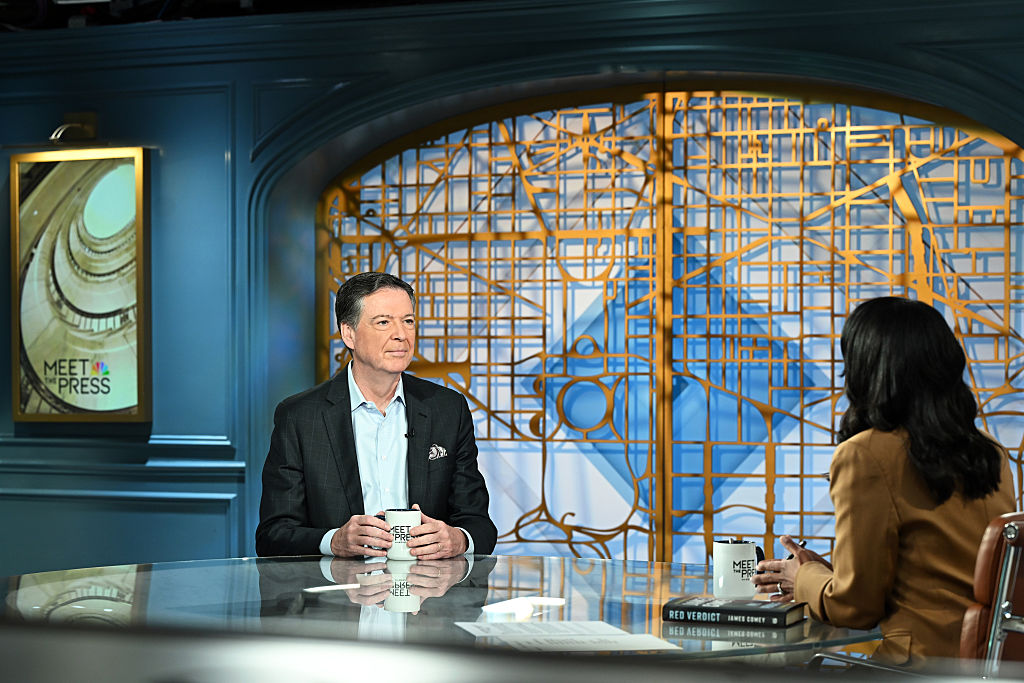
Justice Department Files More Charges Against James Comey

Former FBI Director James Comey appears on NBC's "Meet the Press" in Washington, D.C., on May 17, 2026. —Shannon Finney—NBC/Getty Images

The Justice Department has brought charges against former FBI Director James Comey for the third time in 13 months, this time related to alleged leaks of national security information to the media.

According to court documents filed earlier this month and unsealed on Monday, federal prosecutors are accusing Comey of “willfully” mishandling information related to national defense in October 2016, resulting in the information appearing in media reports.

“Having reason to believe such information could be used to injure the United States and to the advantage of any foreign nation,” the court document said Comey “knowingly and willfully communicated, delivered, transmitted, and caused that information to be communicated, delivered, and transmitted to a person not entitled to receive it.”

The inquiry is the latest attempt to prosecute Comey, who is a prominent critic of President Donald Trump. Trump fired Comey in 2017 while Comey was leading the FBI investigation into potential ties between Trump’s 2016 presidential campaign and Russia. The first Trump Administration cited a memo related to Comey’s handling of the FBI investigation into Democratic presidential candidate Hillary Clinton’s emails. Since then, Trump has publicly called for criminal investigations into Comey and celebrated the indictments he’s faced.

In a video posted on Monday, Comey said the latest investigation was an attempt to politically persecute him.

“They’re back, again,” Comey said. “It would almost be funny if it weren’t such an appalling abuse of the Department of Justice, one that we cannot become numb to.”

“I’m still innocent. I’m still not afraid of these people,” he added.

Comey’s attorneys argued in court filings that the alleged leaks had already been investigated twice during the first Trump Administration in 2017 and 2019, and neither had resulted in charges.

The Justice Department has pursued a number of investigations and indictments against prominent Democrats in recent weeks, appearing to break with the unofficial “unwritten 60-day rule” of avoiding filing new charges or taking public investigatory action that could influence an approaching election. Earlier this month, the Department secured a search warrant for the home of Rep. Ilhan Omar (D, Minn.), who called the effort “the latest escalation in [Trump’s] campaign of political intimidation.” The DOJ also secured an indictment against Virginia Senate Leader Louise Lucas, who led the Democrats’ counter-effort against Republican gerrymandering, on drug trafficking and money laundering charges. Lucas denied the allegations and said she would fight back against an attempt by “people in power … to silence those who stand up to them.”

What to know about the new Comey charges

According to court documents, prosecutors allege that around Oct. 4 and 5, 2016, Comey directed FBI staff to speak with the New York Times “about specific accuracy concerns” related to “misinformation which had appeared” in a Reuters report about Yahoo’s cooperation with U.S. surveillance.

In doing so, prosecutors contend, Comey “illegally transferred classified information.”

The Times article had described how Yahoo had adapted its existing email filtering system, used to detect spam, malware, and child sexual abuse material, to comply with a secret surveillance order to search messages for a computer “signature” associated with communications by a foreign, state-sponsored terrorist organization. The article said the Justice Department had obtained the order from a Foreign Intelligence Surveillance Court judge in 2015 and that Yahoo was barred from disclosing it.

A spokesperson for the Times said the newspaper “does not comment on the sourcing behind our reporting, but we know from experience that prosecutions like this one are designed to discourage sources from providing journalists with the kind of valuable and illuminating information that the public needs to know.”

Comey’s lawyers argued in a motion to dismiss the case that the Trump Administration did not file an indictment within the 10-year statute of limitations. On Oct. 5, prosecutors filed the charges in a criminal information under seal in Federal District Court in Washington, which does not require approval from a grand jury or a judicial finding of probable cause, but have not obtained an indictment.

Previous charges against Comey

The Justice Department has brought multiple charges against Comey during Trump’s second term. It secured an indictment against him in September 2025 over allegations that he made false statements to Congress in 2020 related to alleged leaks to the media. The charges were thrown out by a federal judge in November, concluding that the prosecutor, Lindsey Halligan, had been unlawfully appointed.

Comey was also indicted in April over allegedly making a threat against Trump by posting on Instagram a photograph of seashells on a North Carolina beach arranged to spell “86 47.” Prosecutors argued that the arrangement was intended as a threat “to kill” Trump, who is the 47th President. Comey, who deleted the post after initial backlash, said he did not intend the photograph to be a threat against Trump, and that he understood the numbers to be a “political message.” The numbers “86” have commonly been used to mean “to throw out” or “to refuse service to,” according to Merriam-Webster, but have also been used in some instances to mean “to kill.”

That case is set to go to trial in North Carolina in February 2027.

Earlier on Monday, a federal judge in New York ruled that the Justice Department had unlawfully fired Comey’s daughter, Maurene Comey, in July 2025. The judge ordered her retroactive reinstatement with back pay, concluding that the Trump Administration had violated the Constitution and federal law by claiming the President had executive authority to fire civil servants.

  •  

Flávio Bolsonaro Flees to Miami After Brazil Election Loss, Defying Court Order

Flavio Bolsonaro arrives at Opa-Locka Executive Airport near Miami on Oct. 28, 2026, despite a court order barring the defeated Brazilian presidential candidate from leaving Brazil. —Ricardo Arduengo—AFP/Getty Images

Brazilian Senator Flávio Bolsonaro arrived in Miami on Wednesday after fleeing the country in defiance of a court order to surrender his passports amid a money laundering investigation, days after losing the presidential election to incumbent Luiz Inácio Lula da Silva.

Bolsonaro traveled from northern Argentina to the Ecuadorian city of Guayaquil, the Argentine government said. From there, Bolsonaro, his wife and two daughters flew to Miami, where they were recorded exiting a private jet at Miami-Opa Locka ​Executive Airport. 

President Donald Trump told reporters he “would approve” of Bolsonaro coming to the U.S. “I think they’re fine people,” Trump said. “The election ‌was very strange, and I thought ⁠it was terrible. It’s gotten bad reviews. You look at what happened to their market.”

On Tuesday, U.S. officials told multiple media outlets that the State Department would grant Bolsonaro and his family entry visas amid reports he had left Brazil to head to the U.S.

A Brazilian Supreme Court justice had ordered federal police to open a separate probe into possible illegal foreign financing of Bolsonaro’s presidential campaign, including alleged ties to U.S. Vice President J.D. Vance’s donor network. Lula’s government had previously accused the Trump Administration of interfering in Brazil’s election, an allegation the U.S. denies. TIME has reached out to Vance’s office for comment.

Bolsonaro initially said he would comply with Brazilian Supreme Court Justice Alexandre de Moraes’s order to surrender his passports and refrain from traveling. The order concerned an investigation into Bolsonaro’s alleged links to a Brazilian lawyer accused of laundering more than $1 billion through a fraud scheme.

The confidential order cited Bolsonaro’s flight risk and “significant financial resources.” The son of convicted former President Jair Bolsonaro, Flávio Bolsonaro will lose certain parliamentary protections from prosecution when his term as senator for Rio de Janeiro ends on Jan. 31.

“I have never thought ‌about leaving ⁠the country,” Bolsonaro said in a social media video Monday. “I will hand over my passports and defend myself against this travesty, which is a clear attempt to intimidate me.”

But Bolsonaro did not comply with the order to hand over his passport by the end of the court’s 24-hour deadline on Tuesday morning. Argentina’s National Directorate of Migrations said Bolsonaro and his family entered the country “with valid travel documentation and without any legal impediment” on Tuesday night before boarding a private flight to Guayaquil, Ecuador.

Lula called Bolsonaro’s flight from Brazil “a shameful act.”

“Those who have nothing to hide have nothing to fear,” Lula added, recalling his own arrest in 2018 on charges of passive corruption and money laundering. His convictions that were later overturned.

Bolsonaro is also being investigated over alleged links to a banker connected to a corruption scheme. He is alleged to have raised millions of dollars from the banker to fund a biopic about his father.

Bolsonaro's departure could inflame political tensions amid claims from Brazil’s right wing and abroad that the election was unfair. Bolsonaro initially said he would seek to annul the vote, although his Liberal Party later conceded defeat. In the video posted Monday, he said he would seek to have Lula’s ticket disqualified, citing alleged disinformation and “vote buying.” He also said he would organize congressional opposition to Lula’s government.

“I wasn’t the one who lost,” he said. “The system won.”

Trump, an ally of the Bolsonaros, said Monday that the election appeared “rigged.” He did not provide evidence for the claim.

“I didn’t take ​sides, but it looked like another rigged election,” Trump said.

“I just think it had a very bad look, the election, the ​way it was tabulated,” he added. “The extension given was very strange.”

Brazil’s Supreme Court had granted a two-hour voting extension on Sunday, citing transport issues raised by Lula’s campaign. Bolsonaro’s campaign had separately requested a two-hour extension due to heavy rainfall in certain areas.

Lula won the election by more than 4 million votes. Roughly 0.03% of all votes—or fewer than 35,000—were recorded in the extra two hours. Vice President Geraldo Alckmin told Rede Vanguarda that Trump’s claims were “completely wrong.”

Money laundering inquiry

The inquiry into Bolsonaro stems from a federal probe into unauthorized deductions from pension payments made by Brazil’s social security agency. The broader operation, launched in April 2025, investigated associations suspected of collecting unauthorized membership fees from pension benefits.

Evidence from the probe led investigators to examine suspected money laundering involving betting platforms and financial transactions linked to Brazilian lawyer Willer Tomaz, who denies wrongdoing.

Police reportedly discovered that Bolsonaro had “master user” access to bank accounts belonging to Alcazar Holdings, a company owned by Tomaz. In May 2025, a person working for Tomaz asked the bank to remove Bolsonaro’s access to the accounts, local media outlets BPMoney and Times Brasil reported earlier this month, citing police findings. Both Bolsonaro and Tomaz deny having a joint account or financial ties.

De Moraes’s order also barred Bolsonaro from contacting Tomaz. Bolsonaro said on Monday that the ruling came after his brother, Eduardo Bolsonaro, had said on a podcast last week that he should leave the country if he lost the election.

AFP reported that Bolsonaro’s Brazilian and diplomatic passports were canceled, but that he has held Italian nationality since 2023. His departure appeared to surprise his political allies, including his campaign manager Rogerio Marinho who told reporters Tuesday that he had no information about Bolsonaro’s whereabouts.

“I received a text message from him this morning, where he said he would let some time pass today and then would talk with us, and that was it,” he said. “That was the only communication we had.”

A critic of Brazil’s justice system

Bolsonaro has repeatedly criticized Brazil’s judiciary and described the investigations into him as politically motivated. The country’s Supreme Court generally assigns cases through a lottery system. The money laundering investigation was assigned to de Moraes on Oct. 16.

De Moraes was the lead justice in last year’s trial of Jair Bolsonaro, who refused to accept his election loss in 2022. A five-member panel of Supreme Court justices convicted Jair Bolsonaro, by a 4-1 vote, of attempting to overturn his election defeat and sentenced him to 27 years and three months in prison. He is serving the sentence under house arrest due to poor health. Prosecutors alleged that the plot included plans to assassinate Lula. Jair Bolsonaro denies wrongdoing.

In June, a Supreme Court panel unanimously convicted Eduardo Bolsonaro of coercion in judicial proceedings. Prosecutors alleged he had attempted to lobby the Trump Administration to use tariffs and sanctions, including on de Moraes, to pressure judicial authorities to drop the prosecution of Jair Bolsonaro. Eduardo Bolsonaro was sentenced to four years and two months in prison, but remains in Texas, where has lived since 2025.

De Moraes has also faced scrutiny over reported ties to Daniel Vorcaro, the former owner of Banco Master, whose financing of a film about Jair Bolsonaro is the subject of the separate inquiry into Flávio Bolsonaro. The New York Times reported, citing a police dossier, that Vorcaro sent text messages to de Moraes asking for help to avoid arrest. In messages to other associates, Vorcaro reportedly mentioned paying millions to the law firm of de Moraes’s wife. De Moraes has denied wrongdoing and said he never acted to favor Vorcaro or Banco Master.

De Moraes also clashed with tech billionaire Elon Musk in 2024 over court orders to block accounts on Musk’s social media platform X. De Moraes temporarily suspended the platform in Brazil after it failed to comply with judicial requirements, which Musk had described as “the most draconian demands of any country on Earth.”

  •  

As Israelis Await Final Election Results, Netanyahu and Rival Face Tough Path to Power

Israel's Prime Minister Benjamin Netanyahu casts his ballot, alongside his wife Sara, at a polling station in Jerusalem on Oct. 27, 2026. —Yonatan Sindel—AP

Israel appears to be on the brink of a political deadlock, with neither Prime Minister Benjamin Netanyahu nor his main rival, former Israel Defense Forces chief of staff Gadi Eisenkot, projected to gain a parliamentary majority.

While partial results show that Netanyahu's Likud party has edged ahead slightly, if the embattled leader is to forge a path for another term, he will likely need to secure a coalition. Such alliances can take weeks or months to form, meaning the future leadership of Israel’s parliament, the Knesset, remains unclear.

As of Wednesday evening in Israel, authorities had counted more than 88% of ballots cast at polling stations across the country. Another set of ballots logged at special polling sites, including military bases, have yet to be counted. Authorities estimate that somewhere between 430,000 and 480,000 votes were cast in this way. As such, it could still take another day or two for the final election results to be released.

Israel's three leading broadcasters have projected that Netanyahu's bloc of right-wing parties is on course to win 53 seats in parliament, with the opposition ‌bloc of Eisenkot looking at 48. Both are short of the 61 seats required for a majority. Parties representing Arab Israelis are projected to secure 19 seats.

Once all the votes have been tallied, Netanyahu looks set to remain as caretaker while President Isaac Herzog holds consultations with all the political factions to determine the formation of the next government—a process that could take weeks.

"Next week, I will invite the representatives of the factions to consultations ahead of assigning the mandate to form the next government," Herzog said on Wednesday. "With the publication of the results, I ask one important thing from everyone who arrives—arrive with an open mind."

Both Netanyahu and Eisenkot have stated their own intentions to form the next coalition.

In a defiant speech made after the polls closed, Netanyahu called for a "strong, right-wing" government."

Eisenkot, in a social media update late Wednesday, said: "Long workdays still await us, but we are focused on the heavy task entrusted to us—bringing change to Israel and establishing a Zionist mobilization government."

While results remain inconclusive, Netanyahu’s longstanding ally, U.S. President Donald Trump, who gave a last-minute endorsement to the longest-serving Israeli premier, already appeared to take credit for Netanyahu’s election performance.

“You know, it's pretty close, which was very well,” Trump said when asked about it by reporters early Wednesday. “Because I think when the endorsement went out, it helped him a lot, but I actually heard he did pretty well. It might be winning or tie. The tie is sort of considered a win in that case because it’s a big chess match.”

As the vote count continues, here’s what to know about the pivotal election—and what comes next.

How Israel's election day unfolded

Israelis flocked to polling stations on Tuesday to decide Netanyahu’s political fate. The election was widely seen as a referendum on Netanyahu’s leadership and Israelis’ willingness to change course amid uncertainty.

It was the first election in the country since the Oct. 7, 2023 terrorist attacks by Palestinian militant group Hamas and the subsequent Israeli war in the Gaza Strip. Since then, Israel under Netanyahu has pursued an aggressive military campaign across the Middle East—going to war with Iran, backing settler attacks and displacement in the West Bank, and carrying out strikes against militant groups in Lebanon and Yemen

From 7 a.m. to 10 p.m. local time on Tuesday (1 a.m. to 4 p.m. EDT), Israelis were able to cast votes for representatives in the Knesset. Numbers from Israel's Central Elections ​Committee reflected a strong turnout, with 77.7% of eligible voters reported to have cast their ballots by 10 p.m., local time—the highest turnout logged since 1999.

Netanyahu was joined by his wife Sara as he cast his own ballot at a polling station in a Jerusalem school. “This is a very moving and fateful moment. My wife and I are truly overwhelmed,” Netanyahu told reporters after voting. “We know what is at stake, and since I am not allowed to say things explicitly, I will say: Vote correctly.”

Not long after, Netanyahu told his supporters that "buses are heading to the polling stations and huge lines are being reported in the Arab settlements." Complaining that "the right-wing strongholds are not waking up," he again urged people to go out and vote.

Netanyahu’s Likud party said in a statement that it had submitted a request to the Central Elections Committee to extend voting hours past 10 p.m. The committee later announced it would not be extending voting hours past the scheduled closing time.

Read More: Israel's Choice

Who is in the running?

Two main political blocs are contending to form Israel’s next government. The first is the pro-Netanyahu coalition led by Netanyahu’s Likud party. The coalition includes far-right and ultra-Orthodox parties, such as Otzma Yehudit (Jewish Power) led by national security minister Itamar Ben-Gvir and Religious Zionism-Zehut led by finance minister Bezalel Smotrich. Their ultranationalist policies have found an audience in younger right-wing Israelis.

On the other side are the Jewish-led opposition movements—with Eisenkot and the centrist Yashar (Straight) party at the forefront. Eisenkot, who entered politics in 2022, joined Netanyahu’s emergency war cabinet after the Oct. 7 attack on Israel. But after having lost a son in combat in Israel’s wars, Eisenkot left his post in 2024. Two of his nephews also died fighting in Gaza, a prominent campaign talking point.

The opposition also includes a joint ticket led by former Prime Minister Naftali Bennett and Knesset opposition leader Yair Lapid, the secular nationalist party Yisrael Beiteinu (Israel Our Home) led by former finance minister Avigdor Lieberman, and the Democrats led by former IDF deputy chief of staff Yair Golan.

The Democrats party on Tuesday said Golan had been “approached in a threatening manner” by a man who was found to be carrying a knife. The lawmaker was attending a voting-day mobilization tour in Tel Aviv's HaMesila Park at the time of the incident.

"Golan’s security guards blocked the man, and as they moved toward him, a large knife slipped from beneath his clothing and fell to the ground," the party said in a statement shared with the Guardian. "Police were called to the scene and arrested the suspect." Golan, in his own statement, vowed that "incitement and violence will not deter us" and encouraged people to go out and vote.

Meanwhile, some polls had suggested that Eisenkot’s Yashar party may garner slightly more support than Netanyahu’s Likud, but they also projected that neither the Prime Minister’s right-wing bloc nor the opposition were likely to win the 61 Knesset seats needed to form a government.

Including Arab parties such as United Arab List (Ra’am) and the Joint List, or fringe parties, could be necessary to form a government. Both pro-Netanyahu and anti-Netanyahu coalitions have so far ruled out teaming up with the Arab-led parties. Arab citizens of Israel make up about 20% of the population, though they receive fewer government services and endure higher poverty and unemployment rates. Discrimination and disappointment have historically depressed Arab-Israeli voter turnout. However, on Tuesday, there appeared to be strong turnout in some of Israel’s largest Arab-majority towns.

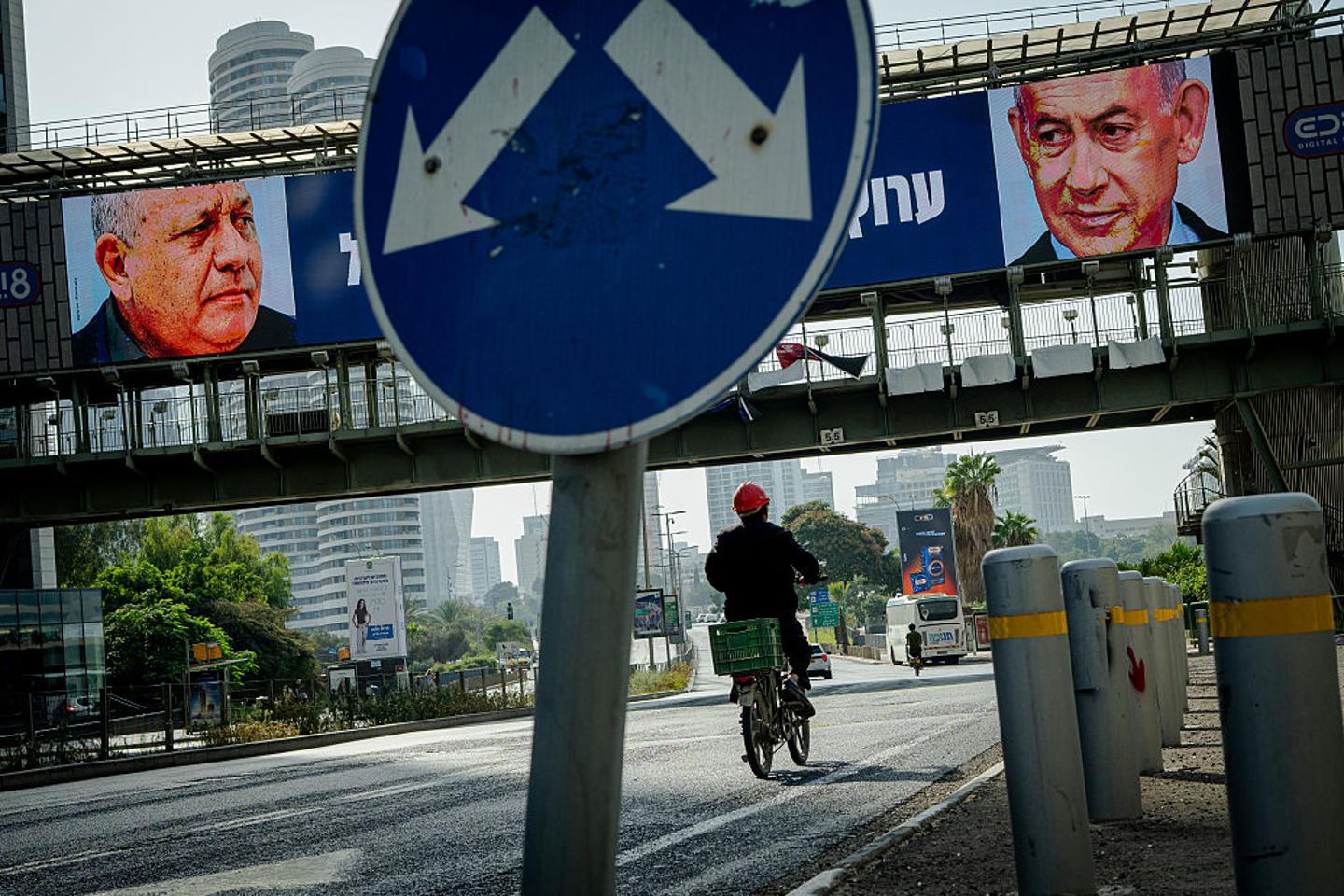
A cyclist rides beneath a pedestrian bridge displaying electronic election billboards showing former IDF chief of staff Gadi Eisenkot (L) and Prime Minister Benjamin Netanyahu (R) in Tel Aviv, Israel, on Oct. 23, 2026. —Erik Marmor—picture alliance/Getty Images

Netanyahu touts Trump endorsement

Netanyahu has brought attention to the support he received from Trump, who only announced his endorsement days before the election as conflict in the Middle East has tested their friendship.

In a late-night TV appearance on Oct. 25, Netanyahu boasted of Trump’s endorsement and said that Trump was willing to take action “that would finally, finally, remove the Iranian threat” so long as Netanyahu stayed in power. Netanyahu added that he has already instructed Israel’s national intelligence agency Mossad as well as the IDF to “bring down” the Iranian regime. Trump remains very popular in Israel.

By contrast, U.S. Vice President J.D. Vance declined to endorse Netanyahu for re-election, just a day after Trump put his “complete and total” support behind the Israeli leader.

“The President has the most effective endorsement in American, or international, political history,” said Vance, when asked in an interview if he would also be extending an endorsement of his own. “I endorse American candidates and that’s where I'm focused on, is the midterms, so I'm not getting involved in the Israeli elections.”

When pushed for an answer, Vance added: “I'm not anti-endorsing [Netanyahu], I'm not pro-endorsing him.”

A high-stakes election for Netanyahu

At stake for Netanyahu could be more than his continued leadership. The premier faces an international arrest warrant for alleged crimes related to the Israeli military campaign in Gaza. And even domestically, critics have demanded an inquiry into Netanyahu’s decision-making around Oct. 7. The attack, which resulted in over 1,200 people in Israel killed and around 250 hostages taken, is considered by many to be indicative of a major security failure.

The Gaza health ministry reports that since Oct. 7, 2023, more than 74,000 individuals have been killed. In the absence of independent monitoring on the ground, Gaza’s health ministry is the primary source for casualty data relied upon by humanitarian groups, journalists, and international bodies. Its figures do not differentiate between civilians and combatants and cannot be independently verified by TIME.

Another issue driving the election is public fury over ultra-Orthodox communities’ exemption from military conscription for men engaged in religious studies. Despite a shortage of soldiers, less than 10% of eligible ultra-Orthodox men enlist, amid demands from Netanyahu’s allies to exempt them. Eisenkot, Netanyahu’s main rival, has promised to end the de facto exemptions. 

Netanyahu’s repeated attempts to reform the judiciary have also factored into this election, with critics slamming his undermining of democratic institutions and connecting it to his legal interests. Netanyahu is in the middle of a yearslong corruption trial, which he and his allies—including Trump—have claimed is politically motivated. He sought, but didn’t receive, a presidential pardon from Herzog.

When will we know the results?

About 7.3 million Israeli citizens were eligible to vote on Tuesday. The election fills the Knesset’s 120 seats through proportional representation—which means parties, not personalities, are on these voters’ ballots. 

After polling stations closed at 10 p.m. (4 p.m. EDT), local media broadcasted initial exit polls. The final vote tally is expected by Oct. 30, with official results published on Nov. 4. 

But getting a clear picture of the Israeli government is likely to take longer.

No single party has ever claimed 61 seats to form a government, meaning Israel has always been governed by coalitions. What those coalitions may look like will depend on the election outcomes for smaller parties, which each need 3.25% of the votes to secure a seat in the Knesset.

Once the election winners are determined, President Herzog ⁠will refer to party leaders to choose a preferred Prime Minister and will ask the strongest candidate to form a government within 42 days. If a coalition cannot be formed after multiple attempts, the current Likud-led coalition government will continue to serve as caretaker before another round of elections is held in the coming months.

  •  

Evacuees Arrive to Safety From Besieged Ukrainian City of Oleshky

A few days of truce allowed the removal of remaining civilians from Oleshky, which continual Russian attacks have made all but uninhabitable.

© David Guttenfelder/The New York Times

  •  

Major Israeli TV networks revise polling projections – as it happened

This blog had now closed – our live Israel election results coverage continues here

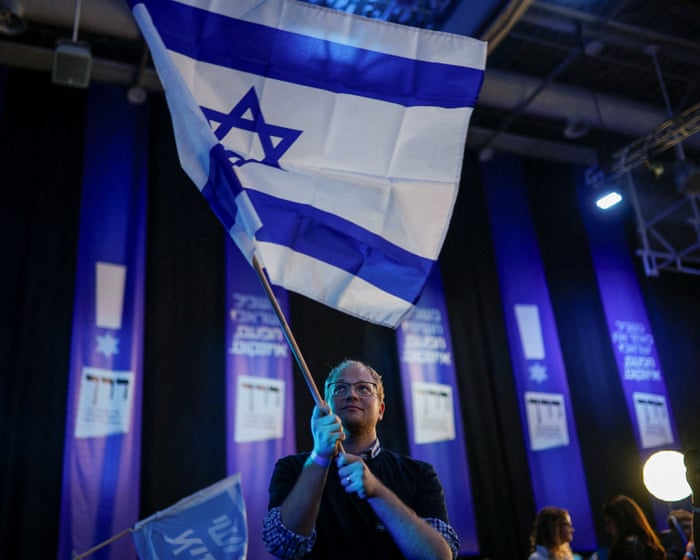
Across Israel, voting is now under way. Here are some of the latest images being sent to us over the newswires:

Tens of thousands of Israelis living abroad have flown in for the elections, according to Aid Coalition, a US-based nonprofit focused on strengthening Israel’s democracy. Israeli law generally requires citizens to vote in person in the country, with narrow exceptions for diplomats and certain official emissaries abroad.

Continue reading...

© Photograph: Shir Torem/Reuters

© Photograph: Shir Torem/Reuters

© Photograph: Shir Torem/Reuters

  •  

The Rise of Electrostates Could Redraw The Global Economy

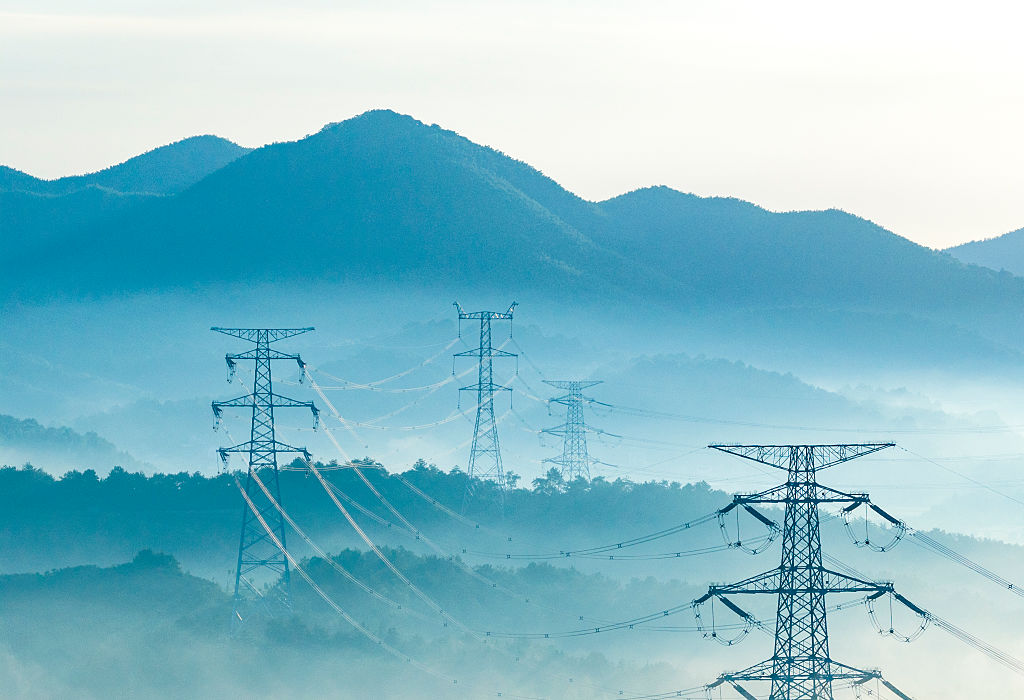
Ultra-high voltage power lines on Sept. 6, 2026 in Wuhu, Anhui Province of China. —Xing Chaoming/VCG—Getty Images

When shipping through the Strait of Hormuz ground to a halt in March, energy importers relearned an old lesson: a country that buys its energy as fuel, cargo by cargo, also imports every price shock. The consequences of how governments respond to this truth will soon reverberate beyond energy markets. 

Decisions made today to secure more reliable energy may help determine where factories are built, which countries manufacture the technologies powering the global economy, and how vulnerable nations remain to the next disruption in oil and gas supplies. These decisions will define which countries emerge as electrostates, with the power to shape and control future economies.

New analysis by We Mean Business Coalition published today looking at electrification across 16 countries reveals how unevenly this transformation is progressing. The United States is doubling down on domestic oil and gas production, while China is rapidly electrifying its economy and consolidating its lead in electric technology manufacturing. Others are now moving in China's direction. France plans to lift electricity's share of final energy from 27% to 38% by 2035, Canada to double its electricity supply by 2050, and Europe wants to become the world's first “electro-continent.”

Rather than simply ranking countries, the Electrification Competitiveness Index maps two dimensions: the deployment and market uptake of electric technologies, and the policies and conditions supporting further progress.

Across the 16 economies, the median score for enabling conditions is 67%, compared with 45% for deployment and market conditions. In other words, in most countries, policy is running ahead of the market. Part of that gap is a time lag, but it also shows the distance between preparing for electrification and achieving it at scale. Successful electrification requires not simply more policies, but better-aligned policies that reinforce one another and give businesses the confidence to invest.

China scores highest on deployment, with extensive electric vehicle adoption and an industrial base producing much of the equipment the world needs to electrify. It already manufactures more than 80% of global battery cells. But its transition extends well beyond transport: electricity's share of China’s final energy consumption has doubled since 2005, with electrification spreading across industry, buildings, and transport. Although much of its electricity (54%) is still generated from coal, the plan is to replace that with clean power. What’s more, given China’s manufacturing dominance, as other countries electrify, they must make a choice: where to compete in electric technology manufacturing and where they might gain more from cheaper imported equipment.

Europe is one region trying to revive industrial competitiveness while reducing its exposure to imported fossil fuels, a vulnerability the Hormuz crisis has brought sharply back into focus. Electrification is central to both ambitions. Brussels wants to double electricity's share of final energy to 46% by 2040, yet that share has been stuck at around 23% for a decade, and the economics of switching remain difficult for many businesses. In Britain, industrial electricity costs over five times as much as gas per unit of energy, while factories in Germany and the U.K. face significant grid-connection constraints. France and Spain are better positioned in several respects, with more favourable electricity prices and stronger deployment, but across Europe the challenge is increasingly one of turning established policy frameworks into commercially viable investment.

Businesses deciding where to build factories, expand production, or replace equipment must also weigh electricity costs and grid access alongside skills, suppliers, and markets. If electrification remains difficult or expensive, businesses may postpone modernisation, continue investing in fossil-fuel equipment or direct new investment towards locations offering better conditions. Over time, this could reshape Europe's industrial geography, influencing where manufacturing capacity, jobs, and technological expertise develop.

In the U.S., existing deployment provides a foundation for further electrification, but policy reversals and infrastructure constraints raise questions about momentum. More than two terawatts of generation and storage are waiting in interconnection queues. Washington's focus on expanding fossil-fuel production risks leaving American manufacturers competing in a global market whose growth is increasingly driven by demand elsewhere.

For developing economies, electrification offers a different prospect: the opportunity to build modern energy and transport systems without first replicating the fossil-fuel infrastructure that wealthier countries are now spending heavily to replace. Ethiopia is already showing what is possible, with rapid electric vehicle adoption despite electricity reaching only around 60% of its population. Indonesia, the Philippines, and South Africa face greater barriers, including limited grid investment and electricity systems still dominated by fossil fuels.

Seizing those opportunities will depend on access to finance, reliable grids, and policies suited to each country's circumstances. Without them, emerging economies risk investing scarce capital in infrastructure that may become increasingly expensive to operate or eventually replace.

As this global shift evolves, economies powered increasingly by domestically generated electricity become less exposed to global fuel markets, but more dependent on access to batteries, electrical equipment, minerals, and the technologies needed to build and maintain their infrastructure. The concentration of manufacturing capacity in a handful of countries creates vulnerabilities of its own. Yet a dependency on equipment you buy once is very different from a dependency on fuel you buy every month. When a shipping lane closes, a fuel-importing economy feels it within days. If solar panel exports stopped tomorrow, the panels already installed would keep generating for decades.

Electrified economies also need far less energy in the first place. Burning fuel in engines, boilers, and power stations wastes around two-thirds of the energy that goes in, mostly as heat. Electric motors and heat pumps do the same work with a fraction of the input. So electrification does not simply swap one import for another; it can shrink the energy bill. The European Commission estimates that meeting its 2040 target could cut E.U. spending on fossil fuels by up to €260 billion a year.

This presents governments with a different industrial and energy-security challenge: not simply how quickly they can replace fossil fuels, but whether they can build the electricity systems, industrial capabilities, and trading relationships that make the transition economically resilient. Climate policy and industrial strategy are becoming impossible to separate, as the technologies needed to cut emissions also become central to economic competitiveness.

When governments meet in Antalya, Turkey, for COP31 in November, the U.N. climate conference president will push for a global goal to raise electricity's share of final energy from around 20% today to 35% by 2035. That shift deserves greater attention than it is getting. The transition from fossil fuels to electricity will not end competition over energy resources and technologies. It will change what countries compete for, what they need to import, and where economic power is concentrated. The electrostates of 2035 are being built now.

  •  
❌