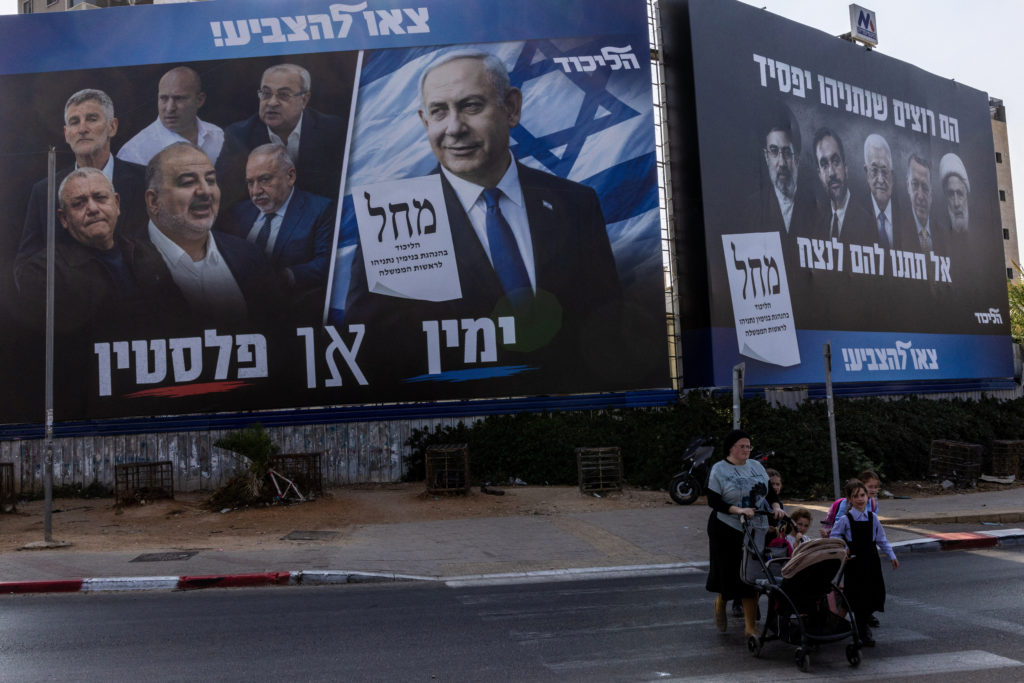
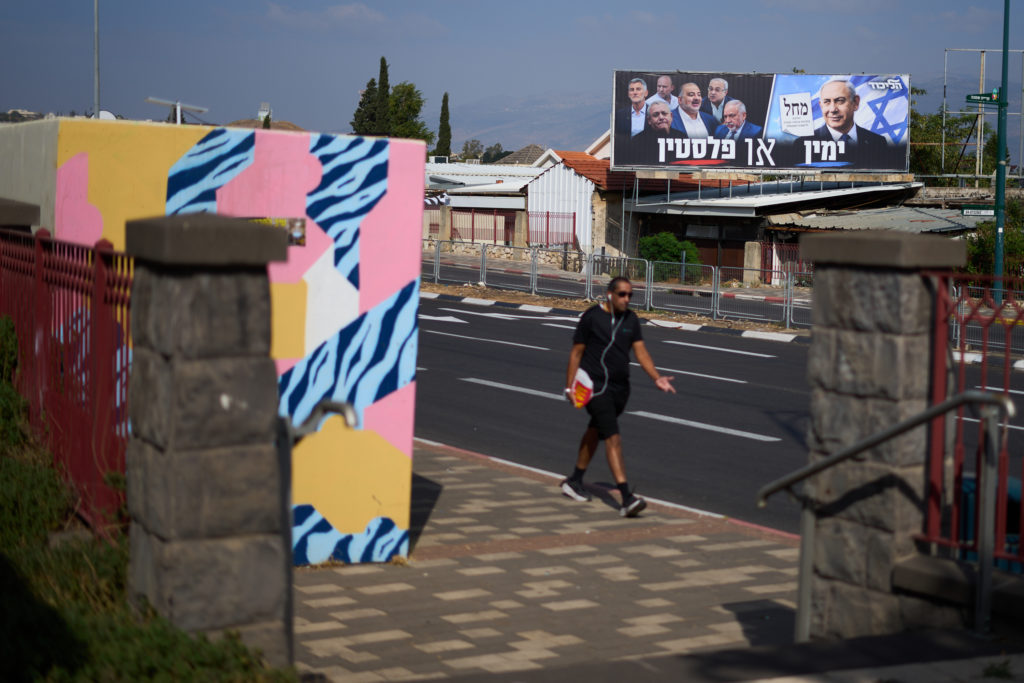
Israelis are deeply divided over Netanyahu's leadership and moral character, but they largely support settlement expansion and are opposed to a Palestinian state.
Israelis are in the final hours of an intense election season amid reports of a clash between Prime Minister Benjamin Netanyahu and the Israeli military over Iran.
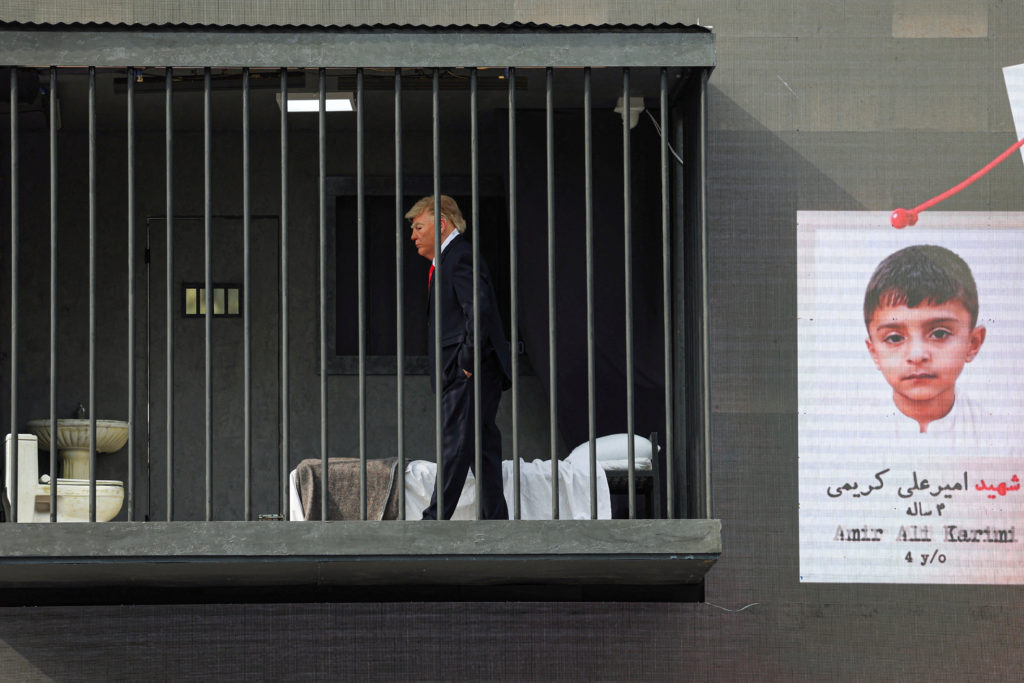
Saudi Arabia, Turkey and Pakistan made a rare joint visit to Tehran amid reports that the U.S. and Israel were drawing up plans to renew their attacks on Iran.
Mohsen Rezaei, the head of Iran’s Supreme National Security Council, in July. He will meet with a delegation from countries in the Mecca Pact to discuss conflict in the region, according to an Iranian official.
Supporters and opponents of Prime Minister Benjamin Netanyahu have expressed intense anxieties about isolation abroad, security at home and the future of Israel’s identity.
Benjamin Netanyahu, Israel’s prime minister, speaking to supporters in the food court of a shopping mall in Holon, Israel, during a campaign visit this month.
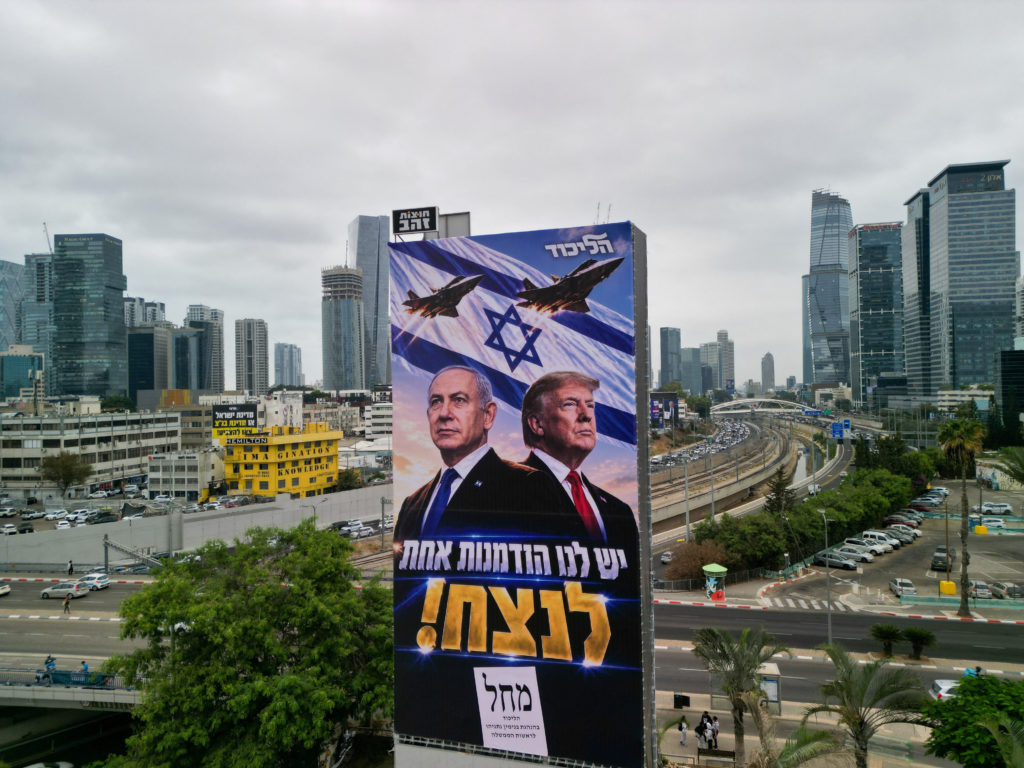
Israeli Prime Minister Benjamin Netanyahu, who faces a close vote Tuesday, says Iran's leadership must be eliminated. U.S. President Donald Trump vows to "finish the job" in Iran eight months after the war began, as a third aircraft carrier and thousands of troops make their way to the region.
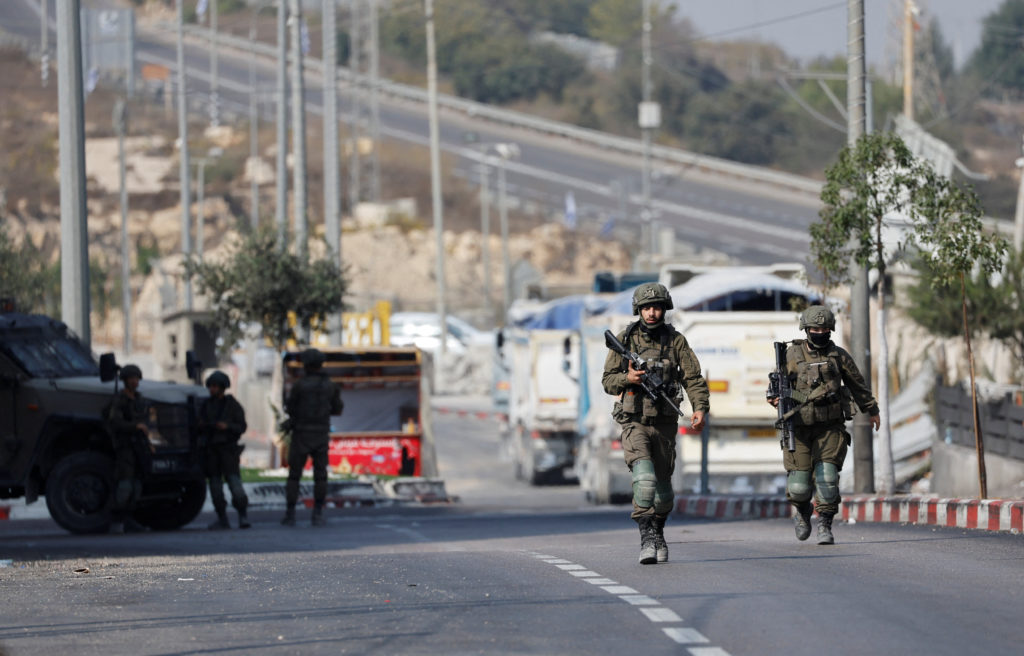
The operation, focused on the city of Hebron, the site of Friday's attack, came as Israel enters the final days before a tense election, which is largely seen as a referendum on current Prime Minister Benjamin Netanyahu's leadership and security policies during the past three years of war.
Israelis head to the polls on Tuesday for an election that will determine the country’s next prime minister. But it can take weeks, months or longer to form a new government.
With new intelligence and the possibility of all sides seeking pretexts for action, the war in Iran is entering a dangerous phase ahead of elections in the United States and Israel.
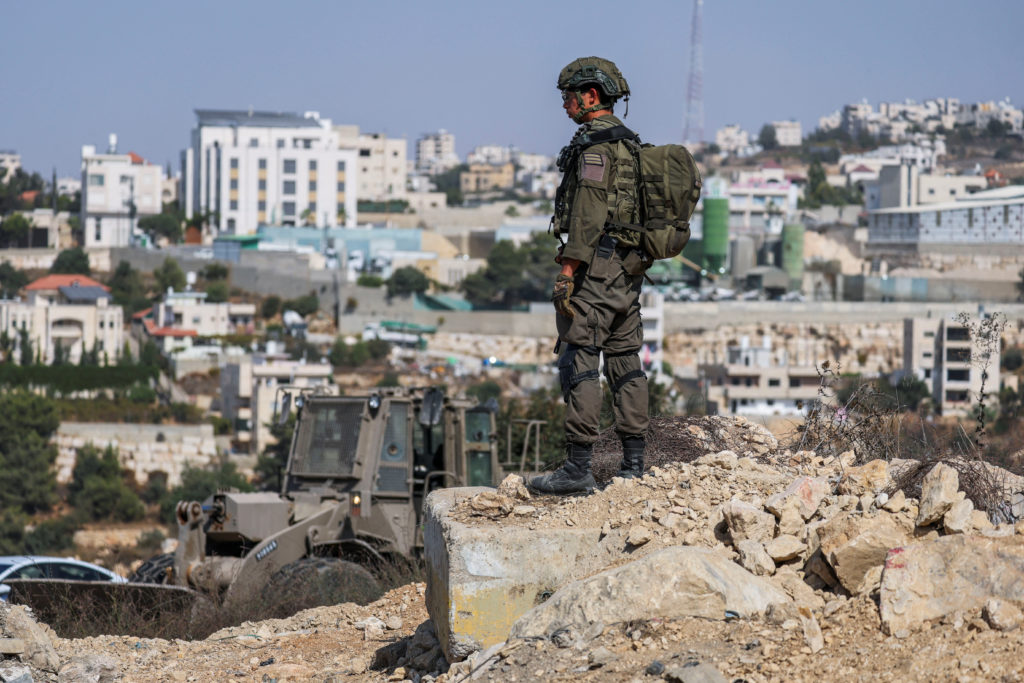
Hundreds of Palestinian families fled their homes as the Israeli military raided Hebron. The operation came a day after Palestinian gunmen killed two soldiers.
The Oct. 7 attacks marred Prime Minister Benjamin Netanyahu’s image as Mr. Security. Ahead of elections, he’s trying to sell Israelis on the new, hawkish version of himself.
Kiryat Shmona, Israel's northernmost city, has long been a bastion of support for Prime Minister Benjamin Netanyahu's Likud party. But that loyalty is no longer ironclad.
Two Israeli soldiers were killed in an attack in the occupied West Bank on Friday morning that also left two suspected gunmen dead, the military said, violence that is likely to heighten political tensions and security concerns ahead of Israel's parliamentary election next week.
Pro-Palestinian Jewish American demonstrators rally outside AIPAC’s the Manhattan headquarters in February 2024. | Selcuk Acar/Anadolu via Getty Images
This story appeared in Today, Explained, a daily newsletter that helps you understand the most compelling news and stories of the day. Subscribe here.
Israel felt inescapable in the midterm primaries, especially for Democrats, where centrists and progressives clashed — memorably! — over military aid, Gaza, and (of course) AIPAC.
But with the Election Day almost upon us, the subject seems less prominent. When I Googled “Israel US elections” this morning, all the top results concerned next week’s Israeli parliamentary elections.
In less than two weeks, however, Americans will also head to the polls. They’ll decide which party controls Congress, along with a slew of state and local offices. The stakes are arguably unusually high: Voters will choose whether to check the power of a president who has bulldozed over historical norms and limits.
As we count down to that momentous and potentially messy day, I’m partnering with my colleague Astead Herndon and Vox’s The Midterms, Actually team for weekly editions on the biggest issues shaping the midterms. We’re breaking down one issue each week and suggesting further reading and races to watch in November.
You know the first part of this story already, because we’ve discusseditquitea lot: Americans’ views of Israel have nosedived over the past 18 months.
That shift helped shape the Democratic primaries and will likely figure prominently in the coming presidential contest. But how much Israel matters in a general midterm election, to people outside the political left…well, November will really test that.
Voters rarely rank Israel policy among their top priorities. In a poll that the Associated Press and NORC Center for Public Affairs Research conducted earlier this month, about 80 percent of registered voters said Congress should highly prioritize the cost of living during its next term, and roughly 70 percent said the same about ending the Iran war. By comparison, less than a third of voters said they prioritized cutting off aid to Israel.
There’s another way that Israel factors into US elections, of course — and that’s in fundraising. The American Israel Public Affairs Committee (AIPAC) has become one of the biggest spenders in US elections and a repeat flash point in this year’s Democratic primaries.
But in the general election, even AIPAC has been overshadowed by the GOP’s big-business donors, many of them in tech, who have given Republicans a historic spending advantage in this year’s contests. On Wednesday, the lobbying group actually announced it would no longer endorse political candidates or make direct campaign contributions.
In either case, whatever happens in the midterms won’t likely transform US policy toward Israel. President Donald Trump is still in charge of foreign policy, after all, and even if Democrats take back the House, they’ll have little ability to reverse his agenda.
But a Democratic majority would gain “new congressional tools to act on Israel-Palestine issues,” Hady Amr, the former US Special Representative for Palestinian Affairs, wrote in a new analysis for Chatham House. Those tools aren’t flashy (think: hearings, funding restrictions, and reporting requirements), but they could certainly set the stage for a broader policy shift under a Democratic president.
Races to watch:
Florida’s Senate race, where Democrat Angie Nixon has criticized her party’s ties to the pro-Israel lobby;
➨ Gather ye roast spuds while ye may. Vegan restaurants appear to be experiencing a downturn of sorts: According to one online directory, the number of establishments fell from 1,717 last October to 1,509 now. But the news isn’t entirely or unambiguously bad. One added pressure on plant-based restauranters, for instance, is growing competition from mainstream restaurants that have started offering vegan dishes.
Before you go…
Did you know…that North America’s largest wind farm has more than 900 turbines, each as tall as the Statue of Liberty, and encompasses an area roughly the size of Chicago? It just came online in June.
Today’s trivia: What’s the plural of Prius, as in Toyota’s hybrid hatchback car? (You can find this and other brain puzzles in Vox’s daily crossword. Look for the answer in tomorrow’s edition.)
Yesterday’s trivia: Yesterday we asked after the definition of the word “cartomancy.” That’s the practice of fortune-telling or divination using a deck of cards. Witchy!
Photojournalist Heidi Levine is transferred on a stretcher into an ambulance after she was attacked by Israeli settlers while photographing Palestinian farmers harvesting their olives on October 16, 2026. | Ahmad Gharabli/AFP via Getty Images
This story appeared in Today, Explained, a daily newsletter that helps you understand the most compelling news and stories of the day. Subscribe here.
On Friday, Israeli settlers attacked Palestinians living in the West Bank, as well as a Washington Post photographer, who was hospitalized with serious injuries.
Photojournalist Heidi Levine was knocked down, beaten, and robbed of her camera equipment by masked settlers in an attack captured on video by other journalists. Those other members of the press rescued her from the attackers while Israel Defense Forces soldiers reportedly stood by.
Levine had lacerations and a wound to her hand that split her finger to the bone, according to the Post, which condemned the attack in a statement. Jasper Nathaniel, an independent journalist who helped Levine escape the attack, said that Levine also had cracked ribs, and may have been stabbed.
Assaults like this one are becoming more common in the West Bank, where settler violence — which is currently targeting the ongoing olive harvest — has worsened. Last week, another photojournalist for the news wire Agence France-Presse was beaten with rifles by settlers, and Palestinian residents of the West Bank have been shot, beaten, and terrorized while the Israeli settlers targeting them face few consequences.
Why settler violence is growing in the West Bank
As my colleague Zack Beauchamp recently explained, under international law, the settler movement in the West Bank is clearly illegal. Nevertheless, it’s continued to grow, and it has a friend in the current Israeli government led by Benjamin Netanyahu. It’s also becoming increasingly violent.
Two current Israeli officials, Bezalel Smotrich and Itamar Ben Gvir, are settlers themselves, and both have used their offices — as ministers of finance and national security, respectively — to further the settler cause, including by making it easier for settlers to commit unchecked violence against Palestinians.
The United Nations reported in June that settler attacks had reached “the highest sustained levels ever recorded…with [an average of] six daily attacks that have resulted in casualties, property damage or both,” and in many Palestinians being forced from their homes by settlers. In late September, the International Committee of the Red Cross said that expanding Israeli settlements and violence by settlers was “making everyday life untenable” for Palestinian residents of the West Bank.
As Zack has reported, settlements and settler violence are both intentional tactics, serving to force more Palestinians off their land, isolate the ones who stay, and push any potential two-state solution further out of reach.
That kind of violence is likely only to worsen in the weeks to come: Israel will hold elections on October 27, which could well result in Netanyahu’s settler-friendly government losing power. As a result, the Washington Post reported earlier this month, settlers are “racing to lock down gains” before the election with ever more extreme violence.
One link for later
➨ Agentified kind of life. My colleague Adam Clark Estes turned the keys to his life over to a passel of AI agents for two weeks to see what would happen. They successfully saved him some times, he writes, largely with mundane tasks — but he left with mixed feelings about the experiment, including the possibility of contributing to a world with more AI slop.
Before you go…
Did you know…that the aerodynamic crouch used by jockeys in horse racing — known as the “martini glass position” — made race times roughly 5 to 7 percent faster? Jockeys maintain it with only a few toes resting on each stirrup.
Today’s trivia: Who is the author of the 1952 self-help book The Power of Positive Thinking? (You can find this and other brain puzzles in Vox’s daily crossword. Look for the answer in Monday’s edition.)
Yesterday’s trivia: We asked about the answer to the ultimate question of life, the universe, and everything in The Hitchhiker’s Guide to the Galaxy. That would be the number 42 (take it up with Douglas Adams).
A destroyed car sits outside a burnt home in the West Bank village of Jalud on September 29, 2026. | Erik Marmor/Getty Images
In the weeks and months following Hamas’s brutal October 7, 2023, attack on Israel, and Israel’s devastating campaign in Gaza that followed, the world’s attention turned away from the West Bank.
Over the past three years, however, the situation in the Israel-occupied territory has worsened as Israeli settlers have carried out more violent attacks on Palestinians.
Israeli Prime Minister Benjamin Netanyahu has largely dismissed violent West Bank settlers as an issue, blaming the Jalud attack on a “handful of rioters” and referring to settlers as “juvenile delinquents” in a speech to the UN last month, in which he argued that the world should focus on violence committed by Palestinians instead.
But even as he downplays the problem, human rights organizations have documented a record level of Israeli settler violence in the West Bank. The International Committee of the Red Cross has said that such attacks have made everyday life “untenable” for the more than 3 million Palestinians living in the West Bank.
The Israeli settlements are also clearly illegal, as Vox’s Zack Beauchamp explained in September — but that hasn’t stopped them from expanding.
The Wall Street Journal’s Feliz Solomon reported on the Jalud attack and has written about the role of Hilltop Youth in worsening settler violence. She spoke with Today, Explained co-host Noel King about the reality on the ground in the West Bank, the settler groups behind it, and how Israeli officials are responding.
Below is an excerpt of their conversation, edited for length and clarity. There’s much more in the full podcast, so listen to Today, Explained wherever you get your podcasts, including Apple Podcasts, Pandora, and Spotify.
Tell me about the last three years in the West Bank. What’s been happening?
The October 7 attack really hardened a lot of people’s views in Israel, and that’s played out in the West Bank in a number of ways.
One is that the government of Benjamin Netanyahu, which has some powerful members who are settlers themselves, became much more overtly supportive of expanding the Jewish settlements.
The second thing that changed was basically a total breakdown of trust, both between Jews and Arabs, and also between Jews and the state, because a lot of people felt that they were really on their own in terms of security.
All of this created a really combustible environment. There are more settlers there now. They’re behaving more brazenly, and there’s what a lot of people would describe as a permissive environment of almost total impunity.
What does that total impunity look like? We often hear the term “settler violence.” What does that mean?
There’s really a whole spectrum of violent actions. It’s mostly by younger male settlers. There are some acts of daily harassment, like trespassing on Palestinian property, vandalism, stalking people, blocking roads, and preventing access to resources like water wells. And then on the other end of the spectrum, there are also acts of extreme violence.
There have been some very serious physical assaults. Settlers throwing rocks with slingshots. Last year, there was a viral video of an elderly woman who was beaten with a stick. She was hospitalized for days. And lately, we’ve been seeing more mob violence where a large group of settlers will raid a Palestinian village. They’ve set mosques and other property on fire.
Just to be clear, there’s violence by Palestinians too, but we’re really seeing an alarming surge of violence by settlers that’s often unpunished, and increasingly it’s happening when settlers go into Palestinian areas where they’re not supposed to be.
You reported on an attack that happened last week in the West Bank near the Palestinian village of Jalud. Tell me what happened.
Over the summer, some young settlers who are associated with a group called the Hilltop Youth set up an encampment around three houses on the outskirts of the Palestinian village, Jalud, and essentially besieged the houses. They blocked their access to essential goods and harassed the residents until, in late July, they felt so unsafe that they fled.
Two of those houses belonged to the Tubasi family. In early September, Israel’s high court ordered the state to ensure their safe return, and in late September, they tried to go back. We spoke with Wael, who’s one member of the family, and also with their lawyer about what happened when they tried to go back.
A few dozen [Israeli] security forces were deployed to escort them home in the middle of the night, and when they got there, they found that the house was totally ransacked. They showed us before and after pictures, and the windows were smashed, the doors were broken, electrical wires were cut, and there was just debris all over the place.
When they came inside for the first time in about two months, they were walking through the property looking at the damage with flashlights, and they’d only been there for a few minutes when suddenly they were surrounded by a mob of settlers. They said at first that there were about 50 settlers around the house, and the military later said that there were more than a hundred people that took part in what they called a riot.
The authorities told the family to take cover deeper inside the house, and they hid inside a stairwell as the soldiers tried to force these settlers to retreat, but they were shouting and throwing rocks at the house, and then, according to Wael, they even started climbing in through the windows. At that point, the authorities told the family to go upstairs, all the way up to the roof and to hide in a corner of the rooftop.
Wael explained what he saw up there. He was looking down and he saw the soldiers battling it out with this large group of settlers and this thick cloud of tear gas and loud bangs from stun grenades.
“There are more settlers there now. They’re behaving more brazenly, and there’s what a lot of people would describe as a permissive environment of almost total impunity.”
Eventually, the security forces realized that they weren’t getting the situation under control. They had to get this family out of there. They took them back downstairs and outside and put them in a military vehicle, but then the settlers surrounded the vehicle and they were rocking the car. They slashed the tires so that [the family] couldn’t leave. Then the soldiers had to move them into an armored military vehicle and eventually they got them out.
A short while later, not long after they had escaped, they started receiving video messages from some of their neighbors that showed what happened after they left, which was that their car and their house had been set on fire.
All right, so the Israeli authorities in the form of soldiers were trying to help this Palestinian family legally return and settlers violently blocked them. This is settlers versus the authorities. What do we know about who these settlers are and what is motivating them?
This was a very large group. We know of three people who were detained in this incident. All of them were teenagers. The youngest one I believe was 15 years old.
A lot of the harassment in this area comes out of a nearby settlement called Esh Kodesh and smaller, more informal settlements around it that are called outposts. And these outposts are usually pretty crude encampments. They often start with just tents or a camper van or a trailer with no electricity and no water. And the people who choose to live in these places tend to be very young, very extreme ideological settlers.
You mentioned something called the Hilltop Youth. Who are they?
The Hilltop Youth is a loose network of settlers that live outside the mainstream, and they often have much more extremist views than the mainstream settler movement. It’s an offshoot of religious Zionism, which is one of the main ideologies of the settler movement, and it sort of fuses the ideas of Orthodox Judaism with ultranationalism.
The Hilltop Youth take these ideas to the extreme, and I’ve spoken with a bunch of them myself. They believe that they’re on a divine mission to reclaim the Holy Land for Jews, and they’ll cite parts of the Torah and other religious texts that they interpret as empowering them to take the land back and even to use violence. They see it as a preventive type of self-defense, and they see themselves as protecting all other Jews.
These are young people, some of them teenagers. Where are they coming from? Why are their parents not grounding them? How has this been allowed to unfold the way it has?
It’s a good question, and I should say also that not all Hilltop Youth are violent, but a lot of the violence that’s committed by Jews in the West Bank does come from this group, and they come from all over the place. Some of them grew up in the settlements, and then as teenagers, they kind of wandered and they struck out on their own. And then there are others who come from all over Israel.
A lot of the Hilltop Youth, we’re finding, are kind of troubled kids. Sometimes they’re dropouts from strict religious schools, sometimes they have behavioral issues or ADHD, and they just didn’t really fit in. We heard from some kids who said that they found out about the outposts by word of mouth, like someone at their school had invited them to come for the weekend and they’d come and they’d stay a few days and eventually they’d start spending more and more time there until at some point they’re just living there.
There are a number of NGOs that recruit young kids to come work as farm hands on agricultural outposts in the West Bank, and some of those are in these areas that are more prone to radicalization. These organizations present themselves as very innocent in that they’re identifying kids that need help and are bringing them to a place where they will learn some discipline and they will have a purpose and they’ll have something to do. But that often puts them into a more extreme environment.
In the case of the family you profiled in Jalud, it’s clear that the Israeli authorities, in the form of soldiers, attempted to help the family get back to their home. How does this typically play out, though? How do Israeli soldiers typically respond when settlers attack Palestinians?
There have been a number of high-profile examples of video footage circulating that appears to show Israeli soldiers either standing idly by or even, some would argue, siding with the settlers.
In one recent example, there was a video that showed some soldiers praying alongside settlers who had besieged the home of a Palestinian American man, and that was actually not very far from where the Tubasi house is. The military said that it was looking into it to determine whether disciplinary action needed to be taken.
In general, military officials acknowledge that this violence by settlers is a big problem, and the security establishment definitely does not support what’s happening here. They see it as getting in the way of counter-terrorism efforts and overall efforts to bring stability to this very volatile area.
I’ve heard this directly from military officers, but on the ground there does seem to be a breakdown of discipline in some cases and a lack of clear instruction in other cases. Some soldiers simply don’t know how to deal with threats from other Israelis, especially really young ones, as you pointed out. It’s just not what they’re trained to do.
Do you think the government could put a stop to these attacks by settlers if it wanted to, or has the government lost control?
This problem has gotten so big that it’s going to be very difficult to solve without significant backlash, but I have spoken with a number of former Israeli security officials who say yes, much more could be done — starting with a more frank acknowledgement of what’s happening, clearer law enforcement procedures, and more disciplinary actions.

 Login