RFK Jr, the health secretary, has suggested the deaths were ‘fabricated’ while the CDC claimed it was reviewing them
Top US health officials and government agencies are currently not including the two recent measles-associated deaths in Pennsylvania in their counts.
“This is highly unusual,” said Debra Houry, former chief medical officer of the US Centers for Disease Control and Prevention (CDC). She noted that this did not happen with the three deaths reported from measles in Texas and New Mexico last year.
RFK Jr, the health secretary, has suggested the deaths were ‘fabricated’ while the CDC claimed it was reviewing them
Top US health officials and government agencies are currently not including the two recent measles-associated deaths in Pennsylvania in their counts.
“This is highly unusual,” said Debra Houry, former chief medical officer of the US Centers for Disease Control and Prevention (CDC). She noted that this did not happen with the three deaths reported from measles in Texas and New Mexico last year.
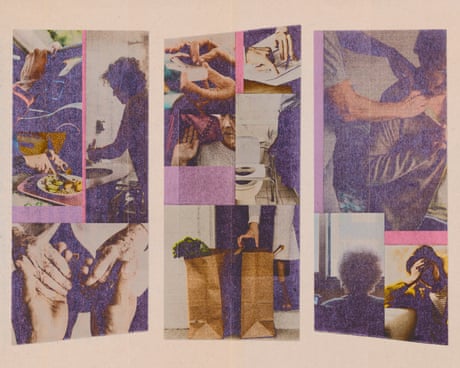
The discussion about diarrhea has increased lately, especially with the rise of cyclosporiasis. Although unpleasant, it is manageable and can be treated at home
In the US, people are discussing diarrhea more than usual. As of late August, more than 17,000 people across the US have had cyclosporiasis, a parasitic infection often traced to contaminated produce. But tensof millions of diarrhea cases occur in the US every year, caused by lots of other factors.
Some causes, such as cyclospora infection, benefit from antibiotic treatment. But most episodes of diarrhea go away by themselves and don’t require treatment apart from staying hydrated, says Benjamin Levy, a gastroenterologist at the University of Chicago.
It is a fraught topic. We asked eating disorder experts for guidelines to follow when talking about other people’s bodies, and how to do so without doing harm.
New child safety measures are welcome, but the wider risks posed by these platforms remain unaddressed
“Hook, hold, harvest and hide” was how Megan O’Neill, a lawyer for the US state of California, characterised Meta’s business model in the trial that ended last week with an $18bn settlement, to be shared between the states and territories that brought the case. It was a clever way to describe the company’s approach to users’ attention and data. But the sharpness of her words was not matched by the deal. While the strengthening of child safety features is welcome, the tech giant once again batted off efforts to alter its products.
Meta’s decision to settle enabled it to avoid any admission of liability. It put a stop to the awkward questions being asked of witnesses including Adam Mosseri, Instagram’s CEO, and the damaging claims made by whistleblowers such as Arturo Béjar. This former Meta safety engineer told the court that his own daughter had been sent unsolicited photos of male genitals on Instagram.
Do you have an opinion on the issues raised in this article? If you would like to submit a response of up to 300 words by email to be considered for publication in our letters section, please click here.
Assisting an ageing loved one can start with small tasks but may lead to full-time caregiving that requires more support
Helping an ageing parent or loved one often begins with easy-to-field requests: Pick up a prescription. Drive them to a doctor’s appointment. Grab groceries.
However, light tasks – just “helping out” here and there – may eventually snowball into the avalanche of full-time caregiving, a phenomenon becoming known as “caregiver creep”. Like “caregiver burnout”, it’s not a formal term, but there is growing awareness about this slow build among healthcare providers and experts.
Technology trained on millions of routine ECGs could fast-track high-risk patients for treatment
Doctors have developed a “superhuman” AI tool that can spot heart disease in less than two seconds.
The groundbreaking technology has been trained on millions of patients and works by extracting more information from a routine electrocardiogram (ECG) than the human eye can typically see.
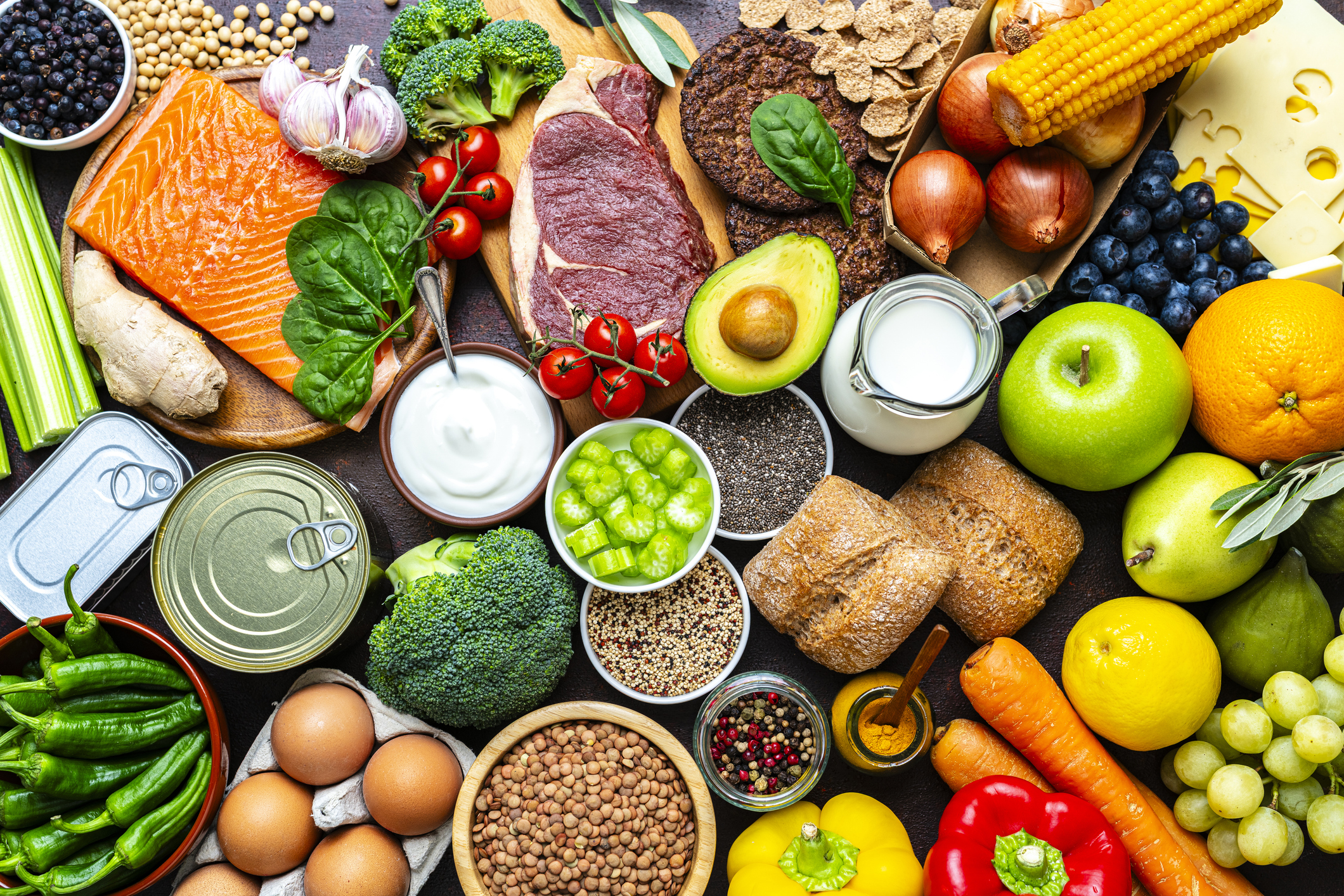
The Mediterranean diet is one of the most researched and most prescribed eating plans for weight loss, heart health, and many conditions in between. Research has linked it to better health outcomes, including lower rates of Type 2 diabetes, stroke, heart issues, cancer, and even better cognitive health.
Yet many people still have misconceptions about the Mediterranean diet: mainly that it’s expensive and difficult. “I think that people just have to be told that it is affordable and it's quite easy,” says Joan Salge Blake, clinical professor of nutrition at Boston University, author of the book Nutrition & You, and the host of the nutrition podcast Spot On!
The pillars of the Mediterranean diet include eating more vegetables, whole grains, fish, and olive oil, and consuming minimal amounts of alcohol, red meat, and saturated fats. Getting good amounts of physical and social activity is a core tenet of the lifestyle plan, too. But you don’t have to overhaul your diet overnight. “Try to take one one or two small steps at a time, and you'll eventually get there,” says Angel Planells, a registered dietitian in Seattle and spokesperson for the Academy of Nutrition and Dietetics.
We spoke to experts about easy ways to start adopting the Mediterranean diet.
Embrace frozen and canned produce
Americans are woefully behind on their produce intake. Only about 12% of U.S. adults ate the recommended amount of fruit, and 10% ate enough vegetables, according to the latest analysis by the U.S. Centers for Disease Control and Prevention..
A great way to start getting more produce on your plate is through your freezer and pantry, Blake says. When you’re first learning to prepare fresh fruits and vegetables, they can become expensive—especially if they end up rotting away, forgotten, in a fridge drawer. Since grocery bills have skyrocketed over the last few years, that can make the shift even more daunting. But Blake points out that frozen and canned produce can carry the same nutrients in an easier-to-store, more cost-effective format.
“Some people think, ‘Oh, I’ve got to cook from scratch, and everything's got to be fresh,’” says Blake. “And the answer is, ‘No, it does not.’”
It’s also easier to deal with. “Canned and frozen produce is cleaned, chopped, and ready to go. It's like having Rachael Ray in your freezer and pantry,” she says. “Fresh is not always best.”
Choose frozen or canned seafood
Fresh seafood is also often pricey, but it’s not a requirement that your seafood be fresh, either.
“It could be frozen. It could be out of a can,” Blake says. Tuna and salmon also come packaged in a pouch, which is “extremely, extremely affordable and really, really good for you based on the science that we have today,” she says.
For time-strapped Americans, frozen and canned foods can help speed things along, reduce food waste, and ensure that there’s always some kind of produce at the ready.
“These are as nutritious as fresh, and they're convenient, and this way you don't have to go back to the supermarket more than once a week,” she says. She also recommends checking out your local supermarket’s deals to see what’s on sale that week.
Diversify your protein sources
“We get kind of fixated that it has to be animal protein, and that's clearly not the case,” says Planells. For animal protein, the Mediterranean diet favors seafood and leaner cuts of meat, and it also recommends plant-based sources of protein like beans and lentils.
Despite rising grocery costs, a May 2026 report from the American Farm Bureau Federation finds that “America’s demand for meat continues to grow.” As of July, ground beef prices were up 10% from the same time in 2025.
“Everyone wants protein, protein, protein, but we're going to go broke,” says Planells.
Swap in leaner cuts and types of meat, embrace eggs, and try more plant-based protein like tofu, beans, nuts, and seeds, he recommends, which both comply with the Mediterranean diet and might end up being a cost effective and healthier trade.
You can also add leaner, greener proteins into meaty dishes you already like. “If you're going to make a chili, what you can do instead of putting in like 2 lbs of ground beef is put in 1 lb of lean ground beef and double up or triple up on beans,” Blake suggests. “You cut the cost of that meal per serving, and you also decrease the saturated fat and increase the fiber per serving.”
Take baby steps
“Whatever way people eat, whatever way they shop, it would be better to try to look into their life and try to make small, gradual changes in what they're doing than trying to give them the pathway to excellence,” says Planells. Instead of fried foods, opt for baked, grilled, or steamed. In terms of meats, pick leaner cuts. Choose healthier snacks, like nuts or yogurt, instead of products like chips. Swap in whole grains like quinoa, brown rice, and whole wheat pasta instead of processed versions.
“Every time we have a meal or snack, it's an opportunity to try to make it as nutrient-rich as possible,” says Planells.
When Planells works with a patient, he often suggests making one small diet-related and physical-related change a week.
Movement is just as key to the Mediterranean lifestyle as the food is. When researchers originally started studying the diets and lifestyles of people in the region, Blake says, they found that physical activity was an important part. “We really need to start getting movement in our life as a habit,” says Blake.
Correction, Aug. 31
The original version of this story misspelled a dietitian's name; she is Joan Salge Blake, not Joan Saldge Blake.
Technology trained on millions of routine ECGs could fast-track high-risk patients for treatment
Doctors have developed a “superhuman” AI tool that can spot heart disease in less than two seconds.
The groundbreaking technology has been trained on millions of patients and works by extracting more information from a routine electrocardiogram (ECG) than the human eye can typically see.
The jury could find her guilty of murder or the lesser crime of manslaughter, or it could acquit her if it finds that she wasn't in control of herself due to psychiatric problems.
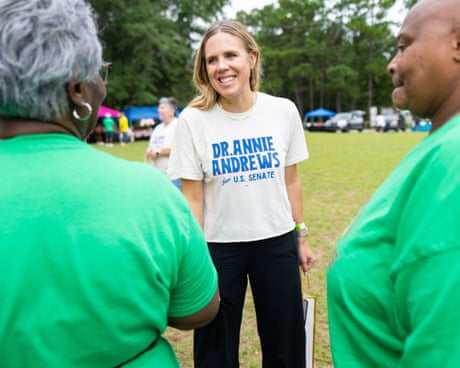
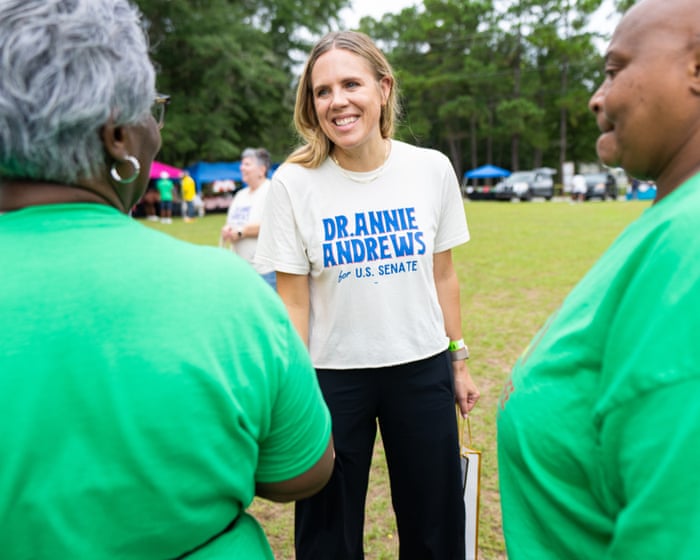
After Lindsey Graham’s death, Democrat Annie Andrews finds herself in a closely watched race as she seeks to flip his Republican seat
Annie Andrews was a dark horse Democrat challenging a five-term Republican in the US Senate when 314 Action, a political action fund devoted to electing scientists and doctors, first backed her.
Now, after the unexpected death of Senator Lindsey Graham, Andrews finds herself in a closely watched race. Donald Trump persuaded South Carolina voters last week to select Graham’s sister, Darline, as the new Republican candidate. They will face off in November in an election still heavily favored to keep the seat in Republican hands in the conservative state.
Sexual and reproductive services face an uncertain future as the country’s second-largest donor halts support worth hundreds of millions of pounds
The Swedish flag is still flying above the pale blue building overlooking the Atlantic in Liberia’s capital, Monrovia, but the doors of the embassy are now closed to visitors. On 31 August, the Swedish embassy in Liberia ends a presence in the country that dates back to 1961.
While Trump administration cuts have contributed to the epidemic of foodborne illnesses this summer, there are also deeper issues that make the American food supply chain susceptible to parasites and bacteria outbreaks.
Apparently a dedicated mud room will make you less stressed. But I have a very different approach
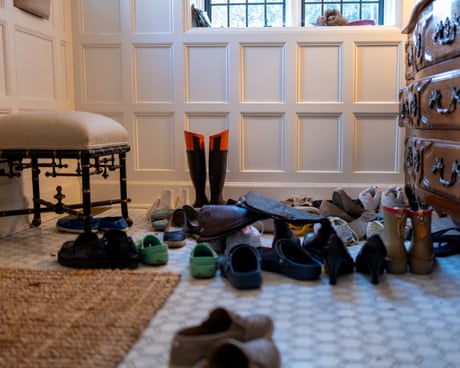
I was excited to learn that the latest interiors essential, according to the Washington Post, is a “dirty zone”. I’m ahead of the curve – I’ve already got a dirty zone by each main door (and also one directly outside the back door, where, rudely, a mystery animal has defecated). The fridge drawers are dirty zones thanks to the windfall apples I thought I would cook, but predictably left to liquefy. There’s a dirty zone next to the washing machine and a mildewy one inside it. There’s the festering compost bin I’m too chicken to tackle post-heatwave, plus the cupboard under the stairs, which we don’t talk about. Good luck finding a clean zone, basically.
Does this make me kinda chic? Unfortunately not: the Post is actually preaching the benefits of confining the sordid ephemera of life to carefully delineated and hidden areas: storage benches, monogrammed totes or even a “mud room” (for coats, shoes, skis, lacrosse sticks and dog-washing sinks – I think posh Britons call it a boot room). A 2021 study in the Netherlands found that participants who did chores in chaotic environments had higher levels of the stress marker salivary alpha-amylase. I always wonder what’s brewing in my mouth as I fall over piles of filthy shoes yet again while running to answer the door.
Over the years, Julianne Holt-Lunstad has fielded many requests from startups looking for her help. These entrepreneurs came to the Brigham Young University professor with the well-meaning goal of “solving” loneliness; they believed their app or company could help consumers build genuine connections, and wanted Holt-Lunstad’s opinion on this feature or that business tactic.
Across the pond, University College London professor Noreena Hertz was getting the same calls. They wanted her to join their boards, to advise them, to give their proof of concept a stamp of approval.
“Of the many startups who’ve approached me, and it’s probably about 50 or 60 in the space,” Hertz told Vox, “there hasn’t been one where I felt convinced by their business model.”
In the years since Hertz gave it a name, the loneliness economy has only ballooned. As public attention to loneliness has mounted — despite the fact that research doesn’t consistently show whether a loneliness epidemic exists in the first place — the market stepped in to offer solutions. No longer are the lonely limited to joining a running club, they can now rent friends and cuddlers. They can hire acoach to help vanquish loneliness and build a community. (One charges $3,000 for a three-month program.) They can attend a $1,000 weekend-long summer camp to make friends (with the option to pay in installments via Klarna). They can buy a $250 pendant that listens to their every word and can communicate back via voice or text. They can join a coworking space meant to quell loneliness with a nearly $300 a month price tag. They can enroll in a bootcamp for how to be less shy, hop in a group travel excursion with other solo venturers, download an app where AI pairs you with other strangers for activities. Loneliness is no longer a societal issue with mental and physical costs and structural solutions but one businesses hope consumers can buy their way out of.
But is it possible to disrupt the slow burn that is making a friend? To outsource the intimacies of friendship to AI? To put a price tag on human connection?
“I would caution developers to really critically evaluate their business model and the barriers to who they’re actually reaching,” Holt-Lunstad told Vox. “Think about ways that [connection] can occur organically without monetizing it.”
The cottage industry of loneliness services is just another example of capitalism wrapping its tentacles around human desire. But in most cases, the cost of the app, or product, or experience is going to be much higher than the possibility of eliminating loneliness.
One person’s loneliness is another’s business opportunity
Since the early 2000s when Harvard political scientist Robert Putnam warned of the decline of civic and social spaces in his seminal work Bowling Alone, we have witnessed the “privatization of community,” according to Sam Pressler, a fellow at the Harvard Human Flourishing Program who studies community, connection, and class. Gathering spaces shifted away from places of worship and union halls to boutique fitness centers and private, members-onlyclubs. “There was already this dynamic in place where you could, at a premium level, sell people on community,” Pressler said.
Naturally, the startup world began to see a business opportunity, Pressler said. WeWork founder Adam Neumann launched a new residential real estate company with a goal of “solving loneliness” and $350 million in funding from Andreessen Horowitz. The app 222, which uses AI to pair strangers for group activities based on personality-based questions, raised $10 million in funding. “You then get this anchor within startup land that really has an approach of solve customers’ problems and pain points, in that loneliness is a customer problem or pain point to be solved, through productized market solutions,” Pressler said.
Brian Choi had heard of the male loneliness epidemic, but luckily didn’t feel like he fell into that category. He grew up in the Los Angeles area, where he still lives, and has plenty of friends, but he signed up for 222 several years ago as a way to supplement his social life and meet people who might be interested in activities his existing friends aren’t.
“Dance, for me, means a lot,” the 34-year-old video game character artist, told Vox. “For my best friends, hard to sell them on that. So 222 is a good angle on sharing that experience with other people who are presumably also open to dance.”
But most of the platform’s events, Choi found, were centered around dinner and drinks, which didn’t appeal to him. If there was a meetup with an interactive element, like brunch and a pottery class, he was more likely to engage. But despite attending about a dozen 222 events over the years, Choi hasn’t fostered any serious friendships. “It’s dependent on individuals to be proactive about inviting folks into their lives after the 222 event,” Choi said. “And that can be scary for a lot of people.”
Once a market emerged for loneliness-adjacent services and products, influencers started promoting them. Over the last few years, the content creator Zaid Khan observed his peers hosting “community” events that seemed well-meaning enough until a few common themes emerged: The events seemed to be furthering the creators’ brands, they often came with a ticket price, and they were attended mostly by young, white people. This widespread commodification of community is what Hertz refers to as “WeWashing” — like greenwashing — because an occasional knitting club with a $50 fee does not a community make.
Charging any sort of premium for a social event or service runs the risk of exacerbating inequities. According to Holt-Lunstad’s research, people with only a high school education or less or those who made less than $75,000 a year were less socially connected than those with higher education and incomes. People who stand to benefit the most from interventions to build relationships often can’t afford a $200 a month gym, or lack the time to swipe for friends. These spaces can then become, like Khan observed, homogenized by race, class, and ability. “I’m sorry, but young, attractive, white, straight, 20-somethings living in New York will have no issue. … You can walk into any West Village bar and meet those people,” Khan said. “It’s excluding the people who, I think, genuinely could need it.”
“Masking” a symptom
There is a contradiction at the heart of the loneliness economy: the need for human connection in the modern world is difficult to solve, let alone value and commodify. In order to make money, companies either have to charge top dollar for their social club or camp, or, they need their product to be used by as many people as possible, as often as possible, which inherently flies in the face of how relationships are fostered.
“The ethical problem begins when a company intentionally exploits a consumer’s loneliness, insecure attachment, or fear of missing out to pressure that person into purchasing.”
Cindy Rippé, Terry College of Business at the University of Georgia
Relationships are projects of patience. They unfold after repeated interactions in a physical space, after slow revelations and disclosures and laughs. The loneliness economy isn’t built on unhurried bonding. Instead of consistently showing up to a community event and slowly building connections, some apps are effective at connecting users with strangers for one-time events, but are less focused on encouraging users to exchange numbers and hang out again. “We know from the research that relationships take time to develop, and that there needs to be consistency also over time. When you get to know someone, it takes time,” Holt-Lunstad said. “If you’re only doing it sporadically or once, that’s going to be less likely. If it’s all virtual, that’s going to be less likely.”
Just like hunger and thirst cue you to eat and drink, loneliness is a sign to interact. Swiping for friends may feel productive and occupy time, but without actually hanging out, it may just be a distraction, Holt-Lunstad said. “What I worry is that [apps] may be effective in masking that symptom without actually fulfilling any social needs,” she said. “It would be like no longer feeling thirsty, but we’re not actually drinking any water.”
The loneliness economy also fails to take into account the barriers preventing people from making friends in the first place. In recent surveys, the results of which have not been published, Holt-Lunstad has found both internal and external obstacles to connection, including anxiety, a fear of rejection, physical and mental health limitations, the economic cost of participation, and the time investment required with joining a club. “It might be, that’s a great program, but it’s too far away, or that’s a great program, but it costs too much,” Holt-Lunstad said. “And then, of course, there’s the internal barriers where there’s so much shame and stigma associated with this that many people don’t want to feel like I have to have an app or a program to make friends.”
These potentially lonely consumers may be more vulnerable to companies’ marketing efforts, even though the products are unlikely to solve the underlying issue. According to research, when people feel like they are lacking close, intimate relationships, they are more likely to buy themselves things. “One of the things, for instance, could be spending money to go on group activities rather than individual activities,” Aulona Ulqinaku, an associate professor of marketing at Università Carlo Cattaneo LIUC in Italy, told Vox. People could spend money to join a club you aren’t particularly interested in just to feel a part of something.
Shopping can also serve as a social experience in itself, Cindy Rippé, a senior lecturer in the Department of Marketing at the Terry College of Business at the University of Georgia, told Vox in an email. Employees and other patrons can become familiar and friendly faces, effectively turning a retail space into a third place. A paid social experience, such as a club, could theoretically achieve the same fulfilling effects as shopping, Rippé said. But spending money isn’t what makes people feel better; it’s repeated social interaction, familiarity, belonging.
Because companies can track your activity online, users who search for local clubs or interact with these groups on social media may be repeatedly served ads for other community-centric businesses and thus spend more money on services that may not be effective.
“I hope that we are looking at a world where marketing can be looked at as an instrument for helping people rather than exploiting people,” Ulqinaku said. “The aim should not be, ‘I make money [off] of you.’ The aim should be, ‘I want to make you feel better. I don’t want to exploit you.’”
Putting a price tag on relationships
The pairing of lonely consumers who might be willing to spend money and businesses that definitely want to make it may be good for the bottom line in the short-term, but perhaps not for social health or for revenue in the long-term. (After all, if these products don’t work, people will stop paying for them, and if they do work as promised, people will also stop paying for them.) Friendship isn’t a product you can advertise or put a dollar amount to, Pressler said, and we shouldn’t apply market solutions to non-market goods.
“You can approach it with a consumptive mindset where it’s like, ‘Well, I just need to consume more relationships, and if I consume more relationships, ergo, I will not be lonely or disconnected,’” he said — but that’s not how real-world interactions work. The power imbalance between the companies earning money and the consumer spending it to fulfill a core human need may veer on exploitative, too, Rippé said: “The ethical problem begins when a company intentionally exploits a consumer’s loneliness, insecure attachment, or fear of missing out to pressure that person into purchasing.”
Which isn’t to say communal gatherings with a price tag are inherently exploitative. Live music and events, like concerts, successfully bring people together for shared experiences, according to Hertz, the professor and author. (Of course, tickets have become so expensive that seeing your favorite act perform is becoming a luxury.) Groups centered around an activity have the potential to connect people, too. But buying your own yarn and needles to bring to a weekly craft night at your local knitting shop is different from paying $50 to join a one-off “knitting club” organized by a VC-backed friendship app.
Because social health touches so many aspects of life — the physical spaces we inhabit, the technology that both facilitates and inhibits socialization, the costs of interacting — the path toward connection is more complex than marketable products or individual purchases. It involves government investment in public spaces and low- or no-cost community events; policies that allow everyone to lead a dignified life, which includes the space for leisure activities; and a societal shift that prioritizes slow, intentional relationship building instead of instant connection.
“The need is real,” Hertz said. “The purported solutions are many. Some of them I think can be part of the solution. Some of them may well end up making us lonelier as a society.”
Studies have found that anti-inflammatory drugs can improve your mood. But what does that mean for conditions such as depression and anxiety?
Inflammation is the immune system’s response to injury or infection. If you cut yourself and the area becomes red and swollen, that’s inflammation: immune cells are rushing to fight germs and repair tissue.
But inflammation can also occur in the body during illnesses, and a low level of inflammation can arise from obesity or ageing. “A marker of that inflammation tends to be elevated cytokines in people’s blood,” says Prof Daniel M Davis, head of life sciences at Imperial College London and author of Immune Health: A Myth-Busting Guide. “They’re the molecules immune cells use to communicate with each other.”
New South Wales police have appealed for information to find the mother of a newborn baby boy, whose body was discovered in a rubbish bin in Auburn in Sydney’s west on Monday morning.
Police said emergency services responded to reports of the body of a baby located in a rubbish bin at a unit block along Harrow Road in Auburn at 11.20am, with officers from the Auburn police area command finding the body of a newborn boy.
Checks at pharmacies for people aged 40 to 84 are aimed at identifying those at risk of heart attack or stroke
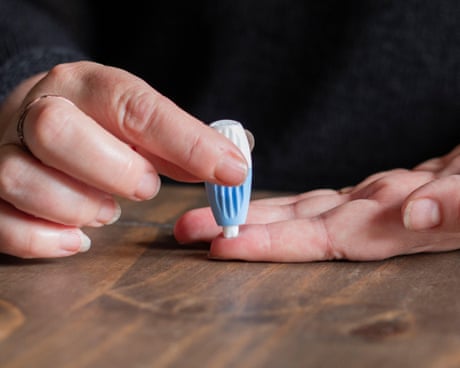
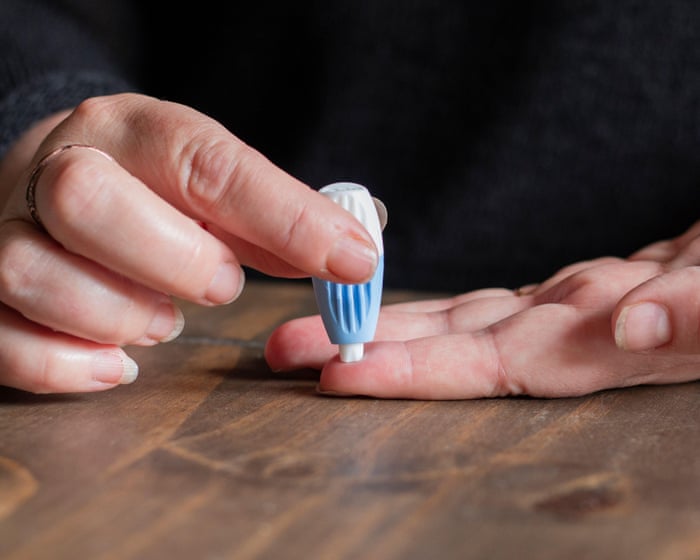
The NHS in England is to offer free finger-prick blood tests for cholesterol on the high street for the first time under plans to reduce heart disease and stroke deaths by a quarter within the next decade.
The seven-minute tests will be available at participating pharmacies as part of a national rollout to spot “ticking timebombs” earlier.
The Australian government is working with Russian officials in a bid to secure the release of Australian Oscar Jenkins, Matt Thistlethwaite says.
Speaking to ABC news breakfast, the assistant minister for foreign affairs declined to answer whether a prisoner swap was on the table.
Obviously, we try and negotiate as best we can on behalf of all Australians who find themselves in difficulties such as this. We obviously have to abide by international laws and we always uphold them. But the Australian officials on the ground will work with their counterparts to ensure that, hopefully he’s returned to Australia safely.

 Login
Login