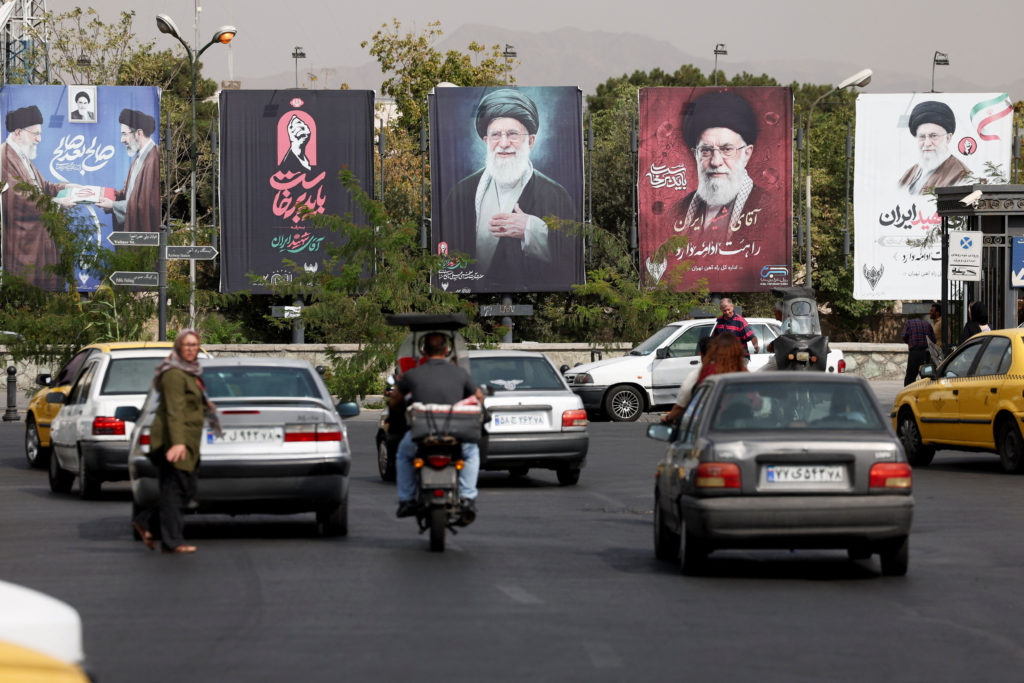
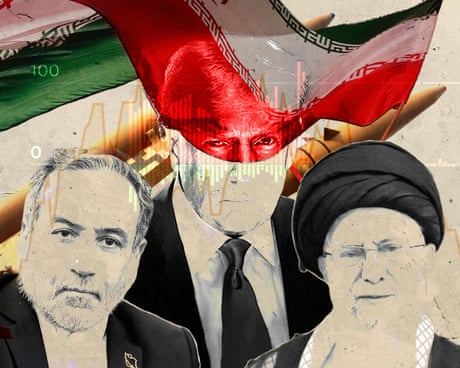
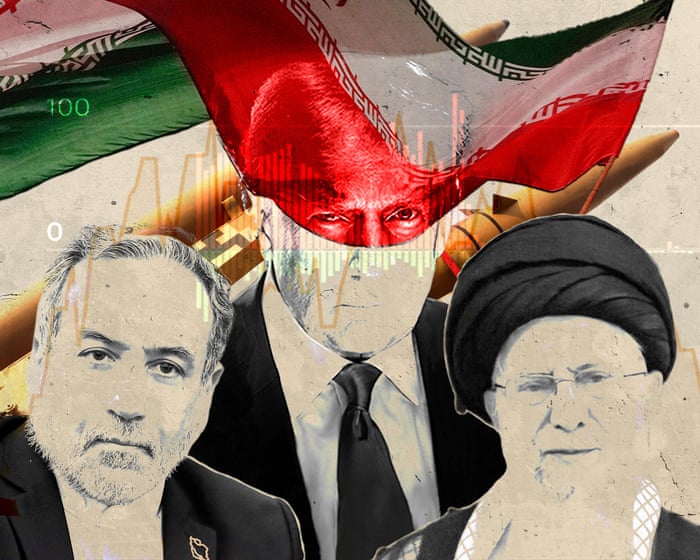
As with its approach to Hormuz, the US has mistaken applying pressure for an actual strategy. But Tehran has chips of its own to play
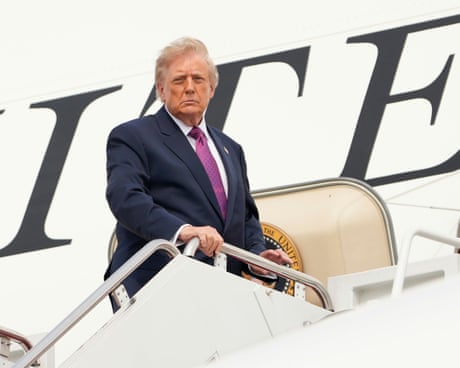
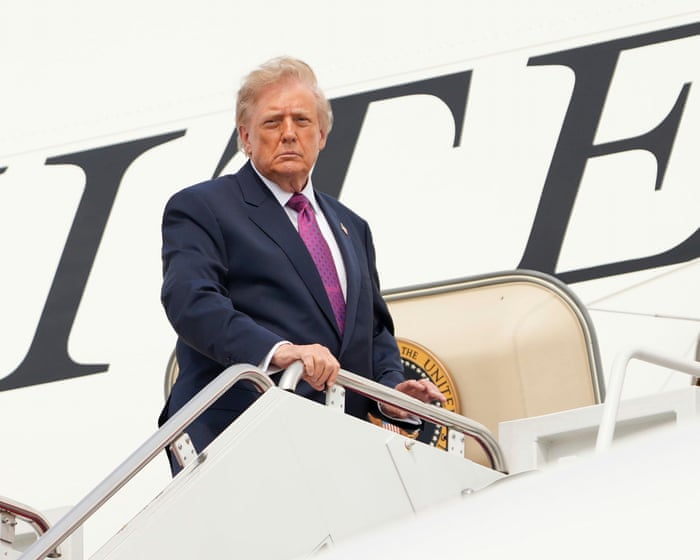
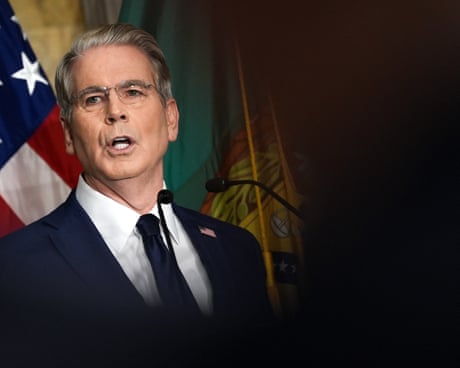
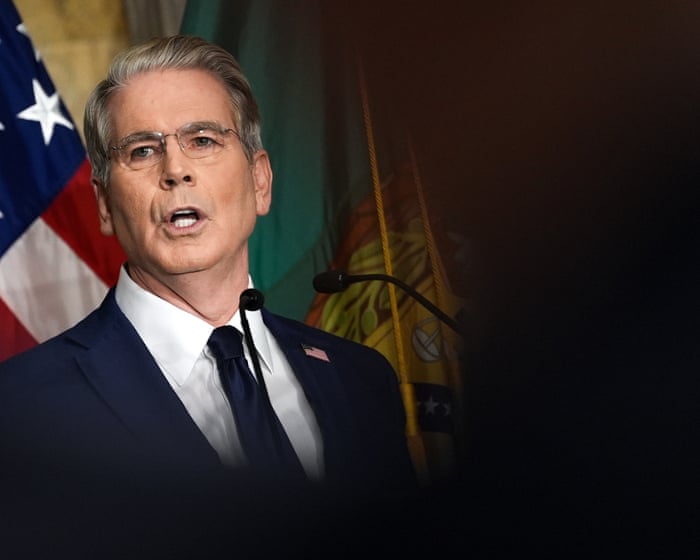
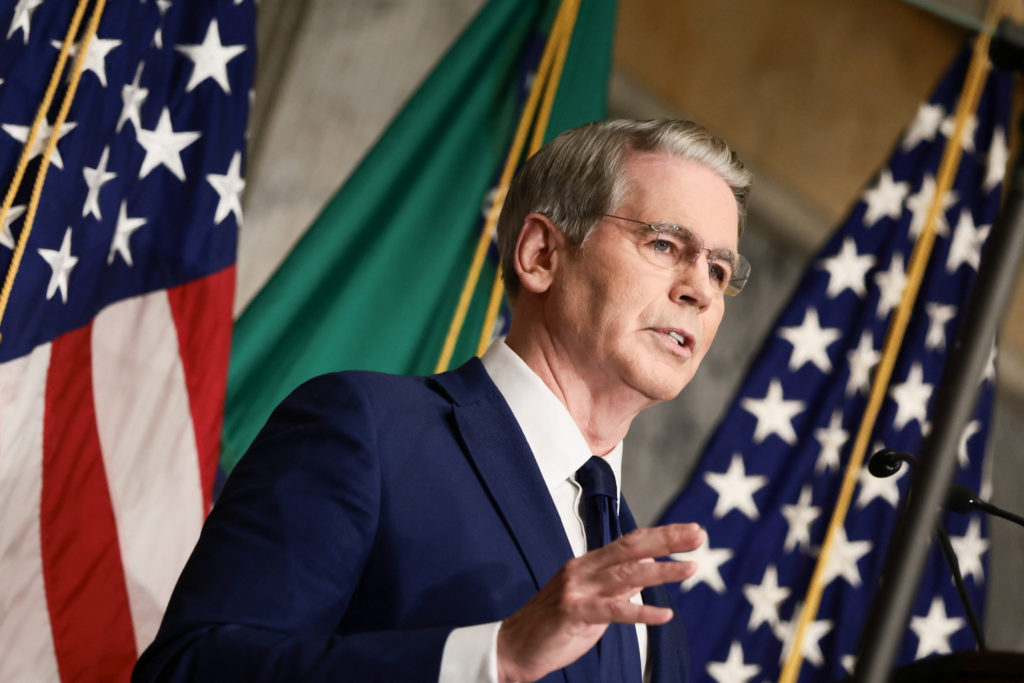
Donald Trump has found a new way to promise victory over Iran. After months of war have failed to force Iran’s capitulation or collapse, his administration has unveiled what the US Treasury secretary, Scott Bessent, calls Operation Economic Outcast: an effort to cut it off from what remains of the global economy and threaten foreign governments, banks and companies with sanctions if they continue doing business with Tehran.
There is no question that Iran is vulnerable. Its economy has been battered by years of sanctions, war and a months-long US naval blockade. Iranian officials acknowledge that oil exports and access to foreign currency have been severely constrained. Ordinary Iranians are already enduring high inflation, currency depreciation and worsening living standards. Further economic strangulation will inflict significant additional hardship.
Sina Toossi is a senior non-resident fellow at the Center for International Policy, where his work focuses on US-Iran relations, US policy toward the Middle East and nuclear issues
There’s little optimism about treasury secretary’s ability to handle Trump’s tariffs, Iran sanctions and colossal US debt
History remembers Gen Dwight Eisenhower, the supreme commander of the allied forces in Europe during the second world war, for his role in the D-day invasion of Normandy. Whether Scott Bessent will achieve similar posterity as the face of the “economic D-day” in Iran remains to be seen.
The US treasury secretary, already trying to manage a $40tn national debt pile, this week took charge of Donald Trump’s effort to reverse-engineer his war of choice. Whereas the US would typically take on an adversary with diplomacy, sanctions and military force, in that order, the US president started with a six-month bombing campaign and now hopes that economic isolation can finish the job.
Iran's new leaders evince little faith in any agreement with Trump — after coming under attack twice while holding talks — and they may be bracing for another assault once the U.S. replenishes its supplies of interceptors.
President Recep Tayyip Erdogan in Ankara, Turkey, this year. Analysts and officials fear the growing rivalry between Turkey and Israel could exacerbate volatility in the Middle East.
Oil companies and governments are consuming their once vast stockpiles as Iran and the United States continue to struggle for control over the Strait of Hormuz.
Under a new rule proposed Friday by the Treasury Department, the Emirati branches of Banque Misr, Egypt's second-largest bank, would be severed from access to the U.S. financial system.
Terrified of being seen as a loser, Donald Trump is nonsensically lashing out – even against our old friend Canada
I’m still grieving Dolly Parton. I never met her and always wanted to. She was almost exactly my age and my height and had values I deeply admired. Her death leaves a hole in the firmament.
Which brings me to the person whose values are as far from Dolly Parton’s as any human could possibly be and still claim to be human. I’m referring, of course, to the current occupant of the Oval Office.
Iranians have become increasingly desperate, as they grapple with an economic crisis made worse by the conflict and grow increasingly skeptical about President Trump’s motives.
Iranians have become increasingly desperate, as they grapple with an economic crisis made worse by the conflict and grow increasingly skeptical about President Trump’s motives.
From the first US and Israeli strikes six months ago to the battle for Hormuz, this timeline plots how Trump’s war on Iran quickly became a regional conflict with global economic consequences
On 28 February 2026, the US and Israel began large-scale strikes on Iran. Tehran responded by attacking Israeli and US allies across the Gulf.
Iran’s supreme leader, Ali Khamenei, was killed on the first day of strikes, and the strait of Hormuz – a crucial waterway for transporting oil – was effectively closed soon after. The conflict quickly became a regional war with global economic consequences.
President denies visit was to gain support for Iran sanctions or due to fears that Putin plans to ‘test Nato resolve’
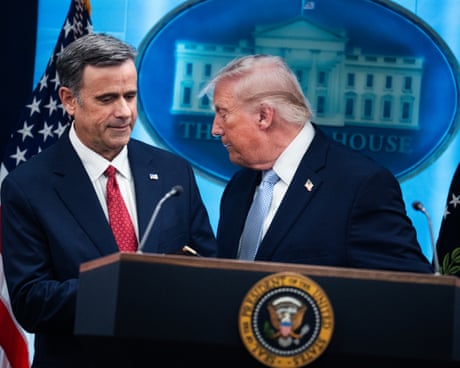
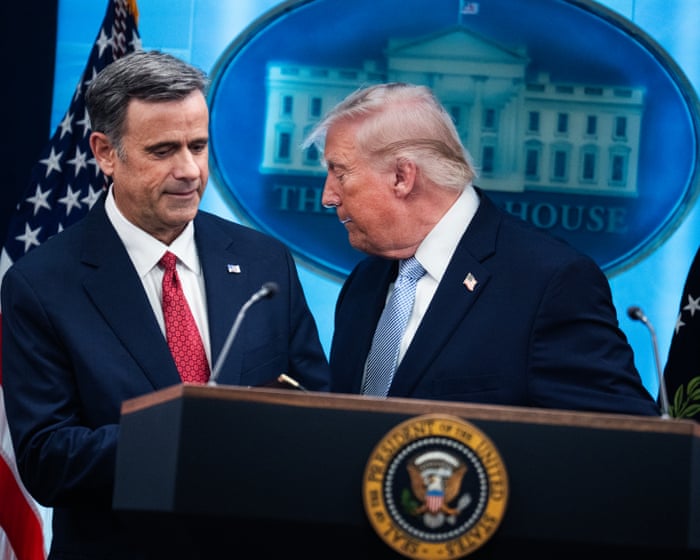
Donald Trump has downplayed a visit to Moscow by the CIA director, John Ratcliffe, as “semi-routine” after he turned up in the Russian capital unannounced, triggering a wave of speculation about the reasons for his trip.
Ratcliffe was reported to have flown to Moscow on a government transport plane on Tuesday in a rare visit after taking off from the Andrews air force base in Maryland.
There still is no off-ramp in sight despite President Donald Trump's repeated assertions that the war has been won or a deal to resolve it was nearly complete.
Sheikh Mohammed bin Abdulrahman Al Thani has been a key mediator in the conflict, even as his country has blamed Tehran for hundreds of missile and drone attacks.
Qatar’s prime minister, Sheikh Mohammed bin Abdulrahman Al Thani, at a news conference in Egypt in August. His trip to Tehran comes at a moment of heightened tension between Iran and Qatar.
As photojournalist sentenced to 15 years, rights groups warn law would turn civic engagement into security crime
Iran has taken the first step towards criminalising contact with foreign media, in a move human rights groups have said attempts to “sever the entire Iranian society from the rest of the world”.
For journalists, researchers and even ordinary citizens, the proposed law being discussed by Iranian lawmakers this month could make speaking to international audiences and groups a potential criminal act and restrict coverage of events such as January’s mass anti-regime protests.

 Login
Login