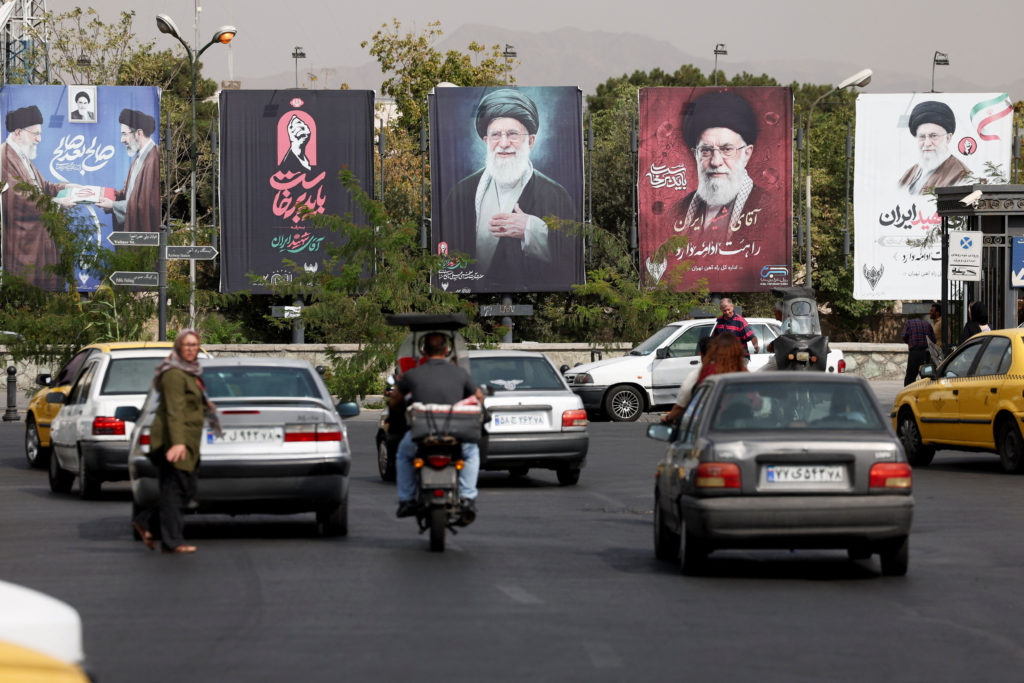
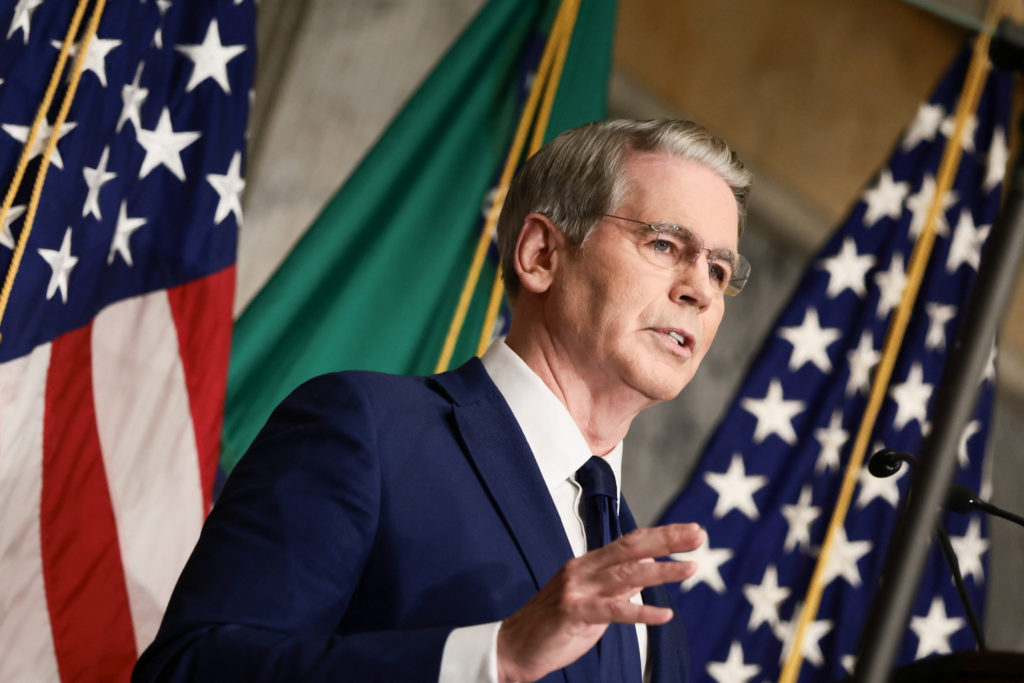
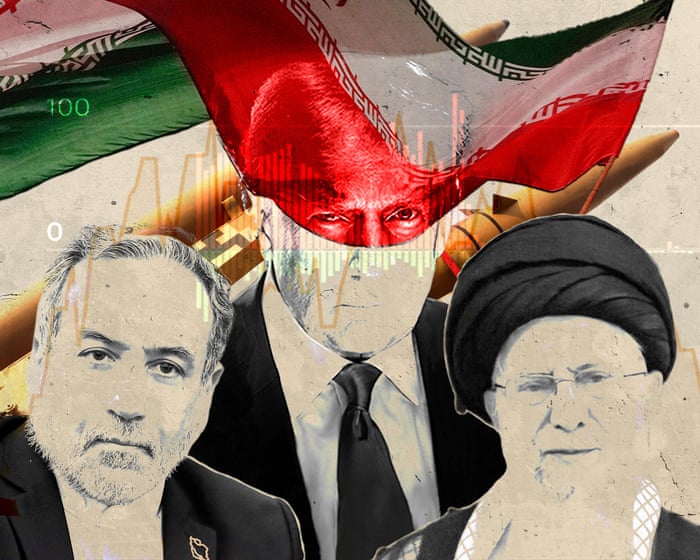
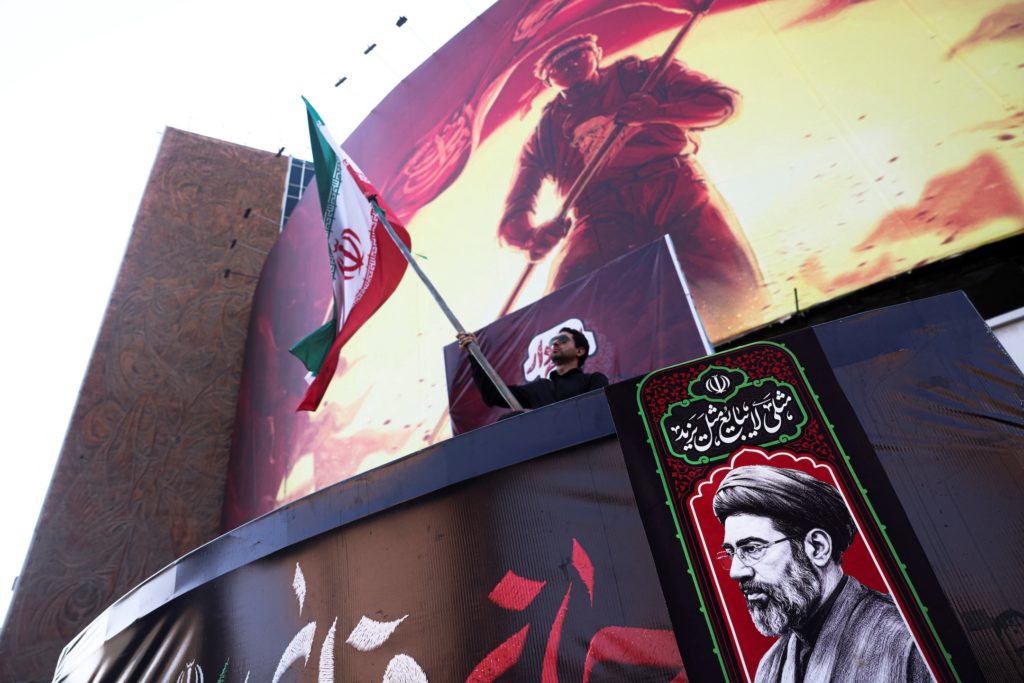
Iran's new leaders evince little faith in any agreement with Trump — after coming under attack twice while holding talks — and they may be bracing for another assault once the U.S. replenishes its supplies of interceptors.
President Recep Tayyip Erdogan in Ankara, Turkey, this year. Analysts and officials fear the growing rivalry between Turkey and Israel could exacerbate volatility in the Middle East.
Oil companies and governments are consuming their once vast stockpiles as Iran and the United States continue to struggle for control over the Strait of Hormuz.
Under a new rule proposed Friday by the Treasury Department, the Emirati branches of Banque Misr, Egypt's second-largest bank, would be severed from access to the U.S. financial system.
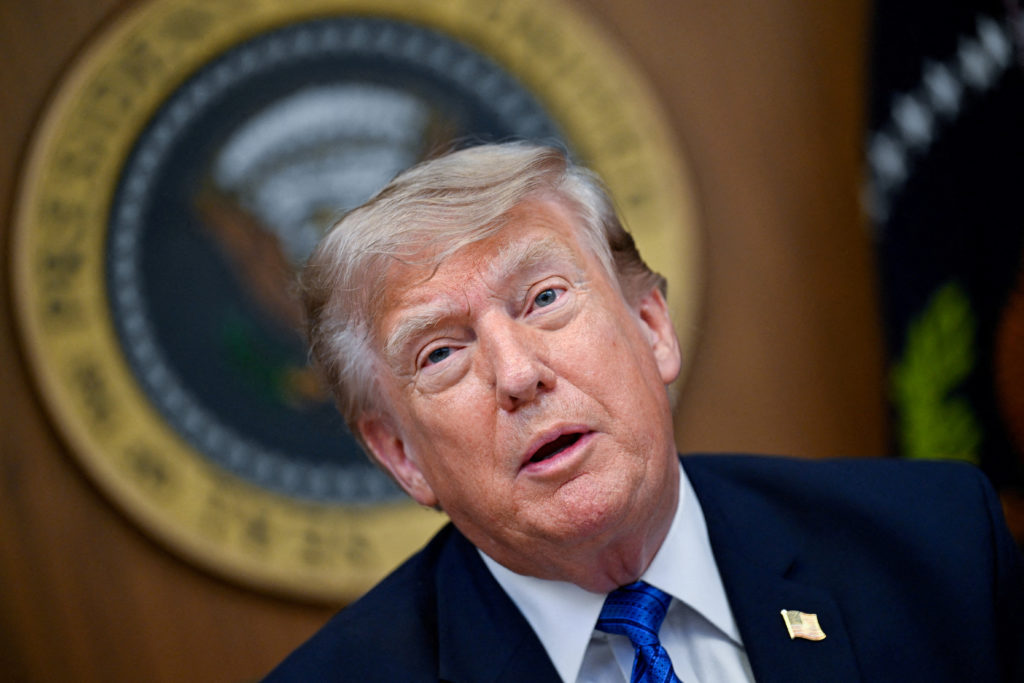
Terrified of being seen as a loser, Donald Trump is nonsensically lashing out – even against our old friend Canada
I’m still grieving Dolly Parton. I never met her and always wanted to. She was almost exactly my age and my height and had values I deeply admired. Her death leaves a hole in the firmament.
Which brings me to the person whose values are as far from Dolly Parton’s as any human could possibly be and still claim to be human. I’m referring, of course, to the current occupant of the Oval Office.
Iranians have become increasingly desperate, as they grapple with an economic crisis made worse by the conflict and grow increasingly skeptical about President Trump’s motives.
Iranians have become increasingly desperate, as they grapple with an economic crisis made worse by the conflict and grow increasingly skeptical about President Trump’s motives.
From the first US and Israeli strikes six months ago to the battle for Hormuz, this timeline plots how Trump’s war on Iran quickly became a regional conflict with global economic consequences
On 28 February 2026, the US and Israel began large-scale strikes on Iran. Tehran responded by attacking Israeli and US allies across the Gulf.
Iran’s supreme leader, Ali Khamenei, was killed on the first day of strikes, and the strait of Hormuz – a crucial waterway for transporting oil – was effectively closed soon after. The conflict quickly became a regional war with global economic consequences.
President denies visit was to gain support for Iran sanctions or due to fears that Putin plans to ‘test Nato resolve’
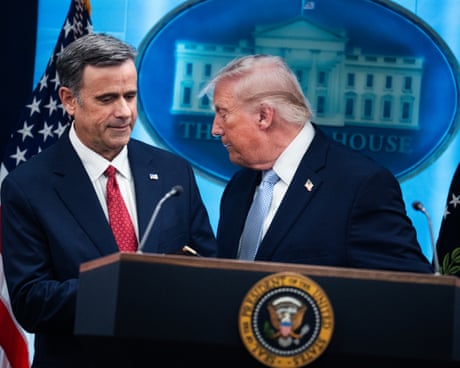
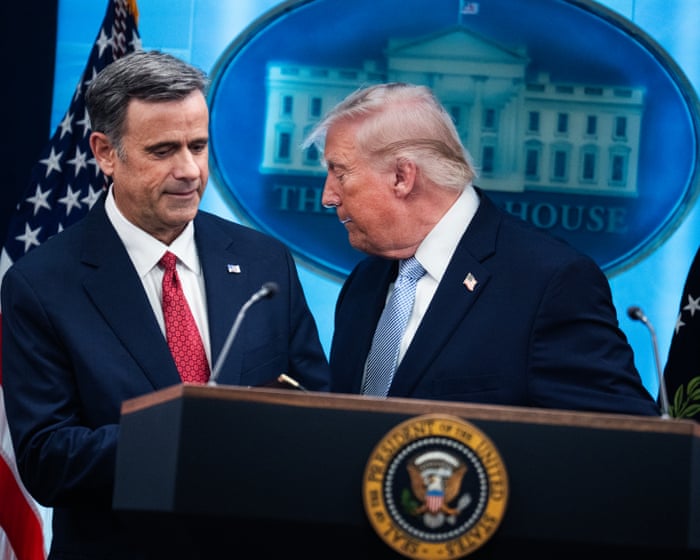
Donald Trump has downplayed a visit to Moscow by the CIA director, John Ratcliffe, as “semi-routine” after he turned up in the Russian capital unannounced, triggering a wave of speculation about the reasons for his trip.
Ratcliffe was reported to have flown to Moscow on a government transport plane on Tuesday in a rare visit after taking off from the Andrews air force base in Maryland.
There still is no off-ramp in sight despite President Donald Trump's repeated assertions that the war has been won or a deal to resolve it was nearly complete.
Sheikh Mohammed bin Abdulrahman Al Thani has been a key mediator in the conflict, even as his country has blamed Tehran for hundreds of missile and drone attacks.
Qatar’s prime minister, Sheikh Mohammed bin Abdulrahman Al Thani, at a news conference in Egypt in August. His trip to Tehran comes at a moment of heightened tension between Iran and Qatar.
As photojournalist sentenced to 15 years, rights groups warn law would turn civic engagement into security crime
Iran has taken the first step towards criminalising contact with foreign media, in a move human rights groups have said attempts to “sever the entire Iranian society from the rest of the world”.
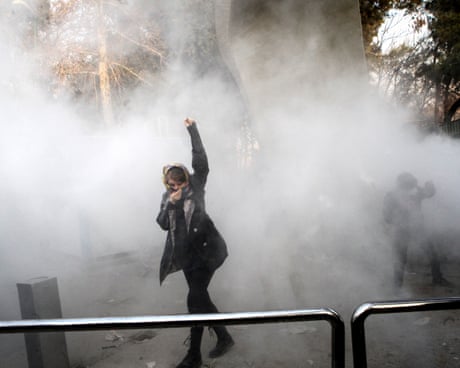
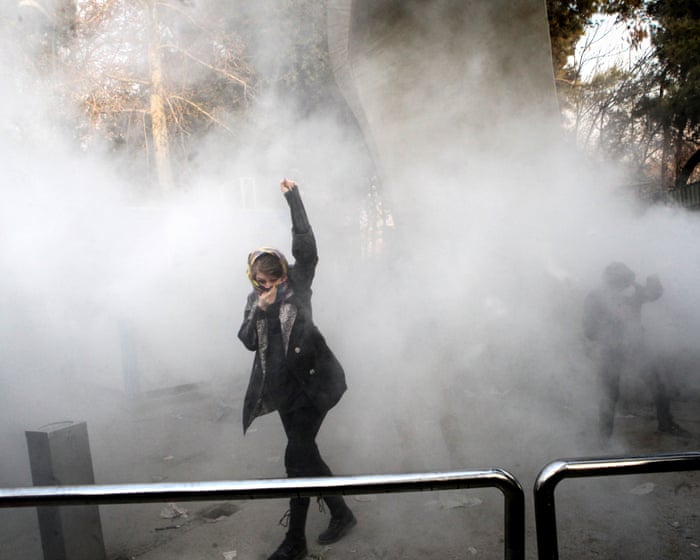
For journalists, researchers and even ordinary citizens, the proposed law being discussed by Iranian lawmakers this month could make speaking to international audiences and groups a potential criminal act and restrict coverage of events such as January’s mass anti-regime protests.
Internal calls to end war get louder as Gulf neighbours plan alternative pipelines to cut reliance on waterway
Is the strait of Hormuz, recently cited by the office of the Iranian supreme leader as “the pillar of Iran’s new security order”, and as transformative as possessing a nuclear weapon, in reality becoming a fast-diminishing asset, leaving Iran increasingly vulnerable to the new planned US wave of economic sanctions?
It is the key debate that is raging inside Iran, with many different conclusions being drawn for Tehran’s negotiating strategy. Those who warn the strait’s value as a chokehold on the world economy will erode, leaving the country without foreign exchange reserves, argue that Iran’s negotiators should seek a deal soon.
"The U.S. Secret Service is aware of the video and investigates anything that can be perceived as a threat toward our protectees," Secret Service spokesman Nate Herring said in a statement.
The U.S. launched what the Trump administration calls "Operation Economic Outcast" against Iran. It includes threats to increase sanctions on Iran's trading partners. The pressure comes as the administration indicates it is trying to avoid returning to war, but cannot overcome Iran's stranglehold over the Strait of Hormuz. Nick Schifrin discussed more with Miad Maleki.
The USS Abraham Lincoln deployed in the Arabian Sea on April 16, 2026. | US Navy via Getty Images
This story appeared in The Logoff, a daily newsletter that helps you stay informed about the Trump administration without letting political news take over your life. Subscribe here.
Welcome to The Logoff: The cracks are starting to show in President Donald Trump’s Iran campaign.
What’s happening? Conditions on a US warship deployed in the Middle East have grown so dire, multiple sailors have reportedly tried to go overboard (at least one did so but was rescued safely, according to CNN).
The USS Abraham Lincoln aircraft carrier has been deployed for more than 250 days, starting last November, including a stretch of more than 200 days at sea — a modern record. Its deployment was supposed to end months ago, in May, but has continued as Trump’s Iran war stretches on.
How is the administration responding? Defense Secretary Pete Hegseth said Thursday that reports about conditions on the Lincoln are “completely misrepresented.” Help is on the way for the Lincoln, though, with another US aircraft carrier en route to the area to replace it (according to the Wall Street Journal, the replacement was already planned, and not in response to deteriorating conditions on the Lincoln).
Why does this matter? Conditions on the Lincoln are not the only recent stumbling block for the US war with Iran. Earlier this month, we learned more about the US’s increasingly serious shortages of key offensive and defensive missiles, including THAAD and Patriot interceptors used to protect US troops and allies. On top of that, the Washington Post reported Thursday that the US has run through around a quarter of its Reaper drones, which cost tens of millions of dollars apiece.
It’s the latest example of how the math of the war is starting to slant against the US: Reaper drones and Patriot missiles are incredibly expensive, while Iran has figured out how to mass-produce attack drones on the cheap. And with no end in sight, shortages and situations like the Lincoln will only become a larger problem.
And with that, it’s time to log off…
Here’s some good news from my colleague Adam Clark Estes: As wrecked as your attention span may feel, it’s not permanently degraded. He talked with attention experts to figure out how to repair his, and how we can all do the same. You can read his full story here with a gift link — and then, for all of our brains’ sake, let’s log off. We’ll see you back here tomorrow.

 Login
Login