Reading view

The Trouble With Trump’s Attempt to Rename Lake Ontario

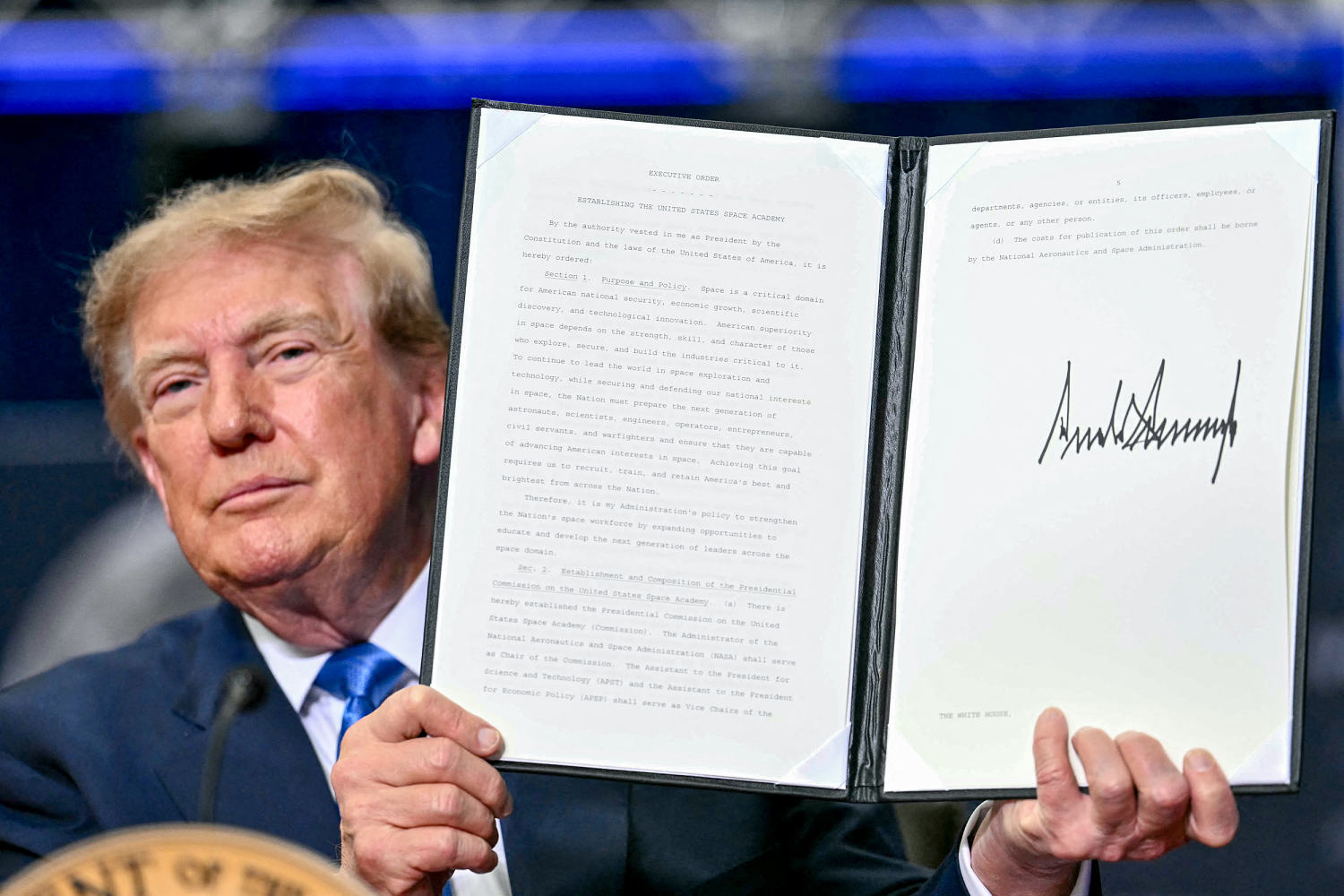
President Donald Trump on Thursday signed an ‌Executive Order instructing Interior Secretary Doug Burgum to rename Lake Ontario as “Lake America.” ​

As President Donald Trump’s approval rating hit a new low, he turned once again to the art of redrawing the world map. With the stroke of a pen, the President sought to erase over 400 years of cartographic history by renaming Lake Ontario as “Lake America” through executive order. Trump’s unilateral action requires that the U.S. Board on Geographic Names update its databases to “reflect the renaming of the Lake and remove all references to Lake Ontario.”

Trump’s executive order applies to all U.S. federal maps, documents, and other communications. However, experts suggest that Trump can’t force other countries, international organizations, private mapping companies, or even U.S. state governments to use the new name. Canada’s Prime Minister Mark Carney has already responded in no uncertain terms that Canada will retain the original name of Lake Ontario “today and forever.” New York Governor Kathy Hochul also rejected the use of the name “Lake America” on New York state maps.

As two geographers who have spent decades studying political toponymy, or the politics of place naming, in both the United States and Canada, we are dismayed by the careless nature of Trump’s impulsive use of place renaming as a form of political rage baiting

Renaming Lake Ontario is part of a larger pattern of using place naming to promote the Trump brand and his “America First” ideology. From the very outset of his second presidential term, Trump launched the so-called “Golden Age of America” by announcing that the Gulf of Mexico would be renamed the “Gulf of America.” This has now been followed with “Lake America,” and Trump even mused about possibly renaming the Atlantic or Pacific Ocean, we presume to something along the lines of “American Ocean” or “Ocean of America.”

Over the past year, Trump’s obsession with naming places has given rise to a new term—toponymic narcissism—which refers to the condition of being obsessed with naming places after oneself.  

In many respects, Trump tends to approach the world map much like the Greek mythical figure of Narcissus viewed a body of water: as an opportunity to admire the reflection of his own self-image.

The cost of this narcissistic approach to controlling and changing place names is that it obscures how these names should be shared symbolic resources that serve the broader public and not just the ambitions, grievances, or political feuds of a single individual.

The conventional process of naming geographical features along the U.S.-Canada border involves bringing a formal proposal to the U.S. Board on Geographic Names and the Geographical Names Board of Canada, along with their state and provincial counterparts on both sides of the border. There is generally an extensive consultation process to ensure all geographical naming authorities are on the same page before moving forward with a name change. Yet Trump has thrown all of this out the window simply to rage-bait a U.S. ally into submission.

While the standard place naming process is not perfect, it at least establishes an institutional procedure for review, consultation, evidence gathering, and consideration of competing claims before a geographic name is changed. By contrast, what we are witnessing under Trump 2.0 is a unilateral naming by decree or whim with seemingly no public discussion or real government consideration of impacts and consequences. 

It is clear to us that Trump’s renaming of Lake Ontario is symbolic political theater aimed at diverting our attention away from the fallout of his trade war with Canada. Yet symbols matter. Place naming is a world-making practice that shapes the very foundations of our geographical imaginations and how we come to know and engage with the world.

There is a risk in dismissing Trump’s cartography of mass distraction as a frivolous symbolic tactic, since it can have real consequences for what is taught in classrooms, reconciliation efforts with Indigenous peoples, and the badly needed repair of relations between the United States and Canada.

If there is any hope to be found in the cartographic carnage that Trump is unleashing on the world map, it is that a future president can just as easily reverse these name changes in an attempt to restore America’s world image.

  •  

Trump Administration Asks Supreme Court to Uphold Ban on Transgender Troops

President Trump issued an executive order barring transgender service members from the military as part of a broader attack on transgender rights.

© Allison Robbert for The New York Times

If the justices accept the case, they could schedule oral arguments during the Supreme Court’s term that begins in October.
  •  

Judge Again Denies Trump’s Request to Move Hush-Money Case to Federal Court

The ruling, from Judge Alvin K. Hellerstein, blocks President Trump’s quickest path to overturning his 2024 conviction for covering up hush-money payments to a porn star.

© Doug Mills/The New York Times

In July, the Supreme Court found that presidents were entitled to presumptive immunity for official acts, raising the bar for any prosecution.
  •  

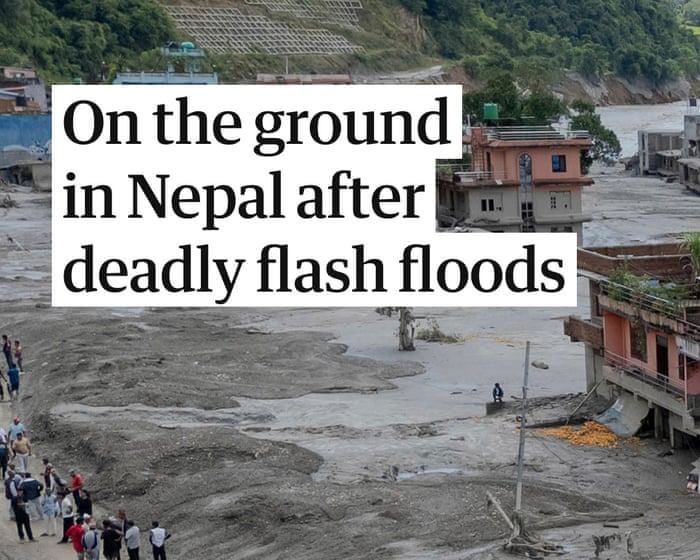
‘The flood took everything I have’: survivors grieve for relatives and homes swept away in Nepal

Army helicopters ferry survivors from inaccessible areas to a camp at a barracks in Bidur

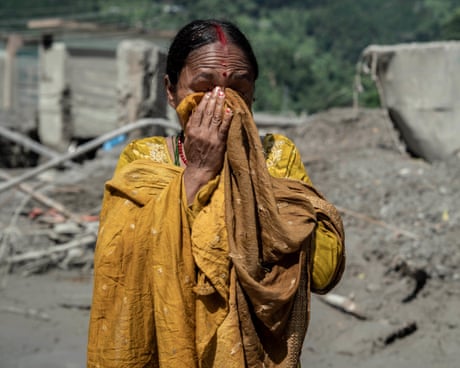
The three women sat together in the army tent and wept. They cried out for their sons, their husbands, their homes. As flash floods coursed through the Himalayan mountains on Wednesday morning, a monstrous black wave took everything from them.

As a melting glacier high up in the Himalayas between Tibet and Nepal splintered and crashed into the valley below, it set off a deadly cascade of water, mud and debris down the Bhote Koshi River. The impact of the glacier collapse was so strong that experts initially reported it as an earthquake. The Nepali village homes that lined the riverbank and clung to the mountainside stood little chance.

Continue reading...

© Photograph: Ahmer Khan/The Guardian

© Photograph: Ahmer Khan/The Guardian

© Photograph: Ahmer Khan/The Guardian

  •  

Clashes Cloud Shawn Fain’s Re-election Bid at U.A.W.

A federal investigation and conflict over Israel are preoccupying the United Auto Workers president ahead of a vote that would give him a second term.

© Sarah Rice/Getty Images

Shawn Fain’s confrontational style, personnel moves and outspokenness as president of the United Automobile Workers have complicated his bid for re-election.
  •  

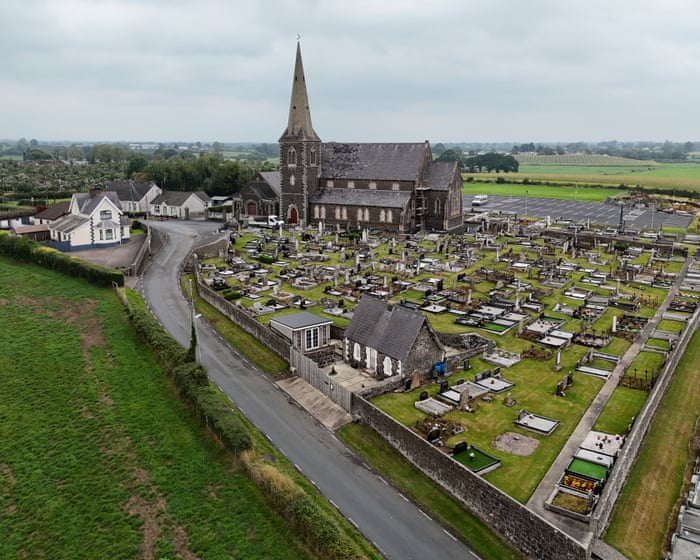
Drumcree ruling raises fears of sectarian confrontation in Northern Ireland

High court quashes latest restriction on Orange Order march, reigniting political row over Garvaghy Road

The boiling cauldron known as Drumcree that used to scald and torment Northern Ireland each summer gradually cooled two decades ago, leaving it as a name for the history books.

Instead of pitched battles between Orangemen and police around the parish church near Portadown in County Armagh, and the murderous sectarian violence they triggered across the region, gave way to a de facto truce.

Continue reading...

© Photograph: Niall Carson/PA

© Photograph: Niall Carson/PA

© Photograph: Niall Carson/PA

  •  

New heart attack definition promises better care for women

Leading cardiovascular health groups reclassify overlooked causes and introduce sex-specific diagnostic thresholds

Doctors have agreed the world’s first universal definition of a heart attack, paving the way for millions of women to finally receive better treatment after decades of being “deprioritised”.

In one of the biggest procedural shake-ups in a generation, the world’s four leading cardiovascular health groups have signed off on new guidance for healthcare professionals when seeing suspected heart attack patients.

Continue reading...

© Photograph: David Sillitoe/The Guardian

© Photograph: David Sillitoe/The Guardian

© Photograph: David Sillitoe/The Guardian

  •  

China Sees Opportunity in America’s Recent A.I. Security Scares

A leading Chinese A.I. start-up released its latest model and made the case that China’s embrace of open software is safer than Silicon Valley’s closed approach.
  •  

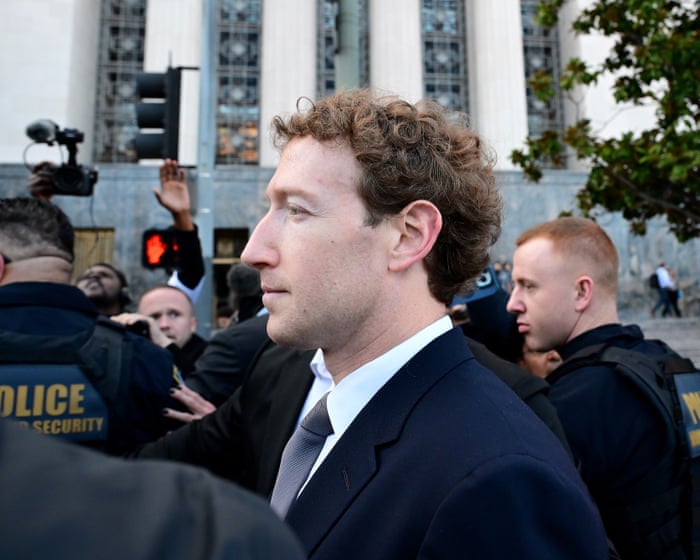
An $18bn settlement – and Zuckerberg barely blinked. The tech titans must be stripped of their power, and soon | Jonathan Freedland

Those who said Meta harms children struck a blow, but the ability of big tech to gouge profits and cause harm is barely diminished. That’s the battle to come

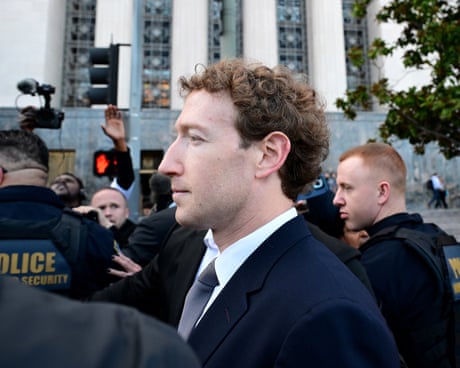
Follow the money. If you want to know how the tech giant Meta really feels about the $18bn it agreed to fork out to end a landmark lawsuit against it – an outcome widely hailed as a victory for campaigners – just look at its share price. It didn’t go down when word came on Wednesday that Meta had settled with the 29 US states that had argued that the company’s Facebook and Instagram platforms harmed children. On the contrary, Meta stock went up, initially surging by 5%, before levelling out at a gain of just over 1.25%. There could be no clearer proof that the money men reckon Meta dodged a bullet.

To be sure, there was plenty to hearten those who have long believed that social media damages teenagers especially, whether by exposing them to content they shouldn’t see or by sapping their self-esteem, offering them filters that show how much prettier they would look if they had cosmetic surgery or giving them a metric of their popularity – and unpopularity – in the form of a running tally of “likes” and views.

Jonathan Freedland is a Guardian columnist

Do you have an opinion on the issues raised in this article? If you would like to submit a response of up to 300 words by email to be considered for publication in our letters section, please click here.

Continue reading...

© Photograph: Wally Skalij/Getty Images

© Photograph: Wally Skalij/Getty Images

© Photograph: Wally Skalij/Getty Images

  •  

At least 93,000 ‘in great need’ after Nepal-Tibet flash floods, says Red Cross

Federation says it fears death toll of nearly 600 will continue to rise as rescuers reach cut-off areas

The Red Cross has said at least 93,000 people may have been affected by Wednesday’s flash floods on the Nepal-Tibet border, which have killed nearly 600 people, left another 1,900 missing, and triggered a huge rescue operation that is being hampered by fears of new flooding.

The International Federation of Red Cross and Red Crescent Societies (IFRC), the world’s largest humanitarian network, said it feared the death toll would continue to rise as some of the hardest-hit areas remained inaccessible after roads and bridges were destroyed by the torrents.

Continue reading...

© Photograph: Rajesh Kumar Singh/AP

© Photograph: Rajesh Kumar Singh/AP

© Photograph: Rajesh Kumar Singh/AP

  •  

Companies Can Tell Investors Less Under Proposed S.E.C. Rules

Fewer audit and disclosure requirements could reduce costs, but experts say they could also help disguise fraud or financial stress.

© Tierney L. Cross for The New York Times

Paul Atkins, the Trump-appointed chairman of the Securities and Exchange Commission.
  •  

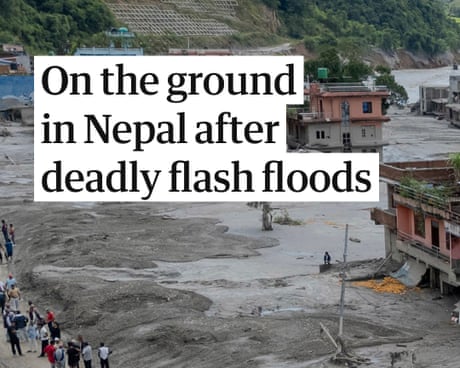
On the ground in Nepal after deadly flash floods – video

South Asia correspondent Hannah Ellis‑Petersen is on the ground in Bidur, one of the most devastated towns in Nepal, after the deadly flash floods that struck on Wednesday morning. Most homes were completely washed away when a tide of mud, rocks and debris flooded the river valley. Those who survived describe clinging on to buildings and trees as the water rushed over them

Continue reading...

© Photograph: Reuters

© Photograph: Reuters

© Photograph: Reuters

  •  

Families of 33 missing Britons rush to Nepal as fears grow of more floods

Desperate relatives trying to reach loved ones last seen in area where entire villages have been swept away

Families are rushing to Nepal to search for the 33 British nationals who are still missing, as fears mount over the risk of a second wave of flooding in the region.

The catastrophic flash floods that hit Nepal and Tibet on Wednesday, thundering down valleys and sweeping away entire villages, have killed at least 538 people, while more than 1,500 remain missing.

Continue reading...

© Composite: Facebook

© Composite: Facebook

© Composite: Facebook

  •  

'Preposterous': Lawmakers Reject Trump's Renaming of Lake Ontario Amid U.S.-Canada Trade War

President Donald Trump on Thursday signed an ‌Executive Order instructing Interior Secretary Doug Burgum to rename Lake Ontario as “Lake America.” ​

Canadian Prime Minister Mark Carney has said Lake Ontario will continue to be called by that name despite President Donald Trump signing an Executive Order directing for it to be renamed as “Lake America.”

“The name is more than 400 years old, pre-dating both the Confederation of Canada and the Declaration of Independence of the United States of America,” said Carney on Thursday. “We know that America is changing. Their trading relationships, their foreign policies, their national monuments, their hydronyms.”

Insisting that Canadians are aware of the “naming reality,” Carney rejected Trump's directive for the lake, which borders the Canadian ‌province ⁠of Ontario and the U.S. state of New York.

The name change is the latest jab in an escalating trade war between the U.S. and Canada after talks collapsed last week, leading to tariffs being imposed by both countries.

The order applies to U.S. federal references of the lake and does not determine how Canada—or others—refer to the body of water.

The “Lake Ontario” moniker has also firmly been rejected by many in the U.S., including New York’s Gov. Kathy Hochul, who simply stated: “New York won’t be calling it that.”

With tensions between the Trump Administration and Canada reaching new heights, here’s what to know about how lawmakers on both sides of the lake have responded to the Executive Order.

How Canadian lawmakers have reacted

Ontario Premier Doug Ford, a vocal critic of the U.S. President, insisted “it’s Lake Ontario to Canadians and the rest of the world, now and forever.” In agreement, Ontario lawmaker Marit Stiles said: “It will always be Lake Ontario.”

Patrick Brown, the mayor of Brampton, Ontario, described the name change as “preposterous,” telling CNN: “We’re still going to call it Lake Ontario, I think many of you [Americans] will still call it Lake Ontario.”

“The only person who is going to have a trouble with what to call it is your President,” Brown continued. “If our Prime Minister wanted to rename the Mississippi, you’d probably get a chuckle out of it. It’s having the same reaction in Canada.” 

Pierre Poilievre, Canada's main opposition leader, staunchly pushed back on Trump’s directive. “Lake Ontario is and will always be Lake Ontario, and no Executive Order will change that. It doesn't belong to President Donald Trump to rename on a whim,” he said

“It's Lake Ontario, buddy,” said Nova Scotia Premier Tim Houston, referring to the name change as “some real foolishness.” 

Elsewhere, Toronto mayor Olivia Chow vowed that Trump's "antics won't weaken our resolve as Canadians."

Manitoba Premier Wab Kinew likened Trump to an “over the hill” rock band. “He thought he had a real hit, a real golden oldie with the Gulf of Mexico, and he’s trying to bring back that,” he said, referencing how Trump signed a similar order last year renaming the Gulf of Mexico the “Gulf of America.” 

City councillor Brad Bradford, who is currently running for mayor of Toronto, said if he’s elected, he’ll push to rename Trump’s home state the “Province of New York.”

Referring to D.C.’s actions as "ludicrous," Bradford insisted “you can try and change the name of a lake, but you can’t change the spirit of our city, our province, or our country.” 

What U.S. Democrats have said about the name change

Rep. Tim Kennedy of New York referred to the trade war as "illogical" and accused Trump of distributing "juvenile" rhetoric. “Lake Ontario will always be Lake Ontario,” he said.

Former First Lady and 2016 Democratic presidential nominee Hillary Clinton stated “it’s Lake Ontario” in response to the news.

Sen. Chris Van Hollen of Maryland argued the move was “more evidence we elected a toddler as President.” 

Rep. Debbie Dingell of Michigan announced plans to introduce a bill, titled the "Hands Off Our Great Lakes Act," that would nullify the name change.

Denouncing the President's directive, Dingell said: “Donald Trump can sign all the Executive Orders he wants, but it will always be Lake Ontario. Canada is not our enemy. It is our neighbor, our ally, and one of Michigan’s most important economic partners. It is a friendship that no stroke of a pen can erase.”

House Minority Leader Hakeem Jeffries told his social media followers: “Donald Trump picked a fight with Canada that is costing you money. Instead of fixing it, he is spending your tax dollars to rename Lake Ontario.”

Sen. Mark Kelly of Arizona queried the directive while referencing the cost of living crisis, asking: “How does changing the name of a lake help the American people? They can’t afford their lives right now.”

Sen. Amy Klobuchar of Minnesota, who is running for Governor, referenced the lake that straddles her own state when responding to the news, saying: “On behalf of the great Lake Superior, I call that superiorly stupid. We’ve had enough of Trump’s tariff taxes.”

  •  

Cocktail of the week: Legare’s mini bay leaf martini – recipe | The good mixer

Make a batch of this vodka- and vermouth-infused tipple to keep fresh in the fridge and sip over the weeks ahead

We came up with this when we were looking to create some fun, bespoke but easy-to-serve cocktails that we could pre-batch for busy services but that still had an edge. Vodka is an especially good base for infusions because it’s so neutral, while martinis are having a real moment right now, so this ended up ticking all our boxes, being something that’s recognisable but fun, and also noticeably our own.

Alex Mammone, general manager, and Matt Beardmore, executive chef, Legare and Luna, London SE1

Continue reading...

© Photograph: Rob Lawson/The Guardian. Drink styling: Seb Davis.

© Photograph: Rob Lawson/The Guardian. Drink styling: Seb Davis.

© Photograph: Rob Lawson/The Guardian. Drink styling: Seb Davis.

  •  

Managerial turnover means we need new ways to predict Premier League fixtures

With 110 matches to feature two coaches appointed this year, tactical history may be more insightful than teams’ head-to-head records

New managers are facing an almost one-in-two chance of being fired before the end of the season, a finding from Guardian analysis that shows 22 of the past 50 permanent Premier League managers to leave their roles lasted less than a year.

The betting markets reflect this reality. Six of the eight Premier League managers deemed most likely by bookmakers to be next to leave their post were appointed in 2026. Football management is a very precarious employment position. It looks inevitable that some of the 11 men who have only been in their role since earlier this year will fall before the end of the 2026-27 season – even if none of them are the first to move on.

Continue reading...

© Photograph: Catherine Ivill/AMA/Getty Images

© Photograph: Catherine Ivill/AMA/Getty Images

© Photograph: Catherine Ivill/AMA/Getty Images

  •  
❌