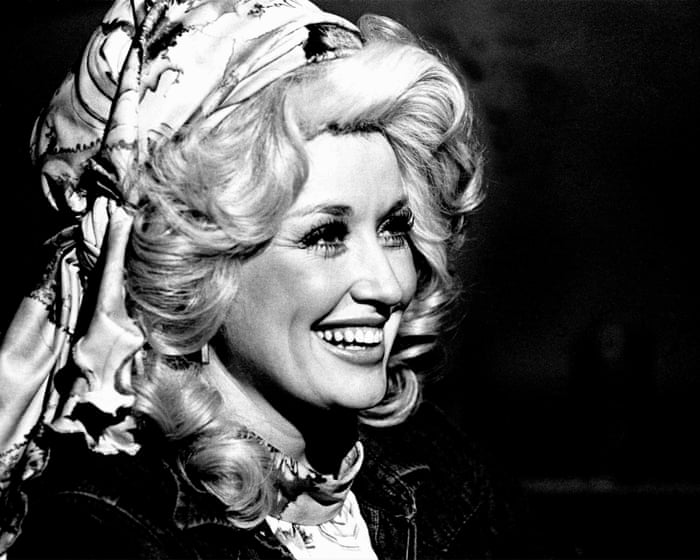
Musicians and performers pay tribute to the country legend who managed to be a generational talent, a formidable entrepreneur, a dedicated philanthropist and a truly kind person
What we eat and where it comes from is a critical part of human health. According to a 2025 survey, 59 percent of Americans think it’s important to know where their food comes from, and 54 percent prioritize food that is consistently available locally. And one of the best places to get that locally sourced food? Farmers markets.
The US has more than 8,700 farmers markets, where roughly 40,000 farmers sell their products. Recently, the markets have been getting a bit more attention thanks to a series of high-profile food recalls. Americans’ confidence in the safety of their food is being tested, and buying direct from your local farm could be the answer.
Some produce travels hundreds or thousands of miles from where it’s grown to where it’s sold, passing through processing, storage, and distribution facilities. One advantage of a small local farm is the direct journey the produce takes from the field to the customer. But how does a small family farm business compete with major grocery stores for customers, and what’s behind their sales pitch for safer and fresher food? We drove out to Camarillo, California, to a small family farm to find out.
This video is presented by Verizon Business. Verizon Business doesn’t have a say in our editorial decisions, but they help make videos like this one possible.
The site, called Stud or Dud, helps daters dig up dirt on potential paramours. It’s fueled by the same public data as PeopleFinders.com—and comes with many of the same concerns.
Richie Bell stood at the door of an East Village bar, nervous for a singular reason: he had to hand over his phone to a bouncer to get in. At 23 years old, Bell had hardly ever been without a device — he got his first iPhone in elementary school — but when he saw a video on TikTok advertising a queer, phone-free, funk dance party called Who’s Dancing?, he decided to test his limits. He immediately purchased a ticket and planned to attend alone.
Bell was pleasantly surprised to discover he wouldn’t have to relinquish his phone at all, but simply allow security to place tape on both the back and front-facing cameras. “You can’t scroll Reels because, think about it, on iPhones anyway, if they’re taping the front camera, that’s also the speaker area,” Bell told Vox. Without the temptation of content on his phone, Bell mingled with other attendees, who were similarly unoccupied and also flying solo. Even though event staff kept their eyes peeled for any errant phone usage, no one seemed to reach for them anyway.
Compared to other bars and parties he’s been to, Bell found this one more conducive to unbridled socializing and dancing. It’s easier to approach a stranger when they’re not hunched over their phone. No one is worried about looking like a fool, immortalized in video, because everyone is a little foolish, moving their bodies without fear of judgment.
Across the country, clubs, bars, music venues, and other social spaces are encouraging attendees to lock their phones away — or, at least keep them out of sight — for screen-free gatherings. According to event hosting platform Eventbrite, phone-free experiences have increased more than 500 percent globally between 2024 and 2025. Musicians Phoebe Bridgers and Harry Styles banned phones at their concerts; comedians John Mulaney and Bill Burr have followed suit. Clubs from Los Angeles to Miami are creating camera-free dance floors. Bars and restaurants in cities like San Francisco and Philadelphia that have long prohibited phone and camera use have been joined by newer establishments in Charlotte, North Carolina and Fort Worth, Texas.
The rise of phone-free socializing speaks to a growing exhaustion with an always-connected world. More than half of US adults say they use their smartphone too much, according to a 2022 Gallup survey. Excessive smartphone use has been linked to poor sleep quality and depression, and even the mere presence of a phone lessens cognitive capacity. The ubiquity of devices — and the cameras on them — has instilled a low-grade panic that you might end up going viral for eating a sandwich in the background of an influencer’s video. Even Gen Z, who has always lived under the spectre of technology, is nostalgic for times before everyone was “plugged in” and widely accessible.
Screen-free events are the natural evolution of the cultural desire to break up with tech. By transforming physical spaces, ridding them of distracting devices, event organizers and bar owners aim to foster connection, reclaim attention, and maintain a sense of privacy. Even a short detox from smartphones has the ability to dramatically shape the tenor of a get-together for the better.
“Exploited for content”
Before X&ND (pronounced “zand”), the funk and soul artist who organized the phone-free party Bell attended, first conceived of Who’s Dancing?, they noticed very few people actually cutting loose at clubs. Instead, they were on their phones. “The second that anybody starts dancing in a club where there’s meant to be dancing, people pull out their phone,” X&ND told Vox. “They’re getting surveilled, they’re getting essentially exploited for content and being put in a position where they’re on display for people that they didn’t necessarily want to be on display for.” X&ND wanted to create a space for women, queer, and trans people to dance and express themselves without the fear of ending up on the internet.
Since last summer, X&ND has hosted eight sold-out dance parties (and Bell estimates he’s attended seven). Phone-free events, X&ND said, are a reclamation of culture, of attention, of self-expression. “Influencers aren’t able to post anything. Different companies aren’t posting anything about our parties because we don’t give them the material to,” they said. “I think it’s the culture taking the culture back.”
The bar and nightclub scene has struggled in recent years, with many venues closing due to high rent and fewer patrons spending money on alcohol. But perhaps a less obvious culprit is the pervasive anxiety of being captured on video during a moment of vulnerability. Some might be turned off from entering these spaces altogether due to the high risk of embarrassment if they’re captured and mocked online.
In Washington, DC, 28-year-old Jo Vee had similar concerns about privacy and craved an environment where they could be anonymous. Like Bell, Vee has had access to a camera phone since they were a child and can’t remember a time when they weren’t thinking about what to post on Instagram. But when a friend organized a phone-free dance party, Vee jumped at the opportunity to enjoy themselves, free from the pressures of the algorithm — and the potential of accidentally becoming a meme. “There’s nothing more terrifying than thinking that you’re going to a party just to have fun, and then you wake up the next morning and there’s a video of you that has 10 million views that you had no idea about, and now you’re like a GIF reaction on the internet.” (Vee clarified that they do not speak from personal experience, but said that a version of this has happened to a couple of friends.)
Distraction-free connection
Although many people inherently recognize the downsides of excessive phone use, they also realize they’re fighting an uphill battle. Demanding jobs can tether workers to their emails and algorithms are designed to keep us engaged and scrolling. Our attention is constantly being pulled from the real world to the digital one. But even a brief respite from screens can be beneficial.
In his research, Georgetown associate professor Kostadin Kushlev found that phone usage during a social interaction undermines how much people enjoy spending time with others. “It’s not so much [that] the phone is making us feel unhappy,” Kushlev told Vox, “it’s more like I could be happier if I was not using a phone.” Put another way, people enjoy social gatherings more when they keep their phone out of sight because they can give their full attention to their conversation partner.
Kushlev’s other research has shown that as people curbed their phone usage over a two-week period, their ability to pay attention improved. Even a shorter detox period, like a two-hour phone-free gathering, could minimize overstimulation and encourage greater focus, Kushlev said.
Inside the Charlotte, North Carolina, bar Antagonist, couples on dates engage in heart-to-hearts and neighboring tables of strangers strike up conversations. That’s because the bar has banned phones. Upon entering, visitors are asked to secure their phone in a pouch which they keep with them for the duration of their stay. If they need to use their phone, they can do so outside.
Since Antagonist opened in March, owner Michael Salzarulo has observed patrons clamoring for a Friday night detox after a long week of screen-mediated work. “Normally Saturday is your biggest day,” Salzarulo said, “but Friday nights are our busiest nights of the week.” While anyone can lock their phone in another room for a few hours, Antagonist provides an element of accountability, Salzarulo said: a dedicated space for distraction-free connection.
Alex Becker was yearning for a break from her phone and her “email, Microsoft Excel job” when she co-founded PA Unplugged, a nonprofit championing policies that advocate for more mindful uses of technology, last year. One of the nonprofit’s initiatives, Screen Free Philly, maintains a calendar of screen-free events and organizes its own gatherings at breweries, parks, and other civic institutions, urging attendees to set aside their phones for discussions, art projects, and board games. At the most recent get-together, dozens of attendees handed their phones to Becker while they completed a series of puzzles throughout the city.
Although these gatherings are still fairly niche, Becker sensed a hunger among participants to seek out further opportunities for tech-free connection. While ditching a smartphone completely may be unrealistic, setting it aside for date night or an afternoon of gaming might be a salve for our tech-addled brains. We can implement these best practices at our own gatherings, too, by encouraging friends to leave their phones in a basket by the door or offering disposable cameras at parties.
“People are just done and ready to take their attention back, take their time back, and encourage more real-world connection,” Becker said.
Pet owners, rescue agencies, and wildlife groups are calling for new safeguards as AI makes it harder to tell whether animals, from polar bears to house cats, are real or fake.
A terminally ill woman makes a final trip to Egypt in an exquisitely wrought portrait of end-of-life reckoning
Virginia Woolf said of Middlemarch that it is one of the few English novels written for grown-up people. In the shallow and infantilising age through which we are living, Colin Thubron dares to assume that his readers are adults. Passage is a very beautiful, very moving, authentic work of art. Hardly more than a novella, it sits lightly in the hand, but its emotional and aesthetic weight overtips the balance.
Thubron began his career as a travel writer and a large part of the action of Passage is set in a vividly but economically evoked Egypt. This is not the teeming Egypt of Cairo or Alexandria, but of the countryside, the villages, and the great immemorial tombs and ancient monuments. The best travel writers know that “abroad” is most convincingly evoked not by awed exclamations at the world’s wonders, but by an attitude of relaxed familiarity. Thubron is obviously an old Egypt hand, or at least has the skill to convince us that he is.
Michael Coats Jr. of the Cleveland Browns tackles Ray Davis of the Buffalo Bills during a preseason game on August 22, 2026. | Nick Cammett/Getty Images
This story appeared in Today, Explained, a daily newsletter that helps you understand the most compelling news and stories of the day. Subscribe here.
Football season kicks off soon, and there’s an elephant on the field. Not the University of Alabama’s pachydermal mascot, alas — but a new study on the incidence of brain injury in football players.
The startling paper, published this morning in the journal BMJ, examined the brains of 235 of the 878 former NFL players who died between 2016 and 2021. It found that at least one in four of those players — and, in all likelihood, many more than that — had chronic traumatic encephalopathy (CTE) at their time of death.
CTE is an ugly disease. It’s a progressive, degenerative brain disorder caused by repeated blows to the head. It can be debilitating in its advanced stages, with symptoms including memory loss, confusion, depression, erratic behavior, and personality changes.
Researchers have long linked CTE to the recurrent head trauma common in football and other contact sports. But this study offers one of the clearest estimates yet of just how widespreadthe disease is. It’s not a freak occurrence confined to an unlucky few — it’s a significant occupational hazard, akin to black lung disease in coal miners.
Federal regulators have intervened to protect coal miners and other people in hazardous jobs, of course — but they’ve stayed on the sidelines when it comes to sports. Football is an American institution, after all. And regulators have few obvious ways to make the game safer.
Last year, the Trump administration also advanced a claim that, in my mind, gets straight to the heart of the moral dilemma of being a football fan. The Occupational Safety and Health Administration proposed formally excluding from standards enforcement hazards that are “inherent and inseparable from the core nature of a professional activity.” (That proposal has not been finalized yet.)
Is danger inherent to the “core nature” of football? And, if it is, how do fans reconcile their love of the sport with the substantial harm that it inflicts?
“Part of what makes football interesting is that it refuses to resolve itself morally,” the cultural critic Chuck Klosterman told Vox earlier this year. “It doesn’t let you land comfortably on one side or the other.”
Klosterman, who recently published a book about football, is one of these people who believes that danger is inherent to the sport: Remove it, he said, and the stakes diminish — the whole game gets less meaningful.
At the same time, football arguably does a lot of good, too: It creates shared rituals and civic pride; it gives millions of people a sense of belonging in an otherwise atomized world.
So where does that leave fans? Somewhere uncomfortable, I suppose. But we can draw a couple practical conclusions: Kids should not play tackle football. And both the NFL and college football programs should keep working to improve helmets and cut down on contact, especially in practices.
One link for later
➨ Treat yourself to a PSL. Yep: It’s (somehow, already) that time again. Since Starbucks debuted the divisive seasonal beverage in 2003, it’s become “a straw man for discussions about capitalism, seasonal creep, and the meaning of ‘basic.’”
Before you go…
Did you know…that humans’ closest invertebrate relative is the lowly sea squirt? As one biologist put it to Vox: “They just decided to take a different route on evolution.”
Today’s trivia: What is the state bird of Minnesota, recently embraced by anti-ICE protesters as a popular symbol of their movement? (You can find this and other brain puzzles in Vox’s daily crossword. Look for the answer in tomorrow’s edition.)
Yesterday’s trivia: Yesterday we asked you for the traditional, three-letter nickname for students and graduates of Yale. That would be “Eli,” as in “Elihu Yale” — the wealthy 18th-century merchant whose donations helped found the school.
When the NFL season kicks off next month, millions of Americans will gather around their televisions to watch athletes of comic book proportions crash into each other at breathtaking speeds. Inevitably, those players’ heads will smash into each other, leaving them dazed on the field. And according to a major new study, these repeated head-on collisions may eventually lead to a degenerative brain disease for many — if not most — of the players long after they’ve left the field.
For years now, America has been reckoning with the tension between its love for football and the growing evidence of its dangers. Those concerns can be boiled down to three letters: CTE, or chronic traumatic encephalopathy, which is the progressive brain disease that can lead to dementia, depression, suicide, and other serious mental health problems.
One major question over the past 20 years has been: Exactly how often does playing football lead to CTE? What are the risks for peewee players versus pros? How quickly does the brain deteriorate once the disease takes hold? And new research, published this week in BMJ, has provided us with some staggering answers. After analyzing the death records for hundreds of former NFL players, the co-authors concluded that at least 25 percent of the former players who died between 2016 and 2021 had CTE at the time of their death.
And the actual prevalence could be much higher, but more players’ brains would have to be given over to scientists for a CTE assessment for us to know for sure. Because among the 338 players whose brains were donated and studied, the CTE rate was an astonishing 93 percent. The question is, according to the researchers: Is that percentage skewed because the players exhibiting CTE symptoms were more likely to offer up their brain for research? Or, as the authors suggest is possible, is the real CTE rate closer to 90 percent? Only further research will be able to tell us, but even the latest estimate — one in four — is cause for concern.
It’s a stark reminder of football’s risks, delivered right on the cusp of a new season for pro, college, and high school teams around the country. And according to the Aspen Institute’s annual State of Play report, there are signs that the game’s future may actually be at risk.
More and more American parents are steering their kids away from tackle football. How long can an elite league like the NFL last when the pool of players is getting smaller and smaller — at the same time the scientific evidence of its dangers is becoming clearer and clearer?
The youth football pipeline is drying up
Despite the latest research, the NFL is going to be fine in the short term. Professional football is the biggest TV show in the country: Last year, 83 of the top 100 rated TV shows were NFL games, up from 72 in 2024. The next Super Bowl will almost certainly attract more than 100 million viewers and end up the single most-watched TV program in the US for the whole year. Football is one thing that transcends politics in an increasingly polarized America.
But with each new piece of evidence about the physical and mental costs of playing football, football’s long-term dominance looks less and less certain. Already, if you dig into the trend lines for youth participation, they reveal a real threat to the sport’s future.
Let’s start with the good news for football enthusiasts: Flag football has become more and more popular among kids, supported by investments and promotion by the NFL itself and expert consensus that it’s much safer than tackle, especially when it comes to head injuries. According to the Aspen Institute’s State of Play survey, flag football participation among kids ages 6 to 12 grew by 13.6 percent from 2019 to 2024, while tackle football play dropped 7 percent among the same age group over that time.
But it’s participation among the next age group that may be most revealing. According to the Aspen Institute, tackle football participation rates among Americans ages 13 to 17 — the prime age for middle school and high school teams — decreased 9 percent from 2019 to 2024. It has even fallen behind tennis among the teenage cohort. Many of the tweens who play flag football may never strap on a helmet to play tackle.
Even if fewer kids play tackle football year over year, the sport may still subsist on its promises of upward mobility for people who come from poorer backgrounds. With the recent introduction of compensation for college players, elite athletes can make millions of dollars in income before they even reach the NFL. It may be no surprise, then, that the young people still playing tackle football are more likely to be lower-income and live in conservative states.
Another study found that Black and Hispanic parents, who on average earn less money than their white counterparts, are more likely to see football as a path to college scholarship or even a professional career; the Washington Post reported in 2023 that the proportion of white players at the college level is falling while the percentage of Black players is rising. Football players are often thought of as modern gladiators: participants disproportionately from lower classes aspiring to riches and glory in a violent game for the viewing pleasure of the general public. That’s becoming more and more true as we learn more about its dangers.
As the annual hoopla around the NFL kickoff makes clear, football’s cultural dominance remains unrivaled among professional sports. But this new study has left even me, a lifelong football fan, wondering how much longer it can, and should, last.
An anthropomorphized Pumpkin Spice Latte with a spooky black cat. | @TheRealPSL/Twitter
Editor’s note, August 25, 10:15 am ET: This article was originally published in 2018 and has been updated for the start of the new PSL season.
August 25is not a day that is particularly known for feeling especially crisp or autumnal in most parts of North America. And yet it’s the day this year — the earliest release date ever — that Starbucks, contending with a slowdown in sales, will unleash its annual run of pumpkin spice lattes upon its customers.
You’d be forgiven for mistaking this tone for one of disdain. Since its inception in 2003, the pumpkin spice latte has become something of a straw man for discussions about capitalism, seasonal creep, and the meaning of “basic,” resulting in widespread hatred for an otherwise innocuous beverage.
For example, back in 2014, at the height of pumpkin spice mania, this very website described the PSL as “an unctuous, pungent, saccharine brown liquid, equal parts dairy and diabetes, served in paper cups and guzzled down by the liter” — even though clearly the pumpkin spice latte is a highly delicious treat that pairs well with wearing vests and making dorky comments about how crisp the air feels today. Yes, it contains 380 calories; yes, it will make your coffee a rather unappetizing orange color; no, you should not “guzzle it down by the liter.”
But contempt for the PSL and other items of the seasonal pumpkin spice variety is often not really about the flavor itself. After all, there are plenty of other flavors we should all be way more furious about. (There is a shop in Scotland that serves mayonnaise ice cream, people!) Too frequently, it’s about sexism, class anxiety, and our collective skepticism of savvy marketing. After all, the PSL is doing something right: It’s Starbucks’ most popular seasonal beverage, with about 424 million sold worldwide. In 2019, the chain leaned in further with the introduction of the Pumpkin Cream Cold Brew, finally admitting to the world that late August is still iced coffee weather.
The history of the PSL
The pumpkin spice latte almost didn’t exist. As former Starbucks veteran Tim Kern told Quartz, “A number of us thought it was a beverage so dominated by a flavor other than coffee that it didn’t put Starbucks’ coffee in the best light.”
Fortunately for Starbucks, the Tim Kerns of the company were ultimately overruled, because within a decade of its launch in 2003, the PSL became its top-selling drink, with more than 200 million of them sold. In 2015, Forbes estimated the PSL brought in around $100 million in revenue over a single season.
2015 was also the year that Starbucks changed its decade-old formula to include actual pumpkin for the first time, rather than simply caramel coloring and pumpkin pie spices (like cinnamon, nutmeg, ginger, allspice, and cloves). By all accounts, it tasted pretty much the same, just, according to its inventor, “cleaner.”
At that point, the PSL wasn’t just a cash cow — it was a cultural phenomenon. In part, that’s thanks to its marketing: There is nothing inherently seasonal about the spices that go in pumpkin pie, but Starbucks is able to convince us that the drink should only be consumed during the fall months, thereby increasing demand.
But there’s another reason the PSL exploded so much over the past decade. Culinary food trend analyst Suzy Badaracco told Vox in 2014, “Pumpkin became recognized as part of the comfort food trend during the recession in 2008,” due to its association with Thanksgiving and the holidays. In tough times, we’re more likely to crave foods that bring back happy memories.
Surely, though, the reason we all began talking about PSLs to begin with was their prevalence on social media. It’s not that they’re inherently photogenic — a Starbucks cup is a Starbucks cup regardless of what’s inside it, and the PSL doesn’t get its own specially designed cup the way the holiday drinks do.
It’s because when you add a PSL to a photo of, say, your new fall boots standing atop crunchy-looking leaves or a selfie featuring a festive dark lip color, it adds to the autumnal aesthetic. It’s not a coincidence that Instagram — the epicenter of cutesy fall tableaus — happened to blow up in the early 2010s, which is the same time it became cool to claim you despised pumpkin spice.
But maybe that’s not the whole story.
The backlash is about our anxieties around capitalism
The fact that the pumpkin spice latte — which, to many, conjures the scents and imagery of Thanksgiving — is released in increasingly hot weather year after year is often touted as an ominous harbinger of the evil forces of seasonal creep. “It’s agricultural revisionism!” argue some, citing the fact that pumpkins aren’t actually in season until autumn proper.
A viral John Oliver clip from 2014 declares as much, noting that “that bottle of pumpkin-flavored science goo sits behind the counter of Starbucks, never aging, like Ryan Seacrest”:
Perhaps in response to such criticism, in 2019 Starbucks released its second pumpkin spice beverage since the PSL’s introduction, but this time, it’s cold. The Pumpkin Cream Cold Brew is a vanilla cold brew with pumpkin cold foam and topped with pumpkin spice, which CNBC describes as “less sweet and has a stronger coffee taste than a pumpkin spice latte.”
The success of the PSL is also largely responsible for the barrage of pumpkin spice-flavored everything else, including cream cheese, dog treats, Kahlua, and an especially wacky seasonal crossover, Peeps. There have also been air fresheners, deodorant, even Four Loko (okay, that one ended up being a joke), resulting in the expected amount of hand-wringing about a food trend “gone too far.” (Indeed, back in 2010, the spice brand McCormick forecast that pumpkin spice would be a popular flavor for the holiday season, which in turn likely exacerbated the rush.)
When a food trend is as in-your-face as pumpkin spice is — ever been to a Trader Joe’s in October? — it forces us to think about how the free market is essentially designed to create this kind of phenomenon. If a product like the pumpkin spice latte sells, it’s natural under capitalism for other companies to attempt to replicate that success. But it’s uncomfortable when we see it happening on such an exaggerated scale.
Actually, the backlash is about our contempt for women
Well, maybe, but maybe what pumpkin spice backlash is really about is our dismissal of trends that are coded as feminine. As Jaya Saxena wrote in Taste in 2017, in a piece titled “Women Aren’t Ruining Food,” “When men enjoy something, they elevate it. But when women enjoy something, they ruin it.”
She continues, on the topic of “girly” food crazes like açai bowls, rosé, and pumpkin spice versus “manly” ones like barbecue, Flamin’ Hot Cheetos, and IPAs:
When those foods blow up, we judge women for falling for the marketing or trying to jump on the bandwagon, and we assume that because they like something other women like, they don’t have minds of their own. And on top of that, women are asked to reckon with, consciously or unconsciously, the perceived psycho-sexual symbolism attached to seemingly innocuous foods.
Plus, “masculine” foods are almost never chastised for being “basic,” the ever-nebulous term used to describe someone with average, predictable taste that’s usually reserved for women.
In the most stereotypical (and by now probably outdated) terms, a “basic bitch” wears North Face, leggings, and Uggs, and absolutely adores hashtag-PSLs, marking her as a woman with “a girlish interest in seasonal changes and an unsophisticated penchant for sweet,” as The Cut noted back in 2014.
There are often classist implications, too. In a 2014 BuzzFeed piece about “basic” and class anxiety, Anne Helen Peterson wrote:
Unique taste — and the capacity to avoid the basic — is a privilege. A privilege of location (usually urban), of education (exposure to other cultures and locales), and of parentage (who would introduce and exalt other tastes). To summarize the groundbreaking work of theorist Pierre Bourdieu: We don’t choose our tastes so much as the micro-specifics of our class determine them. To consume and perform online in a basic way is thus to reflect a highly American, capitalist upbringing. Basic girls love the things they do because nearly every part of American commercial media has told them that they should.
Essentially, hating pumpkin spice lattes is our way of othering those who drink them, and in the process, marking ourselves as decidedly un-basic.
Of course, this notion of what “basic” means is not the same way black people have been using it for decades, which, as Kara Brown explained in 2014 in Jezebel, pretty much just translates to “I think that the stuff you like is lame and I don’t really like you.”
“Rihanna could become the official spokesperson for Starbucks pumpkin spice lattes and nobody would think of her as basic,” she wrote. “You know why? Because Rihanna does what she wants and what she thinks is cool and doesn’t give a damn about anybody else.”
Or maybe nobody cares anymore
Even if Rihanna suddenly became the official spokesperson of PSLs, however, there is also the possibility that, quite frankly, nobody really cares that much anymore. We seemed to have hit peak “pumpkin spice hot take” in the year 2014, with searches for “pumpkin spice latte” peaking in 2015.
Maybe that’s because we’ve all been stricken with a case of seasonal beverage fatigue in general. Starbucks is constantly coming out with random gimmicky drinks, from the Unicorn Frappuccino to the so-called secret menu.
We also aren’t seeing the same kind of anger directed at what is arguably replacing pumpkin spice as autumn’s de facto flavor. In 2017, both Starbucks and Dunkin’ Donuts released maple pecan lattes. And according to restaurant menu data from that year, “mentions of maple as a flavor in nonalcoholic beverages on menus are up 86 percent this year over last. … Pumpkin mentions, on the other hand, are down 20 percent.” Yet nobody’s complaining about how stupid maple syrup is.
And these days, tweets about PSLs are way more in the vein of “Screw you and let me enjoy my shitty drink in peace, because everything is terrible.”
Pumpkin Spice Latte comes back tomorrow and I am 100% getting one in 91 degree weather because this world is a shitshow and I take joy where I can get it, like in delicious flavored coffee drinks.
People have also expressed exhaustion about the “actually-ing” over what pumpkin spice even is, as if anyone really wants to talk about it.
"pumpkin spice refers to the spices used in pumpkin pie and doesn't actually taste like pumpkins" is the "Frankenstein was the name of the doctor" of this decade
There are even ironic tweets poking fun at the automation of feminist responses to the anti-pumpkin spice brigade:
Women's unabashed enjoyment of a thing has always led to wholesale dismissal of said thing as frivolous and/or bad. From early examples like needlework to more current cases like pumpkin spice and romance novels, we can track this trend throughout history. In this paper I will –
Anyway, this is all to say that maybe by now pumpkin spice has finally returned to signifying the autumnal blend of cinnamon, ginger, nutmeg, and cloves, and nothing more: not basic, not everything wrong with capitalism, and not gross. Because it’s not! It’s delicious.
Update, August 26, 2026, 10 am ET: This story was originally published in 2018 and has been updated multiple times, most recently with the 2026 PSL return date.
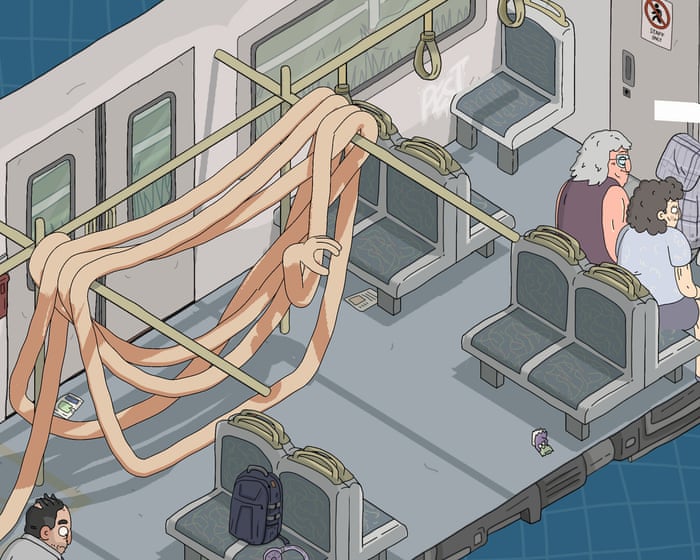
Developers who met through Australia’s improv scene and publishers of comedic party games have united for this slithering challenge in which you play as one extended limb
Most stealth games cast you as a spy, an assassin or a master thief. My Arms Are Longer Now dispenses with most of the criminal person, to send in just one spectacularly badly behaved limb. It slithers across floors, winds around furniture, steals things and slaps anyone within reach – finally answering the question nobody asked: what if your own arm turned to crime?
As Toot Games co-founder Matthew Jackson puts it: “You are the bad thing that happens to the people.”
Meta is in court again over child safety, and this time it’s a landmark case that could force significant changes to core features of Facebook and Instagram.
Lindsay Clancy’s defense argues she killed her three kids because of postpartum psychosis. But armchair detectives, including many fed-up mothers, are laying blame with her ex-husband.
Indiana Fever players Caitlin Clark, left, and Sophie Cunningham, right, during a WNBA game against the Atlanta Dream on August 16, 2026, in Atlanta, Georgia. | Rich von Biberstein/Icon Sportswire via Getty Images
On the court, the WNBA is thriving. After 30 years, its players are receiving a historic payout, along with a massive TV distribution deal that will mean more games, and hopefully even more fans. But off the court, all that attention has some downsides. Most recently, it means that the culture war has come for the WNBA.
Specifically, the league has found itself at the center of a debate over transgender athletes and women’s sports, one that Indiana Fever guard Sophie Cunningham ignited last month.
Cunningham, 30, has gained a reputation as an “enforcer” for her All-Star teammate, Caitlin Clark. In July, she told ESPN that “I think that I am here to extend love, but I also think that with love is truth, being honest. And I want to protect young girls in a locker room or young girls in sport who shouldn’t have to go against biological men.”
No known trans athletes have ever played in the WNBA, but that hasn’t much deterred pundits from weighing in. It’s the latest instance of the WNBA playing a central role in conversations about race and gender — even as most of the outrage is happening outside the court, while players and coaches would rather focus on basketball.
To get a better sense of what’s going on in the league — and why — Today, Explained co-host Noel King spoke with Ringer staff writer Seerat Sohi, who covers the NBA, WNBA, and women’s college basketball, about why the WNBA can’t seem to escape the culture wars.
Below is an excerpt of their conversation, edited for length and clarity. There’s much more in the full podcast, so listen to Today, Explained wherever you get your podcasts, including Apple Podcasts, Pandora, and Spotify.
What is it about the WNBA ?
The WNBA is a league that invites, frankly, a lot of distraction, both because of its own institutional failures — I do think the WNBA really struggles at telling its own story and has at times run away from its own story — but I think in general, the WNBA has become fertile ground for the culture wars, as we put them, because the league has exploded in popularity at the same moment in the country where we are embroiled in this cultural, political, legal fight over what the role of women is in society.
Let’s break this down to the two pieces you mentioned. You referenced institutional failures. What do you mean?
The WNBA, from the top down, has been understaffed, and it has historically been marketed in a way that is obsessed with trying to bring in some apocryphal average American, the nuclear family. And at the same time, this has been a league that has been defined by people who have historically existed on the margins. They are female athletes at a time when historically female athletes were not paid much attention to, and in fact were mocked.
It’s the league that is primarily Black, that is openly queer, that is politically outspoken. And the league has always tried to toe the line of marketing the faces that feel more like a girl-next-door type of vibe.
To the point that early on, we can look at, for example, Sue Bird, who, when she entered the league [in 2002], was encouraged to not come out.
And if you look back at pictures of her, she is dressed in a way that not only is it feminine, but it is also not the issue. The issue is that she’s very clearly uncomfortable in her own skin. Diana Taurasi, whose jersey was just retired — if you look back at her awards, it’s the same thing.
Fast-forward to 2026, these are queer icons who are highly marketable in the media environment that we are in right now, but the WNBA has always been behind the eight ball in that regard because it has run away from its identity.
So by institutional failures, what we mean is maybe a lack of bravery or a lack of spine. You also said this exploded because the WNBA is of great interest at this moment to right-wing figures. What do you mean by that?
The right cares about the WNBA in the same way that it cares about who becomes a Disney princess. It understands the power of a good story. It understands symbolism. To see women on that stage thriving, to see them sweaty, to see them wanting, to see them be the main character instead of the object of somebody else’s affection or interest, to see them be the subject and be the ones that are going for something as opposed to being on the sidelines.
That in and of itself alone is very, very powerful. And then you think about where the WNBA is politically. This has always been a league that has been very outspoken. This is a league that in 2020 helped flip a Georgia Senate election and actually ousted their then-owner of the Atlanta Dream who spoke out against the Black Lives Matter movement.
I always understood the WNBA to have a smaller fan base. But the situation with Sophie Cunningham has made me realize it is much larger and much more middle-of-the-road than I would have thought. Did something change recently? Did the fan base of the WNBA grow?
[Indiana Fever All-Star] Caitlin Clark was an explosive figure. Caitlin Clark was really a gateway drug for WNBA fans. The sheer amount of eyeballs that she has brought to the game, the attention, her logo threes. She is the type of player that makes children out of all of us. And then there’s also this right-wing movement that has latched onto her as a symbol.
Why is that? For someone who doesn’t watch many games, what’s going on?
Caitlin is white and straight. That is a demographic that I guess you could say is maybe underrepresented in the WNBA. And there was a feeling when she came into the league that she wasn’t welcomed in the same way that maybe other stars in the past have been. There was a sense that maybe there was some resentment.
Now, I don’t know if that’s true. I would imagine, look, these are human beings that we’re talking about. There was probably a spectrum of feelings when you think about it. This was a league that didn’t have charter flights. Caitlin Clark comes in, they get charter flights.
Now, obviously that’s great for the players, but I also think that there was a feeling of, “Oh wait, the WNBA could have done these things that we’ve been advocating for for a long time. Now they’re finally listening because Caitlin is here.”
She is, ironically, an organic phenomenon that is bringing to light the manufactured failures of the WNBA in the past.
Caitlin Clark goes to the WNBA. The WNBA grows its fan base to include people who traditionally were not watching. And then what is the leap from that fact? More people at games, more eyeballs on games. More eyeballs on players, to a conservative movement seizes upon the WNBA and says, “We’re gonna make something out of this.” How did you see that play out?
It started with the 2023 college national title game, when Caitlin was still in college. And she went up against Angel Reese from LSU. LSU won that game. And after the game, Angel Reese did the “You can’t see me” taunt by John Cena, and it was actually something that Caitlin did [previously] in the Elite Eight. It was taken as trash talk. Angel then repeated that symbol to Caitlin after they won and pointed at her ring.
In the aftermath of that, Angel Reese was called all kinds of things by not only conservative commentators — a lot of this was conservative commentators, but you also had people like Keith Olbermann, who’s a former SportsCenter anchor and probably somebody who’s a little bit more in the middle of the road, calling her classless.
I think a lot of the WNBA fans took those things to be dog whistles, that it was a form of racism. And there was also just overt racism. There were just words that you and I would not say and would not repeat here that were thrown at Angel Reese, who has also dealt with a lot of vitriol since that moment.
That moment changed both of their lives, frankly. And that was really the inciting incident. From then on, I think that there were a lot of people in the new media landscape that recognized that the WNBA was a fault line for a lot of our modern discourse in America.
It is a league that you can use as a proxy to talk about race, gender fluidity, femininity, DEI, labor politics. It is probably the most modern American league that we have.
And if you look back at the history of sports, I think Americans have always used sports as a proxy to talk about things that aren’t actually about the sport. And the WNBA is really just the latest vessel of that.
The app now allows men to make the first move, suggesting its women-first positioning was limiting growth. It joins other dating apps now throwing everything at the wall in a bid to stay relevant.
The West Coast house-party scene has long been iconic. For these young, tech-savvy entrepreneurs, it was also inspiration for MyPlots, a party-promotion empire.
Overwhelmed theater apps and a scarcity mindset around exclusive big-screen formats for blockbusters like Dune: Part Three and The Odyssey have led to the “concertification” of movies.
Reading decline happens during the big transition all middle-grade readers go through: moving from short illustrated chapter books to fully fledged novels. | Ryan McVay/Getty Images
Something happens to kids when they’re about 9 years old. Before then, they’re voracious little bookworms, with most of them saying they read for fun at least five days a week. After their ninth birthday, only 35 percent still do.
Experts call this phenomenon “the decline by 9,” and they spend a lot of time trying to figure out how to stop it. They talk up and cherish the books that break through: the Harry Potters and the Percy Jacksons, which got so many kids to keep reading through those danger years and which sold so well through millennial and Gen Z childhoods. Publishers keep looking for new books compelling enough to keep kids away from their screens and glued to the page.
But for the past 10 years, books for kids ages 8 to 12 (known as middle grade) have been selling less and less.
“It had been happening for maybe a decade, very very slowly,” said Joanne O’Sullivan, a children’s book author and reporter for Publishers Weekly. What had been a gradual slope got dramatically worse in 2020. And in the years since the pandemic, publishers have shut downmultiple middle-grade imprints, culminating in it happening twicethis year.
No one in publishing is entirely sure why kids books stopped selling, but there are two major theories. One says that children are no longer reading as much as they used to, because they are worse readers than previous generations were. The age group that used to happily devour Harry Potter is now distracted by iPads and YouTube shorts, so they never developed the ability to sit down and focus on a printed page. Their reading scores, which started falling in 2014, tell the tale.
The other theory says that the kids aren’t the ones who changed — publishers are. Starting in the 2000s, middle-grade books began getting long, with the average going from 174.5 pages in 2006 to 290 in 2016. According to this narrative, publishers flooded the market with books too difficult for their target audience. Kids responded by tuning out.
Whichever theory is true, the fact remains that all those ravenous 8-year-old bookworms depend on middle-grade publishers to keep on reading after they turn 9. The publishers who sell these books have built massive businesses on their ability to supply kids with exciting, addictive stories. If they’re failing, what will kids turn to for entertainment instead?
Key takeaways
Sales of middle-grade books have been declining for over a decade, but the decline worsened during and after the pandemic.
Some industry insiders argue that, under the influence of Harry Potter, publishers started putting out books too long for their young readers.
Others argue that today’s overscheduled kids no longer have the free time to devote to reading for pleasure and that the pandemic broke the middle-grade book discovery chain.
Looking forward, publishers are focusing on short and funny books heavily loaded with graphics.
The middle-grade novel of the future looks like the Dog Man books.
Why did tweens lose interest in books?
Reading decline happens during the big transition all middle-grade readers go through: moving from short illustrated chapter books to fully fledged novels. It’s a pain point.
“They’ve been doing short chapter books; they’ve been doing those leveled readers in the classroom; and, then, all of a sudden, what’s available to them is a lot chunkier, more challenging,” O’Sullivan said. She described the transition as “abrupt,” adding, “that’s not necessarily just for kids who are struggling with reading. That’s also for kids who like reading and are capable.”
“If you have a kid who’s not a very confident reader, a long book is very intimidating,” Kelly Dickinson, a middle school librarian in Bethesda, Maryland, told Vox. “They just stall out before they can even pick one, because they look at it and they think, ‘I can’t read that.’”
The shadow of Harry Potter, with its doorstopper volumes approaching a thousand pages, looms large here. Before Harry, a standard middle-grade novel might look like The Baby-Sitters Club volume The Truth About Stacey, which clocks in around 35,000 words. In a Substack post in April, Vicky Weber, an author, literary agent, and author coach for middle-grade books, pointed out that Sorcerer’s Stone was 76,944 words long, already pushing the limits of a middle-grade reader’s attention. After the books became phenomenons, they got much longer; Order of the Phoenix was 257,045 words, which is heftier than most adult novels. As publishers raced to catch up, their books began to expand, as well.
“When something becomes really popular, other publishers try to replicate that success,” Weber told Vox. “I think one of the things we didn’t take into account is how many Harry Potter readers were adults.”
While middle-grade books really did get longer, everyone I spoke to also acknowledges that kids’ reading scores really did drop, too. Kids have lost a lot of their unstructured play time to the grind of organized sports and music lessons, which means the empty childhood hours that are such perfect reading opportunities have vanished. “That time to just sit down and read is so truncated for a lot of kids, probably a lot of the kids who would have chosen to read a 400-page book if they had the time,” O’Sullivan said.
Then, there was the trauma of Covid, which smashed right into kids’ reading habits. “There were factors like schools and libraries closing, not much time with peers, and plenty of screen time during the pandemic,” said Kristen McLean, who runs the thought leadership collective Circana Entertainment Knowledge Group. All these bad effects, McLean said, that essentially “broke the discovery chain” for middle-grade fiction, in what she describes as “a perfect storm for lower literacy.”
The graphic novel pivot
The good news is that kids didn’t stop reading entirely during the pandemic. A few categories spiked: illustrated books, graphic novels, and manga. Jackie De Leo, now the chief merchant and publisher at Scholastic, was a vice president at Barnes & Noble during the pandemic, and she describes seeing kids with an unquenchable thirst for manga all through 2020.
“If you sat in a store and watched the manga section, you’d see little kids at lunch; you’d see them through the day; and, then, it would move into being adults,” De Leo said. “The only real constraint was actual inventory.”
Now, O’Sullivan says she keeps hearing middle-grade publishers say, “Let’s meet them where they are.” In practice, that appears to mean they’re focusing on books like the wildly popular Dog Man, a graphic novel series featuring a hero with the head of a dog and the body of a police officer.
“Dog Man is full color — so immersive,” De Leo said. “There’s these fun parts about the physical book, too, where you actually have to flap the pages and it makes an animation reel.” More importantly, she said, the books are funny. “Kids like things that are funny, and we were giving them some pretty serious things for a while — books for adults packaged as middle-grade books.”
The new ideal middle-grade book is short, punchy, and comedic and comes with a hefty dose of graphics. “Maybe it’s comics, maybe it’s illustrated novels,” O’Sullivan said. “Maybe, instead of just running text, they’ll have a panel with some text messages in it or something, just to break up the text to make the entire experience of reading less intimidating.”
This focus on breaking up the text means that publishing isn’t going back to what middle-grade books looked like before Harry Potter: short, simple chapter books à la The Baby-Sitters Club and Encyclopedia Brown. Those series weren’t hefty or overly serious, but they were massive bestsellers on the strength of their words, not their images. (It’s also worth noting that Scholastic adapted a few of the BSC books into graphic novels in 2006 and, then, perhaps seeing the writing on the wall, picked up the project again in 2021.)
I asked De Leo if she thought the industry’s shift to including more illustrations suggests that kids have lost an ability to handle pure text, even when it is short and sweet.
But De Leo said that reading graphic novels represents a “different type of literacy” from that required to read Encyclopedia Brown mysteries, not a lesser one. She said that when she reads a graphic novel, she has trouble forcing herself to look at the images, not just the words. When she sees kids focusing on the pictures with ease, she takes it as evidence of “a real visual literacy that they have that I am jealous of.”
Dickinson, the librarian, said she wishes that publishers would put out comedic fiction in more formats. “A lot of kids want funny books, and a lot of the funny books are the illustrated hybrid stuff,” she said. “There’s not enough other funny books, in my opinion.”
Reenvisioning middle grade books
Experts are hopeful that publishers’ new direction will be enough to get kids reading again — and to get their parents to buy books. “This is probably the first year where I’ve heard people being optimistic and feeling excited about the new ideas that are coming,” O’Sullivan said. “People are beginning to be able to re-envision middle grade.”
The publishing shutdowns reflect the industry’s new direction. One of the three people to survive the March closure of Dial Books for Young Readers was an editor specializing in picture books and graphic novels. Macmillan is replacing the now-defunct Roaring Brook Press imprint, which also closed in March, with a new imprint specializing in nonfiction and illustrated books for kids, although it’s not yet clear what age group the new imprint will cater to.
With kids becoming stronger readers and books getting shorter, the hope is that they’ll meet in the middle.
“Kids in the middle-grade age are extremely self-centered and view everything through how it impacts them. Developmentally, that’s very normal,” Dickinson said. “But also, they’re incredibly empathetic at this age.” Reading fiction, which allows us to imagine how other people’s minds work, can be deeply impactful for this malleable age if kids can hold onto their love of reading long enough to reap the benefits.
“This is a time when reading habits and interest in reading can really die,” Dickinson said. “The hope is to help kids discover what kinds of books or what formats they like — and to show that there are ways in.”
The early website Hot or Not taught its users to rank people at scale. Twenty-six years later, dating apps are trying to escape the culture the site helped create.
 Login
Login