The president’s deportation machine is creating a class of people inside the US who have fewer protections against the power of the state
Is the Trump administration creating a group in the US with fewer protections against executive power owing to their immigration status? Its often openly racist actions suggest so. US Immigration and Customs Enforcement (ICE) claims to target “the worst of the worst” – undocumented migrants who commit violent crimes. Yet the Guardian reported that over half of those arrested in July had no criminal convictions or pending charges. That month, ICE made record arrests and deportations, apprehending 1,500 people and removing 1,100 daily.
When campaigning, Donald Trump falsely claimed that Haitians were “eating the pets”. In office, his administration moved to end temporary protected status (TPS) for Haitians. In June, the supreme court let the protection expire, leaving about 350,000 people at risk of deportation to a country gripped by violence and instability. The court’s decision means more than 1 million TPS holders from 13 nations previously considered too unsafe to return to are now at risk of deportation. Many have lived and worked legally in the US for years.
Do you have an opinion on the issues raised in this article? If you would like to submit a response of up to 300 words by email to be considered for publication in our letters section, please click here.
New child safety measures are welcome, but the wider risks posed by these platforms remain unaddressed
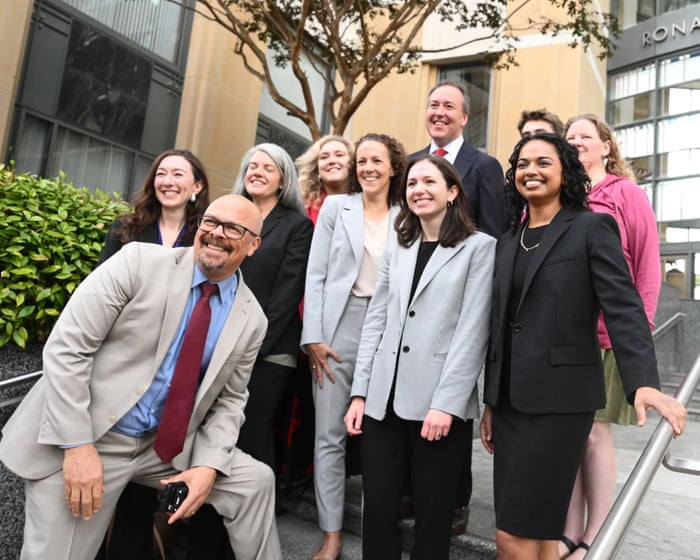
“Hook, hold, harvest and hide” was how Megan O’Neill, a lawyer for the US state of California, characterised Meta’s business model in the trial that ended last week with an $18bn settlement, to be shared between the states and territories that brought the case. It was a clever way to describe the company’s approach to users’ attention and data. But the sharpness of her words was not matched by the deal. While the strengthening of child safety features is welcome, the tech giant once again batted off efforts to alter its products.
Meta’s decision to settle enabled it to avoid any admission of liability. It put a stop to the awkward questions being asked of witnesses including Adam Mosseri, Instagram’s CEO, and the damaging claims made by whistleblowers such as Arturo Béjar. This former Meta safety engineer told the court that his own daughter had been sent unsolicited photos of male genitals on Instagram.
Do you have an opinion on the issues raised in this article? If you would like to submit a response of up to 300 words by email to be considered for publication in our letters section, please click here.
The far right is close to winning a state election for the first time since the second world war. A different economic approach is needed to combat it
The early autumn has become a time of foreboding and angst in German politics. In the eastern states that have become strongholds for the far-right Alternative für Deutschland (AfD) party, it has regularly made headline-grabbing advances in September elections. Only the refusal of mainstream politicians to form coalitions with one of Europe’s most extreme movements has kept it out of power.
This year, the lights are flashing red. Next weekend, when voters in Saxony-Anhalt cast their ballots, the signs are that the traditional firewall may not be enough. In polling, the AfD is currently scoring above 40% in the state, which could win it enough seats to govern on its own. Compared with the last election in 2021, its support has doubled; backing for the closest challenger, the centre-right Christian Democratic Union (CDU), has tumbled by almost 15%.
Outsourcing the industry to China cannot continue, but Europe knows it can no longer count on the US for a solution
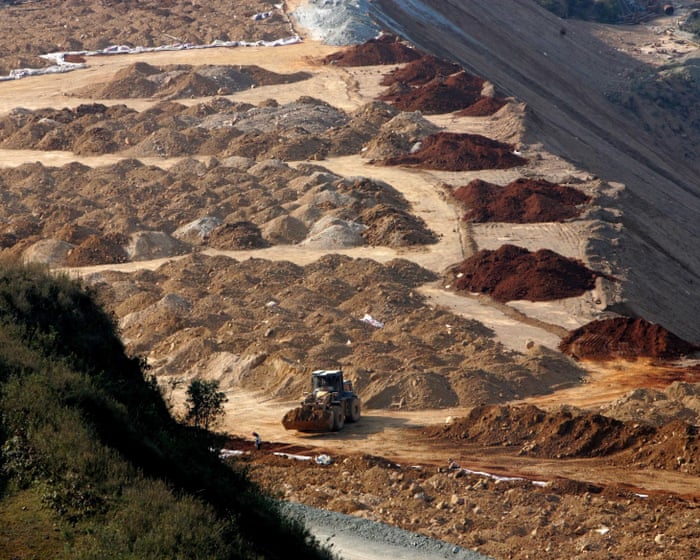
The alarm sounded 16 years ago. In 2010, China blocked exports of key rare earths to Japan in a row over disputed islands in the East China Sea. The critical minerals are essential to everything from advanced weaponry and iPhones to electric vehicle batteries and wind turbines, so the rest of the world took note. But it didn’t take much action. China still accounts for about 70% of rare-earth mining globally and 90% of separation and processing.
Then, last year, Beijing forced Donald Trump to back away from his trade war – not with its retaliatory tariffs, but the curbing of rare-earth exports. A scramble for new supplies began in earnest. The year-long trade truce is due to expire in November. The price of erbium, an element essential to communications infrastructure, has already jumped because of fears that export controls will soon be renewed.
The British Museum’s landmark cultural exchange is a symbol of post-Brexit rapprochement between Britain and France
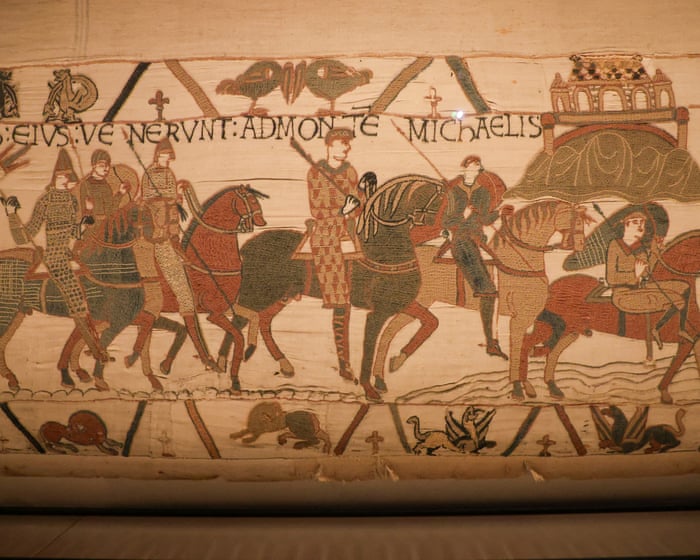
“Harold Rex interfectus est”: King Harold is killed. As every British schoolchild knows, the Bayeux tapestry depicts a turning point in the history of these islands: defeat at the Battle of Hastings in 1066, which would lead to the ascent of William the Conqueror to the English throne. Its return to the UK for the first time in nearly 1,000 years is being hailed as a hugely historic moment in its own right. The loan of the tapestry (technically an embroidery of wool on linen) to the British Museum in exchange for UK treasures from Sutton Hoo is the ultimate manifestation of soft power – a 70-metre symbol of post-Brexit Anglo-French rapprochement in comic-strip form.
Ticket sales for the exhibition, which opens on 10 September, were the biggest in a single day in the museum’s history, with online queues of 80,000. Radio 4 is devoting a day of special broadcasts to mark the arrival of the tapestry, including a new drama with verse from the poet laureate Simon Armitage. The museum’s videos explaining this tale of ambition, friendship, betrayal and revenge are fittingly narrated by Traitors presenter Claudia Winkleman. Norman-mania is here.
Do you have an opinion on the issues raised in this article? If you would like to submit a response of up to 300 words by email to be considered for publication in our letters section, please click here.
 Login
Login