Altering copyright law to allow AI companies to scrape music, books and journalism could trigger a constitutional breach, Coalition senators and the recording industry have warned, as they raise new fears it could open Australia to massive legal action and compensation claims from rights holders worldwide.
The attorney general’s department admitted it was “extremely alive” to the issue, and Australia’s leading constitutional expert, Anne Twomey, agreed there was “potentially” a concern – depending how legislation was drafted – that granting AI companies permission to scrape copyrighted material from the internet could amount to an acquisition of property by the government.
As is the custom, millions of children in the United States will be out in the streets this Halloween to trick-or-treat, decked out in costumes. Also as is custom, adults will fret about the mostly mythical dangers children may face. Once upon a time it was razor blades in apples; this year, it’s rainbow fentanyl in candy. But while fears of children receiving narcotic-spiked treats are unfounded, there is a very real danger that America’s children face on this most hallowed of evenings: cars.
That’s because pedestrians under the age of 18 are three times more likely to be struck and killed by a car on Halloween than any other day of the year. A 2026 analysis of federal crash records found that 45 children were killed while walking on Halloween between 2010 and 2024, more than any other day. That risk grows to 10 times more likely for children aged 4 to 8 years old, according to a study from 2019 in JAMA Pediatrics.
“You’re going to have increased numbers of children, including younger children who are out on the streets,” said Lois Lee, a professor of pediatrics and emergency medicine at Harvard Medical School. “At the same time, you have adults who are driving, and especially this year on a Monday, people will be driving home from work. If children are in costume, they may be wearing darker clothing … which makes them harder to detect.”
The JAMA Pediatrics study from 2019 corroborates this, noting that Halloween “may heighten pedestrian traffic risk, because celebrations occur at dusk, masks restrict peripheral vision, costumes limit visibility, street-crossing safety is neglected, and some partygoers are impaired by alcohol.” It’s the kind of lethal combination that can turn a fun occasion into a deadly nightmare. Adult victims included, the risk of death to all pedestrians was 43 percent higher on Halloween compared to a regular evening.
But what happens on Halloween isn’t an isolated incident. After gun injuries, motor vehicle injuries are the second leading cause of death among children in the US overall. And with pedestrian fatalities (both adult and child) at a 40-year high in the US, it’s worth asking why children roaming the streets is so inherently deadly, and what can be done about it.
“Sometimes when you talk about this issue, you get pushback from people and people say, ‘Well, of course, you have more children on the streets, of course, more children are going to die,’” Doug Gordon, a writer and podcast host who advocates for safer streets and cities, told me. “But that accepts a baseline level of danger that I think we as a society have in fact accepted on the other 364 days of the year.”
There are broader reasons for why streets have gotten even more dangerous for pedestrians recently. One is that drivers are distracted — not just by their phones, but increasingly by the infotainment systems that come as a part of newer cars. A more pressing issue is the increasing size of cars in the US; SUVs make up half of all car sales in the US, and are much more likely to kill pedestrians in crashes than smaller vehicles. “Mass times [acceleration] is force,” Gordon summed up. “When you increase the mass of something, you’re going to increase the force at which it interacts with a small vulnerable child.”
But the biggest reason may be that American streets and cities are designed for cars, and not people. As Charles Marohn — founder and president of Strong Towns and an expert on urban planning and civil engineering — has argued, engineers who design streets prioritize getting cars as quickly from point A to point B over everything else. One recent example: A traffic safety committee in Utah could not find any way to make the five-lane road crossing to a school safer for students aside from just removing the crosswalk altogether.
But there is a lot that can be done to make streets safer, for future Halloweens and every other day of the year. In the short term, cities and towns can build on open streets programs implemented after the Covid-19 pandemic began, which involve closing certain streets to car traffic to allow for more public space. Notably, New York City announced a “Trick or Streets” plan that would see 100 car-free zones in effect from 4 to 8 pm on Halloween this year. And the Big Apple isn’t alone, as Henry Grabar reported for Slate: less dense and more car-dependent cities like St. Petersburg, Florida and Seattle will also either close off the city center for Halloween or actually allow residents to apply for permits that can close off their neighborhoods to car traffic.
In the long run, Gordon believes that places around the US should be able to pass what is known as the popsicle test, where a kid should be able to safely walk to a store, buy a popsicle, and return home before it melts. In essence, every city should be designed to be friendly and traversable to the most vulnerable in our communities. “If you start thinking along those lines, then I think you start thinking along the lines of what infrastructure is needed to make that possible, where I would feel comfortable letting my kid do that,” Gordon said. “Halloween is like a giant version of the popsicle test because it’s not just your kid, it’s every kid in the neighborhood.”
Designing safer streets for children goes beyond safety — it would make for a better Halloween. “Having sidewalks and good lighting is a good preventive measure, not just for injury prevention, but also just general health,” Lee told me, “because that encourages everybody in the neighborhood to walk, exercise, and get outside, which is better for everybody’s health as well.”
And if their safety isn’t enough motivation, designing dense, walkable cities could even lead to bigger candy hauls for kids.
“When you build a city that’s safer, so that kids can walk around by themselves and not be worried about getting hit by a car, or the parents being worried about them being hit by a car, it’s just better,” Gordon said. “It’s awesome. They’re independent. It’s fun. And on Halloween, they get a lot of candy.”
Correction, October 31, 4 pm ET: A previous version of this story had an inaccurate definition of the equation for force.
Update, October 30, 2026, 10 am ET: This story has been updated to include new federal crash data.
IISS study questions overreliance on American support and ‘overdependence on expensive, high-end systems’
Gulf states are going to have to reconfigure their trillion-dollar defences given the damage inflicted on their economies and the questionable continued value of US bases in the face of Iranian attack, according to a study by the International Institute for Strategic Studies.
The report says that in the weeks before the 8 April ceasefire, 12 regional states, overwhelmingly in the Gulf, faced 4,670 Iranian one-way attack drones and more than 1,400 ballistic missiles. Nearly half were aimed at the United Arab Emirates. Although the vast majority were repelled, one estimate of the damage to energy infrastructure cited by the report is put as high as $58bn (£43bn).
A Get Out the Vote rally hosted by the Republican Party of Kentucky took place on October 24, 2026. | Tom Williams/CQ-Roll Call, Inc via Getty Images
Less than a week out from the 2026 midterms, Republicans across the country are feeling the heat from their party’s vote last year to shrink Medicaid by roughly $1 trillion over the next decade. The cuts, driven largely by new work requirements and eligibility checks, are expected to leave more than 7 million Americans without insurance by 2034. They’ll also hit hospitals, clinics, and nursing homes that everyone uses, whether or not they’re on Medicaid.
These cuts weren’t supposed to be noticeable to voters just yet. Republicans designed them to take effect in 2027, after the midterms.
But some of the damage is already showing up. Paired with a reduction in tax credits to help buy insurance through the Affordable Care Act, and rising employee premiums, the cuts are colliding with a broader voter revolt against the high cost of living — and have turned healthcare into a top midterm issue.
A slew of recent polling shows healthcare costs sitting at the top of voters’ economic worries as the campaign season winds down. A KFF poll from earlier this month found healthcare outranked food, housing, and utilities as a top concern, with nearly half of voters saying it was “extremely important” for candidates to be talking about. And in late September, an Associated Press and KFF survey of rural voters found that twice as many said the Trump administration’s healthcare policies had hurt the health of people in their community as said they’d helped.
Key takeaways
Healthcare costs top the list of voters’ economic concerns
The GOP’s new $50 billion rural fund doesn’t offset $137 billion in rural Medicaid cuts, and the savings come mostly from people losing coverage.
Work requirements hit nationwide in 2027, so the first wave of coverage losses lands as the 2028 campaign begins.
Republicans have tried to rebrand the One Big Beautiful Bill Act as the “Working Families Tax Cuts,” but Politico found voters largely unmoved by the new name, and Fox News recently gave Democrats a 22-point lead on who voters trust to handle healthcare.
They’ll have even more to work with next year. The new Medicaid work requirements and the six-month eligibility checks that Republicans delayed past the midterms will all take effect in 2027, which means the first wave of people losing health insurance coverage will hit right as the 2028 campaign begins.
Republicans’ defenses aren’t holding up
Reducing Medicaid spending became a critical part of the One Big Beautiful Bill Act in order to help offset the multitrillion-dollar cost of extending President Donald Trump’s first-term tax cuts, adding some new ones, and funding ICE.
Mindful of the potential for political backlash, Republicans took steps to ward off attacks.
The main defense Republicans have relied on is to point to a $50 billion rural health fund that was also included in the bill. The GOP is touting it as “the single largest investment” in rural healthcare in over 20 years.
But fact-checkers and health analysts have been clear that this temporary infusion of funds, spread out over five years, doesn’t offset the $137 billion in permanent cuts projected to hit rural areas over the same decade.
Maine Republican Sen. Susan Collins, who voted to let the One Big Beautiful Bill Act reach the Senate floor but against final passage, leaned on this rural healthcare fund in a debate earlier this month. “If I had not allowed the bill to go to the floor, I would never have been able to author the $50 billion fund to help rural healthcare,” she said. Troy Jackson, her Democratic challenger, emphasized that the fund comes nowhere close to covering what Mainers stand to lose. “Senator Collins is like an arsonist who helped set the fire, and then she wants credit for bringing a cup of water to put it out,” he said.
Voters don’t need a fact-check to notice when a hospital shuts down or reduces service. In some cases, medical institutions aren’t waiting for the cuts to arrive, and are making decisions based on the federal funding they expect to lose. In Iowa, for example, MercyOne Clinton Medical Center ended labor and delivery services earlier this year, citing decreased Medicaid funding as part of the reason.
“The public’s not stupid, and we’re all already absorbing a lot of additional costs that we shouldn’t have to because of Republican decision-making in Washington, DC,” Michigan Gov. Gretchen Whitmer told Politico recently.
The second is to deny there is reduced spending at all. “It’s not an actual cut,” as GOP Rep. David Valadao of California said in a debate several weeks ago — the savings, Republicans argue, come from cracking down on waste, fraud, and abuse.
This distinction is an important one in certain campaigns. Medicaid covers over 60 percent of Valadao’s California district, and he voted for the bill. Valadao also led a letter, signed by 12 other Republicans from battleground districts, declaring that “we cannot and will not support a final reconciliation bill that includes any reduction in Medicaid coverage for vulnerable populations.” Every one of them ultimately voted for it.
Loss of coverage is already happening in Nebraska, the only state to start enforcing its new Medicaid work requirements ahead of the deadline.
The “no actual cuts” claim rests on a technicality that the law doesn’t reduce benefits for anyone who stays enrolled. But the roughly $1 trillion in savings the Congressional Budget Office scored comes almost entirely from people losing coverage. When Arkansas tried the same 80-hour-a-month work requirement in 2018, more than 18,000 people lost their health insurance within months. This happened mostly because people didn’t know about the changes or couldn’t handle the new paperwork.
Loss of coverage is already happening in Nebraska, the only state to start enforcing its new Medicaid work requirements ahead of the deadline. Millions more across the country are getting notices in the mail that they could lose their insurance next year.
The problems driving voter anger are about to get worse
Nebraska offers the clearest preview of what’s coming. The state began enforcing its Medicaid work requirements in July, well ahead of the federal deadline, and more than 1,000 residents have already lost coverage, according to the Washington Sun. Republican Sen. Pete Ricketts, who voted for the bill, is tied with Dan Osborn, an independent, in a state that Trump carried easily.
“One out of two Republicans either are, have been or have a family member that is or has been on Medicaid,” Bob Ward, a pollster with the GOP firm Fabrizio Ward, told the Washington Sun. “It’s not like a theoretical thing.”
The rest of the country will experience these new administrative burdens beginning in January. Adults covered under the Medicaid expansion will have to prove every six months that they’re working, volunteering, or attending classes at least 80 hours per month, or demonstrate that they qualify for an exception.
There were Republicans, including some who ultimately voted for the One Big Beautiful Bill Act, who warned in 2025 that voters would not respond well to billions of dollars in Medicaid cuts. Polling at the time found that 71 percent of voters who backed Trump also said they’d oppose cutting the federal health insurance program.
Several months before voting for the bill Missouri Sen. Josh Hawley warned that cutting Medicaid would be “both morally wrong and politically suicidal.” Trump himself told his fellow “cost-cutting Republicans” to avoid going “too crazy” and “REMEMBER, you still have to get reelected.”
Leaders working in healthcare say these changes will drive up costs for all patients, irrespective of whether they use other forms of insurance. For example, if there are fewer people able to access primary care through Medicaid, then more patients will need to utilize hospital emergency rooms for care, and hospitals are required to provide treatment there regardless of whether they’ll be reimbursed. To cover that lost Medicaid revenue, experts expect that some hospitals will need to cut staff, services, or close clinics. They’ll also likely shift costs onto everyone else, through longer ER wait times and higher premiums for patients still on insurance.
Workers who get insurance through their employers are bracing for hikes, too. KFF’s annual employer survey found the average worker is paying more than $600 more toward a family plan this year than in 2025, and the cost-shifting that follows Medicaid cuts is expected to push premiums higher still. One August survey of employers found average plans are projected to rise next year by more than 8 percent. Roughly 160 million Americans get coverage this way.
Republicans have made a bet that higher costs won’t hurt them next week or in two years. Sen. Thom Tillis (R-NC), who announced his retirement days before voting against final passage of the One Big Beautiful Bill Act, warned that voters would come to understand who took away their health insurance coverage.
“If you’re a competent Democrat, you’re going to figure out how to communicate to them how it affects their lives,” he said that summer. “And it almost certainly will.”
Prime minister says room for manoeuvre was limited by geopolitical crises and Labour’s 2024 manifesto
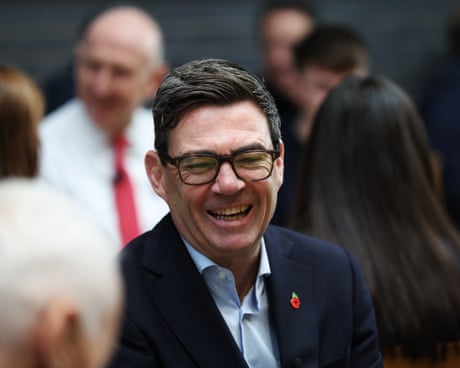
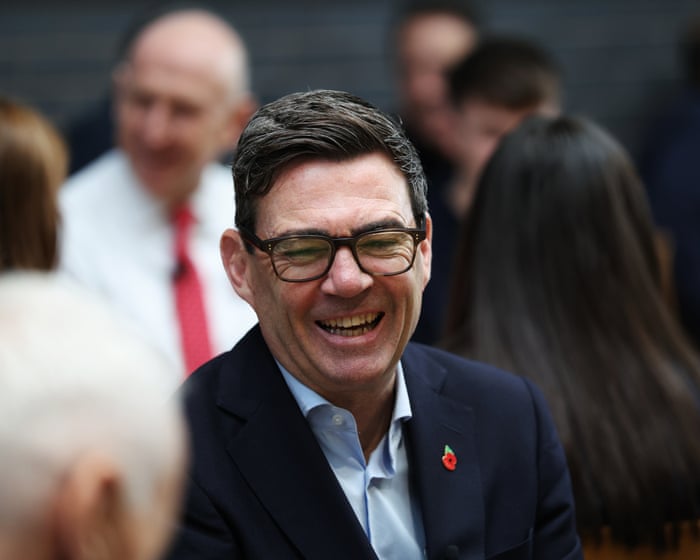
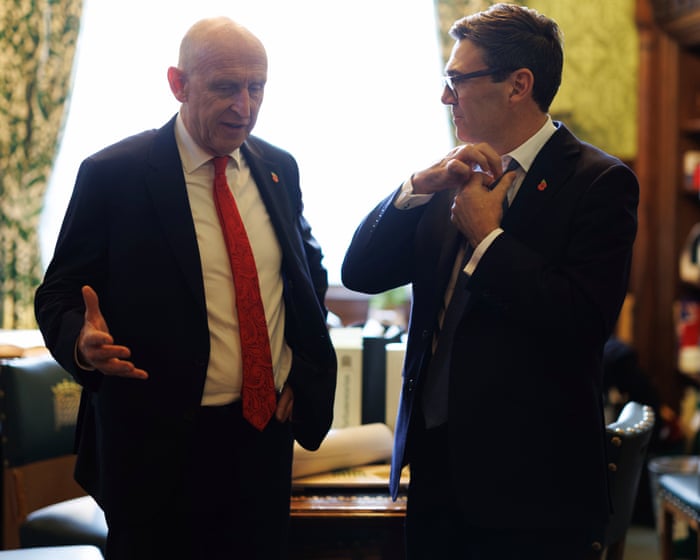
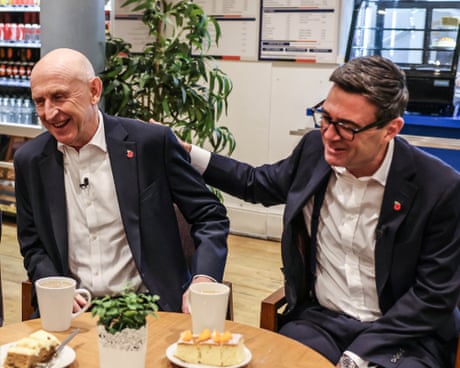
Andy Burnham has admitted his first budget as prime minister was not as radical as he would have liked because of the economic uncertainty facing the country.
He said he would have liked to have gone further with this week’s announcement – including with higher energy support payments – but felt hemmed in by external events such as the war in Iran, which has pushed up borrowing costs.
Cross-party committee says ‘moonshot’ vow to end obesity epidemic in a decade will fail without personal leadership from PM
The UK government’s promise to reverse rising obesity rates in the next decade is “doomed to fail” without a major rethink and a new plan led directly by the prime minister, a cross-party committee of MPs has concluded.
The health and social care select committee said in a report that there are no signs the so-called “moonshot ambition on obesity”, set out in the 10-year health plan for England, will achieve anything significant.
Andy Burnham must tread cautiously, but Brexit was a very grave act of self-harm – and he is right to address it
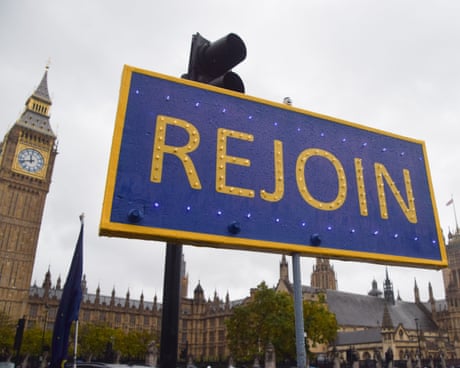
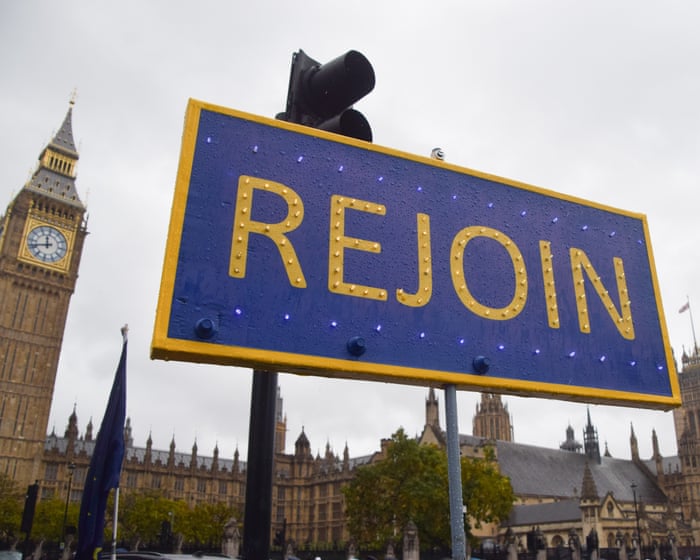
Andy Burnham’s opening debate on whether Britain should rejoin the EU is divisive, painful and politically risky. That is why it should be welcomed. To jeopardise his popularity so soon after coming to office might seem reckless, but the issue is urgent and not going away. Brexit is continuing to damage the nation’s economy. The prime minister’s job is to challenge, if not reform it.
The Brexit decade has evoked a bizarre sense of guilt among Britons. Opinion polls show nearly 60% regard it as a mistake, with just a third still in favour. Almost a quarter of those who voted for Brexit now regret it. While early forecasts of economic disaster were proved wrong, the accumulated cost of cutting links with Britain’s biggest trading partner is estimated at 6-8% of GDP.
Report calls for an effort to tackle harms in similar way to obesity and smoking, and stresses need to ‘offer boys something better’
The manosphere and online misogyny should be treated by the government as a public health issue, in the same way as obesity or smoking, experts have said.
Writing in the Lancet, the authors of a new report argue that a coordinated response is needed, involving governments, schools, health services and community organisations, similar to the public-health response to tobacco use and ultra-processed food.
Experts round on chancellor over ‘scattergun’ budget, saying he ducked big tax and spending decisions
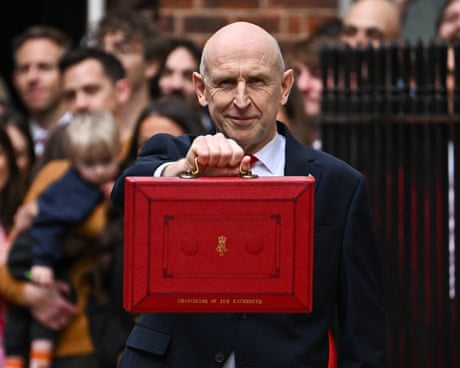
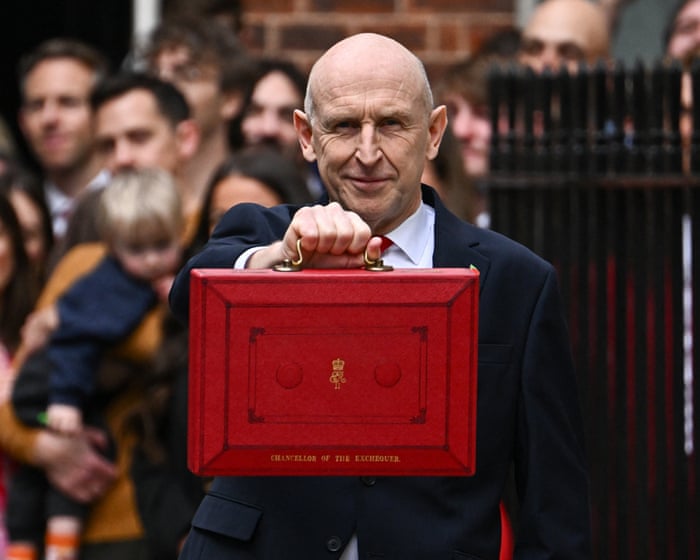
John Healey has backed away from cutting the cost of welfare this parliament, amid dire warnings his first budget could lead to brutal spending cuts because of a £28bn shortfall in public finances.
Experts rounded on Healey’s steady-as-she-goes budget on Thursday, with the Institute for Fiscal Studies saying he had left himself a mountain to climb by ducking big tax and spending decisions.
Protesters in Minnesota advocate for universal healthcare. | David Berding/Getty Images for People's Action Institute
Americans want changes to their healthcare, and the candidates in this year’s midterms are making bold promises about how they are going to improve it: Medicare-for-all, or a public health insurance option, or free primary care for everyone. If Democrats win big this year, they could build up momentum to control Congress and the White House in 2029, which could leave them well-positioned to take on the thorny problem of how to fix the US health system.
Even though a meaningful attempt at reform is still years away and universal health care in any form might seem like a progressive pipe dream, the industry is not sitting idly by.
As Democrats have started to roll out policy proposals in anticipation of winning back Congress, the industry has been there to start making its case. In some campaigns, that means backing Republicans, but it also means lobbying Democratic Party leaders to hold the line against their more progressive members who want to push for far-reaching changes.
The question now is: Will their old playbook work? Can the industry convince Democrats to scale back their policy ambitions, or is their grip on Congress loosening?
“The next two years are actually quite pivotal, for doing the groundwork and all the necessary socializing, consensus-building,” said Kim Monk, a former congressional healthcare staffer who co-founded the private-sector research firm Capital Alpha Partners. “That’s the work that gets you to a point where either party decides, okay, this will be on our platform — or not.”
That will be the tug-of-war of the next two years: a PR battle waged between health companies with hundreds of millions of dollars at their disposal on one side and progressive lawmakers, activists, and patient advocates on the other that will ultimately determine what’s possible in the next phase of American healthcare.
The healthcare industry doesn’t want Democrats to win too big
In the short term, the industry is hedging its bets in the face of a Democratic wave.
Private enterprise has historically backed the Republican Party, but that’s starting to shift. What the healthcare industry values above all else is balance. Democrats operating without any constraints are more likely to impose government regulations on medical companies. But full GOP control comes with its own risks, like the $1 trillion in Medicaid cuts passed as part of the One Big Beautiful Bill Act, which has already led to clinics and hospitals laying off staff or even closing facilities altogether.
Sign up for the Good Medicine newsletter
Our political wellness landscape has shifted: new leaders, shady science, contradictory advice, broken trust, and overwhelming systems. How is anyone supposed to make sense of it all? Vox’s senior correspondent Dylan Scott has been on the health beat for a long time, and every week, he’ll wade into sticky debates, answer fair questions, and contextualize what’s happening in American health care policy. Sign up here.
“At least for the short term, I imagine the healthcare industry would welcome control of Congress by Democrats, creating more predictability, forestalling more cuts in Medicaid and the Affordable Care Act, and potentially reversing or delaying some of the cuts that have already been made,” said Larry Levitt, executive vice president for health policy at KFF. “The longer-term political calculus for the healthcare industry is more complicated. Many Democrats are pushing for a bigger role for government in health care.”
In other words, while healthcare companies might welcome a Democratic House as a check on President Donald Trump’s unpredictability, they aren’t necessarily hoping for a massive blue wave that could make significant reforms a serious possibility if Democrats were to win the White House in 2028.
The industry’s MO when it looks like a wave election is brewing is to balance the scales: I reported in 2016 how, in what was looking like a good year for Democrats, the drug industry poured money into the campaigns of Republican candidates by a 6-to-1 margin in competitive races, hoping to stifle the agenda of presumed President Hillary Clinton. (Of course they, like the rest of us, are still susceptible to being wrong.)
And that’s how the industry has been approaching the 2026 election: In many of the pivotal House and Senate races, they are backing the GOP.
As healthcare journalist Merrill Goozner reported last week, the American Hospital Association PAC and PhRMA, a drug industry trade group, have given a combined $14,500 to Republican incumbent Jon Husted and none to his Democratic challenger Sherrod Brown in the historically expensive Ohio Senate race. In Maine, Republican Sen. Susan Collins has received donations from all of the major healthcare trade groups — hospitals, pharma, insurers, and doctors — while her opponent, Democrat Troy Jackson, got none. (He also has sworn off corporate PAC money.) Even in an open race without an incumbent, like the Iowa Senate campaign, the Republican candidate has scored donations from hospitals and pharma, but the Democrat has not, Goozner reported.
If Democrats take the House but not the Senate, that would immediately put a damper on their healthcare reform plans — whereas winning a Senate majority would allow them to start drafting and debating bills in both chambers with an eye toward what could actually pass if they win in 2028 too.
“If there is actually a blue tsunami next week and Democrats get 51-plus [members] in the Senate, that’s a really big deal,” Monk said. “You can’t just say this doesn’t matter because Trump’s going to veto it, because I think it very much becomes a 2028 issue.”
And even as they work to push the next Congress more to their ideological liking, the healthcare industry is preparing for the fight that comes after.
The industry is prepping its counterattacks on ambitious healthcare proposals
Each subset of the industry has its own versions of this argument: Pharma warns that price controls could stifle innovation, insurers warn that coverage mandates will increase premiums, hospitals warn that constraints on their funding could lead to closures and job losses. (There’s a well-known saying among DC insiders that every congressional district has a hospital, making every member potentially susceptible to the industry’s message that new healthcare legislation could result in their own constituents losing their jobs.)
They’ve started by trying to discredit the more sweeping health policy proposals before new members ever arrive in Washington, DC. In Texas, for instance, Republican groups have leaned on an industry-commissioned study to attack Democratic Senate candidate James Talarico for supporting Medicare-for-all, warning that it would lead to cuts for rural hospitals — at least according to an analysis produced by the Partnership for America’s Future, a coalition of industry groups that exists explicitly to oppose Medicare-for-all or a public option. They ran a similar ad against Democrat Janelle Stelson, who’s trying to topple incumbent Rep. Scott Perry in Pennsylvania.
The industry is trying to plant the idea in voters’ minds that these big, bold proposals may sound superficially appealing, but carry significant risks: You could lose your plan, you could lose your doctor, you could pay higher taxes. (And they often have their own studies to back those arguments, like the one cited in this year’s campaign, to counter the evidence offered by advocates in support of reform.) And it might work exactly like it has in the past. As John McDonough, a former congressional healthcare staffer and author of America’s Wrong Turn: US Health Care in the Neoliberal Era, put it to me, the history is clear: “Every comprehensive effort, defeat, and every incremental effort succeeds.” That is in part because of the healthcare industry’s influence and its success in framing the debate.
On top of trying to sway the competitive races, the industry is also trying to keep its most important allies within both parties happy ahead of the midterms. As the Center for Health and Democracy’s data shows, the health insurance industry PACs alone have given tens of thousands of dollars to Democratic and Republican leaders, as well as senior members of the healthcare-focused House and Senate committees.
It’s another hedge, an attempt to keep the members who will decide what’s on the agenda next year on their side. The industry supports reversing the GOP’s massive Medicaid cuts and increasing funding for the ACA marketplaces, two top-priority items for Democrats if they win Congress in the midterms. But they are hoping the party’s leaders will steer their members away from some of their more radical ideas for overhauling healthcare. Because while individual sectors within healthcare may squabble over smaller-scale reforms, the entire industry is united against plans to fundamentally change the US health system. (They are also increasingly owned by the same parent company, as consolidation in the medical sector becomes more and more common.)
“The healthcare industry is all for more people having coverage and stable government financing,” Levitt said, “but will circle the wagons to fight Medicare-for-all.”
Already, whenever Democrats start talking about their health policy ideas, the industry is ready with a response. Last month, as some Democrats announced support for a public insurance option, the Partnership for America’s Health Care Future argued it would reduce access. “A public option is not the answer to the affordability and access challenges patients and families are facing,” said the group’s executive director, Lauren Crawford Shaver.
Meanwhile, the health insurance lobbying group, AHIP, released a 40-page document in October on how to improve affordability and access, using it in part to argue against a public option because it would “stifle competition and threaten the coverage most Americans want to keep.” Centrist Democratic groups who receive industry support have said they are “preparing for war” against Medicare-for-all, according to the news outlet Sludge.
The industry is not omnipotent, however, and the debate could still change if Americans’ healthcare gets worse over the next few years. The US uninsured rate has been on the rise as pandemic protections expire and the costs of healthcare rise for millions. Unless Democrats succeed in stopping the Republican Medicaid and ACA cuts in the OBBBA, that problem is going to get worse — and that could also force Democrats to think bigger about how to fix it.
“I am not sure anyone has fully absorbed how damaging and disruptive that is going to be — including to hospitals and health systems,” Jonathan Oberlander, professor of social medicine at the University of North Carolina and the former editor of the Journal of Health Politics, Policy and Law, told me over email. “Large coverage losses will trigger great instability in health politics and perhaps open more of a window to bolder proposals.”
So, will the industry’s arguments still have juice? After the medical industry enjoyed a brief rebound in popularity during the pandemic, 50 percent of Americans say they have a negative view of it, while 37 percent have a positive view, per Gallup. And the appetite for reform is growing: 64 percent of Americans say it is the government’s responsibility to make sure that everyone has healthcare coverage — the highest share at any time, except for the late 2000s, shortly before the ACA became law.
Even the hospital industry, which has long enjoyed more public support than pharma or insurance companies, is seeing its popularity waver: A Families USA poll from August found that an overwhelming 81 percent of Americans thought hospital prices were unreasonable.
“Hospitals have done a great job of pleading poverty on Capitol Hill. ‘We’re probably the only provider who basically has to provide care to whoever shows up. We have no reason to be efficient. Just give us more money,’” Monk said. “I think that argument is wearing a little bit thin.”
US vice-president writes to top Iranian security official in sign Washington has not abandoned diplomacy
Hopes of averting a major new conflagration between Iran and the US soon after Tuesday’s midterm elections could rest on Iran’s response to a personal letter from the US vice-president, JD Vance, offering to restart diplomacy.
The letter, written after predominantly Qatari mediation, was sent to the secretary of Iran’s supreme national security council, Mohsen Rezaei on Sunday. It requires Tehran to agree to make commitments on its nuclear programme at the start of a process that would lead to the opening of the strait of Hormuz within seven days in return for US sanctions relief.
Musician wrote a ‘love letter’ to Canada with a new album – and some pointed commentary about the US president
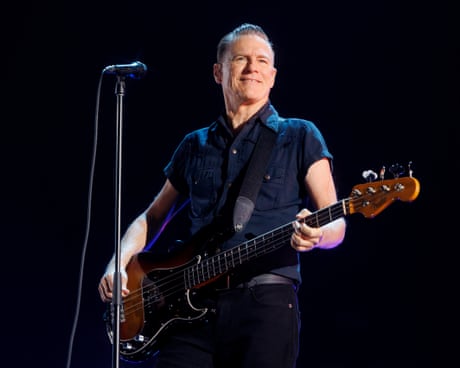
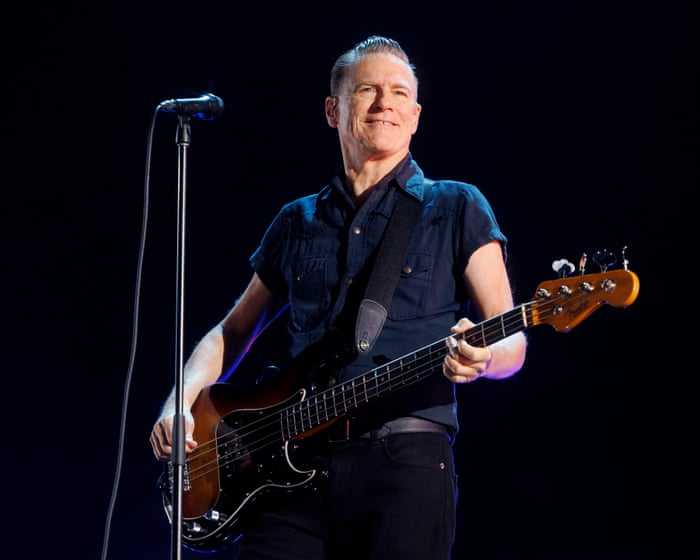
Lake Ontario, the vast body of water that straddles the US-Canada border, has gone by many names over the centuries: Lac Saint-Louis, Lacus Ontarius, Skaniadorio, Cataraqui Lake. But one thing it will never be called, says the Canadian rock star Bryan Adams, is Lake America.
In his new song Lake Ontario, Adams takes aim at the US president, Donald Trump, accusing him of “breaking the peace” between the people who live on the lake’s shores.
The ‘lake of shining waters’ is what the Iroquois called her
It’s a First Nations name – not an executive order.
John Healey aced the morning-after media round because his Martin Lewis measures left nothing to challenge him on
Maybe it had been one of the greatest acts of political genius after all. The day after the budget is usually the moment when things start to fall apart. When clued-up journalists and economists have had a chance to go through all the fine points the chancellor would rather everyone had missed. The forecasts that suggest everything is predicated on a wing and a prayer. The hidden unfunded tax cuts. The greater-than-expected spending commitments.
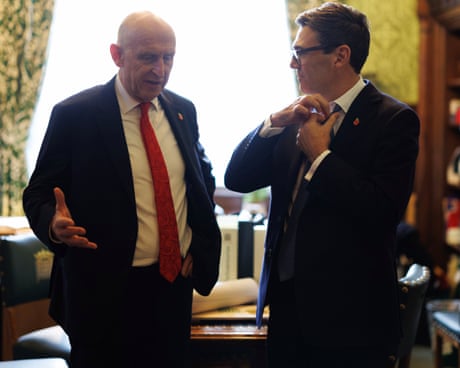
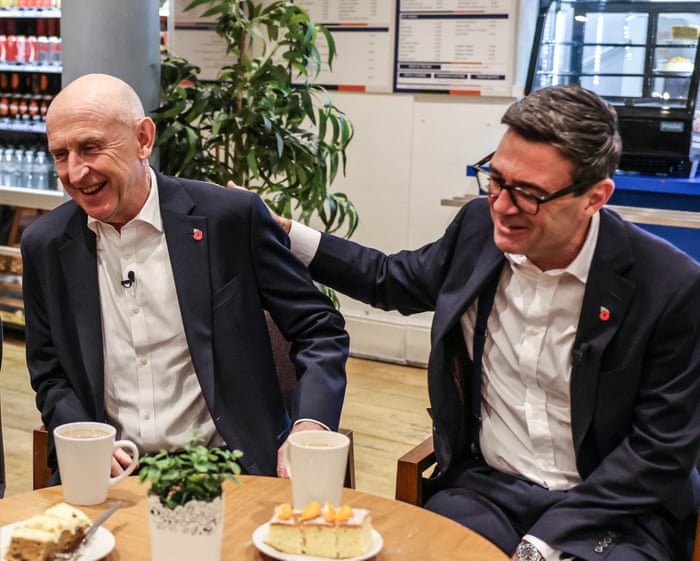
But on Thursday morning Andy Burnham and John Healey could afford themselves a sigh of relief. All had gone about as well as they could have hoped. It turns out that when you don’t make any massive tax or spending commitments, there isn’t a great deal to unravel. All there had been was a raft of small-scale interventions designed to help people with their personal finances. Call it the Martin Lewis budget. In fact, Healey and Lewis now seem unable to get through the day without spending some time with each other. They certainly can’t stop talking about one another. It’s becoming unhealthily co-dependent. The gods of small things.
Thinktank says chancellor has given himself a mountain to climb after ducking big decisions in low-key speech
John Healey has paved the way for a “brutal” spending review next year after his budget failed to cover a £28bn shortfall in the public finances needed to avoid a return to austerity, according to Britain’s leading tax and spending experts.
A day after his address to the Commons, the Institute for Fiscal Studies (IFS) said the chancellor had left himself a mountain to climb by ducking several big decisions in his debut tax and spending statement.

 Login