From surgeons to senior civil servants, even the most decent people can make disastrous mistakes. But these gaffes require honesty
Gabriel Weston made a mistake at work this summer. It doesn’t define her – she was and is a well-regarded NHS surgeon and author – but it was serious enough, as she explained in an extraordinarily candid series of Instagram and Substack posts this month, to prompt an investigation that left her feeling “ashamed and alone and really quite nervous”. Whatever went wrong in the operating theatre was bad enough to be classed a “never event” (something that should never be able to happen if the process is working properly) and triggered a nagging anxiety that she might somehow do it again, unless she figured out where she had unexpectedly gone wrong.
It’s a fascinating insight into a process that most people never have the courage to talk about openly. But it also highlights why it’s so hard in practice for doctors and other professionals to acknowledge and learn from mistakes – as every public inquiry into every public scandal ends up recommending, only to repeat it all over again after the next one – rather than close ranks and cover up. Weston says she only spoke up out of frustration with what she saw as her employers’ failure to support her (she had asked to reduce what she considered an overloaded operating list to take some pressure off, which she says has now happened, leaving her full of praise for the hospital’s ultimate response). Judging by the responses to her posts, she’s not alone.
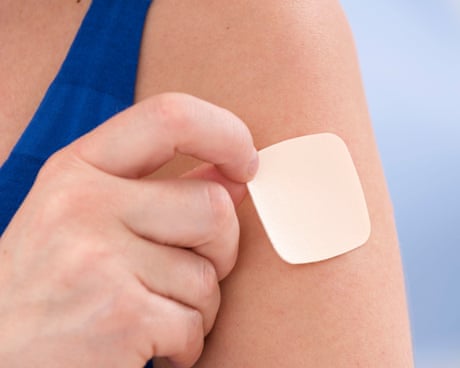
Some experts express concern about ‘lack of transparency’ as agency removes warnings on three estrogen patches
Three more patches for treating menopause will no longer carry black-box warnings about cardiovascular disease, breast cancer and dementia, officials at the US Food and Drug Administration (FDA) said on Friday.
The FDA did not convene an advisory committee and offered few details on the scientific basis for the decision in the press briefing. The news follows the removal of black-box warnings from six menopause treatments in February, as patients across the US struggle with shortages of the patches.
Every so often, after a marathon, headlines will pop up about a marathon runner collapsing and dying during or shortly after the race. It’s rare, but it happens: A 2025 study found records of 176 cardiac arrests during long-distance running events in the U.S. out of about 29 million people who finished the races.
Deaths like these raise the question of whether such an intense physical feat as a marathon can possibly be dangerous, or at least unhealthy, for the heart. We asked scientists who study marathoners about long-distance races and heart health, plus what runners can do to keep themselves safe.
Is all that running actually good for you?
Experts are pretty unequivocal: Yes. “Exercise is good for the heart,” says David Oxborough, professor of echocardiography and cardiovascular physiology at Liverpool John Moores University in the U.K. “We know that regular moderate-intensity exercise improves your cardiovascular risk, it reduces mortality, and it has real positive benefits.”
Of course, training for a marathon—which can take months or years of steady increases in endurance—is different from the act of running the race itself, says Daniel Muniz, senior lecturer in exercise physiology at the University of Hertfordshire in the U.K. “Running a marathon is a big physiological stress. You're going to hurt after…and if you look at markers in your physiology, everything is going to be all over the place.” Markers of muscle damage and heart damage are elevated, at least for a little while. (Oxborough, who has studied some of these elevated markers, says that they come back down swiftly and don’t seem to be linked to long-term damage.)
But the consistent training that running a marathon requires carries positive effects for physical and mental health, Muniz continues. “The benefits far outweigh the negatives. I think that's very fair to say.”
Why do people die running marathons, then?
Dying during a marathon is extremely uncommon, says Oxborough. What’s more, it doesn’t seem random. People who die during endurance running events tend to fall into two categories, often identified after the fact: either younger people who have undiagnosed genetic heart problems, or middle-aged men who have heart disease without any symptoms.
“If you've got underlying disease, then there is a risk of sudden cardiac death. If you're under the age of 35, that is usually caused by an inherited cardiac disease, such as cardiomyopathy. As you go over 35, the main cause is more acquired disease, like coronary artery disease,” he says.
How can you find out if your heart is healthy enough for a marathon? And should you?
“You should, absolutely,” says Oxborough. “We do pre-participation cardiac screening for young people in competitive sport. We have charities in the U.K. It's now becoming much more accepted in the U.S., and it wasn't before. This is a simple 12-lead ECG and a questionnaire to young people.”
That’s enough to start the process of figuring out whether people might have an inherited disease, the experts say. If they do, it doesn’t mean they have to stop training. It just might shape how they decide to train and manage their risk.
What about older people?
The problem with coronary artery disease is that many people have no symptoms in the early stages.
If you’re thinking of running a marathon and you’re over 35 or 40, here’s what Oxborough recommends: “Go speak to your GP. Have a 12-lead ECG done. Have your blood done. Make sure your cholesterol levels are normal. Have your blood pressure taken, and if any of them show any sign that they may be a higher risk, then we recommend an exercise stress test. And if you're very lucky, if you're able to access it, a CT coronary angiogram,” he says. These are tests that will help establish your baseline and what is likely to be happening in your arteries before you really ramp up training.
Not all of these are required, but “a baseline test of risk is really important, and that you can do at your GP,” he says.
Can anyone run a marathon?
In principle, yes. “I am of the opinion that most people with training should be able to run a marathon. The important bit there is: with appropriate training for a number of months or or perhaps a year,” says Muniz.
This is not a physical challenge where you can go out and achieve it tomorrow without practice. “But if you start training and you start running for 20 minutes, or run and walk, and then transition to run for 20 minutes, 30 minutes, 40 minutes, and then you do that for a number of months, I think most people should be able to eventually run a marathon,” he says.
At TechCrunch Founder Summit 2026, happening November 4 at SoWa Power Station in Boston, networking powered by Braindate is designed to make those conversations easier to find, whether they are in 1:1 or small-group on-site meetings. Register before the event starts to save up to $100 on your pass, plus get a second for free.
As is the custom, millions of children in the United States will be out in the streets this Halloween to trick-or-treat, decked out in costumes. Also as is custom, adults will fret about the mostly mythical dangers children may face. Once upon a time it was razor blades in apples; this year, it’s rainbow fentanyl in candy. But while fears of children receiving narcotic-spiked treats are unfounded, there is a very real danger that America’s children face on this most hallowed of evenings: cars.
That’s because pedestrians under the age of 18 are three times more likely to be struck and killed by a car on Halloween than any other day of the year. A 2026 analysis of federal crash records found that 45 children were killed while walking on Halloween between 2010 and 2024, more than any other day. That risk grows to 10 times more likely for children aged 4 to 8 years old, according to a study from 2019 in JAMA Pediatrics.
“You’re going to have increased numbers of children, including younger children who are out on the streets,” said Lois Lee, a professor of pediatrics and emergency medicine at Harvard Medical School. “At the same time, you have adults who are driving, and especially this year on a Monday, people will be driving home from work. If children are in costume, they may be wearing darker clothing … which makes them harder to detect.”
The JAMA Pediatrics study from 2019 corroborates this, noting that Halloween “may heighten pedestrian traffic risk, because celebrations occur at dusk, masks restrict peripheral vision, costumes limit visibility, street-crossing safety is neglected, and some partygoers are impaired by alcohol.” It’s the kind of lethal combination that can turn a fun occasion into a deadly nightmare. Adult victims included, the risk of death to all pedestrians was 43 percent higher on Halloween compared to a regular evening.
But what happens on Halloween isn’t an isolated incident. After gun injuries, motor vehicle injuries are the second leading cause of death among children in the US overall. And with pedestrian fatalities (both adult and child) at a 40-year high in the US, it’s worth asking why children roaming the streets is so inherently deadly, and what can be done about it.
“Sometimes when you talk about this issue, you get pushback from people and people say, ‘Well, of course, you have more children on the streets, of course, more children are going to die,’” Doug Gordon, a writer and podcast host who advocates for safer streets and cities, told me. “But that accepts a baseline level of danger that I think we as a society have in fact accepted on the other 364 days of the year.”
There are broader reasons for why streets have gotten even more dangerous for pedestrians recently. One is that drivers are distracted — not just by their phones, but increasingly by the infotainment systems that come as a part of newer cars. A more pressing issue is the increasing size of cars in the US; SUVs make up half of all car sales in the US, and are much more likely to kill pedestrians in crashes than smaller vehicles. “Mass times [acceleration] is force,” Gordon summed up. “When you increase the mass of something, you’re going to increase the force at which it interacts with a small vulnerable child.”
But the biggest reason may be that American streets and cities are designed for cars, and not people. As Charles Marohn — founder and president of Strong Towns and an expert on urban planning and civil engineering — has argued, engineers who design streets prioritize getting cars as quickly from point A to point B over everything else. One recent example: A traffic safety committee in Utah could not find any way to make the five-lane road crossing to a school safer for students aside from just removing the crosswalk altogether.
But there is a lot that can be done to make streets safer, for future Halloweens and every other day of the year. In the short term, cities and towns can build on open streets programs implemented after the Covid-19 pandemic began, which involve closing certain streets to car traffic to allow for more public space. Notably, New York City announced a “Trick or Streets” plan that would see 100 car-free zones in effect from 4 to 8 pm on Halloween this year. And the Big Apple isn’t alone, as Henry Grabar reported for Slate: less dense and more car-dependent cities like St. Petersburg, Florida and Seattle will also either close off the city center for Halloween or actually allow residents to apply for permits that can close off their neighborhoods to car traffic.
In the long run, Gordon believes that places around the US should be able to pass what is known as the popsicle test, where a kid should be able to safely walk to a store, buy a popsicle, and return home before it melts. In essence, every city should be designed to be friendly and traversable to the most vulnerable in our communities. “If you start thinking along those lines, then I think you start thinking along the lines of what infrastructure is needed to make that possible, where I would feel comfortable letting my kid do that,” Gordon said. “Halloween is like a giant version of the popsicle test because it’s not just your kid, it’s every kid in the neighborhood.”
Designing safer streets for children goes beyond safety — it would make for a better Halloween. “Having sidewalks and good lighting is a good preventive measure, not just for injury prevention, but also just general health,” Lee told me, “because that encourages everybody in the neighborhood to walk, exercise, and get outside, which is better for everybody’s health as well.”
And if their safety isn’t enough motivation, designing dense, walkable cities could even lead to bigger candy hauls for kids.
“When you build a city that’s safer, so that kids can walk around by themselves and not be worried about getting hit by a car, or the parents being worried about them being hit by a car, it’s just better,” Gordon said. “It’s awesome. They’re independent. It’s fun. And on Halloween, they get a lot of candy.”
Correction, October 31, 4 pm ET: A previous version of this story had an inaccurate definition of the equation for force.
Update, October 30, 2026, 10 am ET: This story has been updated to include new federal crash data.
In the late 2010s, a movement argued that no one body type is superior than another. Now in the GLP-1 age, people are still pursuing thinness - and just not talking about it
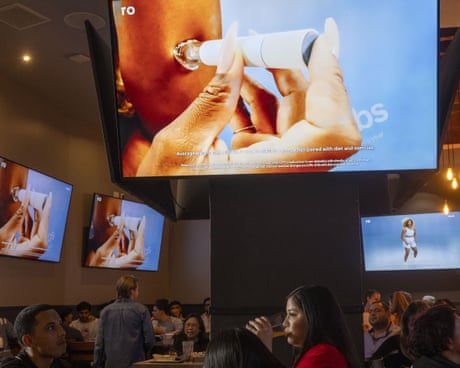
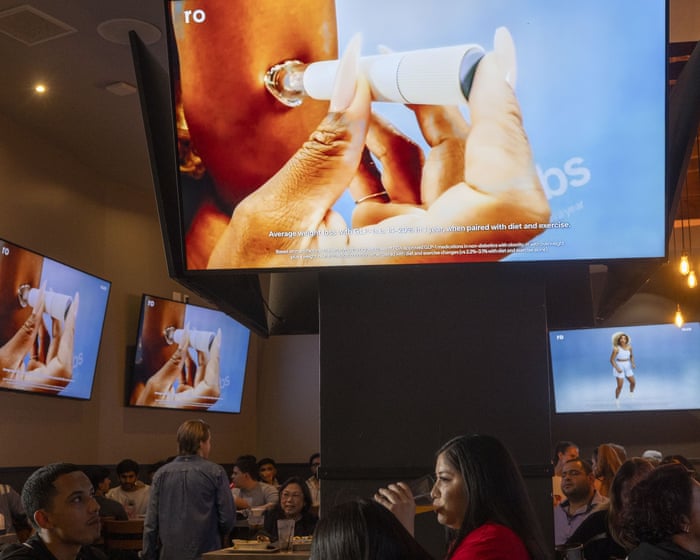
Vogue World Milano was held beneath the vaulted glass domes of Italy’soldest shopping arcade, featuring Gigi Hadid in archival Valentino couture and robots dancing on the catwalk while Miuccia Prada scowled at them. A splashy event staged in the midst of a month of fashion shows in New York, London, Milan and Paris, in which 97.5% of models were a US size four or under, what ticked people off most was the presence of trillion-dollar pharma company Eli Lilly on the list of sponsors.
Eating disorder advocates spoke out against the association between an aspirational fashion show and the manufacturer of the weight-loss drugs Zepbound and Mounjaro.
Parents are opting for a second shot of MMR vaccine sooner, which aligns with guidance in Germany, the UK and France
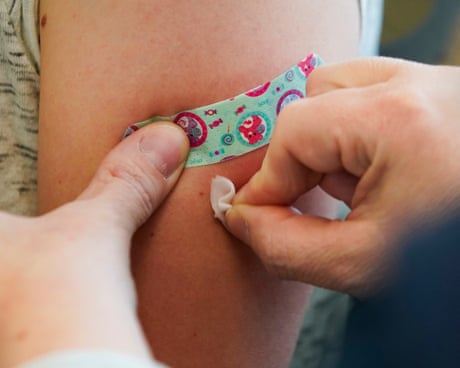
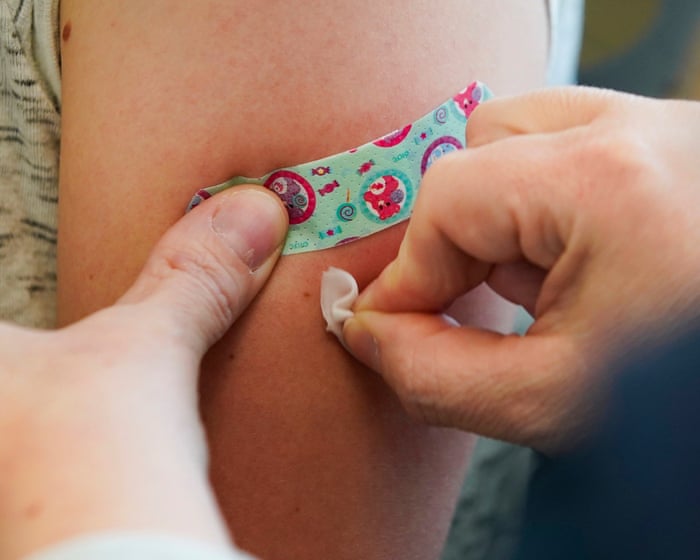
Measles cases are accelerating in the US, with twice as many confirmed cases as last year, and more parents are opting for earlier vaccination – especially with the second dose of the measles, mumps and rubella (MMR) vaccine, which can be given as soon as four weeks after the first.
Giving the second shot soon after the first aligns with what some other countries, such as Germany, the United Kingdom and France, recommend – and the US Centers for Disease Control and Prevention (CDC) also says it’s an option.
Cross-party committee says ‘moonshot’ vow to end obesity epidemic in a decade will fail without personal leadership from PM
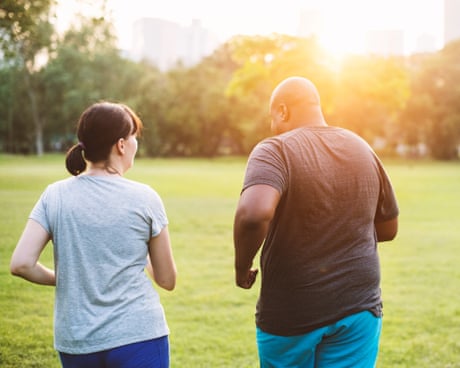
The UK government’s promise to reverse rising obesity rates in the next decade is “doomed to fail” without a major rethink and a new plan led directly by the prime minister, a cross-party committee of MPs has concluded.
The health and social care select committee said in a report that there are no signs the so-called “moonshot ambition on obesity”, set out in the 10-year health plan for England, will achieve anything significant.
Report calls for an effort to tackle harms in similar way to obesity and smoking, and stresses need to ‘offer boys something better’
The manosphere and online misogyny should be treated by the government as a public health issue, in the same way as obesity or smoking, experts have said.
Writing in the Lancet, the authors of a new report argue that a coordinated response is needed, involving governments, schools, health services and community organisations, similar to the public-health response to tobacco use and ultra-processed food.
Twenty-five states sued the Trump administration in June over the new Centers for Medicare and Medicaid Services guidance tied to the 2025 law known as the "One Big Beautiful Bill."
Report calls for an effort to tackle harms in similar way to obesity and smoking, and stresses need to ‘offer boys something better’
The manosphere and online misogyny should be treated by the government as a public health issue, in the same way as obesity or smoking, experts have said.
Writing in the Lancet, the authors of a new report argue that a coordinated response is needed, involving governments, schools, health services and community organisations, similar to the public-health response to tobacco use and ultra-processed food.

 Login