❌

Reading view

Sarah Howe wins Forward poetry prize for best collection

Howe’s ‘exceptional’ Foretokens took the main £10,000 award, while Nur Turkmani, Tara Bergin and Biff Smith swept up the remaining categories

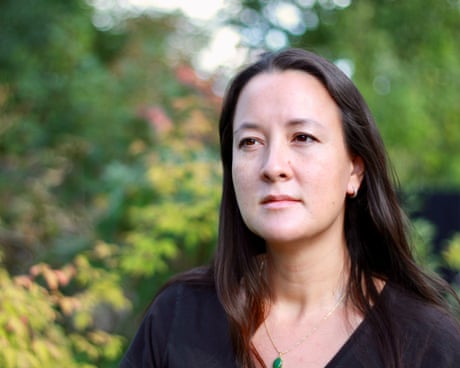
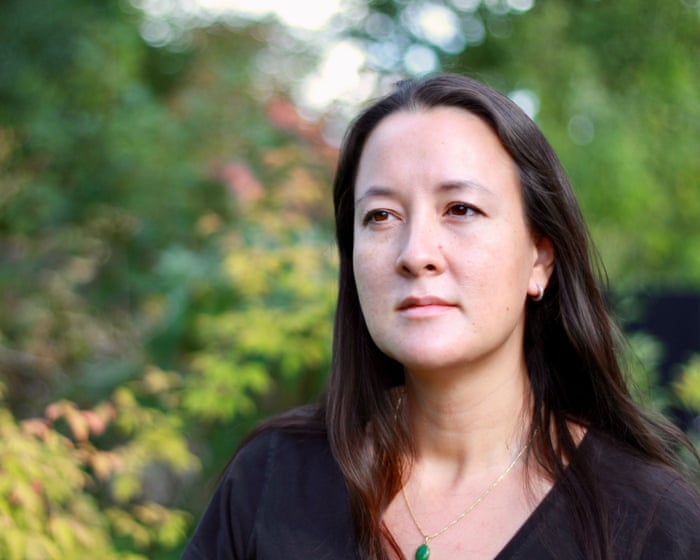
Sarah Howe has won the Forward prize for best collection, one of the UK’s most prestigious poetry awards, for Foretokens, a collection that explores new parenthood, the death of her father and her mother’s early life in Hong Kong.

Howe was announced as the winner during a ceremony hosted by Joelle Taylor at London’s Southbank Centre on Saturday evening, and will receive £10,000.

Foretokens by Sarah Howe (Vintage Publishing, £12.99). To support the Guardian, order your copy at guardianbookshop.com. Delivery charges may apply.

Continue reading...

© Photograph: Marc Lixenberg
© Photograph: Marc Lixenberg
© Photograph: Marc Lixenberg

  •  

Bram Stoker’s Dracula audiobook review – cinematic horror with an A-list cast

Jonathan Bailey, Ella Purnell, Aimee-Lou Wood, Maggie Gyllenhaal and more bring shock and gore to an immersive retelling with real bite

Do we really need another retelling of Bram Stoker’s fabled horror novel, which has already yielded multiple films, plays and radio dramas? Perhaps not, but this new audio version of Dracula, directed by Mary Lambert and adapted by Robyn Aherne, justifies its existence with an unusually star-studded cast, a streamlined story and an immersive and frequently nightmarish sound palette.

Bridgerton’s Jonathan Bailey is smooth and charismatic as the eponymous count who invites a young solicitor, Jonathan Harker (Louis Partridge), to his castle in Transylvania to assist him with the sale of a property. There, Harker becomes increasingly uneasy as he glimpses the count’s diabolical powers and realises that he is, in fact, a prisoner.

Continue reading...

© Photograph: Marc Piasecki/Getty Images for Netflix

© Photograph: Marc Piasecki/Getty Images for Netflix

© Photograph: Marc Piasecki/Getty Images for Netflix

  •  

If British Library reading rooms become ‘co-working spaces’, it’s all too easy to imagine what comes next | Andy Beckett

The plan to generate revenue from areas currently used by the public is causing bitter dispute, and raises fundamental questions

In a crowded country that is short of public money, any expansive public building that seems underused in any way is vulnerable. Professional critics of state spending can claim taxpayers’ money is being wasted. Managers of the building who are under financial pressure can argue it needs to be used more intensely, perhaps that some spaces should be commercialised and offered for rent. The original open, uncommodified, egalitarian quality of the building can be steadily sliced away.

The British Library in London is in danger of that fate. A huge brick battleship moored on the Euston Road since 1997, it claims to be the largest public building constructed in the UK in the 20th century. Its both forbidding and exhilarating exterior conceals 11 unusually elegant and comfortable reading rooms and one of the world’s most extensive print and digital collections, free to use for anyone who is over 18. Last week, these readers received an email with the subject line, “Transforming your Library”. Next summer, the library would “begin work on repurposing our [three] Science and Social Sciences Reading Rooms to become a flexible workspace … available for hire by workers and businesses for co-working, collaboration and meetings”. The reason given for removing more than a quarter of the library’s much-loved research space was “ensuring we generate the necessary revenue to keep our core services free”.

Andy Beckett is a Guardian columnist

Continue reading...

© Composite: Guardian Design/Getty Images

© Composite: Guardian Design/Getty Images

© Composite: Guardian Design/Getty Images

  •  

Are You With Me Now? by Hanif Kureishi review – a novelist unleashed

The constraints of Kureishi’s life after a devastating accident infuse his writing with a new and thrilling immediacy

Some months after returning home, after a grim year in hospitals in Rome and London, Hanif Kureishi begins to rebel. Not against his family, or the physical reality of being tetraplegic (and how could he?), but the liberal homogeneity of Shepherd’s Bush. He gets a diamond stud in his left ear at Westfield shopping centre, a piercing that enraged his father when he was 17. He sends off for a Maga cap and wears both to the farmers’ market, hoping for vitriol but getting nothing. “These quiescent scumbags only cared about themselves and their shopping,” he grumbles. “Being a fascist is far less thrilling than I imagined.”

Kureishi’s “re-punking” after decades in the metropolitan elite remains an ongoing project, just one response to his paralysis after a fall on Boxing Day 2022. His memoir Shattered was written in the long shock of that severance from a former life, which left him with no movement in his hands or legs, “a Beckettian chattering mouth”.

Continue reading...

© Photograph: Sarah Lee/The Guardian

© Photograph: Sarah Lee/The Guardian

© Photograph: Sarah Lee/The Guardian

  •  

Liz Truss has brought our divided nation together – in mockery of her | Emma Brockes

Though times are hard and days are dark, the former PM’s latest book reminds us of the fun to be had when a figure is so ridiculous but cannot see it

In these times of social and political division, it’s worth doing a quick audit of what keeps us together. Where, as we fight over what constitutes “wealth” and whether or not to go back in on Brexit, are the key sites of consensus? The Celebrity Traitors and the gloriousness of Nigella on Bake Off may offer one area of unity; you can say the words “David Attenborough” to any sample of the population and elicit exactly the same murmur of approval. But, as the recent history of the internet shows, the most forceful bonds are those forged against, rather than in favour of, something. With that in mind, let’s turn to our old friend Liz Truss.

It’s an unusual position, isn’t it, wondering if we might owe a debt of gratitude to the former prime minister who, after tanking the value of the pound in 2022 and otherwise carrying on with the efficacy of someone stopped at random in the street and given the keys to government, is widely regarded as the worst ever to have held office. Truss has a book out this week, her second since leaving office, entitled Bank Job: A Short Book on How the Bank of England Broke the Bond Market and Brought Down the Government, and on the evidence of its early reception, it seems likely to prove even more successful in uniting disparate communities of Britain than her previous volume, Ten Years to Save the West.

Emma Brockes is a Guardian columnist

Continue reading...

© Photograph: Jonathan Brady/PA

© Photograph: Jonathan Brady/PA

© Photograph: Jonathan Brady/PA

  •  

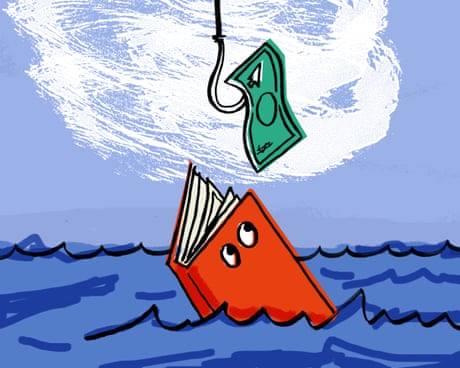
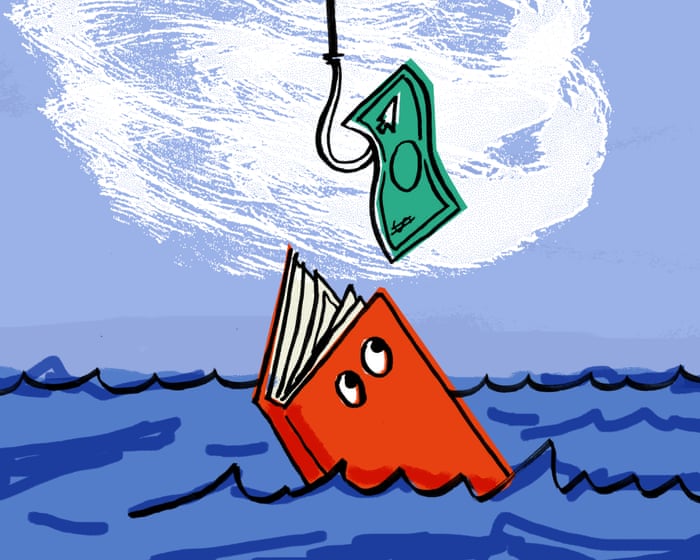
Fake film deals and emails from top agents: who is behind the explosion in literary scams?

Writers are being bombarded daily with invitations from fake book groups and offers to publicise their work. For the scamming industry, aspiring authors can be a soft touch

• This piece first appeared in the Dial

‘Hello Professor Snigdha Poonam,” the email began. I read that again. Nobody has ever called me “professor” for the obvious reason that I am not a professor. Bracing myself, I read on. The email was from Timothy Firth, organiser of a Seattle-based life-drawing community with 1,943 members that regularly has “thoughtful discussions inspired by creative works”. A recent inspiration was my first book, Dreamers: How Young Indians Are Changing Their World. The group wanted to discuss it, the email said, at one of its upcoming meetups. Attendees would be encouraged to post reviews on Goodreads and Amazon after.

I looked up CAM Life Drawing and found an events page and an Instagram account. The latter had some photos of Timothy Firth – white, male – as well as testimonials from members who said he worked “day and night to create more community space”. Something told me this wasn’t the man who had reached out to me.

Continue reading...

© Illustration: Anaïs Mims/Guardian Design

© Illustration: Anaïs Mims/Guardian Design

© Illustration: Anaïs Mims/Guardian Design

  •  

‘We sold out tickets within 13 minutes’: new novel from romantasy author Sarah J Maas sparks fan mania

Move over Oasis – 6,000 people tried to buy 220 tickets to a masquerade ball to celebrate the release of A Court of Splintered Harmony, while specialist bookshops catering for the genre report huge sales

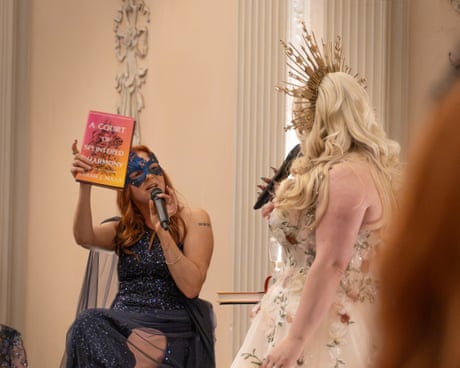
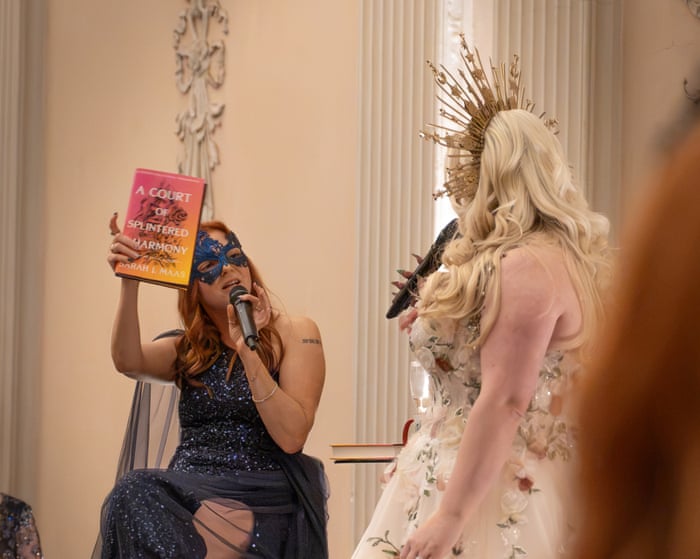
When The Spicy Librarian, a romance bookshop in Leamington Spa, announced a masquerade ball to celebrate the new Sarah J Maas novel, 6,000 people tried to buy 220 tickets. “We sold out within 13 minutes,” says the shop’s co-founder Ali Maynard James. “As soon as tickets went on sale, our website crashed”.

The shop was one of many across the UK marking the release of A Court of Splintered Harmony, the first instalment of Maas’s A Court of Thorns and Roses series in more than five years. On Monday night, bookshops threw parties and opened past midnight – and The Spicy Librarian hired a stately home to mark the occasion.

Continue reading...

© Photograph: Beth Melvin

© Photograph: Beth Melvin

© Photograph: Beth Melvin

  •  
❌