The Long Wave is two! And over the past year, once again, it has surprised us with the breadth of stories and events in the diaspora.
The Long Wave has also evolved into a large community, with many readers getting in touch and sharing their thoughts, tips and sometimes their polite disagreements. We welcome and relish all of it. Here is the team’s selection of our favourite editions.
Oliver Reed and Vanessa Redgrave put in the performances of their lives in this film originally banned for obscenity that highlights the violence of power
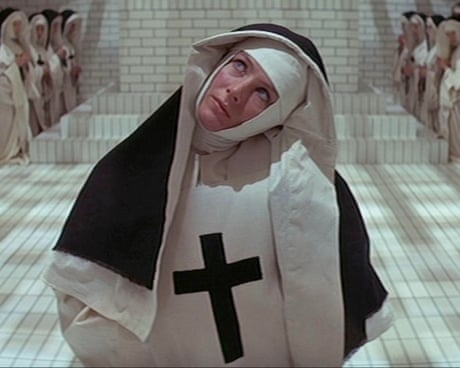
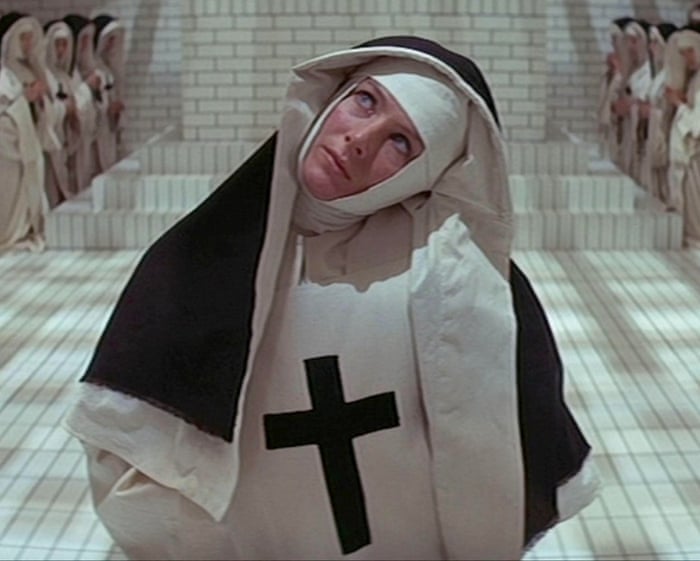
‘I could never be Satan’s boy. I haven’t the humility.” The speaker is Father Urbain Grandier, the 17th-century French priest accused of witchcraft, stylishly played by Oliver Reed, in Ken Russell’s scabrous 1971 classic; it is now restored and rereleased in its complete form after years of censorship. It comes from an era when movies, playing in high-street cinemas, still had the power to shock, to position that shock in the polite cultural mainstream and to compel serious discussion about whether that shock – or, conversely, a ban – was justified.
The Devils is based on a true story of politically directed mass hysteria, adapted by Russell from two literary works: Aldous Huxley’s The Devils of Loudun and John Whiting’s stage play The Devils. Of course it is obscene; obscenity is the glowing sulphurous paint which Russell is applying to the canvas. It is about obscenity – but the obscenity does not reside in the sexualised images of the crucified Christ or naked nuns disporting themselves; it is the violence of authority that is shown to be obscene. The idea of martyrs or heretics being burned at the stake has long been an accepted fact recounted in U-certificate history lessons, and a punishment which survived well into the European enlightenment. Russell shows you what it might actually look like and that is to involve a confrontational assault on good taste.
Events in Ireland explore origins of Gulliver’s Travels, the Dublin clergyman’s book that became an instant hit in 1726
In March 1726, an Irish clergyman visited London and arranged for a courier to deliver a manuscript to a publisher under cover of night. The dean of St Patrick’s Cathedral in Dublin knew his novel would cause trouble and wanted to publish it anonymously.
His name was Jonathan Swift and the story was called Travels into Several Remote Nations of the World. The satirical work was published that October and is better known 300 years on as Gulliver’s Travels.
Workers tell WIRED that NOA—or “No Ordinary Assistant”—was unhelpful. Bestselling authors also say AI is ruining their relationships with Big Five publishers.
The author believes we are at a turning point as a species – and even in the shadow of big tech it’s up to us how we want to proceed
‘I am a storyteller by trade,” writes Jeanette Winterson on the first page of her 2021 book 12 Bytes, an idiosyncratic and thought-provoking series of essays in which she considered just how artificial intelligence might change everything about our lives. “And I know everything we do is a fiction until it’s a fact: the dream of flying, the dream of space travel, the dream of speaking to someone instantly, across time and space, the dream of not dying – or of returning.”
She had already been thinking about our possible futures for at least 15 years – her 2007 novel, The Stone Gods, for instance, imagined a post-climate catastrophe world populated by robots and humans who never age, while 12 Bytes was preceded by Frankisstein: A Love Story, which alternates a recreation of the summer Mary Shelley wrote Frankenstein with a trans doctor’s travels among present-day cryogenecists and AI-enabled robots.
This audacious portrait of the French author through the eyes of his women is Shafak’s love letter to literature in dark times
In Frantumaglia, her collection of essays on writing and reading, Elena Ferrante writes that she has sometimes dismissed Gustave Flaubert as a “misogynist”, angered by his invention of as callous a mother as Emma Bovary. In other moods, however, she has wondered whether Flaubert allows his female characters to say what “women truly think and say and live but do not dare write”.
Ferrante’s ambivalence is, I think, the most fitting feminist response to Flaubert’s novel. It’s tempting to castigate him as a male writer who kills his female character because he can’t imagine any other end for a transgressive woman; to reproach him for not giving Emma Bovary the profundity of emotion with which Tolstoy imbues Anna Karenina. But this isn’t the whole story, because Flaubert was so complex a figure: restlessly self-doubting even as he more than held his own in an age of cocksure egos; ecstatically happy in his solitary states of aesthetic creation precisely because they could throw him outwards into other people’s stories and minds.
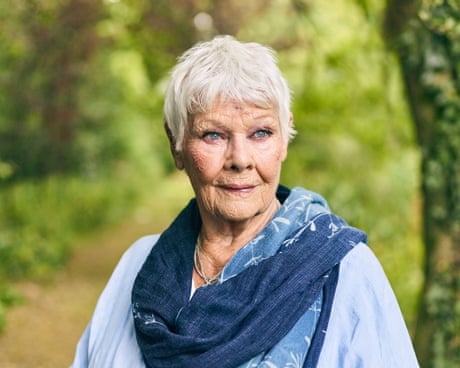
The actor waxes lyrical on directors, dildos and why she hates being referred to as though she’s a dusty old relic
In the late 1950s, Judi Dench was invited to meet a major Hollywood producer about a possible career in the film business. The producer looked at her for a long time and said: “Very nice to meet you but you’ll never make a movie because you have every single thing wrong with your face.” As she left his office, Dench – who was 23 and about to make her professional debut as Ophelia in Hamlet at the Old Vic – breathed a sigh of relief and resolved to concentrate on theatre. Though she dabbled in film and TV, it wasn’t until the 1990s that she became a bona fide movie star, playing M in the Bond films and winning an Oscar for her portrayal of Elizabeth I in Shakespeare in Love. Yet, she notes: “Being onstage is where I feel safest. Yes, I’ve appeared in films, but I’d never consider myself a film actor.”
Dench’s reflections on her working life form the backbone of Is It Too Late to Make a Run for It?, a memoir built around her conversations with the actor and theatre director Brendan O’Hea, Dench’s friend with whom she also collaborated on 2023’s Shakespeare: The Man Who Pays the Rent. This book confirms much of what is already known about Dench: that she is impishly funny, swears like a sailor, and that, despite that film producer’s unkind comments, she has “no hang-ups about what I look like on camera … Acting for me is not about looking glamorous. It’s whatever’s needed for the story.” We also learn that Dench, who is 91, can’t resist a prank: while playing Brecht’s Mother Courage at the Barbican in London, she replaced the drinks her character serves to two soldiers with cider vinegar – “It was a joy watching them knock it back, made even more glorious by the fact they had to ask for a top-up.”
Events in Ireland explore origins of Gulliver’s Travels, the Dublin clergyman’s book that became an instant hit in 1726
In March 1726, an Irish clergyman visited London and arranged for a courier to deliver a manuscript to a publisher under cover of night. The dean of St Patrick’s Cathedral in Dublin knew his novel would cause trouble and wanted to publish it anonymously.
His name was Jonathan Swift and the story was called Travels into Several Remote Nations of the World. The satirical work was published that October and is better known 300 years on as Gulliver’s Travels.
A fatal mistake sparks this juicy melodrama, in which a philosophy professor navigates the guilt of being a survivor
What if, battered by cancer and cancer treatment, you decided to end your life? And what if it went wrong and you lived, but a friend died in your place? Would you tell the police the truth? Or reason that there’s no point punishing your grieving, bruised self any further, especially when – in the first bit of good news you’ve had for years – you learn that your treatment may finally be working?
It’s the kind of moral question that London philosophy professor Esther Luck loves throwing at her students. But Jude Cook’s third novel makes the dilemma bracingly personal. As it opens, Esther, who has ovarian cancer, is waiting in a toilet cubicle on the fifth floor of her university building – the only one without CCTV – for the arrival of her dodgy French ex, Michel. He has agreed to shoot through the door and end her misery. But someone else arrives first. Laura is the department’s fragrant superstar, with her BBC presenting gig and handsome barrister husband. She finds an empty stall, Michel gets the wrong door, and Esther is left guilty, panicked and alone on the loo as Laura’s blood pools on the floor.
In her new book, Envy, Stacy Kim explains how to understand the feeling, identify your deeper desires and use them to achieve your goals
In the 16th-century poem The Faerie Queene, envy is a ghoulish figure riding a ravenous wolf, sad to see the fortune of others and “wonderous glad” of their hardship. It’s not a flattering depiction; better to be thankful for what we have, rather than dwell on such a bitter and self-destructive feeling, right?
Maybe not. “I think that when we don’t examine our envy, that’s when it leads us astray,” says Dr Stacy Kim, social scientist, life coach and author of the new bookEnvy: Why Wanting What They Have is the Key to Getting What You Want. Kim wrote the book after seeing the way envy came up for her coaching clients and reflecting on the role it had in her own life. The book is informed by social science and philosophy research, as well as her personal and professional experiences.
Similar target: “You remind yourself: ‘Hey, the reason why I’m feeling this envy is because what I want is within my reach,’” she says.
Intangible desire, as mentioned above
Relevant comparison: Identify which specific domain – something you care about or already participate in – is relevant to your desires
Negative emotion: How long does it last? How intense is the message it’s sending? This tells us how important the feeling is.
Envy by Stacy S. Kim is out now. To support the Guardian, order your copy of the UK edition at guardianbookshop.com. Delivery charges may apply.
A foreign affairs expert’s bleak assessment of the state of global security
Are we on the brink of a new world war? This bleak subject is increasingly invoked by leaders, soldiers and officials, from Donald Trump to Vladimir Putin to the heads of our military and intelligence services. It’s an urgent theme, then, for the FT foreign affairs columnist Gideon Rachman to explore in his latest survey of global diplomacy. Rachman draws his title from the expression, sometimes attributed to Trotsky: “You may not be interested in war, but war is interested in you” – the idea being that conflict doesn’t much care whether we like to think about it or not: it will come knocking on our doors regardless.
Clearly, humanity is in a particularly unsafe spot right now, but seeing our security issues laid out like this, catalogued and mapped and analysed, they seem almost overwhelming. To summarise: the most powerful, nuclear-armed states – the US, China and Russia – are led by unscrupulous, self-dealing “strongmen”, each of whom is playing with the nationalist “Great Again” politics epitomised by Trump. Democracy is being rolled back around the world, and even bastions of liberalism such as the UK, France and Germany seem vulnerable to takeover by the Putin-friendly far right. The so-called rules-based international order and its institutions – the UN, the WTO, Nato – are being deliberately undermined by the aforementioned strongmen, and are as weak now as they have ever been.
An acclaimed novel comes to life as a new opera, exploring a deeply personal side of one of America's most consequential presidents, Abraham Lincoln, and the profound grief that shaped his life. Jeffrey Brown takes in "Lincoln in the Bardo" at the Metropolitan Opera in New York for our arts and culture series, CANVAS.
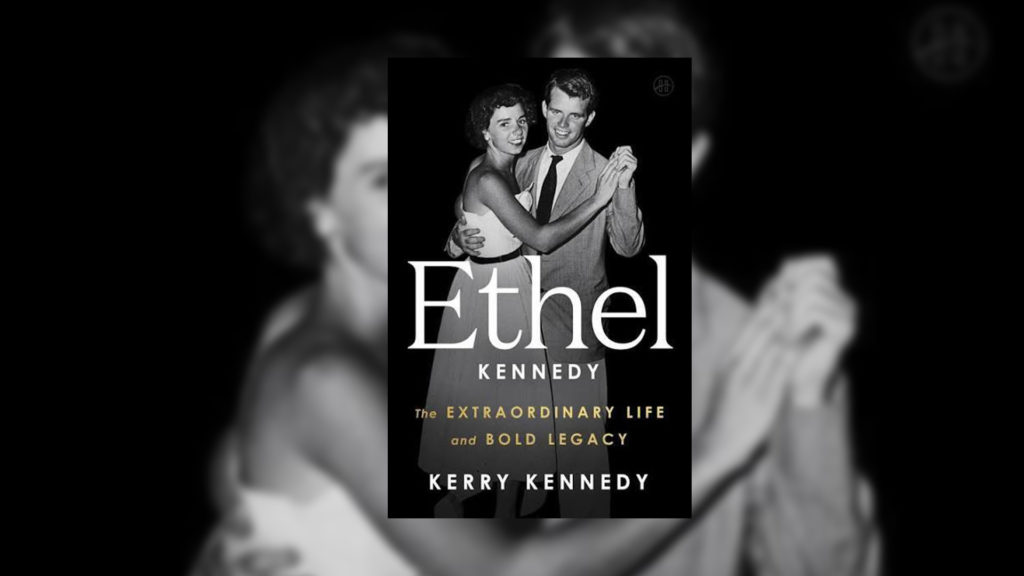
Two years ago, Ethel Kennedy passed away. The matriarch of the prominent political dynasty, she was a steadfast supporter of her husband, Robert F. Kennedy, and a lifelong advocate for human rights. She's now being remembered in a new book by her daughter called "Ethel Kennedy: The Extraordinary Life and Bold Legacy." Amna Nawaz sat down with Kerry Kennedy to discuss more.
A priest speaks to parishioners during Sunday Catholic Mass inside the Our Lady of Guadalupe Church on August 10, 2025, in Mission, Texas. | Tom Brenner for the Washington Post via Getty Images
To the average observerconcerned with the future of American democracy, it might be easy to conclude that religion has been part of the problem — particularly over the last few years. Right-wing religious leaders, including the leading Southern Baptist televangelist Robert Jeffress, have endorsed “Christian nationalism”; other evangelical pastors and conservative Catholic intellectuals have been openly pondering if America should become more of a theocracy; Secretary of Defense Pete Hegseth, who once called for an “American crusade,” evoking bloody medieval religious campaigns, has referenced Christian theology in statements about the Iran war.
To critics, these examples show that American religion is becoming an active threat to pluralism and tolerance — the ideas that make American democracy work.
But what if the solution to this anti-democratic slide is also religion — more religion than the US currently has?
Key takeaways
The authors of a new book argue that declining levels of religiosity have worsened polarization, which has led to a backslide in democracy.
To reverse this trend, the authors suggest everyone, but particularly liberals and secular people, engage with religion more and take lessons on debate and disagreement from faith traditions.
For those who do identify as religious already, this would mean participating in organized religion; for those who are not religious, this would mean approaching religion and religious people with more openness and curiosity.
This argument has limitations, but there are signs it is becoming more widespread, including the rise of religious Democrats and the pope’s recent comments.
A new book by two thinkers from opposing ends of the ideological spectrum argues that declining levels of religiosity across the board, but particularly among liberals, have deepened political polarization, which in turn has corroded democratic norms. Now, they argue, one of the most effective ways for liberals to stand up for democracy is to engage with religious communities and their scriptural traditions with more respect, openness, and curiosity. The authors also urge liberals who are believers themselves to embrace organized religion and return to it themselves.
Conservative evangelical Christian Matthew Kaemingk and liberal Muslim writer Shadi Hamid argue in Can Religion Save Democracy? that there’s a necessary and unique role that religious institutions and organized religion must play in American public life. Religion serves a fundamental regulating purpose, tempering emotions, fundamentalism, and nihilism. And when that fades away, those base instincts and emotions get channeled into our politics.
They write:
As Americans exit churches in droves, they’re not leaving behind their religious passions. Instead, they’re transferring those passions to the political battlefield. In this new post-religious context, Christian faith and Scripture function less as moral constraints within evangelical circles and more as political cudgels to use against one’s opponents.
“We’re not trying to convert [nonbelievers],” Hamid told me in an interview. “Believing is one thing, but believing that religion can play a positive role is another. And we want to encourage secular readers to embrace the second proposition, even if they don’t believe religion is true or don’t believe God exists.”
What happens when religion recedes from the public square
At the core of Kaemingk and Hamid’s argument is a simple case: There is an innate religion-shaped hole in people in the 21st century, which has been slowly replaced with politics, unbridled passions, and secular ideologies. The loss of religion hasn’t meant a loss of religious convictions, but instead has meant the rise of a new fanaticism, either secular or fundamentalist, while depriving everyone of the good things that organized and institutional religion can do.
It’s not a completely novel argument; it’s a combination of St. Augustine’s famous line that “our hearts are restless until they rest in [God]” and of the political scientist Robert Putnam’s modern case that churches and religious communities provided the third spaces that fostered civic partnership, trust, meaning, and belonging.
But they also connect these lines of thinking to what the Dutch philosopher Abraham Kuyper used to argue around the turn of the 19th century: that all people are religious, and that something very similar to religious fervor quietly powers all political movements. Religion is “pervasive, public, and pluriform” — an essential part of being human, whose absence leaves nihilism, fear, and distrust in isolated, but still fanatical, individuals.
“If Kuyper is correct that all human beings desire ultimate belief and belonging, then erasing or sequestering religion won’t extinguish our spiritual passions. They will simply shift elsewhere,” Kaemingk and Hamid write. And that shift has been toward politics, candidates, elections, and secular “creeds” that provide identity, belonging, moral certainty, and salvific promises without the accountability, guidance, and caution that religious traditions can provide.
It’s not hard to find examples of what Kaemingk and Hamid mean here. From 2016 to 2024, many observed elements of quasi-religious fervor in movements powering Trump and Woke 1.0. Trump’s strongman appeal generated a cult of personality around him, while anti-Trump resistance efforts and progressive social movements often took on qualities people also found quasi-religious: in-group markers, language, and customs, BlueAnon theories. What’s left is a stalemate, with more conservative religious believers bunched up on one end, and nonreligious but equally passionate citizens on the other end.
Kaemingk and Hamid argue that people on the left often respond by denigrating religion and religious people, dismissing those who try to defend or practice it in the public square, or forcing them to adopt secular language and thinking instead of letting religious people bring their full selves to the public space. But the way out of this current stalemate, Kaemingk and Hamid suggest, is for people on the left to be open, curious, and respectful with the devoutly faithful, whether they’re neighbors or candidates running for office.
“For that audience, my desire is to say, ‘Hey, you don’t have to believe in religion, but you can recognize the positive aspects of religion,’” Hamid told me.
That involves practical, daily activities and more high-minded appeals. In regular life, the authors recommend prayer, or prayer-like practices for nonbelievers, to help better understand and forgive opponents. They suggest there can be benefits for both nonreligious and religious people to meditate on scriptural and theological teachings about forgiveness, debate, disagreement, salvation, and why earthly politics shouldn’t be taken so seriously.
And they urge liberals in particular to reengage with religious communities and congregations. Religious liberals should avoid isolation or solitary, individualized faith, the authors recommend, and instead return to congregations and specific churches or places of worship to become part of a community and find purpose. For nonreligious liberals, Kaemingk and Hamid suggest they reexamine their own ideological priorities and be open to the possibility of being wrong on some of them, and potentially engage with organized religion to better understand a religious worldview.
Kaemingk and Hamid offer a specific challenge for liberals and secular Americans that might seem a bit unsavory: They have to realize that they are not blameless for the polarization and radical religious fervor that exists right now through their dismissal of organized religion. Their earlier denigration of organized religion around the turn of this century (think of the New Atheist movement), combined with many leaving institutional churches or failing to participate in religious life, has all contributed to the capture of these institutions by unsavory political opponents, or helped in the decline of more moderate congregations. And any attempt to stop this continued slide away from pluralistic democracy hinges on a collective effort between religious and nonreligious Americans to reverse these trends.
This argument has its limitations
Here’s an obvious question: If religion is so good at moderating people, why hasn’t it been able to temper emotions among the religious already? The most loyal Republican voters over the past few cycles have tended to be evangelical and nondenominational Christians, followed by white Catholics — both of which tend to report above-average levels of religious participation. They’ve stuck with Trump and the GOP over the last decade, which has been defined by polarization, authoritarian policies, and even moments of political violence, that both Kaemingk and Hamid say religion can fix.
Here’s an obvious question: If religion is so good at moderating people, why hasn’t it been able to temper emotions among the religious already?
More generally, while there is evidence to suggest that evangelicals who leave their churches become more cynical and individualistic — a point in Kaemingk and Hamid’s favor — there’s not much evidence to suggest that the converse is true: that religious participation has actually tempered emotions, passions, and politics. Instead, there’s a case to be made, as the writer Robert P. Jones laid out recently, that the opposite seems to be true: The most religious folks tend to still be the most likely to support harsher Trump-era policies.
Hamid acknowledged that this is a challenge,but argued this isn’t about the religion itself — rather a Trump-specific phenomenon:“Many evangelicals have let partisan loyalties take precedence over religious commitments,” he told me. “This is the distorting effect that Trump has had on the evangelical movement.”
He emphasizedthat evangelicalism has suffered because many of the most fervent MAGA supporters who identify with that religious movement are not actually very religious. “Evangelicals aren’t going to church as much as they used to on average,” he said. “There has been a kind of process of de-institutionalization in the kind of Protestant domain. And the people who tend to be more fervent MAGA supporters tend to go to church less.” He compared the level of evangelical support that Ted Cruz and Trump got in 2016: Trump had an upper hand among unchurched evangelicals.
Beyond this, the practical reality is that, as things stand today, religiosity does not seem likely to bounce back to the levels it was at two decades ago — at least, not without the help of secular Americans.
What the authors prescribe for politics and elections
Still, it’s an attractive idea, and it’s not hard to see why people might be open to it. Even Democrats themselves seem to understand that writing off religious voters for years was a bad idea. Some of the most promising Democratic candidates in red states in upcoming midterm elections are religious, including Texas Senate nominee James Talarico and Kansas Senate nominee the Rev. Adam Hamilton. A dozen other pastors or believers are running in down-ballot races across the country, while potential 2028 presidential candidates like Democratic Kentucky Gov. Andy Beshear and Democratic Pennsylvania Gov. Josh Shapiro talk openly about their personal faiths, the role of organized, institutional religion, and seem comfortable doing so.
“It’s promising,” Hamid told me about this trend. “Part of what we argue in the book is that Americans should be able to bring their full convictions into the public arena. If they’re editing themselves or suppressing their religiosity out of fear of alienating constituencies, that’s not good for democracy.”
And Kaemingk and Hamid also have a very influential intellectual ally in this mission: Pope Leo XIV just made a similar case in France for secular liberals to reexamine their understanding of religious liberty and how to balance it against the rise of right-wing religious politics.
“A Christian engaged in public service and guided by the light of his or her conscience, illumined by faith, cannot be considered a proselytizer or a threat to the unity of the nation,” he said in Paris, appealing directly to France’s fiercely secularized civic leaders. “Indeed, authentic secularity does not exclude religion but is capable of valuing it as an educational resource.”
Aboard a plane back to Rome, Leo continued, arguing that religion must have a role in the public square and pointing to the decline of religion in Germany as something that may have facilitated the rise of a far-right movement that cloaks itself in religious language.
“It would be interesting to study, analyze if and how there may be a relationship, for example, between the growth of these groups on the far right,” Leo said mid-flight, “…with some expression of a combination of these far-right points of view with a certain kind of religion, which…is not an authentic expression of Christianity.”
This may be an unsavory ask for liberals and secularists most upset about creeping religious nationalism in the Trump administration and around the country. The recent creation of a new Office of Religious Affairs in the Pentagon, the invocation of God and Scripture to support military action and immigration enforcement, and the attacks on the wave of religious candidates running as Democrats this year all make it understandable why there may be hesitancy in accepting this challenge. But Kaemingk and Hamid are undeniably right about one thing: In a diverse and pluralistic nation, we have no choice but to live with each other.
I had that question in mind while reading the new book The Opposite of Happiness: How Bad Feelings Make and Break Us, by eminent researcher George Loewenstein. The field is not exactly known for its facility with human emotions, but Loewenstein is a co-founder of behavioral economics, the subdiscipline that studies the many ways that people depart from the ideal of the perfectly rational actor. He’s spent a career investigating how psychology and emotion shape our judgments, and his latest book offers a sweeping account of how suffering structures human life.
That might sound very bleak, like the opposite of a fun read. But the book itself isn’t distressing — it’s a bracing, useful, and even comforting lens on what it means to be alive. It emerged from a period of profound suffering in his own life, one where, he writes, he “thought about suicide constantly.” Writing it, he told me in a recent interview, was “kind of a silver lining for my own misery.”
In Loewenstein’s own words, The Opposite of Happiness is not a self-help book. To him, understanding is its own reward. Though he adamantly refuses to dispense life advice, I still think the book offers much that can help us live more wisely, a little less at war with our emotions.
“Misery is inescapable,” Loewenstein writes. “It’s not some malfunction or a bug in the system. It is the system.” Negative emotions are “more powerful, persistent, and pervasive than positive ones.” That is because, he argues, unpleasant feelings — hunger, pain, anger, loneliness — are how evolution motivated us to do the things we need to survive and pass on our genes. They still heavily shape our conscious experience, however mismatched they may feel to our modern circumstances.
Some version of that insight, that dissatisfaction is woven into the human condition, has been known to humans for eons, of course, captured in philosophical teachings like Buddhism’s Four Noble Truths. The father of economics himself observed that people work hard to earn riches, only to discover the result offers no lasting contentment.“It is this deception which rouses and keeps in continual motion the industry of mankind,” Adam Smith wrote in The Theory of Moral Sentiments. “It is this which first prompted them to cultivate the ground, to build houses, to found cities and commonwealths, and to invent and improve all the sciences and arts.”
Loewenstein puts this understanding into the language of modern psychology, speaking to a current of anxiety and unhappiness running through American life today. It also points to enduring questions about what the purpose of human progress and prosperity is, anyway.
Many of us could particularly benefit from the concept of negative “meta-emotions,” or the judgmental feelings we have about our negative feelings. “At the heart of so many of our miseries is not the fact that we feel bad, but the belief that we should feel otherwise,” he writes. That line immediately rang true to me — merely acknowledging to myself that it’s not a big deal if I feel terrible from work stress, or my cat’s deteriorating health, or whatever else happens to be weighing on me, helps to lighten the load. What if we really tried to wryly embrace the reality that it’s extremely normal for life to suck sometimes? The reward might not be happiness, exactly (an elusive and poorly understood state anyway, Loewenstein points out), but a little less misery.
I recently spoke with Loewenstein about his book — he had a gentle, faintly melancholic air, and took a surprisingly generous interest in some of the choices I was weighing in my own life. Part of our conversation, condensed and edited for clarity, is below.
Americans seem pretty unhappy right now. There has been endless discourse about that. Do you think that your book adds something to that conversation?
I do — I was just an expert on the Meta case that recently settled. I was an expert on the side that was against Meta. I think one of the causes of declining mental health is, in fact, social media. It really exacerbates the types of social comparisons that lead to envy and loss of self-esteem. I would like to think that I provide some new insights into how these modern technologies help to exacerbate the mental health crisis.
One analysis of that, based on what I’ve learned from your book, might be: We as humans are so guided by negative emotions, and often those emotions are relational in nature and have to do with how we compare to other people. Social media is then quite naturally going to tap into and amplifying negative emotions that we’re easily manipulated by.
That’s right. I think of it in two ways. One is there’s kind of a mismatch between the circumstances in which we evolved and the modern environment. And the other is that in the capitalist economy, there are, especially in the internet age, all these entities that are trying to exploit our evolutionary programming for their own good and not for our good.
The premise of the book, as you write, is that “misery is inescapable. It’s not some malfunction or a bug in the system. It is the system” — it’s like our default state. Can you unpack what that means?
I agree with everything you said until “default.” Different people have different set points, and there are some happy people around. I happen to be a glass-half-empty person. My natural state is a little bit below zero. But there are very few people who don’t experience some form of misery frequently and intensely.
The evolutionary function of most negative emotions is pretty obvious, whereas the evolutionary function of happiness is sort of murky. And misery is so dominant that all it takes is a little bit of misery, a little bit of negative emotion, to wipe out any positive emotion. You go out to a really nice dinner at a fancy restaurant with your significant other, and you say something thoughtless and they get offended or they say something thoughtless and you get offended. All of a sudden you can’t even taste the food or appreciate the beautiful surroundings.
Paul Rozin at the University of Pennsylvania referred to this as the “roach effect”: If you drop a roach into a vat of fine French wine, you don’t want to drink the wine. But if you take a roach, you can add as much wine as you want to it and you’re not going to want to eat the roach.
One of the strongest positive emotions is relief — which is interesting and not a coincidence, because it’s relief from negative emotions. It’s telling that maybe the strongest positive emotion involves the elimination of negative emotions.
You can think of misery as a stick trying to get you to do things that evolution thought were good for you; the stick is very immediate, and you know exactly what it’s telling you. If you are hungry, it’s time to eat. If you’re in pain, you’re injured, you’ve got to do something about it. But the carrot is different. The carrot, which is positive emotions, you have to think ahead, Oh, if I did this, then I would experience this positive emotion. It requires a kind of second-order thinking, whereas misery is just immediate. Evolution figured out probably very rapidly, probably when we were single-cell protozoa or something, that sticks are a way better way to get an organism to do what it needs to do than carrots.
How confident are you that the evidence base we have about the psychology of negative emotions generalizes to humanity as a whole and that it’s not culturally biased?
“What I’d really like people to get out of the book is insight — into their own negative feelings, their own types of misery, and other people’s negative feelings.”
Emotion researchers have looked across cultures, and they tend to observe the same basic emotions in a very, very wide range of cultures. What does vary across cultures is what induces the emotions. For example, shame — something that we would be unashamed of, somebody in a different country might be very ashamed of, and vice versa. A lot of these emotions are self-conscious emotions. They have to do with how we interpret the world and whether we’re living up to some kind of standard. Often we get it from culture, from religion, things like that.
But I think the emotions themselves are not universal, but pretty close to universal. My guess is that all 12 negative emotions that I write about are manifested in pretty much all different cultures, from those that have very little connection to Western civilization to advanced economies.
Another timely thread that your book is in conversation with is this idea that American culture has become intolerant of ordinary negative emotions in a way that’s maladaptive. Suzanne O’Sullivan’s recent book The Age of Diagnosis, for example, covered our obsession with medical labels and how they might make us prone to thinking that feeling bad means that there’s something medically wrong with us. What do you think about that? Have we gotten bad at feeling bad?
It is striking to me how it seems like all the young people I meet talk about their therapist, and a lot of them talk about the drugs that they take. Young people also talk about anxiety and depression almost like one word, “anxiety-and-depression.” In my generation, anxiety and depression were two entirely different things.
I think it’s good that younger generations are more comfortable talking about these things and getting help. I do worry that it can be, to some degree, pathologizing. There’s an awful lot of self-focus there. And I kind of worry that if you are dealing with your mental health problems by taking drugs, that it reduces your motivation to figure out things like how to reorganize your life to feel better. But I don’t want to sound too much like a dinosaur.
There’s a contingent of people who might read your book and think, “Yes, isn’t it terrible that humans are built to be unhappy and our evolved instincts don’t serve us well anymore? And that’s why we should engineer humans in such a way that we don’t feel this way all the time.” Someone with a strong utilitarian philosophy might think that if your life sums up to more negative feelings than positive ones, then it’s not even worth living. But that’s not really the vibe that I get from you.
No, yeah. And one of the things I talk about in the book are what psychologists call meta-emotions. These are emotions that one experiences about emotions. I think the single best example is envy. If you envy your friend — almost everyone has friends that they envy, but they’re still your friends. But you might feel that you’re not supposed to envy your friend, and you feel guilty — the guilt is a meta-emotion. Or you can also have meta-emotions about a lack of emotion. So something bad happens to someone, or even somebody dies, and you don’t feel all that bad, and you feel guilty because you’re not grieving.
I think all the societal focus on happiness creates a kind of a meta-meta-emotion, which is that we think we’re supposed to be happy. And then we feel ashamed and guilty about the fact that we aren’t happy — we feel like we failed. That compounds and adds another level of depth to our misery. So I think it can be liberating at some level to understand that misery just is a constant in human existence.
I also think that my book is militantly anti-self-help. There’s no self-help in it whatsoever. But I don’t think it’s a depressing book to read, and it wasn’t particularly depressing to write, though some of the stories that I wrote about were a bit wrenching.
A goal for policy: Less misery
I asked Loewenstein whether all the social and economic progress humans have made over the last few centuries have made us better off psychology. He said: “I don’t think social progress makes us happier, but I do think that certain types of social progress can make us less miserable,” he said. He continued:
“A lot of people in this country are dealing with huge financial anxiety. They’re in debt, like credit card debt or student debt. Not only does that make people miserable day to day, but it destroys relationships and makes parenting much more difficult. And I think the societies that have the highest measures of happiness, which you can equally well interpret as the lowest levels of misery, are societies like the Scandinavian countries that have really robust safety nets.
“I think maybe the central focus of public policy should be to mitigate all sorts of different types of miseries. Living in one of the richest countries on earth, that should be in our power to do. … There are good ways to use your social wealth, and there are terrible ways. We tend to err on the terrible side.”
I like that — but what, then, ought people to do with the information that you’re presenting?
What I’d really like people to get out of the book is insight — into their own negative feelings, their own types of misery, and other people’s negative feelings. To me, insight is valuable in its own right.
The reason I read sad novels is not because they make me happy, but because I feel like I gained some kind of insight into people and into the world. Tess of the d’Urbervilles is the saddest book you could ever imagine, but it’s very meaningful to read, and it definitely feels like you’re a different person after you read it. I love novels, but I have no skill as a fiction writer. So this book was almost like a surrogate for me. Instead of writing a novel, I wrote this book.
I think the lack of self-help drives some people crazy. I did a podcast where the podcaster kept asking me questions about how reading the book would improve somebody’s life. And I kept saying it’s not a self-help book.
I’m just very skeptical of self-help talks and books and things like that. And I know that there’s certain things you are supposed to do to feel good, like you’re supposed to wake up and think of three things that you should be thankful for. And maybe if I did that, maybe I would get happier, but I’ve never been able to actually get myself to do that.
But you do have some insights that people could apply in their lives, like the idea that striving intentionally for happiness or meaning doesn’t really work, and that meaning often comes to us in unforeseeable spontaneous moments. On one hand, that implies a kind of randomness, and maybe there’s not a lot we can do about it. On the other hand, I can predict that I’m more likely to feel a deep sense of meaning in some scenarios than others, and I can put myself into those situations more, like choosing to be social on a weeknight.
A lot of the time the good things in life are just surprising, and sometimes you have to get dragged kicking and screaming into things that ultimately end up being the most fulfilling things in your life. So much of parenting is trying to get your kids to do things that they don’t want to do that you are absolutely convinced that if they started to do them, they would end up loving.
You argue, drawing from economist and philosopher Adam Smith, that human beings are constantly striving to achieve the next thing because we imagine it’ll satisfy us, though it never does. That helpful delusion is what leads us to build cities and cure diseases and all the rest.
Adam Smith is best known for the invisible hand, which is the idea that each person single-mindedly pursuing their own well-being inadvertently promotes the public good. But if you read Adam Smith’s other book, The Theory of Moral Sentiments, he didn’t believe at all that people pursue their own personal interest. He believed that people are driven by this illusion that the next raise, the next accomplishment, will bring happiness, and it never does. I love that contradiction between the conventional interpretation of the invisible hand and what Adam Smith really believed.
So civilization is powered by this dissatisfaction that never resolves itself. But I don’t think you would say the lesson we ought to take from the book is that we’ll always revert back to being miserable, so there’s no point in doing anything.
That’s absolutely not the point of the book. Misery evolved for good reasons, and the whole point of misery is that we’re supposed to take actions to lessen our miseries. That’s what we should be doing, because who wants to be miserable?

 Login