❌

Reading view

The Supreme Court is about to decide whether to ban trans women from women’s sports

People carrying trans rights flags outside the Supreme Court
The plaintiffs in the case K.M.K. v. Washington Interscholastic Activities Association effectively want the Supreme Court to bar trans women from women’s sports teams at high schools and universities. | Heather Diehl/Getty Images

One of the last decade’s most consequential changes to how the Supreme Court operates is the growth of the so-called shadow docket — a process that allows the justices to decide cases unusually quickly, and often without full briefing or oral argument.

Historically, the Court would typically allow contentious legal issues to percolate in the lower courts for months or even years before the justices agreed to decide one of those issues. Then they’d spend months reading briefs, hearing arguments, and debating the case amongst themselves before they finally issued an opinion. This slow process existed because the Supreme Court is the final word on many legal questions — the Court can even override Congress if it claims a law is unconstitutional — and so it should be cautious before it hands down a decision that cannot easily be displaced.

A new case, which recently arrived on the Court’s shadow docket, embodies all the reasons why America’s highest Court should act carefully and slowly. K.M.K. v. Washington Interscholastic Activities Association involves a highly contentious issue — the plaintiffs in the case effectively want the Supreme Court to bar transgender women from women’s sports teams at high schools and universities, even in states that support trans inclusion in sports.

It also involves an appalling sexual assault allegation. One of the plaintiffs in the case is a high school women’s team wrestler who is identified only by her initials because she is a minor. She claims that one of her wrestling opponents, who is transgender, “forcefully” penetrated the plaintiff’s vagina with her fingers during a match.

As a memo from the local prosecutor’s office points out, if these allegations are true then K.M.K. is the victim of a very serious crime — rape in the third degree. The prosecutor’s office, however, decided not to prosecute because it concluded that it could not prove that a sex crime was committed beyond a reasonable doubt. Among other things, prosecutors spoke to the referee who officiated the match, and he said that “nothing stood out to him during the match” and that “after watching the video of the match, he could not say that the suspect’s hand placement was ‘anything out of the ordinary.’”

The school district, meanwhile, says that it has reviewed video of the match, interviewed both competitors, and that its investigation into the allegation is “still ongoing.”

K.M.K., in other words, is exactly the sort of case that the justices should step away from, sending it back down to the lower courts to gather more information and to fully think through the difficult legal issues presented by the case. Setting aside the horrifying allegations against her one-time opponent, K.M.K.’s lawyers — most of whom work for a Christian right law firm, the Alliance Defending Freedom (ADF) — make novel legal arguments that ask the Court to make broad pronouncements that go far beyond its previous precedents. 

One of their arguments, if taken seriously by the justices, could potentially make it impossible for any school athletes, whether cis or trans, to participate in competitive sports of any kind.

There is a very real risk, in other words, that the Supreme Court will, if it moves too quickly in this case, harm millions of school athletes throughout the country. The factual question of whether a particular wrestler committed a crime is separate from the legal question of whether federal law strips states of their authority over trans participation in women’s sports. And this legal question deserves more deliberation than the Court can give it if it decides this case on the shadow docket.

So what are the actual legal issues in K.M.K.?

In West Virginia v. B.P.J. (2026), the Supreme Court warned that judges should not be given the power to decide which athletes may compete on a women’s sports team. “The legislatures and the schools are better equipped — and under the Constitution, are the more appropriate entities,” Justice Brett Kavanaugh wrote for his Court, “to assess the competing medical and scientific considerations and draw appropriate lines.”

B.P.J., of course, was a loss for transgender rights. The Court rejected a constitutional challenge to state laws that forbid trans women from playing on school sports teams within that state. But the legal question in B.P.J. was whether laws barring trans women from women’s sports are allowed — a question that the Court’s Republican majority answered in the affirmative. A victory for the plaintiffs in K.M.K., by contrast, would likely establish that no state may permit trans women to compete on women’s sports teams, regardless of what the people of that state want.

This Court is often skeptical of claims by trans rights advocates, and it almost always resolves disputes between cultural liberals and religious conservatives in favor of the religious right. That said, this Court has thus far respected states’ rights on another contentious issue that is a high priority for the religious right: abortion. Although the Court’s Republican majority overruled Roe v. Wade and eliminated the constitutional right to an abortion, it has rejected some attempts to restrict abortion in blue states — including by repeatedly ruling against litigants who seek to ban the abortion medication mifepristone.

So it is, at least, possible that this Court will follow a similar path in K.M.K. and conclude that the question of which team trans women should play on should be answered by the states and not the Supreme Court.

Broadly speaking, ADF raises two legal arguments against Washington state’s policy allowing trans women to play on women’s sports teams. It claims that Title IX, a federal law that bars “sex” discrimination by most schools, implicitly requires those schools to have sports teams that only cisgender women may play on. It also claims that the Court’s recent decision in Mirabelli v. Bonta (2026), which requires public schools to out trans students to their parents even if the students wish to keep their gender identity secret, also requires those schools to exclude trans women from women’s sports.

There’s no reason for the Supreme Court to decide either of these questions now, however. As Chief Justice John Roberts wrote in Lux v. Rodrigues (2010), when a party that lost in the lower courts seeks an injunction from a Supreme Court justice before their case is fully litigated in those lower courts, they must demonstrate that “the legal rights at issue are ‘indisputably clear.’” This rule, like many old rules disfavoring shadow docket decisions, exists to prevent the justices from rushing into a decision that may later prove unwise.

There is no plausible argument that Title IX “indisputably” bars trans women from women’s sports. That’s because, just a few months ago in B.P.J., the Court held that it was not deciding the question of “whether, under Title IX and the Equal Protection Clause, schools may allow biological males who identify as female to participate on girls’ and women’s sports teams.” So that’s a recent Supreme Court precedent holding that the answer to this legal question remains open.

Mirabelli, meanwhile, is an unusually thinly reasoned decision. The Court’s Republican majority held that schools must out trans students because of a judicially created doctrine saying that parents have “primary authority with respect to ‘the upbringing and education of children.’” But the Court’s analysis of this issue was just a single paragraph long, it relied on the most malleable doctrine in all of US constitutional law, and it had nothing to say about sports. 

Moreover, as the school district points out in its brief, the Court has never held that a parent’s right to direct the upbringing of their child includes a right to dictate which rules will be used by school sports teams. If such a right existed, a parent might insist that a school bar players of a particular race. Or they might demand that their child be allowed to play football without being tackled.

Competitive team sports simply cannot exist if one player’s mother is allowed to demand changes to the rules that neither the league nor the other players support.

In any event, at this stage in the litigation it should be enough for the Court to say that the unique right claimed by K.M.K.’s mother — the right to dictate which rules a multischool competitive sports league will use — is not “indisputably clear” under current law. 

What should happen when the Court eventually decides whether blue states may allow trans women to play on women’s teams?

It is, to borrow from Lux, indisputably clear that the Court should not give the K.M.K. plaintiffs the sweeping policy change that they seek in a shadow docket ruling. But the justices cannot avoid, forever, the question of whether federal law forbids trans women from playing on women’s teams. So how should they resolve this question when it is more properly presented to them?

Let’s dispose of the plaintiffs’ Mirabelli argument first. While the Court has held that parents have some right to direct the education of their children, prior to Mirabelli, this right was construed narrowly. One older case held that states may not forbid parents from sending their children to private schools. Another held that the government may not bar teachers at these schools from teaching the German language.

Prior to the Court’s barely explained decision in Mirabelli, however, the Court had never held that parents may dictate how public schools operate, and the school district’s brief in K.M.K. cites several court decisions warning against giving parents too much authority over public schools. (The Court did hold, in Mahmoud v. Taylor (2025), that parents who object to a school’s curriculum on religious grounds may opt their children out of certain lessons. But the K.M.K. plaintiffs do not raise a religious objection.) As the Supreme Court said in Prince v. Massachusetts (1944), states may “restrict the parent’s control by requiring school attendance, regulating or prohibiting the child’s labor and in many other ways.” 

It’s clear from Mirabelli that the Court’s Republicans do not share this caution about judicial control over public schools. But, because Mirabelli was so thinly reasoned, it’s also impossible for outside observers to determine why these justices want an unprecedented amount of control over public schooling, or whether they have good reasons for asserting this new power.

I will simply reiterate the school district’s objection that, once the Supreme Court opens the door to parents dictating which rules will be used in school sporting competitions, the lawsuits will not end with parents seeking to kick trans women out of women’s sports. The next parent may object to their child wrestling Black people. Or they may demand that their child be given protective gear that gives them a competitive advantage. Some parents may also demand rules changes that conflict with changes demanded by other parents. And there is no principled way to distinguish these requests from a request to exclude trans women.

There are myriad problems, meanwhile, with the K.M.K. plaintiffs’ Title IX argument. That statute provides that schools that receive “Federal financial assistance” may not exclude individuals from “any education program” on “the basis of sex.” This statute has long been read to require equal treatment of men’s and women’s sports by schools that receive federal funds.

But, as the school district argues in its brief, Washington schools do not discriminate on the basis of “sex” — which the Court has defined to mean sex assigned at birth in this context. Instead, they classify athletes on the basis of gender identity. There is one team for all people who identify as male, whether trans or cis, and another team for all people who identify as female. Social conservatives may object to this arrangement, but it does not classify students based on their sex assigned at birth at all.

The K.M.K. plaintiffs’ argument is also undermined by federal regulations implementing Title IX. Those regulations provide that schools generally should not separate women and men in sports, but that they “may operate or sponsor separate teams for members of each sex where selection for such teams is based upon competitive skill or the activity involved is a contact sport.” It is quite a stretch to read regulations saying that schools “may” have sex-segregated teams to say that schools must ensure that their teams are strictly sex segregated.

Finally, recall that Title IX only applies to schools that accept federal funding — schools have the option of rejecting Title IX’s requirements if they also forego federal grants. This matters because, as the Court recently held in Landor v. Louisiana Department of Corrections (2026), “Congress must clearly and unambiguously alert a grant recipient to any condition on federal funds.”

Thus, if there is any ambiguity about whether Title IX requires schools to exclude trans women from women’s sports, that ambiguity must be resolved against imposing any requirements on public schools. Title IX may only be read to ban trans women from women’s sports if it “clearly and unambiguously” does so.

Again, there’s no reason for the justices to resolve either of these questions because, at this early stage in the litigation, the Supreme Court should simply decline to decide K.M.K. because the plaintiffs’ legal rights are not “indisputably clear.” But this Court is often impatient, especially in cases involving culture war issues. Mirabelli was also a shadow docket case, but that didn’t stop the Court’s Republicans from inventing a new legal rule compelling teachers to out their trans students.

There’s a serious risk, in other words, that this Court will rush to decide K.M.K. before it fully considers the legal arguments on either side, or even learns whether the genuinely shocking allegations raised by the plaintiffs have merit.


  •  

The surprising conservative backlash against Justice Alito

Samuel Alito Jr., associate justice of the US Supreme Court. | Al Drago/Bloomberg via Getty Images

Justice Samuel Alito’s new book, So Ordered: An Originalist’s View of the Constitution, the Court, and Our Country, isn’t going to set the world on fire with its bold new ideas. It’s mostly a collection of Alito’s old speeches. 

But if the book treads familiar ground, the reception to it among writers who share Alito’s broad alignment with the political right is quite surprising. Three recent reviews of Alito’s new book —  all by right-leaning authors — sound a lot like the longtime liberal criticisms of Alito.

Key takeaways

  • Justice Samuel Alito has a new book, where he calls himself an “originalist.”
  • But several conservative writers disagree, pointing out that Alito is really just concerned with reaching results that he likes.
  • Ultimately, originalists need Alito more than Alito needs them, because without Alito’s flexible approach to judging, this Court couldn’t consistently reach conservative results.

All three of these reviews accuse Alito of engaging in results-oriented decision-making — meaning that he often seems to start with the outcome that he prefers, and then comes up with a rationale to justify that outcome. This, they argue, is at odds with Alito’s fairly recent decision to label himself an “originalist,” an approach to judging that’s long been sold as a way to keep judges from mistaking “their own predilections for the law.”

Originalism, for the uninitiated, is the idea that the only legitimate way to interpret the Constitution is to ask what its words meant at the time it was ratified. It’s more than just a fashionable idea among many Republican lawyers and judges. Many legal conservatives view originalism as a central part of their professional identity, and powerful conservative organizations like the Federalist Society have long evangelized originalism as the one true way to interpret the Constitution.

Yet, a consistent theme in the critical reviews of So Ordered is that Alito’s actual approach to judging cannot be squared with his decision to label himself an “originalist” in the book’s title. As Harvard law professor Jack Goldsmith, a conservative who has written critically about originalism in the past, writes in his review of the book: “Alito’s embrace of the originalist label is also likely to come as a surprise to people on the left and the right.”

Goldsmith, who led the Justice Department’s Office of Legal Counsel during the second Bush administration, writes in his review of the book that early proponents of originalism, including Scalia, often sold it as a more restrained alternative to “a liberal conception of judging called ‘living constitutionalism.’” Goldsmith says that approach, which was ascendant among liberals several decades ago but has since fallen out of favor, read the Constitution as an adaptable document whose meaning could evolve to deal with “current needs.” 

Conservatives needed an intellectually consistent way to put the brakes on that impulse, and originalism was their answer. By treating the Constitution as an inflexible charter whose meaning was fixed at some distant point in the past, Scalia and his fellow travelers hoped to “limit or reverse the progressive transformation of American society set in motion by Supreme Court decisions that had expanded criminal-defense rights, ended prayer in public school, recognized the rights to contraception and abortion, strengthened voting equality, and supported affirmative action and busing.”

Now that movement conservatives control the Supreme Court, however, it’s less clear whether originalism is still useful to conservatism. As Jason Willick, a conservative Washington Post columnist, writes in his review of Alito’s book, “originalism can get in the way of the right’s ambitions.” Sometimes, an honest application of originalism produces liberal results.

Willick interprets Alito’s book as an attempt to “keep the marriage” between conservatives and originalism together. But if that’s true, it is an open marriage. Alito is happy to make originalist arguments when they suit his preferred outcomes. But his greatest value to conservative Republicans is often that he is willing to write non-originalist opinions that reach the result his team desires, but that a more principled originalist would view as beyond the pale.

On the surface, the fact that conservative intellectuals are starting to notice, and criticize, Alito’s weak commitment to one of the conservative legal movement’s core ideas might indicate that a schism is forming between committed originalists and more flexible partisans like Alito. Perhaps the conservative legal movement is becoming a victim of its own success?

In So Ordered, Alito seems to be suggesting the opposite: He’s offering proof that a judge can still identify as an out and proud originalist, even if they enjoy frequent flings with the right-wing version of “living constitutionalism.” 

More broadly, if Democrats hope that the growing tension between Republican judges’ preferred methodology and their ability to reach reliably conservative results will lead to more liberal outcomes, they should expect to be disappointed. Alito, despite his apostasy, is still one of the most celebrated figures in the Federalist Society, the powerful conservative bar association that has long evangelized originalism as the one true way to interpret the Constitution. 

What is Alito’s actual approach to judging?

So Ordered offers a simple way for judges whose originalist and conservative identities are in tension to resolve that tension: They can continue to self-identify as “originalists,” while still reaching whatever result they want in the most important cases.

Alito hasn’t always described himself as an originalist. In fact, at times he’s openly mocked originalism. In a 2011 argument about how the First Amendment applies to violent video games, Alito responded to an originalist question from Justice Antonin Scalia by quipping, “I think what Justice Scalia wants to know is what James Madison thought about video games. Did he enjoy them?” 

In the past, Alito has, at some points, called himself a “practical originalist,” and at other times expressed doubt about that self-description.

In their reviews, both Goldsmith and Willick highlight Alito’s statement that originalism can only survive as “anything other than a minor academic curiosity” if it is “widely viewed as generally producing good results.” But, as Willick notes, this raises an important question: “Viewed as producing good results by whom?”

The answer to this question is that the justice wants to reach results that he personally, as well as other members of the Republican Party’s right flank, view as good. That, as Willick lays out, entails cracking down on broad exercises of executive power during the Obama administration, then letting those reins go slack during Donald Trump’s presidencies. 

The actual approach to judging Alito describes in So Ordered, the libertarian author Damon Root writes, sounds “much more like the results-oriented ‘living constitutionalism’ that originalists are supposed to oppose.”

Goldsmith, Willick and Root are hardly the only right-leaning thinkers to notice Alito’s thin commitment to originalism. There is also Alito’s closest ideological ally on the Court, Justice Clarence Thomas.

The occasion for Thomas’s criticism was Consumer Financial Protection Bureau (“CFPB”) v. Community Financial Services (2024), a bizarre lawsuit where a lower federal court claimed that an entire federal agency, the CFPB, violated a provision of the Constitution that had literally never been cited by any other court in all of US history to strike down a federal law. 

That provision says that the Treasury may not pay money unless Congress allows that spending through “Appropriations made by law.” As Thomas explained in the Court’s opinion in CFPB, this constitutional provision merely establishes that Congress must identify a “specified source of public money” that an agency may draw upon when it funds that agency. Because the CFPB cleared this low bar, it is constitutional.

Alito’s dissent, meanwhile, did not really make a legal argument against the CFPB. Instead, he spent the bulk of his dissent discussing centuries-old conflicts between England’s Parliament and its king, which eventually inspired the drafters of the Constitution to place appropriations in Congress’s hands. Yet, as Thomas writes, Alito “never connects its summary of history back to the word ‘Appropriations.’” Alito simply listed a bunch of historical facts that are tangentially related to the legal question before his Court, then leapt to the conclusion that the CFPB is unconstitutional.

Alito, in other words, did not actually practice originalism when he wrote this dissent. As Alito concedes in So Ordered, originalism isn’t simply the idea that judges should rely on historical sources when deciding cases. It is, in Alito’s own words, “the theory that constitutional provisions should be understood to mean what the public would have taken them to mean when they were adopted.” Originalists, in other words, are supposed to use history to determine what the words of the Constitution mean, not to vomit historical anecdotes onto a page before reaching an irrelevant legal conclusion.

So Alito’s CFPB dissent is not originalist, but it is entirely consistent with the results-oriented approach to judging that even his conservative critics have begun to notice. One of Alito’s major projects as a justice appears to be attempting to dismantle anything accomplished by President Barack Obama. The CFPB was created by the financial reform legislation that Obama signed in 2010. Alito has also tried three times to kill Obama’s signature legislative accomplishment, the Affordable Care Act.

Yet, as Goldsmith writes in his review of So Ordered, Alito “has supported the Trump administration in every second-term case of importance, including with dissents in every major Trump loss.”

Beyond his unapologetic partisanship, Alito is, as law professor Neil Siegel wrote in a 2017 review of the justice’s career, “the primary judicial voice of the many millions of Americans who appear to be losing the culture wars.”

In So Ordered, for example, Alito repeatedly brings up an argument against same-sex marriage that he first raised in his dissenting opinion in Obergefell v. Hodges (2015), the Court’s landmark marriage equality decision. Same-sex marriage should remain illegal, Alito claims, because its legalization “will be used to vilify Americans who are unwilling to assent to the new orthodoxy.” Alito feared that, once gay equality became enshrined in the law, Americans who reject that equality “risk being labeled as bigots.”

But this isn’t even a legal argument, much less an originalist one. The First Amendment’s free speech clause protects the right to call someone a bigot, even if Alito believes that the charge is unjustified. And the First Amendment’s guarantee that everyone may freely exercise their religion allows believers in liberal faiths to teach others that God abhors discrimination. The Constitution has never been understood to deny civil rights to a group of people because someone might speak disparagingly about individuals who oppose that right. If it did, constitutional rights could not exist.

All of which is a long way of saying that Alito’s conservative critics are right to label him a results-oriented judge. He has no real commitment to a principled theory of interpretation like originalism. His approach to individual cases often turns on whether the defendant is a Democrat or a Republican. And many of his opinions do not so much make legal arguments as, to borrow the words of Lionel Trilling, rely on “irritable mental gestures which seek to resemble ideas.”

Originalists need Alito more than Alito needs originalism

Originalism is a powerful tool in the hands of judges who wish to radically change how the Constitution is understood. In the American legal system, courts typically follow a principle known as stare decisis — Latin for “to stand by things decided” — which holds that judges should almost always follow the legal rules laid down by previous decisions, even if a judge does not like how that earlier case was decided.

Originalism, by contrast, posits that a judicial decision’s legitimacy flows, not from its alignment with prior precedents, but from the judge’s understanding of how the words of the Constitution were originally understood. This allows judges who wish to toss out longstanding legal rules to wrap their opinions in the trappings of America’s founding, and to paint judges who honor stare decisis as betrayers of the Constitution’s true meaning.

Historically, originalism has been used by liberals and conservatives alike to justify dismantling legal rules they despised. Franklin D. Roosevelt-appointed Justice Hugo Black, for example, wielded originalist arguments to attack precedents that undercut the New Deal, or that otherwise interfered with progressive economic legislation.

Similarly, conservatives like Alito use originalist rhetoric to undermine liberal precedents that they abhor. Alito’s opinion in Dobbs v. Jackson Women’s Health Organization (2022), which abolished the constitutional right to an abortion, is chock-full of originalist arguments that “until the latter part of the 20th century, such a right was entirely unknown in American law.”

But one problem with the Constitution’s early history, at least if you are a results-driven judge, is that it does not map perfectly onto anyone’s modern-day political beliefs. While originalism sometimes gives judges strong arguments that they can use to undermine previous Supreme Court decisions, a results-oriented judge like Alito will inevitably want to reach outcomes that originalist arguments cannot support.

Consider, for example, affirmative action. There is no plausible originalist argument against it. The same Congress that drafted the 14th Amendment, which the Court’s Republican majority used in 2023 to abolish race-conscious admissions programs at most universities, also enacted numerous affirmative action programs — ranging from the 1866 Freedmen’s Bureau Act to a much smaller program providing money “for the relief of freedmen or destitute colored people in the District of Columbia.”

But the dearth of originalist arguments against affirmative action has not stopped this Court from implementing its preferred racial policies. As Goldsmith notes, only three members of the current Court — Thomas, plus Justices Neil Gorsuch and Amy Coney Barrett — “regularly try to practice originalism, and they do so very unevenly.” So, when the Republican justices wish to reach a result that cannot be justified by originalist arguments, the opinion is typically authored by one of the Court’s three non-originalist Republicans.

Students for Fair Admissions v. Harvard (2023), the decision ending affirmative action on college and university campuses, was authored by Chief Justice John Roberts — who declared during his 2005 confirmation hearing that “I do not have an overarching judicial philosophy that I bring to every case.” The Court’s more recent decision in Louisiana v. Callais (2026), which applied the Republican justices’ skepticism of race-conscious laws to voting rights, was authored by Alito.

Republicans, in other words, would be in rough shape if they actually filled the Supreme Court with principled originalists. The conservative legal project depends on flexible, results-focused justices like Alito, who will reach ideologically correct conclusions even when originalism calls for a more liberal result, and who will sign their name to opinions that may make their originalist colleagues quietly cringe.

Does that mean that originalist rhetoric will fade in Republican legal circles? It’s certainly possible. In So Ordered, Alito gives a mixed review of the work of Adrian Vermeule, a Catholic conservative law professor at Harvard who argues that legal conservatives should abandon originalism altogether because it constrains their ability to impose their own vision of the “common good.”

Trump, meanwhile, has had a falling out with the Federalist Society. While the Federalist Society successfully pushed Trump to appoint outspoken proponents of originalism to the bench during his first term, many of his second-term nominees’ primary qualification is their personal loyalty to Trump. At least three of his former criminal defense lawyers are now US Court of Appeals judges.

At the same time, some members of the Court’s Democratic minority appear to be taking a page from Justice Black’s playbook. Liberals who disagree with the current Court’s precedents will often find that constitutional history supports their preferred outcomes. Justice Ketanji Brown Jackson, in particular, often wields originalist arguments to disparage her Republican colleagues’ approach to race.

So it’s certainly possible to imagine a future where Republicans abandon originalism in favor of Trump’s personalism or Vermeule’s unapologetically results-driven approach. Democrats, meanwhile, could become outspoken originalists because originalism gives them a vocabulary they can use to argue against applying stare decisis to the Roberts Court’s most right-wing decisions.

But this future is not inevitable. The most important lesson taught by Alito’s new book is that judges do not need to hold any principled legal views in order to identify as an “originalist.” Regardless of how partisan your rulings are, calling yourself an originalist is enough.

  •  

Vance Declines to Endorse Netanyahu for Re-Election, Breaking With Trump

President Donald Trump and Vice President J.D. Vance speak together during an event at the White House on May 8, 2025. —Anna Moneymaker—Getty Images

Vice President J.D. Vance on Monday declined to endorse Israeli Prime Minister Benjamin Netanyahu for re-election, a day after President Donald Trump publicly backed the embattled leader.

“The President has the most effective endorsement in American, or international, political history,” said Vance, when asked in an interview if he would also be extending an endorsement ahead of the election on Oct. 27. “I endorse American candidates and that’s where I'm focused on, is the midterms, so I'm not getting involved in the Israeli elections.”

When pushed for an answer, Vance added: “I'm not anti-endorsing [Netanyahu], I'm not pro-endorsing him.”

Vance’s response stood in stark contrast to Trump's endorsement, as he put his “complete and total” support behind the Israeli leader, while praising his endurance as a “great warrior” Prime Minister. 

Referencing the Iran war, Trump said: “If Israel has the wrong leader, which would be anyone other than Bibi [Netanyahu], America will have to do this work ourselves, and I am not inclined to do so.” He went on to say that Netanyahu has been “strong, brave, and brilliant in the face of tremendous opposition, including that coming from even Israel” and “despite all of that, he has endured.”

Many are viewing the Israeli election as a referendum on Netanyahu, who has faced heavy criticism over his handling of the Hamas-led attack against Israel on Oct. 7, 2023. The subsequent Israel-Hamas war has led to a humanitarian crisis in Gaza. Netanyahu’s government has also been called to task over the reports of settler violence against Palestinian villages in the occupied West Bank.

Read More: How Oct. 7 Changed Israel

Ahead of the elections, Defense Secretary Pete Hegseth reportedly met with Netanyahu on Monday during an unannounced visit to Israel, Axios said, citing two sources with knowledge. 

The Pentagon declined to comment when contacted. TIME has also reached out to the Israeli embassy and Netanyahu’s office for comment.

Vance, meanwhile, has previously issued warnings to Israel regarding its relationship with the U.S. In June, he chastised members of Bibi’s cabinet who had voiced disapproval over Washington negotiating with Tehran to end the Iran war, which started in February with joint U.S. and Israeli strikes. 

“Donald J. Trump is the only head of state in the entire world who is sympathetic to the nation of Israel at this moment in time. And he happens to be the head of state of the world’s superpower,” Vance said as he led a White House press briefing. “If I was in the Cabinet of the Israeli government, I might not be attacking the only powerful ally that I have anywhere left in the entire world.”

While Vance has said his focus is on American candidates ahead of the U.S. midterms, he has previously campaigned avidly overseas.

Vance’s campaigning for international candidates

Vance traveled to Hungary in April ahead of parliamentary elections as the Trump Administration put its full support behind then-Prime Minister Viktor Orbán, who was up for re-election against opposition leader Péter Magyar. (Pro-European conservative Magyar went on to win the election, ending Orbán’s 16-year rule.)

“Together the President of the United States and the Prime Minister of Hungary have been able to do amazing things,” Vance told reporters at a press conference in Budapest. “We want to build upon those amazing things. And of course, I want to help as much as I possibly can, the Prime Minister, as he faces this election season.” Vance later delivered remarks at a rally for Orbán.

Vance also notably met with Alice Weidel, co-leader of the far-right Alternative for Germany (AfD) party, in February 2025, days before a German election.

During that trip, Vance spoke at the Munich Security Conference and used the platform to voice his concerns about Europe, claiming that free speech across the continent was “in retreat.”

He criticized what is known as the “firewall” approach in Germany—the agreement among other political parties that they will not work with the AfD. “Democracy rests on the sacred principle that the voice of the people matters. There is no room for firewalls,” he said.

President Trump’s complicated relationship with Netanyahu

Trump’s endorsement of Netanyahu comes after the pair have shared an, at times, contentious relationship in recent months.

Asked about possible endorsement last week, Trump told reporters “we haven’t even thought about it,” prompting many to wonder if he may stay silent ahead of the consequential Israeli election. 

Trump and Netanyahu have clashed, particularly over Israel’s war against the Hezbollah militant group in Lebanon. 

In June, Trump told reporters that Netanyahu has to be “more responsible with respect to Lebanon,” amid concerns the renewed fighting with Hezbollah could derail the U.S.-Iran peace agreement. (Which later collapsed in light of continued clashes over the Strait of Hormuz.)

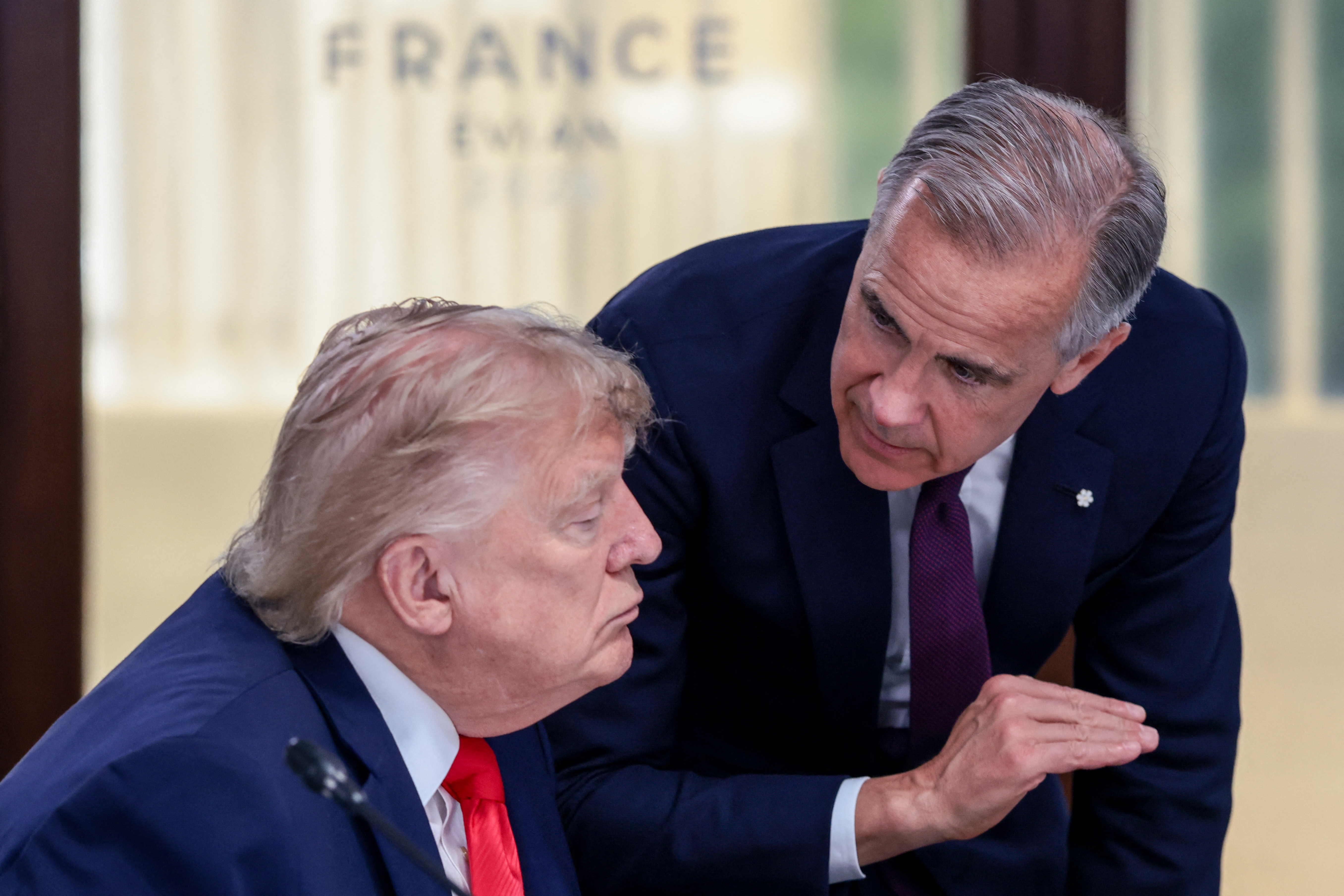
“I'm not happy with the way Israel has handled themselves with Lebanon and with Hezbollah,” Trump told reporters at the G7 summit in France. “It just goes on forever,” he continued, seemingly referencing the exchanging of strikes between Israeli forces and the Hezbollah militant group. “When that happens, it throws a negative light on the big deal, the deal with Iran.”

Trump said he has an “unbelievable relationship” with Netanyahu, but claimed “Israel would have been blown up a long time ago, had I not gotten involved.”

Days before his public remarks, Trump reportedly called Netanyahu “f-cking crazy” during a fraught phone call after Netanyahu ordered an attack on a Hezbollah stronghold in Beirut in retaliation for alleged attacks on Israel by Hezbollah. 

  •  

Corruption is finally breaking through to voters this time

Trump looks down from the Presidential Box in an opera house
According to a Washington Post-ABC News poll, including a substantial minority of Republicans, almost two-thirds of Americans believe President Donald Trump is using the presidency for personal profit. | Chip Somodevilla/Getty Images

This past January, when the New York Times asked President Donald Trump about concerns he was blatantly intermingling his family’s business interests with the presidency, he had a pithy response. During his first term, Trump said, he learned that “nobody cared.”

But after a seemingly endless set of headlines about influence-peddling and profiteering involving Trump or people close to him, voters care now.

A Fox News poll asked voters how concerned they were about more than a dozen issues, and “corruption in government” ranked at the very top. In Gallup polling, the amount of respondents saying they thought government corruption was widespread reached 89 percent — a record high. Almost two-thirds of Americans believe Trump is using the presidency for personal profit, according to a Washington Post-ABC News poll, including a substantial minority of Republicans.

Even Trump seems a bit more worried than usual. Earlier this month, he distanced himself from two of his top political advisers’ foreign consulting work and threatened to fire them if it presents a conflict. Vice President JD Vance was questioned in a CBS town hall that aired Saturday about whether he’d witnessed any potential corruption in the White House (he said he hadn’t).

Accordingly, corruption has emerged as one of the key themes in Democrats’ closing midterm message, with candidates of all kinds hammering it in ads, debates, and interviews. And party strategists have landed on a particular argument about it: They want candidates to link it to Democrats’ message about voters’ other top concern, affordability. 

That is, things aren’t just expensive because of government incompetence — it’s actually powerful interests conspiring to rip you off with the help of politicians compromised by campaign donors and personal conflicts.

Georgia Sen. Jon Ossoff has been hammering this theme all year, listing eye-popping improprieties among what he calls the “Mar-a-Lago Mafia,” while also arguing that pharmaceutical companies and corporate landlords are corruptly driving up your prices. Texas Senate candidate James Talarico, too, regularly argues that “we have an affordability crisis because we have a corruption crisis.” In Kentucky’s Sixth District, House candidate Zach Dembo put out a reform plan while warning “corruption has cost our families, driven up our prices and enriched politicians more interested in their own bottom lines than us.”

Indeed, the Washington Post and Politico report that candidates across the country are being egged on by Democratic messaging firms urging them to make that link. One memo from the Democratic group Senate Majority PAC recommended arguing that corruption “drives up the price of everyday goods: gas, groceries, utilities, housing.” Republican strategists have also noticed voters making a connection between corruption and prices in battlegrounds like Ohio, according to CNN, suggesting their efforts may be breaking through.

“Voters care about corruption right now because it explains why their lives keep getting more expensive while the Republicans are creating a separate class of people who act as if the rules don’t apply to them,” Lauren French, a spokesperson for Senate Majority PAC, told me.

This marriage of affordability and corruption is in part one of convenience — voters are mad about both things, so why not link them together?

And Hakeem Jeffries, the potential next speaker of the House, said this week that corruption would be at the top of the party’s 2027 agenda alongside affordability and healthcare: “We’re going to hold the crooks accountable who’ve visited unprecedented corruption on the American people — beginning on day one.”

This marriage of affordability and corruption is in part one of convenience — voters are mad about both things, so why not link them together? If you’re already going to attack the other side for cutting taxes for big business while slashing healthcare, it’s not a huge leap to name donors or candidates who might benefit and suggest a connection.

“Voters are asking: ‘Why is life getting harder when I’m doing everything right?’” Democratic strategist Jesse Ferguson told me. “The answer is: Because somebody paid to make sure it would.”

The message is clear enough. But what would these candidates actually do about it? 

In practice, the strategy is a consequential victory for the rising progressive wing of the party, which has long argued that Americans’ economic problems are the result of corporations’ and billionaires’ greed and corruption. And it’s leading candidates to embrace many ideas that have long been pushed by progressive advocates — some of which involve “good government” reforms to block conflicts of interest, and others of which involve taking on big business and the ultra-wealthy. 

While enacting some of these ideas may be difficult, there’s little doubt they’ll be a priority in the near future — and some might even draw bipartisan support. Here’s what they’re proposing. 

Democrats’ 3-part anti-corruption agenda

Under the broad umbrella of “corruption,” we can think of three basic categories of ideas that Democrats are embracing.

The first category is: investigating Trump and other people in and around his administration for potential malfeasance. 

Congressional Democrats have said that they want to investigate the Trump family’s crypto investments, their solicitation of foreign business investments, whether Trump granted pardons in exchange for money, corruption in government contracting, the jet gifted to Trump by the government of Qatar, fundraising for the White House ballroom construction, whether Donald Trump Jr.’s wedding was funded by a Russian oligarch, and much more.

In such a target rich environment, one question will be what to prioritize. Another will be: How can these investigations best be designed to achieve actual results? But Democrats are vowing that they will use the powers of congressional majorities to investigate corruption vigorously on many fronts.

The second category: proposing broader ethics or government reforms to the system as a whole.

Progressive advocates have long had a set of favored reforms around this front, such as restricting dark money, super PAC, and corporate spending on elections, as well as requiring greater transparency around donors. Populists on both the left and right have supported banning stock trading by members of Congress. 

Mary Peltola, running for Senate in Alaska, supports term limits for members of Congress; so does Talarico. Trump’s controversial pardons have also sparked interest from some congressional Democrats in limiting the presidential pardon power, an issue that candidates like Kansas Senate nominee Adam Hamilton have also raised.

It would be challenging for a new Democratic Congress to pass any of these reforms into law (for one, they’d need Trump’s signature or a veto-proof two-thirds majority of both chambers). Furthermore, several of these ideas — particularly on campaign finance and term limits — would almost surely be deemed unconstitutional by the current Supreme Court majority. So the path to success on this front is more challenging; unless a particular idea can strike a chord and win broad bipartisan approval.

The third category, then, would be on policies that would actually seek to deliver on that promised link between affordability and corruption — policies that seek to drive down voters’ healthcare costs, utility bills, and grocery prices by challenging malfeasance from corporations or special interests.

The people in the Democratic coalition that have ideas for this are predominantly associated with the progressive wing of the party and specifically the “anti-monopoly” movement. These progressives tend to argue that behind almost every high price is a corporation trying to get one over on consumers, via price fixing or some other monopolistic behavior. 

The new messaging linkage of corruption and affordability boosts these progressives’ credibility inside the party — because it’s exactly what they’ve been saying for years. So expect new Democratic majorities to pursue investigations into and propose legislation about pharmaceutical companies, utilities, tech giants, food conglomerates, and more.

To this end, Talarico has proposed breaking up “healthcare monopolies,” Michigan Senate candidate Abdul El-Sayed has proposed to “break up corporate concentration in agriculture” by challenging “consolidated seed, fertilizer, and chemical market monopolies,” and Peltola wants to block “anti-competitive” mergers of grocery chains that drive up prices.

Still, there’s a debate among Democratic wonks and commentators over whether taking on corporate villains and unwinding mergers is actually likely to succeed in delivering lower prices for consumers. 

Skeptics on the party’s center left argue that broader economy-wide forces are more important than individual cases of corporate wrongdoing. They argue that President Joe Biden already pursued a strategy of “turning to the federal government’s antitrust authorities to try to tame red-hot price increases,” as the New York Times put it in December 2021, and it failed to rein in inflation.

Other policies candidates have sometimes mentioned in their corruption and affordability combo platter could more directly address costs — scrapping tariffs, undoing health care cuts — but also might add to deficits, putting more pressure on inflation, which could in turn keep interest rates higher on mortgages and auto loans. So there may not be any easy choices for Democrats if they gain control of government after 2028, and the most effective message might not necessarily be the most effective policy.

But the momentum for change is there inside the party. Just as the first post-Watergate midterms ushered in a generation of politicians determined to enact new good-government reforms, it’s likely there will be significant energy from Democrats behind both corruption and affordability issues for the foreseeable future. If they win congressional majorities, and especially the presidency in 2028, they’ll get to put their theory to the test.

  •  

Why the Trump administration is fighting over a golf course

A golfer wearing red and black crouches on a golf course, leaning on a club.
A golfer plays on the course at East Potomac Golf Links in Washington, DC, on October 19, 2026. | Saul Loeb/AFP via Getty Images

This story appeared in The Logoff, a daily newsletter that helps you stay informed about the Trump administration without letting political news take over your life. Subscribe here.

Welcome to The Logoff: Donald Trump is trying to take over a public park. 

What’s happening? On Sunday, Trump announced in a social media post that East Potomac Golf Links, a municipal golf course on the Potomac River in Washington, DC, would close next month for what he described as “restoration work” to transform it from a three-course complex into a single professional-caliber course. 

According to a rendering of the “restoration” shared by Trump, the new course would also eliminate a popular public park and multiuse road around the course, which is currently home to some of DC’s historic cherry trees. 

Why does this matter? Relative to many other Trump decisions (like, say, the Iran war or interfering with Ukraine’s ability to defend itself), the fate of a golf course is not so high-stakes.

But it’s shaping up to be a major legal fight over the administration’s blitzkrieg approach to Washington that saw the East Wing of the White House demolished last year and Trump’s name attached to (and subsequently removed from) the Kennedy Center.

A DC preservation group previously sued over Trump’s plan to transform the course, which has been in the works for months prior to Sunday’s announcement. And the administration was already in hot water with a DC District Court judge over the recent removal of more than 500 trees from the course, which it described at the time as maintenance rather than part of Trump’s renovation scheme. 

Trump, for his part, has said that his administration has “an absolute right” to renovate the course and does not need approval, setting him on a course for a bigger clash with federal courts. 

What’s the big picture? Setting aside everything else about Trump’s golf course push, it’s unlikely — with just 15 days until the midterms — that this is a fight that will endear him or his party to voters, who are broadly fed up with corruption, inflation, and the overall cost of living.

And with that, it’s time to log off…

Hi readers, happy Monday! Early voting is getting underway in some states and while The Logoff officially encourages you not to read too much — or anything, really — into early voting numbers, I do recommend this post from the Substack newsletter Can We Still Govern? by Don Moynihan. He rounded up some of the best “I voted” stickers with art submitted by (mostly) children, ranging from charming to deeply strange. You can find them all here.

As always, thanks for reading, have a great evening, and we’ll see you tomorrow!

  •  

The French youth revolt

A masked protester holding a smoke flare and French flag
A protester holds a smoke flare and French flag during a demonstration at Paris’s Place de la Republique on October 17, 2026. | Kiran Ridley/AFP via Getty Images

This story appeared in Today, Explained, a daily newsletter that helps you understand the most compelling news and stories of the day. Subscribe here.

French protests have long been the stuff of legend, literature, and Broadway musicals. But even by those storied standards, last weekend’s demonstrations were pretty remarkable.

More than half a million people took to the streets in occasionally violent protests that are posing a mounting political challenge for the French government. The movement began roughly a month ago over concerns about the sorry state of public high schools, which are frequently underfunded and understaffed. 

But in the weeks since, the student protests have rapidly expanded to encompass a wider range of grievances around inequality, high living costs and public services. The ranks of the protesters have also swelled to include some more opportunistic looters and agitators.  

In Paris, masked rioters trashed businesses and set fires, while students blocked the Louvre Museum on Monday, forcing it to close. In Limoges, a city of roughly 130,000 people, the spire of a 19th-century town hall dramatically collapsed in flames.

The national government has responded with curfews for parts of cities including Paris, Nice, and Lille, as well as emphatic condemnations of the violence. In a televised address on Sunday night, French President Emmanuel Macron also promised to partner with students, teachers, trade unions and other groups to identify “joint solutions.”

But it’s unclear what solutions could possibly speak to the whole of this newly expanded movement. The initial student protesters were after concrete educational reforms, like smaller class sizes and less chaotic schedules. The demands now are more diffuse and disjointed, reflecting the sense that — as Macron himself put it — “there is no desirable future” for young people in France. It’s a situation that the French far right is already exploiting, just six months before the country’s next presidential election.

Go a little deeper

If you’re getting a bit of déjà vu here — that’s French for “already seen,” FYI — please know you have good reason. The French also turned out for gigantic mass protests against a proposed retirement age increase three years ago. And a gas-tax hike five years before that. Some historians trace French protest culture all the way back to the 1300s.

While it’s not necessarily true that the French demonstrate more than people in other Western countries, their protests do tend to attract outsize global attention. Youth protests over education, living costs, and government corruption have also recently taken place in Belgium, Portugal, Italy, Spain, and Albania, for instance. I’d hazard that you’ve heard less about them.

But there’s a twofold explanation for why France’s protests loom so large. First, protest occupies a special place in French history and culture — and the world knows it. As one political scientist explained in a 1994 paper on the history of French protests, the French have an unusual, centuries-long track record of turning demonstrations into actual political change, arguably starting with the French Revolution.

More recently, in 1968, student protests expanded into a larger worker strike that nearly toppled the government. Many of today’s young protesters have specifically referenced that heritage in interviews and slogans.

But that’s not the only reason that French people always seem to be protesting. Conditions in France are also, well … pretty protestable. Consider just the narrow issue of public education, which sparked the current hullabaloo. 

By some estimates, higher-education funding per student has fallen by 20 percent in just the past 10 years. High school classrooms are frequently overcrowded, and a government report cited by The Guardian concluded that the country’s aging schools are in need of billions of dollars of building repairs and climate mitigation.

The government has pointed to France’s strained finances as a constraint on addressing these issues. (And, in fairness, France’s finances are indeed very strained.) There’s a sense, however, that young people are bearing the cost of that crisis more than other populations. Cost-cutting measures that would affect older people — such as raising the retirement age from 62 to 64 — have been delayed in the face of fierce opposition. And by “opposition,” of course, I mean protests. 

One link for later

➨ Make your AI fallback plan. Artificial intelligence will cost many people their jobs; in some places, it already has. But instead of panic-learning the first available trade, first consider where you find meaning in your current occupation. That should help guide you to a fallback career that will still feel valuable, even if it’s…you know. Not your first pick. My colleague Sigal says she’d become a rabbi; I think I’d like to teach again. 

Before you go…

  • Did you know…that a single episode of Sex and the City is credited with launching the early aughts cupcake craze? Today’s food trends are much shorter-lived, by comparison. And they typically start on TikTok or Instagram. 
  • Today’s trivia: What mass-market, imported beer is named for a river in the Netherlands? (You can find this and other brain puzzles in Vox’s daily crossword. Look for the answer in tomorrow’s edition.)
  • Yesterday’s trivia: Last week we asked you for the author of the 1952 self-help book The Power of Positive Thinking. That would be Norman Vincent Peale, the Protestant minister who also preached at President Donald Trump’s childhood church and officiated his first wedding.
  •  

How the Iran war is ruining Saudi Arabia’s plans

A fire raging at a building
Flames burn at a facility belonging to Saudi oil giant Aramco south of Riyadh on October 3, 2026. | AFP via Getty Images

As the US-Iran war drags on, the damage is being felt regionally: Saudi Arabia experienced the worst attack in over a decade earlier this month, when Yemen’s Iran-backed Houthi militia struck an airport in the Saudi capital, Riyadh. The strike killed at least 13 people and wounded more than 300 others.

Saudi Arabia responded with missile attacks on Yemen, striking oil facilities, and the Houthis have launched more strikes of their own, targeting Saudi oil infrastructure. 

The dueling strikes are the latest development in a decade-plus of conflict between Saudi and the Houthis, a political and military group that controls part of northern Yemen, which had been on pause until earlier this year after a 2022 ceasefire. But the Iran war, and Houthi affiliation with Iran’s network of proxy groups, mean the current violence has far-reaching implications for the US, Israel, and the global energy economy. 

It also threatens more than just Saudi Arabia’s airports and oil industry: As Gregg Carlstrom, a Middle East correspondent for The Economist, explains, the attacks cut at the heart of the country’s project to evolve into a destination for foreign investment, travel, tourism, and more. On Monday, the country’s upcoming Future Investment Initiative was postponed until 2027.

Carlstrom, who is based in Riyadh, spoke with Today, Explained co-host Sean Rameswaram how the attack has been received inside Saudi Arabia, why it comes at an especially bad time for the country, and how President Donald Trump might — or might not — get more involved. 

Below is an excerpt of their conversation, edited for length and clarity. There’s much more in the full podcast, so listen to Today, Explained wherever you get podcasts, including Apple Podcasts, Pandora, and Spotify.

Can you help us understand how the Houthis have such a presence in the country right now? Are they infiltrating the country? Are they already there?

They’re shooting from outside the country. They’re shooting from Yemen. The Houthis are a group that’s been around for a few decades. They were originally a local insurgency in Yemen that was fighting against the Yemeni government. They originate from the northern part of Yemen, but they were able to gain control of large parts of that country from 2014 onwards. Ali Abdullah Saleh, the longtime dictator of Yemen, was overthrown during the Arab Spring and the Houthis were able to seize a large chunk of territory. 

They are effectively in control of most of the population centers in Yemen. They have received increasing support from Iran, which has provided them with weapons, with money, with know-how, and technical expertise. And they have used that to build an arsenal of drones and missiles, which they are using now to carry out attacks on Saudi Arabia.

And was there a particular reason they targeted the airport in Riyadh? Were they trying to send a message here?

If you listen to the messaging from the Houthis, they are trying to describe this as almost a like-for-like campaign, where you’ve had years in which the Saudi-led coalition, which invaded Yemen in 2015, has been imposing a blockade of Yemeni airspace, has been restricting flights in and out of that country. 

And so the Houthis describe this publicly as being a retaliation in kind, but I think they’ve also just figured out that attacks on airports are a very effective way to cause economic disruption in Saudi Arabia. You prevent not just people from flying in and out but also, as we’ve seen disruptions to shipping via the Strait of Hormuz, a lot of cargo that these countries depend on for daily needs are coming in by air instead. 

Carrying out these sorts of attacks, shutting down the airport in a capital city, is a very effective way for the Houthis to impose economic pain on the Saudis.

And I guess on some level it makes the country feel insecure. How is that making Saudi Arabia’s leader feel right now? What’s his response been?

It comes at a very difficult time for the Saudi leadership because they are supposed to be hosting a number of events this month where Saudi will be playing a role on the world stage. 

There’s something called the World Petroleum Congress that is taking place this week [October 11–15], which is normally a big event that draws executives from top oil and gas companies. Many of them canceled their participation because of the attacks on the airport. 

Then they are supposed to be hosting the [now-postponed] Future Investment Initiative, which is something often known outside Saudi Arabia as “Davos in the Desert.” It’s the sort of flagship investment conference that takes place here every year. It draws a who’s who of global finance. 

For a country that is trying to diversify its economy, a country that is trying to attract foreign investment and make itself into a hub for finance and travel and tourism, these sorts of attacks are very detrimental to those goals.

And this is coming as Crown Prince Mohammed bin Salman and the rest of the leadership in the country is really trying to establish Saudi Arabia as the premier economic hub in the region. The stakes are really high for him right now?

They are. And just about everything that they are trying to do is being disrupted by what’s happened over the past few weeks. 

If you look at travel, for example, the Public Investment Fund, which is the Saudi sovereign wealth fund, last year launched a new airline, Riyadh Air, which they are hoping will eventually compete with Emirates or Qatar Airways, the really big carriers in the Gulf.  

That airline was just getting into regular operations this summer where they were growing their fleet, they were growing their network of destinations. And then suddenly this happens and their home base in Riyadh is shut down. They have moved some of their planes out of Riyadh to other airports to keep them safe from Houthi attacks. Obviously, it’s very disruptive for trying to build an air carrier. 

In Riyadh itself, the financial district — this sort of long-planned attempt to set up a banking hub that might rival the one in Dubai — had just started to get going over the past couple of years, when you had banks and other financial services firms moving in there. Everybody who works there has now been told to work remotely for the foreseeable future because there is a concern about possible Houthi attacks against skyscrapers and the financial district. 

Everything they are trying to do, from finance to travel to trade, all of it is being disrupted and threatened by what’s happening in Yemen.

What options does he have to reassure investors and the world really that he can protect the country and maybe especially his airport, where a bunch of the investment is focused?

The airport, I think, is going to be difficult to reassure people about. You can install additional air defenses there. You can move more batteries and more interceptors there, but at the end of the day, no air defense system is hermetic. There’s no 100 percent guarantee that you’re going to shoot down every incoming projectile. 

As long as there is this ongoing war between the Houthis and Yemen and the Saudis, I think people might have ongoing concerns about the airport. You have to resolve that underlying issue to give people confidence. 

Now, how do you try to resolve that? If you’re Saudi Arabia right now, you have two bad options. One is you keep fighting. You try to militarily defeat the Houthis or at least force them to accept a renewed ceasefire. 

The other option is you cut a deal. You try to offer the Houthis some concessions that might encourage them to go back to the ceasefire. That’s going to be very costly for Saudi Arabia. I’ve heard that the Houthis are demanding probably billions of dollars of financial concessions where they would want the Saudis to offer some money for reconstruction and to pay the salaries of Yemeni civil servants working in Houthi-controlled areas. 

If you are the Saudi leadership right now, neither one is really a good option.

Crown Prince Mohammed bin Salman has a pretty strong relationship with the president of the United States, who’s very sympathetic to Saudi Arabia and Saudi investment. Has he appealed to President Trump for help here yet?

He has. He’s done so repeatedly over the past month or so, asking not just for support with the Saudi campaign in Yemen, but for America to carry out its own airstrikes in Yemen. And the response so far from Donald Trump has been to refuse that.

For the US to get involved in a bigger way, there are some practical constraints at the moment where a lot of American military assets are tied up in the Strait of Hormuz trying to keep that open, keep oil flowing through the Strait. And so the response from Trump has been disappointing for the Saudi Crown prince. The US is providing intelligence support. It’s helping on that front, but it is not directly getting involved in the war in Yemen.

  •  

Midterm Ad Spending Has Surpassed $10B. Where Is the Money Coming From?

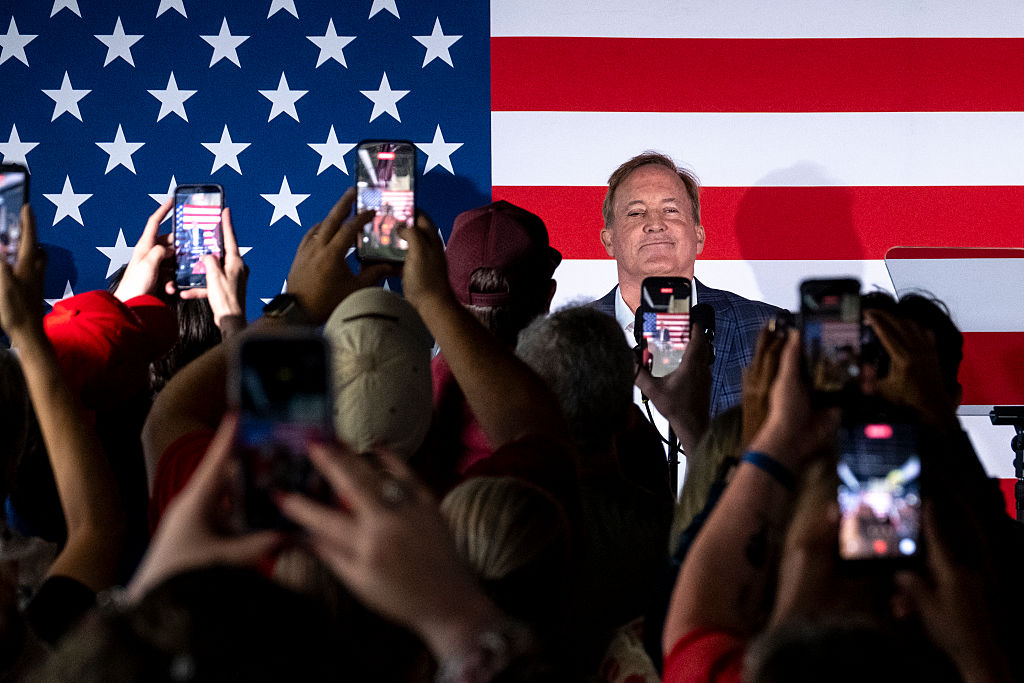
Texas Attorney General Ken Paxton, a Republican, poses at a rally for his Senate bid at Southern Roots Brewing Co. on Oct. 17, 2026, in Killeen, Texas. —Joel Angel Juarez—Getty Images

Political advertising spending for the midterm election cycle this year has reached a record high, surpassing $10 billion as of last week. It is projected to reach $11.6 billion by Election Day, according to the media tracking group AdImpact. The previous midterm spending record was set in 2022 at $8.9 billion, the organization reported, and the 2024 presidential cycle saw some $11.2 billion spent on ads. 

The figure does not capture other campaign expenses, such as staffing, travel, and voter outreach. But it does measure one of the more influential political campaign tools: Research published in the American Political Science Review in 2021 estimated that a Senate candidate with a $2 million television advertising advantage over an opponent could gain about 10,000 votes—potentially enough to tip a close race.

Read More: Ohio May Be the Sleeper Senate Race of the Midterms

Spending the most, however, does not guarantee electoral success, experts tell TIME.

“It is important to keep in mind that having the most, and spending the most, does not guarantee you wins,” says Brendan Glavin, the director of insights at the research group OpenSecrets, which tracks money’s effect on U.S. politics, policy, and elections. “You need to have enough to compete, and you need to be able to get your name out, and people need to know who you are. But it’s not always about having the most.”

That has not deterred both parties from digging deep into their piggy banks this cycle—although their spending has been uneven.

Republicans have significantly outspent Democrats in Senate races, at $233 million to $121 million on broadcast television ads across nine of the tightest upper-chamber races last month, according to AdImpact. In races categorized as “toss-ups” by the Cook Political Report, AdImpact data attributes $947 million to Republicans and $625 million to Democrats, including ads that have not yet been aired. A large portion of the funding comes from a small number of deep-pocketed individuals bankrolling super PACs.

The spending gap is much narrower in House races, where Republicans have outspent Democrats by $14 million across 21 toss-up races.  

Democratic Senate candidates, however, have substantially outraised their Republican opponents in many competitive races.

Here’s where some of that money has come from and a look at how it’s being spent.

Texas Senate race: $500 million

Texas is one of the most closely watched Senate races. October polling shows that James Talarico has the chance to become the state’s first Democratic Senator since 1993. A win in the state would deal a critical blow to Republicans’ grip on the upper chamber of Congress. He’s at 51% against Republican Ken Paxton according to CBS/YouGov polling from Oct. 8-16.

Combined ad spending and airtime reservations have surpassed $500 million, according to AdImpact, making it only the second non-presidential race to cross that threshold. The Ohio Senate race in 2024 reached $542.7 million. 

Elon Musk, who has given $369 million to Republicans since the start of 2025 and is the biggest individual donor to federal elections this cycle, gave $158 million last month to Senate Leadership Fund, which transferred matching amounts to Texas PAC, the group supporting Paxton. Musk gave an additional $10 million to Lone Star Liberty PAC in August to support the candidate.

Glavin says that these donations, although not funneled to Paxton’s campaign directly, “essentially went directly into supporting Paxton” and appear to have “helped stabilize things” for him.

Talarico has outraised his opponent by roughly $50 million from July through September—but large donors and super PACs have given Paxton the edge when it comes to broadcast ads. 

Ohio Senate race: $460 million

Over $450 million in combined ad spending has gone toward Ohio’s Senate race, according to AdImpact.

Republicans have spent nearly $270 million to support Jon Husted, while Democrats have spent over $180 million in support of Sherrod Brown. Ohio gives Democrats another chance to flip a Republican-held seat, with Husted leading by less than a point as of Sunday, according to an ActiVote poll.

Husted was appointed to replace Vice President JD Vance in 2025, meaning that the winner of this special election would need to win again in 2028 to serve a full six-year term.

Through September, Republicans spent $41 million more than Democrats in aired election ads, making it the second-largest GOP dollar advantage among nine identified battleground states, behind Texas, according to AdImpact.

Maine Senate race: $200 million

Maine is home to the most expensive Senate race per capita this cycle, with a combined ad spend of roughly $200 million.

In Maine, Democrats are vying to flip a red seat. Republican Sen. Susan Collins is seeking her sixth term, but she’s closely contested by logger and former Maine Senate President Troy Jackson. 

Republicans have spent or committed almost $114 million on advertising since January, compared with almost $81 million for Democrats, according to AdImpact.

What are the donation limits for PACs and super PACs? 

The Federal Election Campaign Act sets limits for individual donations to congressional races.

The limit for an individual donation to a candidate’s campaign is $3,500 per election for the 2025-2026 election cycle. These caps are adjusted for inflation every two years. 

A traditional political action committee (PAC) pools contributions to support or oppose candidates. Individuals may contribute up to $5,000 to a traditional federal PAC per year. The limit is higher for contributions to a national party committee, at $44,300 per committee per calendar year. 

Super PACs, unlike traditional PACs, cannot donate directly to candidates’ campaigns or coordinate their advertising with those campaigns. Those restrictions are intended to prevent unlimited outside donations from becoming a way around limits on contributions to candidates.

There is no limit to how much an eligible person or entity can donate to a super PAC, as demonstrated by Musk's steep contributions in Texas. 

Several other billionaires have also contributed to Republican super PACs: Shipping industry moguls Elizabeth and Richard Uihlein donated $138 million in the current election cycle, while Jeff Yass, who founded Susquehanna International Group, and his wife, Janine, contributed $110 million. The top donor to a Democratic super PAC is George Soros, who is linked to the entities responsible for contributing $102 million to Democracy PAC, which he founded in 2019.

Two court decisions in 2010 helped establish today’s super PAC system. The Supreme Court’s Citizens United ruling protected independent political spending by corporations and unions, while a subsequent federal appeals court ruling removed limits on individual contributions to groups making only independent expenditures.

Critics argue that the system gives wealthy donors disproportionate political influence and allows money to flow through nonprofits that conceal its original sources, using what’s referred to as “dark money.” Super PACs must disclose their donors, but those donors can include organizations that do not identify their own funders. 

The legal rationale for allowing unlimited contributions rests on the premise that prohibiting individuals or entities from contributing directly to campaigns prevents corruption.

  •  

An Idaho ICE Raid Rounded Up Hundreds. The Fallout Could Change How ICE Operates

Agents stand at La Catedral Arena in Wilder, Idaho, in late October 2025 as part of an investigation into alleged illegal horse betting that involved multiple law enforcement agencies. —Sally Krutzig–Idaho Statesman/Tribune News Service via Getty Images

People first noticed the black helicopter in the sky. 

It was a chilly Sunday afternoon a year ago at La Catedral Arena, a popular track for horse racing outside the Idaho town of Wilder. Hundreds had gathered at the arena for a festival celebrating horse racing and Mexican culture. 

As the military-style helicopter hovered above them, attendees from the rural, predominantly Latino community, began to get nervous.

“Something is wrong,” Ivan Popoca, who attended the festival with his two kids, remembers thinking.

Within minutes, the festival grounds descended into chaos. Backed by armored trucks and snipers, more than 200 members of law enforcement stormed the grounds, some shot rubber bullets into the crowd and hurled flash-bang grenades into vehicles where people had fled to hide. Hundreds of people, including teens as young as 14, were detained and zip-tied.

When it was all over, federal authorities had arrested 105 people for alleged immigration violations. Yet on paper, this wasn’t an immigration raid at all. The only warrant for the Wilder raid was secured by the FBI. Its target: the owner of the track and four others for alleged unlicensed gambling. 

Twelve months later, the Wilder raid is at the center of a court fight that could shape ICE operations around the country. Advocates argue that in Idaho, ICE unlawfully piggybacked on an FBI operation, rather than securing their own warrant, as they would be expected to do on this type of operation. A lawsuit brought forth by the ACLU argues that federal authorities violated the Fourth Amendment, which protects against unreasonable searches and seizures, by using an unrelated search warrant as a “cover to go fishing for immigration arrests.” 

“That is not what a criminal search warrant execution looks like. That is what a massively violent immigration raid looks like,” says Jenn Rolnick Borchetta, an ACLU attorney who helped bring the resulting lawsuit. 

Trump Administration officials insist that the arrests made that day were lawful. “The facts haven’t changed: ICE helped dismantle an illegal horse-racing, animal fighting, and a gambling enterprise operation out of a property known as La Cathedral Arena in Wilder, Idaho,” a DHS spokesperson told TIME. Idaho Gov. Brad Little also defended the raid, saying in a statement at the time that it is “common practice” to detain others present while processing the scene. 

For Wilder residents, the La Catedral raid remains an open wound that refuses to heal. Popoca still recalls with anger how he and his 16-year-old son were zip-tied for hours for no apparent reason. 

The ACLU and some of the families involved in the case released a documentary online on Monday called Wilder Raids in which they discuss the raid’s impact, and why the legal challenge matters beyond people in Wilder. 

“Some community members don't even want to think about this anymore,” says Leo Morales, the executive director of the ACLU Idaho. “But there are also folks who are also realizing how critical it is to be able to push back, to organize and to demand fairness and justice.”

Recurring nightmares

Juana Rodriguez attended the festival with her three-year-old son. Despite both of them being U.S. citizens, they were zip-tied and detained for hours following the raid. Like many others who were detained, she described not being given access to food or water. 

“For the longest time, my son begged me for food. He begged me for water,” Rodriguez says. She repeatedly asked the officers she could be untied so that she could feed and console her crying son, she says, but was rebuffed. “I wish I could have done more in the moment, but I couldn't.”

Detainees were eventually taken into a tent and questioned by ICE agents about their immigration status.  Among the 105 people who were ultimately arrested, 75 are believed to have been deported to their home countries, according to local media, and 26 were released from ICE custody after their lawyers filed habeas corpus petitions. The whereabouts of the remaining four people are unclear. ICE did not provide an update on their case status.

The day after the raid, the Wilder School District reported absent rates soared, with 20% of students absent, according to The Idaho Statesman. More than half of the district’s student body is Hispanic or Latino.

A year later, Rodriguez says she is still scared to go to Latino cultural and other public events because of what happened at La Catedral. She also has nightmares about ICE officers taking her child away from her.

“I'm from here. My kids are from here,” she says. ”Why should I have to feel that? Like, I shouldn't.”

A large group of protesters gather in October 2025 in Caldwell, Idaho, to protest an FBI and ICE raid in Wilder. —Darin Oswald–Idaho Statesman/Tribune News Service via Getty Images

ICE’s growing legal fights

The ACLU filed a class-action complaint in February, charging that a variety of local, state and federal agencies violated the constitutional rights of those at the festival. Both sides are now waiting for a judge to rule on a motion by ICE and other agencies to dismiss, in which it argued that federal and state law enforcement are protected by qualified immunity, a longstanding legal doctrine when executing a federal warrant. 

The Wilder case is one of multiple lawsuits the Trump Administration is fighting over its immigration enforcement operations. In Minnesota, none of the federal agents involved in the deaths of Renee Good and Alex Pretti have been criminally charged, but a string of civil lawsuits is beginning to emerge. Earlier this month, the family of Renee Good, who was killed last January by a federal agent during the immigration enforcement surge in Minnesota, filed a pair of civil lawsuits against the federal government, according to their legal representative. Marimar Martinez, a U.S. citizen who was shot by a Border Patrol agent during a confrontation on a Chicago street last year, has also filed a lawsuit against the federal government. 

Anyone seeking to hold federal agents accountable must be prepared for a long wait, says Borchetta. A lawsuit against the federal government can’t even be filed unless it’s been six months since a complainant filed a claim for compensation and the issue remains unresolved.  

“If a federal employee is driving their car negligently on the job and hits you with their car, you can bring a claim for them for that negligence,” Borchetta says. “It also applies where an ICE agent is mistreating you or causing you harm.”

But the law itself imposes many limitations on suing the federal government. Victims can seek compensatory damages for actual losses, but not punitive damages. And unlike state authorities who can be sued for civil rights violations in state courts, federal law enforcement authorities are generally shielded from such lawsuits based on legal precedents. 

But Borchetta says the impact of the lawsuits can be bigger than any verdict. She argues that the ongoing Wilder case has already helped change ICE’s conduct as well as how local governments collaborate with them. 

“While we don't yet have a decision from the court, we haven't seen more raids like this in Idaho,” she says. “The lawsuit itself exposes both the state and the federal actors to liability, and that can change behavior itself.”

  •  

Trump is coming for your credit card rewards. That’s good.

Donald Trump pointing at a crowd on a stage
President Donald Trump points after addressing attendees on the first day of the 2026 Republican National Convention at the American Airlines Center on September 9, 2026 in Dallas. | Andrew Harnik/Getty Images

Wall Street is sending the public a dire warning: President Donald Trump has become a threat to the very foundation of American freedom — your frequent flier miles.

Okay, America’s big banks haven’t been using rhetoric quite that grandiose. But they are accusing Trump of imperiling Americans’ credit card rewards. 

The feud between Wall Street and the White House centers on the Credit Card Competition Act (CCCA). Long stalled in Congress, that legislation aims to drive down the “swipe fees” that merchants pay to banks when customers use credit cards. In theory, if those fees fall, retailers might pass on some of the savings to consumers, in the form of lower prices.

Trump first endorsed the bill in January. But he’s ramped up his advocacy for it recently, amid a broader (belated) push to address voters’ affordability concerns ahead of November’s midterms. Last week, the White House urged Congress to “put Main Street over Wall Street” by enacting the law. On Monday, Trump praised Kansas Sen. Roger Marshall for “working tirelessly to pass the Credit Card Competition Act, in order to stop the out of control Swipe Fee ripoff!”

The financial industry is used to taking fire from Trump right before Election Day, then receiving favorable treatment from him thereafter. But in this case, Trump’s threat is not entirely idle. Large retailers are lobbying hard to get the Credit Card Competition Act passed during December’s lame-duck congressional session. Banks have responded by issuing a “code red,” in the words of the Wall Street Journal. In recent days, their lobbyists have warned policymakers that, if swipe fees fall, credit cardholders’ cash rewards and travel points will go down with them.

In truth, the consequences of the Credit Card Competition Act are uncertain. But if the banks’ big-picture story is right — and the law cuts both swipe fees and credit card rewards — that would probably benefit the average American.

Poor people pay for your travel points

To see why, we need to first examine how the credit card system currently works — and whom it does and doesn’t benefit. 

Whenever you use a credit card to purchase a banana from Aldi, or volleyball from Dick’s, or an adult-sized Grape Fanta Can Halloween costume from Party City, the retailer must pay a fee to the bank that issued your card. The bank then uses that revenue to fund your rewards.

Critically, merchants don’t just eat the costs of swipe fees. Rather, they pass on part of the expense to consumers, in the form of higher prices. Some businesses concentrate these price hikes on card users (for example, barbershops often charge less if you pay with cash). But most retailers charge every customer the same price, regardless of their payment method. 

For this reason, shoppers who pay with cash or debit effectively subsidize those who pay with cards: The former face higher prices than they would in a world without credit cards, yet they receive no “cash back” or travel points in recompense. 

This arrangement seems unfair on its face. But it is especially troubling when one considers class disparities in the use of credit cards and receipt of rewards.

As a general rule, the higher a person’s income, the more they use credit cards. In 2024, US households who earned less than $25,000 a year put just 17 percent of their payments on credit cards; among households earning more than $150,000, that figure was 51 percent, according to Federal Reserve data.

What’s more, the rich are also more likely to qualify for premium cards that charge merchants exceptionally high fees, in order to fund extraordinarily lavish benefits. 

As a result of all this, swipe fees effectively redistribute money from poor and working-class people to affluent and wealthy ones. According to a 2026 working paper from the National Bureau of Economic Research, the credit card system takes, on average, $88 a year from households with annual incomes below $150,000, while delivering an average yearly benefit of $390 to households with incomes above that threshold.

American swipe fees are too damn high

To be sure, this does not mean that lower-income Americans would be better off in a world where credit cards didn’t exist. Such cards serve a variety of valuable economic purposes, from helping households weather unexpected expenses and irregular incomes to facilitating online commerce. And maintaining a credit card system costs money: Banks need to finance the loans they extend, while payment networks must maintain vast computer systems to process transactions and detect fraud. 

Yet America’s credit card system is needlessly expensive. Our nation’s merchants — and thus, consumers — pay far higher swipe fees than their counterparts in other rich countries. 

To take one illustrative example: When an American buys $100 worth of groceries using a standard Visa card, the supermarket must pay the issuing bank a minimum of $1.23. Some disfavored stores must pay as much as $1.57 on such a purchase. If a customer uses a premium “Visa Infinite” card, meanwhile, the grocer’s fee can run as high as $2.07.

By contrast, in Canada, a grocery purchase worth $100 US dollars would incur a fee worth 95 cents if the customer used a standard Visa card. 

In Australia and the European Union, meanwhile, government regulations would cap that fee at 30 cents (or .3 percent), no matter what kind of card was used. 

Suffice to say, Australia and the EU manage to sustain functional credit card systems, despite charging merchants a tiny fraction of the swipe fees absorbed by US businesses. And although retailers have pocketed some of these savings, research suggests that fee caps have also lowered consumer prices. 

This affordability gain does come at a cost; American cardholders do tend to reap higher rewards than Australian or European ones. But this is not a good trade from the standpoint of economic justice; few think it is fair to take money from the poor to give to the rich.

The Credit Card Competition Act might not work

All this said, whether the Credit Card Competition Act would actually yield those outcomes is uncertain. The bill does not directly regulate swipe fees. Instead, as the name suggests, it aims to give credit card companies greater competition. 

Today, each time you buy an adult-size Grape Fanta Can Halloween costume with a Visa, Party City is required to process your purchase using Visa’s network. Which means it needs to pay whatever swipe fee Visa decrees. The store can protest an exorbitant rate by refusing to accept Visa cards. But this would send a large number of customers into the hands of Spirit Halloween. So its leverage is limited.

Under the CCCA, however, Party City would be able to accept Visa on a transaction — without necessarily using Visa to process the payment. Instead, the bank that issued the customer’s Visa would need to provide Party City with at least one alternative payment processor — a different network that has no relationship with Visa and which might offer lower fees. 

The law’s authors hope — and the banking industry fears — that this mandatory competition will force down swipe fees. But it’s not clear how much of a difference the CCCA would actually make. 

After all, under the law, banks would still get to choose the alternative payment network available to retailers when their customers pay with Visa (or Mastercard, or American Express, etc.). Party City would no longer need to pony up whatever Visa asks when a shopper pays with a Visa-Bank of America card. But if the store did decline to use Visa’s network, it would then need to partner with Bank of America’s hand-selected alternative. And since banks benefit from high swipe fees, BofA would have an incentive to pick an expensive backup option.

Nevertheless, the banks and retailers both seem to believe that the CCCA will sharply reduce swipe fees. If they’re right, then Congress shouldn’t vote down the bill, merely to protect affluent Americans’ travel points. 

It doubtlessly feels nice to receive a free flight or hotel stay, as a reward for spending a lot of money on yourself. But the poor probably should not have to pay higher prices, just so the affluent can enjoy such satisfactions.

  •  

Ramaswamy Facing Tougher Fight Than Republicans Had Expected in Ohio

Vivek Ramaswamy listens as Vice President JD Vance speaks during a rally for Ramaswamy and other Republican candidates on Oct. 09, 2026 in Lima, Ohio. —Samuel Corum—Getty Images

On the day Vivek Ramaswamy made official his run for Ohio Governor, President Donald Trump did not dally.
“He will be a GREAT Governor of Ohio, will never let you down, and has my COMPLETE AND TOTAL ENDORSEMENT!” the President wrote on Truth Social on Feb. 24 of last year, within hours of Ramaswamy kicking off his campaign.

Trump’s post essentially cleared what had been expected to be a crowded GOP field, boxing out the likes of state Attorney General Dave Yost, state Treasurer Robert Sprague, and Lieutenant Governor Jim Tressel in a state where Republicans felt dominant. It also effectively gave Ramaswamy almost two years to focus on keeping the Governor’s mansion in GOP hands. But the very connections to Trumpism that fueled Ramaswamy’s fast political rise are now giving his party reason to worry, as polls show him trailing Democrat Amy Acton, a former state health chief and a first-time candidate.

“Something is happening here. I just can’t tell you what,” says one Ohio Democratic strategist, reflecting the apprehension pervasive in both parties right now.

On the campaign trail, Ramaswamy occasionally moderates his image as the brash MAGA warrior railing against “the woke left,” pitching tax cuts and economic development when he’s with suburban crowds and chamber of commerce types. But he can still come off at times as a pugilistic troll. He has promised to be "the most conservative Governor in Ohio's history,” defying Ohio’s history of moderate conservatives who have governed the Heartland homebase. He has embraced AI data centers in a state where they are far from popular. And he has not shrunk from Trumpian hardline immigration policies, especially when he appears with Trump. 

"As Americans, we believe in merit, that the best person gets the job, regardless of their skin color, that you are judged not on the color of your skin, but on the content of your character and your contributions,” Ramaswamy said during an Oct. 12 rally with Trump in Youngstown, where Acton grew up. “That is who we are as Americans."

Ramaswamy has not developed a thicker skin than when he ran for the White House just two years ago. In July, when confronted by hecklers at Xavier University in Cincinnati, he simply walked off stage: “Peace out, see you guys.”

The polls still show a close-range contest, but in the increasingly nasty ad war, the spending suggests a far more lopsided fight. Ramaswamy and his supporters have now run $101 million in ads against Acton, with $36 million of that coming from Ramaswamy himself. 

Acton and groups supporting her have spent about one-third of the Ramaswamy media wave, much of it describing Ramaswamy as a “swindler” who conned his way to a fortune and harnessing anti-billionaire sentiment.

“This is a guy who has been flying around the state on his corporate jet. Ohio is not a huge state geographically. It’s a state that’s incredibly driveable,” says David Cohen, the director of the Applied Politics Program at the University of Akron. “He was the worst possible choice for Republicans, not that they really had a choice.”

Dr. Amy Acton speaks with supporters during a rally in Cincinnati on April 28, 2026. —Jon Cherry_Getty Images

A loss for Ramaswamy would be a stunning reversal of fortunes for Ohio Republicans. Once seen as a quintessential swing state, Trump won Ohio during all three of his presidential bids with margins between eight and 11 points.

If Democrats can show a rebound in Ohio, the state may actually wind up back on the must-visit list for 2028 contenders from both parties. After all, states like Georgia and Arizona were also once solidly red until break-out candidates—backed by party spending—upended those assumptions.

 “Calm down,” says a consultant who has worked with Ohio candidates in past cycles, when asked about Democrats’ optimism. “It’s still Ohio.” 

Ramaswamy’s rise via Trump

For a while there two years ago, Ramaswamy seemed like the most obvious heir to Trumpism. When he launched his presidential bid in 2025, he couched it in effusive praise for the then-former President, to the point that he sometimes sounded like a Trump surrogate in the GOP debates that Trump refused to attend.

After a weak showing in Iowa, Ramaswamy ended his campaign and quickly folded into the broader MAGA-verse. He was chosen by Trump to help Elon Musk upend the federal government at the Department of Government Efficiency, before dropping out of that partnership.

But the talent for going viral that helped Ramaswamy gain a national profile has proved less successful this election cycle in Ohio. Social media videos of him hitting tennis balls and baseballs while listing his policy proposals have provided a font of online mockery. He hastily left Ohio State’s season opener after being booed and heckled. Later, he faced criticism for having worn a knock-off Ohio State jersey to the game. 

Ramaswamy has also struggled to navigate his identity as a Hindu and the son of immigrants from India in the modern GOP. In the gubernatorial primary, auto entrepreneur Casey Putsch ignored Trump’s endorsement of Ramaswamy and vied for the nomination, pitching himself as an “America First” alternative to Ramaswamy. In one YouTube spot,  Putsch hoisted a rifle and challenged Ramaswamy to a game of “cowboys and Indians.” 

While Ramaswamy easily won his party’s nomination, almost one-in-five votes in the primary were for Putsch, a hint that Ramaswamy’s appeal had its limits even within his own party. “One of the storylines here is a man who is Indian American and whose religion is Hindu,” says Christopher Devine, a political science professor at the University of Dayton, says. “There are a lot of members of the Republican base who may have difficulty voting someone of his demographic profile.”

Amid efforts by both campaigns to push policy ideas like tax cuts and education reform, the ad war has boiled down to attacks portraying Ramaswamy as a conman and Acton as a drunk. The latter is based on an August 2019 incident in which police responded to an incident in Acton’s home that Acton has accused Ramaswamy of dramatically mischaracterizing, to the point that she refused to share a debate stage with him. Ramaswamy has also refuted allegations his fortune came from misleading investors.

On Tuesday, the race took an even nastier turn. An anti-Acton video surfaced online starring Acton’s mother, who has not spoken to her daughter since 1978. In the ad, she calls her daughter a “liar”—not over the candidate’s allegations that she was molested and raped by her stepfather, who was indicted, but her claims she spent time as a homeless youth.

“Don’t let her become your Governor,” Acton’s mother Donna Arthur says in the video. “If you think she’ll make your life better, you’re fooling yourself. It will only get worse.” It is not at all clear who created the ad, who funded it, or if it is destined for broadcast. Still, its existence was a stunning escalation in a race that may set the new standard for mudslinging, so much so that Philip Stearns, Acton’s brother, released a statement calling the ad “a despicable low.”

Devine says the tone of the attacks is a shift from the Senate race, where former Democratic Sen. Sherrod Brown and current Republican Sen. Jon Husted both have extensive records for each side to focus on. “In the Governor’s race, there’s no record to pick apart. Without much of a track record in politics to run on, they’re focusing on personal attacks against the other,” Devine says.

Ohio polling raises questions 

As polling consistently shows an advantage for Acton, Republicans are increasingly arguing that the polls may be wrong by just enough to give Ramaswamy the win. One proof point is 2018, when some polls showed Brown winning re-election by double digits. By the time votes were cast, Brown won by less than seven points

Republicans, heading into a make-or-break stretch of voting, are repeating those statistics to make the case that the polling once again is under-counting Republican voters. 

Cohen, the political science professor, doesn’t share that view of skewed polling: “I’m not skeptical at all. All of the polls are trending in the right direction for Acton.” 

Democrats, for their part, are viewing the race as a tie, at best. Among their reasons for concern is Ohio’s poor track record when women are on the ballot. The state’s voters have never elected a woman as Governor and rejected both Hillary Clinton and Kamala Harris as presidential contenders. 

Yet given the strong headwinds against Republicans’ national brand, they can’t hide their bullishness toward the races for Governor and Senate, where polls show Brown up over Husted. “I haven’t felt this good, like we have a chance, in a while,” says a second Ohio Democratic strategist. But, he adds, given how tight both races may be, no one should expect an early race call once the polls close.

  •  

Republicans have a huge fundraising advantage. Will it matter?

Donald Trump speaks on stage against a background of American flags.
“When you talk about how many seats can the Democrats gain, given how unpopular Trump is, the Republican money is seen as a real limiter on Democratic chances,” New York Times reporter Shane Goldmacher told Vox’s America, Actually podcast. | Alex Wong/Getty Images

Polls and pundits alike are widely — if sometimes cautiously — predicting a blue wave in the midterm elections on November 3. But there’s an important caveat to predictions of a Democratic triumph: Republicans have far more cash at their disposal.

President Donald Trump’s super PAC alone had around $400 million on hand earlier this fall, and Elon Musk has personally pumped hundreds of millions into critical races, including $158 million for Texas alone. 

Democrats, by contrast, have lagged far behind, especially relative to their performance in past cycles, with the party’s candidates propped up more by small-money donors than deep-pocketed institutional players.

Shane Goldmacher, a national political reporter for the New York Times, has extensively covered the role of money in American electoral politics. He spoke with America, Actually host Astead Herndon about where that money is coming from, how the GOP is spending it, and the effect that it might have on the coming elections. 

They also discuss the races that aren’t getting funded — and what current fundraising patterns might tell us about the candidates who could be in the mix in the next presidential campaign cycle. 

Below is an excerpt of their conversation, edited for length and clarity. There’s much more in the full show, so listen to America, Actually wherever you get your podcasts or watch it on Vox’s YouTube channel.

A couple of weeks ago we asked, “What is the GOP strategy to try to win?” And one of the answers we got is they simply have more dollars than Democrats. Everyone’s talking about this GOP money advantage, but how big is it really, and where is it coming from?

It’s bigger than I’ve basically seen in the last 20 years, and it’s almost entirely coming from big donors. President Trump has a super PAC. It had about $400 million in it at the beginning of September, and there was no Democratic counterpart.

And then the Republican National Committee, which is functionally controlled by Trump, had another $130 million. More than Democrats, because the DNC has literally more debts than cash. That’s a half a billion dollars.

You’re saying this is a historic edge.

In 2024, Kamala Harris outspent Donald Trump significantly in the general election. In 2020, Joe Biden significantly outspent Donald Trump in the general. In 2016, Hillary Clinton. And in the midterms along the way, same story. 

This is a switch, and when you talk about how many seats can the Democrats gain, given how unpopular Trump is, the Republican money is seen as a real limiter on Democratic chances.

Do we know anything specific about the people putting in money to the Trump super PAC and the RNC to give them such a lead?

Most of these folks are disclosed. And Trump has been pretty open about raising money from the very moment that he won. He’s been pretty clear that he is in business to help people who are helping him. And so there are big crypto industries that are giving money that are expecting or hoping for favorable regulation from the administration.

So it’s a lot of big businesses. It’s a lot of wealthy Republicans who generally support him anyway, and there are industry groups that see benefit to being in favor.

I will never forget, obviously, the scene from Trump’s second inauguration when he had the Zuckerbergs and the Bezoses and Elon Musk behind him. Is that how I should think about the people funding this donor advantage? Is it tech oligarchs? Is it tech forward?

There’s a lot of tech. I wouldn’t say it’s exclusively [tech]. And Musk, by the way, is like an extra pot of money. Musk, the world’s richest person, is said to be spending at least $200 million. So that’s a bigger chunk. He has given some money directly to the Trump super PAC. He’s given some money to these congressional super PACs. 

Is this just quid pro quo? Is this just a group of businesses who think, “Hey, no matter how unpopular this guy is, it is worth investing in him and his party because they’re gonna, regulate or not regulate in a way that’s favorable for us”?

It’s not quite just that. He raised a ton of this money when he was not so unpopular. If you want to say something smart that he did, it was that. Throughout 2025 he was raising all of this money.

And I don’t want to overstate the Republican advantage. A lot of these Democratic candidates are raising a ton of money. James Talarico stands out as maybe the peak example of this.

The Texas Senate race is the most expensive race in the country right now, and Republicans are pouring $200 million to save the nominee there. So a big chunk of that advantage is going to Texas. And the Democrats have put very little money from outside groups into Texas. 

Talarico has captured the imagination of these small Democratic donors, and he’s raised tens and tens of millions of dollars. I would be shocked if he doesn’t hit $100 million by the end of the cycle. 

You reported that the GOP’s pulling back in North Carolina. What should we take from that in terms of how the GOP sees its own landscape when it comes to the federal races?

Where have Republicans put that money? They put it into South Carolina right next door to protect a seat that was once thought, on the Senate front, to be safe for Republicans. This is the former Lindsey Graham seat that his sister is now running in. And then even more of it has gone to Kansas. This is a state that has not elected a [Democrat] to the Senate for nearly 100 years. 

If you’re the Republican Party and you’re pulling money out of a state like North Carolina that hasn’t elected a Democrat since 2008, and then putting it into a place that hasn’t elected one since 1932, that tells you where the, the bar is moving.

I think the concern for Democrats right now is there might be a wave, but Kansas has a big red wall. It’s hard to beat that kind of institutional advantage for the Republican Party.

Considering how close we are to Election Day, like, what are they actually spending this money on? Is it just more ads? Is it just more mailers?

I was in Pennsylvania this month, and I was trying to watch political ads on YouTube for various races. And I was getting pre-roll of three political ads before I watched the political ad I was trying to watch. So much about our elections is being decided now by people who are actively trying not to consume political news. It costs more money to reach people who are avoiding it on purpose.

There are some organizing things that happen, but most of the money is various versions of advertising.

On the Democratic side, considering this GOP edge, what are the races that you currently describe as underfunded? Where do the Democrats wish they had more money?

Number one is governors’ races, actually. When you look at where Democratic donors swoon, it’s Senate races. There are no candidates for governor who have made people swoon like this in recent years. 

[James] Talarico is raising all this money, but in Texas also, Gina Hinojosa, the Democratic candidate for governor, does not have that kind of money, and she’s running against Greg Abbott, who had $100 million.

What should we ascribe that to?

I think there’s actually a pretty simple answer, which is, if you don’t live in the state, it doesn’t impact you. If you’re a small donor and you live in California, you can be excited about a Senate candidate because you want Democrats to control the Senate. Are you as excited about a Democratic governor of Georgia?

It’s hard to argue that the governors of these key presidential battlegrounds aren’t some of the most important races on the ballot this year.

By the way, a problem with both parties. Republican national donors and these super PACs also don’t fund these governor’s races at the same level. So it’s not just a Democratic issue, but it’s more acute [for them] because Democrats are so well-funded at the small-donor level.

Fundraising is a huge part of what sets the presidential candidates apart from one another. The money game among those candidates has already started. Is there anyone who’s quietly built some donor network that’s worth thinking about? Is there someone who stood out as a particularly effective fundraiser when we think about the 2028 crowd?

Let me give you my favorite stat from the last Democratic primary, which is that Mike Bloomberg spent twice as much as Tom Steyer, who spent twice as much as Bernie Sanders, who spent twice as much as Joe Biden, who became the Democratic nominee. And so money isn’t gonna determine who wins the next Democratic presidential primary.

One person who has unlimited money, functionally, is JB Pritzker. He’s a billionaire, the governor of Illinois, and he is spending his money now to help other Democrats, which is a good way to make friends.

My last question is an open one. What’s an underexplored story that we should be following going forward when it comes to campaign cash or both parties’ relationship with money?

One of my big questions is what happens to Republican small-dollar fundraising in that post-Trump era. Because there have basically not been any other Republicans who have excited donors for a decade.

Not JD Vance? 

I have not seen evidence. JD Vance was not a good fundraiser before he [joined] the ticket with Donald Trump. When he ran for Senate, his primary run was funded chiefly by Peter Thiel through a super PAC.

There are candidates who’ve raised some money, but nothing on the scale of what these Democratic candidates have been able to raise online. When you talk about that Trump era [ending] at some point, are there others who are going to get Republican small donors excited? We don’t know. We haven’t seen it yet.

  •  

How to lose a job in five days

Katie Zacharia, a blonde woman wearing a dark double-breasted jacket over a white blouse, speaks from behind the podium in the White House briefing room.
White House Press Secretary Katie Zacharia speaks during a news briefing at the White House on October 13, 2026. | Chip Somodevilla/Getty Images

This story appeared in The Logoff, a daily newsletter that helps you stay informed about the Trump administration without letting political news take over your life. Subscribe here.

Welcome to The Logoff: White House Press Secretary Katie Zacharia is out of a job after only five days. 

What happened? Zacharia was fired on Friday after less than a week in her new role, after a rocky start that included a halting performance in the briefing room, a scandal over her legal credentials, and a round of less-than-successful cleanup interviews. 

The firing makes her the shortest-tenured White House press secretary in history, outstripping even first-term Trump communications director Anthony Scaramucci, who made it 10 or 11 days (figures vary) before getting the boot. 

“Records are made to be broken,” Scaramucci posted on Friday. “But I take no pleasure in other people’s pain.” (No word yet on whether the “Zacharia” will emerge as a unit of time, as the “Scaramucci” has.) 

What’s the context? Zacharia’s remarkably short stint behind the podium unfolded as the White House is engaged in an unprecedented attack on press freedom: The administration is still trying to ban three media outlets — CNN, MS NOW, and Politico — from the White House, though as of earlier this week, a judge is still blocking the ban from taking effect.

The diminished nature of the press secretary job was on full display in Zacharia’s sole briefing on Tuesday, when she took questions from just three outlets: Breitbart, Fox News, and the Daily Mail. 

Why does this matter? Zacharia’s no good, very bad week is not likely to leave much of a lasting mark in its own right — other than, perhaps, as pub trivia — but as NBC’s Garrett Haake points out, it’s a very tangible manifestation of a White House that seems to have no idea how to spin itself out of crisis with just weeks until the midterm elections. 

Most recently, Trump has landed on flat-out lying about the state of the economy — but like Zacharia’s time as press secretary, it doesn’t seem like it’s going to go all that well.

And with that, it’s time to log off…

The underlying trend — municipal inaction — may be infuriating, but I loved this story about “tactical urbanism” from my colleague Sara Herschander. 

As she writes, vigilante activists have taken to painting their own crosswalks, building benches, and even installing makeshift bike lanes in their neighborhoods — and every time they do, “they remind us that it is not actually that hard — or even that expensive — to do many of the simple things that can make our cities safer and more pleasant places to live.” 

You can read Sara’s full piece here, no gift link needed. Enjoy, have a great weekend, and we’ll see you on Monday!

  •  

West Bank settlers brutally attack a Washington Post journalist

A woman sits on a stretcher as it’s loaded into the back of a vehicle by a man in an orange safety vest.
Photojournalist Heidi Levine is transferred on a stretcher into an ambulance after she was attacked by Israeli settlers while photographing Palestinian farmers harvesting their olives on October 16, 2026. | Ahmad Gharabli/AFP via Getty Images

This story appeared in Today, Explained, a daily newsletter that helps you understand the most compelling news and stories of the day. Subscribe here.

On Friday, Israeli settlers attacked Palestinians living in the West Bank, as well as a Washington Post photographer, who was hospitalized with serious injuries.

Photojournalist Heidi Levine was knocked down, beaten, and robbed of her camera equipment by masked settlers in an attack captured on video by other journalists. Those other members of the press rescued her from the attackers while Israel Defense Forces soldiers reportedly stood by.

Levine had lacerations and a wound to her hand that split her finger to the bone, according to the Post, which condemned the attack in a statement. Jasper Nathaniel, an independent journalist who helped Levine escape the attack, said that Levine also had cracked ribs, and may have been stabbed.

Assaults like this one are becoming more common in the West Bank, where settler violence — which is currently targeting the ongoing olive harvest — has worsened. Last week, another photojournalist for the news wire Agence France-Presse was beaten with rifles by settlers, and Palestinian residents of the West Bank have been shot, beaten, and terrorized while the Israeli settlers targeting them face few consequences.

Why settler violence is growing in the West Bank

As my colleague Zack Beauchamp recently explained, under international law, the settler movement in the West Bank is clearly illegal. Nevertheless, it’s continued to grow, and it has a friend in the current Israeli government led by Benjamin Netanyahu. It’s also becoming increasingly violent. 

Two current Israeli officials, Bezalel Smotrich and Itamar Ben Gvir, are settlers themselves, and both have used their offices — as ministers of finance and national security, respectively — to further the settler cause, including by making it easier for settlers to commit unchecked violence against Palestinians. 

The United Nations reported in June that settler attacks had reached “the highest sustained levels ever recorded…with [an average of] six daily attacks that have resulted in casualties, property damage or both,” and in many Palestinians being forced from their homes by settlers. In late September, the International Committee of the Red Cross said that expanding Israeli settlements and violence by settlers was “making everyday life untenable” for Palestinian residents of the West Bank.

As Zack has reported, settlements and settler violence are both intentional tactics, serving to force more Palestinians off their land, isolate the ones who stay, and push any potential two-state solution further out of reach. 

That kind of violence is likely only to worsen in the weeks to come: Israel will hold elections on October 27, which could well result in Netanyahu’s settler-friendly government losing power. As a result, the Washington Post reported earlier this month, settlers are “racing to lock down gains” before the election with ever more extreme violence.

One link for later

➨ Agentified kind of life. My colleague Adam Clark Estes turned the keys to his life over to a passel of AI agents for two weeks to see what would happen. They successfully saved him some times, he writes, largely with mundane tasks — but he left with mixed feelings about the experiment, including the possibility of contributing to a world with more AI slop.

Before you go…

  • Did you know…that the aerodynamic crouch used by jockeys in horse racing — known as the “martini glass position” — made race times roughly 5 to 7 percent faster? Jockeys maintain it with only a few toes resting on each stirrup.
  • Today’s trivia: Who is the author of the 1952 self-help book The Power of Positive Thinking? (You can find this and other brain puzzles in Vox’s daily crossword. Look for the answer in Monday’s edition.)
  • Yesterday’s trivia: We asked about the answer to the ultimate question of life, the universe, and everything in The Hitchhiker’s Guide to the Galaxy. That would be the number 42 (take it up with Douglas Adams).
  •  

Carney Warns U.S. Is Trying to ‘Break’ Canada as Trump Revives ‘51st State’ Threat

U.S. President Donald Trump and Canadian Prime Minister Mark Carney at the G7 summit, in Evian, France, on June 16, 2026. —Evelyn Hockstein—Getty Images

Canadian Prime Minister Mark Carney on Thursday warned that the United States is trying to sow discord as he urged Albertans not to vote for a separation referendum.

“The stakes are high. This referendum, it comes at the worst possible time. The world has become more dangerous and divided,” Carney said at a rally in Calgary ahead of Monday’s vote, which will see residents decide whether the oil-rich province should hold a referendum on independence. “There are some outside our borders who are working to break us, so they can own us.”

While Carney didn’t explicitly name the U.S., the remarks echoed his previous warnings of the dangers of American dominance. Carney's statement came a day after U.S. President Donald Trump revisited his ambitions to annex Canada, telling the crowd at a rally in Arizona that the country will “end up being the 51st state, because it's the only way it works.” Trump again accused Canada of treating the U.S. “very badly” and vowed he won’t allow it to happen anymore as “it’s a whole different ballgame now [that] Trump is in town.”

The U.S. and Canada remain in a contentious trade standoff after negotiations collapsed in August. Canada’s retaliatory tariffs came into effect last month, matching the economic pressure imposed by the U.S. Carney has encouraged Canadians to band together and take back their economic power by choosing Canadian products over those made in the U.S. The trade tussle comes after months of Trump repeatedly threatening Canada’s sovereignty—a move that has stoked tensions between the U.S. Administration and Canadian officials.

In light of Trump’s most recent remarks about possible annexation, Canada’s former deputy Prime Minister Chrystia Freeland said it would be dangerous to deepen or maintain close economic ties with a neighbor that “openly says they want to take you over.”

Carney admitted in an interview with the New York Times last month that he had studied the risk of a U.S. invasion, given Trump’s charged rhetoric. “I think you have a responsibility in these roles to look at extreme tail risk,” he said. “That’s just risk management. That’s not a base case, but it would be irresponsible not to [prepare].”

Amid the U.S.-Canada tensions, Carney is desperately trying to promote his “Canada Strong” strategy—one that he hopes will very much include Alberta. Polling conducted by 338Canada suggests that as of Oct. 11, 75% of Albertans would vote to remain part of Canada. But Carney’s resolve is being tested on more than one front, after the separatist Parti Québécois won Quebec's provincial election earlier this month. Incoming Premier Paul St-Pierre Plamondon has already stated his intention to hold a referendum on Quebec independence. While he has vowed not to initiate a vote so long as Trump is in office, the looming presence of a separatist movement undoubtedly complicates matters for Carney at a time when he is striving to show that Canada is strong enough to prosper without relying on the American market.

With the U.S. and Canada locked in a trade stalemate, and with annexation threats once again dominating the conversation, here’s a look at the reality Carney is facing as he deals with both domestic and international pressures.

Trump's remarks complicate Carney’s unity efforts

Trump’s accusations that Canada has taken advantage of the U.S. on matters of trade and security date back to before Carney became Prime Minister in March 2025, meaning the friction we’re currently seeing goes deeper than a simple clash between Trump and Carney. Trump would often refer to Carney's predecessor Justin Trudeau as the "governor" of the "great state of Canada."

In terms of any physical threat facing Canada, Patrick Leblond, a professor of public and international affairs at the University of Ottawa, says that Carney “put it best when he talked about tail risk” in his interview with the Times. “It’s the financial term for something that has potentially high impact, but low probability,” Leblond explains.

Trump’s economic actions and threats have proven to be far more damaging than his annexation remarks, experts note.

“He has weaponized market access to the U.S.,” says Leblond. “What we can expect is more economic pressure from the White House in the coming months. Trump and his acolytes certainly [appear to] see Canada as a small, weak country that the United States should try to squeeze further.”

The U.S. is Canada’s largest trading partner, with almost $2.6 billion worth of goods and services passing across the border daily in 2024. According to the Office for the U.S. Trade Representative, trade between the two was down 4.6% from 2024 to 2025, but still saw $872.3 billion worth of goods and services cross the border.

Still, there are concerns that any suggestion of annexation, however unlikely it may be, could damage Carney’s high-stakes domestic campaign to unite the country.

On the home front, the success of a separatist party in Quebec is another threat to the unity that Carney is striving for. However, despite the Parti Québécois' victory (they fell five seats short of securing a majority government), the desire for separatism among Quebec residents remains low—with only 31% in favor of sovereignty for the province, according to data from 338 Canada released on Oct. 11.

“If Quebec is on a path to separation or not, it would never be because they were looking for further alignment with the United States,” argues Lori Turnbull, a professor in political science at Dalhousie University. “Quebec has a variety of cultural protections in the Canadian federation. They would have none of that in the United States.”

The more immediate risk for Carney lies in Alberta, with residents preparing to vote on whether the province should hold a referendum on independence.

Carney, who was raised in Edmonton, Alberta, on Thursday framed the referendum as an opportunity for voters to “stand up for Alberta, the heart of Canada” and “recognize that we're all responsible for each other.”

Ahead of the vote, residents express their views with signs outside their homes in Edmonton, Alberta, on Sep. 28, 2026. —John Diep—Getty Images

How Trump’s threats could also help Carney

The pressure and rhetoric from the U.S. could actually work in Carney’s favor, experts tell TIME.

“The effect of Trump's comments has been unifying,” says Turnbull. Despite discussions of independence in Alberta and Quebec, she says “there isn't widespread panic that the country is coming apart.”

In fact, research conducted by the Environics Institute for Survey Research in 2025 found that “in almost every province, the proportion of residents who are very attached to Canada is greater than the proportion who are very attached to their province.”

Between Trudeau’s resignation on Jan. 6, 2025, and a federal election in Canada months later on April 28, Carney’s Liberal Party went from 20% to 42.8% in the polls, according to CBC, with Carney’s message of defiance in the face of Trump proving to be a rallying point.

This falls in line with depleting favorable views of the U.S. among Canadians. In July, 44% of Canadians had a favorable opinion of China compared to 33% of Canadians who held the same view of the U.S., according to a Pew Research Center survey. “When China is more popular than the U.S. in a country like Canada, you have to ask yourself: ‘What's going on?’” says Leblond.

Continued annexation threats could bring Canadians even closer together.  “Already, trust is very low, and [more threats] would confirm even more that the United States is [perhaps] not a trustworthy partner at this time,” Leblond argues.

Since the U.S.-Canada trade war reignited in August, Carney has seen his domestic approval rating bounce back up. On Oct. 15, it stood at 62% according to Poliwave, compared to 56% in mid-July. Carney’s resistance against American economic pressures could help his cause, particularly in possible separatist provinces.

“In August, when Carney walked out of the negotiations with the U.S., the highest levels of support for him were found in Quebec,” says Leblond. Indeed, Carney’s approval rating in Quebec grew from 76% to 80% between Aug. 17, and Sep. 7, the highest in any province, according to Liaison Strategies.

Turnbull says the support behind Carney’s decision to walk away from negotiations prompted a strong sense of “patriotism and loyalty.” 

That attitude among Canadians has been reflected in the burgeoning “Buy Canadian” movement, in which consumers across the country have joined a boycott of U.S. products in an effort to feed back into the Canadian economy. 

Carney strengthens international alliances to end reliance on American market 

In September, European Commission president Ursula von der Leyen invited Canada to work toward becoming the bloc’s first “associate member,” in what she described as an “urgent” reimagining of partnerships.

While addressing the European Parliament as a guest of honor in Strasbourg, France, Carney insisted “Europe and Canada are stronger together” and said “Canada and the European Union can anchor our ground to hold our values while forming a protective canopy under which our citizens can thrive.”

Trump called the unique membership proposal “laughable” and has threatened economic punishments if the E.U. moves forward with von der Leyen’s plan.

Carney’s shift towards other partnerships “doesn't mean that Canada is not going to do business with the U.S., but it's no longer a preferred partner,” says Leblond, noting that Carney wants to build relations with partners that “share the same values in terms of rules-based trade and investment.”

In January, after meeting with Chinese President Xi Jinping, Carney announced a new strategic partnership with China, focused on “energy, agri-food, and trade.” Carney agreed to cut his country’s 100% tariff on Chinese electric cars in return for lower tariffs on Canadian farm products, including canola seeds, a major Canadian export.

These stronger international ties that diversify trade and security away from the U.S. are proving popular on the homefront, according to data. 

According to Abacus Data, a survey conducted in September found that 49% of Canadians would support Canada joining the E.U. An Ipsos poll conducted in January, in light of Carney’s visit to China, found that 54% of Canadians also said they support stronger trade ties with China.

  •  

Katie Zacharia Out as Trump's Press Secretary After 5 Days

Katie Zacharia is exiting her job as White House Press Secretary after just five days in the position, according to a person familiar with the situation. President Donald Trump on Friday said to reporters that he told Zacharia to reconsider her role, amid reports that she had already been relieved of the job.

“I said to her honestly, if I were you, I'd reconsider,” Trump said outside of the White House, adding, “Katie, do you need this? I don’t think you need this.”

Trump said that the decision was ultimately hers, and that he would speak with Zacharia following a trip to Georgia. “I just want her to be happy,” he said.

Zacharia’s brief stint as press secretary is bound to draw comparisons to Anthony Scaramucci’s 11-day run as Trump's White House communications director in 2017. Then-White House Chief of Staff John Kelly fired Scaramucci after he had given a fiery interview to The New Yorker in which he attacked his colleagues. In Washington parlance, the tenures of prominent White House officials have since been jokingly measured in “Scaramuccis.”

Trump said that Zacharia has been treated “pretty nastily” and “very unfairly” by the media since taking over for former Press Secretary Karoline Leavitt. 

“I said you should reconsider because you don't want to go through this,” he said in reference to the critical media response Zacharia received following her first press briefing on Tuesday.

Trump called Zacharia “an attorney” in his Truth Social post announcing her position, and Zacharia has described herself as a lawyer. But when asked by a reporter where she had passed the bar, Zacharia responded “when I moved to China.” She later said that she had misheard the question. Zacharia then acknowledged while speaking on Fox that she had failed the bar exam.

"You went to Pepperdine law school but you did not pass the bar exam, correct?" Fox host Sean Hannity asked Zacharia on Thursday.

"Correct," Zacharia replied.

When asked whether she regretted never having told the White House that she failed the bar, Zacharia responded “those questions weren’t asked,” and “I’m being hired as White House press secretary, not White House counsel.”

Zacharia previously worked as a general counsel at a the conservative non-profit Fix California. She also has experience working as a communications adviser at Trump Media and Technology Group, which houses the President’s social media platform Truth Social. She previously worked as a spokesperson for former Homeland Security Secretary Kristi Noem, and is a regular on conservative media outlets like Fox News and Newsmax.

Zacharia received a wave of criticism following her first press briefing, which lasted just 14 minutes and during which she only took questions from three reporters. 

Leavitt, the youngest press secretary in White House history, stepped down in August after returning from maternity leave. She recently joined Fox News as an on-air contributor. 


  •  

The case for data centers, explained by a person who wants you to like them

A data center in shades of gray, surrounded by a fence, is seen in front of trees beginning to show autumnal colors; in the foreground is more autumnal greenery.
The JPMorgan Chase data center in Orangeburg, New York, on October 14, 2026. | Kena Betancur/Getty Images

Lately, AI data centers are public enemy No. 1. The concerns are legion: how much water and electricity they consume, the noise they generate, the sprawling buildings they bring to communities, and the technology they’re powering that may or may not take all of our jobs and usher in the robot apocalypse.

Earlier this year, Gallup found that 71 percent of Americans oppose building data centers that support AI in their communities. And the backlash is bipartisan: Majorities of Democrats, Republicans, and independents opposed local construction.

Even in Texas, where data center development has been booming, Republican Gov. Greg Abbott has hit the brakes. In September, he directed state regulators to halt permits for data centers pending audits examining their effects on the power grid and water resources.

But while many data center projects have run aground, others are still getting built — and the companies behind them are employing experts like Nicole Thomas to smooth the way.

Thomas is the senior vice president of media and community engagement at JSA, a marketing and public relations firm that represents data center companies. She spoke with Today, Explained co-host Sean Rameswaram about how the industry is responding to public opposition — and why she argues that these facilities can still be good neighbors.

Below is an excerpt of their conversation, edited for length and clarity. There’s much more in the full podcast, so listen to Today, Explained wherever you get podcasts, including Apple Podcasts, Pandora, and Spotify. 

You’ve been at this for 21 years. Obviously, 21 years ago, data centers were not the hot-button issue they are today. When did you notice the shift?

I’d say about two years ago. I came into this industry myself about four and a half years ago. I come from a state transportation background where community engagement is just paramount. When you’re putting a new traffic intersection up, they expect you to interact with the public. 

When I got to this industry, I said, “Oh, what’s your community engagement like?” And they said, “We don’t even have any community engagements in this industry.” And they weren’t wrong. Because 21 years ago, [data centers] were just like infrastructure. It was like building a warehouse for your computers. And so it was very similar to the way that you would build a Costco.

You would just go in, request a zoning permit, the zoning board would say, “Yeah, that works. Stamp, boom.” And you build your data center. And as a matter of fact, it was very secretive before, because data, and having that data in the wrong hands, has a lot of [cybersecurity] implications. About two years ago is when we started noticing the mainstream journalists coming around asking questions about data centers. And that’s, to me, when it started.

It still feels secretive, I think, to a lot of people, and that’s why people are mad. If you read about this data center that was proposed in Utah by Mr. Wonderful, Kevin O’Leary, it caught a lot of people off guard. Seventy percent of Americans, at the moment, do not want them in their backyards. How do you go about trying to change that 70 percent’s minds? 

First and foremost, I think education is really important. And so one of the things that we did notice very early on because of the previously secretive nature of data centers, there wasn’t a lot of education out there about what they even are. And so that’s something we need to change. We need to make the connection between [phones] and data centers so that people understand what a data center means to their life on a daily basis.

Every app on your cellphone requires a data center to save your information in there. When you put your password into anything, you are interacting with a data center, which will verify your password and then let you into that app. Not to mention all of the information about you that you store in that app is then stored in a data center so that it can be recalled at any time. 

We could not be having this call without digital infrastructure. It doesn’t work that way. We can’t have email without digital infrastructure. And that stat about 70 percent of people not wanting the data center in their backyard — I’d be interested in seeing the stat of how many people actually live near a data center and don’t realize it. 

Because there are nondescript data centers doing work quietly in your neighborhood that have been there for decades and you don’t even know it. And so in some ways I feel, and I think the industry does as a whole, but I won’t speak for them, that the pushback on data centers is somewhat related to the pushback on AI, because people can’t control AI.

You even have Sam Altman telling us that AI will destroy society. So you have this concern about AI and you don’t know how to control it, but you can push back on data centers. And so it becomes the physical manifestation of AI are these data centers that people are trying to get overturned or get to not be in their neighborhoods. 

It’s understandable. I’m a citizen too. You’re a citizen, and if things come into my neighborhood, I want to know about them. I have questions. There’s a big data center that just came to my community not long ago and their community engagement was horrible, absolutely horrible. 

Can I ask where you are?

I’m in Indiana and I won’t say which hyperscaler it is, but a hyperscaler came into — I would say, not my neighborhood, into my city. They’re definitely not in my backyard, but they’re in my city. And so we took them to task because their community engagement was basically non-existent.

Wait, you work in data center PR, but you took a data center in your community to task for not being transparent enough?

Yeah, absolutely. 

Which side are you on?

I’m on the side of responsible development.

We’ve all kind of accepted that we need a cloud for X, Y, and Z. And that it’s worth it so I can take lots of photos. I think everyone’s cool with that.

But the issue here is that people aren’t necessarily cool with AI, but we’re barreling forward anyway. How do you separate this essential need we have from AI, which people don’t necessarily feel is essential to their lives?

I think it goes back to education. Educating consumers on the difference between data centers: a small data center, a medium data center, a large data center. Educating them on why data centers exist and how they interact with data centers on a daily basis multiple times.

I hear you. But again, I feel like the issue here is not the data centers my cellphone needs, but instead is the data centers these AI companies need and these AI companies who the public doesn’t necessarily trust because they keep telling us that they’re going to kill us, and who the public is wary of because they don’t want their jobs being replaced by AI. 

There’s all sorts of reasons that people are skeptical of new technology. So how do you specifically respond to that fear and to those people?

I think it’s, again, understanding the actual data center that’s being built in your community. Is it a 5-megawatt data center? That’s never going to house AI. That’s not enough power to house AI. Is it a one-gigawatt data center like Mr. Wonderful in Utah? That’s different.

But I think that AI is probably going to be something that is a lightning rod in the American public for a very long time. There are going to be people who are going to be anti-AI and pro-AI, and there’s going to be some people in the middle. I think it’s just, again, for us, it’s education, educating the community.

Have you ever been part of a project that a community rejected and you guys just packed up and said, “Okay, we’ll go find another community?”

Yeah. We have some clients who have had pushback from residents and they have said, “Let’s do a one-on-one community meeting where people can come in and ask us questions.”

And after the questions were answered, the community leaves and says, “Okay, this isn’t as bad as I thought it was.” Or we have a community that says, “No, we now have a moratorium and we’re pushing all data centers away.“ 

Sometimes they’ll wait for their client — my client is a developer and they’ve got clients that they’re developing for. If that client will wait, then maybe it is something that we’ll try to work out with the community. But oftentimes, they’ll just say, there’s communities who are literally raising their hand saying, “We’ll take a data center. We’ll take one. We’ll take two. Bring it here.” 

So there are communities who recognize the benefits of data centers. And there are going to be other communities who say, “No, we don’t want this.” And then in five, six, eight years, they’re going to be like, “Wow, that county has a lot of tax dollars. They have a lot of really cool stuff. Why don’t we have that?” And the answer will be data centers. 

I don’t think this ends anytime soon though, right? I counsel my clients that we could still be here in three to five years, really trying to help the American public understand the benefit of data centers. But it’s going to take a lot of education across the industry, and once we get those seeds planted, I’m a firm believer that they grow into educated community members who make educated decisions to bring community-minded data centers to their community.

  •  

A door to single-payer healthcare could open after November 3

Sign that says healthcare is a human right
Protest signs seen at protect Medicaid lights up Capitol amid budget showdown, on May 7, 2025, in Washington, DC. | Leigh Vogel/Getty Images for Caring Across Generations

Twelve years ago, Vermont Democrats tried to make their state the first in the nation to have a single-payer government-financed healthcare system — a bold experiment to push the limits of American health coverage when Obamacare was just being launched.

Their plan failed, and rebooting it became politically impossible, even in Vermont: The Democrats lost the governorship to Republican Phil Scott for what turned out to be a decade.

This year, that could finally change. A progressive political newcomer named Amanda Janoo is taking on Scott in what polls show is a tight governor’s race.

And if she wins, the state could be poised to try a whole new national experiment: One of Janoo’s central campaign promises is to create a pioneering health system where the state pays the full tab for primary and preventive care, while leaving the rest to the existing system.

Key takeaways

  • Amanda Janoo, the Democratic nominee for governor of Vermont, wants to move primary and preventive healthcare to a single-payer system — where the state would pay providers for such care, make it free for patients, and cut insurers out.
  • Previous attempts to pass or enact full single-payer systems have failed at the state level, including in Vermont in 2014.
  • Janoo is trying to focus first on this one relatively smaller slice of the health system, but hopes it could be a starting point to full single-payer reform eventually.
  • Yet even this more limited reform faces difficult political and practical challenges.

Janoo’s candidacy is an example of the policy experiments that are becoming possible nationwide in a projected “blue wave” year, when Democrats could sweep into power in a number of states. But in the healthcare universe, her plan is also an example of how even progressive policy idealists are trying to learn from past failures and focus on what they think can actually be achieved.

Compared to the sweeping ambition of Vermont’s 2014 effort, or Bernie Sanders’s signature “Medicare-for-all” idea, Janoo’s proposal for single-payer has very specific limits. Under Janoo’s proposal for “universal primary and preventive care” (she typically avoids the term “single-payer”), the state government would pay for Vermonters seeing primary care providers such as doctors and nurse practitioners. This government coverage would be universal and free for patients, and insurance companies would be cut out.

However, other parts of the health system — such as hospitals, specialists, and prescription drug companies — would remain under the existing insurance system, for now.

Every effort so far to enact full single-payer at the state level has failed — even in blue states, bills and ballot initiatives have regularly gone down to defeat. Vermont’s previous single-payer experiment made it the furthest — it was signed into law but abandoned before being implemented, when the governor concluded it was unworkable. Wherever it’s gained steam, politicians and voters have blanched at the high costs of moving their health systems onto state budgets, and the high taxes that would be necessary to fund them.

Now, Janoo is making an attempt to refurbish single-payer as something more achievable, by cutting off a smaller slice of it.

“I think it’s clear at this point that a profit-oriented healthcare system is a terrible idea,” Janoo told me in an interview on Monday. But after assessing that the state budget made it “unrealistic” to do single-payer immediately, she concluded, “we could do universal primary and preventive care,” financed by a tax on the wealthiest.

Indeed, single-payer for primary care seems more achievable precisely because primary care is a relatively less expensive part of the healthcare system. But Janoo hopes it will pay major dividends — that better preventive care will improve Vermonters’ health, reducing costs elsewhere in the system by, for instance, making some hospital visits unnecessary.

In speaking to health policy experts about this idea, I heard much sympathy for the goal of universal primary care, but many questions about the details. Would Janoo’s plan be sufficient to bring more primary care doctors to Vermont — and, not unrelatedly, would it pay them more? Would her hoped-for cost savings from preventive care actually materialize? Is picking up the tab for a relatively less expensive part of the healthcare system the best use of sparse state funding?

These questions are becoming national ones, as healthcare gains traction as a political issue again. It isn’t just Vermont where primary care reform ideas are gaining steam: Democrats in Minnesota, Washington state, and elsewhere have discussed them. “There is growing interest in a number of states across the country in doing a universal primary care for all program,” Kevin Grumbach, a family physician and a professor of family and community medicine at the University of California San Francisco, told me. Even Scott, Janoo’s opponent, signed a law calling for a study of universal primary care.

One dividing line emerging, though, is whether to keep insurers involved, or to clear them out with a single-payer system, as Janoo wants. Insurers are unpopular with the public, but they can be a formidable political opponent when they argue that the benefits voters currently enjoy might be lost. Scott has said that the idea of universal primary care is appealing — but that if universal is “just code for single payer, I’m not interested. We’ve already been through that.”

Yet Janoo is hoping that single-payer for primary care will be a stepping stone — a trial run for eventually making the rest of the state’s health system single-payer down the road.

“I think about this often,” Janoo told me. “How do you build the new system as you transition the old — or hospice the old?”

Amanda Janoo is tired of “corporate neoliberal bullshit”

Janoo has long been an unorthodox economic policy thinker. Her rise is part of a broader trend in which progressives and leftists are winning primaries and gaining influence in the Democratic Party — but she doesn’t fit the prototype of the democratic socialist candidates in New York City, Colorado, and elsewhere who’ve gotten much attention this year. Instead, she comes from a different strand of the left, a movement based on a dissident strain of economics and openly skeptical of the benefits of economic growth.

Dating back to when she graduated from college in 2010, in the aftermath of the financial crisis, she was part of a younger cohort rebelling against what seemed the glaring failures of the economic establishment. “The one thing coming out of university I was clear on was that neoliberalism was the worst,” Janoo said on a podcast last year. “This whole idea that governments should just take a hands-off approach to the economy and trust in sort of the disciplinary powers of the global free market to lead them to infinite growth seemed highly problematic and very anti-democratic.”

So for graduate school, Janoo attended Cambridge to study development economics under the “heterodox” economist Ha-Joon Chang. She then spent several years working abroad in international development for the United Nations and other organizations, before moving back to Vermont and working as an economic policy consultant.

In recent years, Janoo became deeply involved with the “well-being economy” movement: an international group of advocates, academics, and experts who criticize what they deem modern capitalism’s obsession with economic growth, and say the “well-being” of humans and the environment should be prioritized instead. They overlap with the “degrowth” movement, which outright argues economic growth should be reduced; last year, Janoo led a workshop at a DeGrowth Institute event on “Degrowth Policy Design.”

Trump’s return to power horrified Janoo. “I’m feeling angry about the rise of fascism and the growing threat of world war, because I feel like we don’t have time for this shit,” she said in a speech at an environmental event last year. ”The planet is on fire and ecosystems are collapsing, and that should really be the focus of all of our attention.” But, she said, “I believe I was born in this moment of history for a reason” and vowed “to fight for democracy — for life.”

So Janoo decided to jump in the race for governor of Vermont. While she is not running on a degrowth platform, her campaign is deeply informed by aspects of the movement’s thought: skepticism about growth’s benefits, a sense that untrammeled capitalism is leading the world to disaster, and that localism provides a better way. For instance, candidates for governor typically pledge that they’d help bring business investment in, but Janoo said in a July debate: “A lot of the problems we’re facing is because we focus so much on attracting external business.” 

“Our economy is not super-diversified, and it is not really centered in the most essential kinds of goods and services you want to make sure people have access to no matter what happens — because honestly, things are bad now and they’re going to get worse,” Janoo told me. “I feel a little bit like a collective prepper right now. My motto is, protect what we love, produce what we need.”

In the Democratic primary, Janoo’s opponent, Aly Richards, had closer ties to the party establishment and led in fundraising. But Janoo ran as a progressive outsider; she promised to advance a “more economically populist vision” instead of “corporate neoliberal bullshit.” Her health plan became a point of contrast with Richards, who said she wouldn’t run on “magical thinking,” and that she wanted a version of universal primary care that would keep insurance companies involved. Janoo won the primary by 2.5 percentage points.

Now, she’s facing Governor Scott, who’s long been viewed as politically untouchable in the state — in 2024, he won his fifth two-year term by a margin of 52 points. But polls show a much closer race this time around, and Janoo could have a national blue wave at her back. If that wave helps carry her into the governor’s mansion. And if she makes it there, Vermont will have its first Democratic trifecta in a decade — and with it, the opportunity for major progressive policy change.

Amanda Janoo’s plan: Single-payer for primary care

Advocates for primary care reform argue that it should be at the top of Democrats’ agenda, in Vermont and elsewhere, because the system is in crisis.

Primary care providers are overwhelmed and underfunded, they say — and, as a result, there aren’t enough. Grumbach, the family physician and UCSF professor, said “the workload, the lack of resources, and the gap in compensation” — as compared to more highly paid specialists — “has made it very hard to recruit people coming out of medical school to want to be family doctors like me.” 

Patients, then, are having trouble finding doctors they like, and aren’t getting sufficient access to preventive care that could help them be healthier. “The emergency rooms are functioning and doing a lot of the work that normally primary care would do,” Janoo told me. “People are waiting a really long time to see anyone, and so often health issues that could have been caught sooner become more serious and dangerous.” 

Finally, both providers and patients complain that insurance companies make the preceding problems worse, by adding administrative burdens and bureaucratic hassle. 

So what would Janoo’s plan do?

First, her plan would guarantee free, government-paid primary and preventive healthcare for all in the state, by cutting insurers out of that part of the system.

Second, she wants to phase out the “fee-for-service” model of care, where primary care providers are paid based on specific services. She’s suggested, instead, either government-paid annual salaries, or per-patient per-month payments.

Third, she wants to try and try and make sure there are more primary care providers in the state, via more spending. “We would need some relocation incentives, so maybe $100 grand if you want to move here, or a student loan repayment program,” she told me. “My hope would also be that we could be a place for foreign-trained medical professionals to come here and be safe and accepted and to bring some cultural diversity,” she added.

As for how it would be paid for, Janoo proposes an income tax increase on the wealthiest Vermonters that, she said, would be comparable to the tax break they got in President Trump’s One Big Beautiful Bill Act last year. Though she hasn’t settled on a final amount, she hopes these new taxes would raise hundreds of millions of dollars.

Would Janoo’s plan work in practice?

In speaking with health policy experts both inside and outside Vermont, though, I heard various questions and doubts about Janoo’s plan.

Some of the problems mix the practical and political. For instance, under this plan, primary care visits would be free, but tests such as MRIs would likely still require the existing insurance system, as would most prescription drugs. Janoo acknowledged to me that deciding how many things the government should pay for would “always be a challenge,” but said her first priority was access to getting people at least some healthcare.

There are also questions about whether this primary spending is really targeted at patients’ most urgent problems. Erasing the copay for your doctor visit might be nice, but those copays weren’t driving people into medical bankruptcy. Janoo’s reform plan leaves the bulk of hefty health spending from hospitals and treatments for very sick people untouched.

The core challenge to Janoo’s reform will be the one that has dogged single-payer reform attempts everywhere: money.

Other questions are about whether Janoo’s hoped-for benefits from better preventive care — she’s said the state could save as much as $300 million a year — will materialize.

“There’s no question that better access to primary and preventive care makes people healthier in the end,” Larry Levitt, executive vice president of the health policy nonprofit KFF, told me. “But advocates have long tried to sell prevention as saving money. I think it’s more likely that it costs money, but keeps people healthier.” One reason for this, he said, is that better preventive care could help identify more underlying illnesses and conditions in patients, and spur more spending to try and address them.

The shift to a salaried model for providers could bring other practical challenges. Though Janoo hopes that ditching fee-for-service will free up providers to see more patients, others suspect a guaranteed salary might incentivize them to see fewer, and wonder what role the government would play in trying to hold such providers accountable.

Finally, I also heard some disconnect between what providers said they wanted, and what Janoo thought they wanted. When we talked, she told me her impression was that primary care providers were most eager for changes in their work environment. “I’ve asked them, ‘If you could get paid a good annual salary — like, average for the nation — and you didn’t have to deal with insurance and the fee-for-service structure, would you do that?’ They say, ‘Absolutely.’”

Yet Grumbach told me that, for the primary care system, “Problem number one is not enough money, problem two is not enough money, and problem three is not enough money.” In his telling, it’s more money that’s the real key to incentivize more new doctors to practice primary care, and help pay other staff and health workers who could actually deliver good preventive care.

If so, the core challenge to Janoo’s reform will be the one that has dogged single-payer reform attempts everywhere: money.

If the government takes on the responsibility of paying primary care providers and setting salaries for them, providers will want those salaries to be high. If they aren’t high enough, the shortfall in primary care providers will worsen. But the higher such salaries are, the higher the taxes the state would need to raise to pay them. Essentially, taxpayers would be asked to shore up doctors’ salaries to keep them in the state — turning the healthcare argument from one kind of difficult political issue to another.

Getting the balance right would be a challenge for the government, with much at stake. But Janoo says her background in industrial policy has convinced her that it’s possible. Furthermore, she hopes, it will be just a starting point for the full single-payer system she still thinks is urgently needed.

“​​My hope is, when I’m governor, that I can start to work with some of our neighboring states,” Janoo said. “Because if we could create a New England-wide system, we could move to universal healthcare really quickly. “I think it’s a moment where people recognize we need a universal healthcare system.”

And, she added, “If we had done it previously, it would be much cheaper than it is now.”

  •  

Trump’s plan to deport a member of Congress

Rep. Ilhan Omar, wearing a white and red head covering and a black top, stands near an American flag at a press conference.
Rep. Ilhan Omar (D-MN) during a news conference at the US Capitol on February 24, 2026. | Daniel Heuer/Bloomberg via Getty Images

This story appeared in The Logoff, a daily newsletter that helps you stay informed about the Trump administration without letting political news take over your life. Subscribe here.

Welcome to The Logoff: Donald Trump wants to deport a member of Congress. 

What’s happening? On Monday, Homeland Security officers raided the Washington, DC, home of US Rep. Ilhan Omar (D-MN) in an investigation reportedly tied to immigration paperwork filled out by her father when she was a minor.

That was, at the time, more than enough cause for alarm. Trump’s animosity toward Omar, who is Somali-American and an outspoken critic of the administration, is well-known, and the raid is an extraordinary violation of the Justice Department’s usual rule to avoid taking visible action around politically sensitive cases within 60 days of an election. 

On Wednesday evening, however, we learned more about the raid from the Wall Street Journal. The Omar investigation, the Journal reported, is explicitly aimed at stripping Omar of her citizenship — and thus her ability to hold office — and deporting her. 

How would they do that? Omar came to the US as a refugee when she was 12 and became a US citizen when she was 17. The Trump administration’s investigation is said to focus on whether she or her family misrecorded her age in order to more easily gain citizenship. 

The government cannot unilaterally denaturalize a citizen, however; it would have to ask a court to do so.

What’s the context? Historically, it’s rare for the US to strip citizenship from naturalized US citizens. But doing so at volume has been a major, if less visible, priority for the second Trump administration. 

As of earlier this year, NBC News reported, DOJ was targeting hundreds of people for possible denaturalization, and has reportedly hoped to put forward hundreds of new cases per month (though successfully stripping them of citizenship is another matter).

Why does this matter? Trump’s campaign to bend the traditionally nonpartisan DOJ into a tool to punish and harass his enemies has been one of the major stories of his second term. 

Even if it never advances beyond Monday’s raid, an investigation targeting Omar’s citizenship with the eventual goal of deporting her from the US represents a new and even more dangerous evolution of that effort — and it threatens to move the US to a far darker place, where citizenship and the rights it guarantees are predicated on the president’s goodwill.

And with that, it’s time to log off…

Hi readers — if you’ll allow me to depart a little from my normal approach to this section, I have a story about politics to share. It’s not, however, about the politics we’re currently dealing with, but about what could be: Democrats’ plan for a quietly ambitious “Project 2029” should they win the White House in 2028. You can read it with a gift link here.

Alternatively, if you’d prefer to just log off, here’s an adorable snow leopard cub with massive paws. Thanks for reading, have a great evening, and we’ll see you tomorrow!

  •  

Cold weather and high prices could flip the Senate

Sen. Susan Collins
Maine Sen. Susan Collins is behind in one poll by just 2 points as the midterm campaign enters its home stretch. | Bill Clark/CQ Roll Call

This story appeared in Today, Explained, a daily newsletter that helps you understand the most compelling news and stories of the day. Subscribe here.

Throughout his second term, President Donald Trump has saddled his party with no shortage of political liabilities — from the mass pardons of January 6 convictions to ICE killings of US citizens to questionable Reflecting Pool redesign choices.

For voters, however, there is one stain on Trump’s record more unsightly than all the rest: his failure to reduce Americans’ cost of living.

As the midterm campaign enters its home stretch, Americans’ expenses are rising — and the GOP’s prospects are consequently dimming.

Last month, consumer prices were 3.7 percent higher than they had been one year earlier, according to a Consumer Price Index report released on Wednesday. That represented an acceleration in the inflation rate, one driven largely by skyrocketing fuel prices: Gasoline was 9.1 percent more expensive in September than it had been in August. As a result, America’s average real wage has fallen by 44 cents since January.

In less than three weeks, Americans will head to the polls to decide which party controls Congress, along with a slew of state and local offices. As we count down to that momentous and potentially messy day, this newsletter is partnering with our colleague Astead Herndon and Vox’s The Midterms, Actually team for weekly editions on the biggest issues shaping the midterms. We’re breaking down one issue each week and suggesting further reading and races to watch in November.

Last week, we tackled the data center backlash. And this week, we’re digging into affordability.

Go a little deeper

These upward trends in prices aren’t lost on voters. In a recent Pew Research survey, just 21 percent of Americans said economic conditions were “excellent” or “good” — while 65 percent said that Trump’s policies had made the economy worse.

The high cost of living is weighing on Republican candidates in all battleground races. Maine provides just one example of how potent the issue could prove on Election Day.

From one angle, the state’s Senate race might seem like a gimme for Democrats. Kamala Harris won Maine by nearly 7 points in 2024. Thus, in 2026 — when Democrats are poised to win in a national landslide — one might expect the party to easily triumph.

But Republican incumbent Susan Collins is an unusually formidable foe. The race has been a dead heat, with Democratic nominee Troy Jackson leading by just 2 points in a recent Suffolk University poll.

Fortunately for Jackson, Mainers’ energy bills are expected to soar in the campaign’s final weeks, plausibly increasing voters’ appetite for change in the process. 

Maine is America’s second coldest state and unusually reliant on oil for home heat. As autumn advances, its residents will use more heating oil, thereby driving up both their personal bills and market prices. Thanks to the global energy crunch, a gallon of such fuel is already nearly twice as expensive as it was this time last year. 

Jackson has been hitting Collins on the issue relentlessly. That could put a chill in Collins’s reelection odds — and thus, the GOP’s hopes of retaining Senate control.

➨ Other races to watch:

  • Similar dynamics are playing out in perennially icy Alaska, where Democratic Senate candidate Mary Peltola has hammered incumbent Republican Dan Sullivan for his complicity in sky-high diesel prices, which many Alaskans use for home heat.  
  • In Ohio’s Senate race, Democrat Sherrod Brown has tried to pin rising electricity bills on Republican Sen. Jon Husted, due to his support for data center development. 
  • And in Texas, Democratic Senate candidate James Talarico has attacked his Republican rival, state Attorney General Ken Paxton, for supporting “this disastrous war in Iran that’s driving up our costs.” 

In other news

  • A brief ceasefire ends: Ukrainian drones attacked a Russian oil refinery early Thursday, days after Trump demanded both Russia and Ukraine halt such attacks.
  • Execution livestream canceled: Trump canceled a plan to livestream the execution of Fort Hood shooter Nidal Malik Hasan by firing squad.
  • On the podcast: A recent rash of violence between Saudi Arabia and Yemen’s Houthis threatens to destabilize the region — and make the Iran war much larger. Listen to the whole thing here.

One link for later

Rethink confidence. Research shows confidence is good for your job and good for your romantic prospects. Unsurprisingly, then, a whole industry has sprung up teaching people to be more confident. One writer signed up to work with a confidence coach for the first time, and ended up doubting that her self-doubt was all that bad.

Before you go…

  • Did you know…there are four state laws regarding real estate and paranormal activity in the US? That’s because purported hauntings are just one of many factors that can affect home prices.
  • Today’s trivia: What is the answer to the ultimate question of life, the universe, and everything in The Hitchhiker’s Guide to the Galaxy? (You can find this and other brain puzzles in Vox’s daily crossword. Look for the answer in tomorrow’s edition.)
  • Yesterday’s trivia: We asked which percussion instrument is famously played by Mississippi State University fans at home football games. That would be the cowbell.
  •  
❌