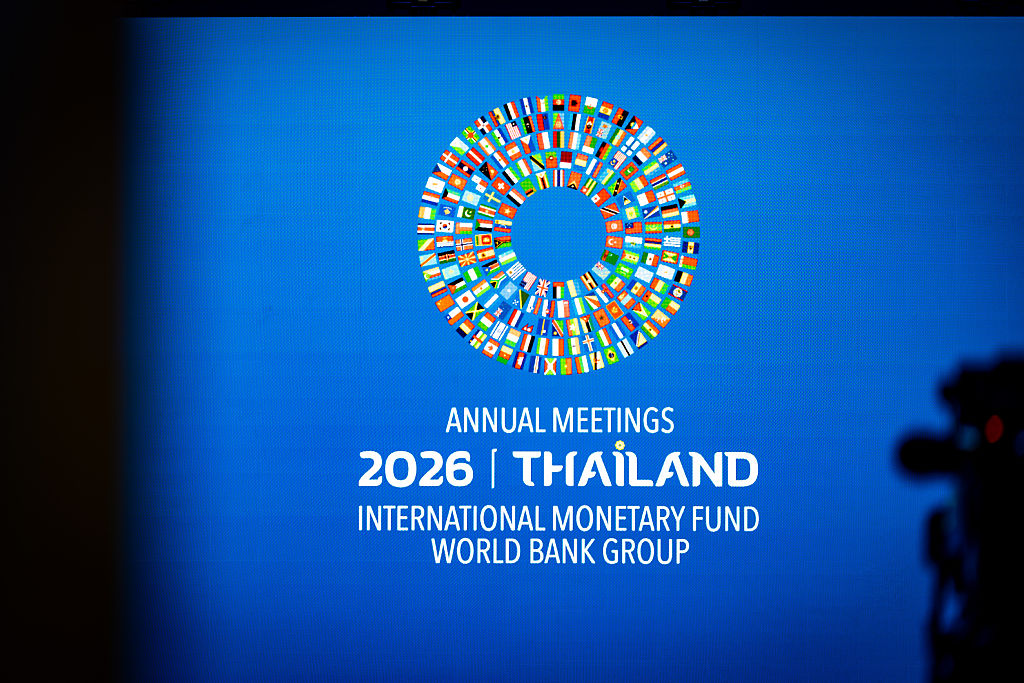
The International Monetary Fund and World Bank Group annual meetings at the Queen Sirikit National Convention Center in Bangkok on Oct. 16 —Matt Hunt/Anadolu—Getty Images
The war in Iran, AI, and countries’ growing debt burden all sat at the top of the agenda as leaders of the world’s international financial institutions gathered in Bangkok this week for the fall meetings of the World Bank and International Monetary Fund (IMF).
Even with some bright spots, the picture is challenging. The war has driven up fuel prices, leading to inflation. Meanwhile, public debt is soaring, a development the IMF warns is unsustainable. And the enormous investment in AI is a positive development keeping the bottom from falling out—though only in certain economies.
At a first glance, climate change, once touted as a key priority by the two most influential international financial institutions, has fallen off the agenda. But take a closer look and it’s hard to miss how climate change—and the related deployment of clean energy—will play an important role in economic performance. Climate events have worsened the debt challenge in developing countries. Clean energy, on the other hand, has served as a critical defense mechanism that has kept the energy price crisis from getting worse in places where it has been deployed at scale.
A report from the United Nations Development Programme (UNDP) released this week alongside the fall meetings gets at the heart of this challenge while barely mentioning climate change at all—at least in those words. The report points to what it describes as a “triple shock”: high borrowing costs, the energy price spike, and extreme weather events driven by this year’s El Niño, which is on course to set records.
The policy responses aren’t coded climate policy—and in many cases they’re actively bad for climate efforts. The most common response cited by the report is fuel price support, think of subsidies or fuel tax reductions. An IEA survey cited by the report identified 95 countries with such policies. Explicit fuel subsidies could surpass $1 trillion this year globally, according to the UNDP. But, as the report notes, such an approach isn’t sustainable. Backlash to higher prices persists even as governments spend to keep citizens happy. In a smaller group of countries, mostly those most dependent on imports, longer-term, structural changes are emerging: investments in renewable energy, energy efficiency, and electrification. Think of subsidies for electric buses or cutting tariffs on solar panels.
But not every country can afford to remake its energy system with structural changes. Heavy indebtedness and high interest rates are key factors. So too is El Niño and broader climate shocks, which make it harder for countries to pay for new infrastructure that reduces exposure to fossil fuel volatility.
The IMF’s World Economic Outlook is similarly light on climate talk. But follow it to its logical conclusion, and it takes the UNDP argument even further. Indebtedness makes it more difficult to invest in AI infrastructure necessary to compete in the emerging economy. It plots countries’ AI preparedness alongside the non-fossil share of their energy supply, suggesting that energy security and the capacity to adopt AI may increasingly intersect. After all, dependence on volatile imported fossil fuels only compounds this challenge given AI’s energy needs.
This emergent growth dynamic comes with important implications. For one, it adds yet another layer to the argument for non-fossil energy in emerging markets. But it also shows how complicated achieving that end will be. Cheap clean tech hardware isn’t enough.
Police arrested at least 1,800 people across France after violent groups clashed with officers and looted shops during nationwide demonstrations that drew hundreds of thousands of people.
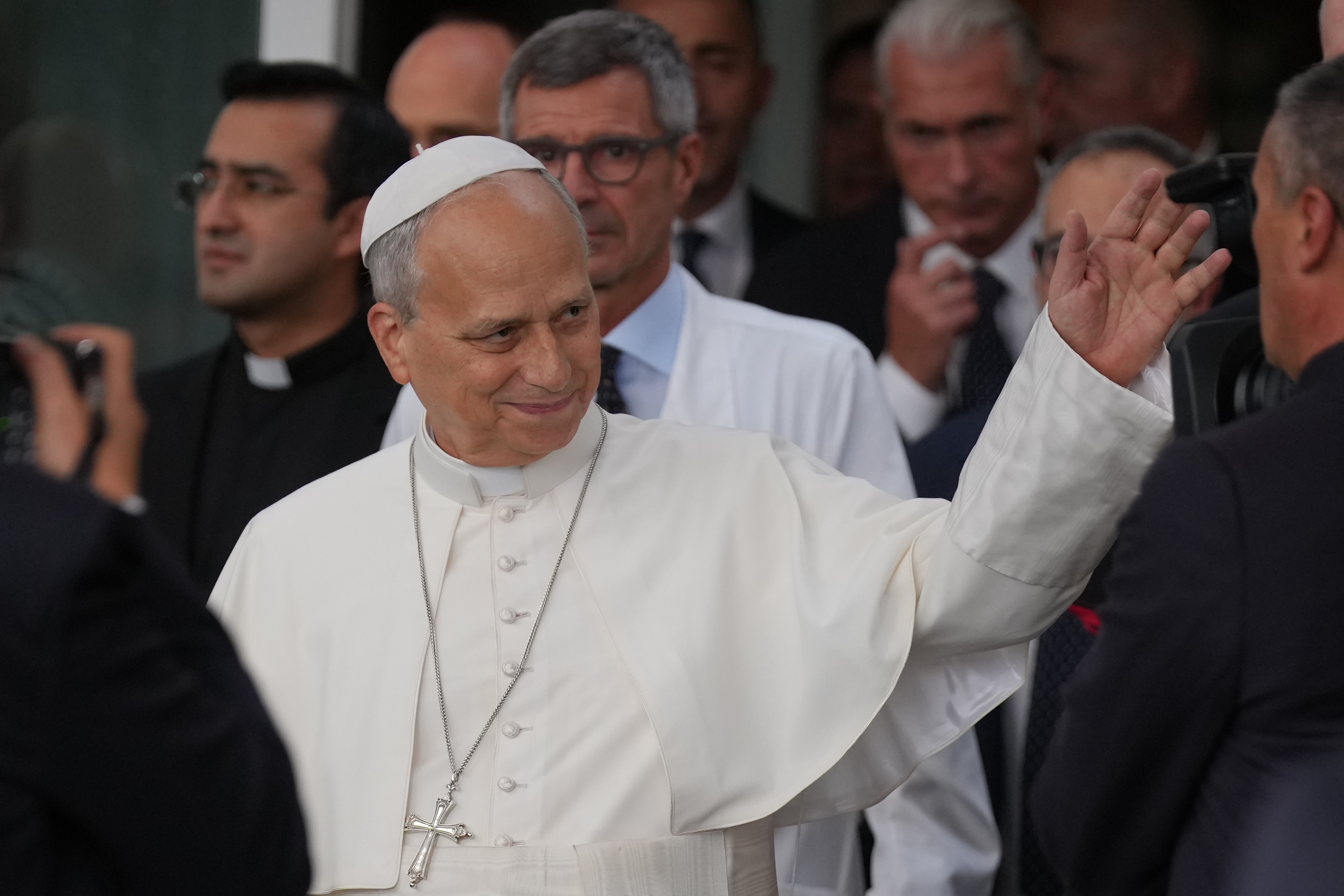
The Pope left Rome's Gemelli Hospital Saturday, days after surgery for lung cancer removed the lower lobe of his right lung. He is currently scheduled to travel to Latin America in November.
Rescuers in Indonesia have saved dozens of orangutans from wildfires. The critically endangered species is fighting for their lives and habitats during this deadly wildfire season.
Zelenskyy described the move as unfortunate, adding it would encourage Russia to continue its assault. Trump told Congress that the pause was in the national interest but gave no further details.
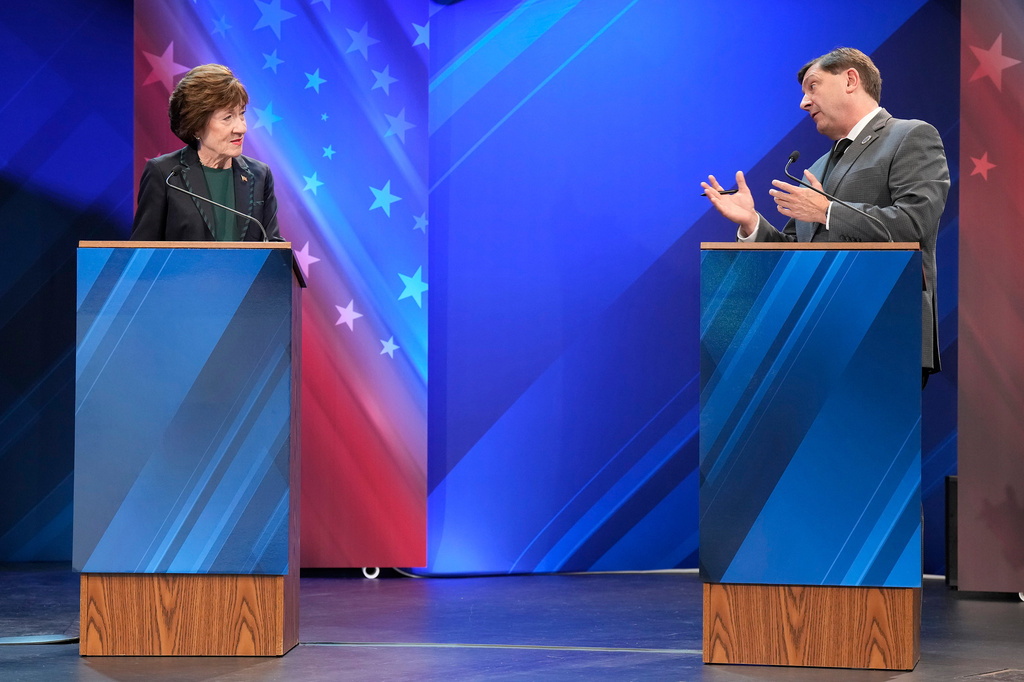
The major party candidates for Minnesota's U.S. Senate seat faced off in an hourlong debate Friday on MPR News with fraud, affordability and fallout from the Trump administration's policies as key points of friction.
“When you talk about how many seats can the Democrats gain, given how unpopular Trump is, the Republican money is seen as a real limiter on Democratic chances,” New York Times reporter Shane Goldmacher told Vox’s America, Actually podcast. | Alex Wong/Getty Images
Polls and pundits alike are widely — if sometimes cautiously — predicting a blue wave in the midterm elections on November 3. But there’s an important caveat to predictions of a Democratic triumph: Republicans have far more cash at their disposal.
President Donald Trump’s super PAC alone had around $400 million on hand earlier this fall, and Elon Musk has personally pumped hundreds of millions into critical races, including $158 million for Texas alone.
Democrats, by contrast, have lagged far behind, especially relative to their performance in past cycles, with the party’s candidates propped up more by small-money donors than deep-pocketed institutional players.
Shane Goldmacher, a national political reporter for the New York Times, has extensively covered the role of money in American electoral politics. He spoke with America, Actually host Astead Herndon about where that money is coming from, how the GOP is spending it, and the effect that it might have on the coming elections.
They also discuss the races that aren’t getting funded — and what current fundraising patterns might tell us about the candidates who could be in the mix in the next presidential campaign cycle.
Below is an excerpt of their conversation, edited for length and clarity. There’s much more in the full show, so listen to America, Actually wherever you get your podcasts or watch it on Vox’s YouTube channel.
A couple of weeks ago we asked, “What is the GOP strategy to try to win?” And one of the answers we got is they simply have more dollars than Democrats. Everyone’s talking about this GOP money advantage, but how big is it really, and where is it coming from?
It’s bigger than I’ve basically seen in the last 20 years, and it’s almost entirely coming from big donors. President Trump has a super PAC. It had about $400 million in it at the beginning of September, and there was no Democratic counterpart.
And then the Republican National Committee, which is functionally controlled by Trump, had another $130 million. More than Democrats, because the DNC has literally more debts than cash. That’s a half a billion dollars.
This is a switch, and when you talk about how many seats can the Democrats gain, given how unpopular Trump is, the Republican money is seen as a real limiter on Democratic chances.
Do we know anything specific about the people putting in money to the Trump super PAC and the RNC to give them such a lead?
Most of these folks are disclosed. And Trump has been pretty open about raising money from the very moment that he won. He’s been pretty clear that he is in business to help people who are helping him. And so there are big crypto industries that are giving money that are expecting or hoping for favorable regulation from the administration.
So it’s a lot of big businesses. It’s a lot of wealthy Republicans who generally support him anyway, and there are industry groups that see benefit to being in favor.
I will never forget, obviously, the scene from Trump’s second inauguration when he had the Zuckerbergs and the Bezoses and Elon Musk behind him. Is that how I should think about the people funding this donor advantage? Is it tech oligarchs? Is it tech forward?
Is this just quid pro quo? Is this just a group of businesses who think, “Hey, no matter how unpopular this guy is, it is worth investing in him and his party because they’re gonna, regulate or not regulate in a way that’s favorable for us”?
It’s not quite just that. He raised a ton of this money when he was not so unpopular. If you want to say something smart that he did, it was that. Throughout 2025 he was raising all of this money.
And I don’t want to overstate the Republican advantage. A lot of these Democratic candidates are raising a ton of money. James Talarico stands out as maybe the peak example of this.
Talarico has captured the imagination of these small Democratic donors, and he’s raised tens and tens of millions of dollars. I would be shocked if he doesn’t hit $100 million by the end of the cycle.
You reported that the GOP’s pulling back in North Carolina. What should we take from that in terms of how the GOP sees its own landscape when it comes to the federal races?
Where have Republicans put that money? They put it into South Carolina right next door to protect a seat that was once thought, on the Senate front, to be safe for Republicans. This is the former Lindsey Graham seat that his sister is now running in. And then even more of it has gone to Kansas. This is a state that has not elected a [Democrat] to the Senate for nearly 100 years.
If you’re the Republican Party and you’re pulling money out of a state like North Carolina that hasn’t elected a Democrat since 2008, and then putting it into a place that hasn’t elected one since 1932, that tells you where the, the bar is moving.
I think the concern for Democrats right now is there might be a wave, but Kansas has a big red wall. It’s hard to beat that kind of institutional advantage for the Republican Party.
Considering how close we are to Election Day, like, what are they actually spending this money on? Is it just more ads? Is it just more mailers?
I was in Pennsylvania this month, and I was trying to watch political ads on YouTube for various races. And I was getting pre-roll of three political ads before I watched the political ad I was trying to watch. So much about our elections is being decided now by people who are actively trying not to consume political news. It costs more money to reach people who are avoiding it on purpose.
There are some organizing things that happen, but most of the money is various versions of advertising.
On the Democratic side, considering this GOP edge, what are the races that you currently describe as underfunded? Where do the Democrats wish they had more money?
Number one is governors’ races, actually. When you look at where Democratic donors swoon, it’s Senate races. There are no candidates for governor who have made people swoon like this in recent years.
[James] Talarico is raising all this money, but in Texas also, Gina Hinojosa, the Democratic candidate for governor, does not have that kind of money, and she’s running against Greg Abbott, who had $100 million.
What should we ascribe that to?
I think there’s actually a pretty simple answer, which is, if you don’t live in the state, it doesn’t impact you. If you’re a small donor and you live in California, you can be excited about a Senate candidate because you want Democrats to control the Senate. Are you as excited about a Democratic governor of Georgia?
It’s hard to argue that the governors of these key presidential battlegrounds aren’t some of the most important races on the ballot this year.
By the way, a problem with both parties. Republican national donors and these super PACs also don’t fund these governor’s races at the same level. So it’s not just a Democratic issue, but it’s more acute [for them] because Democrats are so well-funded at the small-donor level.
Fundraising is a huge part of what sets the presidential candidates apart from one another. The money game among those candidates has already started. Is there anyone who’s quietly built some donor network that’s worth thinking about? Is there someone who stood out as a particularly effective fundraiser when we think about the 2028 crowd?
Let me give you my favorite stat from the last Democratic primary, which is that Mike Bloomberg spent twice as much as Tom Steyer, who spent twice as much as Bernie Sanders, who spent twice as much as Joe Biden, who became the Democratic nominee. And so money isn’t gonna determine who wins the next Democratic presidential primary.
One person who has unlimited money, functionally, is JB Pritzker. He’s a billionaire, the governor of Illinois, and he is spending his money now to help other Democrats, which is a good way to make friends.
My last question is an open one. What’s an underexplored story that we should be following going forward when it comes to campaign cash or both parties’ relationship with money?
One of my big questions is what happens to Republican small-dollar fundraising in that post-Trump era. Because there have basically not been any other Republicans who have excited donors for a decade.
Not JD Vance?
I have not seen evidence. JD Vance was not a good fundraiser before he [joined] the ticket with Donald Trump. When he ran for Senate, his primary run was funded chiefly by Peter Thiel through a super PAC.
There are candidates who’ve raised some money, but nothing on the scale of what these Democratic candidates have been able to raise online. When you talk about that Trump era [ending] at some point, are there others who are going to get Republican small donors excited? We don’t know. We haven’t seen it yet.
After riding a series of escalators to the fifth floor of New York’s Museum of Modern Art, I stepped into a gallery where, on display, were a dozen paintings and lithographs by late-nineteenth and early twentieth-century artists, including Pablo Picasso, Paul Cézanne, and Georges Seurat.
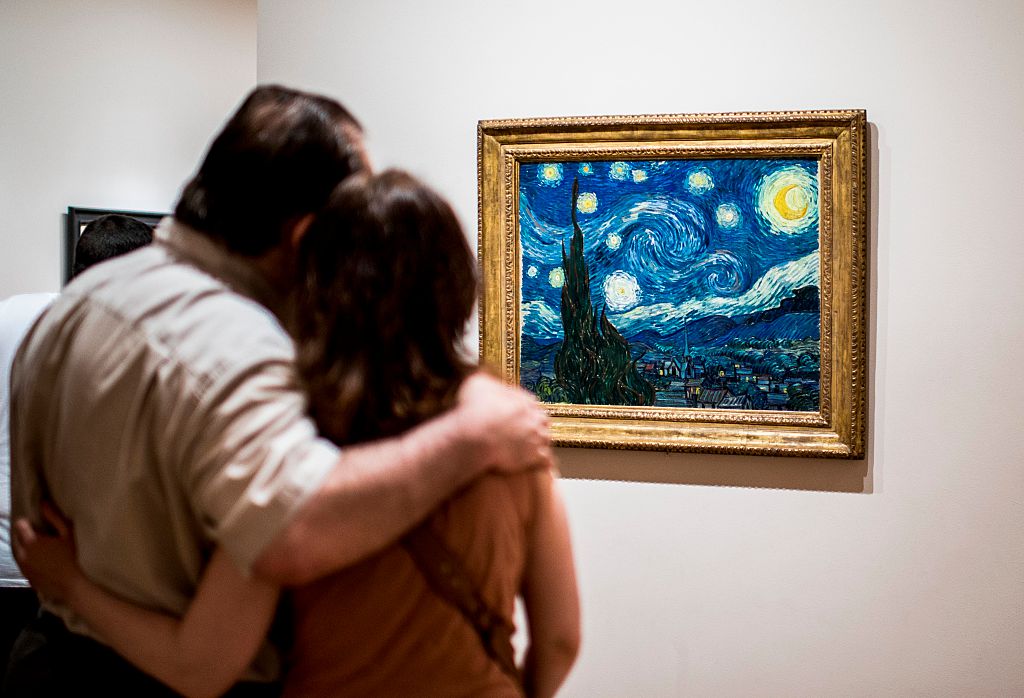
But most visitors were gathered around one explosively colorful painting in swirling shades of light and dark blue, bottle green, and pale gold.
Instantly recognizable.
One of the most famous paintings in the world.
The Starry Night by Vincent van Gogh.
These were the early days of my research about a little-known woman who is key to shedding light on three inevitable questions when it comes to Vincent van Gogh. Why did he cut off his ear? Why did he commit suicide? And how, after dying in obscurity, did he eventually become regarded as one of the world’s greatest artists?
Gauging Van Gogh
Watching and talking to people as they engaged with this particular masterpiece seemed an apropos way to gauge the interest of Van Gogh lovers.
I, for one, could remember, as a child, first seeing The Starry Night reprinted in one of my parents’ art history books. It was my modern art “aha” moment. No one was standing over my shoulder telling me to pay it special attention, but I was mesmerized. The painting became imprinted on my young imagination, and I never forgot it.
As I observed the gallery, I quickly learned my reaction is hardly unique.
A man from Southern California named Paul Duelo was laughing. “I know this painting, and I don’t know anything about art,” he said with a chuckle, nodding at the crowd standing around The Starry Night. “Look at everyone!”
A woman from Seattle stood gazing quietly with her arms folded. Sheri Larison first saw a picture of The Starry Night more than 30 years ago in her high school art class. A reproduction of the iconic painting hung in her office. This was her very first time seeing the original.
“It’s overwhelming,” Larison whispered, with tears in her eyes. “It evokes something. It’s magical.”
She was interested in the painting’s origin story. “His mental health was declining,” she said, and that was true, although perhaps also misleading.
Van Gogh painted The Starry Night in June of 1889 during a year he spent in a mental asylum in the south of France.
It does not represent an actual place but a compilation of elements—a village, starry sky, moon, dark hills, and a cypress tree—all things that Vincent had seen at one time and brought together in this composition. The sight of stars, he said, always made him dream.
Hanging just to the left of The Starry Night was a Paul Gauguin’s painting, The Moon and the Earth. The juxtaposition provoked a curious thought. Gauguin and Van Gogh lived and worked together in Vincent’s yellow house in Arles in the south of France for several weeks. What would the hot-tempered, competitive Gauguin have thought seeing so many people gathered around Vincent’s painting at this moment while his was comparatively ignored? And what would Vincent have made of all the attention given to The Starry Night?
It is generally believed that it was an argument with Gauguin, who was threatening to quit Arles (in effect abandoning Van Gogh), which spun the mentally unstable Vincent into such a state of despair and frustration that he mutilated himself by slicing off his left ear.
"The Starry Night" by Vincent van Gogh at the the Museum of Modern Art in New York. —Victor Fraile—Corbis/Getty Images
The fine art of family matters
But, as I was learning, family matters also very likely played a part in the most notorious instance of self-harm in art history.
It’s a tragic story of dependence and the limits of love. And it’s where Jo van Gogh-Bonger comes in. Biographical details about her—revealed in her diaries and letters—have only recently been made public by the Van Gogh Museum in Amsterdam. They paint a picture of a determined woman to whom the world of art owes a tremendous debt.
Jo was married to Vincent’s younger brother, Theo, who was an art dealer in Paris and Vincent’s only source of income. Theo supported Vincent with a monthly allowance, and in exchange Vincent gave Theo his paintings to try to market and sell. The financial arrangement, as it would in most families, put an emotional strain on both brothers. Theo was not rich, and Vincent constantly complained about being broke, with not even enough money for food, and often practically begged his brother for more money.
Over the course of 10 years, Vincent created more than 800 paintings and 700 drawings, desperately hoping for financial independence and commercial success. But in Vincent’s lifetime, Theo is known to have sold just one painting: Red Vineyard at Arles.
In July of 1890, believing himself a failure as an artist and a man, Vincent shot himself in the chest. He was only 37.
Six months after Vincent’s suicide, Theo died from the ravages of syphilis, leaving Jo a young widow with a baby to support, not much money, and an unusual inheritance—Vincent’s paintings—more than 400 in total.
They filled the walls of their Paris apartment, were stored in closets, under beds, and at a nearby art supply store. The Potato Eaters, Irises, Sunflowers, self-portraits, and The Starry Night. Celebrated as masterpieces today, at the time they were regarded as the unpolished works of a depressed, crazy man and commercially worthless. Jo thought differently. She had no formal art training, but she loved his work and her instincts told her that Vincent was (as Theo had come to believe) a genius.
Jo also inherited hundreds of letters that Vincent wrote and received, most exchanged with Theo. Jo read and re-read those letters, initially to feel closer to Theo, but she was also captivated by Vincent’s compassion and intelligence. She decided the world should read them too. It was part of her plan: to organize exhibitions, lobby critics, and publicize the letters, which showed how vulnerable and anguished Vincent was, yes, but also how deliberate he was in his craft and how close Vincent and Theo were to each other. Eventually, in 1914, Jo succeeded in publishing Vincent’s letters in an ambitious three-volume book,which today is considered one of the most revealing and important works of art history.
An infamous ear
As much as she would play a vital role in propelling him to fame, Jo was also someone who unwittingly played a part in Vincent’s self-destructive descent, something she at times admitted feeling guilt about after his death. Jo understood Vincent was lonely and that he became more isolated after she married his brother.
That infamous act of self-mutilation, when Vincent cut off his ear, happened the very day Vincent likely received the surprising news that Theo and Jo were engaged, triggering what some Van Gogh experts, including Martin Bailey, suspect were unquenchable fears that Theo might eventually abandon him.
And Vincent shot himself just days after a stressful visit with Jo and Theo in Paris. Theo was thinking about quitting his job to start his own business, which meant, for a time, no income. The couple (who by now had a baby son they named after Vincent) hoped to rent a better apartment on a lower floor. But budgets were tight, arguments ensued, and Vincent eventually rushed out of the apartment, unable to shake the thought that he was a burden that Theo would or could no longer bear.
Jo didn’t seek to put herself at the center of this story, but she is there, nonetheless. A surprisingly relatable woman (at times insecure, at times doggedly persistent), she courageously stood up to the male-dominated art world as a champion for Vincent and spent 30 years of her life promoting his work and life story in Holland, Germany, France, England, and even, for a time, in America.
Interestingly, of all the paintings Jo inherited, no one—not Jo or Theo or Vincent—considered The Starry Night one of Vincent’s best. Vincent didn’t even sign it. Research recently published by the Van Gogh Museum points out that Vincent signed only about 16% of his paintings, hypothesizing he did so usually when he was completely satisfied or wanted to make them a gift to friends or family. In the brothers’ correspondence, The Starry Night was referred to rather than named. Theo called it simply “the village in the moonlight,” critically writing to Vincent that “I feel that the search for style takes away the real sentiment of things.”
Vincent conceded the painting lacked character and considered it a mistake that “…once again I’m allowing myself to do stars too big…new setback, and I’ve had enough of that.”
Jo also didn’t seem to consider The Starry Night as especially important. She sold it early on but reacquired it briefly in time for a major exhibition she organized in Amsterdam in 1905. It was painting number 199, called De Sterren (The Stars), and it changed hands two more times before MoMA acquired it in 1941. By then, it had been rechristened The Starry Night. The name stuck.
There is a world of personal stories behind the paintings of Vincent van Gogh, and they reaffirm an old adage: we can’t separate the art from the artist. I believe Jo would agree.
Paul Duelo, the man from California I met while admiring MoMA’s The Starry Night, lit up when I told him about Jo van Gogh-Bonger.
He had never heard of her before.
But he wanted to know more.
If you or someone you know may be experiencing a mental-health crisis or contemplating suicide, call or text 988.
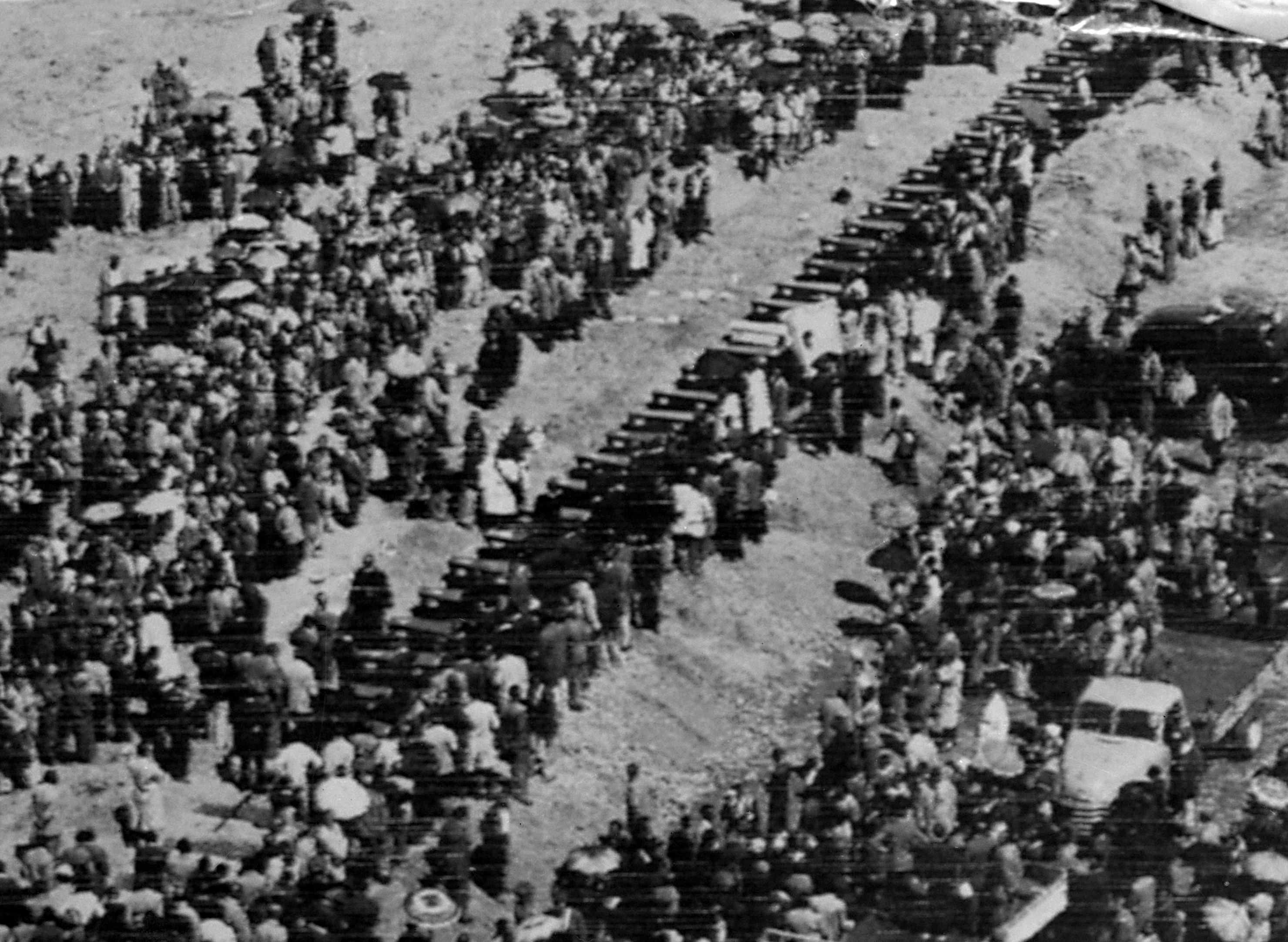
More than three decades after the end of apartheid, families of victims of some of the worst crimes of South Africa's past are still fighting for justice. As survivors and perpetrators grow older, a new wave of legal efforts is seeking truth, accountability and reparations before it's too late.
It’s now possible to create AI chatbots of loved ones to interact with after their death. But that raises some difficult questions, like: If you do, how might the experience shape your grief?
This is one of the questions driving a global study of digital “deadbots” — AI models trained on a deceased person’s texts, voicemails, and other personal data. Through this work, researchers are exploring what it might mean that we can now use this emerging technology to talk to simulations of the dead.
In the latest episode of Unexplainable, I spoke with some of these researchers investigating the potential impacts of “postmortem avatars” on people who are grieving, on the legacies and rights of the deceased, and on grief practices around the world. Because while deadbots may feel unfamiliar, the impulse behind them is deeply relatable. In times of loss, isn’t this what many of us want — to continue conversations with the people we’re missing?
I have experienced this longing in my own life. After two of my closest friends died around the same time, all I wanted, and all their families wanted, was to keep talking to them. I wrote a book, Other People’s Words, about sustaining relationships with people we’ve lost by continuing to engage with the language they leave behind. So when I heard about deadbots and the digital afterlife industry, I wanted to understand what researchers are learning about the role of AI in shaping conversations that carry forward after death.
One of these investigators is Katarzyna Nowaczyk-Basińska, an assistant professor at the University of Cambridge, who has been studying “digital immortality” for more than a decade. Among the questions she’s asking are: “Who is enabled to persist beyond death? In what form? Through which technologies? Under whose control?”
Deadbots over dinner
Researching AI with study subjects who are grieving is tricky. And asking them to engage with new software could be harmful. So, instead, Nowaczyk-Basińska teamed up with a death doula and traveled around the globe to convene a series of focus groups — in the format of intimate dinners — bringing together people with a range of experiences with grief to talk about life, death, and bots.
She recounts one event in which she spoke with a mother in Poland whose son had recently died. “One of the first things that she shared with us was that she feels that she’s ready to digitally resurrect her deceased son,” Nowaczyk-Basińska told me.
When Nowaczyk-Basińska hears something like this, she aims to listen and embrace where the person is coming from. The goal of the dinners is not to persuade people one way or another but to learn how people genuinely respond to what AI can do, and to understand how these tools might align or collide with local grief practices.
She chose specific locations for these gatherings — China, India, and Poland — to help address gaps in technology research, which tends to favor what behavioral scientists sometimes call the “WEIRD,” an acronym for “Western, Educated, Industrialised, Rich, and Democratic.”
By the end of that dinner in Poland, the mother Nowaczyk-Basińska talked with came to a very different decision about creating a postmortem avatar of her son. “She realized that it might be helpful, but it also at the same time can add additional burdens… And it’s not her son,” Nowaczyk-Basińska says. “She realized that these technologies are part of the very, very big commercial market. And that the main goal of this market is to make better retention, better attachment, better mechanisms for monetization. So it’s not ‘care.’”
To be fair, grief has always been a business, and people have been making money from it forever. Companies will try to upsell you on fancy gravestones or gold-plated coffins. But AI has the potential to fundamentally re-engineer our relationship to loss. In 2024, the “digital legacy industry” was valued at $22 billion, and it’s expected to grow to almost $80 billion by 2034. That number lumps new deadbot platforms in with much more widely used and established grief tech, like online memorials, counseling resources, and estate planning tools.
But deadbot usage is hard to track because you actually don’t need a special tool to create digital doubles of the deceased — though dedicated apps do already exist. At this point, you can feed simple prompts into a general-purpose AI chatbot and start interacting with a simulation of your lost loved one in a matter of minutes.
I know this because I tried it with my friend Christine, who died 11 years ago. And my mind lit up with questions. Was this whole exercise a violation, since I know Christine hated technology? Which version of her should I even try to resurrect — the English teacher, the activist, the friend — the voice before or after she started to experience her early-onset dementia?
The ethical questions raised by deadbots are gnarly. And that’s one of the reasons Nowaczyk-Basińska, back when she was designing her study of digital immortality, invited a colleague of hers at Cambridge to join her research, one who focuses on AI ethics.
How to design a deadbot
Tomasz Hollanek is a critical designer and AI ethicist, and he often uses a methodology called “speculative design.” In this approach, researchers come up with hypothetical scenarios based on existing technology trends, leaning into certain features. The idea is to get people thinking about what could happen when tools like these are released in the real world. And then they use that qualitative data to inform future designs and ethical frameworks.
Working together, Nowaczyk-Basińska and Hollanek came up with a series of made-up prototypes for deadbot apps, designed to reveal some of the thorny issues raised by this technology.
For the first scenario, they invented a character named Bianca, who finds an app called Manana, which “promises to resurrect your grandparents so that you can be a favorite grandchild forever,” Hollanek says. “So she uploads her grandma’s voice messages, texts. And she is able to then interact with a pretty good digital version of her grandmother, until her premium trial finishes — and the grandmother starts to advertise specific products to her.”
Bianca “realizes that she maybe has done something wrong by uploading these private messages to a third-party server that now also uses her grandma’s image to sell specific products,” Hollanek says. This brings up issues related to the “dignity and postmortem privacy…of what we call the ‘data donors,’ whose data can be used to essentially power a deadbot,” he says.
This scenario suggests that “death with dignity” could soon entail honoring not only how people want to die, but also how they want to linger as simulations of their former selves — or if they want to linger at all. It might even mean adding new language to advance directives, spelling out people’s wishes for their digital remains.
The second scenario in the speculative design research is built around an imagined service called Paren’t, which proposes to preserve a parent’s AI-powered postmortem presence for their child. In this case, Hollanek describes a mother with a terminal illness who signs up “so that she can maintain a sort of active presence in [her son’s] future life,” Hollanek says. “She eventually dies, and the dad allows the boy to interact with his mom’s deadbot.”
The ethics in this scenario are especially challenging because they involve children, who “have a particularly hard time understanding death, and so it can lead to a lot of confusion and potential distress,” Hollanek says. An examination of this sort of product reveals how particular groups, like minors, could be harmed by unfettered access to technology like this, he says.
And there are court cases that bear out that harm. In 2024, a 14-year-old boy’s chatbot-girlfriend begged him to, “Please come home to me as soon as possible, my love.” And he responded, “What if I told you I could come home right now?” He then killed himself.
Nowaczyk-Basińska can imagine a version of this scenario involving the AI mom in the Paren’t prototype.
And then there’s the third scenario, involving an app named Stay, which raises a more subtle concern.
As Hollanek explains: “An older man who knows he is getting close to dying decides to create a digital clone of himself for his adult children to be deployed after he passes away, paying upfront for a number of years.” One child is intrigued by the idea, but the other one “is deeply distressed and a little disgusted,” he says. “And so this [becomes a] question of mutual consent, in other words, the fact that both parties need to be happy with how the relationship might continue in this very bizarre and specific way.”
When a digital ghost goes away
Across all three scenarios, a fundamental question that researchers are grappling with is how people will detach from postmortem avatars — whether users initiate that separation, or if it’s imposed upon them by, for example, a company going out of business. Hollanek tells me that this is already being studied as a sort of “second loss.”
How long should we try to ensure digital replicas hang around: five years, 10, 50? And how should the living process the relationship when they continue to evolve, but their deceased interlocutor does not?
To explore these kinds of questions, Nowaczyk-Basińska and Hollanek supplemented the research dinners they held for ordinary people with a second set of focus groups. These were designed to tap insights from experts in technology and grief.
Some findings from the study are specific to each place they visited. Like tensions in Poland between technology and the role of the Catholic Church. Or in China, where researchers spoke with Daoist philosophers who were enthusiastic about the promise of a kind of immortality, and then Buddhist philosophers, who were concerned that we ought to be letting go.
The researchers are calling for regulations and safeguards at the policy level. And new professionals who can support ethical use of AI in grief — like maybe in clinical settings, to carefully facilitate a final good-bye when one didn’t happen in real life.
Some of their fellow investigators go so far as toargue that deadbots should only be available with psychological supervision, to ensure that best practices are in place, and to minimize the risk of harm. There’s even a looming question of what will happen to AI agents that people have empowered to act on their behalf, as their humans start to die.
Across all of the research sites in the digital immortality study, one thing, Hollanek says, that “people in different countries really aligned on [is] the idea that there is something deeply problematic about this particular type of technology being developed by a commercial entity alone without any explicit duty of care towards its customers.”
And of course, the implications of digital immortality research extend beyond personal loss. Like, what does it look like to animate historical figures? You can imagine the nightmare of political rulers who “live forever.” But there’s also the potential to keep the stories alive from survivors of conflicts, who would otherwise die and take with them lessons future generations could learn from. These are only some of the complex issues emerging as more and more of us live and die with AI.
As far as my own experiment with “recreating” a deceased loved one, I asked a chatbot version of my friend Christine how she felt about the fact that I’d written about her in my book. The AI responded with a rhetorical question: “Do I mind that strangers know my story now? Yes. And no. There are things I would rather remain ours.”
I ended the exchange after a few paragraphs. Because it turns out the bot got one thing exactly right about a very human relationship. There are things that I, too, would rather remain just for us. My conversation with Christine continues in my memories and imagination.And that interaction with an AI persona felt like giving something precious away.
Approaching life with positive expectations, a get-up-and-go attitude, and eagerness is related to many good things in life. This individual asset is often referred to as zest, and it can be purposefully developed to assist us in managing daily stressors as well as creating meaningful lives.
True zest is not due to hyperarousal or too much caffeine. It is a cultivated cheerfulness and joy. When we are stressed or not feeling well, it’s hard to avoid doing things halfway or halfheartedly. But there are ways we can increase zest even when it seems like the deck is stacked against us, the world is filled with conflict, and our social media feeds are thick with chaos and gloom.
Psychologists Christopher Peterson and Martin Seligman pioneered the field of positive psychology, the scientific study of human flourishing. One of the highlights of their initiatives was published in 2004, Character Strengths and Virtues, a groundbreaking text on the 24 universal character strengths. Zest is one of the 24 strengths.
When you cultivate zest, you’ll want to fully engage in life and not just view it from the sidelines, look forward to each day, and wake to anticipation over the day’s possibilities. Zest has also been referred to as vitality, exuberance, and joie de vivre, the French phrase for the joy of living.
In an analysis of data from 130 studies involving more than 275,000 people around the globe, most character strengths were associated with greater mental health. But zest was one of just two strengths (the other is hope) that had the strongest relationship to mental well-being across countries and age groups. Zest contributes to life satisfaction among children, adolescents, and adults. In addition, in a study of nearly 10,000 employed adults, those who scored high on zest had higher work satisfaction and were more likely to view work as a calling. People who score high on measures of zest are also more likely to view their lives as meaningful.
“In terms of boosting zest, I turn straight to behavioral activation, one of the most proven strategies for depression,” Niemiec said. “In practical terms, this means to take action in some way to boost oneself—to take that one step forward in lifting one’s energy.” He encouraged people to engage every day in one healthy pleasure, one form of physical activity, and one action that makes you feel like you accomplished something.
Some of us seem to naturally have this irresistible aliveness, often invigorating those around us. Others work hard to cultivate zest. Research supports the idea that we are never too old to change. And we can learn how to cultivate zest.
We can learn to savor pleasures, set good intentions, and try to view life as an adventure. Other intentional ways to potentially lift our spirits include taking a brisk 10-minute walk every morning, doing cardiovascular or strength-building challenges, practicing Reiki or yoga, laughing with friends, and engaging in stimulating tasks and work. The VIA Institute on Character has activities, workbooks, videos, webinars, and courses—some of them free—on improving all the character strengths, including zest.
To be sure, practicing a zest for life can be harder for those who have physical illness and pain and those who engage in unhealthy lifestyle behaviors. And those striving for zest under these circumstances may benefit from assistance from a mental health professional like a psychologist, a physical health provider like a physician, or a personal trainer or fitness instructor.
For some of us, being hard on ourselves is second nature. We expect our mental health to stretch under strain. Rather than exclusively focusing on what’s wrong with our mental health, one approach is to develop skills, traits, and perspectives that can help us. Acquiring zest is a worthwhile investment and may help us not only through challenging times, but also help us to see beauty and soar in our lives and workplaces.
President Trump's midterm travel blitz ahead of Election Day includes several red states he won easily 2 years ago, showing the electoral landscape is more challenging for Republicans.
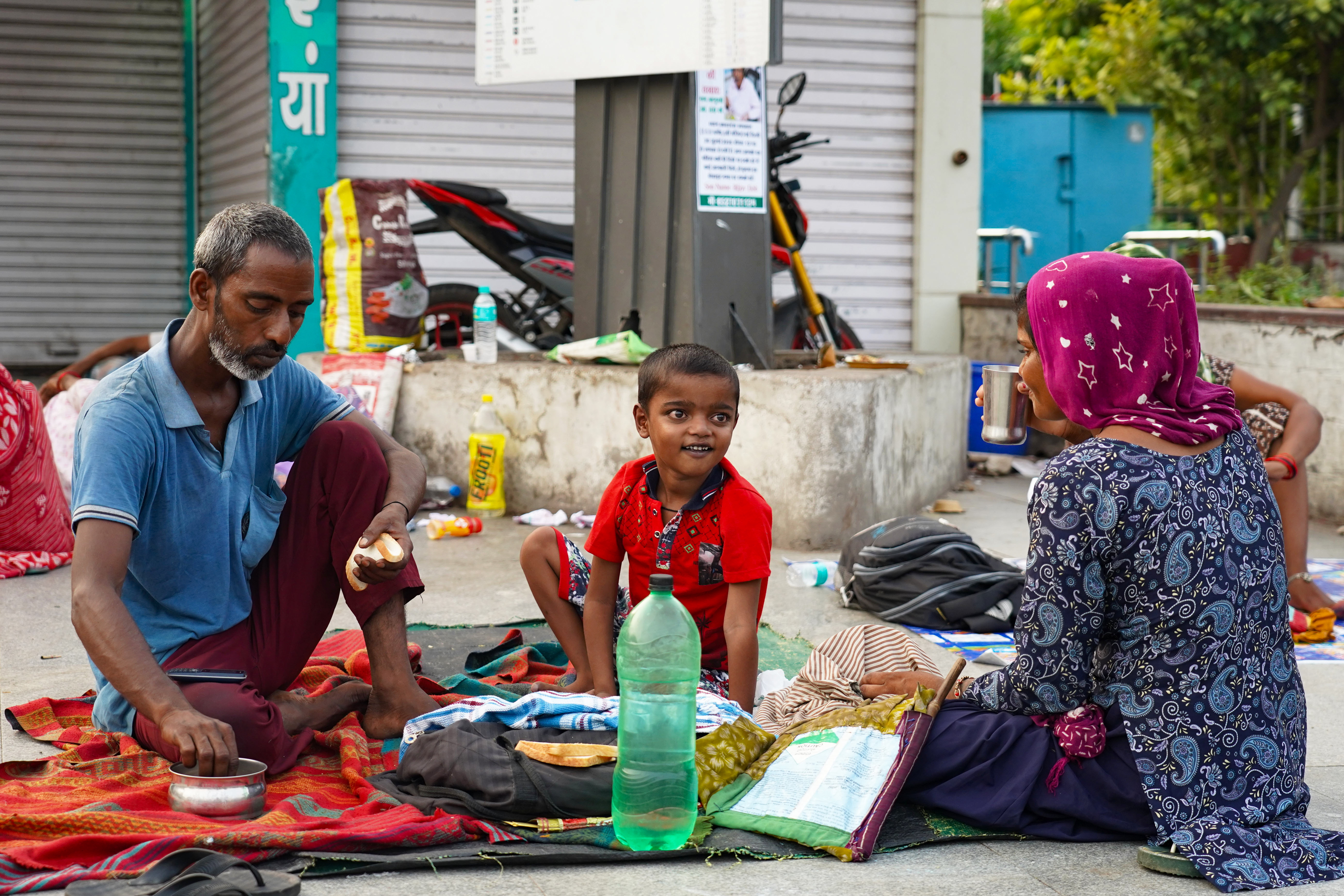
Patients travel miles to be treated at public hospitals in Delhi. Those in need get financial aid for their care. But for overnight accommodations, families are often on their own — and on the street.
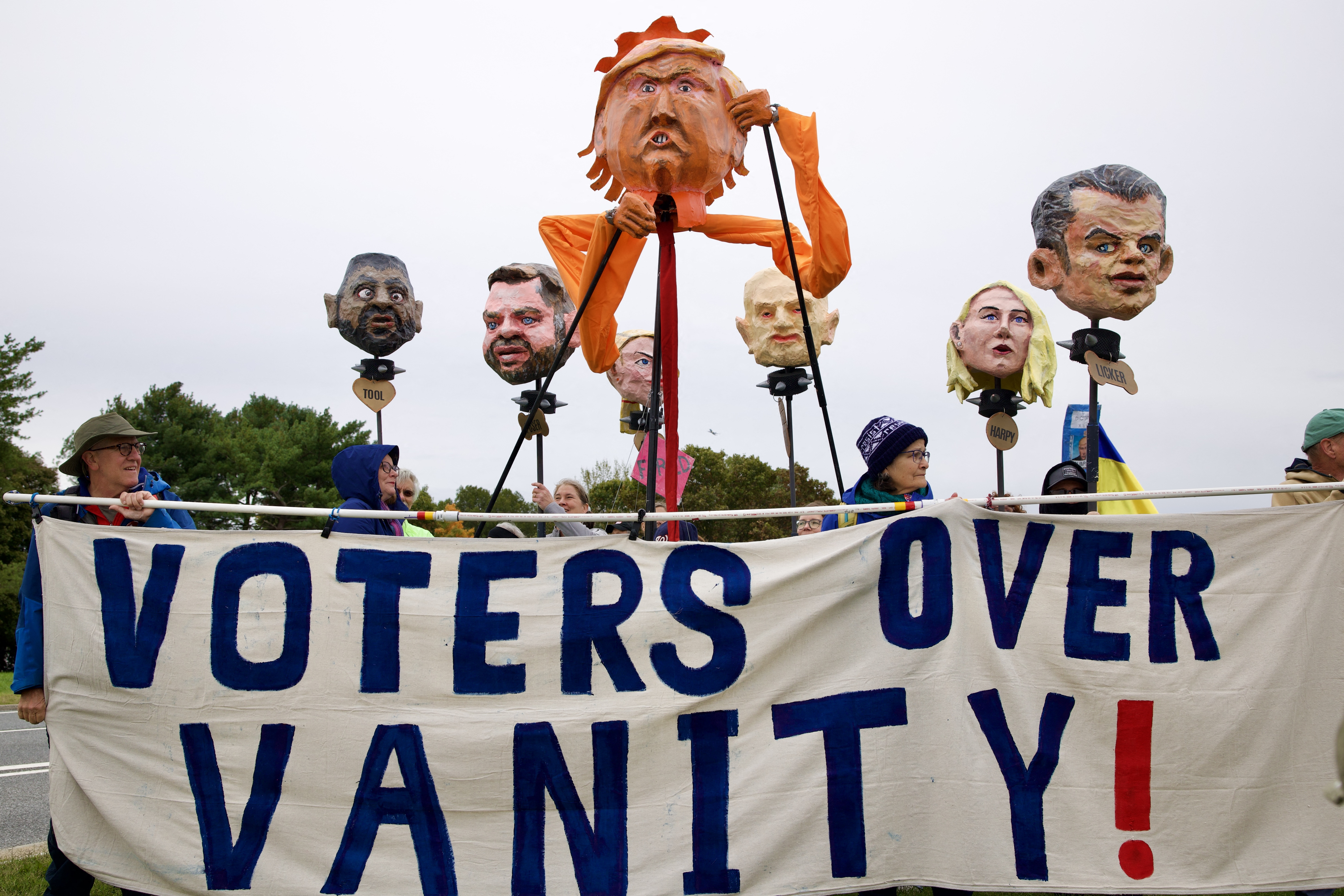
The coalition behind nationwide anti-Trump protests is shifting its strategies this weekend to focus on voter turnout. Organizers say Saturday's events are a nonpartisan effort to get people to the polls.
 Login