Reading view

Trump threatens further action as US and Iran exchange fire in new flare-up

Washington says it acted after observing Iran was planning to deploy fresh mines in strait of Hormuz

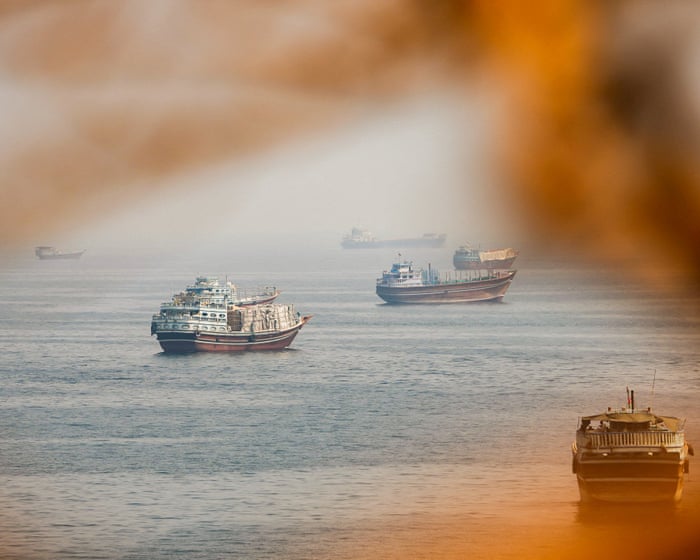
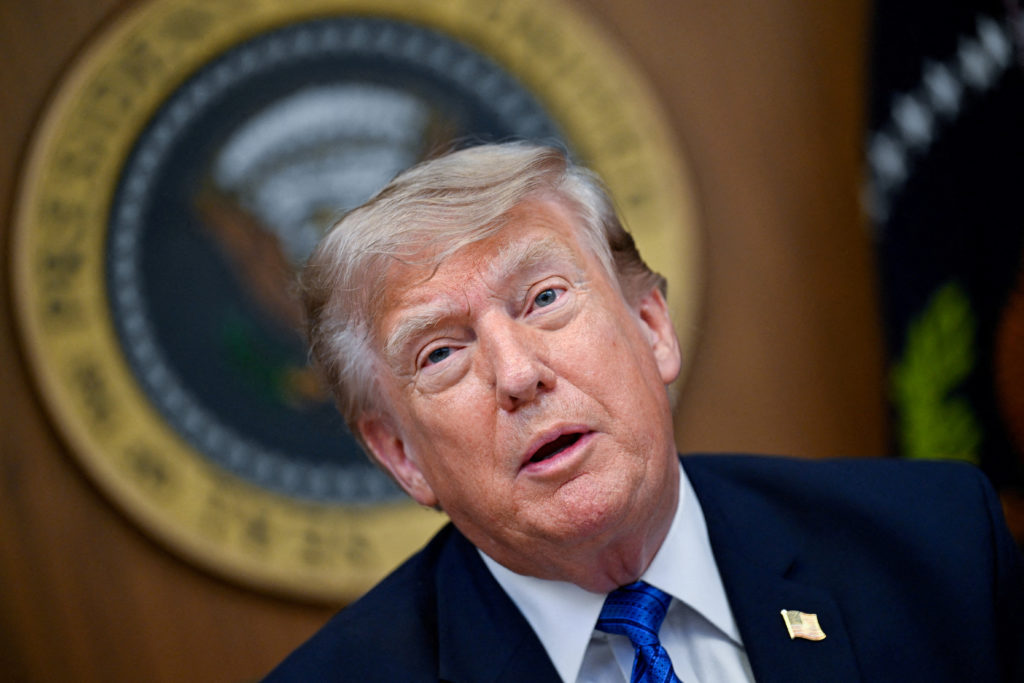
The US and Iran have exchanged fire for the first time in a month, with missiles and drones fired at Iranian rocket launchers on an island in the strait of Hormuz, and Iran targeting US military bases in Jordan and the United Arab Emirates in response.

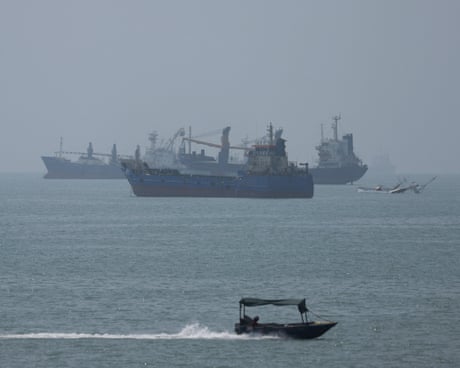
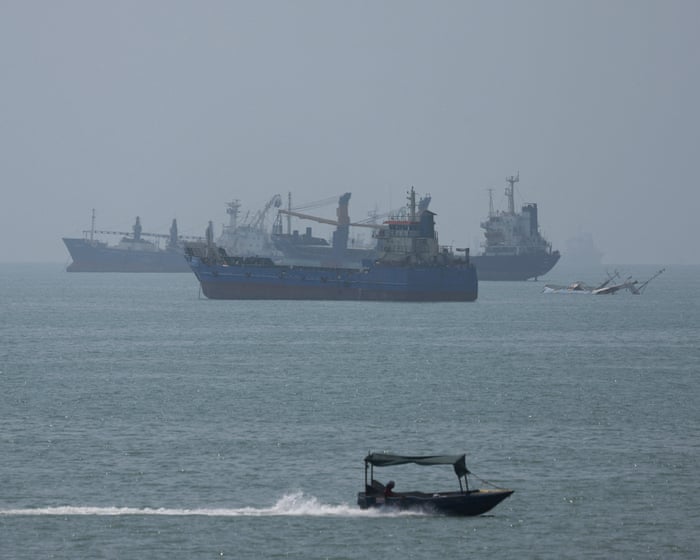
The US president, Donald Trump, on Monday threatened further action. The US is to trying to prise open Tehran’s grip on shipping going through the strait, which before the war accounted for a fifth of the world’s seaborne energy supply. Washington claimed that Iranian control over the waterway had been loosened by repeated US attacks on Iranian missile launchers and radars.

Continue reading...
© Photograph: Majid Asgaripour/Reuters
© Photograph: Majid Asgaripour/Reuters
© Photograph: Majid Asgaripour/Reuters

  •  

Trump threatens further action as US and Iran exchange fire in new flare-up

Washington says it acted after observing Iran was planning to deploy fresh mines in strait of Hormuz

The US and Iran have exchanged fire for the first time in a month, with missiles and drones fired at Iranian rocket launchers on an island in the strait of Hormuz, and Iran targeting US military bases in Jordan and the United Arab Emirates in response.

The US president, Donald Trump, on Monday threatened further action. The US is trying to prise open Tehran’s grip on shipping going through the strait, which before the war accounted for a fifth of the world’s seaborne energy supply. Washington claimed that Iranian control over the waterway had been loosened by repeated US attacks on Iranian missile launchers and radars.

Continue reading...

© Photograph: Majid Asgaripour/Reuters

© Photograph: Majid Asgaripour/Reuters

© Photograph: Majid Asgaripour/Reuters

  •  

U.S. and Iran Exchange Strikes Overnight After Monthlong Calm

The renewed attacks were the latest sign that the war that began six months ago appears far from over.

© Reuters

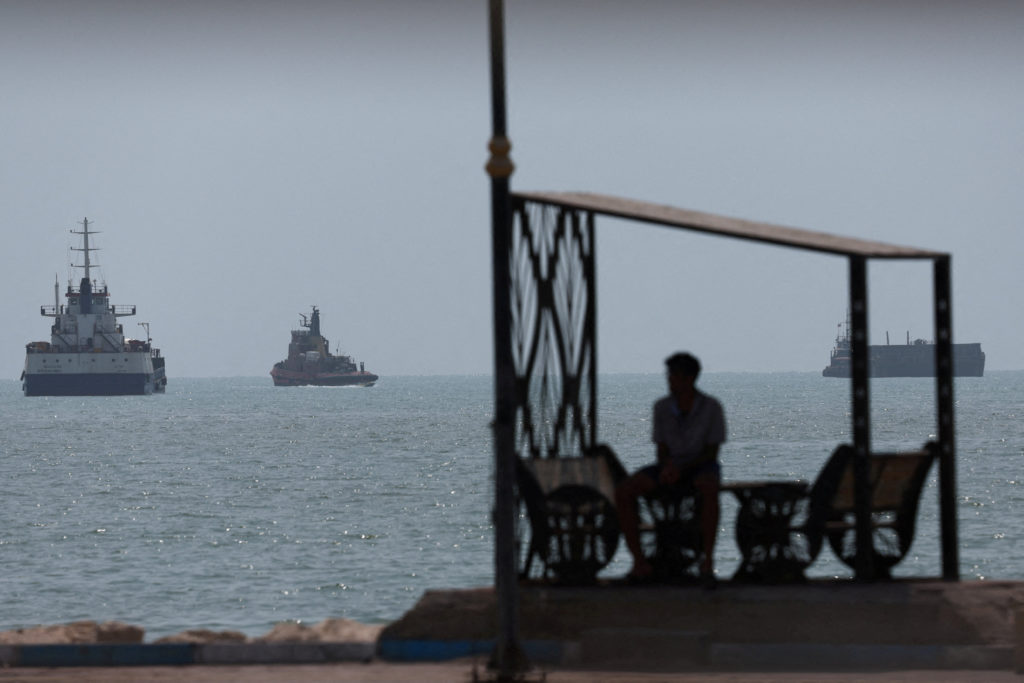
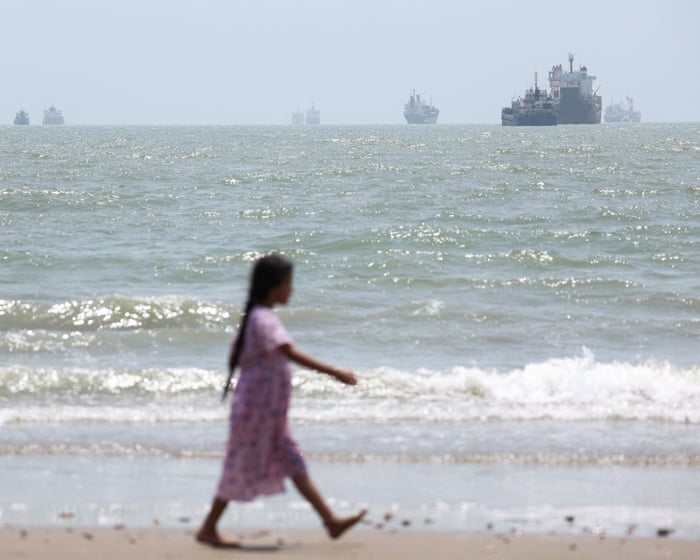
The Strait of Hormuz, the waterway in the Persian Gulf that has been at the heart of the conflict between the United States and Iran, on Monday.
  •  

U.S. Attacks Island in Strait of Hormuz; Iran Retaliates With Missile Fire

The exchange on Sunday was the first known military action between the two nations in a month, raising the risk of a renewed round of fighting.

© Arash Khamooshi/Polaris for The New York Times

In Tehran last month.
  •  

Iranian president says he still wants diplomatic end to war after US strikes on Hormuz – Middle East crisis live

US targets Iran’s Larak Island in first exchange of fire in more than a month as Masoud Pezeshkian says America ‘has not fulfilled its commitments’

Coinciding with this week’s G20 meeting, the EU has issued a statement saying it will work with the US and other allied countries to maintain economic pressure against Iran.

“The ‌EU welcomes efforts at ensuring that Iran ceases its destabilising activities and engages in peace negotiations with good ‌faith, also through additional economic pressure, including through ​the US-led Operation Economic Outcast,” it said in reference to the pressure strategy the White House describes as “an unprecedented campaign to sever every remaining economic lifeline sustaining” the Islamic republic.

Continue reading...

© Photograph: Reuters

© Photograph: Reuters

© Photograph: Reuters

  •  

Trump says US will ‘hit Iran hard’ as hostilities resume – as it happened

Iran responded to an assault on its Larak Island by targeting US bases in Jordan

Coinciding with this week’s G20 meeting, the EU has issued a statement saying it will work with the US and other allied countries to maintain economic pressure against Iran.

“The ‌EU welcomes efforts at ensuring that Iran ceases its destabilising activities and engages in peace negotiations with good ‌faith, also through additional economic pressure, including through ​the US-led Operation Economic Outcast,” it said in reference to the pressure strategy the White House describes as “an unprecedented campaign to sever every remaining economic lifeline sustaining” the Islamic republic.

Continue reading...

© Photograph: Morteza Nikoubazl/NurPhoto/Shutterstock

© Photograph: Morteza Nikoubazl/NurPhoto/Shutterstock

© Photograph: Morteza Nikoubazl/NurPhoto/Shutterstock

  •  

U.S. strikes Iranian rocket launchers on the Strait of Hormuz in first military action in weeks

The fighting comes just days after the Trump administration said it would turn its focus to increasing economic pressure — rather than military action — to try to end its war with Iran.

  •  

US strikes Iranian launchers in strait of Hormuz, sparking reprisal attack on airbases in Jordan and UAE

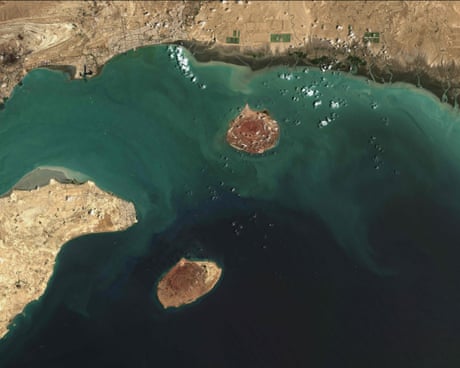
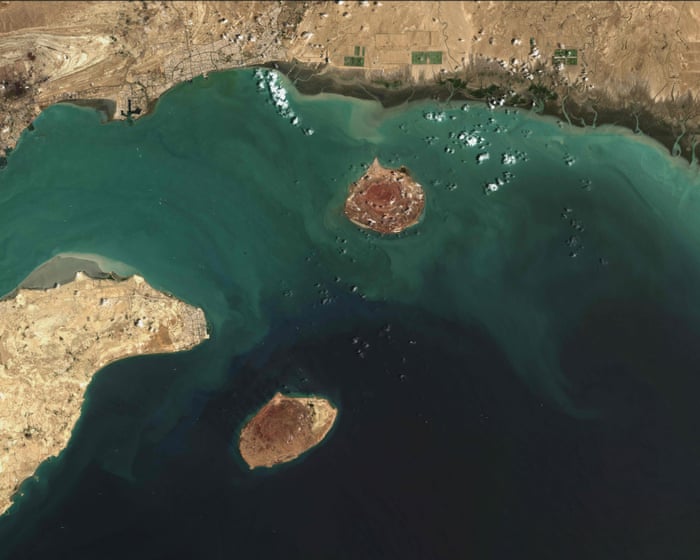
US says it attacked Larak Island to prevent launch of sea mines, prompting reprisals against airbases used by US forces, with tanker fire also reported in strait

Iran has launched retaliatory strikes on airbases in Jordan and the United Arab Emirates after the US attacked Iranian rocket launchers in the strait of Hormuz, the first such hostilities in a month.

Hours later, Iranian state TV later reported that a supertanker had caught fire after hitting two naval mines while attempting to pass through the southern side of the strait. It ‌did not identify the vessel or provide information ​about its crew.

Continue reading...

© Photograph: Maxar Tech/AFP/Getty Images

© Photograph: Maxar Tech/AFP/Getty Images

© Photograph: Maxar Tech/AFP/Getty Images

  •  

First US military attacks on Iran in a month prompt retaliation

US attacks Iranian rocket launchers on island in strait of Hormuz and Tehran targets US bases in Jordan and UAE

The US has reverted to military attacks on Iran for the first time in a month, firing missiles and drones at Iranian rocket launchers on an island in the strait of Hormuz, prompting the Iranian military to attack US military bases in Jordan and the United Arab Emirates.

US Central Command said it acted late on Sunday after it detected the Iranians planning to fire fresh mines into the strait. Last week Donald Trump claimed the US navy had cleared the strait of mines for the first time since the conflict started on 28 February, a claim the Iranians rejected as lies.

Continue reading...

© Photograph: Maxar Tech/AFP/Getty Images

© Photograph: Maxar Tech/AFP/Getty Images

© Photograph: Maxar Tech/AFP/Getty Images

  •  

Trump’s ‘economic D-day’ against Iran risks driving the stakes even higher | Sina Toossi

As with its approach to Hormuz, the US has mistaken applying pressure for an actual strategy. But Tehran has chips of its own to play

Donald Trump has found a new way to promise victory over Iran. After months of war have failed to force Iran’s capitulation or collapse, his administration has unveiled what the US Treasury secretary, Scott Bessent, calls Operation Economic Outcast: an effort to cut it off from what remains of the global economy and threaten foreign governments, banks and companies with sanctions if they continue doing business with Tehran.

There is no question that Iran is vulnerable. Its economy has been battered by years of sanctions, war and a months-long US naval blockade. Iranian officials acknowledge that oil exports and access to foreign currency have been severely constrained. Ordinary Iranians are already enduring high inflation, currency depreciation and worsening living standards. Further economic strangulation will inflict significant additional hardship.

Sina Toossi is a senior non-resident fellow at the Center for International Policy, where his work focuses on US-Iran relations, US policy toward the Middle East and nuclear issues

Continue reading...

© Photograph: Mark Schiefelbein/AP

© Photograph: Mark Schiefelbein/AP

© Photograph: Mark Schiefelbein/AP

  •  

For Trump, the Iran War Is Stuck Between Combat and Genuine Peace

The war has deteriorated over the past six months into Mr. Trump’s own version of a “forever war,” with no clear goals and no end in sight.

© Kenny Holston/The New York Times

President Trump has been unable so far to broker an agreement to end the war on satisfactory terms.
  •  

Why Many Iranians Are Losing Hope After Six Months of War

Iranians have become increasingly desperate, as they grapple with an economic crisis made worse by the conflict and grow increasingly skeptical about President Trump’s motives.

© Arash Khamooshi/Polaris for The New York Times

The most immediate preoccupation for most Iranians is dealing with soaring prices caused by an enduring economic crisis.
  •  
  •  

Why Many Iranians Are Losing Hope After Six Months of War

Iranians have become increasingly desperate, as they grapple with an economic crisis made worse by the conflict and grow increasingly skeptical about President Trump’s motives.

© Arash Khamooshi/Polaris for The New York Times

The most immediate preoccupation for most Iranians is dealing with soaring prices caused by an enduring economic crisis.
  •  

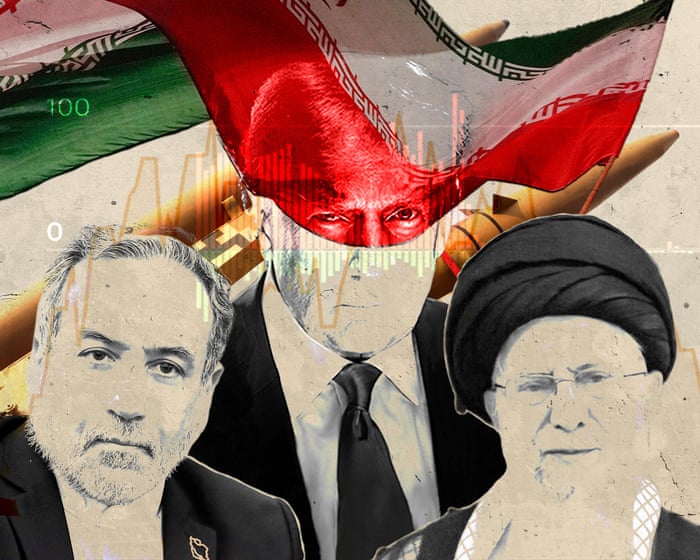
How the Iran war unfolded: every attack and oil price change – visualised

From the first US and Israeli strikes six months ago to the battle for Hormuz, this timeline plots how Trump’s war on Iran quickly became a regional conflict with global economic consequences

On 28 February 2026, the US and Israel began large-scale strikes on Iran. Tehran responded by attacking Israeli and US allies across the Gulf.

Iran’s supreme leader, Ali Khamenei, was killed on the first day of strikes, and the strait of Hormuz – a crucial waterway for transporting oil – was effectively closed soon after. The conflict quickly became a regional war with global economic consequences.

Donald Trump: EPA/Trump Vance transition team

US CENTCOM: AP

Abbas Araghchi: AP

Esmail Baqaei: Getty/Anadolu

Masoud Pezeshkian: AP

Mohammad Bagher Ghalibaf: Getty/NurPhoto

Iran flag: Alamy

Continue reading...

© Composite: Prina Shah for the Guardian / AP / AFP / Getty Images

© Composite: Prina Shah for the Guardian / AP / AFP / Getty Images

© Composite: Prina Shah for the Guardian / AP / AFP / Getty Images

  •  

Qatari Prime Minister Travels to Tehran as Iran War Nears Six-Month Mark

Sheikh Mohammed bin Abdulrahman Al Thani has been a key mediator in the conflict, even as his country has blamed Tehran for hundreds of missile and drone attacks.

© Amr Abdallah Dalsh/Reuters

Qatar’s prime minister, Sheikh Mohammed bin Abdulrahman Al Thani, at a news conference in Egypt in August. His trip to Tehran comes at a moment of heightened tension between Iran and Qatar.
  •  

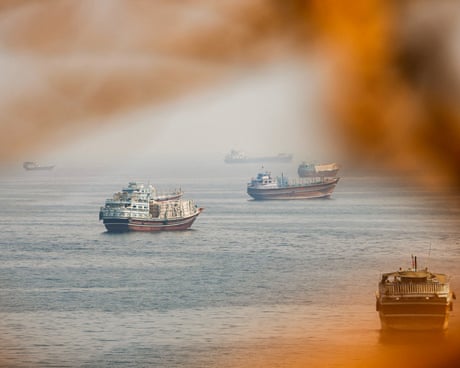
Iran faces strait of Hormuz paradox as strategic value of chokehold erodes

Internal calls to end war get louder as Gulf neighbours plan alternative pipelines to cut reliance on waterway

Is the strait of Hormuz, recently cited by the office of the Iranian supreme leader as “the pillar of Iran’s new security order”, and as transformative as possessing a nuclear weapon, in reality becoming a fast-diminishing asset, leaving Iran increasingly vulnerable to the new planned US wave of economic sanctions?

It is the key debate that is raging inside Iran, with many different conclusions being drawn for Tehran’s negotiating strategy. Those who warn the strait’s value as a chokehold on the world economy will erode, leaving the country without foreign exchange reserves, argue that Iran’s negotiators should seek a deal soon.

Continue reading...

© Photograph: Majid Asgaripour/Reuters

© Photograph: Majid Asgaripour/Reuters

© Photograph: Majid Asgaripour/Reuters
  •  

A look at the new U.S. sanctions on Iran and threats against its trading partners

The U.S. launched what the Trump administration calls "Operation Economic Outcast" against Iran. It includes threats to increase sanctions on Iran's trading partners. The pressure comes as the administration indicates it is trying to avoid returning to war, but cannot overcome Iran's stranglehold over the Strait of Hormuz. Nick Schifrin discussed more with Miad Maleki.

  •  
❌