Reading view

Trump’s ‘economic D-day’ against Iran risks driving the stakes even higher | Sina Toossi

As with its approach to Hormuz, the US has mistaken applying pressure for an actual strategy. But Tehran has chips of its own to play

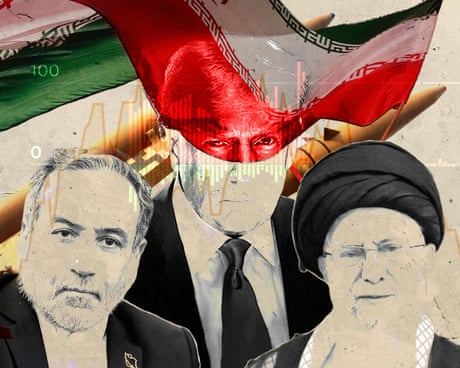
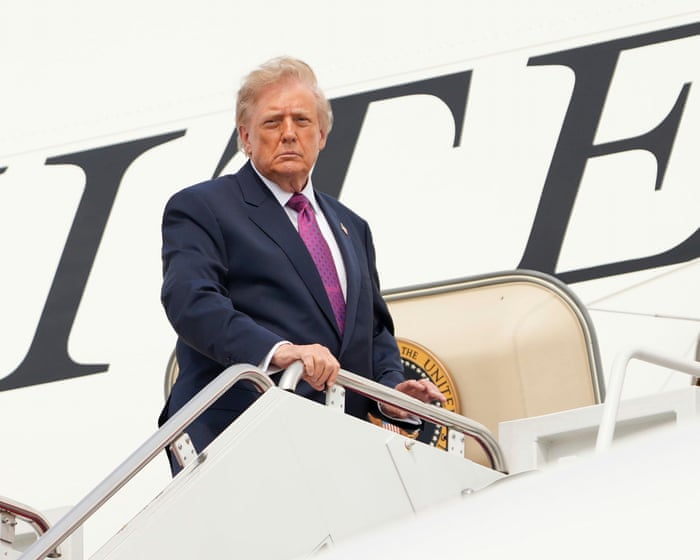
Donald Trump has found a new way to promise victory over Iran. After months of war have failed to force Iran’s capitulation or collapse, his administration has unveiled what the US Treasury secretary, Scott Bessent, calls Operation Economic Outcast: an effort to cut it off from what remains of the global economy and threaten foreign governments, banks and companies with sanctions if they continue doing business with Tehran.

There is no question that Iran is vulnerable. Its economy has been battered by years of sanctions, war and a months-long US naval blockade. Iranian officials acknowledge that oil exports and access to foreign currency have been severely constrained. Ordinary Iranians are already enduring high inflation, currency depreciation and worsening living standards. Further economic strangulation will inflict significant additional hardship.

Sina Toossi is a senior non-resident fellow at the Center for International Policy, where his work focuses on US-Iran relations, US policy toward the Middle East and nuclear issues

Continue reading...

© Photograph: Mark Schiefelbein/AP
© Photograph: Mark Schiefelbein/AP
© Photograph: Mark Schiefelbein/AP


  •  

Dolly Parton was the polar opposite of our bullying president | Robert Reich

Terrified of being seen as a loser, Donald Trump is nonsensically lashing out – even against our old friend Canada

I’m still grieving Dolly Parton. I never met her and always wanted to. She was almost exactly my age and my height and had values I deeply admired. Her death leaves a hole in the firmament.

Which brings me to the person whose values are as far from Dolly Parton’s as any human could possibly be and still claim to be human. I’m referring, of course, to the current occupant of the Oval Office.

Continue reading...

© Photograph: Brandon Bell/Getty Images

© Photograph: Brandon Bell/Getty Images

© Photograph: Brandon Bell/Getty Images

  •  

How the Iran war unfolded: every attack and oil price change – visualised

From the first US and Israeli strikes six months ago to the battle for Hormuz, this timeline plots how Trump’s war on Iran quickly became a regional conflict with global economic consequences

On 28 February 2026, the US and Israel began large-scale strikes on Iran. Tehran responded by attacking Israeli and US allies across the Gulf.

Iran’s supreme leader, Ali Khamenei, was killed on the first day of strikes, and the strait of Hormuz – a crucial waterway for transporting oil – was effectively closed soon after. The conflict quickly became a regional war with global economic consequences.

Donald Trump: EPA/Trump Vance transition team

US CENTCOM: AP

Abbas Araghchi: AP

Esmail Baqaei: Getty/Anadolu

Masoud Pezeshkian: AP

Mohammad Bagher Ghalibaf: Getty/NurPhoto

Iran flag: Alamy

Continue reading...

© Composite: Prina Shah for the Guardian / AP / AFP / Getty Images

© Composite: Prina Shah for the Guardian / AP / AFP / Getty Images

© Composite: Prina Shah for the Guardian / AP / AFP / Getty Images

  •  

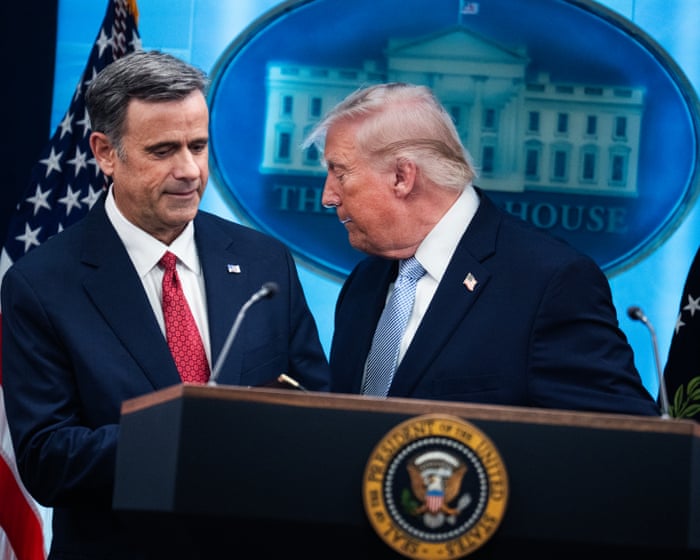
Trump downplays Moscow visit by CIA director as ‘semi-routine’

President denies visit was to gain support for Iran sanctions or due to fears that Putin plans to ‘test Nato resolve’

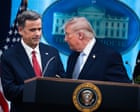
Donald Trump has downplayed a visit to Moscow by the CIA director, John Ratcliffe, as “semi-routine” after he turned up in the Russian capital unannounced, triggering a wave of speculation about the reasons for his trip.

Ratcliffe was reported to have flown to Moscow on a government transport plane on Tuesday in a rare visit after taking off from the Andrews air force base in Maryland.

Continue reading...

© Photograph: Tom Williams/CQ-Roll Call, Inc/Getty Images

© Photograph: Tom Williams/CQ-Roll Call, Inc/Getty Images

© Photograph: Tom Williams/CQ-Roll Call, Inc/Getty Images

  •  
❌