Trump’s threat comes after host described success record of candidates whom president had endorsed as ‘mixed’
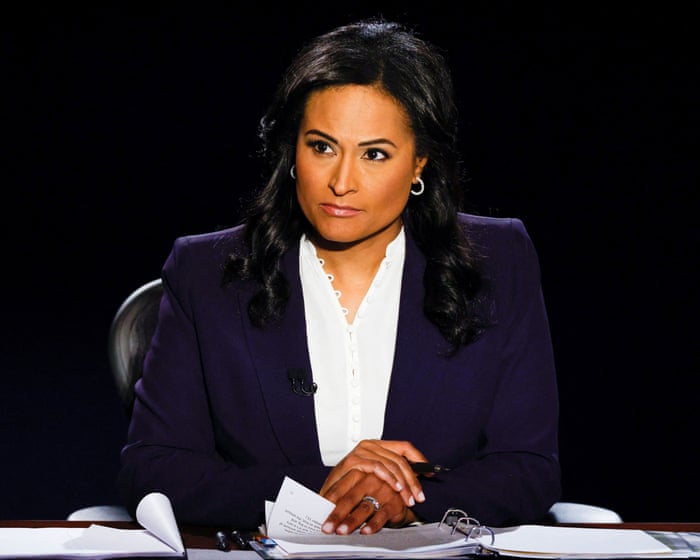
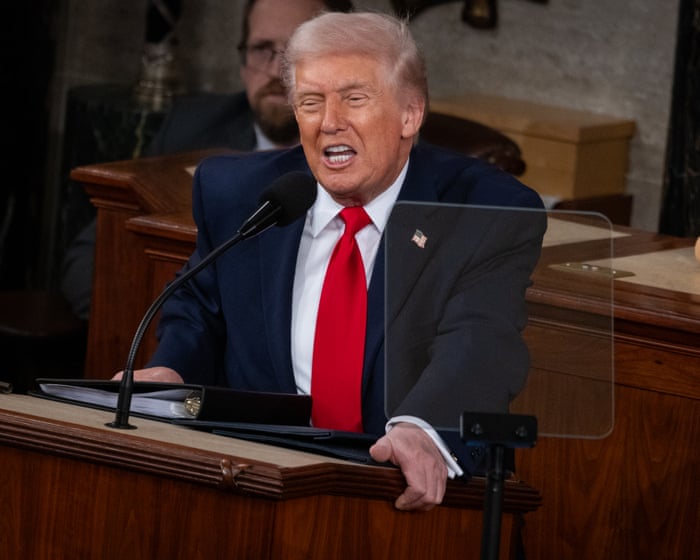
Donald Trump on Sunday said NBC’s Kristen Welker – host of Meet the Press – should face “rebuke or punishment” from the Federal Communications Commission (FCC).
Welker, during a live segment for a local Washington, DC, affiliate, described the success record of political candidates whom the president had endorsed as “mixed”. The segment aired prior to Sunday’s edition of Meet the Press.
Outsourcing the industry to China cannot continue, but Europe knows it can no longer count on the US for a solution
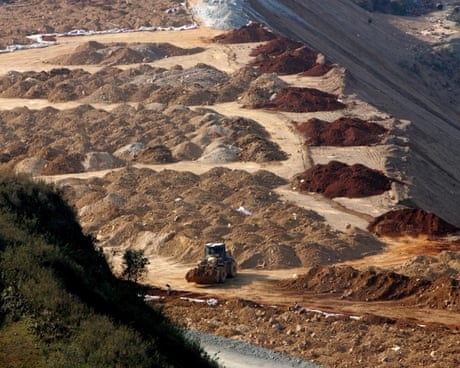
The alarm sounded 16 years ago. In 2010, China blocked exports of key rare earths to Japan in a row over disputed islands in the East China Sea. The critical minerals are essential to everything from advanced weaponry and iPhones to electric vehicle batteries and wind turbines, so the rest of the world took note. But it didn’t take much action. China still accounts for about 70% of rare-earth mining globally and 90% of separation and processing.
Then, last year, Beijing forced Donald Trump to back away from his trade war – not with its retaliatory tariffs, but the curbing of rare-earth exports. A scramble for new supplies began in earnest. The year-long trade truce is due to expire in November. The price of erbium, an element essential to communications infrastructure, has already jumped because of fears that export controls will soon be renewed.
Deal that will reportedly see US take control of 65bn barrels of Venezuelan oil has provoked outrage in her country
Venezuela’s interim president, Delcy Rodríguez, has defended her government’s highly controversial energy deal with Donald Trump, insisting the South American country will maintain ownership and sovereignty over its massive oil reserves.
Rodríguez, who assumed power in January after Trump ordered the abduction of the president, Nicolás Maduro, took to the airwaves on Saturday to push back against criticism of what the US president has called “the biggest oil deal in world history”.
Deal that will reportedly see US take control of 65bn barrels of Venezuelan oil has provoked outrage in her country
Venezuela’s interim president, Delcy Rodríguez, has defended her government’s highly controversial energy deal with Donald Trump, insisting the South American country will maintain ownership and sovereignty over its massive oil reserves.
Rodríguez, who assumed power in January after Trump ordered the abduction of the president, Nicolás Maduro, took to the airwaves on Saturday to push back against criticism of what the US president has called “the biggest oil deal in world history”.
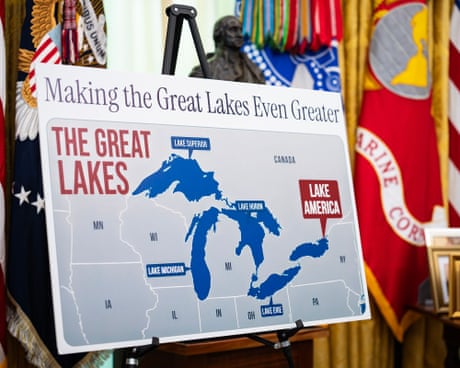
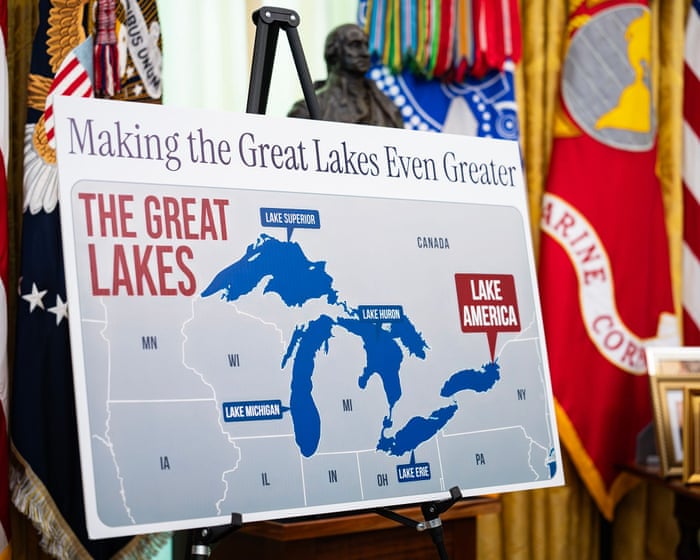
Meanwhile, Trump posts video of himself kicking over a Lake Ontario sign and replacing it with Lake America sign
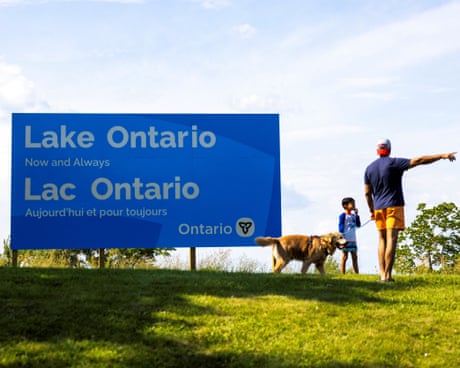
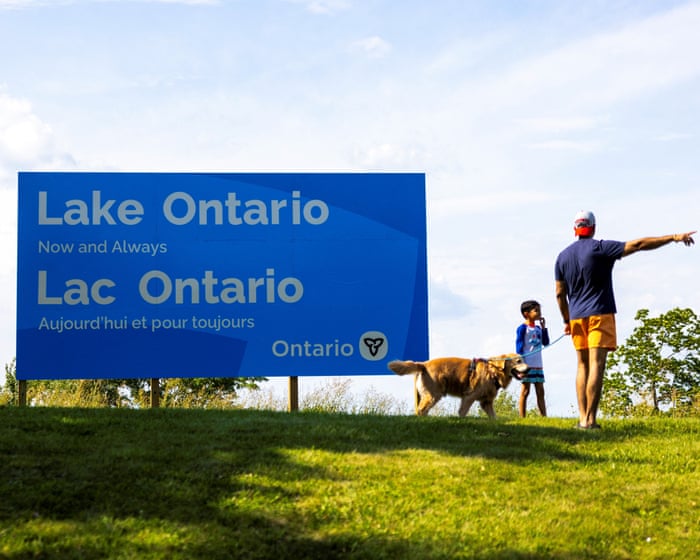
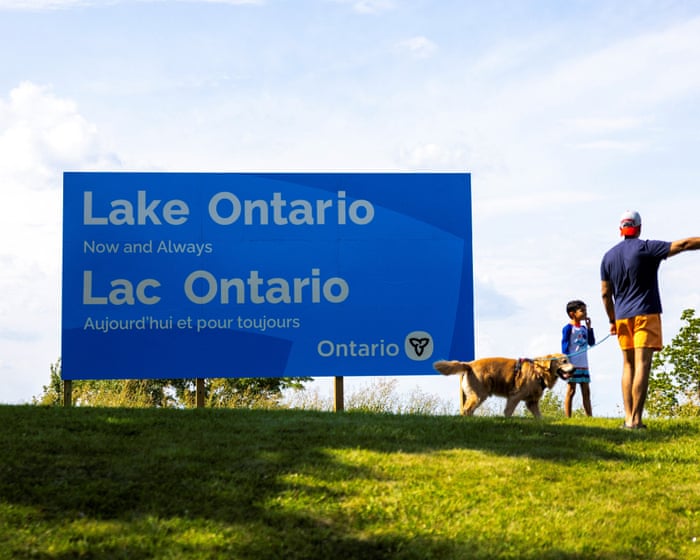
Donald Trump and Canada continued a verbal duel on Saturday over the US government’s administrative renaming of Lake Ontario, with the Ontario premier erecting a giant sign saying “Lake Ontario. Now and Always” – and the American president posting a video of him tearing down an avatar of that sign, erecting a replacement saying Lake America, and dancing to YMCA.
Rhetoric over the naming of Lake Ontario is the public face of an escalating trade dispute between the US and its northern neighbor involving a 50% US tariff on Canadian steel and retaliatory tariffs from Ottawa.
Meanwhile, Trump posts video of himself kicking over a Lake Ontario sign and replacing it with Lake America sign
Donald Trump and Canada continued a verbal duel on Saturday over the US government’s administrative renaming of Lake Ontario, with the Ontario premier erecting a giant sign saying “Lake Ontario. Now and Always” – and the American president posting a video of him tearing down an avatar of that sign, erecting a replacement saying Lake America, and dancing to YMCA.
Rhetoric over the naming of Lake Ontario is the public face of an escalating trade dispute between the US and its northern neighbor involving a 50% US tariff on Canadian steel and retaliatory tariffs from Ottawa.
The Jeffrey Epstein associate’s apparent last hope would be a Hail Mary from Donald Trump – a presidential pardon
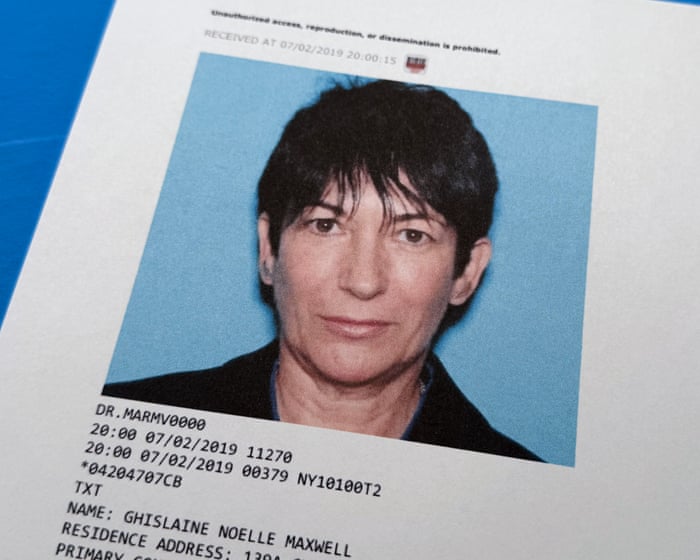
Ghislaine Maxwell seems to be all but guaranteed to have run out of legal avenues to challenge her conviction for her involvement in Jeffrey Epstein’s abuse of girls and young women with perhaps her lingering hopes of freedom resting on a pardon from the Trump administration.
Paul Engelmayer, a Manhattan federal court judge, last week rejected Maxwell’s contention that her constitutional rights were violated at trial and sentencing for her crimes. “Maxwell’s claims are all meritless and all or almost all are frivolous,” Engelmayer wrote in his ruling on the former British socialite’s legal gambit.
Inside the US state department, critics are still attacking a shuttered office established to counter foreign propaganda. Now, some of its work is also being resumed
A botched leak of purportedly explosive government files to a prominent conservative online personality was supposed to offer proof of what the Trump administration and its allies have long alleged: that a little-known office inside the US state department, created to fight foreign propaganda, had secretly become a tool for domestic censorship.
Two former high-ranking officials at the Global Engagement Center (GEC), a target of Republican ire that lost its funding in 2024 and was disbanded after Donald Trump’s return to office in 2025, say the documents show nothing of the kind.
Inside the US state department, critics are still attacking a shuttered office established to counter foreign propaganda. Now, some of its work is also being resumed
A botched leak of purportedly explosive government files to a prominent conservative online personality was supposed to offer proof of what the Trump administration and its allies have long alleged: that a little-known office inside the US state department, created to fight foreign propaganda, had secretly become a tool for domestic censorship.
Two former high-ranking officials at the Global Engagement Center (GEC), a target of Republican ire that lost its funding in 2024 and was disbanded after Donald Trump’s return to office in 2025, say the documents show nothing of the kind.
It is unclear whether this Supreme Court will allow President Donald Trump to make sweeping and unilateral changes to how the country runs its elections so close to the midterms. | Andrew Caballero-Reynolds/ AFP via Getty Images
Well, that was quick.
On Thursday evening, federal district Judge Indira Talwani issued a new order that temporarily blocks an effort by the Trump administration that appears designed to sabotage voting by mail in the upcoming midterm election. Talwani previously blocked an executive order that President Donald Trump issued in March, which ordered the US Postal Service (USPS) to impose a byzantine array of new regulations on voting by mail, but the Supreme Court reinstated the order on Monday.
Talwani’s new order sets up a new legal fight that is almost certain to return to the justices, and it is unclear whether this Court, with its 6-3 Republican majority, will allow Trump to make sweeping and unilateral changes to how the United States conducts its elections so close to an actual Election Day.
That said, while Talwani’s new order in League of Women Voters v. Trump is brief, it is well-crafted to persuade at least some members of the Court’s Republican majority to break with the leader of their political party.
Talwani relies on a fairly new legal concept known as the “major questions doctrine,” that the Court’s Republican majority invented in the later part of the Obama administration, and that the Court has only actually used against one president: Joe Biden. Briefly, the doctrine claims that the executive branch may not make policy changes that are too sweeping or too aggressive, often even if a federal statute appears to give it the power to do so.
As the Court summarized this idea in Utility Air Regulatory Group v. EPA (2014), the first Supreme Court decision to articulate the major questions doctrine, “we expect Congress to speak clearly if it wishes to assign to an agency decisions of vast ‘economic and political significance.’”
This doctrine, as Talwani indicated in her recent order, cuts sharply against Trump’s rules governing voting by mail. The Trump administration’s new rules impose so many layers of bureaucracy on mail ballots that it likely would be impossible for many states to comply with these regulations. Trump’s new rules, in other words, would effectively shut down voting by mail in much of the United States. And there are several states who conduct their elections almost entirely by mail, which means that Trump’s rules could effectively cancel the 2026 midterms in those states.
If that’s not a decision of “vast economic and political significance,” nothing is.
The uncertain question, however, is whether the Court will actually apply its major questions doctrine to Trump — something that several justices have thus far been reluctant to do. In Learning Resources v. Trump (2026), the tariffs case,three Republican members of the Court (Chief Justice John Roberts and Justices Neil Gorsuch and Amy Coney Barrett) did say that this doctrine prohibits many of Trump’s tariffs. But the other three Republican justices (Clarence Thomas, Samuel Alito, and Brett Kavanaugh)refused to apply this doctrine to a member of their own party.
If Roberts, Gorsuch, and Barrett hold to the view they expressed in Learning Resources — the view that the major questions doctrine applies to both Trump and Biden — then it is likely that these three justices plus the Court’s three Democrats will form a majority that willstrike down Trump’s latest attempt to sabotage voting by mail.
A brief history of the major questions doctrine
Many federal laws lay out a broad policy goal, and then empower a federal agency to write rules that will achieve that goal. Federal law, for example, requires the EPA to determine when power plants must install cutting-edge technology to reduce their emissions. It tasks a body within the Department of Health and Human Services with determining which vaccines must be covered by health insurers. And it gives the Federal Communications Commission some control over the cost of cable television.
Often, the federal statutes granting these powers are written quite broadly. During the later part of the Obama administration, however, many voices within the conservative legal movement grew concerned that Democratic presidents could use these broadly worded statutes to make major policy changes. Indeed, in the late Obama administration, the Federalist Society’s annual lawyers’ convention, probably the most important annual gathering of influential Republican attorneys, became a showcase of proposals to restrict federal agencies and prevent them from using their congressionally granted authority too aggressively.
Ultimately, the Supreme Court’s Republican majority settled on the major questions doctrine as their solution to this clamor within the Federalist Society and other conservative legal groups. The doctrine effectively gives the justices a veto power over any policy proposal advanced by the executive branch if the justices deem that policy to be too ambitious.
The doctrine effectively gives the justices a veto power over any policy proposal advanced by the executive branch if the justices deem that policy to be too ambitious.
One common critique of this doctrine is that it appears nowhere in the Constitution or in any federal law. The Court first announced the doctrine in its 2014 opinion in Utility Air, which merely invoked it to criticize a hypothetical EPA regulation that never actually existed. The Court has also never handed down a majority opinion explaining where the justices’ new power to veto federal regulations comes from. Moreover, while some individual justices have attempted to do so, their explanations conflict with each other, and are often ridiculous. Barrett has argued, for example, that the major questions doctrine derives from a parable about a babysitter.
Another criticism of the doctrine is that the Court has never applied it to a Republican administration — indeed, the Court has thus far only applied it to Biden. The doctrine, after its first appearance in 2014, laid dormant for the entire first Trump administration — only to spring back to life in order to block several of Biden’s attempts to respond to the Covid-19 pandemic.
Yet, while the major questions doctrine is hard to defend as a good faith effort to interpret the Constitution or any statute, the pragmatic case for allowing someone to rein in a too aggressive president has undoubtedly gotten stronger in the last two years. Trump is a walking advertisement for the idea that there should be limits on executive power. If the Court decided to apply its major questions doctrine to Trump, it’s unlikely that many Democrats would object to such a decision.
Thus far, however, the Court’s three Democrats have kept this recently fabricated doctrine at arms length — in Learning Resources v. Trump (2026), for example, they concluded that it was unnecessary to invoke the major questions doctrine to strike down Trump’s tariffs that were at issue in that case because federal law was clear that those tariffs could not exist.
The Court’s Republicans, meanwhile, have split on whether the doctrine should be applied to Trump. While Roberts, Gorsuch, and Barrett all concluded that Trump’s attempt to impose trillions of dollars worth of new taxes on imports was a decision of “vast ‘economic and political significance,’” the other three Republicans joined an opinion by Justice Brett Kavanaugh, which said that the doctrine does not apply “in the foreign affairs context, including foreign trade.”
Kavanaugh, in other words, would have invented a new exception to a brand new legal doctrine, which just happened to be perfectly tailored to exempt a Republican president’s signature economic policy.
Still, there are three Republican justices who have previously concluded that the major questions doctrine may be used against a Republican president. If these justices hold to that view in League of Women Voters, that’s enough to form a majority against Trump’s restrictions on voting by mail because the Court’s three Democrats have already signaled that they oppose those restrictions.
League of Women Voters gives the Roberts Court a second chance to legitimize one of its most consequential changes to US law
Because the Court has neither offered a plausible explanation of where the major questions doctrine comes from, nor applied this doctrine in a nonpartisan way, both the Democratic justices and a wide array of legal scholars have treated the doctrine as illegitimate. So have I. Kavanaugh’s dissenting opinion calling for a Trump-sized exemption to the major questions doctrine certainly didn’t help the case for it.
But if any case justifies a court decision that overrides a presidential power grab, League of Women Voters is that case.
Trump has carried out a vendetta against voting by mail since the 2020 election. During the Covid pandemic, disease-shy Democrats were much more likely to vote-by-mail than Republicans, because voting by mail allowed Democrats to avoid a trip to the polls where they might catch Covid. And these voting patterns continued even after the pandemic receded. According to the Pew Research Center, 44 percent of Democrats, and only 26 percent of Republicans, voted by mail in the 2024 election.
The new restrictions on voting by mail, in other words, are almost certainly motivated by Trump’s desire to shut down a method of voting that is preferred by Democrats, and thus skew the 2026 election towards Republicans.
Among other things, the new rules require states to mail ballots in a special envelope which must include certain design elements mandated by the federal government. These envelopes must be preapproved by the Postal Service, and individually scanned in a process that the Trump administration claims will take “less than a minute per mailpiece.”
But, as several states point out in a legal filing challenging Trump’s rules, California alone needs to mail 23 million ballots to individual voters. So that potentially adds up to “23 million minutes … or more than 43 years” that state officials would need to spend just to comply with one small part of the new regulations.
If the major questions doctrine applies to Republican administrations, however, there is no need to parse whether these two laws should be read to allow the Trump administration to effectively shut down voting by mail. The question of whether to quash a method of voting that tens of millions of US voters have used in the past is undoubtedly a question of “vast … political significance.” And thus, under Utility Air’s holding that Congress must “speak clearly” before it can give a federal agency the power to resolve this question, the two vague statutes that Trump’s lawyers cite to justify the new rules are not enough.
League of Women Voters, in other words, should be a very easy case — even for the Court’s Republicans. All they need to do to strike down Trump’s attack on voting by mail is apply the same rules to Trump that they previously applied to Biden.
As with its approach to Hormuz, the US has mistaken applying pressure for an actual strategy. But Tehran has chips of its own to play
Donald Trump has found a new way to promise victory over Iran. After months of war have failed to force Iran’s capitulation or collapse, his administration has unveiled what the US Treasury secretary, Scott Bessent, calls Operation Economic Outcast: an effort to cut it off from what remains of the global economy and threaten foreign governments, banks and companies with sanctions if they continue doing business with Tehran.
There is no question that Iran is vulnerable. Its economy has been battered by years of sanctions, war and a months-long US naval blockade. Iranian officials acknowledge that oil exports and access to foreign currency have been severely constrained. Ordinary Iranians are already enduring high inflation, currency depreciation and worsening living standards. Further economic strangulation will inflict significant additional hardship.
Sina Toossi is a senior non-resident fellow at the Center for International Policy, where his work focuses on US-Iran relations, US policy toward the Middle East and nuclear issues
The Canadian PM is one of the few world leaders to stand up to the US president. Former colleagues say they are not surprised
Mark Carney stood before a walnut-veneered lectern, his face drawn tight, as he announced that talks with Canada’s biggest trading partner had collapsed. “Last spring, I warned that America is trying to break us so that they can own us,” he said. “And I promised: that will never, ever happen. We are keeping that promise.”
For years, the former central bank governor had worked hard to calm markets. Now, he was asking Canadians to accept uncertainty and confrontation.
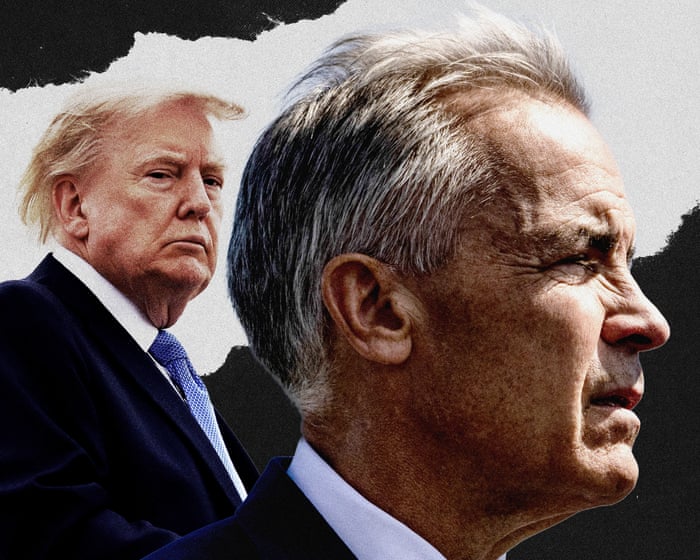
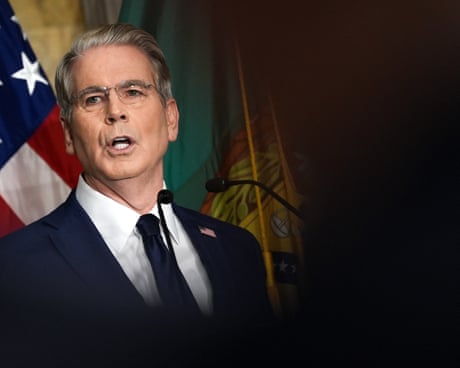
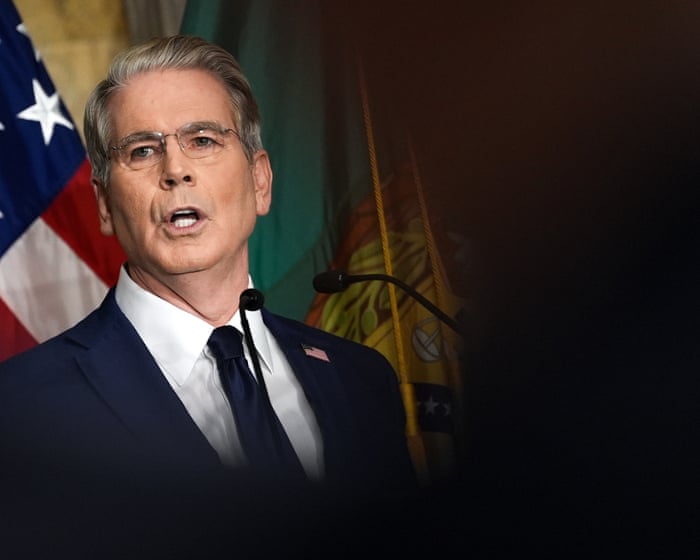
There’s little optimism about treasury secretary’s ability to handle Trump’s tariffs, Iran sanctions and colossal US debt
History remembers Gen Dwight Eisenhower, the supreme commander of the allied forces in Europe during the second world war, for his role in the D-day invasion of Normandy. Whether Scott Bessent will achieve similar posterity as the face of the “economic D-day” in Iran remains to be seen.
The US treasury secretary, already trying to manage a $40tn national debt pile, this week took charge of Donald Trump’s effort to reverse-engineer his war of choice. Whereas the US would typically take on an adversary with diplomacy, sanctions and military force, in that order, the US president started with a six-month bombing campaign and now hopes that economic isolation can finish the job.
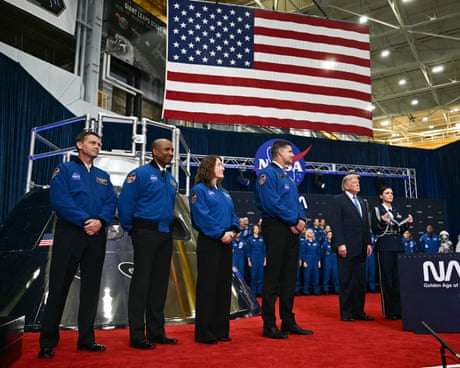
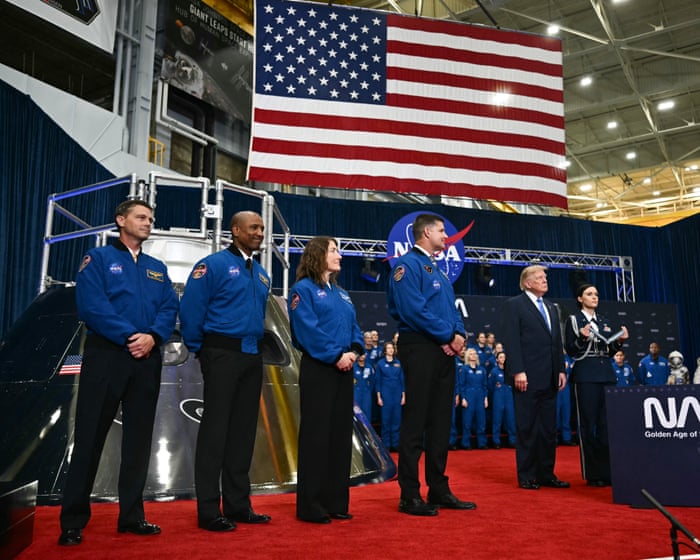
Reid Wiseman, Victor Glover, Christina Koch and Jeremy Hansen receive Congressional Space Medal of Honor
The Artemis II astronauts who flew around the moon in April received the US’s highest space honor on Friday.
Donald Trump presented the Congressional Space Medal of Honor to the three Americans and one Canadian whose lunar flyby for the US space agency Nasa set a new distance record for humanity.
Reid Wiseman, Victor Glover, Christina Koch and Jeremy Hansen receive Congressional Space Medal of Honor
The Artemis II astronauts who flew around the moon in April received the US’s highest space honor on Friday.
Donald Trump presented the Congressional Space Medal of Honor to the three Americans and one Canadian whose lunar flyby for the US space agency Nasa set a new distance record for humanity.
Commodity Futures Trading Commission said Gabriel Perez wagered on Kalshi about words president used in speeches
A White House teleprompter operator who left his post amid accusations that he used inside knowledge to make bets on Donald Trump’s speeches on an online prediction market has been fined $172,000, according to federal regulators.
Gabriel Perez illicitly exploited “material, nonpublic information” that he gathered through his work for the president in order to place wagers on the Kalshi platform “for his personal benefit”, the Commodity Futures Trading Commission (CFTC) maintained in a news release on Friday.
In deep red South Carolina, the president helped stoke apprehension of a deeper red surge ahead of November’s US midterm elections
After casting his vote in South Carolina, a man who introduced himself as Chestnut was unwilling to give his full name. “You don’t have a need to know,” the air force veteran declared. He was, however, happy to share his views.
“I’m a true American. I believe in the USA,” said the man, outside Christ the Servant Lutheran church in Conway. “And I don’t believe in communism or socialism.”
Ignore Iran, the Epstein files, and your wallet – not to mention Trump’s plummeting approval ratings
Don’t mention the war! Or the economy, for that matter. Or the Epstein files. Or Natalie Harp. Or “affordability”, which, as Donald Trump recently said at a rally, is a word that was “never used” by the media before he took office. Best not to talk about anything that affects ordinary people or embarrasses the president, really. Instead, let’s all rejoice in Trump’s latest triumph: renaming Lake Ontario, which is shared by Canada and the US, as Lake America.
On Thursday, Trump signed an executive order directing federal agencies to America-fy the lake’s name on US maps and documents, which is an excellent use of time and resources. I suppose we can at least be thankful that the president, who is trying to slap his own name on everything from airports to the Kennedy Center, didn’t decree that the body of water be called Lake Trump.
Searching for exoplanets and clues on planet formation, the Roman telescope begins million-mile journey from Florida launchpad
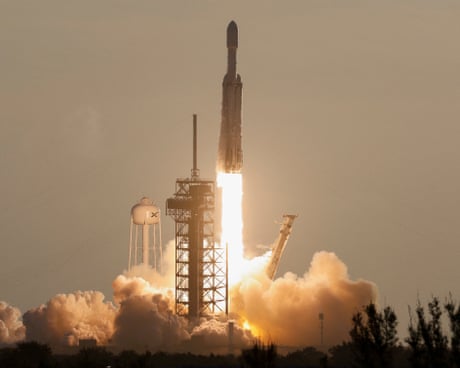
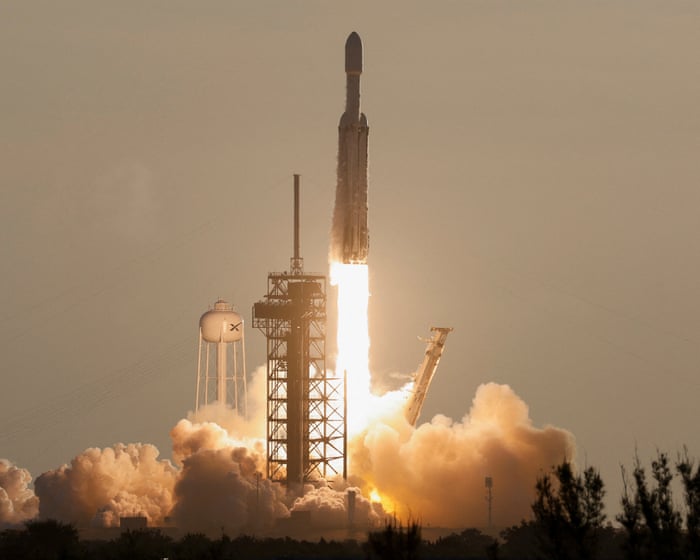
A $4.3bn space telescope that Donald Trump tried to kill has lifted off from Florida as Nasa embarks on the next stage of its quest to unlock the secrets of the universe.
The Nancy Grace Roman space telescope survived two rounds of proposed White House budget cuts, and began a million-mile journey into deep space from a launchpad at the Kennedy Space Center on Sunday morning. .

 Login
Login