Australians are buying less pizza but more weight-loss drugs. They love “dupes” but don’t enjoy writing letters.
Here are five key takeaways from the August reporting season that show what consumers are buying as cost of living pressures reignite, and how retailers are responding.
The U.S.-Canada trade war has galvanized Canadians behind their prime minister’s decision to walk away from negotiations. What happens when the time comes for talks to restart?
Avoiding US goods and services – from tech to whisky to air travel – has forced many to find a new way of living
For William McDonald, 38, a diesel mechanic from Thunder Bay, Ontario, “Canadian is always the first choice,” even if it means his weekly bills are higher.
“As soon as Trump started putting those tariffs on in February [last year], I started boycotting US goods,” he said. “Avoiding American products has driven my costs up, and I’m still happy to do it.
Federal Reserve Chair Kevin Warsh said there is still work to do on inflation. At the Fed's annual economic symposium in Jackson Hole, Wyoming, Warsh also said that although he is not committed to a rate hike, he is not ruling it out. Amna Nawaz discussed more with Nick Timiraos of The Wall Street Journal.
However, Kevin Warsh didn’t say if interest rates would change in coming months, as inflation remains stubborn
The US Federal Reserve is not done fighting high inflation, its chair, Kevin Warsh, said in his first major speech in the role on Friday, emphasizing that it was “the Fed’s job to deliver stable prices”.
Warsh did not indicate where the Fed will take interest rates in the coming months, despite US inflation remaining stubbornly above the central bank’s 2% target amid the war in Iran. But his speech was taken by markets as a signal that rates may rise in the coming months, a move that may put him at odds with Donald Trump, who has aggressively called for rates to be cut.
Edward Yardeni, an upbeat strategist with an excellent track record in assessing the stock market, explains why he thinks the good times will continue for years.
In a high-profile speech, Kevin M. Warsh said the Federal Reserve was chiefly responsible for taming inflation. If price increases do not return to the central bank’s target quickly, “we have work to do,” he said.
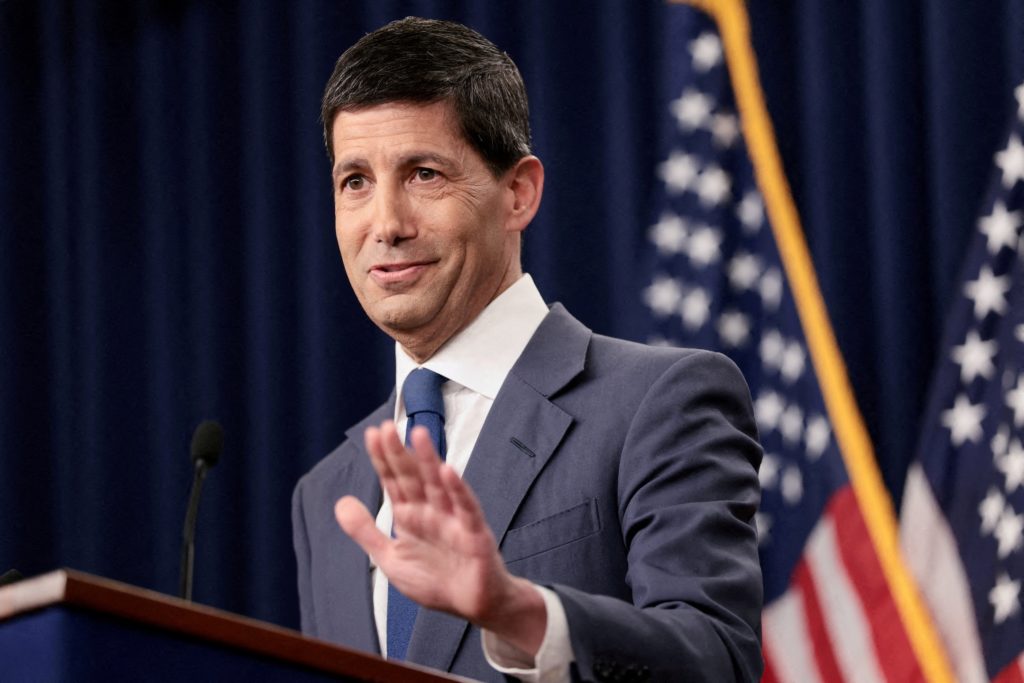
Kevin M. Warsh, the Federal Reserve chairman, left, used a closely watched speech in Jackson, Wyo., to assure the public that the central bank is committed to tackling inflation.
Unpopular new policy comes as midterms loom and control of Congress could be decided by several Michigan races
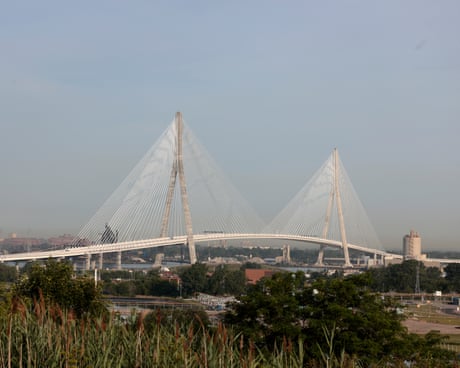
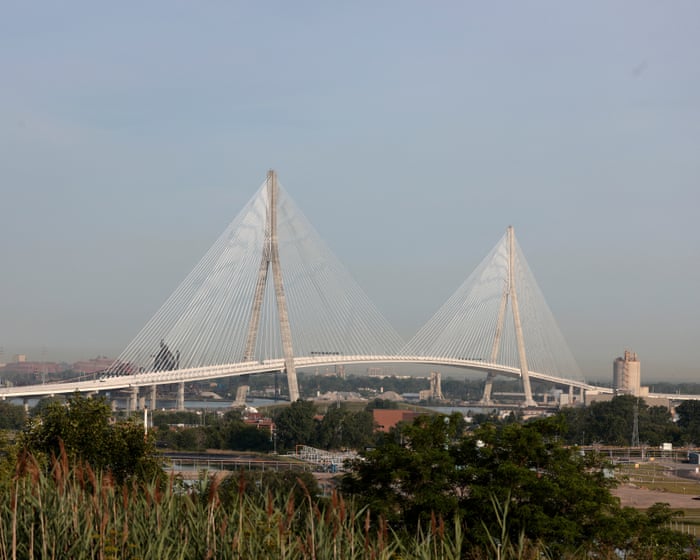
Every day $1bn worth of goods crosses the river dividing Detroit, Michigan, and Windsor, Ontario, two largely blue-collar US and Canadian cities that have come to act as one in the creation of North America’s auto industry.
News this week of Donald Trump’s escalating trade spat with Canada has everyone worried. Political and economic leaders and observers labeled the move an act of “hubris” , blamed Trump’s “ego”, and called the escalation “insanity”.
Unpopular new policy comes as midterms loom and control of Congress could be decided by several Michigan races
Every day $1bn worth of goods crosses the river dividing Detroit, Michigan, and Windsor, Ontario, two largely blue-collar US and Canadian cities that have come to act as one in the creation of North America’s auto industry.
News this week of Donald Trump’s escalating trade spat with Canada has everyone worried. Political and economic leaders and observers labeled the move an act of “hubris” , blamed Trump’s “ego”, and called the escalation “insanity”.
The relative indifference to the news that the U.S. government now owes $40 trillion demonstrates how drastically the politics of deficit spending has changed.
Even people sympathetic to President Donald Trump’s economic nationalism seem confused about the trade war with Canada. | Andrew Harnik/Getty Images
LONDON, Ontario — President Donald Trump seems dead set on escalating his trade war with Canada. And no one is really sure why.
On Monday, Trump threatened another round of 50 percent tariffs on top of the ones he just implemented — this one targeting Canada’s auto industry, which is so deeply integrated with its American counterpart that large duties would do major damage on both sides of the border. By Tuesday morning, he had begun musing about renaming Lake Ontario “Lake America” to spite Canadians. And throughout all of this, he and Vice President JD Vance had renewed their “jokes” about absorbing Canada as the 51st state.
But who is this even for? While the White House’s behavior infuriates Canadians — it is palpable on the ground here in Canada — it’s unusual by Trump standards in that nobody seems to want this conflict but him.
Even the most fringe, or unpopular, foreign policy ideas he’s pursued typically have think tanks devoted to pushing them, or a loyal ally to please, or a voting bloc to rile up before the midterms. But unlike, say, Trump’s conflicts with Iran, or Cuba, or China, it’s hard to find a highly visible corner of conservatism that’s the driving force behind a nationalist campaign against Canada.
When I reached out to trade experts, political scientists, and in-the-know Republicans of the pro- and anti- Trump persuasion to try to trace the origins of Trump’s trade war, they had trouble pointing to anything solid. As one veteran GOP lobbyist put it, there doesn’t seem to be any ideological, business, or congressional coalition devoted to egging on the trade fight.
Even people sympathetic to Trump’s economic nationalism seem confused: Michael Lind, a populist pundit who last year penned a piece titled “Why tariffs are good,” has just written a follow-up titled “The madness of Trump’s Canada trade war.” And while there are some affected industries — autos, steel — they don’t seem to be main characters: United Auto Workers, which backed some prior tariffs, came out strongly against the proposed auto tariffs.
The politics don’t make much sense either. American voters have long disapproved of Trump’s tariffs on Canadian-made goods, and the current escalation threatens to be the largest and most economically damaging yet. Republicans sound anxious about its impact on the midterms; several key Senate races are in states right on the Canadian border, and any tariff-related price spike there could supercharge Democrats’ core midterm message about affordability.
“This has never been a particularly well-thought strategy. I think that the biggest, most coherent explanation is that this is about power.”
Kim Clausing, UCLA trade economist
“If I were [Senate Majority Leader] John Thune, I’d be very pissed at Trump right now,” says Adam Carlson, a Democratic pollster at Zenith Research.
So why are we at (economic) war?
The best answer is deceptively simple: because Trump, and Trump alone, wants to be.
There is no good strategic rationale for the way Trump has gone about badgering America’s northern neighbor, even if you share his broadly nationalist view about trade. Rather, Trump has become fixated on dominating or even possessing Canada. And his top deputies are backfilling his fixation, including by offering terms of surrender the Canadians simply couldn’t accept.
“This has never been a particularly well-thought strategy,” says Kim Clausing, a trade economist at UCLA. “I think that the biggest, most coherent explanation is that this is about power.”
It’s the latest example of the risks of governance by one man’s whims — one that could both damage America’s economy and burn its relationship with its staunchest ally before it resolves.
Trump’s northern power trip
Typically, when you try to explain the policy of any government, you look at two main factors: interests and ideology. In this case, neither is close to sufficient to explain the intensity of Trump’s war on Canada.
It is true that, for decades, the United States has had meaningful trade disputes with Canada over issues like lumber and dairy. But these issues never boiled over into a massive trade war, for the simple reason that they simply aren’t that large as a percentage of GDP. There’s a reason that every administration prior to this one — including Trump’s first — handled these issues through normal negotiating processes rather than loud bullying.
On the ideology front, it is true that Trump’s 2016 victory has revived conservative interest in economic nationalism — leading to the creation of groups like American Compass, a think tank dedicated to putting policy meat on the bones of the right’s nationalist spirit. But these nationalists largely converged on China as their principal economic enemy. While Trump trade adviser Peter Navarro is helping run Canada policy now, there was no sign in his essay in Project 2025 — or from other allies — that anyone was contemplating a full-on trade war with Canada beforehand. And American Compass does not appear to be involved in the current fight, offering no official comment on its press page or founder Oren Cass’s X feed.
“I really do think it is Trump’s idiosyncrasies that caused him to settle on Canada,” says Phil Magness, an economic historian who closely tracks intra-right economic disputes. “Others in the admin are going along with it.”
The timeline backs up Magness’s assessment.
In November 2024, shortly after winning the election, Trump began feuding with then-Prime Minister Justin Trudeau — calling him “governor” and beginning his talk of Canada as the 51st state. Less than two months after taking office, Trump targeted Canada with (at that point) historically high 25 percent across-the-board tariffs.
When the Washington Post investigated the rationale behind these tariffs at the time, they found a void. There was no policy paper behind the Canadian tariffs, nor any clear intellectual godfather or industry backer. People inside the administration put all the credit (or blame?) solely at the president’s feet. Within MAGA media, the closest to radical anti-Canada sentiment might have been Tucker Carlson’s trollish musing about “regime change” in 2023.
After Mark Carney replaced Trudeau as prime minister, and won the general election primarily on an anti-Trump platform, tensions cooled to a somewhat surprising degree, at least when it came to trade talks. Prior to this week, the 51st state rhetoric had declined dramatically; negotiations on trade looked like they had a real chance of success. Indeed, just this Tuesday, Trump himself declared they had reached a deal and postponed tariff implementation as a result. The Friday breakdown thus felt like a bit of a shock.
But reading detailedaccounts of the negotiation collapse, including a brand-new ticktock from the New York Times, it’s clear that overweening American conditions were a major part of the failure. Most strikingly, and relevant, were US demands that it have control over Canada’s tariff rates with other countries and that it be able to reimpose American tariffs on Canada at will.
The key point here is that the Trump administration was not, and never has been, interested in a reciprocal trade deal between allies based on clear and cogent principles. Instead, they want to vassalize Canada — to bully it into surrendering elements of its sovereignty, or even its sovereign existence altogether. It is clear that this is the direct result of the president’s personal fixation.
Why exactly Trump has become so obsessed with controlling Canada is harder to say. Per the Post, there are theories ranging from bitterness around a legal battle over Trump Tower Toronto to his friendship with Kevin O’Leary, Canadian entrepreneur and host of the reality show Shark Tank. Certainly, his more recent rivalry with Carney hasn’t helped: “Canada lives because of the United States,” Trump declared, menacingly, after the prime minister delivered a critical foreign policy speech in January.
My own personal theory is that it’s of a piece with Trump’s desire to acquire Greenland, another cause that’s largely unique to him. He is looking toward his presidential legacy, and nothing makes a real estate developer think “legacy” more than literally enlarging the size of the United States on the map.
But in practical terms, the reason may be immaterial. Whatever the roots of Trump’s Canada fixation, we know that it is real and a major driver in US foreign policy — one so important, in fact, that he is willing to jeopardize his party’s all-important Senate majority in order to pursue it.
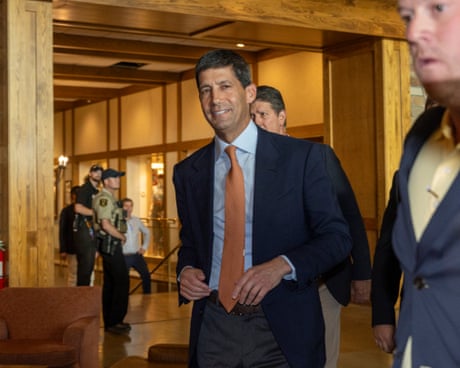
Kevin M. Warsh is scheduled to deliver his first address at the Federal Reserve’s annual conference in Jackson, Wyo., with U.S. government bond markets on edge and inflation risks resurfacing.

 Login
Login