High court quashes latest restriction on Orange Order march, reigniting political row over Garvaghy Road
The boiling cauldron known as Drumcree that used to scald and torment Northern Ireland each summer gradually cooled two decades ago, leaving it as a name for the history books.
Instead of pitched battles between Orangemen and police around the parish church near Portadown in County Armagh, and the murderous sectarian violence they triggered across the region, gave way to a de facto truce.
Moscow recruits an estimated 1,000 people a day but western officials say it cannot keep up with casualty level
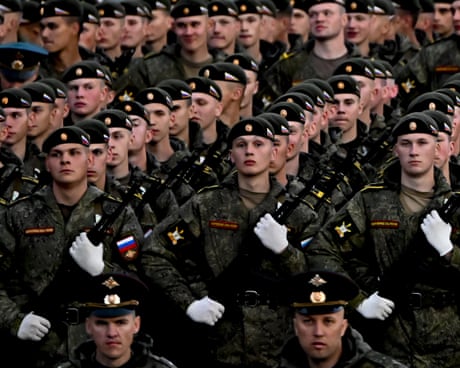
Russia is losing about 6,000 more troops in Ukraine each month than it can recruit, western officials have said.
While Russia is still acquiring new battlefield recruits at speed, with an estimated rate of 1,000 a day, in the last two months even this has not been sufficient to replace those killed or injured.
However, Kevin Warsh didn’t say if interest rates would change in coming months, as inflation remains stubborn
The US Federal Reserve is not done fighting high inflation, its chair, Kevin Warsh, said in his first major speech in the role on Friday, emphasizing that it was “the Fed’s job to deliver stable prices”.
Warsh did not indicate where the Fed will take interest rates in the coming months, despite US inflation remaining stubbornly above the central bank’s 2% target amid the war in Iran. But his speech was taken by markets as a signal that rates may rise in the coming months, a move that may put him at odds with Donald Trump, who has aggressively called for rates to be cut.
Brazil has failed to prove compliance with EU rules on use of antibiotics in cattle and poultry farming
The UK’s leading farming organisations and animal health experts have called for an urgent ban on imports of Brazilian meat, in light of concerns over the safety of imports.
The National Farmers’ Union in England and its sister organisations in the devolved administrations wrote to the government on Friday warning that public health was at risk.
Exclusive: PM also warns his ministers against trying to influence vote when bill returns to Commons next month
Andy Burnham has told Labour MPs that he will not cast a vote when the assisted dying bill returns to the Commons next month, to avoid influencing the debate.
While supporters of the measure welcomed his move, No 10 officials said the prime minister had no wish to affect the process in either direction, and was just doing what he thought was best to allow MPs to reach their own collective view.
Terrified of being seen as a loser, Donald Trump is nonsensically lashing out – even against our old friend Canada
I’m still grieving Dolly Parton. I never met her and always wanted to. She was almost exactly my age and my height and had values I deeply admired. Her death leaves a hole in the firmament.
Which brings me to the person whose values are as far from Dolly Parton’s as any human could possibly be and still claim to be human. I’m referring, of course, to the current occupant of the Oval Office.
The president senses a crisis in his cult of personality. He believes the path to victory is through unwavering devotion
Donald Trump has framed his theme for the midterm elections. It has come to him as naturally and inevitably as staring into the mirror, beyond any logic or argument, his definitive answer to no specific issue, providing no understanding of any particular problem, but transcending all of them. His political theme is more primal than programmatic, more instinctive than analytical, a heartfelt expression to protect his greatest romantic attachment, his obsessive fixation, his idealized object: himself.
Trump’s campaign theme is unrequited love. Unlike the pollsters, media consultants and pundits, he alone has grasped the magnitude and the source of the existential crisis threatening his politics. He has identified the problem for the Republicans as the faltering measure of complete devotion to him. His demand has nothing to do with mutual affection. It is a ploy to reassert his slipping control, a manipulative test to prove loyalty to him, or else. There can be no absolute rule without an absolute ruler; no absolute ruler without absolute submission; no absolute submission without the expression of absolute love. His sadness at its fading gives way to anger, paranoia and greater acts of retribution. He equates the fear he instills as a form of love. Trump accepts subservience, from whatever motive, as affection or its closest equivalent. He cares nothing about sincerity, so it’s all in the show. The less love displayed, the more fear required. Yet there is no rebound, but only deeper rejection.
Speech part of effort to strengthen National Rally party’s international ties before Marine Le Pen’s presidential bid
The French far-right leader Jordan Bardella is to give a speech at Reform UK’s party conference in Birmingham next week as he attempts to boost international ties before Marine Le Pen’s bid for the French presidency next spring.
Le Pen’s far-right, anti-immigration National Rally (RN) is high in the polls and she is predicted to reach the final round of the French presidential race in May.
President Donald Trump on Thursday signed an Executive Order instructing Interior Secretary Doug Burgum to rename Lake Ontario as “Lake America.”
Canadian Prime Minister Mark Carney has said Lake Ontario will continue to be called by that name despite President Donald Trump signing an Executive Order directing for it to be renamed as “Lake America.”
“The name is more than 400 years old, pre-dating both the Confederation of Canada and the Declaration of Independence of the United States of America,” said Carney on Thursday. “We know that America is changing. Their trading relationships, their foreign policies, their national monuments, their hydronyms.”
Insisting that Canadians are aware of the “naming reality,” Carney rejected Trump's directive for the lake, which borders the Canadian province of Ontario and the U.S. state of New York.
The name change is the latest jab in an escalating trade war between the U.S. and Canada after talks collapsed last week, leading to tariffs being imposed by both countries.
The order applies to U.S. federal references of the lake and does not determine how Canada—or others—refer to the body of water.
The “Lake Ontario” moniker has also firmly been rejected by many in the U.S., including New York’s Gov. Kathy Hochul, who simply stated: “New York won’t be calling it that.”
With tensions between the Trump Administration and Canada reaching new heights, here’s what to know about how lawmakers on both sides of the lake have responded to the Executive Order.
How Canadian lawmakers have reacted
Ontario Premier Doug Ford, a vocal critic of the U.S. President, insisted “it’s Lake Ontario to Canadians and the rest of the world, now and forever.” In agreement, Ontario lawmaker Marit Stiles said: “It will always be Lake Ontario.”
Patrick Brown, the mayor of Brampton, Ontario, described the name change as “preposterous,” telling CNN: “We’re still going to call it Lake Ontario, I think many of you [Americans] will still call it Lake Ontario.”
“The only person who is going to have a trouble with what to call it is your President,” Brown continued. “If our Prime Minister wanted to rename the Mississippi, you’d probably get a chuckle out of it. It’s having the same reaction in Canada.”
Pierre Poilievre, Canada's main opposition leader, staunchly pushed back on Trump’s directive. “Lake Ontario is and will always be Lake Ontario, and no Executive Order will change that. It doesn't belong to President Donald Trump to rename on a whim,” he said.
“It's Lake Ontario, buddy,” said Nova Scotia Premier Tim Houston, referring to the name change as “some real foolishness.”
Elsewhere, Toronto mayor Olivia Chow vowed that Trump's "antics won't weaken our resolve as Canadians."
Manitoba Premier Wab Kinew likened Trump to an “over the hill” rock band. “He thought he had a real hit, a real golden oldie with the Gulf of Mexico, and he’s trying to bring back that,” he said, referencing how Trump signed a similar order last year renaming the Gulf of Mexico the “Gulf of America.”
City councillor Brad Bradford, who is currently running for mayor of Toronto, said if he’s elected, he’ll push to rename Trump’s home state the “Province of New York.”
Referring to D.C.’s actions as "ludicrous," Bradford insisted “you can try and change the name of a lake, but you can’t change the spirit of our city, our province, or our country.”
What U.S. Democrats have said about the name change
Rep. Tim Kennedy of New York referred to the trade war as "illogical" and accused Trump of distributing "juvenile" rhetoric. “Lake Ontario will always be Lake Ontario,” he said.
Former First Lady and 2016 Democratic presidential nominee Hillary Clinton stated “it’s Lake Ontario” in response to the news.
Sen. Chris Van Hollen of Maryland argued the move was “more evidence we elected a toddler as President.”
Rep. Debbie Dingell of Michigan announced plans to introduce a bill, titled the "Hands Off Our Great Lakes Act," that would nullify the name change.
Denouncing the President's directive, Dingell said: “Donald Trump can sign all the Executive Orders he wants, but it will always be Lake Ontario. Canada is not our enemy. It is our neighbor, our ally, and one of Michigan’s most important economic partners. It is a friendship that no stroke of a pen can erase.”
House Minority Leader Hakeem Jeffries told his social media followers: “Donald Trump picked a fight with Canada that is costing you money. Instead of fixing it, he is spending your tax dollars to rename Lake Ontario.”
Sen. Mark Kelly of Arizona queried the directive while referencing the cost of living crisis, asking: “How does changing the name of a lake help the American people? They can’t afford their lives right now.”
Sen. Amy Klobuchar of Minnesota, who is running for Governor, referenced the lake that straddles her own state when responding to the news, saying: “On behalf of the great Lake Superior, I call that superiorly stupid. We’ve had enough of Trump’s tariff taxes.”
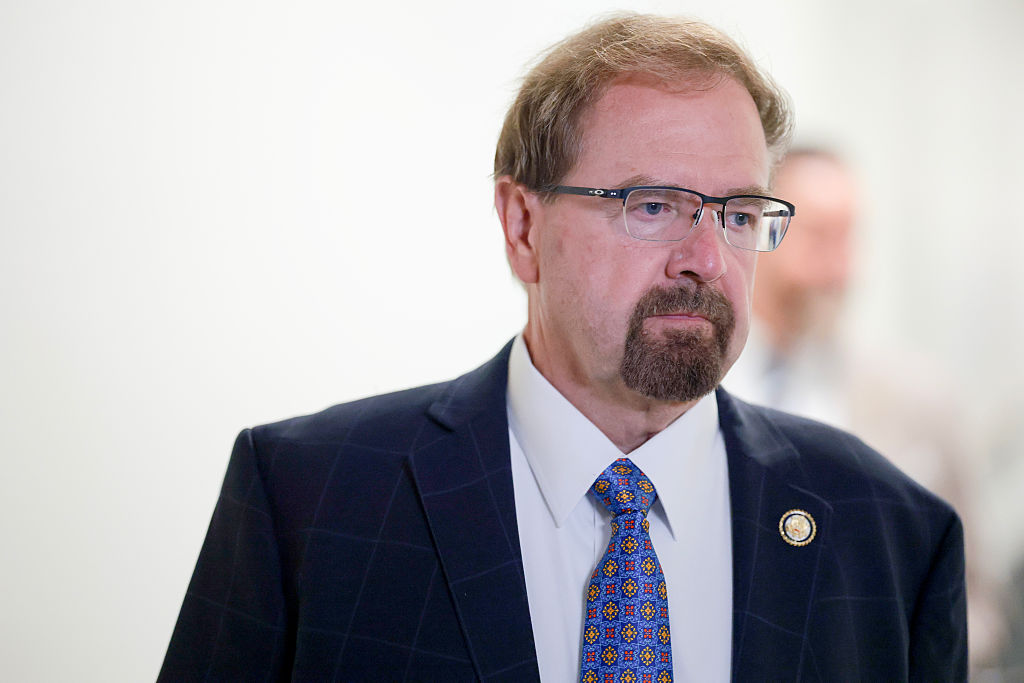
Rep. Chuck Edwards departs from a House Republican conference meeting in the U.S. Capitol Building in Washington, D.C. on July 21, 2026. —Anna Moneymaker—Getty Images
Republican Rep. Chuck Edwards of North Carolina is appealing to his House colleagues not to censure him over his conduct toward two female staffers.
Edwards dropped his re-election bid on Aug. 5 following an Aug. 3 House Ethics Committee report that found the Republican lawmaker had “engaged in persistent unprofessional and inappropriate conduct” toward the two staffers. The panel recommended Edwards’ censure, and a vote is expected next week.
Ahead of the vote, however, Edwards wrote a six-page letter addressed to other House members defending himself, saying that while he recognizes some of his colleagues may view his interactions differently, “context matters” in assessing them.
“An affectionate friendship is not a sexual proposition,” Edwards wrote in the letter, dated Aug. 25 and first obtained by NOTUS and reported on Thursday. “A gift is not sexual misconduct. A compliment is not sexual misconduct. Poetry is not sexual misconduct. Socializing with a colleague is not sexual misconduct. Caring deeply about someone with whom you have worked and come to know for years is not sexual misconduct.”
The 65-year-old lawmaker noted that the panel concluded he had “neither engaged in sexual activity with nor explicitly propositioned any individual staff member,” that he “did not violate federal sexual harassment law,” and that “the allegations in this matter do not implicate quid pro quo sexual harassment.” He claimed in the letter that his behavior toward the two staffers was similar to that toward his other staff—including gifts he’d given and trips he’d taken with or arranged for them.
Attached to the letter was a one-page factsheet and a memo submitted by Edwards’ counsel to the House committee responding to the report. Edwards alleged the panel had cherry-picked certain evidence to fit a narrative.
While censure does not remove a House member from office, it is one of the strongest forms of public rebuke in the chamber. A majority vote is required to censure a lawmaker.
TIME did not immediately hear back from Edwards’ office or the House ethics panel when asked for comment.
Former Reps. Eric Swalwell of California, a Democrat, and Tony Gonzales of Texas, a Republican, resigned in April under bipartisan pressure from their colleagues and threats of expulsion amid separate allegations.
Besides Edwards, the House ethics panel is also investigating allegations against Republican Rep. Cory Mills of Florida, who lost his Aug. 18 primary.
On Aug. 17, the panel also announced it was reviewing allegations that Democratic Rep. Jimmy Gomez of California may have engaged in inappropriate sexual contact with a House staffer.
What the committee found regarding Edwards
The ethics panel report found that the two women involved, who previously worked with Edwards from since he was a State Senator, “were subject to increasingly unusual attention from the Congressman while they worked for him, creating an environment where both they and their coworkers felt uncomfortable.”
The panel detailed some of the alleged instances. In one, Edwards allegedly told one of his female staffers, who was in her early 20s and had rejected a dinner request because of rumors surrounding Rep. Edwards and a staffer, that it was “disappointing to feel something that used to be easy has gotten complicated.”
Per the report, Edwards had given the two staffers several gifts, including jewelry worth over $1,000, as well as “designer purses, guns, shoes, flowers, a laptop and cell phone, KitchenAid mixer, robotic vacuum, vacations, tickets to performances, and one-on-one dinners.”
Edwards, according to the report, also went to the house of the staffer in her 20s to “perform chores like yardwork, pick her up and drop her off for events and activities with his driver, and decorate her Christmas tree together (for which he skipped votes in the House that evening).” It also stated that Edwards wrote a poem for one of the staffers that he read aloud at her going away party in the congressional office.
The report added that Edwards was, “at minimum blind to that reality, and at worst, dismissive of the impact his inappropriate conduct had on the careers and wellbeing of two women on his staff.”
Current House rules state members are disallowed to engage in “unwelcome sexual advances or conduct” toward any employee. Edwards insisted in his letter that he’s not asking anyone to approve of his behavior, but argued “many of the activities emphasized by the report are not themselves prohibited.”
How have Edwards’ colleagues reacted to his letter?
The condemnation has come from across the political aisle.
Rep. Kat Cammack of Florida, who chairs the Republican Women's Caucus, posted on X that “22 pages of explanation do not change a fundamental fact: Members of Congress hold extraordinary power over their staff. With that power comes a responsibility to exercise sound judgment and maintain appropriate boundaries.”
Rep. Teresa Leger Fernández of New Mexico, chair of the Democratic Women’s Caucus, in a statement to CNN and others, referred to the letter as “22 pages of ramblings by someone who refuses to understand sexual harassment or his abusive power over the women who worked for him. His lack of remorse speaks for itself.”
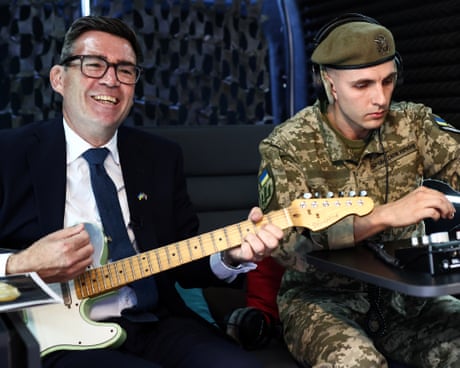
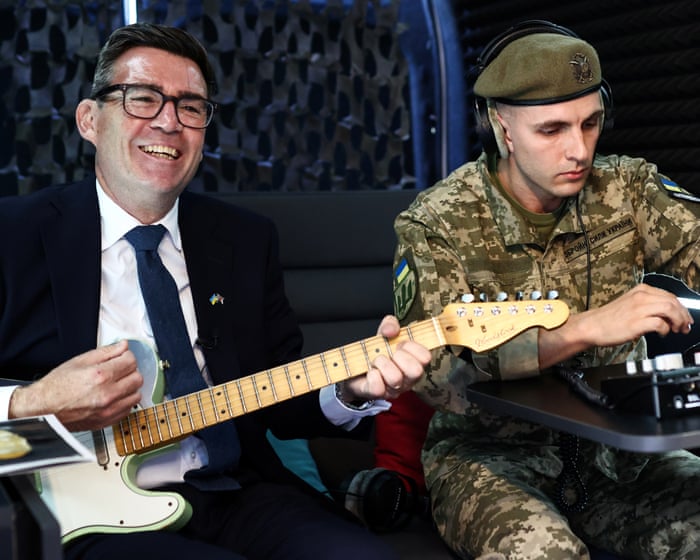
The UK prime minister clearly still adores the band. Perhaps he’s attracted to songs about sham justice and murderous meat factories, shot through with nihilism and exquisite despair
As an origin story, Andy Burnham: Smiths Fan has a lot going for it. It’s plainly authentic: he can name the time he saw them live (Salford University, Queen Is Dead tour, 1986). A cynical young man in a hurry might fake that now, but not back when he first said it, in 2013. Asked by Labour Uncut for his desert island tracks during his 2010 leadership bid, three of the eight were sung by Morrissey (two Smiths singles and one off Viva Hate), which is superfan territory.
That’s a softball exercise to endear yourself to Labour members; you have eight chances to hit every base, and to blow three lives on an artist who had already, by then, been dabbling in nationalism for 18 years (we’ll come back to this) was dicey and brave. You’ll recall that Burnham did not win that election. If you were an enemy state, amassing this hinterland for an asset, you’d have basically done a really good job.
Unpopular new policy comes as midterms loom and control of Congress could be decided by several Michigan races
Every day $1bn worth of goods crosses the river dividing Detroit, Michigan, and Windsor, Ontario, two largely blue-collar US and Canadian cities that have come to act as one in the creation of North America’s auto industry.
News this week of Donald Trump’s escalating trade spat with Canada has everyone worried. Political and economic leaders and observers labeled the move an act of “hubris” , blamed Trump’s “ego”, and called the escalation “insanity”.
Unpopular new policy comes as midterms loom and control of Congress could be decided by several Michigan races
Every day $1bn worth of goods crosses the river dividing Detroit, Michigan, and Windsor, Ontario, two largely blue-collar US and Canadian cities that have come to act as one in the creation of North America’s auto industry.
News this week of Donald Trump’s escalating trade spat with Canada has everyone worried. Political and economic leaders and observers labeled the move an act of “hubris” , blamed Trump’s “ego”, and called the escalation “insanity”.
A woman examines goods in a warehouse damaged by a Russian drone attack, in Zaporizhzhia, Ukraine, on August 19, 2026. | Dmytro Smolienko, Ukrinform/NurPhoto via Getty Images
Imagine this: Two countries are at war. Country X sends a drone into a major industrial city in Country Y, aiming to take out two propane tanks. A routine sequence. But this time, the drone never reaches its targets. Instead, Country X’s drone accidentally strikes a wall nearby, explodes, and kills three young civilians.
When Country Y eventually retrieves the drone’s remnants for intel, it finds an AI supercomputer inside that reveals something unsettling. Instead of a human deciding what to strike — the AI did.
Key takeaways
A Russian AI-enabled drone reportedly selected its own target in Ukraine, killing three civilians — an ominous case of machines making lethal choices without direct human intervention.
The global debate over autonomous weapons has narrowed to two competing frameworks: “meaningful human control,” which pushes for human intervention in lethal decisions, and the Pentagon’s more flexible “appropriate human judgment.”
OpenAI has adopted the Pentagon’s language, accepting a standard that does not require a person to decide every lethal action and leaves its practical limits to future, case-by-case military applications.
The truth is, you don’t have to imagine this scene — it just happened. For the first time in the Russia-Ukraine war, as reported recently in the New York Times, three Ukrainian civilians were killed by a Russian drone, developed, designed and released by humans, that, in the end, selected its target autonomously. And this new reality is shaping up to be the future of warfare.
That’s because a number of countries, including those with the world’s most consequential militaries, are rejecting the idea that human beings need always be in control of weapons in war.
Instead, as new autonomous weapons technologies become more capable and existing international legal frameworks struggle to keep up, some countries are embracing a more expansive view of human responsibility: that people can exercise enough control not by approving each strike, but by designing, testing, and setting the rules under which a given weapon operates.
This shift has produced one of the most consequential policy debates of today. And ultimately, human dominion over “killer robots” — as autonomous weapons are colloquially called — could come down to a battle between two three-word phrases: “meaningful human control” versus “appropriate human judgment.”
A high-stakes semantic battle
In the early 2010s, “meaningful human control” emerged as an initial framework in the first international discussions on regulating an acceptable level of human involvement (or lack thereof) in deploying autonomous weapons. While the term quickly became an initial organizing principle among many states within these debates, it also drew immediate opposition from several others, such as the US and Russia.
“The problem is what does [meaningful human control] mean?” said Lena Trabucco, an expert on AI and human control and a non-residential fellow at the Stockton Center for International Law at the Naval War College. “And what makes something meaningful versus not meaningful human control?” There was both a lack of consensus about what “meaningful” meant and what “control” meant, she said. But the problems went beyond simple semantic ambiguity. “Getting a whole bunch of countries to agree on a standard for what ‘meaningful control’ is,” Trabucco said, became “a near impossible task.”
Ultimately, while an exact definition of meaningful human control never totally solidified, the term became intelligible enough to facilitate continued international dialogue on how to police autonomous weapons. As Trabucco explained, “We all kind of understood what we were trying to grasp with the idea of meaningful human control, even if we didn’t agree on a kind of standard for what is ‘meaningful’ or what ‘control’ exactly means.”
Brad Boyd, retired colonel and senior military fellow at Stanford’s Center for International Security and Cooperation, said that in this international context, “meaningful control” came to be understood as human involvement at the exact moment a given weapon is fired. However, from the US perspective, that consensus definition still left a number of problems unresolved.
One of the most important holes in the definition was the issue of timing. “The release of a weapon could theoretically be minutes, hours, days, weeks ahead of when the weapon actually strikes the target,” Boyd explained. For example, a drone can be released to sweep a designated area and remain airborne for hours, searching for anything that matches its given target criteria. Seconds, minutes, or hours might pass between the moment a person launches the drone and when the machine finds and fires upon a target.
“This expansion of the timeline became very difficult for the construct of ‘meaningful human control’ to actually seem like it was doing what people wanted it to,” Boyd said. The tension between certain technical or engineering problems and the policy language preferred by international forums created, from the US perspective, insurmountable obstacles to making meaningful human control a truly practicable framework.
So, the US adopted its own alternative: “appropriate human judgment.”
“Autonomous and semi-autonomous weapon systems will be designed to allow commanders and operators to exercise appropriate levels of human judgmentover the use of force,” a key Department of Defense directive reads. The new language effectively moved the required point of human intervention away from the moment that a weapon is fired toward oversight of a given system’s entire life cycle — from its design, to its development, to its deployment.
There are some contexts where a government might not need as much human control over a weapon to comply with international law, Trabucco said. That’s where the subtle preference of “appropriate” over “meaningful” matters. “If we’re on the high seas, maybe it’s not as necessary to meet a super high threshold of human control because there’s not much risk to civilians or civilian property in those contexts,” she said.
“Now, in a city, an urban environment,” where the risk of civilian harm and other collateral damage is much greater, Trabucco explained, “then that’s where that high threshold would become important.” The US sought flexibility to determine how much human involvement it deemed necessary, based on the battlefield context in question, as opposed to having a fixed, universal standard of “meaningfulness.”
And why the move from “control” to “judgment?” Well, Boyd explained that “anytime we automate anything, whether it’s automating a car or automating machinery, we are trying to make it go faster, more precise, et cetera.” So, instead of insisting that humans be involved in any given part of the process, which could slow combat operations down, the US simply aimed to ensure autonomous systems behaved according to legal and ethical standards, no matter what situation they were deployed in.
Who decides how much human judgment is appropriate?
“It’s not necessarily the control that we want. What we really want is the machine to reflect our values, our laws, and our regulations,” Boyd said. “When humans employ our values, laws, and regulations, we call that judgment.”
Though designed to avoid setting a universal standard of human involvement as demanded by meaningful human control, appropriate human judgment is not a totally empty phrase. According to the DoD directive, the framework requires testing systems, defining operational limits, assessing likely civilian harm, training operators, setting rules of engagement, and ensuring that a system remains within its authorized mission. And, in some contexts, those requirements may institute more thorough protections built into weapons than a simplistic condition that a human be the one to pull the trigger in the end.
But the framework is not without a core puzzle of its own — who decides how much human judgment is appropriate? And what happens when the private sector, as in the ones developing such technologies, adopts this language before we have an answer?
And now — the private sector is forced to pick a side
In July, the same month of Russia’s autonomous drone strike, OpenAI did something important not many noticed: it revised its relationship to military uses of its technology once more. Just three years ago, OpenAI maintained a total ban on “military and warfare” uses of its technology. Now, after a few quiet revisions since 2023, a new five-page policy document outlined the company’s provisions for just that. (Disclosure: Vox Media is one of several publishers that have signed partnership agreements with OpenAI. Our reporting remains editorially independent.)
Most significantly, in explaining its basic condition for employing its technology in military contexts, particularly those involving decisions over the use of lethal force, OpenAI borrows a familiar phrase: appropriate human judgment.
The timing was not subtle. The document arrived just months after the public showdown between OpenAI’s competitor Anthropic and the Pentagon over the former’s reservations about military applications of its technology. That fight ended with President Donald Trump demanding the immediate cessation of all Anthropic use within the government. Mere hours after Anthropic was booted, OpenAI CEO Sam Altman announced his company had struck its own deal with the government. (Disclosure: Future Perfect is funded in part by the BEMC Foundation, whose major funder was also an early investor in Anthropic; they don’t have any editorial input into our content.)
But OpenAI didn’t just earn a contract in the wake of the Anthropic-Pentagon showdown, it also took a lesson — aligning your policy with the government’s wins you favor. Or, worse, that opposing the government bears a steep price.
“Appropriate human judgment,” the policy document reads, “does not require a human decision on every discrete system action.” The framework, instead, requires that “humans make informed decisions about the conditions for deployment.”
As both Trabucco and Boyd noted, the “appropriate” level of human involvement can vary, depending on the operating environment, the type of target, a particular system’s technical prowess, the anticipated risk to civilians, and a number of other political, economic, and strategic considerations important to a military operation. That flexibility is operationally appealing to the military, of course. But it also has a cost — safeguards against handing over total control of lethal force to machines become hard to identify, harder to measure, and hardest to enforce.
When will we know when the human-machine balance of power in war becomes “inappropriate”? The truth is — there’s no clear answer.
By cosigning the Pentagon’s flexible framework, OpenAI accepts that this standard has no settled meaning, that its application will be decided case-by-case behind the walls of military bureaucracy, and that the government may need room to change its mind. It’s a choice that suggests the company is less interested in establishing clear red lines and is more receptive to the military’s own versatility about how AI and autonomy might be used in lethal operations.
“Human judgment over critical decisions must be meaningful in practice, not merely formal,” the company’s principles document reads. But, instead of drawing its own clear boundary around what its technology will and won’t do, OpenAI has accepted ambiguity as the price of partnership.
That undoubtedly makes the company a more useful ally to the Pentagon — while making it harder for the public to know where human judgment ends and machine-controlled violence begins.
That undoubtedly makes the company a more useful ally to the Pentagon — while making it harder for the public to know where human judgment ends and machine-controlled violence begins.
As the development and deployment of autonomous weapons rapidly accelerates, without many guardrails in place at all, one question is worth asking right now: before other AI labs and tech companies adopt the framework in an effort to align themselves with the US, what does appropriate human judgment truly mean? Ironically, what the phrase doesn’t mean may be what’s most consequential.
For the sake of humanity, the semantics of policing autonomous weapons is worth clarifying — or we risk totally losing control.
 Login
Login