Texas and Florida accounted for nearly 20,000 of the July arrests. The agency has been bolstered by billions of dollars from Congress and has hired 12,000 new deportation officers and agents.
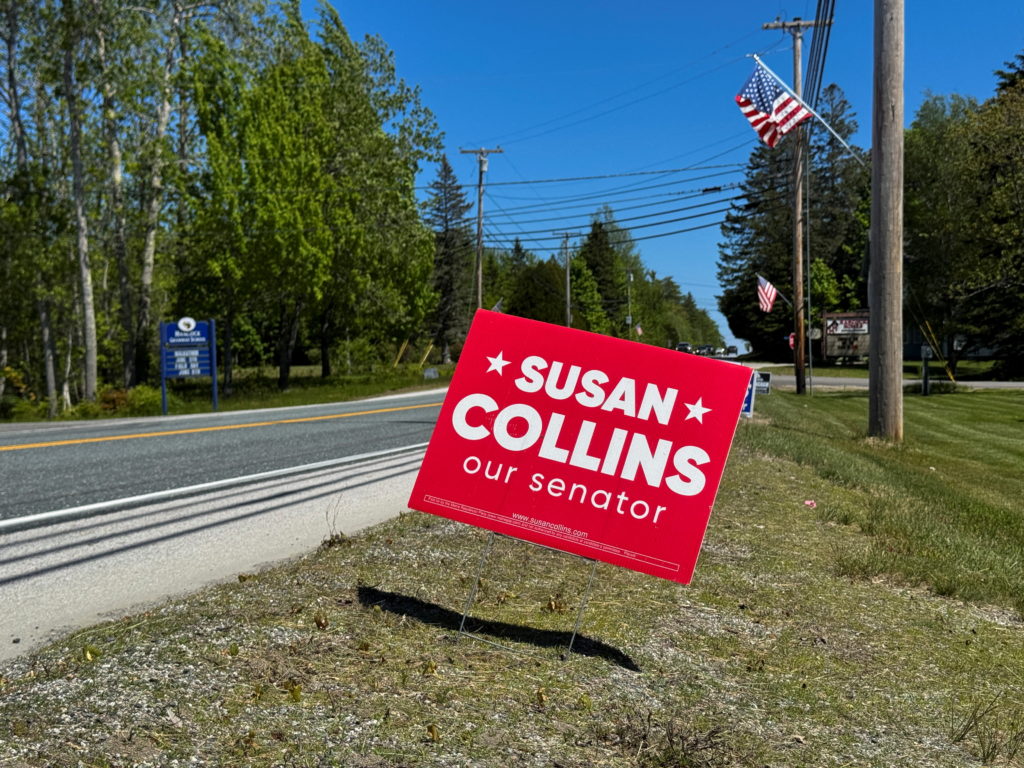
President Donald Trump's trade war with Canada is escalating as the midterm elections approach, threatening Republican efforts to address voters' economic concerns in a year when control of the U.S. Senate hinges on states along the border between the United States and its northern neighbor.
Canada struck back at the United States on Tuesday with retaliatory tariffs on about $20 billion worth of American goods, including steel, dairy products, appliances and farm equipment, as the trade war between the once-friendly neighbors escalated sharply.
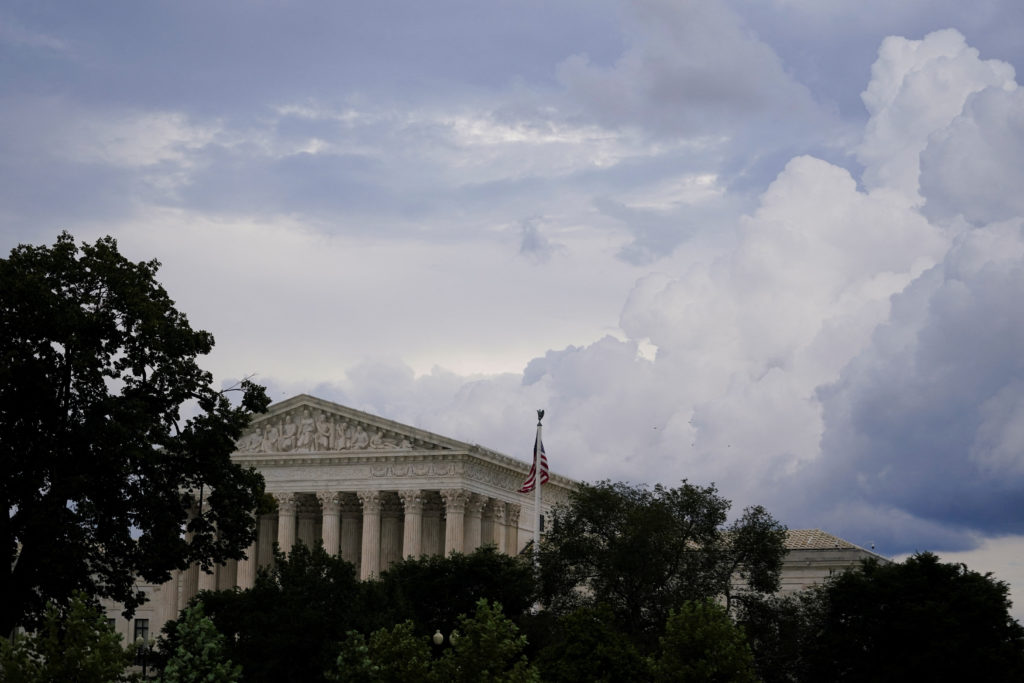
Rather than saying that President Donald Trump's order is legal, the high court said Monday it was too early for Democratic-run states to challenge it in June, when they convinced a federal judge in Boston to freeze the order for November's election.
"The U.S. Secret Service is aware of the video and investigates anything that can be perceived as a threat toward our protectees," Secret Service spokesman Nate Herring said in a statement.
Illinois prosecutors shared defendants’ personal data with federal immigration agents without criminal warrants, public disclosure, or legislative oversight.
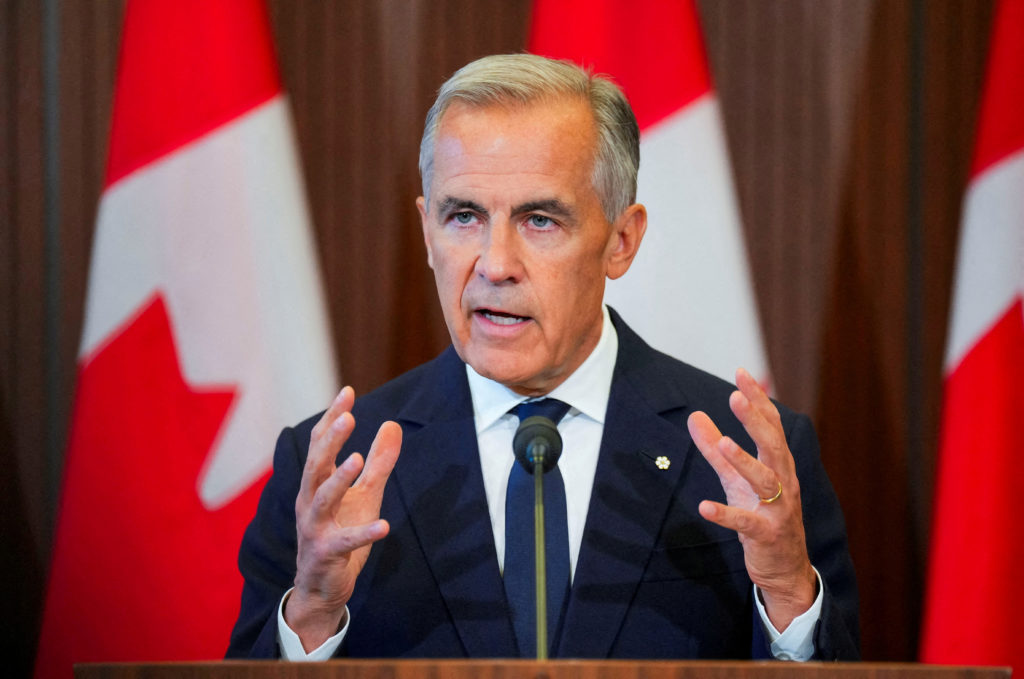
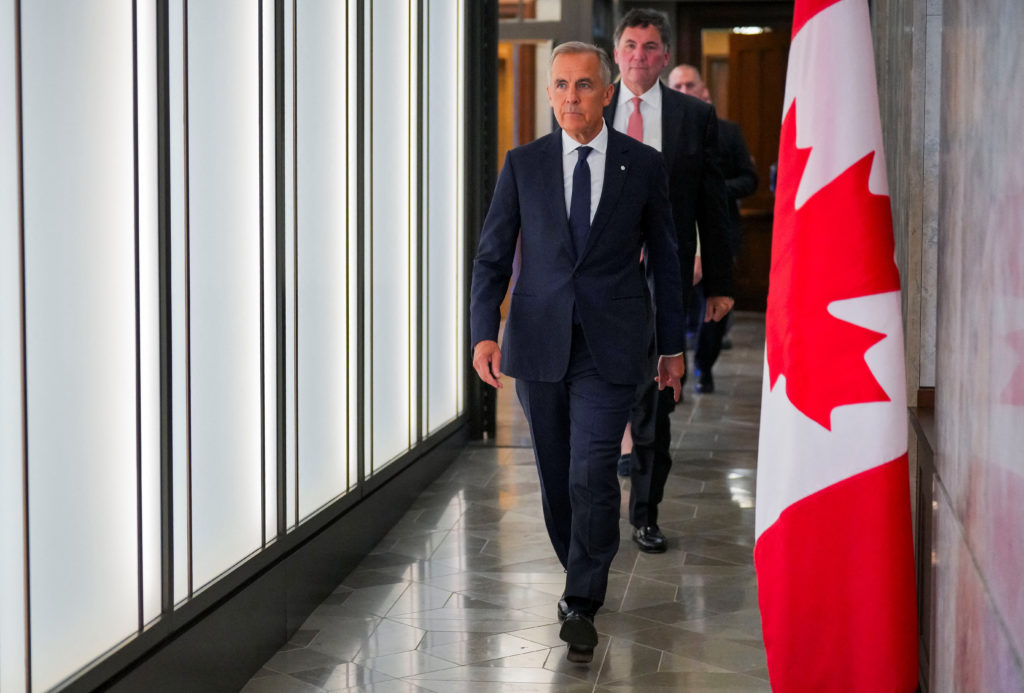
The trade war between the U.S. and Canada is intensifying after negotiations broke down over the weekend. Canadian Prime Minister Mark Carney said his country had been preparing for a fundamental shift in its relationship with the U.S., which it no longer views as a reliable partner. Geoff Bennett discussed the economic fallout on both sides of the border with Peter Armstrong of the CBC.
Canada will announce retaliatory tariffs against the United States on Tuesday, an official familiar with the plans told The Associated Press, escalating a trade fight that has sharply worsened since negotiations with the Trump administration collapsed.
The Department of Justice spent more than a decade building a case accusing Live Nation of illegally dominating the live event industry by thwarting competition to keep ticket prices high. But according to a Wall Street Journal investigation, President Trump urged senior DOJ officials to settle the case just days before it was set to go to trial. Ali Rogin discussed more with Rebecca Ballhaus.
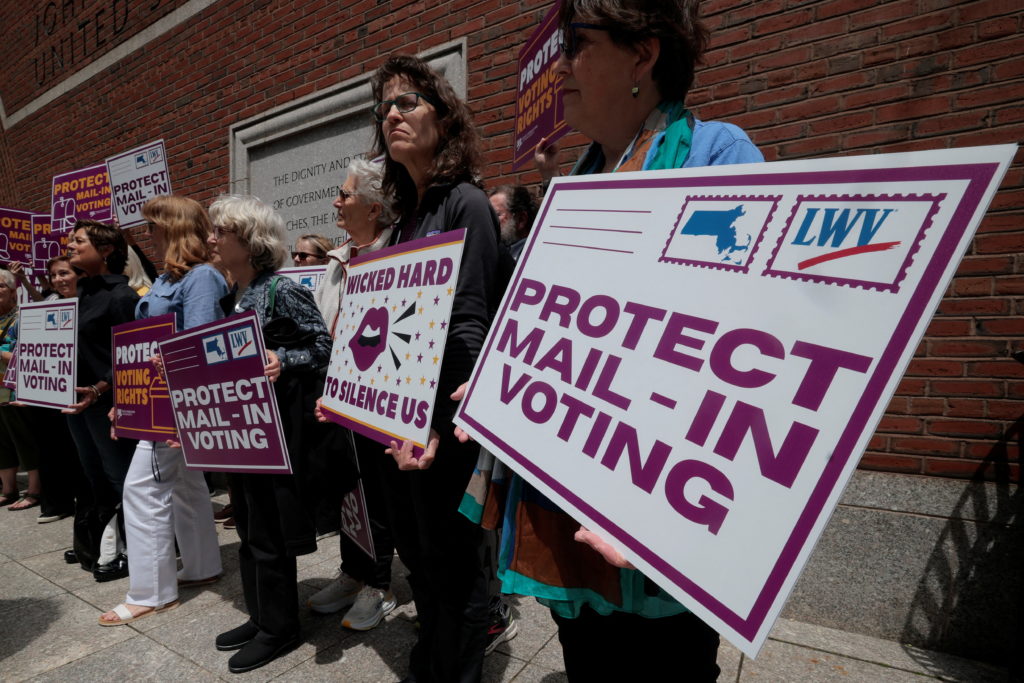
The U.S. Postal Service laid out how it would implement the order last week, but time is running short to impose major changes with some states beginning to send mail ballots to voters in just a few weeks.
The Trump administration is preparing to revoke the visas of up to 200,000 foreigners who have applied for or are currently seeking asylum status in the United States.
The U.S. Department of Agriculture has said concerns about the New World screwworm's spread lessened enough to allow the movement of cattle from Mexico at a crossing in Douglas, Arizona.
Miranda Luby was only 36 years old when her tinnitus arrived in the middle of the night, without warning and for no clear reason
One night two years ago, I was lying in bed when I began to hear a high-pitched, electronic hum. The scene that followed would be comical if it wasn’t so traumatic. I roamed around the house in my PJs, frantically pressing my ears against various electrical appliances. It took half an hour to realise the sound was coming from inside my own head.
I’d heard ringing in my ears before, rising then falling, like a one-note crescendo of an orchestra. As a kid, I used to believe the myth it was the sound of dying ear cells, playing a swan song for a frequency I’d never hear again. This was different. This time, it didn’t stop.
A few things are certain in life: death, taxes, LeBron James playing professional basketball — and Americans’ belief that crime is getting worse. Since Gallup began asking about national crime in 1989, a majority of respondents said they thought crime in the US was higher than the year before in every survey year except 2000, 2001, and 2025. Even in that last year, 49 percent still said more crime was happening. It’s perhaps the archetypal example of negativity bias, the mental habit of giving more weight to bad news than good.
Last week, the FBI put some numbers on just how big that bias is. The American murder rate — which peaked in 1980 at 10.2 per 100,000 — fell to an estimated 4.1 per 100,000 people in 2025, matching the rates recorded in 1955 and 1956 for the lowest ever measured in the country. The violent crime rate (murder, rape, robbery and aggravated assault) fell 9.7 percent, the largest single drop since J. Edgar Hoover was running the bureau in 1936.
That much is known. But what’s not known for sure about the crime drop is almost everything else. Adam Gelb, who runs the Council on Criminal Justice, says that there is no single or easy explanation for the historic lows, while Jeff Asher, the analyst who spotted this decline before nearly everyone else, agrees. For every leading candidate — federal pandemic spending, some normalization after the 2020 social collapse, better violence prevention, even the decline of drinking — there is a corresponding hole.
But there is one American city where researchers can point to a specific program, measure what it did, and put real numbers on it. And it just happens to be the city that spent 50 years — and five award-winning seasons on HBO — as America’s shorthand for murder.
Baltimore recorded more than 300 homicides a year for most of the last decade, and more than 200 for most of the past half-century. In one month, July 2015, 45 people were killed — an astounding figure for a city of just around 600,000 people at the time.
But Baltimore finished 2025 with 133 homicides, the fewest since 1977 and about 60 percent fewer than in 2020. Through the first eight months of this year, the city has seen 60 murders, and the police commissioner’s target is to stay under 100.
What caused this? Three things at once.
Baltimore Mayor Brandon Scott’s Group Violence Reduction Strategy identifies the few people most likely to shoot or be shot — two groups that heavily overlap — and sends people to their doors with two messages: you are on our radar, and here is housing and job training. Separately, the longer-running Safe Streets program puts outreach workers with real street credibility between disputes, aiming to interrupt them before they become shootings.
That’s the harm reduction element. There’s also a tough-on-crime component. The state’s attorney office says it has secured 2,129 convictions since 2023 across several gun-related violent-crime categories, with over 1,700 of those defendants incarcerated.
Meanwhile, Baltimore’s homicide clearance rate reached 60 percent by mid-2026. Its nonfatal-shooting clearance rate was 54 percent, up more than 12 percentage points from a year earlier. Criminologists have long held that the certainty of being caught deters criminals more than the severity of the sentence, and more successful shooting investigations are a common thread where violence is falling around the country.
How do you tell whether a program worked, or whether a city just got lucky? Drug trials get a control group; cities don’t. Baltimore got one almost by accident: the strategy launched in the city’s Western District in 2022 and nowhere else, which left the rest of the city as a comparison.
That’s what a team of economists and criminologists used. They measured the Western District against Baltimore neighborhoods that hadn’t started the program yet, and over 18 months the number of people shot there, fatally or not, ran about 30 percent below that stand-in. Killings alone fell by a similar share, but deaths are rare enough that chance couldn’t be ruled out. Police made no more arrests than before. Arrests for serious violent crime rose 81 percent.
A second, looser test set the whole city against a composite of other big American cities and put Baltimore’s murder rate about 25 percent below it. The authors are careful with that one: too much changed in Baltimore at once to say how much it the strategy was responsible for.
Murder is contagious
Baltimore’s success is built on two ideas, and they came from two very different places.
The first came from a doctor named Gary Slutkin, who spent the 1980s and early 1990s fighting tuberculosis in San Francisco, cholera in Somali refugee camps, and AIDS across Africa. He came home to Chicago in 1995, a year the city recorded over 800 homicides.
Key takeaways
Americans have told Gallup crime is getting worse in nearly every year since 1989. In 2025 the US murder rate fell to 4.1 per 100,000, tying 1955 and 1956 for the lowest ever measured, and violent crime dropped 9.3 percent — the largest single-year fall since the FBI began national estimates in 1936.
Nobody can say why. Federal pandemic spending, the unwinding of the 2020 collapse, violence prevention programs, Americans drinking less: every leading explanation has a hole in it.
Baltimore isan exception. Because its Group Violence Reduction Strategy launched in one police district first, researchers could measure it against the rest of the city. Shootings there ran about 30 percent lower — and police made no more arrests than before.
When Slutkin examined the city’s shooting maps, they looked familiar. Clustered in space, clustered in time, and spreading case to case — murder resembled the outbreaks he used to fight. Slutkin reasoned that the way to treat violence was to treat it like cholera: find the people most likely to transmit. Interrupt the transmission. Change the conditions that let it spread. Slutkin built the model into a program called CeaseFire, now Cure Violence Global, and its Baltimore descendant is Safe Streets.
The second idea came from a criminologist. David Kennedy, working in Boston in the 1990s, found that 61 gangs with about 1,300 members — under 1 percent of the city’s young people — were tied to at least 60 percent of its youth homicides. Get those people in a room with police, prosecutors, and community elders, tell them plainly what comes next, and the shooting slows down.
That approach is called focused deterrence. Baltimore’s Group Violence Reduction Strategy is a version of it. To see how it works over a longer period of time, take a trip across the Atlantic to Glasgow in Scotland, which in the early 2000s was considered the murder capital of Europe.
In 2005, in the midst of that wave of violence, Glasgow’s Strathclyde Police established a Violence Reduction Unit that operated with a basic thesis: evidence shows that violence can be prevented. Among other interventions, the unit sent trauma surgeons into schools to describe what a blade does to a face and stationed outreach workers at hospital bedsides to reach victims in the vital hours after an attack, the moment when retaliation can still be stopped.
In 2024-25, Scotland recorded 45 homicide victims, the fewest since comparable records began in 1976 and down from 96 two decades earlier. Every case was solved.
Pull the handle
So we have clues to why crime has dropped so much, but not clear conclusions. As successful as Baltimore’s group violence strategy has proved, a 2023 study of a similar street-outreach effort in Boston found no effect whatsoever. And the latest evaluation of Baltimore’s own Safe Streets — 11 sites, each measured against a stand-in version of the same neighborhood without the program — produced numbers that sound terrific but settle very little: youth homicides down 42 percent and youth shootings down 21 percent, but neither is strong enough to rule out chance. And while some sites saw youth homicide fall by as much as 100 percent, two sites saw it rise by 42 and 89 percent.
Some experts, like the UC Irvine criminologist Emily Owens, argue the crime decline has been so widespread and similar — big cities and small, red and blue governments — that the true cause is some larger social change rather than what any one city is doing. Nor can we be sure the fall will continue. Billions in federal pandemic relief money has supported many of the programs that have worked well in places like Baltimore, and that money is already running out. But we can identify one reason why it happened, and learn from that success.
As it happens, Gary Slutkin was not the first doctor to look at a map of the dead and see a pattern in it. In September 1854, a cholera outbreak was killing hundreds of people in London’s Soho district. A doctor named John Snow had mapped the outbreak and saw the dead were clustered disproportionately close to the district’s Broad Street water pump. Snow had a theory that water was connected to the disease and convinced a Soho parish board to remove the handle of the pump.
Nobody in Soho at that moment could have told you what caused cholera. It would only be 29 years later that someone would definitely identify the responsible pathogen, and in doing so, explain why Snow’s intervention worked. But the explanation could wait. The dying stopped that month in Soho, just as it is stopping in Baltimore and around the US today. And that’s what counts.
A version of this story originally appeared in the Good News newsletter. Sign up here!
Tina Peters was convicted of seven counts related to election interference in 2024. Now, she’s fielding an offer from a county that’s become a hotbed of voting-related conspiracy theories.
Sources tell WIRED that Elon Musk is expected to spend up to $200 million in the midterms. It could be a big boost for GOP Senate candidate Ken Paxton, who’s struggled to raise cash.
Just last month, I marked my 25th year as a professional journalist, which I guess means my journalistic career is old enough to rent a car, no questions asked. Work in the news for that long, and you’ll occasionally find yourself surprised by things you published in the past. Like, I had all but forgotten that I had written this Time magazine cover story in 2008:
A couple things here. One, as the cover demonstrates, journalistic sensitivity was…less than ideal then, to say the least. And two, over a quarter-century occasionallycovering obesity (both childhood and adult), that story only seemed to go in one direction: worse.
It wasn’t for lack of trying. We put calorie counts on menus, taxed soda (well, in some places), built workplace wellness programs, and funded a small library of diet research. We deplored food deserts and promoted farmers’ markets. We told people — again and again — to eat less and move more. But the lines just kept going up.
By the CDC’s measured survey, the share of US adults with obesity did not change meaningfully between 2013 and 2023. The age-adjusted obesity rate sat at 40.3 percent, while the age-adjusted severe obesity climbed from 7.7 percent to 9.7 percent over the same stretch.
While the question of weight in America is inextricably tied to body image and moralizing, those numbers had a deadly effect. One demographic model estimated that obesity was associated with roughly 18 percent of deaths among Black and white Americans ages 40 to 85 between 1986 and 2006. From diabetes to kidney failure, heart disease to sleep apnea, obesity is the delivery system for other diseases.
Which is what makes a Gallup report published in July so surprising. In Gallup’s self-reported height-and-weight series, the US adult obesity rate fell to 36.4 percent, down from a peak of 39.9 percent in 2022. Over roughly the same period, the share of adults who said they were currently taking a GLP-1 drug for weight loss rose from 3 percent in 2024 to 11 percent in 2026 — approximately 29 million people. While this only shows correlation, not causation, and Gallup’s self-reported measure should not be compared directly with the CDC’s measured rate, the timing is suggestive to say the least.
And the weight might be the least interesting thing about these drugs.
Semaglutide — the molecule sold as Ozempic and Wegovy — was first developed and approved as a treatment for type 2 diabetes, not obesity. It was only after earlier GLP-1 drugs and diabetes trials showed substantial effects on appetite and weight that researchers deliberately tested a higher dose for obesity, resulting in Wegovy in 2021.
But as it turns out, the list of things that have been noticed happening on the side with GLP-1s has gotten so long it’s begun to eclipse the main event. The coverage of GLP-1s has barely kept up with this news, because weight loss is what made these drugs famous and what we continually obsess over. But it turns out, weight loss may not be what they’re best at.
Side effects may include…
Let’s start with sleep apnea, which, untreated, drives up blood pressure, strains the heart, and raises the risk of stroke. These are people whose breathing stops dozens of times an hour, all night, every night. Two year-long trials put 469 of them on tirzepatide — the drug sold as Mounjaro and Zepbound — and cut those interruptions by more than half. Roughly half the group finished the year with no apnea at all, or with so little left that they stopped being tired all day.
Then there are the kidneys. A major trial followed 3,533 people with type 2 diabetes and chronic kidney disease for a median of 3.4 years. Semaglutide reduced the relative risk of a composite of kidney failure, a sustained loss of at least half of kidney function, or death from kidney-related or cardiovascular causes by 24 percent; all-cause mortality was 20 percent lower.
And the liver: A trial, still underway, biopsied the livers of 800 people whose organs had grown fatty, inflamed and scarred and randomly assigned them to semaglutide or a placebo. After 72 weeks the inflammation had cleared in nearly 63 percent of those on the drug, with no worsening of the scarring, against 34 percent on placebo.
And to top it off, a 17,604-person trial of participants who were overweight or obese but did not have diabetes found a 20 percent drop in major cardiovascular events.
As GLP-1s — which in part came out of a hormone in Gila monster venom — demonstrate, medicine has long found some of its biggest wins in the margins of drugs ostensibly built to do something else entirely.
Sildenafil, better known as Viagra, began life at Pfizer as a candidate treatment for the heart disease angina. It failed at that, and its now-famous use turned up in data as a side effect in what must have been a very interesting trial for its subjects. Minoxidil (Rogaine) was a blood pressure pill that turned out to help patients grow hair. Finasteride (Propecia) was approved for enlarged prostates before anyone thought to sell it for baldness — and then a trial of more than 18,000 men found it cut prostate cancer diagnoses by about 25 percent, a benefit that took 20 years of follow-up to fully vindicate.
Perhaps the most famous example is aspirin, which spent most of a century as a painkiller before a doctor in California named Lawrence Craven noticed that the patients he’d given aspirin gum to after tonsillectomies bled more than they should. He guessed the aspirin thinned the blood, and started handing it out to middle-aged men, who were at higher risk of heart attacks. Craven died in 1957; the trial that ultimately proved that he was onto something — showing that aspirin in heart attack victims cut vascular deaths by a fifth — didn’t run until 1988.
The strange morality of Ozempic
Viewed this way, GLP-1s can seem like miracle drugs — but even miracle drugs can’t cure everything.
There had been great hope that GLP-1 might reduce dementia rates, but when Ozempic maker Novo Nordisk ran a proper trial, it didn’t show evidence of slowing clinical progression of Alzheimer’s. Much the same happened with cancer. Observational data had hinted that GLP-1 users developed tumors less often, but when a Harvard team pooled 48 placebo-controlled trials covering 94,245 people, they found the drugs have little to no effect on the risk of thyroid, breast or kidney cancer, though evidence for other cancers was less certain, leading to FDA boxed warnings. One plus: In some early animal studies, high doses of GLP-1 drugs caused thyroid tumors in rodents, but further research largely hasn’t validated the fears that it could be more widespread, though uncertainty about some rare thyroid cancers remains.
For many people, weight loss isn’t the end of what these drugs seem able to do. It’s where the benefits begin.
The bigger concerns largely remain the known ones, starting with muscle loss. Across 22 randomized trials, about 25 percent of the weight lost on these drugs turns out to be lean muscle mass. Some of that is simply unavoidable in any weight loss, but too much can mean a great deal, especially if you’re 75.
And cost remains a barrier: In a 2025 KFF poll, 56 percent of adults who had ever used a GLP-1 said the drugs were difficult to afford; 27 percent said they had insurance but paid the full cost themselves. In a separate Cleveland Clinic chart review of 288 adults without diabetes who stopped injectable semaglutide or tirzepatide within a year, 47.6 percent stopped because of cost or insurance problems, compared with 14.6 percent because of side effects. (The money, at least, is improving. An oral GLP-1 drug was approved in April, and it starts at $149 a month for people paying cash, while Medicare trial pricing of $50 a month for some GLP-1s went live in July.)
A stickier obstacle is the one that can’t seem to be divorced from questions about weight: judgment. As my colleague Dylan Scott wrote recently, researchers at Rice University found that people rate a GLP-1 user more harshly than someone who never lost weight at all. That makes perfect sense when you consider how contentious weight is in America — and none at all when you think about just how many people have benefited from these drugs in so many different ways.
I sometimes wonder how we would view GLP-1s if they could do everything they’ve been shown to do, but somehow not change a person’s appearance.
So much of the discourse around these drugs has been shaped by the fact that many of the earliest and most public and apparent users were already thin people, often celebrities, using them to get even thinner. But that framing has become increasingly difficult to square with reality.
Two things can be true at once: American culture has a toxic relationship to weight, and millions of Americans can and are benefiting from these drugs. For many people, weight loss isn’t the end of what these drugs seem able to do. It’s where the benefits begin.
A version of this story originally appeared in the Good News newsletter. Sign up here!

 Login
Login