❌

Reading view

Brazil’s victory for the planet and democracy: seven lessons from Lula’s win

The trouncing of the far right provides a playbook for social and environmental movements in other countries facing elections, including the US, Spain and France

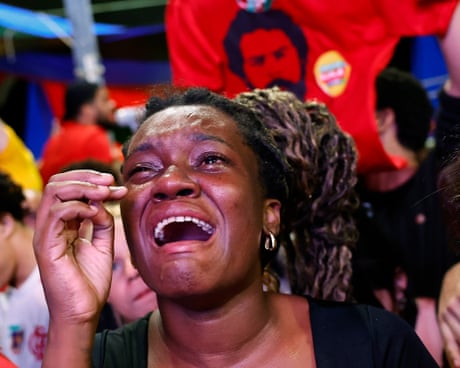
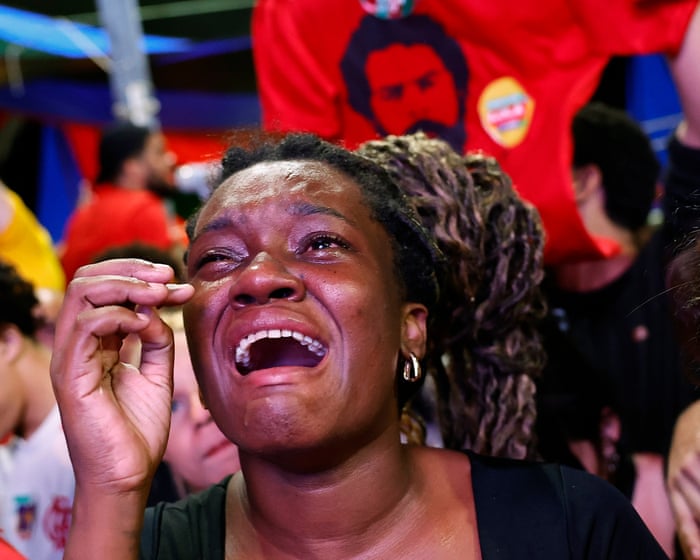
Thank you, Brazil, for demonstrating how the far right can be trounced while protection for the Amazon is strengthened. In a world where nature and democracy appeared to be bleeding out in tandem, voters and forest defenders in this global south powerhouse have shown it is possible to staunch the flow. This should provide much needed inspiration and, more practically, a playbook for social and environmental movements in other countries facing elections, including the US, Spain and France.

The astonishing comeback victory of Luiz Inácio Lula da Silva in Sunday’s presidential runoff against his extreme right challenger Flavío Bolsonaro has brought oceans of rapturous supporters on to the streets, while also thrilling conservationists, climate activists and social justice campaigners across the world.

Continue reading...
© Photograph: Andre Coelho/EPA
© Photograph: Andre Coelho/EPA
© Photograph: Andre Coelho/EPA
  •  

Brazil’s victory for the planet and democracy: seven lessons from Lula’s win

The trouncing of the far right provides a playbook for social and environmental movements in other countries facing elections, including the US, Spain and France

Thank you, Brazil, for demonstrating how the far right can be trounced while protection for the Amazon is strengthened. In a world where nature and democracy appeared to be bleeding out in tandem, voters and forest defenders in this global south powerhouse have shown it is possible to staunch the flow. This should provide much needed inspiration and, more practically, a playbook for social and environmental movements in other countries facing elections, including the US, Spain and France.

The astonishing comeback victory of Luiz Inácio Lula da Silva in Sunday’s presidential runoff against his extreme right challenger Flavío Bolsonaro has brought oceans of rapturous supporters on to the streets, while also thrilling conservationists, climate activists and social justice campaigners across the world.

Continue reading...

© Photograph: Andre Coelho/EPA

© Photograph: Andre Coelho/EPA

© Photograph: Andre Coelho/EPA
  •  

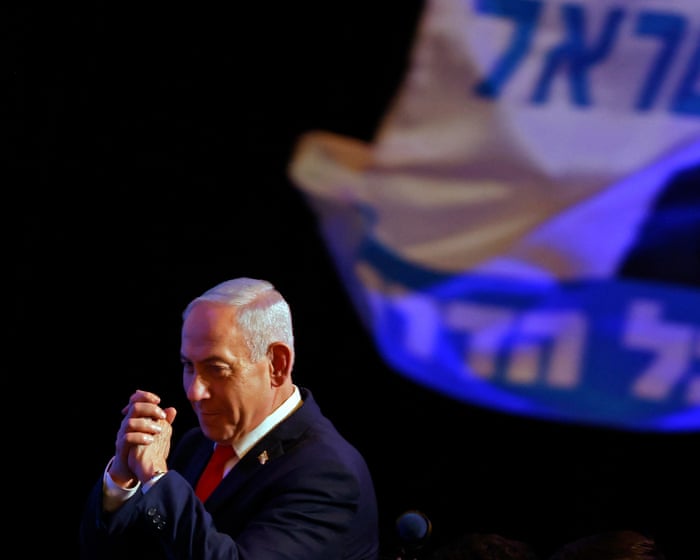
Netanyahu accused of smearing Arab voters to hold on to power

Prime minister claims Arab Israeli parties used foreign backing to steal elections, in which his coalition lost its majority

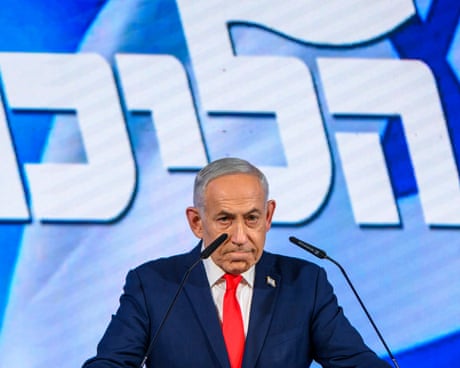
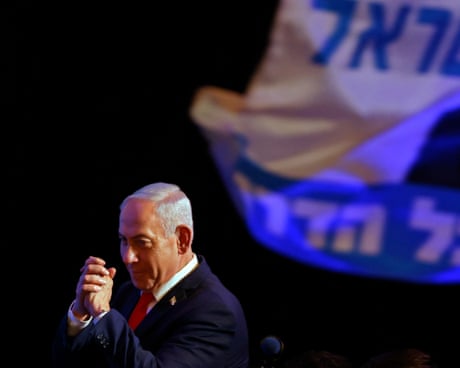
Benjamin Netanyahu has been accused of using smear tactics to cling to power, after he claimed that Arab Israeli parties had used foreign backing to “steal” Tuesday’s election, in which the prime minister’s coalition lost its parliamentary majority.

Netanyahu and his allies called on the internal security service, Shin Bet, to investigate alleged vote buying and other irregularities in Palestinian communities in Israel, supposedly funded by foreign money.

Continue reading...

© Photograph: Jalaa Marey/AFP/Getty Images

© Photograph: Jalaa Marey/AFP/Getty Images

© Photograph: Jalaa Marey/AFP/Getty Images

  •  

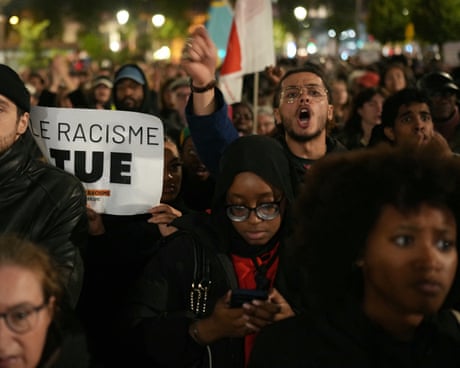
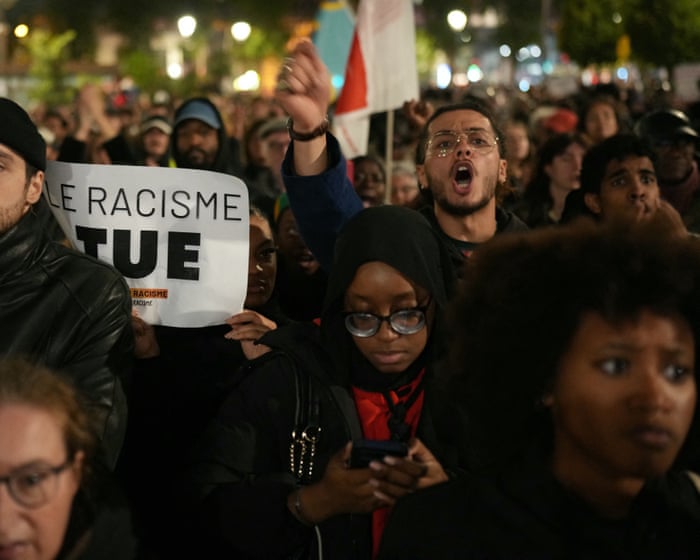
Racism needs to be understood as a global phenomenon – our humanity depends on it

In order to eliminate global racism, we must dismantle the ideological architecture that allows it to thrive worldwide

Around the world, racism is fueling a new wave of global unrest. In recent weeks, demonstrations in France turned violent amid mounting frustrations over socioeconomic and racial inequities, led by a younger generation that has had enough. Earlier this month, the Green party of England and Wales’s decision to define Zionism as a form of racism sparked controversy and renewed public debate about what racism is and who gets to decide it. In September, electoral gains by Germany’s far-right Alternative for Germany (AfD) party raised alarms in a nation with a dangerous history of racist, antisemitic fascism. And for the past year, the Trump administration has pushed ahead white supremacist agendas throughout the United States, highlighted by violent Immigration and Customs Enforcement (ICE) raids targeting people by race, regardless of citizenship status.

To understand each of these examples of racism in isolation would be a mistake. They are connected. Racism is not merely a series of random occurrences affecting certain people in certain places. It is more than institutional discrimination in schools or workplaces or even systemic inequalities in healthcare and policing. Racism is an interconnected, global phenomenon, spreading throughout our human ecosystem and embedded in world order. This global racism, which I name and define in my new book Global Racism: A Challenge for the World, is dangerous – it underpins wars and threatens our very humanity.

Anna Spain Bradley is the author of Global Racism: A Challenge for the World and a professor of law at the UCLA School of Law

Continue reading...

© Photograph: Dimitar Dilkoff/AFP/Getty Images

© Photograph: Dimitar Dilkoff/AFP/Getty Images

© Photograph: Dimitar Dilkoff/AFP/Getty Images

  •  

The Guardian view on Israel’s elections: Netanyahu lost his mandate. If opponents unite, he’ll lose power too | Editorial

His chief rival should reject the prime minister’s anti-democratic vision and work with Palestinian Israeli parties

Benjamin Netanyahu has lost his mandate but not, so far, power. While final votes are still being tallied, most voters picked his opponents on Tuesday. His bloc’s share of seats remains the largest, but appears to have slumped by around 10, leaving it below the 61 needed for a majority in the Knesset. Palestinian Israeli parties surged, and are projected to almost double the 10 seats they held. The result is that Mr Netanyahu’s main challenger, Gadi Eisenkot, a former head of the military, now faces a choice: fall into line with Mr Netanyahu’s racist fearmongering or work with Arab-led parties.

The prime minister who oversaw shocking security failures ahead of the Hamas atrocities of 7 October 2023 still pitches himself as “Mr Security”. On trial for corruption, he has persistently attacked democratic institutions, especially the judiciary. He embraced and then indulged the ultra-right as they cheered on brutal settler violence in the occupied West Bank. (Itamar Ben-Gvir and Bezalel Smotrich lost ground in these polls, but perhaps due to their vision’s permeation of mainstream politics more than a revolt against it.) Mr Netanyahu’s war on Iran has destabilised the region. The tens of thousands of Palestinians killed by his government’s genocidal war on Gaza have barely featured in the election campaign, but its cost for Israeli hostages and international support for Israel have been noted by voters.

Do you have an opinion on the issues raised in this article? If you would like to submit a response of up to 300 words by email to be considered for publication in our letters section, please click here.

Continue reading...

© Photograph: Alexi J Rosenfeld/Getty Images

© Photograph: Alexi J Rosenfeld/Getty Images

© Photograph: Alexi J Rosenfeld/Getty Images

  •  

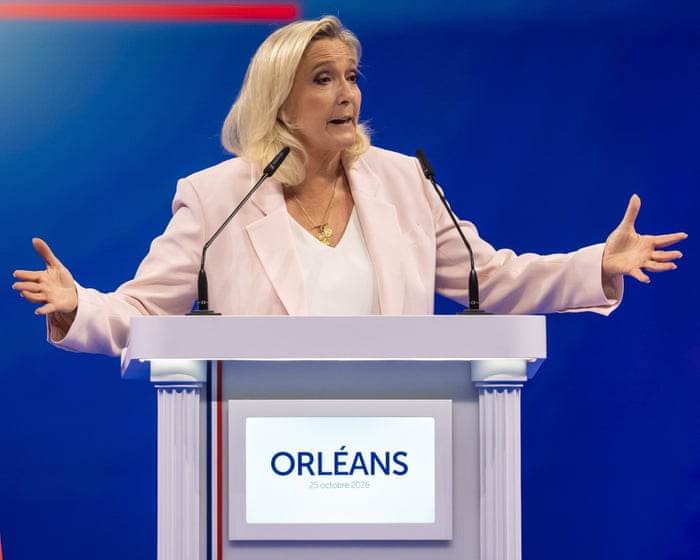
The Guardian view on the far right’s plans for Brussels: doing the work of Xi, Putin and Trump | Editorial

If ever enacted, proposals by Marine Le Pen and the AfD leader, Alice Weidel, to hollow out EU institutions would be a continental act of self-harm

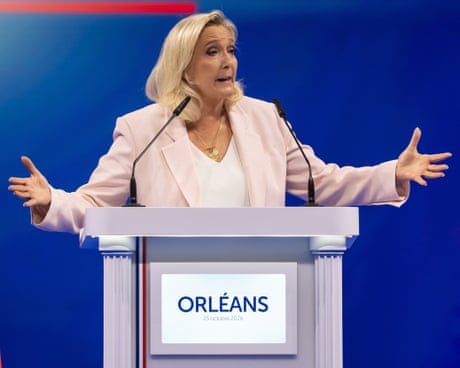
Following the Brexit referendum in 2016, Marine Le Pen was in a predictably celebratory mood. Britain’s vote to leave the European Union, she told one interviewer, was the first breach in the “Brussels Wall”. Ms Le Pen’s Front National party was at that point committed to taking France down the same path, given the chance. But as the UK’s self-inflicted economic wounds became a cautionary tale for the rest of Europe, the notion of Frexit was put on ice.

Instead, Ms Le Pen now hopes to lead far-right allies in hollowing out the EU from within. This month, both she and the leader of Alternative für Deutschland, Alice Weidel, outlined their visions of a “Europe of nations” in which EU institutions would be stripped of both cash and power. Ms Weidel’s “new deal for Europe” would abolish elections to the European parliament, and seek German opt-outs in areas such as migration, defence and common borrowing. Ms Le Pen’s party, now called National Rally, proposes slashing French contributions to the EU budget by 60% over a five-year presidential term, and ending the role of Brussels in proposing common policies for the 27 member states.

Do you have an opinion on the issues raised in this article? If you would like to submit a response of up to 300 words by email to be considered for publication in our letters section, please click here.

Continue reading...

© Photograph: Christophe Petit-Tesson/EPA

© Photograph: Christophe Petit-Tesson/EPA

© Photograph: Christophe Petit-Tesson/EPA

  •  
❌