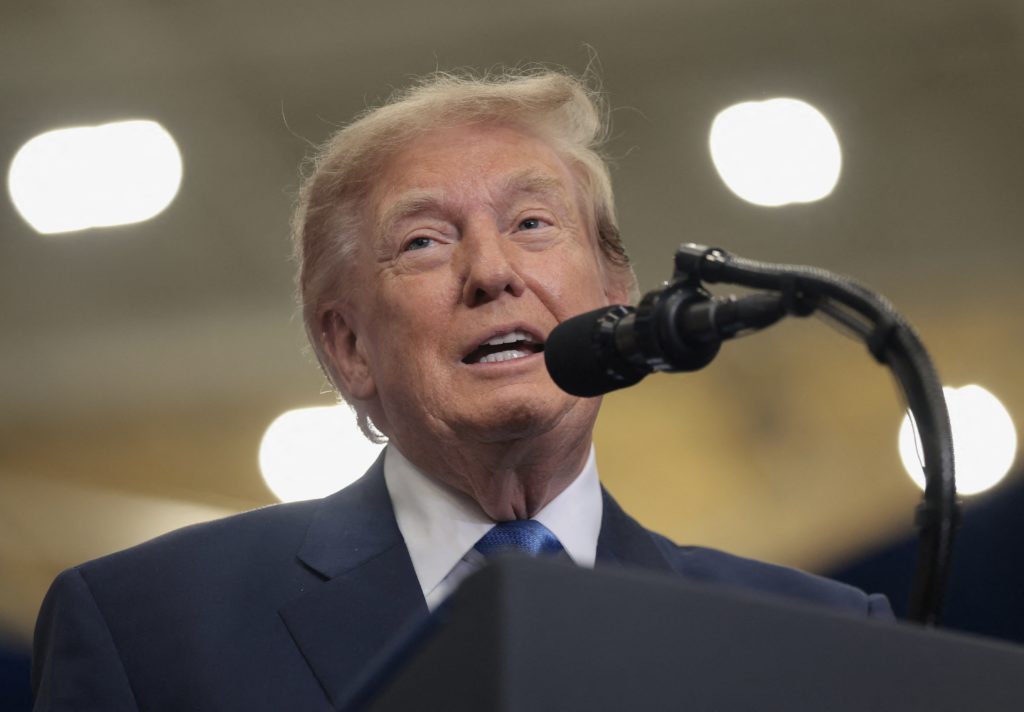
UK house prices increased for the first time in four months in August, according to a leading index, as buyers and sellers remained in a “holding pattern” before an expected increase in interest rates later this year.
The average price of a British home rose 0.2% month on month in August to £275,465, the first increase since April, according to Nationwide. Analysts had forecast a 0.1% rise.
FCA chief, Nikhil Rathi, warned of ‘adverse consequences’ if challenge made to settlement, court filings allege
The boss of the UK’s financial regulator is accused of threatening a consumer group with “adverse consequences” if it blocked a £9.1bn compensation scheme meant to settle the motor finance scandal.
Legal documents reviewed by the Guardian said the alleged comments by the Financial Conduct Authority (FCA) chief executive, Nikhil Rathi, amounted to “an inappropriate intervention by a public official”.
Savings grow as energy prices in Great Britain rise and cost of panel installation falls, analysis finds
Households in Great Britain’s cloudiest regions could still save more than £400 a year on their energy bills by installing rooftop solar panels, research has found.
Rising wholesale energy prices mean the potential savings from a home solar panel system have climbed in recent years, as the cost of installation has continued to fall, leading to increased demand.
Exclusive: FCA pressures firms to do more to sort 760,000 accounts as watchdog urges families to use free tracking service
Child trust fund providers are being put under the spotlight to check they are treating savers fairly and doing all they can to reunite young people with lost accounts.
The Financial Conduct Authority (FCA) said about 760,000 accounts worth an average of £2,000 were yet to be claimed – more than £1.5bn in total – as it launched a review of the market.
Premium of nearly 10% paid by housebuyers comparable with cost of a cheaper private school over seven years
A house near a top state secondary school costs an extra £40,000 on average, according to research that reveals education premiums that rank alongside some private school fees.
The average property in a postcode district that includes a top 50 state secondary commands a price tag of £415,791, compared with £375,217 across the wider local authority areas in which those schools are located, a UK-wide analysis by the estate agent Yopa found.
With traditional goals such as stability and home ownership feeling out of reach, young people are focused on the present
By now, we all know the shape of financial nihilism: the throw-your-money-at-anything reaction to the dissolution of the slow, linear path to wealth; the prediction markets, meme stocks, cryptocurrencies and microluxuries growing in its place. We’re left in an economic no man’s land. But financial nihilism only describes where we put our money. What about how we earn it in the first place?
The modern economy has long relied on our need for stable employment – to pay the mortgage, to keep our kids fed, or, for some, to chase prestige and power – to generate the work ethic that keeps the wheel of production turning. None of this is going well for young people. Our jobs are insecure, we can’t afford houses, we’re deferring having kids (if we have them at all), and only 6% of us say a leadership position is our primary career goal. Hope is one of the economy’s most productive inputs, powering our willingness to endure long hours. When the production function of income – the mechanism that turns hard work into a stable salary, then a mortgage, then a pension – breaks down, so does our relationship with the input. I call this production nihilism: my generation’s growing indifference to the kinds of work we’re willing to participate in, and where we’re willing to earn.
Centre for Economics and Business Research calculates effect of inflation and wage stagnation to end of 2027
UK households will have suffered a £2,400 financial hit, on average, from the Iran war by the end of 2027, new analysis shows.
The Centre for Economics and Business Research (CEBR) has calculated that the jump in inflation since the conflict began, and weaker wage growth, will knock £1,100 off the real income of the average UK household in 2026, and by a further £1,300 in 2027.
Some young people are teaching in countries like South Korea as education funding is gutted and recent grads face a tough job market in their own countries
A year ago, Arianna Marie, 25, was struggling to control the students in her Florida elementary school classroom.
She was living with her parents to save on rent and quickly feeling her passion for teaching dry up, even though it was her first job since graduation.
Breakdown recovery group’s private equity owners reportedly in talks with various suitors to sell company
The German-based financial services company Allianz is considering a £5bn takeover swoop for AA, the breakdown recovery group, Sky News has reported.
Allianz was one of a small number of parties holding talks with advisers to AA about a deal, Sky News said, adding that the private equity outfit EQT was another bidder.
Plagued by bank impersonation scams, one Guardian Money reader got even by stringing the fraudsters along … for hours
“A couple of Sundays ago at just past 11am my mobile rang. An automated message purported to be from Barclays Bank, querying a payment to Argos for more than £1,000. Not only had I not made a payment to Argos recently, nor do I bank with Barclays.
I am plagued with these kinds of calls. Usually, when possible, I make it clear to the scammers that I know their game. Usually, that call ends there and then.
It is the third time Judge Alvin K. Hellerstein has blocked Trump from having the U.S. District Court in Manhattan seize control of the case from the New York court where he was tried and convicted.
Even people sympathetic to President Donald Trump’s economic nationalism seem confused about the trade war with Canada. | Andrew Harnik/Getty Images
LONDON, Ontario — President Donald Trump seems dead set on escalating his trade war with Canada. And no one is really sure why.
On Monday, Trump threatened another round of 50 percent tariffs on top of the ones he just implemented — this one targeting Canada’s auto industry, which is so deeply integrated with its American counterpart that large duties would do major damage on both sides of the border. By Tuesday morning, he had begun musing about renaming Lake Ontario “Lake America” to spite Canadians. And throughout all of this, he and Vice President JD Vance had renewed their “jokes” about absorbing Canada as the 51st state.
But who is this even for? While the White House’s behavior infuriates Canadians — it is palpable on the ground here in Canada — it’s unusual by Trump standards in that nobody seems to want this conflict but him.
Even the most fringe, or unpopular, foreign policy ideas he’s pursued typically have think tanks devoted to pushing them, or a loyal ally to please, or a voting bloc to rile up before the midterms. But unlike, say, Trump’s conflicts with Iran, or Cuba, or China, it’s hard to find a highly visible corner of conservatism that’s the driving force behind a nationalist campaign against Canada.
When I reached out to trade experts, political scientists, and in-the-know Republicans of the pro- and anti- Trump persuasion to try to trace the origins of Trump’s trade war, they had trouble pointing to anything solid. As one veteran GOP lobbyist put it, there doesn’t seem to be any ideological, business, or congressional coalition devoted to egging on the trade fight.
Even people sympathetic to Trump’s economic nationalism seem confused: Michael Lind, a populist pundit who last year penned a piece titled “Why tariffs are good,” has just written a follow-up titled “The madness of Trump’s Canada trade war.” And while there are some affected industries — autos, steel — they don’t seem to be main characters: United Auto Workers, which backed some prior tariffs, came out strongly against the proposed auto tariffs.
The politics don’t make much sense either. American voters have long disapproved of Trump’s tariffs on Canadian-made goods, and the current escalation threatens to be the largest and most economically damaging yet. Republicans sound anxious about its impact on the midterms; several key Senate races are in states right on the Canadian border, and any tariff-related price spike there could supercharge Democrats’ core midterm message about affordability.
“This has never been a particularly well-thought strategy. I think that the biggest, most coherent explanation is that this is about power.”
Kim Clausing, UCLA trade economist
“If I were [Senate Majority Leader] John Thune, I’d be very pissed at Trump right now,” says Adam Carlson, a Democratic pollster at Zenith Research.
So why are we at (economic) war?
The best answer is deceptively simple: because Trump, and Trump alone, wants to be.
There is no good strategic rationale for the way Trump has gone about badgering America’s northern neighbor, even if you share his broadly nationalist view about trade. Rather, Trump has become fixated on dominating or even possessing Canada. And his top deputies are backfilling his fixation, including by offering terms of surrender the Canadians simply couldn’t accept.
“This has never been a particularly well-thought strategy,” says Kim Clausing, a trade economist at UCLA. “I think that the biggest, most coherent explanation is that this is about power.”
It’s the latest example of the risks of governance by one man’s whims — one that could both damage America’s economy and burn its relationship with its staunchest ally before it resolves.
Trump’s northern power trip
Typically, when you try to explain the policy of any government, you look at two main factors: interests and ideology. In this case, neither is close to sufficient to explain the intensity of Trump’s war on Canada.
It is true that, for decades, the United States has had meaningful trade disputes with Canada over issues like lumber and dairy. But these issues never boiled over into a massive trade war, for the simple reason that they simply aren’t that large as a percentage of GDP. There’s a reason that every administration prior to this one — including Trump’s first — handled these issues through normal negotiating processes rather than loud bullying.
On the ideology front, it is true that Trump’s 2016 victory has revived conservative interest in economic nationalism — leading to the creation of groups like American Compass, a think tank dedicated to putting policy meat on the bones of the right’s nationalist spirit. But these nationalists largely converged on China as their principal economic enemy. While Trump trade adviser Peter Navarro is helping run Canada policy now, there was no sign in his essay in Project 2025 — or from other allies — that anyone was contemplating a full-on trade war with Canada beforehand. And American Compass does not appear to be involved in the current fight, offering no official comment on its press page or founder Oren Cass’s X feed.
“I really do think it is Trump’s idiosyncrasies that caused him to settle on Canada,” says Phil Magness, an economic historian who closely tracks intra-right economic disputes. “Others in the admin are going along with it.”
The timeline backs up Magness’s assessment.
In November 2024, shortly after winning the election, Trump began feuding with then-Prime Minister Justin Trudeau — calling him “governor” and beginning his talk of Canada as the 51st state. Less than two months after taking office, Trump targeted Canada with (at that point) historically high 25 percent across-the-board tariffs.
When the Washington Post investigated the rationale behind these tariffs at the time, they found a void. There was no policy paper behind the Canadian tariffs, nor any clear intellectual godfather or industry backer. People inside the administration put all the credit (or blame?) solely at the president’s feet. Within MAGA media, the closest to radical anti-Canada sentiment might have been Tucker Carlson’s trollish musing about “regime change” in 2023.
After Mark Carney replaced Trudeau as prime minister, and won the general election primarily on an anti-Trump platform, tensions cooled to a somewhat surprising degree, at least when it came to trade talks. Prior to this week, the 51st state rhetoric had declined dramatically; negotiations on trade looked like they had a real chance of success. Indeed, just this Tuesday, Trump himself declared they had reached a deal and postponed tariff implementation as a result. The Friday breakdown thus felt like a bit of a shock.
But reading detailedaccounts of the negotiation collapse, including a brand-new ticktock from the New York Times, it’s clear that overweening American conditions were a major part of the failure. Most strikingly, and relevant, were US demands that it have control over Canada’s tariff rates with other countries and that it be able to reimpose American tariffs on Canada at will.
The key point here is that the Trump administration was not, and never has been, interested in a reciprocal trade deal between allies based on clear and cogent principles. Instead, they want to vassalize Canada — to bully it into surrendering elements of its sovereignty, or even its sovereign existence altogether. It is clear that this is the direct result of the president’s personal fixation.
Why exactly Trump has become so obsessed with controlling Canada is harder to say. Per the Post, there are theories ranging from bitterness around a legal battle over Trump Tower Toronto to his friendship with Kevin O’Leary, Canadian entrepreneur and host of the reality show Shark Tank. Certainly, his more recent rivalry with Carney hasn’t helped: “Canada lives because of the United States,” Trump declared, menacingly, after the prime minister delivered a critical foreign policy speech in January.
My own personal theory is that it’s of a piece with Trump’s desire to acquire Greenland, another cause that’s largely unique to him. He is looking toward his presidential legacy, and nothing makes a real estate developer think “legacy” more than literally enlarging the size of the United States on the map.
But in practical terms, the reason may be immaterial. Whatever the roots of Trump’s Canada fixation, we know that it is real and a major driver in US foreign policy — one so important, in fact, that he is willing to jeopardize his party’s all-important Senate majority in order to pursue it.
An anthropomorphized Pumpkin Spice Latte with a spooky black cat. | @TheRealPSL/Twitter
Editor’s note, August 25, 10:15 am ET: This article was originally published in 2018 and has been updated for the start of the new PSL season.
August 25is not a day that is particularly known for feeling especially crisp or autumnal in most parts of North America. And yet it’s the day this year — the earliest release date ever — that Starbucks, contending with a slowdown in sales, will unleash its annual run of pumpkin spice lattes upon its customers.
You’d be forgiven for mistaking this tone for one of disdain. Since its inception in 2003, the pumpkin spice latte has become something of a straw man for discussions about capitalism, seasonal creep, and the meaning of “basic,” resulting in widespread hatred for an otherwise innocuous beverage.
For example, back in 2014, at the height of pumpkin spice mania, this very website described the PSL as “an unctuous, pungent, saccharine brown liquid, equal parts dairy and diabetes, served in paper cups and guzzled down by the liter” — even though clearly the pumpkin spice latte is a highly delicious treat that pairs well with wearing vests and making dorky comments about how crisp the air feels today. Yes, it contains 380 calories; yes, it will make your coffee a rather unappetizing orange color; no, you should not “guzzle it down by the liter.”
But contempt for the PSL and other items of the seasonal pumpkin spice variety is often not really about the flavor itself. After all, there are plenty of other flavors we should all be way more furious about. (There is a shop in Scotland that serves mayonnaise ice cream, people!) Too frequently, it’s about sexism, class anxiety, and our collective skepticism of savvy marketing. After all, the PSL is doing something right: It’s Starbucks’ most popular seasonal beverage, with about 424 million sold worldwide. In 2019, the chain leaned in further with the introduction of the Pumpkin Cream Cold Brew, finally admitting to the world that late August is still iced coffee weather.
The history of the PSL
The pumpkin spice latte almost didn’t exist. As former Starbucks veteran Tim Kern told Quartz, “A number of us thought it was a beverage so dominated by a flavor other than coffee that it didn’t put Starbucks’ coffee in the best light.”
Fortunately for Starbucks, the Tim Kerns of the company were ultimately overruled, because within a decade of its launch in 2003, the PSL became its top-selling drink, with more than 200 million of them sold. In 2015, Forbes estimated the PSL brought in around $100 million in revenue over a single season.
2015 was also the year that Starbucks changed its decade-old formula to include actual pumpkin for the first time, rather than simply caramel coloring and pumpkin pie spices (like cinnamon, nutmeg, ginger, allspice, and cloves). By all accounts, it tasted pretty much the same, just, according to its inventor, “cleaner.”
At that point, the PSL wasn’t just a cash cow — it was a cultural phenomenon. In part, that’s thanks to its marketing: There is nothing inherently seasonal about the spices that go in pumpkin pie, but Starbucks is able to convince us that the drink should only be consumed during the fall months, thereby increasing demand.
But there’s another reason the PSL exploded so much over the past decade. Culinary food trend analyst Suzy Badaracco told Vox in 2014, “Pumpkin became recognized as part of the comfort food trend during the recession in 2008,” due to its association with Thanksgiving and the holidays. In tough times, we’re more likely to crave foods that bring back happy memories.
Surely, though, the reason we all began talking about PSLs to begin with was their prevalence on social media. It’s not that they’re inherently photogenic — a Starbucks cup is a Starbucks cup regardless of what’s inside it, and the PSL doesn’t get its own specially designed cup the way the holiday drinks do.
It’s because when you add a PSL to a photo of, say, your new fall boots standing atop crunchy-looking leaves or a selfie featuring a festive dark lip color, it adds to the autumnal aesthetic. It’s not a coincidence that Instagram — the epicenter of cutesy fall tableaus — happened to blow up in the early 2010s, which is the same time it became cool to claim you despised pumpkin spice.
But maybe that’s not the whole story.
The backlash is about our anxieties around capitalism
The fact that the pumpkin spice latte — which, to many, conjures the scents and imagery of Thanksgiving — is released in increasingly hot weather year after year is often touted as an ominous harbinger of the evil forces of seasonal creep. “It’s agricultural revisionism!” argue some, citing the fact that pumpkins aren’t actually in season until autumn proper.
A viral John Oliver clip from 2014 declares as much, noting that “that bottle of pumpkin-flavored science goo sits behind the counter of Starbucks, never aging, like Ryan Seacrest”:
Perhaps in response to such criticism, in 2019 Starbucks released its second pumpkin spice beverage since the PSL’s introduction, but this time, it’s cold. The Pumpkin Cream Cold Brew is a vanilla cold brew with pumpkin cold foam and topped with pumpkin spice, which CNBC describes as “less sweet and has a stronger coffee taste than a pumpkin spice latte.”
The success of the PSL is also largely responsible for the barrage of pumpkin spice-flavored everything else, including cream cheese, dog treats, Kahlua, and an especially wacky seasonal crossover, Peeps. There have also been air fresheners, deodorant, even Four Loko (okay, that one ended up being a joke), resulting in the expected amount of hand-wringing about a food trend “gone too far.” (Indeed, back in 2010, the spice brand McCormick forecast that pumpkin spice would be a popular flavor for the holiday season, which in turn likely exacerbated the rush.)
When a food trend is as in-your-face as pumpkin spice is — ever been to a Trader Joe’s in October? — it forces us to think about how the free market is essentially designed to create this kind of phenomenon. If a product like the pumpkin spice latte sells, it’s natural under capitalism for other companies to attempt to replicate that success. But it’s uncomfortable when we see it happening on such an exaggerated scale.
Actually, the backlash is about our contempt for women
Well, maybe, but maybe what pumpkin spice backlash is really about is our dismissal of trends that are coded as feminine. As Jaya Saxena wrote in Taste in 2017, in a piece titled “Women Aren’t Ruining Food,” “When men enjoy something, they elevate it. But when women enjoy something, they ruin it.”
She continues, on the topic of “girly” food crazes like açai bowls, rosé, and pumpkin spice versus “manly” ones like barbecue, Flamin’ Hot Cheetos, and IPAs:
When those foods blow up, we judge women for falling for the marketing or trying to jump on the bandwagon, and we assume that because they like something other women like, they don’t have minds of their own. And on top of that, women are asked to reckon with, consciously or unconsciously, the perceived psycho-sexual symbolism attached to seemingly innocuous foods.
Plus, “masculine” foods are almost never chastised for being “basic,” the ever-nebulous term used to describe someone with average, predictable taste that’s usually reserved for women.
In the most stereotypical (and by now probably outdated) terms, a “basic bitch” wears North Face, leggings, and Uggs, and absolutely adores hashtag-PSLs, marking her as a woman with “a girlish interest in seasonal changes and an unsophisticated penchant for sweet,” as The Cut noted back in 2014.
There are often classist implications, too. In a 2014 BuzzFeed piece about “basic” and class anxiety, Anne Helen Peterson wrote:
Unique taste — and the capacity to avoid the basic — is a privilege. A privilege of location (usually urban), of education (exposure to other cultures and locales), and of parentage (who would introduce and exalt other tastes). To summarize the groundbreaking work of theorist Pierre Bourdieu: We don’t choose our tastes so much as the micro-specifics of our class determine them. To consume and perform online in a basic way is thus to reflect a highly American, capitalist upbringing. Basic girls love the things they do because nearly every part of American commercial media has told them that they should.
Essentially, hating pumpkin spice lattes is our way of othering those who drink them, and in the process, marking ourselves as decidedly un-basic.
Of course, this notion of what “basic” means is not the same way black people have been using it for decades, which, as Kara Brown explained in 2014 in Jezebel, pretty much just translates to “I think that the stuff you like is lame and I don’t really like you.”
“Rihanna could become the official spokesperson for Starbucks pumpkin spice lattes and nobody would think of her as basic,” she wrote. “You know why? Because Rihanna does what she wants and what she thinks is cool and doesn’t give a damn about anybody else.”
Or maybe nobody cares anymore
Even if Rihanna suddenly became the official spokesperson of PSLs, however, there is also the possibility that, quite frankly, nobody really cares that much anymore. We seemed to have hit peak “pumpkin spice hot take” in the year 2014, with searches for “pumpkin spice latte” peaking in 2015.
Maybe that’s because we’ve all been stricken with a case of seasonal beverage fatigue in general. Starbucks is constantly coming out with random gimmicky drinks, from the Unicorn Frappuccino to the so-called secret menu.
We also aren’t seeing the same kind of anger directed at what is arguably replacing pumpkin spice as autumn’s de facto flavor. In 2017, both Starbucks and Dunkin’ Donuts released maple pecan lattes. And according to restaurant menu data from that year, “mentions of maple as a flavor in nonalcoholic beverages on menus are up 86 percent this year over last. … Pumpkin mentions, on the other hand, are down 20 percent.” Yet nobody’s complaining about how stupid maple syrup is.
And these days, tweets about PSLs are way more in the vein of “Screw you and let me enjoy my shitty drink in peace, because everything is terrible.”
Pumpkin Spice Latte comes back tomorrow and I am 100% getting one in 91 degree weather because this world is a shitshow and I take joy where I can get it, like in delicious flavored coffee drinks.
People have also expressed exhaustion about the “actually-ing” over what pumpkin spice even is, as if anyone really wants to talk about it.
"pumpkin spice refers to the spices used in pumpkin pie and doesn't actually taste like pumpkins" is the "Frankenstein was the name of the doctor" of this decade
There are even ironic tweets poking fun at the automation of feminist responses to the anti-pumpkin spice brigade:
Women's unabashed enjoyment of a thing has always led to wholesale dismissal of said thing as frivolous and/or bad. From early examples like needlework to more current cases like pumpkin spice and romance novels, we can track this trend throughout history. In this paper I will –
Anyway, this is all to say that maybe by now pumpkin spice has finally returned to signifying the autumnal blend of cinnamon, ginger, nutmeg, and cloves, and nothing more: not basic, not everything wrong with capitalism, and not gross. Because it’s not! It’s delicious.
Update, August 26, 2026, 10 am ET: This story was originally published in 2018 and has been updated multiple times, most recently with the 2026 PSL return date.
Earlier this month, Trump sent a letter to Lisa Cook, a Joe Biden appointee to the Federal Reserve, demanding that she respond to exceedingly flimsy allegations that she committed mortgage fraud. This is the first step in a process that is likely to end in Trump attempting to remove her from the Federal Reserve’s board a second time — which means that the courts will inevitably have to get involved once again.
It’s tempting to blame this bout of déjà vu on Trump, but the Supreme Court is at least as responsible for his actions as the president itself. If the Court didn’t want Trump to thumb its nose at their decision in Trump v. Cook (2026), they should have written that decision clearly enough that lawyers could actually figure out what the president is and is not allowed to do.
The Cook decision, which involved Trump’s first attempt to fire Cook, is similarly incomprehensible. It was handed down the same morning as Trump v. Slaughter (2026), which seems to hold that Trump can fire anyone who leads a federal agency. But Cook does not even cite the Slaughter decision, much less explain why the two cases are different.
Slaughter was grounded in the “unitary executive,” a theory shared by all six of the Court’s Republicans which claims that the president must have full control over federal agencies, including the power to fire their leaders — and thus agencies that have some ability to act independently of the president, such as the Federal Reserve, are unconstitutional. Cook suggests that there’s a Federal Reserve exception to this theory, although the opinion does not offer a clear explanation of why this exception exists.
There are very good policy reasons why Trump should not be able to fire Cook, or any other member of the Federal Reserve’s board. The Fed has the power to inject cocaine into the US economy, temporarily giving it a boost at the price of much greater turmoil and higher inflation down the road. If presidents are allowed to fire the Fed’s leaders, they can remove anyone who refuses to give the economy a bump during an election year — boosting the president or his party’s reelection chances, and triggering consequences that won’t be felt until after the election is over.
But the fact that preserving the Fed’s independence from the president is a good idea does not mean that the Constitution permits it. And, in Slaughter and several related cases, the Court’s Republican majority endorsed an interpretation of the Constitution that is completely incompatible with the idea of an independent Federal Reserve.
That means that, until the Court resolves this tension between Slaughter and Cook, there’s likely to be a great deal of confusion about who really controls the Fed — Trump or its current board — and whether Trump may effectively order the Fed to take actions that benefit him, but that could cause lasting harm to the US economy.
The unitary executive, briefly explained
The issue at the heart of Cook was whether the president is able to fire a member of the Federal Reserve.
Federal law provides that the Federal Reserve’s governors may only be fired “for cause,” and not simply because the president does not like them or disagrees with their policy views. The Republican justices have also long argued that Congress is forbidden from limiting the president’s power to fire federal agency leaders, because this would give the president less than full control over the federal government’s executive branch.
These justices point to a line in the Constitution that states that “the executive power shall be vested in a President of the United States of America.” According to the Court’s Republican majority, this means that the president must have full control over any federal agency that wields power that is “executive” in nature, including the power to fire that agency’s leaders for any reason whatsoever. As Justice Antonin Scalia wrote in an influential 1988 dissenting opinion, this constitutional provision “does not mean some of the executive power, but all of the executive power” is held by the president.
There are numerous problems with this unitary executivetheory. The biggest one is that, while the Constitution does say that there is something called the “executive power” that belongs to the president, it does not define what this power is, and the Court’s decisions embracing the idea of a unitary executive often rely on dubious historical claims.
But, regardless of whether the unitary executive rests on a sound reading of the Constitution, it is now the law. And Slaughter suggests that this Court’s definition of the term “executive power” is quite expansive. In that case, the Court indicated that any agency leader who “enforces and administers” a federal statute wields “executive” power, and thus must be fireable at will by the president.
But then, almost immediately after the Court handed down Slaughter, it ruled in Cook that Trump could not fire one of the Fed’s leaders — or, at least, that he could not do so right away.
The Cook decision is word salad
Under the Republican justices’ definition of which officials wield executive power, and thus must be fireable at will by the president, Cook clearly should qualify. But five justices, the three Democrats plus Chief Justice John Roberts and Justice Brett Kavanaugh, joined a majority opinion by Roberts that, at least, temporarily delayed Trump’s ability to fire Cook. Three other justices took the coward’s way out, arguing in dissent that Trump should win on narrow procedural grounds that would have allowed him to fire Cook, but that also might permit a court to reinstate her at some point in the future.
Only Justice Clarence Thomas seemed to fully embrace the unitary executive theory, in Cook, and with it the idea that firing Cook is well within Trump’s power.
Thus, if Slaughter is correct that an agency leader who “enforces and administers” a federal statute must be fireable at will by the president, Trump should have the power to fire Cook.
Roberts’s majority opinion doesn’t really make a legal argument. But it does make a couple of historical and policy claims that point in the direction of allowing an independent Federal Reserve to exist. Roberts begins his opinion with a history of nationally chartered banks, noting that the first such bank “predates even our Constitution “And he alludes to a “‘long tradition’ of ‘monetary policy … exercised independent of … executive influence.’”
But it’s hard to tell why this tradition matters, at least in a world where every other federal agency is subject to the unitary executive. The Republican justices have previously claimed, for example, that the president must have full control over all federal prosecutions. But historical evidence suggests that, at the founding, prosecutions were often led by private attorneys or by judicial appointees — that is, not by the president or his appointees. So why doesn’t this historical evidence exempt the Justice Department from the unitary executive?
And, if the legal reasoning in Cook is thin, the decision’s actual holding is largely toothless. After laying out his half-baked argument for why the Federal Reserve is unlike any other federal agency, Roberts doesn’t actually write that Trump may not fire Cook. He simply says that “Cook was entitled to notice and some opportunity to respond prior to her termination” — although Roberts also writes that, once Cook has a chance to respond to the allegations against her, “only then can the courts assess the validity and sufficiency of such charges.”
So, by sending a letter to Cook informing her of the allegations against her and giving her a little bit of time to respond, Trump has complied with the Supreme Court’s decision. He will likely then attempt to fire her no matter what she says in response, and then there will be another round of litigation where some poor trial judge will have to “assess the validity and sufficiency” of the allegations against Cook without any guidance from the Supreme Court regarding how strong those allegations must be.
That said, it is likely that when Cook does respond to Trump’s allegations, those allegations will prove quite flimsy indeed. Trump alleges that Cook committed mortgage fraud by claiming two separate properties as her principal residence in bank documents. But Reuters examined those bank documents and discovered that she disclosed to the lender that one of those properties would be used as a vacation home. So it appears that no fraud actually occurred.
Will that be enough for Cook to keep her job? The short answer is “probably” — why would the Supreme Court have handed down such an incoherent opinion in Cook if it intended to apply the unitary executive to her anyway? But the Cook opinion itself offers little guidance to the judges who will need to sort through this mess.
President Donald Trump at Joint Base Andrews, Maryland, on August 21, 2026. | Win McNamee/Getty Images
This story appeared in The Logoff, a daily newsletter that helps you stay informed about the Trump administration without letting political news take over your life. Subscribe here.
Welcome to The Logoff: Donald Trump’s trade war with Canada is back in full force.
What’s happening? Remember last week, when Trump said that the US and Canada had a trade deal in place? It turns out they do not. After negotiations fell through on Friday, Trump responded with a 50 percent tariff on some $20 billion in Canadian goods, plus threats of higher tariffs on cars, car parts, and steel to come in 2027.
Trump, Vice President JD Vance, and other administration officials are also leaning into ever more inflammatory rhetoric, with Vance taunting Canada on Monday as “a state” that “quite literally would get invaded by a foreign country were it not for the umbrella of protection provided by the United States of America.”
How is Canada responding? With outrage, as my colleague Caitlin Dewey explains, and with tariffs of their own: On Saturday, Canadian Prime Minister Mark Carney said that his country would match US tariffs “dollar for dollar,” starting early next month.
“We cannot accept what the U.S. has offered,” he wrote, “and we will not give what they have asked.”
In addition to trade terms, the US allegedly made requests to weaken Canada’s French-language protections, which Carney said would have infringed on Canadian “sovereignty.”
Why does this matter? Immediately speaking, tariffs make things more expensive at a time when voters are already incensed over prices and the Iran war is making inflation worse; their impact could be especially felt in border states like Maine and Michigan, which also happen to have high-stakes, closely contested Senate races coming up in 72 days.
On a longer timeline, the Trump administration is doing damage to the US-Canada relationship that goes far deeper than specific tariffs and will be far harder to reverse. Already, in January, Carney delivered a speech charting a plan to move past relying on the US as a global partner; Trump’s latest trade war will only accelerate that rupture.
And with that, it’s time to log off…
Violent crime rates in the US are falling across the board, according to new 2025 statistics released by the FBI, including the murder rate, which just hit a 70-year low — tied for the lowest ever recorded. That’s good news in any context, but if you want to learn more, my colleague Bryan Walsh took a crack at explaining how it happened. You can read his article here with a gift link.
Thanks for reading, have a great evening, and we’ll see you back here tomorrow!
Canadian Prime Minister Mark Carney (right) and Dominic LeBlanc, the minister responsible for Canada-US trade, arrive at a press conference in Ottawa, Ontario on August 22, 2026. | Dave Chan/AFP via Getty Images
This story appeared in Today, Explained, a daily newsletter that helps you understand the most compelling news and stories of the day. Subscribe here.
President Donald Trump is putting the “war” in “trade war.” Or so his senior officials really want you to believe.
“At dawn begins an economic D-Day,” Treasury Secretary Scott Bessent wrote Sunday night, previewing the latest round of sanctions against Iran.
“It’s a country that doesn’t have a military,” Transportation Secretary Sean Duffy said, incorrectly, of Canada over the weekend. “To think that they’re going to go to war with Donald Trump and actually win that war…is foolish.”
The war with Iran is literal, of course. The war with Canada, slightly less so. But in both cases, the Trump administration is trying to weaponize America’s economic might to get its way in otherwise stalled negotiations.
Iran and the US have been locked in on-again, off-again talks for almost the entire six months since the US-Israeli strikes began. And last week, trade negotiations between the US and Canada collapsed amid disputes over tariffs on key Canadian industries, as well as US demands that Canada weaken protections for its culture and the French language. Now, both countries are promising steep retaliatory tariffs on goods ranging from cars and steel to anoraks.
Trump is betting that economic pain will produce the concessions diplomacy hasn’t. But Americans also suffer the fallout from these kinds of tactics.
I am one such American. Hello! Bonjour! I am planning to visit Montreal over Labor Day weekend…and have begun to fear that my New York plates might provoke some patriotic ne’er-do-well to key my car.
As someone who grew up on the Canadian border, with Canadian friends and Canadian radio stations and Canadian flags on most every pole, the notion that I might be newly unwelcome — or, quelle horreur, despised — in Canada is a new and unpleasant one.
Not to fear, said my colleague Zack Beauchamp. (Zack lives 90 minutes northwest of me in Ontario, and is Vox’s go-to expert on Canadian concerns.) Most Canadians “are actually quite chill toward individual Americans,” he said, and he therefore rates it “unlikely” that anyone will vandalize my vehicle.
At the same time, Zack said, most Americans fail to realize how dramatically, and perhaps permanently, Canadians have turned on the US as a country. To many of us, the trade war is a tedious or incomprehensible policy dispute. To Canadians, it’s seen as a real threat to their sovereignty.
Zack shared this example from his own family, which — existential stakes notwithstanding — kind of cracked me up. His wife, who is Canadian, is participating in a popular boycott movement and has “shifted literally everything she purchases” to avoid American products.
That includes buying terrible Canadian-made dishwasher pods whose wrapping doesn’t dissolve in the machine. Or purchasing him a deodorant from the puzzlingly named brand Green Beaver, which is “somewhat worse at repelling smell,” Zack said.
“Whenever I ask her about why she does these things, she points to those World War II posters about reducing gas use — carpooling so you aren’t riding with Hitler,” Zack said. “Because that is literally how Canadians think about these things: as a war for their survival.”
The rupture is existential for Americans, too, I think — albeit in a different and less urgent way. It has to do with what American identity represents in the world today.
That’s more abstract than something like the cost of a car (which, by the way, will likely rise dramatically if Trump implements the tariffs he threatened this morning on Truth Social). But the way the world sees America also matters.
One link for later
➨ Hold the eggs. A new study found that raising cage-free hens generates more greenhouse gas emissions than conventional egg farming. If you don’t want to choose between animal welfare and climate change…may we suggest switching your eggs out for tofu or beans? (Sorry, sorry! But not every tip in this newsletter can be uplifting.)
Before you go…
Did you know…that researchers believe young children’s brains don’t record permanent memories because they’re busy prioritizing other patterns and skills? It’s a phenomenon called “infantile amnesia,” and we’re still a long way from fully understanding it.
Today’s trivia: What’s the traditional, three-letter nickname for students and graduates of Yale? (You can find this and other brain puzzles in Vox’s daily crossword. Look for the answer in tomorrow’s edition.)
Yesterday’s trivia: Last week we asked you for the insect stage after the larva. That would be the pupa or pupal stage — basically, insect adolescence.
The Treasury Department headquarters in Washington, DC, on May 27, 2026. | J. David Ake/Getty Images
This story appeared in Today, Explained, a daily newsletter that helps you understand the most compelling news and stories of the day. Subscribe here.
As someone with a 401(k), I tend to prefer it when financial news doesn’t reference the 2008 financial crisis. Unfortunately, that was not to be on Tuesday: the US bond market is having a tough go of things right now, and the 30-year Treasury yield just hit a 19-year high last reached in June 2007. Other countries, including Japan, Germany, and France, also hit multi-year highs.
So what does that all mean? It sounds technical, but bond yields underlie the cost of borrowing for just about anything, from mortgages to car loans. Essentially, they’re the rate the government pays to borrow money on different time horizons (10-year Treasury notes or 30-year bonds, for example, often just called Treasuries). When investors sell government bonds, the price falls, and bond yields go up. A combination of weak demand and heavy supply right now means the problem is particularly acute.
The current shakiness in bond markets reflects the broader set of problems facing the US and global economies right now: The Iran war is dragging on with no end in sight after the US and Iran blew through a 60-day deadline to reach a more permanent peace deal yesterday, inflation is still a problem, and the national debt in the US and elsewhere is rising. Huge volumes of corporate borrowing for AI data centers in the US also play a role.
Here’s an uncomfortable problem: Part of the reason for climbing US bond yields is investors feeling antsy about the national debt. But the higher those yields go, the more it costs the government to service that debt, and the more quickly it’s going to accrue. And the US has a milestone approaching: $40 trillion.
It’s expected to reach that mark sometime this week, the Washington Post reported on Tuesday, months sooner than expected. Shortly after that — sometime early in 2027 — the US could once again be staring down the debt ceiling, which Congress will have to raise (it previously acted last year to raise it by $5 trillion, to $41.1 trillion total).
Whenever that rolls around, it’s likely to be a major political fight, especially if Democrats win back one or both chambers of Congress this fall (unless Republicans do so this fall, as Trump has urged).
But as my former colleague Dylan Matthews wrote in 2024 (when the national debt was merely $35 trillion or so), there are very good reasons to address the growing national debt beyond the political: Not only can it weigh on the overall economy over time, but if things get really serious, it can also spiral into a debt crisis. It’s never happened in the US before, which has some things going for it that make such a crisis far less likely than in other countries. As Dylan pointed out some $5 trillion ago, though, that doesn’t mean it’s impossible.
One link for later
➨ Environmental law at risk. Trump is asking the Supreme Court to clear the way for construction to continue on his East Wing ballroom/“Military Complex,” which has been blocked by lower courts. But the case goes much further than that: As my colleague Ian Millhiser explains, if justices rule in Trump’s favor, “numerous environmental, conservationist, and historical preservation laws could effectively cease to function.”
Before you go…
Did you know…that most pet hamsters are Syrian hamsters, native to the northern part of the country? It’s just one of many great details in this nuanced piece from my colleague Kenny Torrella, about the complicated story of Mollie, the hamster uploading his runs to Strava.
Today’s trivia: Which Dutch astronomer theorized a cloud that constantly creates comets? (You can find this and other brain puzzles in Vox’s daily crossword. Look for the answer in tomorrow’s edition.)
Yesterday’s trivia: Yesterday, we asked you for the title of Iran’s ruler before the 1979 revolution. That was the shah; Mohammad Reza Pahlavi was the last to hold the title.
Beyoncé performs onstage during the Renaissance World Tour at Arrowhead Stadium on October 1, 2023, in Kansas City, Missouri. | Kevin Mazur/WireImage for Parkwood
From a fan perspective, seeing the Knicks at Madison Square Garden, attending the US Open and sipping on Honey Deuces, and getting a seat to Olivia Rodrigo’s Unraveled Tour and sing-screaming to “Stupid Song” couldn’t be more different. But they do have one thing in common: They’re all expensive.
Attending a live event has become a luxury purchase. Not that long ago in 2019, the average price of a concert ticket was $92. Maybe your seats weren’t great, but you could afford to be in the room. Now the average price has risen to around $133 for face value, and you’re likely spending way more to see the biggest names in music and sports. And thanks to Live Nation’s grip on the music and sports ticketing industry, ever-increasing service fees, and features like dynamic pricing and a ruthless secondary resale market, it certainly feels like we’re not seeing any relief from these sky-high costs anytime soon.
For those who, say, can’t afford a $1,845 nosebleed ticket to see the Nova Knicks or a $2,000 Olivia Rodrigo resale seat, that means watching at home, or, if something isn’t eventually streamed, just missing out entirely.
Looking at a seating map and seeing exactly how much ticket prices are changes your perception of the people lucky enough to attend. Like, what kind of person is spending that much money to sit in the very last row? How do they move through this universe with that much money to spend on bad seats? Is everyone secretly rich? Is this just a matter of fiscal irresponsibility? What is going on????
While Vox cannot speak to how everyone in attendance is paying for their tickets, we did talk to one person who was willing to share.
Enter: Craig, a 44-year-old living in the Bay Area, who makes roughly $180,000 per year. Craig spent more than $15,000 seeing Beyoncé’s Cowboy Carter Tour six times. This interview has been edited for length and clarity.
Why tickets for live events cost so much
The price of going to see concerts and sporting events in the US is expensive, and it always feels like the next thing you’re going to is going to be even pricier. There are a few reasons for this:
Ticketmaster and its parent company Live Nation Entertainment’s tight grip on the industry: Live Nation controls so much when it comes to artists, ticketing, and venues that it’s virtually impossible to field any kind of competition. In April, a federal jury in New York ruled that Live Nation was an illegal monopoly, but the ramifications of this verdict still remain to be seen.
The resale market: An ongoing problem for fans is the resellers and bots that gobble up tickets. This shuts fans out and leaves them with few options other than hopping onto the resale market where prices can skyrocket.
“Service” fees: If you want to buy a ticket to the LA Olympics in 2028, you’ll also have to pay a 24 percent service fee per ticket. These fees are now standard with live events — despite crackdowns — and are an enduring source of frustration for fans.
I want to know, are you a secret heiress? A billionaire oligarch? How does one afford to see Beyoncé six times?
No, I’m not an heiress. I’m not unfortunately a billionaire — well, no, billionaires are bad, so don’t quote me on that. But it’s funny, one of the first things that comes to mind is my fandom for so many artists is expansive, but also I just spend money on certain things and not other things. My mom’s big motto in life was, “We’re making memories.” And so for me, I’m never going to regret going to Beyoncé six times. I’m going to regret only seeing her Renaissance tour twice.
One of my big regrets is not going to the Renaissance World Tour.
I realized a lot of it is — it’s the only place where you can really have this communal experience with people that are in your same delusional mindset. With Cowboy Carter, I was at the very first show in LA, and then I had planned to go to three shows. But then it just became this thing that got into my soul and was like, “I need to keep going.”
I don’t mind putting this into print or whatever, but I’m an addict, an alcoholic who’s been in recovery for decades, and so it’s easy for me to get hooked on things, but this is such a pure, very expensive way to have joy.
What was it about Cowboy Carter that compelled you to keep going? Was it because you knew Renaissancewas amazing? Was it because you saw the movie?
Yeah, I saw the movie four times, but I just kind of knew. And my big three are Björk, Fiona Apple, and Beyoncé. And so Björk is in Iceland most of the time, thank God. Fiona Apple as much as —
Wait, wait, thank God because of your wallet?
Yes.
And Fiona Apple, I’ve seen her many times, but she just doesn’t tour. As much as I’d love her to, she just doesn’t. And I will see Robyn three times this year. I’ve seen Carly Rae Jepsen as many times as I can. But with Beyoncé, it’s like I know there’s a limited amount of how much she’s going to be doing what she’s doing. And with Act III at some point coming up, there’s a real push that I need to get as much as I can. And it sounds greedy, but I don’t feel bad taking up a ticket or space, when I enjoy it as much as I do.
Take me through Cowboy Carter. You said you were going to initially see it three times.
Right.
You ended up seeing it how many times? Six?
I saw it six times.
Take me through that mentality — from three, how’d that balloon six?
I knew that I was going to see the first three shows. I had planned with a boyfriend who’s now an ex that was part of this whole process. I was going to go to the first show, the second show, and the third show, and then I was going to be done. But I knew in the back of my mind that I wasn’t probably done. And it’s so funny because my first outfit was pretty homegrown, a just-barely-put-together cowboy hat that I bought at the show. And then by the time I was at the fifth and the sixth show, I had a custom-made gold outfit.
It became this thing where I can’t quite explain how I ended up going to six shows other than it was this snowball rolling downhill.
What kind of tickets did you have? Were they all the same?
I was in the section right by the catwalk. So it was like, Oh shit, I have to go do this againin the same spot. What I would’ve done differently is I would’ve seen it from way up above. I would’ve seen it from cheaper seats.
What was your more expensive ticket?
I mean, honestly, my most expensive ticket was the last show and I paid $2,200. And at that point, it had built so much that there was no way I wasn’t going to not be where I wanted to be. It just was like, “Nope, this is happening.”
Tell me about that. You have amazing tickets. You’re up close…
The last show, I was alone in Club Ho-Down. The amount of friends that I made and the amount of celebrities that I saw — to be in that environment with people that are on your same level and people are screaming and crying and know exactly what’s going to happen. And then when Shaboozey comes out or Jay-Z comes out or Destiny’s Child comes out — I’m getting chills just thinking about it. I can’t explain how I led myself to going to six, but once you’ve got $8,000 on your credit card, what is $12,000?
I — well, $4000 more?
I know.
Did you buy them all at one time or was it after you saw the first two?
I had planned the first three and then I had a friend who I went to New York with and we talked ourselves into going to New York. And then in the back of my mind I was like, “I have to go to the last two shows.”
I don’t regret it. I honestly probably will go to eight for Act III. But I will also be more strategic and I will get a seat that is a lot cheaper for a couple of shows.
Now I’m going to ask you about the painful stuff. So you said if you’re already $8,000 down, what’s $12,000. But did you plan for it? Can you talk me through the financial planning of this?
There wasn’t really any. The breakup that I had happened after my New York show. And so I think my delusional sort of mania kicked in and I was like, “Fuck it, I’m going to spend $800 on an outfit that’s custom-made.” I’m going to go to both shows at the end and just — it got me through a really tough summer, and it was something that I don’t regret.
How does that work on a credit card? You said that you recently paid it off, right? Is that two years later?
It’s a year later. I live in San Francisco. I have a pretty good job, but also I work in education, and I’ve worked in education my whole life. So it was a lot of my interest, I paid a lot of fees, I’m sure, it takes so long to pay it off, and I was adding to it the whole year. I am not good with money. I wish I were. But again, I don’t have aspirations to own property yet, and I don’t have children.
Beyoncé is your big expense of the last couple years.
Yeah, pretty much.
And again, I feel embarrassed about that a little bit because I have friends where one spouse, their entire salary goes to childcare. And I’m like, oh, that sounds not fun.
But think of it this way: that’s so much Beyoncé that you could be experiencing instead of having a kid.
Yeah.
So Act III is rumored. Would you do it again?
Oh, absolutely. Like I said, I’m going to possibly go to, I think, between five and eight shows depending on. And one of my work friends, we talk about what’s happening in the world and we kind of decided that 2026 is Jay-Z’s year.
He has his shows. He has a show on her birthday. So I’m hoping that means the album doesn’t come out until 2027, which means the tour would be 2028, which means I have enough time to save, enough time to put some money away and be a little bit more strategic.
Do you have a limit of how much you’re willing to spend?
On Beyoncé? I think the gay math, the boy math, that I do in my head is if I see it in chunks, it’s not as bad. The first time I looked at the whole thing was yesterday, and I looked at hotels and flights, merch, and tickets. But if I see it in little bits, I’m like, “Well, that’s not that much.” And I don’t think about how it adds up.
If Beyonce was like, “Oh, here’s my last show.” Is there a limit?
Anything up to $5,000 probably if it was a super important show or last show and I had the opportunity to do that. My parents have seen a lot of shows. That’s something sort of that I had grown up with — going to see artists.
And the real problem is Beyoncé has set this financial bar that now I almost feel like I could spend that kind of money on anyone. The fact that I’m seeing Robin in LA for $300, I’m like, “Oh my God, of course I’m going to go to three shows that week.”
Can I ask you, when was the first time you saw Beyoncé?
I mean, this is embarrassing to admit, but it was Renaissance.
Oh my gosh.
I know. And one of my big regrets is not going to see her earlier.
It was 2016, and I just was like, “I can’t afford $1,000.” It’s ridiculous to say that now. And I’ve always been a fan. I had mix tapes in the ’90s with “Say My Name” and all the Destiny’s Child songs, and I’ve always been a fan of hers, but it really kicked into gear at self-titled or Lemonade. And that makes me sound like a fake fan, but that’s not true. It’s just seeing her live, it really brought it to a new level.
I was going to tell you that I saw her when she was touring that album — the “Love on Top” album…
4.
4. I saw her at Barclays and it was only, I want to say, $200 for the lower bowl right off the floor. It’s obviously a lot more now.
I honestly don’t know how some people afford it. I know some people save and save and save to go to one show and they don’t have a credit card or they don’t want to put things on a credit card. I know how privileged I am to have the ability to put something on a credit card, pay it off eventually — I live in the Bay Area and have a job that’s a pretty good job, blah, blah, blah.
For a normie, what you spend on Beyoncé is mind-blowing, but I’m sure there are people that you met at Cowboy Carterthat may have spent a lot more than you, right?
Oh, yeah. There was some video that popped up, I think it was from Renaissance, but it was like, “This is my 26th show.” And Beyoncé read the sign and stepped back a bit. I don’t remember what the exact number was [it was 35]. When I was in the pit at the very last show, it wasn’t abnormal to be where I was, and be like, “I’ve seen her six times.”
So when it comes to the most serious Beyhivers, some may consider you a casual fan?
Yeah. I mean, I’m in it, but I also feel like I’m a person that always goes to a lot of shows, and this is a little bit of a light year for me just because no one huge is touring for me, but she’s coming.
How can you reap what you sow while sharing with your descendants too? | Pete Gamlen for Vox
Hi readers! Shayla Love here, science journalist and longtime fan of Your Mileage May Vary. I’m honored to be subbing for Sigal Samuel while she’s out on parental leave. I’m diving into your questions as a way to help understand human nature and our choices through multiple lenses: philosophical, psychological, and beyond. Please send in any emotional, body/brain, sociological, perceptual, or other kind of life quandaries you might have.
I am a (gracefully?) aging mother of three and proud grandmother of four. I keep hearing about how my generation (okay, I am a boomer) is hoarding wealth and failing to pass it down.
When I look at my lifestyle, I’m facing a fork in the road. Either I splurge on a lovely retirement, or I save so my kids and their kids can have an easier life. We’re all middle-class, so this is not a question of survival. The kids have college funds. Do I owe it to my descendants to scrimp as I age? Surely it’s not right for me to spend my savings on bucket-list vacations…How should I balance spending on myself and on the others that will come after me?
Dear Rainy Day Funder,
I’m so glad to hear you’re not in financial survival mode. But you are facing some economic constraints: You can’t splurge on a luxurious retirement while at the same time saving a substantial nest egg for your kids and grandkids.
Have a question you want answered in the next Your Mileage May Vary column?
Fill out this anonymous form! Newsletter subscribers will get my column before anyone else does and their questions will be prioritized for future editions. Sign up here!
It sounds like this feeling of either-or is causing you some anguish. The instinctual response is, as you suggest, to hoard as much as possible for your progeny to use later on. But at the same time, that feels like it’s zero-summing your own experience in your golden years.
So I’d like to introduce you to an economic thinker who has some advice that might surprise you. John Maynard Keynes, 19th-century British economist, would say: Don’t save your money!
Keynes wrote that when times are tough, people react by keeping their money close, and not spending it. But this sets in motion what he called the paradox of thrift. One person’s expenses are actually another person’s income, he pointed out; if everyone saved their money, no one would make money either, and a recession could drag on and on. In the end, people’s savings would, paradoxically, go down, even though they were scrimping.
We can apply the paradox of thrift to your own family as a mini-economy. Inheritance has traditionally worked by setting aside large chunks of your assets to pass along to your children and grandchildren — which could be helpful when the day of windfall comes. But why wait? And would waiting actually stymie your family’s financial potential?
In past generations, an inheritance like this often happened far earlier. I’m comforted that we are living longer (an average of a decade or more longer) than in the mid-20th century, but this sets up new issues, as you’re stuck in, with when and in what quantity to transfer any extra resources.
Now, as people retire with decades of good life to enjoy ahead of them, they are often doing so at the very same time their adult children are the most financially stressed: They are trying to buy homes, they’re in the busiest middle part of their careers, and many have children of their own they’re raising and trying to save for.
This doesn’t mean you have to give away all your money to your family so that they can spend it on the pleasures you have given up. Keynes wasn’t anti-savings so that money could be spent frivolously. He did believe that spending money was one of the best ways to give the greater economy a boost. Perhaps there are ways you could think about spending your money that stimulate your family’s internal economy, that also help you enjoy your retirement.
For example, you could invest in a lakeside property to kick your feet up at — an asset that will appreciate in value over time and be sold at a profit, or be passed down through the generations to enjoy for many summers to come. Maybe you assist your children in buying a home — one with a comfortable guest suite. You could invest in a business your children want to start, and help them grow something that could accrue more wealth over time. Using your money these ways may even feel more like splurging than scrimping! Yet, it ideally would achieve both: a fun way to spend your hard-earned money now, and create more abundance for your family’s future.
A hidden bonus of non-traditional inheritance moves like these is that they all involve spending more time together with your family and potentially even strengthening those relationships along the way. The Greek philosopher Aristotle wrote in TheNicomachean Ethics that there were three kinds of friends. Some are based on utility, and exist only because of what people can get from one another. Other friendships are based on pleasure, when you like doing things with someone. Finally, friendships of virtue persist because you stick by people who inspire you by their strong character. Simply setting aside your money is a relationship that leans utilitarian. Working on a shared meaningful project could help deepen your relationships with your kids and grandkids in those pleasurable and virtuous directions.
Speaking of, I don’t think you need to be making these decisions alone.
You used an interesting word in your question: Do you, as an individual, owe it to your family to set them up with a more comfortable financial future, at the expense of personal indulgences? A lot of the discussion around older generations’ money, and whether or how they should pass it on, avoids dealing with this sticky moral component. Why should parents give their kids money?
I think there’s clarity to be found in thinking more closely about why we owe each other anything.
There are few better thinkers to turn to than Confucius to consider our obligations to family. The fifth-century Chinese philosopher believed that we can’t understand ourselves only as individuals. You are nobody when you are alone; you only come alive as a mother, a daughter, or a sister. These relational roles each come with specific duties and ways of interacting. Successfully fulfilling these roles within the family has a bigger impact, according to Confucius. It’s what creates the foundations for a harmonious and functional society. For children in this web of relations, it’s critical to uphold filial piety, or the need to respect, honor, and care for parents as well as all of their other elders and ancestors.
Filial piety has, over the years, been criticized for being too rigid, and setting overly high expectations for blind obedience and conformity in children. So I’ve been interested to see the concept of reciprocal filial piety emerge. In reciprocal filial piety, children have a genuine feeling of gratitude to their parents for raising them, and any obligation they feel is heartfelt — they want to return the favor and care for their parents too.
As a half-Chinese person, I find it interesting that in family life in the West, filial piety is often reversed. There’s a lot of air time discussing what parents owe their children, and not so much the other way around.
For example, I noticed that you don’t mention how your family intends to care for you in the future, or what they might feel a sense of owing you. If you do take a Keynesian approach to your family and decide to spend your money in ways that could benefit everyone, it might be worth engaging in some Confucian-tinted conversations not only about what you owe everyone else, but what you all appreciate about each other.
You can reflect, together, on how your family is stronger because of all the ways you’ve chosen to look after one another, not only because of how much money is in the bank.
Bonus: What I’m reading
I think it’s worth having a copy of TheAnalects of Confucius lying around, which is full of nuggets of wisdom. One morsel I recently read was about how to best get along with others: “The gentleman harmonizes without being an echo. The petty man echoes and does not harmonize.” The lesson is that we don’t gain much by blindly following and copying what other people do. The most harmonious way to be in a society, or even a family, is to have interlocking roles that complement each other, like different pitches do in a choir.
I thought a lot about getting older when reading this piece on death doulas by Alexandra Schwartz in The New Yorker. It serves as a reminder that people outside of the immediate family can also help with life’s hardest transitions.
And, for something fun: I enjoyed this investigation by Natalie Wolchover in Quanta on why she (or anyone) is left-handed. She explores left-handed stigma and neuroscience, as well as a theory about humans using their right hands because they once were better to win fights with.
Abdul El-Sayed overcame a major financial disadvantage to win Michigan’s Senate Democratic primary. | Bill Pugliano/Getty Images
The 2026 midterm cycle is projected to be the most expensive election cycle in US history, with candidates across the board raising money at a record pace. And voters are taking notice: Big-donor groups tied to issues like Israel policy, AI, and crypto have become major flashpoints in primary races in both parties.
Campaign spending alone doesn’t determine elections. The recent Democratic Senate primary in Michigan was the most expensive Democratic congressional primary in terms of outside spending — but ended with Abdul El-Sayed overcoming a major financial disadvantage to win the nomination. In California, billionaire Tom Steyer spent over $200 million of his own money on his bid for governor, but lost.
But the ever-rising tide of cash helped fuel voter concerns about corruption and the campaign finance landscape is only getting more confusing: In June, the Supreme Court struck down limits on how much political parties can spend in coordination with their own candidates, further blurring the line between what candidates raise directly and what parties can spend on their behalf.
How can voters follow the money? How much difference does outside spending actually make in the outcomes of these races? And how much can candidates rely on grassroots donors to push back?
Let’s start with a race like the recent Michigan Senate Democratic primary. Abdul El-Sayed was massively outspent by outside interest groups like AIPAC and still won. Does that change how you think about money’s role in politics, or is it generally consistent with what we know?
The bulk of my research is looking at US House primaries, and I think you could probably draw similar conclusions for Senate primaries, except that in most cases, Senate primaries have way more information. So in the case of Michigan, I think people knew largely what the choices were. And after you get to that stage, largely through money and advertising and voter outreach, and campaigning, after that point, money might matter less because voters become more familiar with choices. But this is a really steep hurdle in most congressional primaries.
I think that people forget how low information these contests usually are. Many primary voters really don’t know much about candidates. I think in the Michigan Senate example, that was less true. Money isn’t irrelevant, but when you have other pieces of information, that can override money. And furthermore, in that case, both of the candidates were spending millions of dollars in the primary. I mean, this is just so unique in a lot of ways.
Is there a minimum level of money congressional candidates need to be viable? Do we know?
The average for non-incumbent successful candidates in open seat primaries is about three to $400,000 in the first quarter. And if you look at incumbents who lost or struggled, well, their challengers for the most part, are not, you know, broke jokes. They’re raising $200,000 to $300,000 in their first quarter, which resembles what quote unquote “open seat candidates” are raising too in many districts. Maybe not your super wealthy districts like in New York or in California, but in many districts, $300,000 in your first quarter is a really good showing. So I would say money is money, and early money in particular is a prerequisite.
And that’s not going to mean that if you raise a lot of money, you definitely will win. That’s never been the case and that’s still not the case. But it does matter for you, it matters for who is seen to be seriously in the mix, who is perceived to be relevant. And in this cycle, just like in most cycles, virtually all contenders who are either successful or are seen as successful show support through early fundraising.
Your view is that fundraising works largely as a signal of viability and strength — to the public, party leaders, media, everyone. Is that the consensus view in political science, or are there competing frameworks?
In many ways the argument of my book is not very groundbreaking if you talk to practitioners, but it hasn’t been empirically documented in the ways that I did. Some other people in political science call attention to endorsements. The other theory is that money matters not as a signal of viability but for material goods — so to buy advertisements, office infrastructure, hiring staff, and consultants.
“Among those who run, rich candidates are also more likely to win.”
Within a candidate’s total haul, does it matter where the money comes from, like a broad base of small donors, a candidate self-funding, or a super PAC backed by a few wealthy people?
I’ve recently begun to look at this. With a graduate student of mine, Ryan Mundy, we collected data and wrote a paper on why wealthy candidates are likely to win. Because it’s not just the case that rich candidates are more likely to run, which most people know and prior research has shown, but among those who run, rich candidates are also more likely to win.
And what we show is that rich candidates are more likely to raise early money. In particular, they’re more likely to raise large-dollar donations, which then have a greater return in subsequent quarters.
What do we know about candidates who fully self-fund?
So I’ve learned that fully self-funded candidates, meaning those who don’t supplement with financial support from others, typically lose. Self-funding on its own is not as valuable as getting money from others, and in particular large-dollar donations from others.
However, many, many candidates supplement with their own money. Something like 40 percent of non-incumbent general election winners self-fund at least $10,000. I think people don’t really understand the prevalence of self-funding as a supplement, and how that keeps some people disadvantaged, particularly those who can’t self-fund at all.
For some self-funders, I think some of them just don’t want to raise money. It can be pretty unpleasant! And while self-funding with no supplemental money from others is overwhelmingly a bad strategy, there are a couple handful of people who have done this and won out of our sample that looked at 2014 to 2024. There were 407 non-incumbent general election winners in that period. And 17 of them did bankroll at least 90 percent of their first-quarter dollars and won. So not very many, but there are a handful of exceptions who do it and win, and they are all rich. So funding is complicated.
And on the “friends and family” side of early money, who’s actually writing those first checks?
Almost all early money comes from individual contributors. Most of that is itemized, so contributors over $200. Most of our elections are driven by the upper class. On average non-incumbent general election winners are getting like 50 percent of their early money from max-out donors, meaning people who pay the maximum of $6,600. Who can afford to pay that? Not normal Americans. It’s basically politically engaged, politically connected upper-middle class people who know people who run for office.
And the other thing is most of them are not repeat donors! Most of them don’t even give to more than one candidate. Because they’re probably just giving to the one rich person they know who is running for office that year. That’s why in political circles the first quarter is called the “friends and family quarter” — that’s when political consultants tell candidates to open up their Rolodex and call everybody they know from when they started kindergarten to who their coworkers are now.
Is there a point, empirically, where more spending stops helping or even backfires? I’m thinking of a case like Tom Steyer in California.
So the assumption has always been that money has diminishing returns. That goes back to Gary Jacobson’s work from forever ago. But nobody in political science puts a number on it. What they do is they say things like, Oh, the relationship is positive until at some point it goes down.
When outside groups pour money into a race, like AIPAC now, or the charter school lobby and the NRA in earlier cycles, can that spending become politically useful to the candidate it’s targeting, from backlash or otherwise?
“Most candidates are raising the bulk of their money from itemized donors. And most money is still from large donors.”
Yeah, so I don’t think there’s actually good research on this. I don’t think there’s enough information. But I think in general most people don’t know where money comes from. So the backlash is minimal. I’ve asked candidates who raised a lot of money from self-funding, “Did your self-funding ever come up?” And they’d say, “No, it never came up. I thought it would either help me, to show that I wasn’t beholden to special interests, or it would hurt me because I didn’t have the support that having fundraising money from others would demonstrate. But it didn’t come up.” Another candidate who raised a lot of money out of state told me that while it was raised a few times by people on Twitter, no one in person ever asked him about it.
Many people don’t know their own members of Congress. So you can imagine why there wouldn’t be a backlash, because people don’t know enough for there to be one — except in these cases where it does become an issue, like the recent Michigan Senate Democratic primary. It’s certainly part of the narrative for candidates like Elizabeth Warren, her stance against big money is a big part of her persona, same with Bernie Sanders and AOC. But those are real celebrity candidates.
In the 2010s, small-dollar fundraising was talked about as a democratizing counterweight to big money, but I remember reading that research found it could also make politics more polarized. Where did that political science literature land, and has the rise of small donors changed anything as Super PACs and mega-donors have grown more powerful?
So I would say the research is exactly how you describe it. There are so many studies that have shown that small-dollar donors tend to be more liberal Democrats and more conservative Republicans. So they are coming from the ideological edges of the spectrum. And there’s a lot of evidence of that. So that’s the finding, that’s the literature.
If you look at how candidates raise money by and large today, it’s not coming from small donations or unitemized donations. Most candidates are raising the bulk of their money from itemized donors. And most money is still from large donors.
So your read is that, despite all the attention on small-dollar fundraising, the underlying picture hasn’t shifted much either direction?
There’s a tendency to look at the cases that don’t conform to the rule rather than the rule. Like Eric Cantor [who lost in 2014] and AOC [who won in 2018]. In some cases, the losers raised way more than the partisanship of the district in those cases would predict, and then you have candidates who raised no money and unpredictably won. So there’s always this tendency to prop up the exceptions to the rule. In political science, though, we like to look at the rule.

 Login
Login