Ex-energy secretary Ed Miliband’s agenda appears undermined as money is diverted from renewables to defence
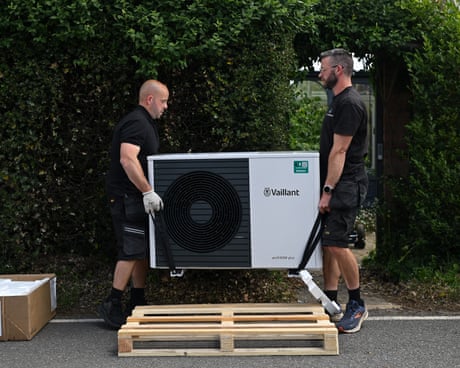
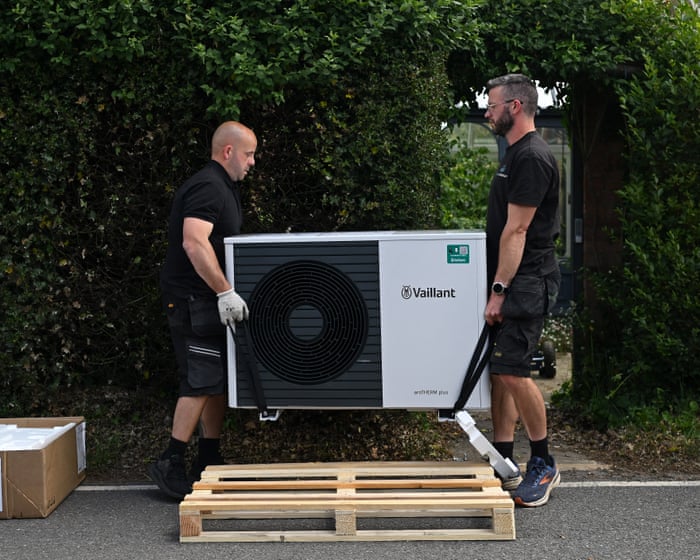
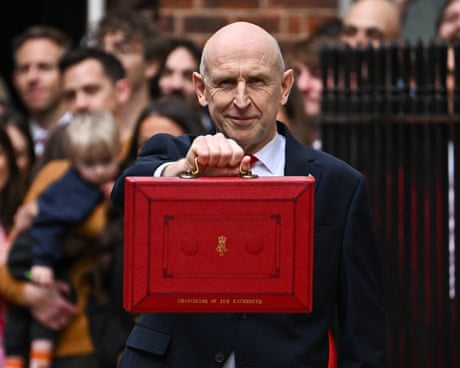
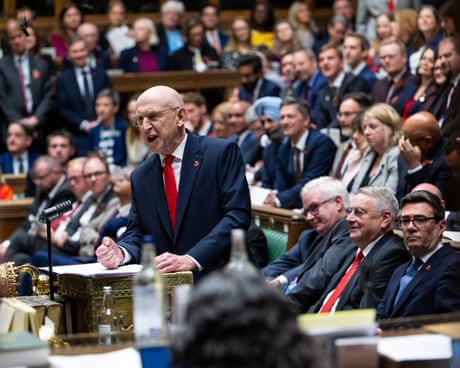
Britain is unlikely to hit its targets on green heating after the cuts announced by John Healey this week, experts have warned, as critics of Ed Miliband claim the former energy secretary’s green agenda is being dismantled.
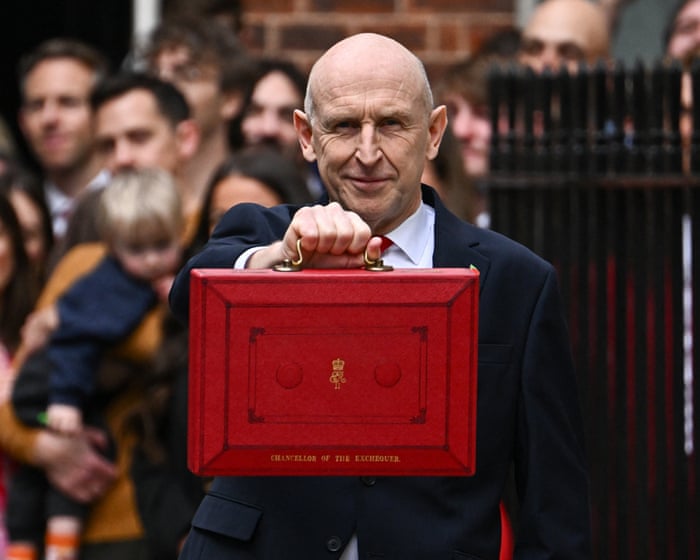
The chancellor unveiled more than £3bn worth of cuts to the energy department’s budget this week, much of which will pay for higher defence spending.
Downing Street has paid tribute to Patrick Stewart following the actor’s death. At the daily lobby briefing, the PM’s spokesperson gave a comment that was a bit more extensive than the usual No 10 contribution when a great British celebrity dies. The spokesperson said that was because Andy Burnham feels strongly about the importance of actors.
The spokesperson said:
The prime minister was very sad to hear of the passing of Sir Patrick Stewart.
As a former culture secretary he knows how much Britain’s greatest actors mean to the country, and Sir Patrick was one of the very best.
Just a reminder that when it comes to Wales, we are not comparing like with like. The term ‘region’ in an English context typically refers to an area covering between 1.5 and 3 million people. In Wales, regions cover much less dense areas. The Swansea Bay city region captures some 700,000 people, and similarly North Wales around 690,000 people. In Mid-Wales sheep outnumber people by 7:1. Only the Cardiff city region is comparable to English tiers, and even then at the lower end: around 1.5 million people.
Transposing an English mayoral worldview onto a very different political geography just doesn’t work. Wales may be a similar population size to the PM’s old manor but that’s where the parallel ends.
Andy Burnham talks about the regions of England and Wales interchangeably but the role the new prime minister champions for metro mayors is, in many respects, already performed by the Welsh government. Powers over skills, employment support, economic development, housing investment and major spending programmes sit at an all-Wales strategic level (covering a similar population size to Greater Manchester.)
His argument for England is that powers should flow from Westminster to city regions because they operate at an economically meaningful scale. Yet when the PM turns to Wales, he seems to suggest that powers already devolved to Cardiff Bay should be dispersed further down the system.
But notably he is not calling on his successor as the mayor of Greater Manchester, Bev Craig, to fragment the powers of the Greater Manchester combined authority and redistribute them amongst its ten constituent councils. On the contrary, the whole logic of the Greater Manchester model rests on concentrating strategic authority at a regional level.
Yet the implication of his comments is that Wales should move in the opposite direction.
Prime minister says room for manoeuvre was limited by geopolitical crises and Labour’s 2024 manifesto
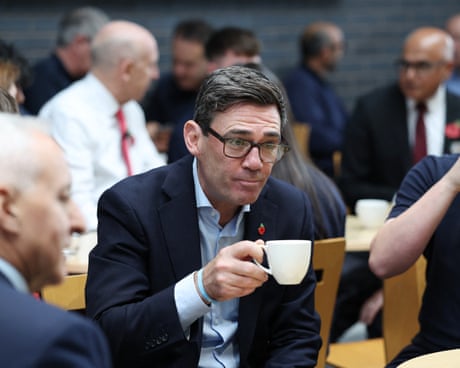
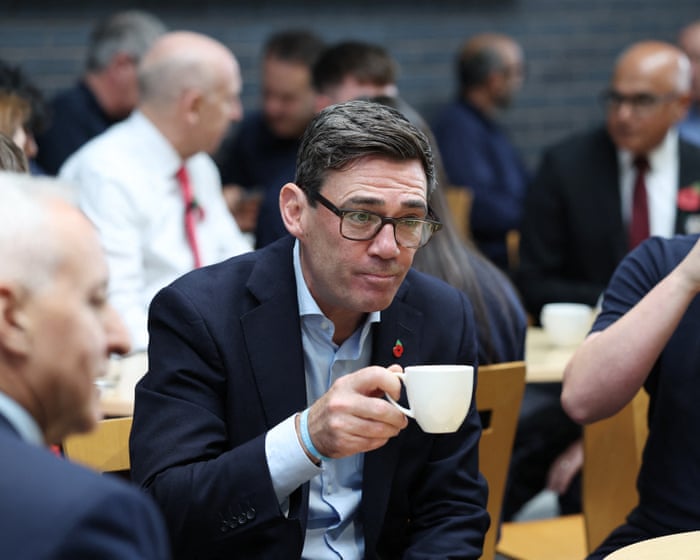
Andy Burnham has admitted his first budget as prime minister was not as radical as he would have liked because of the economic uncertainty facing the country.
He said he would have liked to have gone further with this week’s announcement – including with higher energy support payments – but felt hemmed in by external events such as the war in Iran, which has pushed up borrowing costs.
Experts round on chancellor over ‘scattergun’ budget, saying he ducked big tax and spending decisions
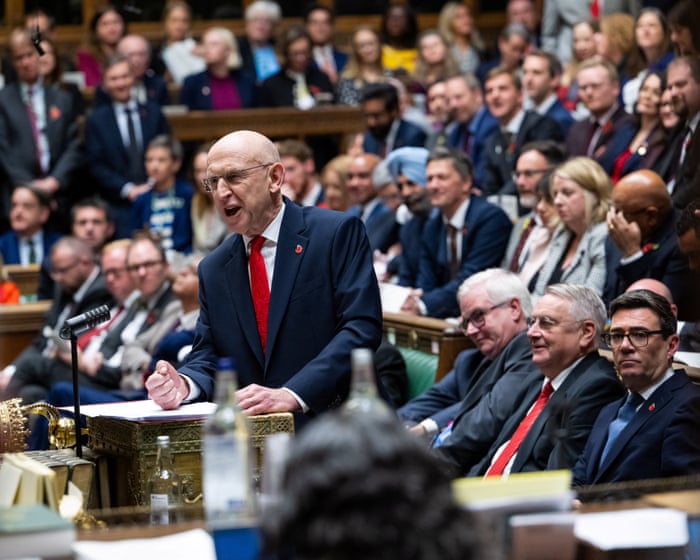
John Healey has backed away from cutting the cost of welfare this parliament, amid dire warnings his first budget could lead to brutal spending cuts because of a £28bn shortfall in public finances.
Experts rounded on Healey’s steady-as-she-goes budget on Thursday, with the Institute for Fiscal Studies saying he had left himself a mountain to climb by ducking big tax and spending decisions.
John Healey aced the morning-after media round because his Martin Lewis measures left nothing to challenge him on
Maybe it had been one of the greatest acts of political genius after all. The day after the budget is usually the moment when things start to fall apart. When clued-up journalists and economists have had a chance to go through all the fine points the chancellor would rather everyone had missed. The forecasts that suggest everything is predicated on a wing and a prayer. The hidden unfunded tax cuts. The greater-than-expected spending commitments.
But on Thursday morning Andy Burnham and John Healey could afford themselves a sigh of relief. All had gone about as well as they could have hoped. It turns out that when you don’t make any massive tax or spending commitments, there isn’t a great deal to unravel. All there had been was a raft of small-scale interventions designed to help people with their personal finances. Call it the Martin Lewis budget. In fact, Healey and Lewis now seem unable to get through the day without spending some time with each other. They certainly can’t stop talking about one another. It’s becoming unhealthily co-dependent. The gods of small things.
Thinktank says chancellor has given himself a mountain to climb after ducking big decisions in low-key speech
John Healey has paved the way for a “brutal” spending review next year after his budget failed to cover a £28bn shortfall in the public finances needed to avoid a return to austerity, according to Britain’s leading tax and spending experts.
A day after his address to the Commons, the Institute for Fiscal Studies (IFS) said the chancellor had left himself a mountain to climb by ducking several big decisions in his debut tax and spending statement.
Guardian columnist, senior economics commentator and host of the new Radical Thinking podcast Aditya Chakrabortty is answering your questions on the big ideas around economics, society and democracy, and his new podcast
thegreatfatsby asks: Do you think the fact that Gabriel Zucman, who is a recognised authority on wealth tax is given more respect, time and attention by the mainstream media than Gary Stevenson, who has worked eloquently and tirelessly to spread the debate about the terrible consequences of inequality and whose ideas and analysis are almost identical is because of our cultural fixation on class prejudice?
Aditya says: I’ve followed Gabriel Zucman (and Emmanuel Saez and Thomas Piketty) for a long time, and find his work rigorous and thought provoking. I don’t always agree, but I appreciate their acceptance that taxes on wealth are part of the fight against ever-increasing inequality.
I think Gary Stevenson is eloquent and compelling and is fighting a good fight. His book tells a story very well. But I don’t accept the insistence on a ‘wealth tax’ (as opposed to taxes on wealth) as being the only way we fight everything from inequality to the far right. We have to look at workers’ rights, housing, public ownership, greater democracy in economics and politics as well.
In the age of algorithm, simple, strong messages cut through. But the truth is often more complex.
Aditya says: What a nice question, Marija. I try to read a lot and write a diary. Unfortunately, I have the handwriting of a GP so I can’t read old entries. The other thing is I try to shirk my mobile phone.
Guardian columnist, senior economics commentator and host of the new Radical Thinking podcast Aditya Chakrabortty answered your questions on the big ideas around economics, society and democracy, and his new podcast
thegreatfatsby asks: Do you think the fact that Gabriel Zucman, who is a recognised authority on wealth tax is given more respect, time and attention by the mainstream media than Gary Stevenson, who has worked eloquently and tirelessly to spread the debate about the terrible consequences of inequality and whose ideas and analysis are almost identical is because of our cultural fixation on class prejudice?
Aditya says: I’ve followed Gabriel Zucman (and Emmanuel Saez and Thomas Piketty) for a long time, and find his work rigorous and thought provoking. I don’t always agree, but I appreciate their acceptance that taxes on wealth are part of the fight against ever-increasing inequality.
I think Gary Stevenson is eloquent and compelling and is fighting a good fight. His book tells a story very well. But I don’t accept the insistence on a ‘wealth tax’ (as opposed to taxes on wealth) as being the only way we fight everything from inequality to the far right. We have to look at workers’ rights, housing, public ownership, greater democracy in economics and politics as well.
In the age of algorithm, simple, strong messages cut through. But the truth is often more complex.
Aditya says: What a nice question, Marija. I try to read a lot and write a diary. Unfortunately, I have the handwriting of a GP so I can’t read old entries. The other thing is I try to shirk my mobile phone.
Thinktank says chancellor has given himself a mountain to climb after ducking big decisions in low-key speech
John Healey has paved the way for a “brutal” spending review next year after his budget failed to cover a £28bn shortfall in the public finances needed to avoid a return to austerity, according to Britain’s leading tax and spending experts.
A day after his address to the Commons, the Institute for Fiscal Studies (IFS) said the chancellor had left himself a mountain to climb by ducking several big decisions in his debut tax and spending statement.
Treasury select committee asks FCA to investigate whether tax surcharge leak led to ‘improper release of inside information’
John Healey is facing pressure to clarify whether he permitted a market-sensitive budget leak ahead of his statement, which moved bank share prices.
The chair of the influential Commons Treasury select committe, Meg Hillier, has written to the Treasury and the Financial Conduct Authority watchdog (FCA) to assess whether a story leaked to Bloomberg, and published more than an hour before the budget was revealed, led to an “improper release of inside information”.
Prime minister wrote to ministers saying he did not want them to ‘advocate for specific options or opine on the likely outcome of the process’
Selling nicotine-free vapes to children under the age of 18 has become illegal from today, the government has said.
Children were already banned from buying vapes containing nicotine. But, under the Tobacco and Vapes Act, shops across the UK will now be banned from selling nicotine-free vapes, and nicotine pouches, to children.
Vaping can be a way to help established adult smokers who are already addicted to nicotine from tobacco to swap to a less dangerous product. Vaping is considered safer than smoking, but that is a low bar. Vapes should therefore never be used by children or non-smokers.
Some children have already come to harm from bad reactions to vapes. The long-term health harms of vaping in today’s children will only become clear over time. They are however unlikely to be good; inhaling multiple, often heated, chemicals into the lungs may well do irreversible harm.
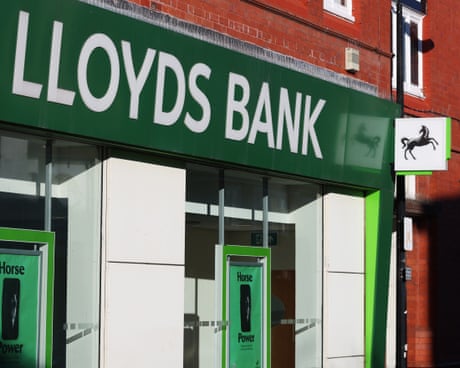
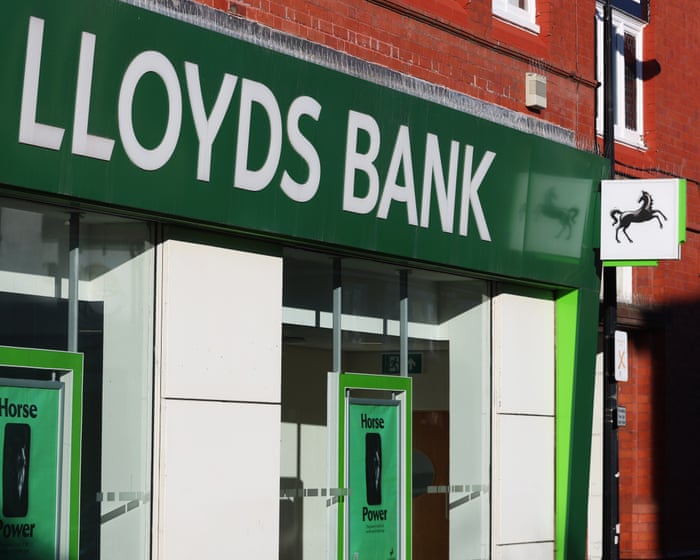
A senior Lloyds Banking Group executive has criticised the chancellor for linking bank tax increases to energy bill support for UK households, as he warned the government against extending the higher levy beyond March 2028.
Lloyds’s chief financial officer, William Chalmers, acknowledged that the economic environment was “challenging” but said the government should not seek to ease pressure on households at the expense of the banking sector as it provides loans that could fuel UK growth.
John Healey delivered a “scattergun” budget that did little to boost living standards and left Britain facing “a painful second half” of the parliament, a leading economic thinktank has warned.
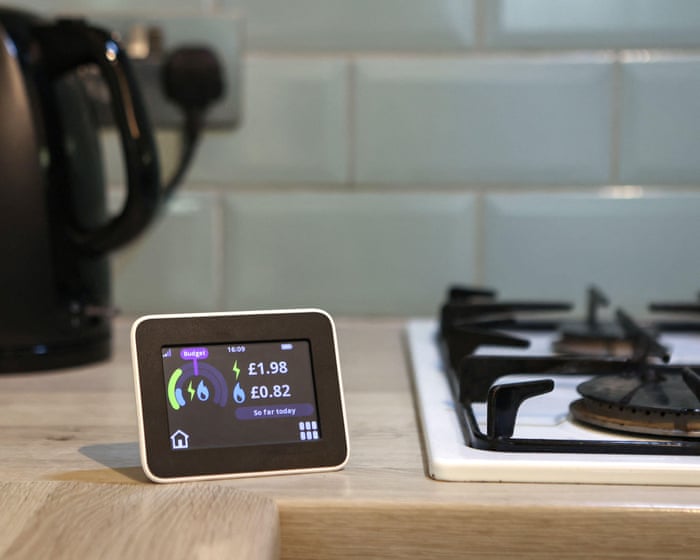
The Resolution Foundation said on Thursday that measures to ease household gas and electricity costs would still leave energy bills higher this year than during the last energy shock.
Prime minister wrote to ministers saying he did not want them to ‘advocate for specific options or opine on the likely outcome of the process’
Selling nicotine-free vapes to children under the age of 18 has become illegal from today, the government has said.
Children were already banned from buying vapes containing nicotine. But, under the Tobacco and Vapes Act, shops across the UK will now be banned from selling nicotine-free vapes, and nicotine pouches, to children.
Vaping can be a way to help established adult smokers who are already addicted to nicotine from tobacco to swap to a less dangerous product. Vaping is considered safer than smoking, but that is a low bar. Vapes should therefore never be used by children or non-smokers.
Some children have already come to harm from bad reactions to vapes. The long-term health harms of vaping in today’s children will only become clear over time. They are however unlikely to be good; inhaling multiple, often heated, chemicals into the lungs may well do irreversible harm.
John Healey had said there will be a reduction in the welfare bill before the next election, with a “tough” approach to young people who do not accept support to get a job or training.
The chancellor was repeatedly pressed on the issue in broadcast interviews after documents from the Office for Budget Responsibility suggested sickness and disability benefits would cost £100bn a year before the end of the decade.

 Login