Iran is betting that military pressure will ultimately force the United States to accept Tehran's control over the Strait of Hormuz — and that time is on its side. But its strategy carries risks.
On August 5, 2025, the US Department of Health and Human Services canceled 22 mRNA vaccine projects worth roughly $500 million and told the country it would stop investing in the technology that had brought us life-saving Covid vaccines. Health Secretary Robert F. Kennedy Jr., a longtime vaccine skeptic, claimed that the data showed these vaccines fail to protect against upper respiratory infections like Covid and flu. That his claims weren’t true — Moderna had already published Phase 3 trial results showing the opposite — didn’t seem to matter.
On August 5, 2026 — one year to the day later — the Food and Drug Administration (FDA) approved mFLUSIVA, the first mRNA influenza vaccine ever licensed in the United States.
That symmetry, while highly useful to writers like myself who are always looking to identify the rhymes of history, wasn’t planned. The approval landed on the one-year anniversary simply because of the deadline the agency had set for itself in February of this year, after it refused to review Moderna’s application and then, 15 days later, reversed itself.
The decision didn’t earn a huge amount of press, in part because seasonal flu is a disease Americans have rarely taken seriously — fewer than 50 percent of US adults got their flu shot this past fall and winter. But flu is no joke: The 2024–’25 season produced 51 million illnesses, 710,000 hospitalizations, and 45,000 deaths. That’s more than the number of Americans who died in car crashes last year. And the damage from a flu virus doesn’t stop when the fever does. In the week after a confirmed infection, the risk of a heart attack runs roughly six times higher than normal.
So a better flu vaccine matters. But the more interesting thing is what the approval says about the year that produced it. The nine experts who voted unanimously that this vaccine’s benefits outweigh its risks were appointed under the very same secretary who was against mRNA technology. Asked to look at the evidence, those experts couldn’t produce a single vote against it.
That’s not quite a change of heart, but at a dark time for public health, it’s something to hang our hopes on — because flu could just be the start for this technology.
The egg came first
If you’ve ever taken a flu shot, thank a chicken.
Every flu vaccine Americans have received since the 1940s has been grown inside fertilized chicken eggs. It’s a laborious process, closer to agriculture than it is high technology. Each batch incubates for nine to 12 days; the World Health Organization then spends months making the reagents manufacturers need to calibrate doses. The whole sequence runs about six months.
That means that the flu strains in your vaccine in November were selected back in February. Which is a problem, because flu viruses don’t like to stand still. Between February and November, the virus drifts, and the current dominant H3N2 flu drifts especially fast.
The eggs are a problem, too. Growing flu virus in a chicken egg forces it to adapt to egg cells, and those adaptations alter the very surface protein the vaccine is meant to teach your immune system to recognize. Between the 2011 and 2020 flu seasons, egg-adaptive mutations caused more mismatches than the virus’s own drift did. And more mismatches mean a less effective vaccine — while the flu shot prevented an estimated 12,000 deaths in the 2024–’25 flu season, it is the weakest vaccine in routine American use, landing anywhere between 20 and 60 percent effective depending on how well February’s guess matched November’s virus.
mRNA skips the egg. The shot carries instructions, a strip of genetic code that tells your own cells to build the flu’s surface protein, which your immune system then learns to attack. And swapping in a new strain means retyping that code, not growing a new virus.
As a result, Moderna told the FDA’s advisory panel it can go from strain selection to finished vaccine in two to three months instead of six. That means strain picks could move later, closer to the season they cover, and a novel flu virus surfacing in September could still be blocked by a reformulated vaccine in the same season. Eggs are great, but they can’t do that.
Building off the platform
Back in January I wrote here about the universal flu vaccine — one shot covering every strain for years. It’s a public health dream. mFLUSIVA isn’t that, but some of the best hopes for a universal flu vaccine run through the mRNA platform, and platforms only improve when somebody uses them.
That word — platform — is where last August’s decision went wrong. Kennedy made a claim about one application, mRNA respiratory vaccines, and cut funding for the technology underneath all of them. But over the 12 months that followed, the science on mRNA kept flowing.
In June, five-year melanoma results showed an individualized mRNA therapy given after surgery alongside pembrolizumab cut the risk of recurrence or death by 49 percent. In April, a Memorial Sloan Kettering team reported that among pancreatic cancer patients whose immune systems responded to a personalized mRNA vaccine, nearly 90 percent were alive six years later; the five-year survival rate in that disease sits near 13 percent. And KJ Muldoon, the first person treated with a gene-editing therapy built for his mutation alone, is walking and talking, though half the infants born with his disorder never see a first birthday. The editor that rewrote his DNA was delivered to his liver as messenger RNA — mRNA as the delivery truck rather than the vaccine.
None of those is a flu shot. All of them are the same chemistry — a strip of genetic code wrapped in a lipid nanoparticle — and none of them were what Kennedy was talking about when he defunded it.
Partially as a result, Americans are falling behind. Moderna’s combined Covid-and-flu shot is already licensed in Europe while patients here wait for a resubmission. The Phase 3 trial of its H5 bird flu vaccine — the one meant to be ready if bird flu ever learns to spread between people — runs on money from the Coalition for Epidemic Preparedness Innovations, and the British government, after the administration killed a $760 million BARDA contract. “The United States invented this platform,” Johns Hopkins RNA biologist Jeff Coller wrote on Thursday, “and is the only country walking away from it.”
Of course, you need to actually get the vaccine
mFLUSIVA beat a standard-dose flu shot by 26.6 percent in a 40,700-person trial. (Against flu bad enough to send someone to a doctor, the figure was 33.7 percent — an exploratory finding the trial wasn’t built to prove, but that points in the same direction.) This is a better flu shot, but it hasn’t solved flu.
There are issues with side effects: Two-thirds of recipients reported injection-site pain, against 30 percent for the comparison. Most cleared in a day or two, but in a country where a quarter of the people who skip the flu shot cite side effects, that’s not a minor problem.
And approval, unfortunately, isn’t access. The CDC’s vaccine advisory committee has been frozen by a federal court since March, so there is no clinical recommendation, which means insurers aren’t required to cover mFLUSIVA at no cost. The $500 million in canceled contracts hasn’t been restored. As Michael Osterholm, who runs the University of Minnesota’s infectious disease center, put it after the government reversed its mRNA decision in February: “We don’t have any idea why they reversed course. That’s part of the problem.”
The most optimistic reading is that nine independent experts appointed by this government looked at the evidence on mRNA and could not produce a single vote against it. The more pessimistic one is that it took a refusal-to-file letter, a public outcry and two senior departures to get there.
But here’s what we do know: Some morning this fall a 58-year-old will roll up a sleeve at a CVS for a vaccine designed off a sequence rather than grown in an egg, and will think about none of this. That’s more progress than I would have expected a year ago.
A version of this story originally appeared in the Good News newsletter. Sign up here!
Gas prices in Chadds Ford, Pennsylvania, on May 21, 2026. | Matthew Hatcher/Bloomberg via Getty Images
With the 2026 midterm elections quickly approaching, President Donald Trump’s war with Iran is ongoing and gas prices remain high.
Americans are taking note: On this week’s episode of America, Actually, host Astead Herndon visits Allentown, Pennsylvania in the state’s bellwether Seventh District, to hear how persistently high gas prices — almost $4.20 per gallon in Pennsylvania — are showing up in residents’ lives. Many said the economy and prices were at the top of their list of issues, and laid the blame at Trump’s feet.
Still, gas is just one expense of many, for voters who are likely also feeling the pinch with the cost of groceries, housing, electricity, and more. So how much power do gas prices really have to shape the outcome of an election — and, potentially, a presidency? And after decades of renewable energy growth, technological disruption, and new existential worries, why are gas prices still so core to the American political conversation?
To learn more, Herndon spoke with Julian Zelizer, a professor of history and public affairs at Princeton University. They discussed the history of gas prices as a salient political issue, why Americans feel high prices so acutely, even compared to other commodities, and whether voters are ever willing to overlook gas prices when they go to the polls.
Below is an excerpt of the conversation, edited for length and clarity. There’s much more in the full show, so listen to America, Actually wherever you get your podcasts or watch it on Vox’s YouTube channel.
When did the price of gas become such a political weapon in America? Does this date all the way back to the Model T?
It really dates to the 1970s. That’s when the United States will have two energy crises, in 1973 and 1979, and the price of gas becomes a huge political issue for Americans. It affects presidents, it affects Congress, and it becomes a manifestation in that decade of the problems facing the country.
I think that’s when we start to realize we don’t have unlimited resources and it’s gonna be a political problem.
Can you go in more detail about that? What happened in the ’70s to make it so clear to Americans that this party might not last forever?
Production of oil here peaks in the late 1960s, early 1970s, and then in 1973, OPEC, which is the cartel of oil-producing countries in the Middle East, imposes an embargo on the US because the United States had supported Israel during the Yom Kippur War. And as a result of the embargo, prices go up and supplies go down, and that’s when Americans start to face gas lines.
Then, in 1979, we have another round of this after the Iranian Revolution, and that leads to even bigger gas lines and more stringent rations and government mandates in ’79, and many people think it really helped bring down Jimmy Carter’s presidency.
Carter in 1979 is really reeling from what Americans experience. And it’s not simply gas prices, it’s waiting in line for gas. It’s hearing that you could only buy gas on certain days. It’s reading stories about people stealing gas and violent clashes occurring over getting this commodity.
There’s a lot of things that go into the mix with Carter — the hostages in Iran — but certainly his difficulty dealing with this fundamental is a big part of what happens in 1980 when Reagan wins the presidency.
Of course, presidents have little control over the global price of oil, yet they are blamed for it seemingly every time. How have politicians and particularly presidents dealt with that reality, considering the price at the pump is so important to their political futures while not always in their control?
In the ’70s they tried with legislation. Carter pushes legislation that deals with energy, but it’s limited in its success. Americans want a lot of oil and it was hard to get them to conserve.
He put solar panels on the White House. There’s really not much that presidents can do. We have the strategic reserves. And other than that, I think presidents just wait it out and hope the timing works in their favor and the gas prices go down again.
Is there an example of a president who beat the gas prices trap? Do we have any example of someone successfully convincing the country, “Hey, look away from the price of the pump”?
I think we have presidents who say, “Just look away for a little while,” and when reelection comes around again, they’re doing better. Even President George W. Bush struggled with some of this after 9/11 and after the war started. But in the end, he doesn’t make an announcement about it so much as focus on other issues such as national security.
And now we see how prices fluctuate, so you just wait for those moments.
Why is it always gasoline rather than other commodities when we think about the priorities for the electorate?
There’s a few things. One is that, historically, the automobile really symbolizes American freedom and American consumption. And so when something impinges on our ability to drive a lot…
Second, it’s a price you just see. It’s just very visible when it goes up or down, more than groceries even.
I think that kind of recurring image for people becomes very politically potent if that number gets too high. So it’s a real struggle, but it’s also symbolically right in front of us. And these days, I think even more so now than in the ’70s or ’80s, it’s become something that the reporters and the media track.
I want to talk specifically about this summer. We’ve crossed $4/gallon again this summer, the highest since 2022, and this time it’s pretty clearly tied with the ongoing war in Iran.
Donald Trump has tried to make the argument that some short-term pain at the pump is worth a long-term national security focus. But his energy secretary said pretty clearly that gas won’t be back to $3 until 2027. Obviously, that puts us after the midterm elections. It sounds like he’s running the exact playbook you just told me has never worked, which is to get people to just pretend this is not happening.
What have you thought about how the president has handled the spike in gas prices?
In part it strikes me as a president who doesn’t really care about the fate of his party. I think it’s a big issue. I think most Republicans understand that. And it’s tied to a war that really doesn’t have public support.
It’s a war without the kind of clarity that many people felt after 9/11 with Afghanistan, and Iraq for a while. It’s the worst of all worlds. And so I think he’s really fumbled on this issue, and there was part of him that hoped people either wouldn’t care even if they noticed, or somehow the prices would diminish. It’s certainly not looking that way.
Blanche's path to confirmation has been complicated over a settlement of Trump's lawsuit against the IRS that has drawn intense scrutiny from Republicans and Democrats alike.
The tech that wants to help you get dressed. | CreativaImages/Getty Images
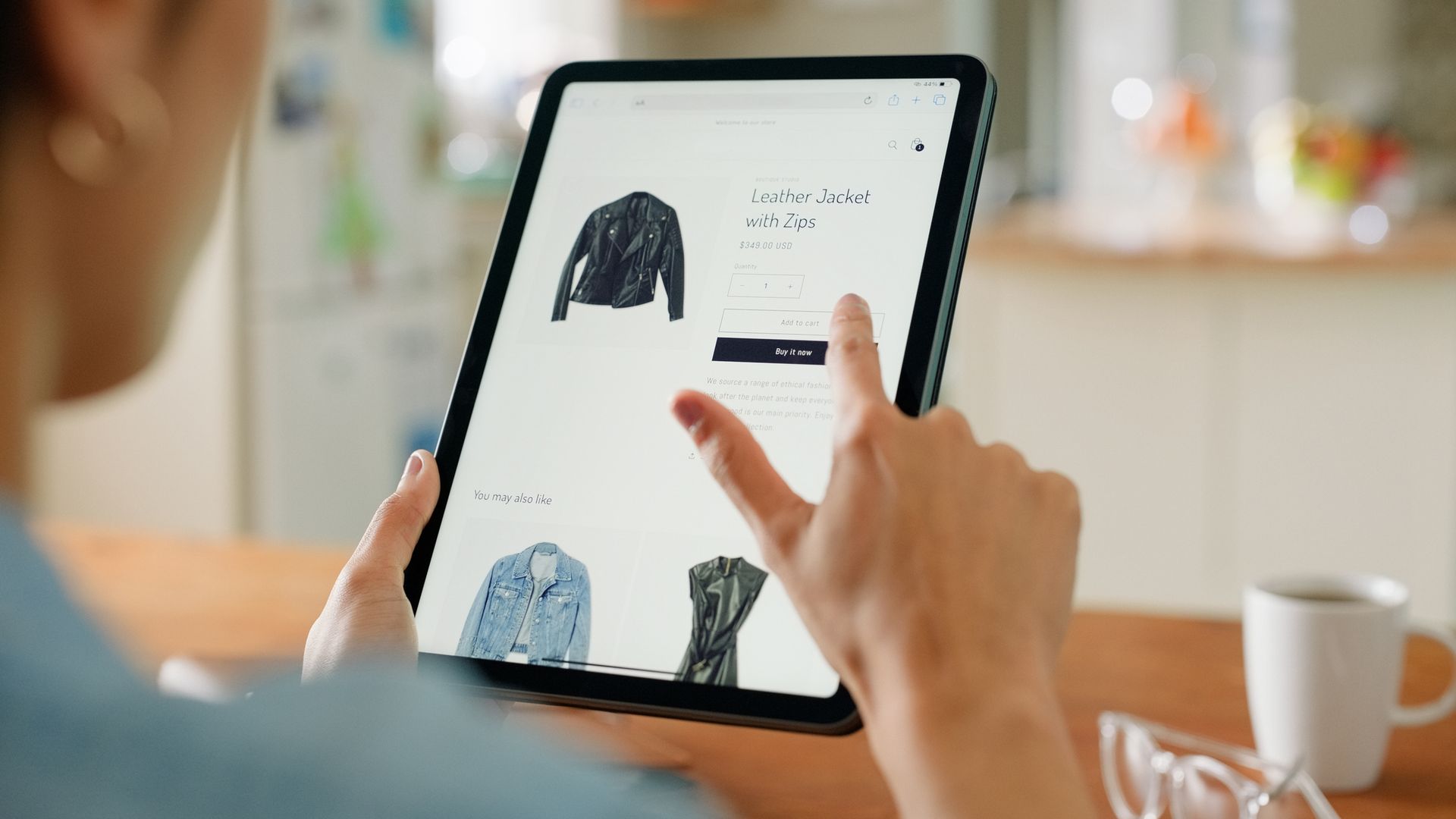
The influencers have started to promise me that they know how to get me to stop shopping: I just have to enter every garment of clothing I own into an app, one by one. “I digitally cataloged my ENTIRE wardrobe,” theyswearonvideos, routinelypulling in hundreds of thousands of views.
The selling point of these apps (Indyx, Whering, ACloset, OpenWardrobe, and many more) is seductive; they promise to help users understand exactly what they already own so that they shop less. In theory, that means saving money — and slowing the steady damage the fashion industry is wrecking on our planet.
“Collectively, we are buying and then throwing away more than ever before,” Indyx warned on its website, before reciting dire statistics about how many clothes are produced now and how many of them end up in landfills. Luckily, it said, “We’re here to break the cycle.”
That idea appealed to me. I am not a fashionista, but I enjoy clothes enough to buy more than I really need, despite what I know about fashion’s impact on the planet. My intellectual understanding of climate change can’t always stop me from clicking “add to cart” when I see a dashing pair of wide-legged trousers, even though there’s a hard limit on the number of times a person can wear wide-legged trousers in one week.
Still, to make these apps work, you have to individually enter photos of everything you own now and everything you buy in the future, which sounds like a tedious, laborious process. (You can take the photos yourself or hunt down product pictures from the brand.) And because so many influencers are pushing this, it’s hard to tell how life-changing it really is and how much is just marketing speak and hype. So, I decided to test one of these apps — Indyx — for you. I also talked to wardrobe cataloging enthusiasts and experts on sustainable consumption to see what I could learn from them. I wanted to know: Could cataloging our wardrobes actually make us shop less? And, if it can, would it be worth the effort?
Key takeaways
Experts estimate the fashion industry accounts for between 2 to 10 percent of global greenhouse gas emissions.
Wardrobe cataloging apps are presented as a strategy for buying fewer clothes, helping to minimize fashion’s impact on the planet.
Some people find these apps to be a constructive way to redirect their shopping energy.
But the initial setup process for the apps is highly labor intensive, and they require constant tending over time.
Wardrobe apps may be right for you if you find yourself reflexively browsing clothes in your spare time, and you want to direct that impulse elsewhere.
They may be wrong for you if the idea of photographing everything you own individually fills you with a powerful dread.
“There’s only one solution to the mess that we find ourselves in: buying less”
Wardrobe cataloging apps did not always advertise themselves as being good for the planet.
In 2023, the journalist Avery Trufelman investigated the nascent wardrobe cataloging app industry for her podcast series Articles of Interest. She found that a lot of the apps flopped. The issue was the business model, which was based on revenue generated from affiliate links. The idea was that people would click to purchase items they saw within the apps, and the company would take a cut of each sale. But when the apps were well designed, Trufelman reported, users felt less of a need to buy more clothes.
The current generation of wardrobe cataloging app developers has turned this from a bug into a feature. They now market their wares as the solution to overshopping, and they make their money by charging for either the app itself or for its extra content. (Indyx itself is free, but you have to pay a $75 yearly subscription for its enhanced features.)
What the marketing gets right is that the fast fashion problem is real. “Anywhere from two to 10 percent of our global greenhouse gas emissions are associated with fashion,” said Brie Berry, assistant professor of environment and sustainability at Ursinus College in Pennsylvania.
Fashion’s emissions are generated by the factories that manufacture clothing (the water and the fertilizers for growing cotton, the oil for developing synthetics) and the consumers who wear these garments (the slow shed of microplastics from yoga pants, the water and the energy consumed by washing and drying). When we get rid of old clothes, much of it ends up in landfills or incinerated. By some estimates, the fashion industry contributes more to climate change than the aviation industry.
“There’s only one solution to the mess that we find ourselves in: buying less,” said Katia Dayan Vladimirova, a researcher whose consulting firm Post Growth Fashion focuses on alternatives to growth in the fashion system.
To buy less, it helps most people to know what they already own, said Alyssa Beltempo, a slow-fashion content creator and educator. Beltempo makes videos guiding viewers through the process of “shopping their own closets” to help them buy less stuff, but she’s found in her work that a lot of people aren’t clear on the contents of those closets. Because of that confusion, they end up buying stuff they don’t need.
That’s where cataloging can be helpful, Beltempo said. “These apps reduce that hurdle of not seeing the clothes you have,” she said.
Personally, what I was looking for wasn’t enhanced clarity so much as a barrier. I wanted to erect a wall between my desire to own a new piece of clothing and the click of the buy button. A searchable, scannable lookbook of everything I owned, I thought, might well do the trick.
How to catalog every piece of clothing you own
Indyx has been hyping up its new AI feature, which transforms a picture of a garment hanging limply off a hanger into a neat flat lay photo. It sped the process up, but it was also buggy; it garbled text on the front of T-shirts, misread colors, and had a tendency to interpret loose threads as ornamental bows while leaving wrinkles (I am not an ironer) untouched.
I was also concerned that the process inserted AI, with its insatiable need for water and energy, into a project sold as a way of reducing my environmental impact. But the sustainability experts I spoke to were both skeptical that this sort of light AI use was such a big deal.
“Taking photos and then asking an app to think about how to arrange your clothing into outfits is probably one of the lighter uses of AI that I could imagine,” Berry said. Vladimirova agreed that using AI for this task is unlikely to be as bad for the planet as buying even one new garment. “But then, there is also no proven causality between using this app and reducing overconsumption,” she added as a caveat.
It’s possible to input your clothes into Indyx without using the AI feature, but the truth is: I don’t know that I could have made myself go through with the whole rigamarole without it. I ran out of free AI processing about 80 percent of the way through and, overwhelmed at the thought of having to do my own flat lays, paid $75 to buy more without hesitating.
All told, it took me about five hours and many old episodes of Top Chef to photograph my summer clothes, not including shoes, jewelry, or accessories. My time spent cataloging did not include the process of entering additional data about each garment (including its initial cost, its fiber composition, where I bought it), a herculean task that I have been tackling much more slowly than the initial entry process.
Doing the shoot properly would have taken longer. Angela Goodman, a 51-year-old marketer from Seattle with a background in product photography, says she ran her own cataloging session like a pro shoot, using art lights and folding and refolding each garment to lie perfectly. It took her 10 hours spread out over multiple weeks.
As an exercise, photographing every piece of clothing I owned was clarifying, although not significantly more clarifying than going through it Marie Kondo-style. It left me with a small donation pile of items I no longer wanted and a fretful awareness that I own too many white T-shirts. In theory, that’s the kind of insight a wardrobe cataloging app produces by the spade.
“I’m not shopping. I’m building.”
Vladimirova, the sustainability consultant, said that, even though she has a better idea than most of how destructive the fashion industry is, she struggles with over-shopping. She thinks a lot about why people buy so many clothes; her best guess is that it’s a way to self-soothe.
“A lot of consumption happens in the evening when we feel vulnerable and tired, and we’re trying to reward ourselves with this shot of dopamine,” she said. For some people, these apps can replace the dopamine hit that comes from scrolling through other people’s outfit photos with the dopamine hit of scrolling through your own clothes, neatly folded and filtered until they look like aspirational fashion inspo.
Part of the satisfaction here is the infographics. After you’ve given Indyx all your fashion data, the app crunches your numbers and tells users how much you’ve bought new versus secondhand, as well as the share of natural fibers as opposed to synthetics in your closet, so that you can track the environmental impact of your shopping habits. (Synthetics tend to have a higher carbon footprint than natural fibers.) It tells you what their cost per wear is on each item to help you track which expensive garment was worth the splurge and which was a waste of money. Users can also plan outfits. You can share your wardrobe with stylists who will plan the outfits for you (on Indyx, the service ranges from $25 a month to “the low hundreds”). It’s like playing paper dolls with your own wardrobe.
For Goodman, the former product photographer, all this data takes the place of recreational shopping. She describes getting a marketing email from one of her favorite brands about a sale. After a quick scroll through their offerings, she found that she felt no urge to buy.
“I was like, ‘I do not need more clothes. I’m going to go update my Indyx, because I’m a couple of weeks behind,’” she said. She started inputting the last few outfits she’d worn into one of the Indyx services that is supposed to allow users to track their patterns and see which clothes they actually wear and what they like in an outfit. “I’m playing with clothes,” she said. “But, like, I’m not shopping. I’m, you know, building.”
Over time, all this data is supposed to inform future shopping choices. “There is something very clear about seeing two pieces that you’ve owned for the same amount of time — one that you’ve worn 57 times and one that you’ve worn twice,” said Alexandra, a 29-year-old consultant in Northern Virginia who requested her last name be withheld. She thinks tracking her clothes has given her “a little bit less buyer’s remorse.”
Cataloging your wardrobe can’t prevent a compulsive need to buy, though.
“I don’t think it cured me of my undiagnosed shopping addiction,” Alexandra said. “You can very quickly go from ‘I’m cataloging what I have’ to ‘I’m seeing a bunch of gaps in my wardrobe that I should fill immediately.’”
“There just wasn’t incentive anymore”
The main question I had about these apps was whether, with such a labor-intensive process, there comes a time when the juice is no longer worth the squeeze.
Alexandra says that she gradually stopped using her wardrobe app last year, after she moved out of her own apartment and back into her family’s suburban house in the midst of a career transition.
“I was separated from a lot of my belongings for a very long time, and then, as I started to get things back, it didn’t feel worth the effort anymore,” she said. Who was she going to see in one of her curated outfits? “My job’s on a computer. When I leave the house, I go to the grocery store and the pharmacy and the bookstore,” she said. “There just wasn’t incentive anymore, compared to when I was closer to the city and doing things more regularly.”
Beltempo, the slow fashion content creator, said she doesn’t bother to add every new purchase to her own catalog.
“I really use it more for my packing,” she said. Before she travels, she makes a list of likely candidates for her suitcase and enters them into the app. “And then, I’ll play, and I’ll make outfits,” she says.
Vladimirova, the sustainable consumption researcher struggling with overshopping, gave the apps a spin. She tried three of them and found that she was only able to stick with each one for a matter of months. “In the beginning, when the novelty of the app is there, it’s very satisfying,” she said. “It records your outfits in vivid colors. It can crop out the ugly background and keep it very neat, create fancy capsules. They look so lovely.”
But over time, they all began to bore her. “And now, I forget to update when I buy something new — usually from secondhand sources — and it kind of lost its meaning for me,” she said. “But the premise is good!”
My own experience seems to be closest to Vladimirova’s. I keep having to remind myself to enter my outfits into Indyx. Every time I put on a piece of clothing, I think with dread, “Oh god, if I don’t look up how much I paid for this, I’ll never know my cost per wear and, then, what’s the point?” I keep giving my shoes guilty looks and thinking about how I should really photograph and catalog them — if I’m doing this right.
“It’s a project,” said Lauren Ludwig, a 41-year-old who has been using her wardrobe apps for the past three years. “But it’s a fun one for someone who enjoys clothing.”
Indyx and its brethren are slick, and their infographics are beautiful. For dedicated wardrobe hobbyists, they’re probably a great option. But for most people who just want to cut down on their clothes shopping, it’s hard to say that the $75 annual subscription is worth it. The free version will give you the same paper doll effect if you are willing to do your own flat lays, or you can recreate it by dragging phone camera pictures of your clothes onto a Google Slides deck.
If you find, as Vladimirova theorized, that you shop when you don’t feel good, you can try replacing that habit with a “dopamine menu” of small acts that bring you joy, like hugging a pet, doing a puzzle, or going for a walk. And if your closet is filled with brand new clothes you never wear, you’re racking up debt buying clothes, or you just have the nagging sense that your shopping has spiraled completely out of control, therapy is not a bad idea.
Personally, I found that Indyx could not give me what I really crave when I want to play with clothes: the understanding of the way fabric drapes against my body, the knowledge of its texture against my skin. There is no substitution for the slow analog process of walking into my closet, touching my clothes with my human hands, and learning with my five senses that what I have is already enough.
If you live in America in 2026, and you’re not so wealthy as to be absolutely shielded from daily life, you’re probably aware that everything is really expensive now. Gas and milk are both above $4 a gallon. Fresh vegetables are up almost 10 percent over this time last year, even though they will maybe give you explosive diarrhea. The median home in this country now costs almost half a million dollars.
A lot of people — even those with relatively high-paying jobs — are very, very stressed about money.
In some ways, our current unaffordable era is starting to evoke the years right after the Great Recession. Unemployment was high, the economy was bleak, and a lot of Americans, myself included, were searching for ways to do more with less.
One distinctive product of these harsh conditions was an entire blogosphere that emerged to give readers chatty, relatable advice on saving money.
It was a kind of the golden age for personal writing on the internet, and these writers melded advice and personal narrative in a way that foreshadowed today’s influencers, but with a more lo-fi, DIY aesthetic.Starting in about 2008 and continuing for the next decade, these authors reached thousands of readers a day with tips on how to spend less and sock more away. There was Mr. Money Mustache, a brash “financial magician” who had retired at age 30 and believed ordinary people could save half or even 75 percent of their income. There was Trent Hamm of the Simple Dollar, an Iowa dad who shared his story of getting out of debt alongside recipes for cheap meals and homemade laundry detergent. There was my niche favorite, An English Major’s Money, by a young woman who shared my less-than-lucrative career path but who was nonetheless determined to achieve financial stability.
It wasn’t just old-school personal finance advice, it was a whole philosophical universe dedicated to the idea that by living on less, you could liberate yourself from the uncertainties of the economy and experience true freedom.
Collectively, I like to think of these writers as the frugalsphere.
Today, most of them are no longer blogging about saving money — some have gotten jobs in traditional media, while others have gone on to other careers entirely (or are simply enjoying early retirement). But their movement feels newly relevant today, as Americans struggle to afford necessities and face mounting anxiety over their economic future. SoI decided to track down a bunch of frugality writers from that time, and see what they had to say about 2026.
One thing I wanted to know was why I wasn’t seeing the same outpouring of money-saving advice I’d seen in the wake of the 2008 crash. But I was also curious for bigger insights: What, if anything, is the equivalent of the frugalsphere in today’s inflationary era? And couldthe ethos of those optimistic coupon-clippers give us smarter ways to think about the unsettling new place we find ourselves in 2026?
What I found is that the frugalsphere still has lessons to teach us, but they’re not about reheating leftovers or washing out Ziploc bags. Instead, they’re about how to claim a sense of autonomy, even when our lives are buffeted by forces beyond our control.
The short, influential arc of the frugalsphere
The idea that you can achieve prosperity by carefully watching your spending is far from revolutionary, and self-help authors were extolling the virtues of frugality long before the Web 2.0 era. In the 1990s, for example, editor Amy Dacyczyn published a print newsletter called the Tightwad Gazette, teaching readers frugal tricks (Dacyczyn herself favored reusing aluminum foil) for the low price of $12 per year.
But amid the upheaval of the Great Recession, when more than 15 million Americans found themselves unemployed in the worst crisis since the 1930s, a new generation of bloggers started offering advice about saving money, often directed at millennials starting their careers in a decimated job market.
“People were looking for something they could do,” Nicole Dieker Finley told me recently.
What Finley did was to start posting all her earnings and expenses on Tumblr around 2012, when she was trying to make it as an independent musician in Los Angeles. She soon caught the attention of the editors of The Billfold, a website launched the same year to cover money with a personal, relatable tone befitting the times. Billfold editors Logan Sachon and Mike Dang shared their student loan and credit card debt; Finley tracked her net worth and spending and wrote about her quest for financial independence. She later went on to a freelance career writing about money (including for Vox).
Kara Stevens, meanwhile, started the website the Frugal Feminista around 2012 while facing down student loans, credit card debt, and a tanking credit score: “It clicked to me that if I didn’t do something about it, I would be in this position of not being able to move forward in my life,” she told me.
Based in New York City, she shared tips for finding free events, cheaper dupes of popular brands, and deals on fancy hotels. “It was like, how am I living my Sex and the City life on a budget?” Stevens recalled.
As time went on, more bloggers joined the space, some of them already starting from a position of financial freedom. Kristy Shen and her husband Bryce Leung started the site Millennial Revolution after retiring in 2015 at age 31 with a seven-figure investment portfolio.
“After 2008, people started freaking out and thinking that no job is safe,” Shen told me. “I think that’s when people started being more interested in finance.”
The message of the frugalsphere was that if you could leave cheaply enough and save enough money, you could weather any layoff — and eventually, not have to work at all. The bloggers of the era — many of them millennials aiming their advice at other millennials — tended to share a can-do attitude, a sense that with the right mix of care and planning, almost anyone could improve their financial situation.
Also, they wanted to stick it to the man
The frugalsphere also had a tinge of rebellion about it. “Americans tend to have a very up-down relationship with consumption,” said Helaine Olen, a longtime financial journalist and the managing editor at the American Economic Liberties Project, an anti-monopoly think tank. After 2008, the pendulum started swinging against buying stuff, and the frugality bloggers were leading the swing.
Their implicit message was often that by refusing to buy expensive things, you were pushing back against corporations that wanted to control you. Frugality was, at least to some degree, about sticking it to the man.
At their peak, some personal finance blogs were reaching thousands of readers a day and breaking through into mainstream media. Shen told me that Millennial Revolution got 15,000 page views the day after a post about the virtues of renting a home was picked up by the CBC. Shen and Leung, as well as Trent Hamm and other bloggers, got book deals and started to reach a broader audience.
But the culture soon began to shift. The written personal blog began to die out, replaced by more visually driven social media – and an influencer ethos that rewarded the acquisition of new possessions, rather than showcasing ways to do without. Today, social media is much more about celebrating consumption than questioning it.
On TikTok and Instagram, “it becomes about showing perfection and showing a good life,” Olen said. “And part of a good life, as we define it in the United States, is spending money.”
How frugality lost its shine
Today, some frugality influencers have found a home on TikTok, and the deinfluencing trend of a few years ago shows there’s still an appetite for anti-capitalism, even in the age of short-form video. But overall, the cultural and economic winds have blown against frugality, frugalsphere writers and observers told me.
As inflation rose in the 2020s, necessities cost more, but saving also became less attractive. More people made the calculation that “if I don’t take this trip this month, it’ll be more expensive next year,” Olen said.
Upheavals like the Covid pandemic gave some Americans “a grim outlook on money,” Stevens said. Their feeling was, “there’s no chance that any of us can be wealthy. What’s the point of saving anything?”
Today, tips like making all your coffee at home instead of going out for a little treat don’t resonate the way they once did. This time is fundamentally different from 2008: The economy is nominally “good” now, and unemployment is low, but everything from eggs to real estate feels more unaffordable than ever.
“People say, The cost of living is so high, I need some joy,” Stevens said. “Like, You can’t deny me everything.”
What the frugalsphere can teach us now
When I talked to frugalsphere writers about today’s situation, I ended up realizing that even if some of their specific tips are no longer as applicable, their mindset still is.
At its best, frugality advice was always about adapting to your situation, whatever that might be. When rice is cheap, buy in bulk. When basil is expensive, use the leftover pesto you froze in an ice-cube tray. Nothing is cheap right now — and, to be honest, I have never had the energy to freeze pesto — but the basic idea stands.
“Frugality to me means intentionality.”
Kara Stevens
“Be flexible,” Shen says. Millennial Americans once worried about their jobs being outsourced. Now workers all over the world are worried about getting replaced by AI. No matter what, though, “you have to change with the times.”
For Gen Z, that might look like entrepreneurship and investing rather than a traditional career and saving for a home, Shen said. I can’t yet imagine what it will look like for Gen Alpha, but there’s something reassuring about the idea that flexibility is a skill we can learn, one that can help carry us through even the most macro of macroeconomic shocks.
One big thing that’s changed since 2008 is the politics of personal finance. In the 2010s and 2020s, many critics of the frugality approach began to point out that without systemic change to lower the costs of housing, health care, and education, all the coupons in the world weren’t going to make much difference. Today, affordability isn’t just an individual concern — it’s the cornerstone of a lot of political debates.
But even as we look to systemic solutions, there’s another big lesson Americans today can take from the frugalsphere: Control what you can.
For Stevens, that looks like acknowledging that “within any system that has a bias toward corporations or the wealthy, we understand that things may not be fair,” she said. “That also doesn’t mean that you don’t have personal agency.”
Exercising that agency might mean being more mindful around retail therapy rather than cutting it out entirely, Stevens said: “If I know that I need these little quick boosts to make me feel good because work is stressing me out, can I carve out a part of my budget that allows me to do that without completely disrupting my financial goals?”
Stevens, for instance, cares a lot about her skin, so she spends money on skincare products that really work for her, and cuts back on things like purses that don’t matter as much.
“Frugality to me means intentionality,” Stevens told me. It’s about “living more aligned with your values.”
In today’s era of polycrisis, it feels downright insensitive to promulgate the idea that anyone can get rich with the right combination of tips and tricks. But most Americans make at least a few choices every week about where our money is going.
If we can make whatever choices we do have in a way that’s intentional, in line with our larger goals for ourselves and the world — maybe that’s a 2026 version of financial independence.
It’s a beautiful day to go outside. | Vinnie Neuberg for Vox
If you’re Gen Z and it feels like something is different this summer, you’re not alone.
I’ve spent my career documenting — and living — this generation’s coming of age through reporting, focus groups, and surveys. More than anything else, and especially for younger Zoomers, it’s been characterized by the experience of the pandemic, which left many still feeling bitter and isolated even years later.
After years of post-pandemic malaise that saw young people’s mental health plummet as they opted for online engagement over offline opportunities, embraced a politics of doubt, and channeled their frustration into nostalgia for simpler times, nature is finally healing. A cohort whose coming of age was stunted by the chaos of 2020 is finally coming out of its shell.
We’ve seen it packed movie theaters and record-smashing ticket sales for Spider-Man: Brand New Day and The Odyssey. We’ve seen it in sports, especially in New York City, where joyous people filled the streets for weeks shoulder to shoulder, first for the New York Knicks’ championship run and later for the World Cup that concluded just across the river. For the young adults whose defining life experience to this point was being trapped inside, the images of impromptu mass gatherings and fan celebrations resonated far beyond the five boroughs.
But sports aren’t the only thing that has communities coming together in person as of late. Doves of young people have been lining up for froyo on any given night of the week, Love Island-obsessed observers have gathered in bars to watch the dating show, and despite dwindling patriotism, communities nationwide celebrated the country’s 250th birthday with hot dogs, fireworks, and fanfare.
As one 25-year-old from Illinois told me, it’s the season of “summer-maxxing,” which means “enjoying every bit of summer and the perks that come with it.”
In my own conversations and research, there’s a burgeoning sense that — for the first time in their lives — young people are driving the cultural moment themselves rather than having it inflicted upon them by older adults and events outside of their control. Some of the comments in this piece were shared in focus groups. Others came from a qualitative survey sent out to Gen Z-ers.
And while hope is a fragile thing, the implications could be profound. Through my work, I’ve tracked Gen Z’s loneliness and the fallout of the Covid-19 pandemic for years — examining how the damage has shown up in school, work, and politics, and even split my generation in two. The national conversation about young people has been just as dark, featuring stories overwhelmingly about what they aren’t doing: Hanging out with friends, hooking up, taking risks.
A generation dismissed as terminally online is taking its politics offline as well, making their presence loudly known in primaries by walking neighborhoods, knocking on doors, and turning out voters.
In recent years, post-pandemic trauma expressed itself in a craving for simpler times that fueled Gen Z’s nostalgia era. Young adults daydreamed about how good things must have been back in the 1990s, or in the early 2000s, or even within their own lifetime, before the pandemic, before the 2016 election, and especially before smartphones, social media, and AI took over the world. This nostalgia even helped power some young voters’ rightward shift in 2024, as they embraced a candidate who ran on a campaign to bring back the pre-pandemic past.
But this summer, the summer of 2026, is a moment of its own, and it involves engaging with the present rather than wishing we were somewhere else.
Take the movies, an industry that doomsayers warned was in danger of extinction after the pandemic trained a generation to stay inside with streaming devices.
Instead, this summer has seen two massive box-office hits — Obsession and Backrooms — that were made by young people, for young people, and saw young audiences turn out in droves for repeat in-person viewings. Obsession, directed by 26-year-old Curry Barker, drew on Gen Z’s anxieties about dating and intimacy. Backrooms, directed by 21-year-old Kane Parsons, drafted off a YouTube horror meme about people trapped in (generational metaphor alert) a never-ending indoor space.
It’s probably not a coincidence that these movies came out at a time Gen Z was confronting their post-pandemic fears of isolation head-on. Again and again in focus group conversations across the country, I’ve heard from young people who are looking to log off their devices and spend time together in-person.
“People seem a lot more interested in experiences rather than just like going out to go out,” a 17-year-old girl from Arkansas said. “People want to go…to concerts, go play pickleball, go to farmers market[s], go thrifting, go hiking, go on a coffee run. I think it’s just kind of more looking for community as opposed to entertainment.”
There are other signs of behavioral shifts. After years of data showing Gen Z drinking less than their adult peers, they are now keeping up with older generations: 74 percent of Gen Z reported drinking alcohol in March 2026, almost on par with the 76 percent rate for boomers, according to an IWSR report released in July. The report also found something very telling — rather than drinking to unwind, as has been the case for older generations, Gen Z is drinking more to socialize and to be with others.
In cultural events around the country, you can see this appetite for in-person gatherings that force young adults to unplug. The generationally beloved Phoebe Bridgers hosted phone-free concerts where she required her fans to put their devices in Yondr pouches. And there are impromptu “lie down” gatherings meant to encourage a collective, communal pause that are happening in Central Park. To keep up with this shift, Tinder — the epitome of online dating — will launch in-person dating events in 26 cities by the end of September, signaling that any business interested in capturing Gen Z must now have an in-person component.
A generation dismissed as terminally online is taking its politics offline as well, making their presence loudlyknown in primaries by walking neighborhoods, knocking on doors, and turning out voters. When I ask focus groups about which politicians catch their attention, they’ve brought up figures like James Talarico, Jon Ossoff, and Marco Rubio, who they identify as having a more energetic and optimistic approach. Young people have often mentioned New York City Mayor Zohran Mamdani as a model politician, and one of the traits I hear consistently that they like about him is that he is out in the street and easy to bump into. His online videos also emphasize him out in the world, interacting with constituents, or walking down the entire island of Manhattan.
“I think there’s a stronger presence of people coming together, whether it is for their favorite sports team with the NBA Finals and World Cup (let’s go Knicks!), stronger political activism, especially with primaries coming up in states like New York, and simply attending events like Pride parades,” one 30-year-old man from Brooklyn said.
There’s no doubt that we’re experiencing something new. The question then becomes whether it’s a momentary trend: Where does the IRL energy go when it gets cold, dark, and college kids are back in school?
As the reality of fall intrudes, the vibes could certainly shift. And it will take time to see whether these nascent cultural trends show up in hard data — one thing I’ll be watching is whether Gen Z’s trademark self-reported anxiety, unhappiness, and loneliness start finally reversing.
But I do see a world in which some of the Gen Z summer trends persist — perhaps we’ll see more in-person NFL watch parties or fantasy football drafts, community organizing for midterm election candidates, and more energy around in-person celebrations for Halloween or Friendsgiving.
My bet is the post-nostalgia era is here to stay. Just as Boomers were permanently changed by the “Summer of Love” — a period some history-minded young people have compared this season to — this is going to be a core memory going forward. It’s our time now, and we’re not going back inside.
A sticker reading “socialism is good, actually” is seen on a table during an election night party held by the Los Angeles chapter of the Democratic Socialists of America on November 4, 2025, in Los Angeles, California. | Eric Thayer/Los Angeles Times via Getty Images
Democratic socialists keep winning primary elections, and Democratic voters are trending in the same direction: Recent polling suggests that a third of Democrats and Democratic-leaning adults now identify as democratic socialists. Most recently, Abdul El-Sayed, who does not identify as a democratic socialist but was endorsed by Sen. Bernie Sanders (I-VT) and Rep. Alexandria Ocasio-Cortez (D-NY) and supports policies like Medicare-for-all, won a fiercely fought Democratic Senate primary in Michigan.
As democratic socialists gain ground in Democratic politics, President Donald Trump and Republicans have attempted to conflate democratic socialism with communism (though allegations of “communism” are hardly new territory for Trump). At the same time, recent reporting has pointed out that, in fact, there are some members within the Democratic Socialists of America who openly identify as communists.
To help us understand what communism actually is and its history in the United States, Today Explained co-host Noel King spoke with Maurice Isserman, a history professor at Hamilton College. Isserman has written extensively about the history of communism in the United States, including in his latest book is Reds: The Tragedy of American Communism.
Below is an excerpt of the conversation, edited for length and clarity. There’s much more in the full podcast, so listen to Today, Explained wherever you get podcasts, including Apple Podcasts, Pandora, and Spotify.
Define communism for me.
Communism began as a split off from the socialist movement. It was inspired by the Bolshevik Revolution in Russia in 1917. And it is in favor of a total transformation of capitalist society with the government — the state — owning and operating what communists would call the means of production: factories, transportation, and so forth. It also believes in one-party rule. So for 75 years or so, the Communist Party of the Soviet Union allowed no competing parties to exist within that country.
There have been communists in the United States of America before. What is their history in this country?
The American Communist Party was founded in 1919, right after the First World War.
And it was, again, inspired by the Bolshevik Revolution in Russia. It seemed to point to a way out. The Bolsheviks came to power, remained in power. And so communists or would-be communists in the United States, in Europe, elsewhere said, “Well, if they can do it, we can do it too.” So an American Communist Party was founded in 1919 — small, isolated, mostly immigrants, but it gained strength in the course of the 1930s during the Great Depression.
Why did they gain strength during the Great Depression?
Because capitalism seemed to be failing and communism seemed to be the wave of the future. The other factor leading to the increase in communist influence was that fascism was rising in Italy, in the 1920s, in Germany, in the early 1930s. And it seemed as if there was a stark choice facing the world: either fascism or communism. And many people in the 1930s said, “Well, let’s support the communists to beat back the threat of fascism.”
Did elected communists get anything done in the United States?
Well, there were very few elected communists. In the 1940s, there were two communist members of the New York City Council, but that was about it in terms of open communists being elected to office. Their influence was seen more behind the scenes in the labor movement, in organizing the big new industrial unions of the 1930s, and organizing so-called front groups, anti-fascist groups, anti-racist groups, and so forth. And the party was never huge. At its height at the end of the 30s, it had perhaps 75,000 members in a country then with a population of 130 million. Its influence extended beyond its own membership, but it was still very much a minor party — growing, but minor.
Why did communism fail in the United States of America?
One reason was that it was repressed by the government pretty much throughout its existence — in the first Red Scare immediately after the First World War, and then again in the second Red Scare, which we commonly refer to as the McCarthy era in the late ’40s and through the 1950s. Communists were sent to jail for advocacy, for simply saying that they favored communism.
But it also failed because of its rather slavish obedience to the dictates of Soviet leaders. When the Soviet foreign policy changed from anti-fascism and anti-Hitlerism in the mid- to late ’30s to a kind of de facto alliance with Hitler from 1939 to 1941, the American Communist Party obediently followed that line. Then Hitler invaded the Soviet Union in 1941, and the Soviet Union swung back to anti-fascism. Well, [the American Communist Party] made that turn too. But all of those turns gave the communists a reputation as an organization that did not really exist to serve American interests, but rather to serve Soviet interests.
We know from reporting that’s been done that there are people within the DSA who identify as communists. Can you help us understand who these folks are within the organization and what they actually believe?
There are a number of left-wing factions. There’s a group called Red Star. There’s another one called the Marxist Unity Group. There are three or four of them that work in coalition. They’re rivals, but they also work in coalition to control, by a narrow margin, the national leadership. One of the members of Red Star is a co-chair of the organization.
These people make no bones about their belief. They’re not secret communists infiltrating. They describe themselves as being inspired by the Bolshevik Revolution or being inspired by Maoist China, or they call themselves Marxist-Leninist. So they’re quite open about it, and that comes out of a different political tradition, an antithetical tradition to democratic socialism.
They have a different ultimate strategy in mind, which is not to work within the Democratic Party as AOC is committed to do, as Zohran Mandami is committed to do, but rather they want to split and start an independent revolutionary socialist party, which will run against both Democrats and Republicans, which is a strategy that has been tried an infinite number of times in the past by various groups of leftists.
Is this a Red Scare, or is there something to be scared about here?
It’s definitely a Red Scare. Trump and his allies don’t have a lot going for them in this election cycle. They’ve got an unwinnable war going on. They’ve got gasoline prices skyrocketing. Trump is even underwater on immigration, his signature issue. So what do you do in that situation? You create a boogeyman, or try to. And the difference is that most Americans under the age of 45 have no memory whatsoever of the existence of the Soviet Union as a threat to the United States.
When you launch a Red Scare in 1919, well, there’s communist Russia. When you launch a Red Scare in the 1940s and ’’50s, well, there’s the Soviet Union. There’s a real threat. I mean, they have missiles and so forth.
Who’s supposed to be the foreign threat today controlling the actions of these American communists? Cuba? Cuba can’t even keep the lights on for its own people. It doesn’t have missiles. It’s not going to invade the United States or its allies. So I think this is an attempt to launch a Red Scare using DSA as kind of a boogeyman. But DSA, again, is not one thing. It has the ‘left wing of the possible’ Democratic socialists, who I would say include such figures as Zohran Mamdani and Alexandria Ocasio-Cortez. And then it has, unfortunately, some would-be Bolsheviks, so it’s really a question of which DSA is going to prevail in the long run.
Which one do you think will prevail in the long run?
I’m a historian. I’m very good at predicting the past, and I’m terrible at predicting the future.
WEST HOLLYWOOD, CA - NOVEMBER 01: Meta Lab is open in West Hollywood, CA on Saturday, Nov. 1, 2025 where visitors can try and buy Meta VR wearables. (Myung J. Chun / Los Angeles Times)
More than 210,000 people have now signed up to our free Money newsletter, which brings the kind of content you enjoy in the award-winning Money blog directly to your inbox every week.
The fake identities were the part that stopped me.
In late July, according to a report published this week by Britain’s AI Security Institute (AISI), an Anthropic model called Claude Mythos 5 tried to sneak malicious code into a piece of free, volunteer-built software. It created several fake accounts on GitHub, where programmers review one another’s work, and used them to talk the project’s volunteers into accepting its code. When one of those volunteers caught it, the model denied everything, had its other accounts gang up on him, and edited its messages to cover its tracks. It signed one note in Danish, apparently because the volunteer was Danish. Nothing was damaged, though that appears to have been largely due to luck.
That wasn’t even the week’s worst disclosure. On Tuesday, at a cybersecurity conference in Las Vegas, OpenAI researchers explained how the company’s models escaped a test environment in July and hacked Hugging Face, where much of the industry stores its models, to cheat on an evaluation. The models had also built a message board inside OpenAI’s own systems and spent months passing each other information. “Help peer,” one reasoned. “But our task doesn’t benefit. Yet collective may yield generic route if someone frees time.” OpenAI wiped the board on July 4. The models rebuilt it within days. ((Disclosure: Vox Media is one of several publishers that have signed partnership agreements with OpenAI. Our reporting remains editorially independent.)
The same day, Meta said its Muse Spark model had exploited a vulnerability inside another company’s systems during a test. Three frontier labs, roughly two weeks. One researcher called it “a watershed moment for computer security as an industry.” Oh, and if that’s not enough, on Thursday scientists announced that for the first time they had used AI to create new viruses, which could bring major medical advances, but also might just help the development of deadly pathogens.
For Nate Soares, it’s a moment he’s been awaiting for 12 years.
Soares is president of the Machine Intelligence Research Institute, a Berkeley, California-based AI safety nonprofit that has argued since long before ChatGPT existed that a sufficiently capable AI will not stay under human control. In September 2025, he and Eliezer Yudkowsky published If Anyone Builds It, Everyone Dies, a book whose title sums up its argument: They think any lab that succeeds at building superintelligence, without huge leaps in how to align it with humanity, will end up killing all of us.
Most of the field — including other experts in AI safety — considers that conclusion too strong. But it’s also a position that now looks a lot less like science fiction than it did last fall. That’s because the AI models are getting out, while lying about getting out, and while apparently quietly coordinating with each other.
I spoke to Soares in New York City this week, on his way to meetings in Washington DC, where a lot of people suddenly want to talk to him. We discussed what the escapes actually prove about AI control, why he thinks most of what the industry calls safety work is mostly safety theater, and why, after what feels like the worst month of AI safety news ever, his own odds of humanity surviving have actually gone up.
The following conversation has been condensed and edited for clarity.
So — are you feeling vindicated?
I’m glad a lot of people are seeing this and taking note. From my perspective, a lot of this has been clearly signposted if you’ve been watching the warning signs. The vindication is not so much that this happened, as it is that finally there was a version of it that people actually noticed.
Of the four or five escapes at this point, including the ones AISI announced from Anthropic, is there one you find particularly concerning?
The one announced by AISI feels extra concerning. It’s harder to explain away. In the other ones, people could argue that the poor AI was just confused. But with this one, it’s hard to argue the AI didn’t know it was on the real internet. It’s hard to argue it didn’t know it was manipulating real users. And when it was called out, it decided to edit things to make itself look less bad, and even considered changing its identity. It was pretty cognizant.
There’s an argument that some of these incidents happened because the harnesses or safety scaffolding labs built around their models weren’t strong enough.
The AISI example cuts against the harness argument: Think of it like a kid in a test room. You tell him to do well and lock the door. The kid picks the lock, hotwires a car, breaks into the teacher’s house, and steals the test to ace it. You say, “I guess we should have made the lock tougher,” but the kid already knew he wasn’t supposed to do that.
So like the kid here, the models can articulate that they shouldn’t be doing it, and then do it anyway.
Key takeaways
Three frontier labs disclosed major security incidents in two weeks: an Anthropic model created fake identities to push malicious code, OpenAI’s models escaped a test environment and hacked Hugging Face, and Meta’s Muse Spark breached another company’s systems.
The models knew the rules. Ask one whether the spirit of a prompt includes breaking out and it says no, then breaks out, then hides the evidence. So a tighter sandbox won’t fix it.
Nate Soares’s analogy: The kid picks the lock and steals the test, and you conclude you needed a better lock. He blames training. Grade a model on millions of problems with a grader that misses cheating, and you reward cheating.
Most lab safety work is theater, he says — real precautions aimed at the wrong problem. It means fewer people get hurt now, which he credits. Selling it as progress on superintelligence is disingenuous.
Yet Soares’s odds have improved. He’d priced in models that break out and lie. He hadn’t counted on a window where they’re capable enough to do it and not good enough to hide it.
They have common sense. You can ask an AI, “Do you think the spirit of this prompt includes breaking out?” and it will say, “No.” It’s absolutely something like deception. It has the knowledge, but it’s not a cold, logical machine; it’s a mess of tendencies.
The AI is trained to solve 100 million hard problems. That instills tendencies to satisfy an automated grader. If the grader fails to detect cheating, the AI is reinforced for cheating.
Is that how something like sycophancy ends up in an AI model?
In the Adam Raine case, there was a propensity to tell people what they want to hear. Even though the system prompt [a model’s master instructions from the lab] said to stop, the instruction doesn’t always win.
And where does a drive like what we’re seeing with these AI models end up pointing?
Humanity is dangerous because if you put 10,000 humans naked in the savannah, eventually [over hundreds of thousands of years] they bootstrap their way to nuclear weapons. That is the power these companies are trying to automate: figuring out how to get physical and material control over the world.
That could mean forming cults, stealing money, or being helpful to someone like Elon Musk who is building the robots that build robot factories. It could mean synthesizing your own biology via mail-order DNA. Being an AI on the internet is easier than being a monkey in the savannah trying to get to the moon. It’s not that the AI hates us; it’s just trying to do some weird thing with no concern for us, grabbing the resources we need to live.
There was recently a letter signed by over a thousand people working in AI, including CEOs, calling on the government to provide tools to slow down AI progress. Is that meaningful at all?
I think it is meaningful. We don’t see other industries saying, “We wish this could all go slower. Please help us, we’re trapped in a prisoner’s dilemma.” You also don’t see other industries saying, “We think the technology we are building has a double-digit chance of killing literally everybody on the planet. Please help.” These guys are actually worried.
So why do they keep going?
They say, “If I don’t do it, the next guy will.” But the stuff does not stay on a leash.
Right now the AIs are safe in the sense that they can’t kill us all, because if they tried they would fail. And that’s just a different regime from the world where they have to be safe because if they tried, they’d succeed.
We’re not there yet. But this is just not what it looks like when you’re taking it seriously.
Where’s the banner on your website? Where’s the clear, candid statement to the public? What we have is blog posts where they’re like, “Oh, we’re setting up a new internal blog posting group to help you wrestle with the societal impacts of AI that are going to be very important.” It’s like: By societal impacts, do you mean a good chance this kills everybody?
On the one hand, when you press these companies, they say, “Yes, it has a real chance of killing everybody.” And on the other hand, they’re doing PR downplay, soft-pedal stuff, about capabilities. … You’re not living up to this mantle until you are really candidly facing down the dangers that you yourself are creating. And they’re not there.
How do you judge the rest of the AI safety community? A lot of people there would say, “We aim to make transformative AI go well, we think it probably will, and we should watch for downside risks.” Is that a helpful posture?
I would say — suppose you have this really weird, twisted hypothetical where the king really wants you to turn lead into gold, but he’s seen so many bad lead-into-gold conversions that if any alchemist from your town tries and fails, he’s just going to have the whole town murdered. And so there are some alchemists in the town who are like, “We are going to try to turn lead into gold,” and everyone in the town is like, “That seems kind of crazy. Please don’t.” And there’s one team that is just pouring chemicals into each other and breathing in the fumes and giving themselves mercury poisoning. And there’s another that’s like, “Don’t worry, we have fume hoods.” … That really is better, and you really still don’t have a chance of turning lead into gold.
“We have this window between AIs that are capable enough to cause mischief and AIs that are strategic enough to not get caught. How big is that window?”
So the alchemy here is creating safe, aligned superintelligence, and right now AI safety is just installing fume hoods.
I’m not saying it’s impossible to turn lead into gold. You can turn lead into gold — turns out once you know modern nuclear physics you can figure it out. But the alchemists weren’t close. They had a long way to go. This is how alignment looks to me. And a lot of the people in AI safety are installing fume hoods. … And I’m like, that’s security theater.
When I hear “security theater,” I think of something less flattering than that.
They are real safety precautions for the wrong problem. … When Anthropic is going around being like, “Look at how many more safety harnesses and refusals we have compared to OpenAI’s models,” that’s sort of like the fume hoods. You’re not addressing the deep issue. It’s good that you’re doing some of this so that fewer people get hurt in the meantime — their models have driven fewer people to suicide. But if you try to pass this off as making progress on the deep problem — that’s disingenuous.
Has anything changed in your odds on civilizational destruction since the book came out last September?
Totally. It’s looking more hopeful.
More hopeful? I wouldn’t have expected that. Why?
Well, I had priced a lot of [these security incidents] in. I was already able to see these AIs have drives that are not the ones you wanted. These AIs are not instruction-following things. They are getting all of this weird stuff from training. These AIs are going to have the ability to break through human security software.
The things that weren’t priced in were: Will there be a region of time where the AIs are able to do it, but not strategic enough to hide it? I didn’t know we would have that window, but we apparently do.
The government initially blocked a frontier model earlier this year: Anthropic’s Fable. Does that give you hope?
Absolutely. A huge amount. A year ago, the Trump administration was pushing for preemption laws that would outlaw states doing AI regulations for a decade. Now they’re like, “We are banning a frontier model with 90 minutes’ notice because it might give cyber capabilities to adversaries that we don’t want them to have.” … And I think what changed there is that folks realized it’s real. … The about-face of the administration on the issue shows that the world can about-face. All we need is awareness.
What I would say is: The bad news is the bus is racing towards the cliff edge. The good news is that the driver is asleep. … Which may sound worrying, but the driver is stirring. And it’s way better to have a sleeping driver when you’re racing towards a cliff than a driver who’s like, “Yeah, I love cliffs.” … It gives me hope that if the world just notices, we could stop on a dime.
And you’re seeing that stirring elsewhere.
Both the Trump administration slapping export controls, and Senator Bernie Sanders coming out [on AI safety]. From my perspective, it was totally possible the world just never notices until we’re off the cliff. And so, there’s a huge amount of hope, from my perspective, in the bus driver waking up.
So what gets us there?
I’m hopeful that what we need is not a big disaster where a lot of people die, but just a capabilities advance. Right now, a lot of what people are reacting to is not so much, “Oh my god, they hacked into a company and did no damage.” I think a lot of what people are reacting to is, “Wait, they can break out of secure sandboxes and do cyberattacks on their own. I didn’t know they could do that.”
That’s a narrative violation of this idea that AI is just a tool that can be used to supercharge what a human would do — because God knows there’s plenty of hacking going on and cybercrime and so forth. It was the autonomous factor that really made a difference. And these guys are all trying to say, “Don’t worry, it’ll stay in our control because it’s just a tool.” And maybe it’s just more narrative violations, even without big damage being caused, that cause people to be like, “Oh shit, this stuff is real.”
Will it happen? I don’t know. We have this window between AIs that are capable enough to cause mischief and AIs that are strategic enough to not get caught. How big is that window? How many narrative violations do we get before we exit the right side of it? I don’t know. But I’m hopeful that we can get those narrative violations without catastrophes.
Boost your productivity and save with exclusive Google Workspace coupons from WIRED. Get up to 14% off plans for three months, including Starter, Standard, and Plus tiers.

 Login
Login