Login

A Few Good Men review – Aaron Sorkin’s legal drama makes unwelcome return to stage
Vivian Beaumont theater, New York City
Unconvincing performances and an ill-fitting big stage make a retooled version of the classic courtroom drama feel like a missed opportunity
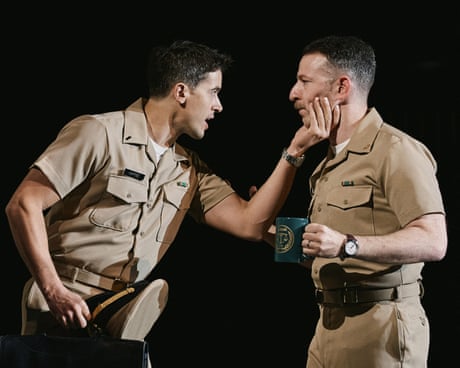
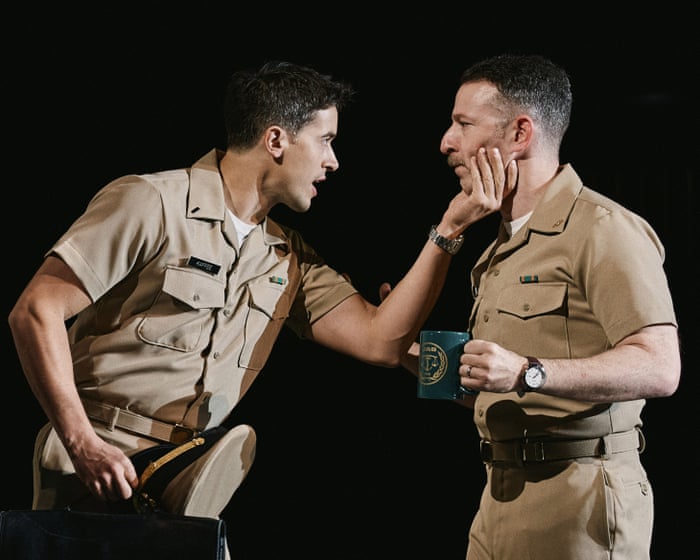
Given the current state of the US military brass, it makes some sense that audiences would want to drift back to an older, nobler idea of the armed services, in which bad actors exist but are rooted out by the good guys in uniform. That perhaps explains the Broadway revival of A Few Good Men, Aaron Sorkin’s 1989 courtroom drama about a cocky military attorney defending two young marines who followed an illegal order with fatal results. The play is at once sharp and misty-eyed, critiquing a hallowed institution while reverently imbuing it with a certain dignity – in some ways, it does for the military what Sorkin’s The West Wing did for the Oval Office.
A Few Good Men was turned into a hit Oscar-nominated film in 1992, starring a then boyish Tom Cruise in the role of recalcitrant navy lawyer Daniel Kaffee and a frightening Jack Nicholson as Kaffee’s ultimate enemy, Colonel Jessep, the hardliner in command of the US military base at Guantánamo Bay, where a marine has died under troubling circumstances. Directed by Rob Reiner, the film is a clever, old-fashioned crowd pleaser, culminating in a classic trial scene punctuated by the line. “You can’t handle the truth!”, Jessep memorably bellows at Kaffee just before confessing to his misdeeds. Those in search of crackling drama and sentimentality about the military should just watch that film, rather than plunking down a considerable sum of money to see the play in its current form at Lincoln Center’s Vivian Beaumont theater.
Continue reading...
© Photograph: Emilio Madrid
© Photograph: Emilio Madrid
© Photograph: Emilio Madrid