❌

Reading view

Experts warn AI copyright changes could breach Australian constitution and spark huge compensation rights case

Scraping copyrighted material from internet could ‘potentially’ amount to acquisition of property by government, Anne Twomey says

Altering copyright law to allow AI companies to scrape music, books and journalism could trigger a constitutional breach, Coalition senators and the recording industry have warned, as they raise new fears it could open Australia to massive legal action and compensation claims from rights holders worldwide.

The attorney general’s department admitted it was “extremely alive” to the issue, and Australia’s leading constitutional expert, Anne Twomey, agreed there was “potentially” a concern – depending how legislation was drafted – that granting AI companies permission to scrape copyrighted material from the internet could amount to an acquisition of property by the government.

Continue reading...

© Photograph: Lukas Coch/AAP

© Photograph: Lukas Coch/AAP

© Photograph: Lukas Coch/AAP

  •  

To baldly go: Patrick Stewart was an icon for bald men everywhere

The actor was an exemplary bald star, embracing his hair loss and the freedoms it brought. He didn’t go grey or recede – and he didn’t wear a wig like William Shatner as Captain Kirk

Patrick Stewart managed to be lots of different things at once. He was a towering figure on stage. He was a literal superhero onscreen. And, at times, he wasn’t above sending himself up. It also needs to be said that he was a bald man.

And a pioneering one at that. Nowhere was this more clear than during his stint on Star Trek: The Next Generation. Previously, Star Trek had been a kind of space-set action show, where the relentlessly virile Captain Kirk would beam down to new planets to either punch or get off with all the aliens there. But then came its successor, and Kirk was replaced by a nonviolent intellectual called Jean-Luc. Worse still, he didn’t have any hair. What a sign of weakness.

Continue reading...

© Photograph: Paramount Pictures/Elliott Marks/Allstar

© Photograph: Paramount Pictures/Elliott Marks/Allstar

© Photograph: Paramount Pictures/Elliott Marks/Allstar

  •  

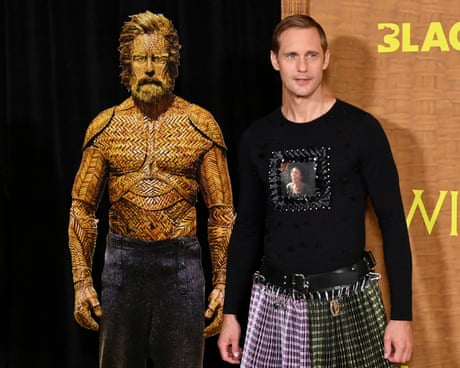
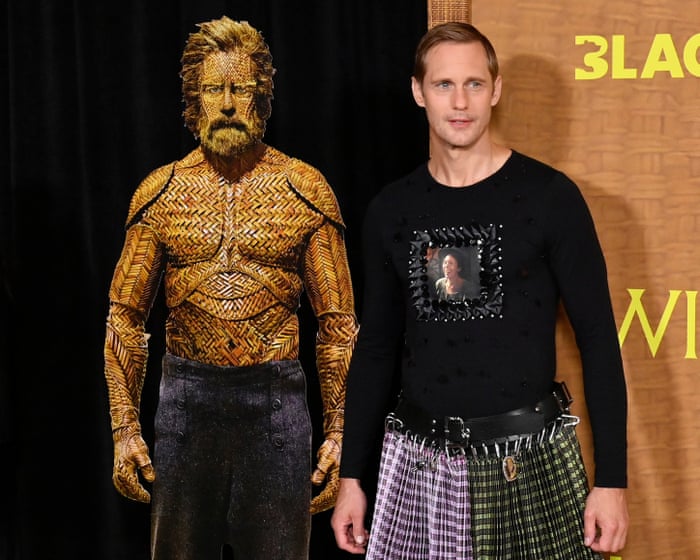
Basketweavers get in a twist over Alexander Skarsgård’s Wicker Husband

Why is he not made of willow? Why is he plaited and not woven? World’s basket makers have plenty of questions

Hollywood heart-throbs are known for their good looks and charisma. But in a classic plot twist, the latest big-screen dreamboat causing viewers to get hot and bothered isn’t even human.

Alexander Skarsgård’s Wicker Husband character in the romcom Wicker has sent the internet into a frenzy.

Continue reading...

© Photograph: Jim Ruymen/UPI/Shutterstock

© Photograph: Jim Ruymen/UPI/Shutterstock

© Photograph: Jim Ruymen/UPI/Shutterstock

  •  

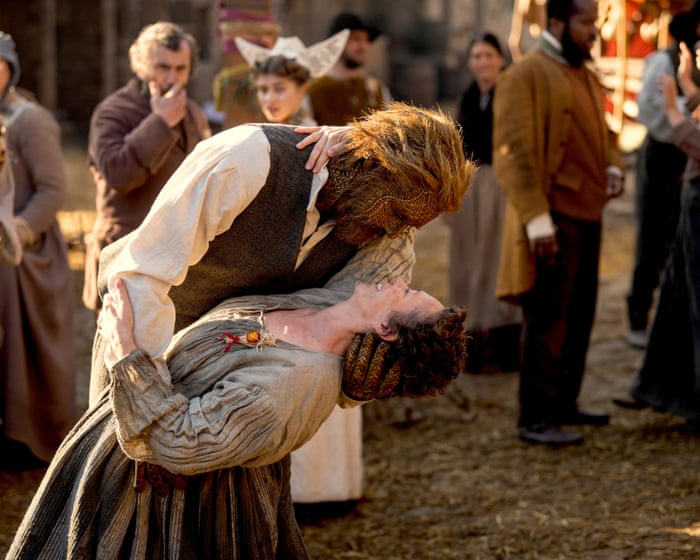
Oh to Believe in Another World review – William Kentridge’s amazing animated ballet of black comic pain

Kentridge’s cine-musical creation, made to accompany Shostakovich’s 10th Symphony, is a marvel of puppetry, dance and humour, exploring humanity, grief and idealism

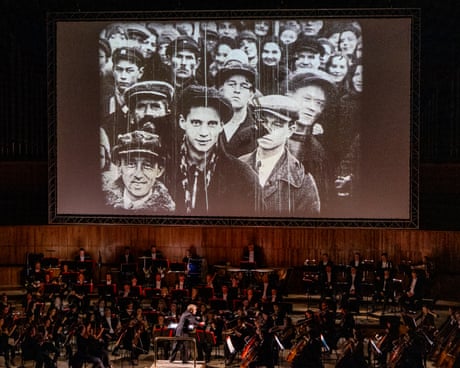
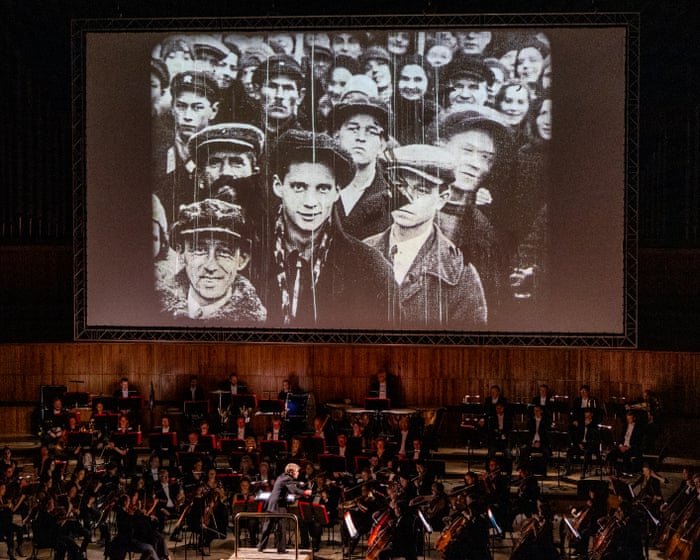
The Baku international arts festival in Azerbaijan is showcasing an amazing cine-musical creation, perhaps the most amazing animation I have ever seen. Oh to Believe in Another World is an hour-long collage animation with live-action choreography by the 71-year-old South African artist and film-maker William Kentridge. It is shown with the live orchestral accompaniment of Shostakovich’s 10th Symphony, and this event is partly in honour of the 120th anniversary of Shostakovich’s birth this year, and partly to honour Shostakovich’s reportedly unrequited love (and lifelong friendship) for his student, Azerbaijani pianist and composer Elmira Nazirova.

The 10th symphony was inspired by Stalin and premiered shortly after his death, so it seems probable that Shostakovich had been at work on it for some time before this, long enough beforehand for at least some of the composition to have been conceived without any sense of Stalin’s death. Could part of it perhaps have been originally intended as an obediently dramatic tribute to Stalin? Yet the music arguably combines fear, awe, revulsion, and a hysterical reaction to the mad energy of Stalin’s genocidal tyranny, a darkly ambiguous respect for the great dictator whose victory in 1945 was a mainstay of the postwar dispensation; perhaps there is also a feeling in the music’s swirl that a great and terrible era has passed away, and with it a kind of grief at all that had been sacrificed to it.

Continue reading...

© Photograph: Pete Woodhead

© Photograph: Pete Woodhead

© Photograph: Pete Woodhead

  •  

‘I left shellshocked’: writers on their scariest non-horror movies

For Halloween, Guardian writers have picked the most efficiently terrifying films outside of the horror genre from How to Have Sex to The Hunchback of Notre Dame

Minor spoilers ahead

Hiding in plain sight throughout Lee Chang-dong’s deliciously enigmatic Burning, in which a spirited young woman (Jeon Jong-seo) disappears, and a wealthy playboy (Steven Yeun) gives serial killer vibes, is a disaffected male rage. That’s perhaps the most commonplace horror of our times, whether on the internet or politics, and you feel the tremors of it steadily breaking the surface in Yoo Ah-in’s performance. He plays Jong-su, an aspiring writer, quietly frustrated with his lot in life. Jong-su works odd jobs and tends to his incarcerated father’s dilapidated farm, growing more desperate to grasp some sense of control over the world around him, which is where the scary part comes in. Lee is the master dramatist who with Burning tilts violently into thriller territory, navigating elements from Taxi Driver, The Vanishing and Michael Haneke’s Caché, using the language of horror movies to conjure up a creeping anxiety and dread that erupts into pure existential fear. Radheyan Simonpillai

Continue reading...

© Photograph: Landmark Media/Alamy

© Photograph: Landmark Media/Alamy

© Photograph: Landmark Media/Alamy

  •  

‘I saw the script and went: oooh!’ Olivia Colman and Alexander Skårsgard on their steamy folk-horror movie Wicker

She plays a depressed fisherwoman. He plays a man made of wicker who is solely dedicated to her pleasure. How did the actors feel about this strange, emotional connection – and what did Colman draw from her own marriage?

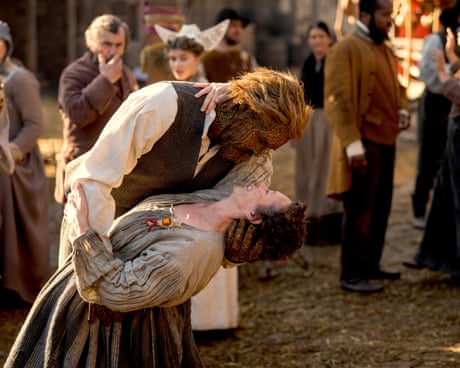
Another year, another raunchy comedy-drama in which Alexander Skarsgård is the answer to a social outcast’s erotic dreams. “I fucking loved Pillion so much!” says Olivia Colman, reliably sweary straight out of the gate, as she brings up last year’s British indie hit starring Skarsgård as a leather-clad dom with a timid traffic warden as his submissive. “And when they kissed at the end … Aww.” The 52-year-old Oscar-winner for The Favourite gives a mock-sniffle and a little shake of her frizzy grey locks, then pretends to dab her eyes.

Seated beside her in a London hotel room and wearing a bright orange “I’m With Stupid” T-shirt, Skarsgård tilts his head appreciatively. In Pillion, it was Harry Melling who had the privilege of being ravaged by the 50-year-old Swedish actor. Now it is Colman’s turn in Wicker, an earthy adult fairytale filmed in Budapest and set in a medieval village populated almost exclusively by British comic actors who converse in language both archaically formal (“Happy to transact with you”) and bluntly colloquial (“I’d better fuck off”). Among them is Phil Daniels as a leering butcher and Richard E Grant as a doctor who is even more inept at his job than Grant was as a Celebrity Traitor.

Continue reading...

© Photograph: Courtesy of Black Bear

© Photograph: Courtesy of Black Bear

© Photograph: Courtesy of Black Bear

  •  

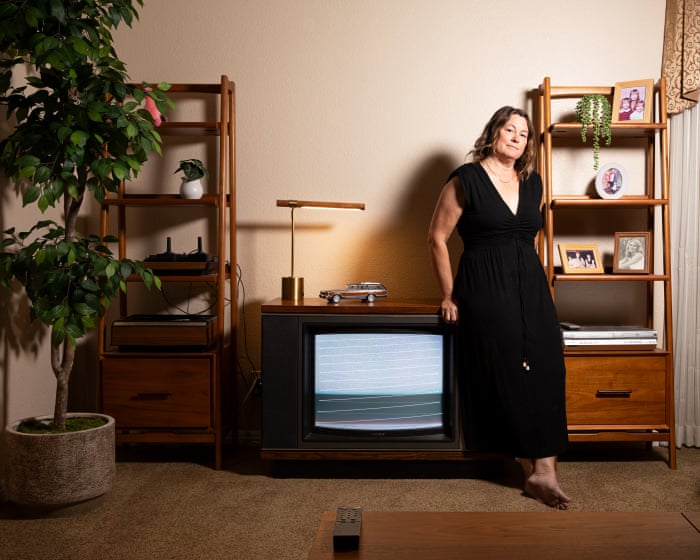
Experience: I live in the house from the 80s horror movie Poltergeist

I was a fan of the film, so when it came on the market, I snapped it up. Now I allow other fans to come and stay in this piece of Hollywood history

I first saw Poltergeist at the movie theatre with my mom and sisters, back when it came out in 1982. I remember being scared, especially during the part when the toy clown drags little Robbie Freeling under the bed. At that age, the idea of a family experiencing something terrifying in the kind of everyday suburban house I was familiar with made a big impression. Later, it became a ritual of mine to put the movie on every Halloween.

I grew up in the Chicago area, but moved to California in the early 90s to go to art college. My sister moved there, too – to Simi Valley, not far from the house used as the Freeling family’s home in the movie. I’d drive past it when I visited her. A couple of years ago, I had a gut instinct that it would soon go up for sale. Sure enough, just weeks later I was sitting with my sister in her back yard when she looked up from her phone and said, “Hey! The Poltergeist house went on the market!”

Continue reading...

© Photograph: Bradley Meinz/The Guardian

© Photograph: Bradley Meinz/The Guardian

© Photograph: Bradley Meinz/The Guardian

  •  

Patrick Stewart brought gravitas and complexity to the screen, from Star Trek to X-Men

From Jean-Luc Picard to Charles Xavier, the actor’s Shakespearean training – and that sonorous voice – made him a unique charismatic force in Hollywood

No actor showed the commercial potential of blue-chip British classical training like Patrick Stewart. With style, technique and the most minutely self-aware, almost vaudevillian sense of mimicry, Shakespearean thesps can turn their hand to American movies and high-end American television and show the American method actors how it’s done – sometimes, even, at the beginning of their screen careers, at a competitively low wage.

Stewart was one of the thoroughbreds of the Royal Shakespeare Company’s 1970s stage generation who had also had classy small screen roles, such as his intimidating Sejanus in I, Claudius opposite Derek Jacobi. But he effected a warp-speed leap to pop culture stardom by getting the role of Jean-Luc Picard, captain of the Federation starship USS Enterprise, in TV’s Star Trek: The Next Generation, the hugely successful reboot of Star Trek that ran from 1987 to 1994, spawning four separate feature films and then another series, Star Trek: Picard.

Continue reading...

© Photograph: MARVEL/Allstar

© Photograph: MARVEL/Allstar

© Photograph: MARVEL/Allstar

  •  
❌