Login

Alaska Governor Orders Probe Into Peltola Campaign Over Alleged Spoiler Scheme
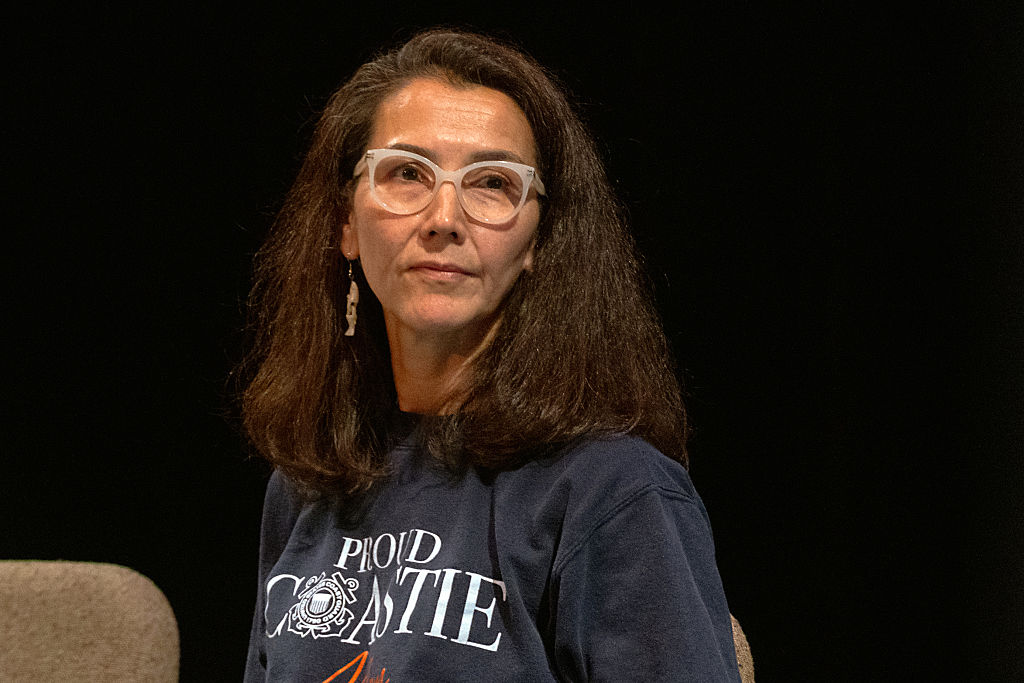
Alaska’s Republican Governor Mike Dunleavy ordered an investigation into Democrat Mary Peltola’s Senate campaign following a report that her team helped recruit candidates to draw votes from her Republican opponent, including a man with the same name.
The announcement, posted on social media overnight, followed President Donald Trump’s call for Peltola’s prosecution and escalated Republican efforts to challenge her candidacy just days before an election that could help determine control of the Senate.
Read More: Republican Panic Sets In Over Prospects of a Massive Blue Wave
On Thursday, Trump declined to say whether Peltola should be seated if she won. “Well, you’re going to have to see what happens,” he told reporters before leaving for a rally in South Carolina. “It’s hard to believe that she could even be allowed to run.”
Peltola is challenging Republican Senator Dan S. Sullivan in the Nov. 3 election. Another candidate, Daniel J. Sullivan Jr., a retired teacher from Petersburg, has denied running at Democrats’ behest. Alaska’s Supreme Court upheld his eligibility for the ballot earlier this year.
The dispute intensified Wednesday after a New York Times report found that Peltola's team worked with people to recruit men named Dan Sullivan to run for Senate, as well as other candidates who could draw votes away from the incumbent.
Dunleavy said the reporting provided new evidence of an effort to mislead voters and supported state election officials’ earlier findings about Daniel J. Sullivan’s candidacy.
“Deliberately tricking voters into casting their ballots for someone else strikes at the integrity of our elections,” the governor wrote.
Peltola, a former congresswoman, dismissed the report, arguing that it diverted attention from issues including the incumbent Sullivan’s support for the war in Iran.
“This is just another distraction. It’s another diversion,” she said during a campaign stop in Soldotna on Wednesday. “This is all stuff to sell newspapers. This is all stuff to get subscriptions.”
A spokesperson for Peltola’s campaign, Alaskans for Mary, said in an email to TIME that it “has no involvement with either Sullivan campaign.” The campaign also said it had made no assertions in federal court about how Daniel J. Sullivan’s candidacy came about or who was involved in his decision to run. The Democratic Senatorial Campaign Committee (DSCC), which was also reportedly involved in the plan, told TIME in a statement that it was “not involved with Dan J. Sullivan.”
Vice President JD Vance also backed an investigation Thursday, accusing Peltola of trying to mislead voters about her campaign’s involvement. “She is trying to steal a Senate seat from the voters of Alaska, and it’s disgraceful,” he told reporters before a campaign trip to Texas.
Trump had accused Peltola and her campaign of voter fraud in a series of Truth Social posts Wednesday, calling for her removal from the ballot and prosecution.
“It was just determined that the Dumocrats in Alaska, despite their sworn statements to the contrary, put a man named Dan Sullivan on the Ballot in order to confuse the Public with respect to Highly Esteemed Senator Dan Sullivan,” Trump posted. “This is Voter Fraud at the Highest Level, and the Dumocrat Candidate, who was involved in the scheme, Mary Peltola, should be removed from the Ballot and prosecuted—So should the FAKE Dan Sullivan. Nothing else will do!”
The Times noted that ballot-stacking tactics are generally considered legal and have been used by both parties.
At Trump’s direction, the Justice Department had already filed a lawsuit seeking to block certification of the election results under specific conditions if Senator Sullivan loses, citing the potential for “voter confusion.” The department wants the results recalculated as though votes for Daniel J. Sullivan had gone to the incumbent, and certification blocked if that would change the outcome.
TIME reached out to the Justice Department for comment on how the report affects its case. Attorney General Todd Blanche told Fox News on Wednesday that he expected to “hear more” from the department this week as officials receive new information.
“They are cheating,” Blanche said. “They are trying to take votes away from the incumbent, not by running an election, not by running on issues, but by putting up a person with the same name, so that confuses Alaskans.”
What Peltola’s campaign reportedly did
According to the Times’ report, which was based on interviews, text messages, and documents prepared for a possible lawsuit, the Peltola campaign pursued a project known internally as “ballot composition,” which involved campaign lawyers and senior aides at the DSCC, which directs Democratic campaign strategy for Senate races nationwide.
One of the Times’ sources, Elisa Rios, Peltola’s former campaign manager who was fired during an August staff shake-up, said the operation to recruit potential spoiler candidates for the Alaska ballot began in the summer of 2025. The Times reported that Peltola’s campaign worked with a “veteran Democratic operative” named Jerid Kurtz, whom it described as having expertise in ballot maneuvering.
The Times reported that a Peltola staffer received instructions to “find as many people named Dan Sullivan in Alaska” as possible. Kurtz reportedly found a man in Petersburg named Dan Sullivan who was open to running for Senate.
Rios said Peltola wasn’t directly involved in the project but was “definitely aware.” The Times also reported that Rios later wanted to recant her statements but did not explain why.
Alaska has a nonpartisan primary system, in which voters may choose a candidate regardless of party affiliation, and the top four advance to the general election. Voters then rank candidates in order of preference. If no candidate wins an initial majority, the lowest-ranking candidates are eliminated in successive rounds and their ballots transfer to voters’ next remaining choices.
The spoiler candidate tactic isn’t new
Alaska’s other Senator, Lisa Murkowski, who endorsed Sullivan but supported Peltola years ago, issued a statement Wednesday demanding that Peltola tell the “honest truth” about the apparent ballot-stacking effort.
“While some may try to write this off as just how politics works now, ballot-stacking should have no place in our electoral process,” Murkowski wrote. “Run and win on your merits: your views, your policy ideas, and your accomplishments. By contrast, recruiting candidates to manipulate the field and influence voting outcomes is simply wrong.”
Nate Adams, a spokesperson for Sullivan’s campaign, also said in a statement that “not one player in this operation has acted in good faith with Alaska voters.”
Republicans have also used similar ballot-stacking tactics. In this year’s Alaska primary, a GOP-aligned political action committee reportedly spent money to boost left-leaning fringe candidates in an attempt to pull votes from Peltola.
When Peltola ran for re-election to the House in 2024, Alaska’s Republican Party supported an effort to help a federally imprisoned Democrat who had never lived in Alaska stay on the ballot.
A GOP-linked political action committee also spent over $1 million this election cycle to boost a third-party candidate in Ohio in a bid to undermine former Senator Sherrod Brown’s comeback bid.
In Minnesota in 2020, Legal Marijuana Now Party candidate Adam Weeks told a close friend before his death that he was recruited by unnamed Republicans to pull votes away from Democrats.