❌

Reading view

Social media is full of weird video game mashups. Where are they all coming from?

AI tools are making it easier to modify and recreate games, raising questions about piracy, copyright and how far the technology could disrupt the industry

• Don’t get Pushing Buttons delivered to your inbox? Sign up here

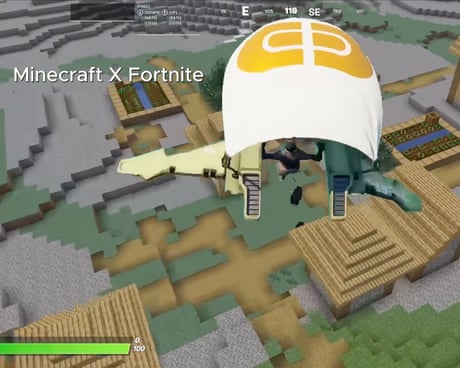
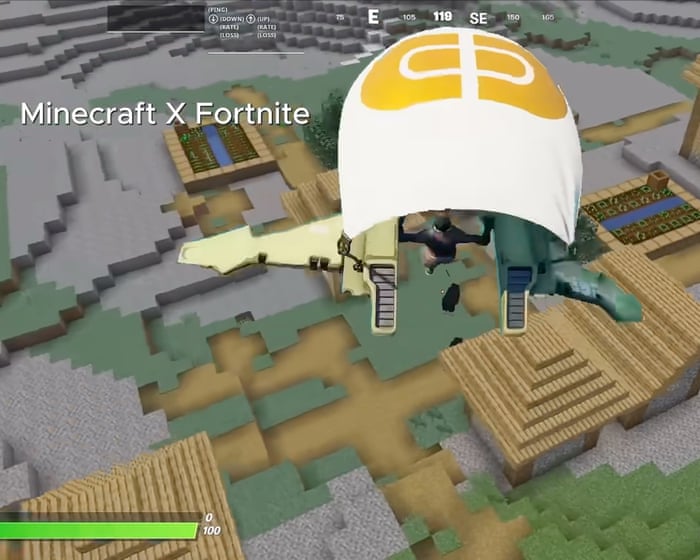
If your social media algorithms have clocked that you’re into video games, something strange will have happened in the past few weeks. Your feed, like mine, will have been full of clips of streamers playing bizarre mashups of popular video games. Skyrim in Minecraft. Halo, except the main character is Mario. Skate 2 in Call of Duty maps. A flood of professional-looking fan-coded game mods that are mildly interesting to look at for 30 seconds, but ultimately inconsequential. Would I download a mod that lets me play Wii Bowling inside a zombie shooter? No, but I am very interested in where they came from.

Of course, the answer – or at least, most of the answer – is AI. After a week of researching this (thanks especially to Replay Mode on YouTube for this informative video, which set me down this track) I now understand that these mashup mods are not just AI-generated videos, but AI-assisted coding. Basically, as of a few weeks ago, Anthropic’s Claude has become extremely good at decompiling video game code. Games are written by humans in readable code and then compiled into binary 1s and 0s that the PC or console running it can read; decompiling is the reversal of that process, revealing a game’s source code, which humans can then edit and mess around with for fun. This used to be an extremely laborious process. But now it is not, because humans aren’t doing much of it any more.

Continue reading...

© Photograph: YouTube
© Photograph: YouTube
© Photograph: YouTube

  •  

‘There is no inevitable dystopia’: Jeanette Winterson on AI and the future of humanity

The author believes we are at a turning point as a species – and even in the shadow of big tech it’s up to us how we want to proceed

‘I am a storyteller by trade,” writes Jeanette Winterson on the first page of her 2021 book 12 Bytes, an idiosyncratic and thought-provoking series of essays in which she considered just how artificial intelligence might change everything about our lives. “And I know everything we do is a fiction until it’s a fact: the dream of flying, the dream of space travel, the dream of speaking to someone instantly, across time and space, the dream of not dying – or of returning.”

She had already been thinking about our possible futures for at least 15 years – her 2007 novel, The Stone Gods, for instance, imagined a post-climate catastrophe world populated by robots and humans who never age, while 12 Bytes was preceded by Frankisstein: A Love Story, which alternates a recreation of the summer Mary Shelley wrote Frankenstein with a trans doctor’s travels among present-day cryogenecists and AI-enabled robots.

Continue reading...

© Photograph: Sarah Lee/The Guardian

© Photograph: Sarah Lee/The Guardian

© Photograph: Sarah Lee/The Guardian

  •  

‘Emotional intimacy’ from AI chatbots would be banned under Australia’s digital duty of care laws

Labor government under pressure to create social media watchdog as new online safety standards bill passes lower house

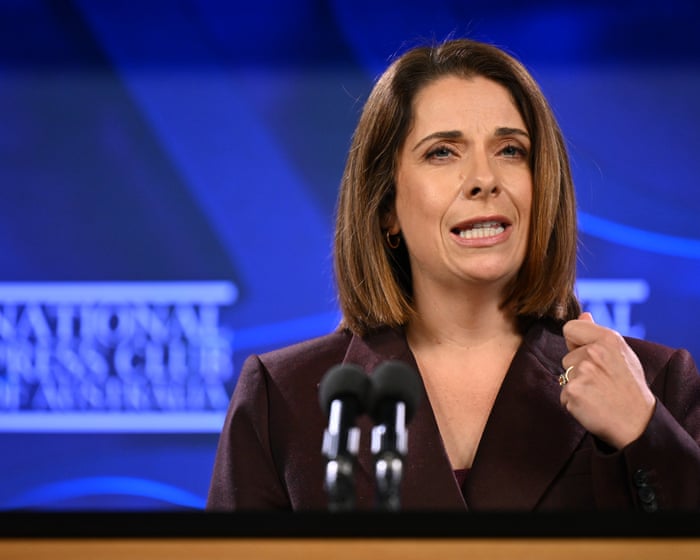
The federal government wants to ban AI chatbots which seek to create “emotional intimacy” after prime minister Anthony Albanese raised the alarm in a heartfelt speech about children treating these agents as their “best friend”.

But Labor is coming under increasing pressure to empower the telecommunications ombudsman to become a watchdog for social media and AI to give Australians an external complaints mechanism and allow the “naming and shaming” of big tech.

Sign up for Guardian Australia’s Politics, really newsletter here

Continue reading...

© Photograph: Lukas Coch/AAP

© Photograph: Lukas Coch/AAP

© Photograph: Lukas Coch/AAP

  •  
❌