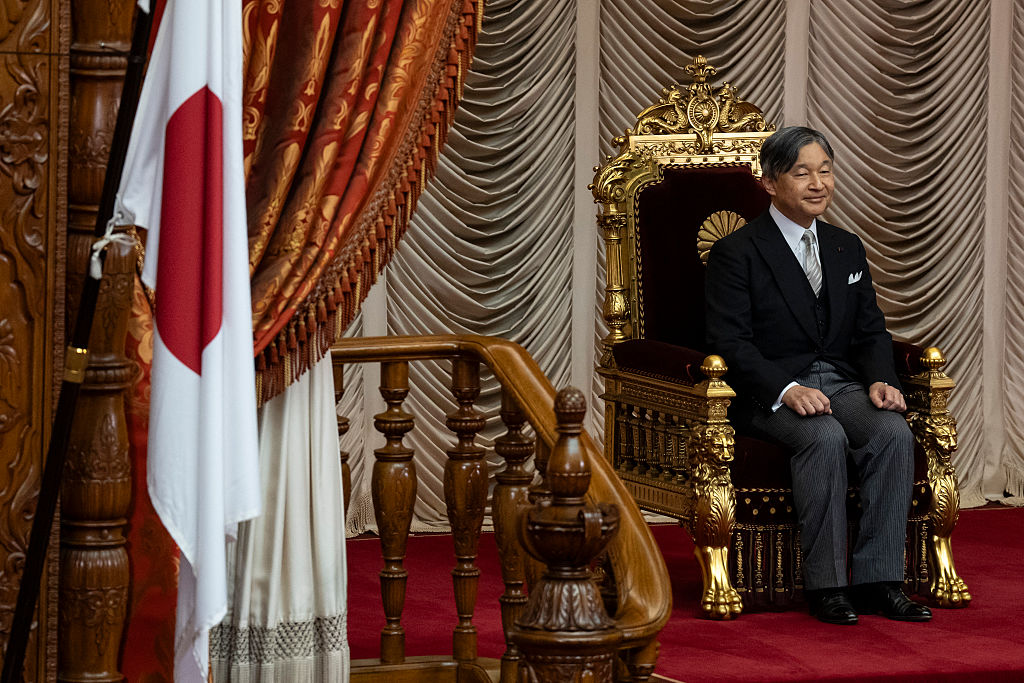
Japan's Emperor Naruhito attends the opening ceremony of an extraordinary Diet session at the House of Councillors at the National Diet in Tokyo, Japan on Oct. 5, 2026. —Yuichi Yamazaki—AFP/Getty Images
Japanese lawmakers are reforming the country’s more-than-a-millennia-old continuous hereditary monarchy in an effort to keep it alive amid a shrinking imperial family.
Amendments to Japan’s Imperial House Law that passed in July took effect on Saturday. One allows Japanese princesses to keep their royal status even if they marry non-royals, though their future children are not considered royals. The other amendment is an apparent roundabout way to preserve patrilineal succession: members of the royal family may adopt a male from former imperial branch families, and those adoptees’ future male offspring can be considered legitimate successors to the throne.
The revisions aim to expand the future pool of eligible heirs to the throne while reinforcing the shutting out of women from leading the Japanese monarchy, which staunch conservatives including the country’s first female Prime Minister, Sanae Takaichi, have repeatedly advocated against upending.
Before the revisions took effect, Emperor Naruhito only had a few viable successors: his younger brother Akishino, followed by his 20-year-old nephew Prince Hisahito, then his 90-year-old uncle Prince Hitachi.
The small pool had raised concerns about the future of the Japanese imperial family. The Japanese public has shown support for female monarchs, signaling a preference to keep the renowned family on the throne. Fans of Princess Aiko, the emperor’s sole daughter, have marched in Japan’s streets in recent weeks in support of her eligibility to become empress.
But extreme right-wing factions in Takaichi’s Liberal Democratic Party have insisted that maintaining only males from the male imperial line as eligible to become emperor preserves the authority of the Chrysanthemum Throne. The revisions were ultimately borne out of the coalition agreement signed in October last year by the LDP and its junior partner, the Japan Innovation Party.
While the Imperial Household Agency has said it will study how to implement the measures, critics are already studying how to turn the policy over, arguing that it violates the country’s anti-discrimination law. Manga artist Yoshinori Kobayashi filed a lawsuit against the government that called the amendment “unconstitutional.”
Experts say the amendments could affect how the Japanese public views the imperial family.
“It could dilute the feeling of closeness or the feeling of holiness that some people might feel towards the royal family,” Jeffrey J. Hall, a lecturer at Kanda University of International Studies, tells TIME, “because they're more used to the royals that they already know.”
Welcoming back the former imperial family branches
The amendments allow members of the imperial family to adopt a male who is 15 years of age or older and is also a legitimate descendant of a male member of the imperial family before it was trimmed down after World War II. That adoptee should not be married or have children.
Several branches of the Japanese imperial family renounced their royal status in 1947 to cut down on costs the monarchy incurred after the war. Government officials previously said that these 11 families split from a common male-line ancestor some 600 years ago, and are now at least 36 degrees of kinship from Naruhito.
However, the adopted males would not be eligible for the throne—only their eligible male offspring would be. The law would be reviewed every 30 years.
Jeff Kingston, a professor of Asian history at Temple University’s Japan campus in Tokyo, tells TIME the government’s offered solution to the dwindling pool raises questions about the legitimacy of the potential heirs. “Would these people be taken as legitimate by the public?” he says remains an open question, especially as reports surface about who those potential additional successors to the throne might be. “The problem of a monarchy is it’s sort of based on—I don't know—a collectively held myth, belief, faith; and a sausage maker probably isn't going to have that magic.”
Hall, from the Kanda University of International Studies, echoes that the Japanese government will find it difficult to convince the public, especially since the move would introduce unfamiliar faces. “It will be a very difficult problem for the Japanese government to try to basically build up an ideology or a PR program that convinces people that the new royal adoptees are just as royal as the other ones that we all know.”
Snubbing the nation’s popular princess
Kingston says that conservatives proposed the amendments to ensure that a female-led monarchy wouldn’t happen in Japan, even when many Japanese people appear fine with it and some even seem to prefer it. Past media surveys have shown that more than 80% of Japanese respondents favored a female emperor.
Protesters took to central Tokyo’s streets on Oct. 10 to call for further debates on the Imperial House Law, claiming that Princess Aiko, who is 24, should be eligible for the throne.
The other amendment that took effect allows Aiko and the four other single princesses to retain royal status if they get married to people outside the imperial family. Before, princesses who did so lost their royal status, meaning their children are ineligible for the line of succession; the most recent being Mako, one of Naruhito’s nieces. Mako married her college boyfriend in 2021 and has since moved to the U.S.
Hall describes the recent amendments as “very strange” and suspects “many Japanese people won't really fully grasp” them. An August poll from the Social Survey Research Center came to a similar conclusion that the revisions to the Imperial House Law “have not gained the understanding of the Japanese public.”
While Naruhito and the royal family have largely ceremonial duties and do not weigh in on the country’s politics, they have even hinted at what they think should be done. In June, the emperor said he hopes any decision to expand the imperial family should have public support: “I hope it will be something that gains the understanding of the people.”
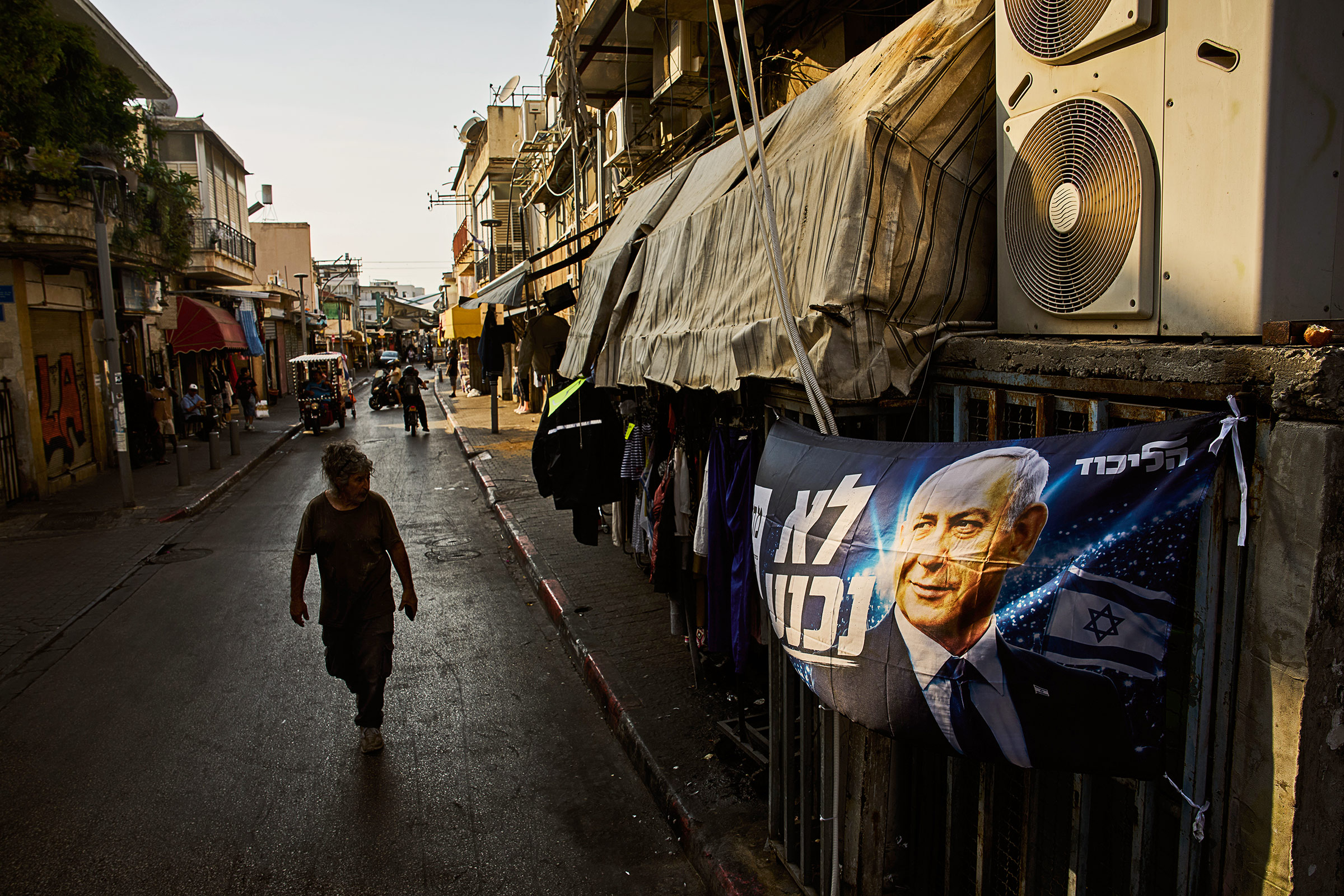
An election campaign banner featuring Israeli Prime Minister Benjamin Netanyahu hangs on a store ahead of Israel's general election in Tel Aviv, Israel, Monday, Oct. 12, 2026. —Oded Balilty—AP
The Israeli settlement of Neve Daniel sits south of Jerusalem, atop one of the highest ridges in the West Bank, nearly 1,000 meters above sea level. The view to the east stretches to the mountains of Jordan, and to the west across the Mediterranean coastal plain—where most Israelis live. But the tranquility of the landscape belies the political fervor animating the Oct. 27 election, a contest with stakes as great as any in the 78-year history of the world’s only Jewish state. When I ask three residents what will ultimately determine their votes, one responds with particular ferocity.
“Seven hundred trucks were delivered to Hamas today by Israel,” says Barak Moore, who has lived in Neve Daniel for 14 years. He’s referring to commercial goods and international aid entering the Gaza Strip. “We’re paying a terrorist organization that committed the greatest atrocity against the Jewish people since Auschwitz.”
While much of the world has come to define Israel by its military actions in Gaza since Oct. 7, 2023, Moore’s views reflect the passions coursing through a society still traumatized by that day. Israelis tend to be less preoccupied by the nearly 75,000 Palestinian fatalities in Gaza since the war began, than by the 1,200 people killed in Israel and 251 hostages taken by Hamas—the women subjected to sexual violence, the children shot at point-blank range, the families burned alive in their homes. In a country so small and intimately connected, scarcely anyone was untouched by events that shattered the assumptions of a people whose nation was founded to give Jews a safe haven in their ancestral homeland.
Both the Hamas massacre and the wars that followed loom over a vote shaping up not only as a referendum on Benjamin Netanyahu, but also the nature of the country that, as Israel’s longest serving prime minister, he has done so much to shape.
Arrayed against Netanyahu is a fractured field of challengers. There is Gadi Eisenkot, the former military chief whose reputation for honesty, sobriety, and competence contrasts with Netanyahu’s polarizing leadership; Naftali Bennett, the right-wing former prime minister seeking a comeback; Yair Lapid, the centrist former premier who has spent years trying to dislodge Netanyahu; and Avigdor Lieberman, the hawkish secular nationalist who has become one of Netanyahu’s fiercest adversaries.
Also on the ballot: Itamar Ben-Gvir and Bezalel Smotrich, far-right extremists whose parties made possible Netanyahu’s current coalition, and whose ambitions to annex the West Bank and resettle Gaza constrain his room to maneuver while damaging Israel’s standing abroad. The next government will either push Israel further down the path of religious nationalism, permanent conflict, and international isolation—or toward a new generation of leadership.
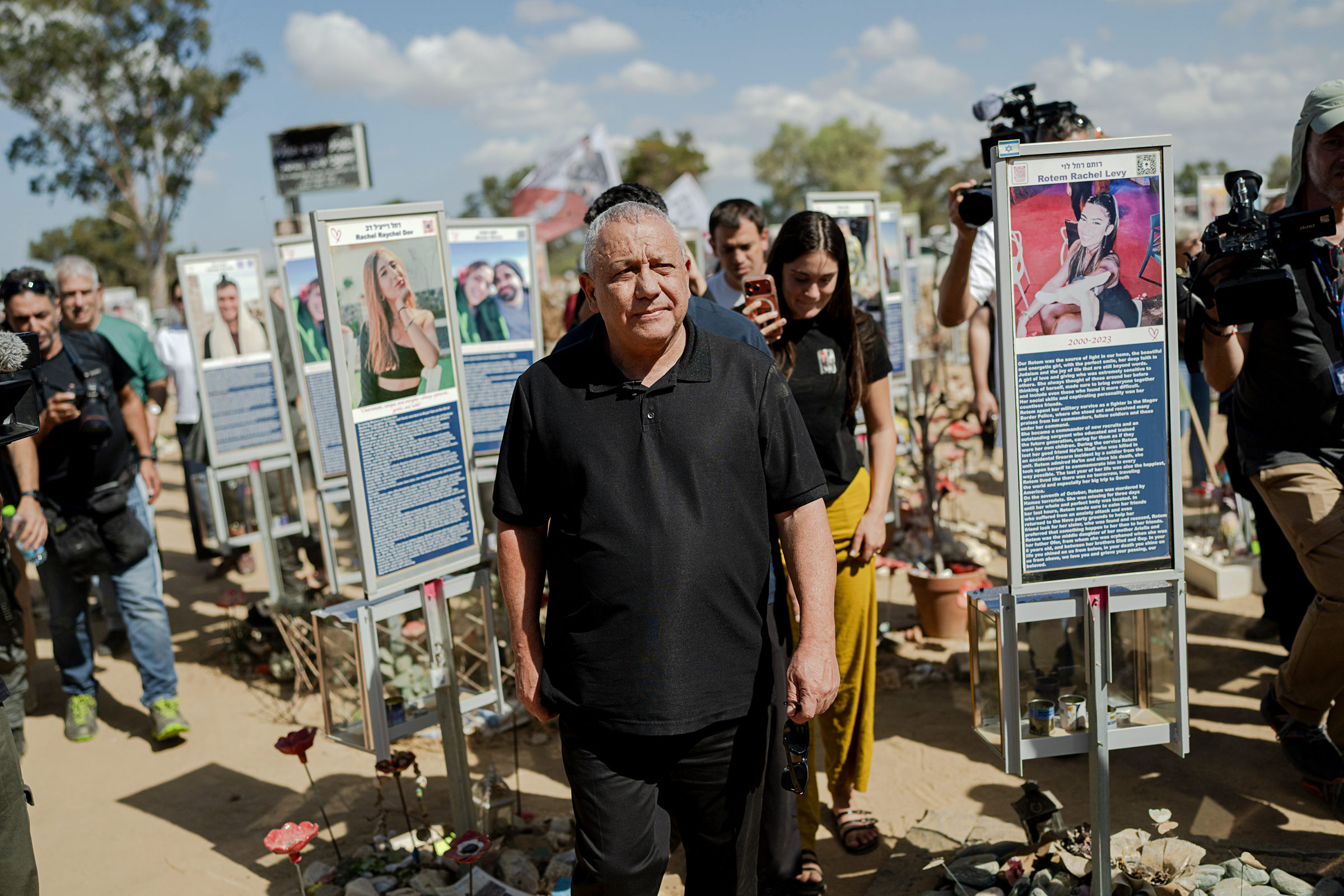
According to the polls, Netanyahu’s strongest challenger is Eisenkot, a soft-spoken, heavyset career soldier running as a centrist. His son, Gal, was killed fighting Hamas in Gaza, and one of his nephews also died in the war. Eisenkot is campaigning on a promise to restore public trust in government, rebuild Israel’s security, and heal the divisions that have fractured the country. “This election is about the identity of Israel,” Eisenkot told TIME in an interview on Oct. 20. “What will be Israel two weeks from now, 10 years from now, 20 years from now? This is the main question.”
Gadi Eisenkot walks past memorial displays honoring victims at the Nova music festival site as Israel marks the third anniversary of the Oct. 7th 2023 attacks. —Erik Marmor—Getty Images
Three years after Netanyahu’s political obituary was being written, pre-election polls show him running in a dead heat. On the eve of the vote, the nation is suffused with a sense of uncertainty; political analysts say almost anything can happen. Netanyahu and Eisenkot could form a unity government. Netanyahu could cobble together another right-wing coalition, dragging Israel further right. Eisenkot could join forces with Bennett, Lapid, and the Arab parties (20% of Israeli citizens are Palestinian) to oust Netanyahu, producing the closest thing Israel could muster to a center-left government. Or perhaps no bloc will manage to pull together the 61 Knesset seats needed for a majority, plunging Israel into another round of elections and a reprise of the paralysis that produced five contests between 2019 and 2022.
“The most probable scenarios currently are either there will be some sort of unity government, which again is very complicated politically because all of the opposition parties swear they don’t want it under Netanyahu, and I don’t see how Netanyahu is going to sit under them,” says Nimrod Nor, an expert on Israeli politics at Hebrew University. “The other is we’re going to have another election after this one.”
According to two sources familiar with Netanyahu’s thinking, he would prefer to form a unity government with Eisenkot. One reason is legacy. He believes such an alliance offers his best chance to transcend the worst security failure in the nation’s history, and to be remembered not only as the leader who emerged from the slaughter of Oct. 7 to decimate Hamas in Gaza and Hezbollah in Lebanon and persuade an American president to wage war against Iran, but also as the statesman who helped to reconcile a divided nation.
The other reason, the sources say, is personal. Netanyahu has little desire to form another right-wing coalition that would leave him beholden to the radical and uncompromising parties led by Ben-Gvir and Smotrich, both of which he brought into government four years ago to reclaim power. “He thought that he could control Ben-Gvir,” one Netanyahu aide says. “Now he knows that he can’t.”
That is precisely what the Israeli right fears he’s thinking, and what brought me to Neve Daniel. The settlement of capacious red-tiled homes is just across the Green Line that defined Israel’s borders before the Six-Day War of 1967. It was built on land that was a Jewish farm even before Israel was founded in the crucible of the 1948 war. Settler violence against Palestinians has risen sharply during Netanyahu’s tenure, but the militant settlers who make headlines by terrorizing their Palestinian neighbors tend to live on hilltops deeper into the West Bank than this.
But few, if any, of the 700,000 Israelis who live in settlements are leftist. Many regard Netanyahu as a cynical opportunist—a political chameleon who parrots their convictions but will do whatever it takes to survive. Among his many heresies, they say, is a long history of accommodating American presidents: signing the Wye River Memorandum under Bill Clinton to advance the Oslo peace process that aimed to create a Palestinian state; voting for the disengagement from Gaza under Ariel Sharon and George W. Bush; endorsing, at least rhetorically, a two-state solution and imposing a moratorium on settlement construction under Barack Obama; and, under Donald Trump, accepting a ceasefire and hostage-exchange agreement to end the war in Gaza.
Three people in Neve Daniel offer a revealing glimpse of the forces pulling Netanyahu rightward. Each plans to vote for a different party, but they all share an overriding objective: a right-wing government with Netanyahu at its center, constrained by allies who will keep him from drifting toward the middle.
Barak Moore is supporting Zehut, a libertarian nationalist party founded in 2015, whose eclectic platform combines tax cuts, the dismantling of monopolies, and cannabis legalization with an uncompromising vision of Israeli sovereignty and the removal of Palestinians from Gaza. It is something of a right-wing hipster party, blending free-market economics with religious nationalism.
Avi Abelow, 52, an activist who runs the website Pulse of Israel, is voting for Netanyahu’s Likud Party. His complaint is not that the prime minister has gone too far in Gaza, but rather that he has not gone far enough, hamstrung by a security establishment and governing coalition insufficiently committed to the nationalist cause. “We should have conquered all of Gaza and made sure it’s Jewish again,” he says.
The youngest of the three, Hershey Kellner, is a 19-year-old Orthodox Jew who moved to Israel from New Jersey just months before Oct. 7. He is supporting Otzma Yehudit, the far-right party led by Ben-Gvir, whose confrontational politics and open contempt for established norms have made him a hero to some of Israel’s most fervent ideologues. Helner admires Ben-Gvir’s push to expand civilian gun ownership, permit Jewish prayer on the Temple Mount, and introduce the death penalty for terrorists.
To explain his thinking, Kellner invokes one of the most consequential decisions in recent Israeli history: the 2011 deal that freed the Israeli soldier Gilad Shalit in exchange for more than 1,000 Palestinian prisoners. Among them was Yahya Sinwar, who would go on to mastermind the Oct. 7 massacre. Helner believes that sparing Sinwar’s life was a catastrophic mistake. “If you hanged him or put a bullet in the back of his head, not sure how the world would be now,” he says, “but it would definitely be better.”
For three years, Israel has been a nation at war, not only with its enemies but with itself. The extraordinary solidarity that followed Oct. 7 has given way to recriminations and ideological divisions, intensified by the trauma of war, the anguish of the hostage crisis, the pain of deepening antisemitism worldwide, and the unresolved question of who bears responsibility for such a stunning security lapse. Though Israel rejects the charge, critics accuse the country of committing a genocide in Gaza, where the dead include both uncounted Hamas fighters and 20,000 children—and of countenancing a thuggish brand of ethnic cleansing in the West Bank. On Oct. 16, masked settlers were filmed attacking Palestinians and European diplomats in the West Bank, and injuring a Washington Post photojournalist.
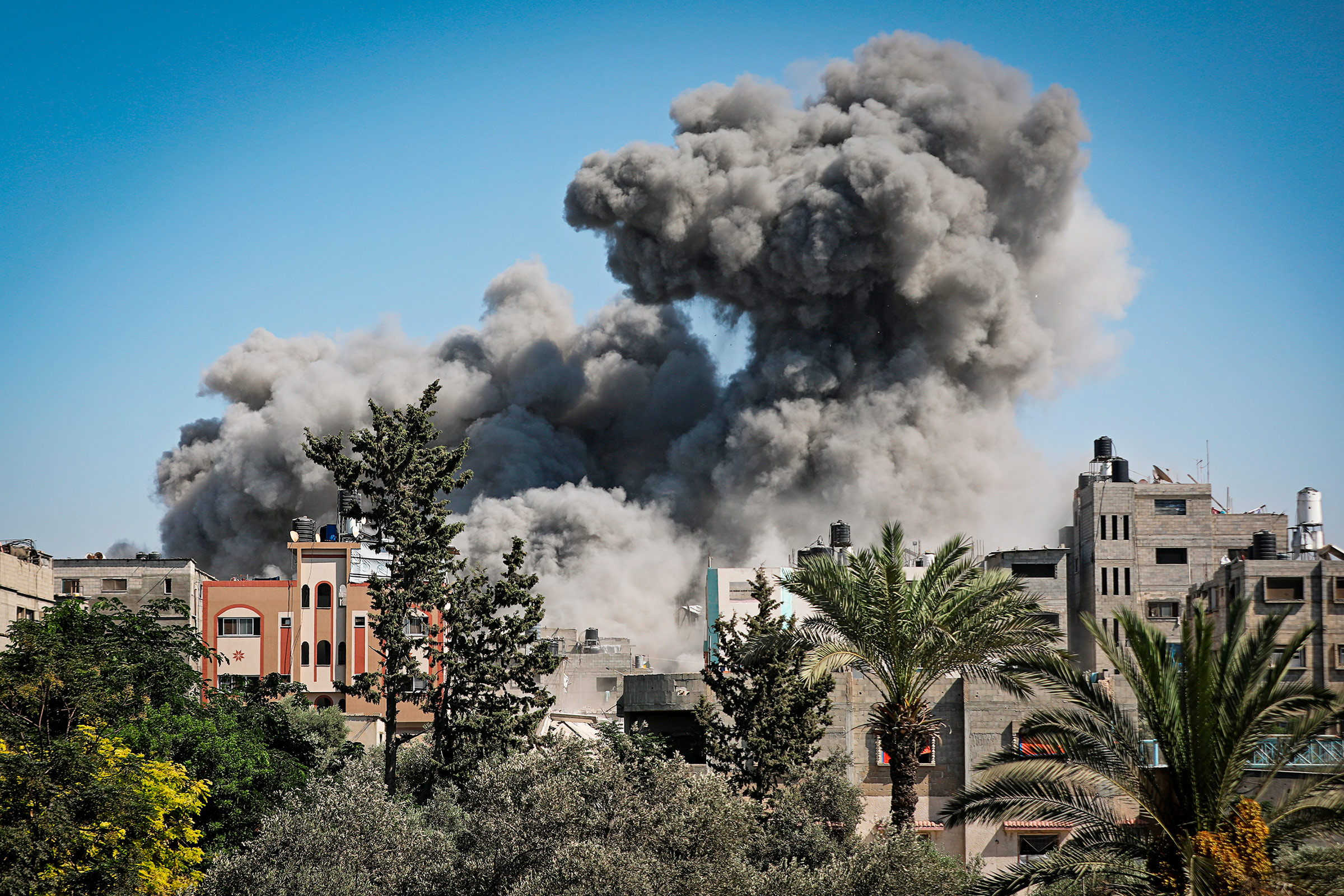
Smoke rises above Gaza after and Israeli air strike on Sept. 8, 2026. —Moiz Salhi—Anadolu/Getty Images
The fault lines run through nearly every aspect of Israeli life. Secular and religious. Liberals and nationalists. Those obliged to serve in the military and the ultra-Orthodox who are not. Those who believe Israel must reach an accommodation with the Palestinians and those who want permanent Israeli control over the West Bank and Gaza. And, not least, those who regard Netanyahu as the indispensable guarantor of Jewish security and those who see him as the principal threat to the country’s democratic character and reputation abroad.
The fear increasingly voiced across Israel’s political and cultural establishment is that another Netanyahu victory could push those divisions toward a societal rupture. After Netanyahu’s coalition moved in early 2023 to restrict the power of the Supreme Court, the prospect of another government dependent on religious and ultra-nationalist parties has raised the specter of an exodus of young Israelis, who see the country’s liberal and democratic traditions slipping away. In a recent survey by the Agam Institute, an Israeli research firm, and the Hebrew University of Jerusalem, 59% of Israelis said they believe internal threats are greater than external ones, while 64% said they were considering leaving Israel, citing insecurity, living costs, and political instability. In a nation of roughly 10 million, even the departure of tens of thousands of highly educated citizens could have consequences far beyond their numbers, draining the country of the talent and investment on which its economic and military strength depends.
There is a deeper irony. Israel was founded as a refuge, a place where a people long subjected to persecution and exile could finally determine their own destiny. Some Israelis now contemplate leaving, not because they have lost faith in the necessity of a Jewish state, but because they fear the political direction of the state created to provide one.
For those contemplating a future abroad, there is an unsettling question: Where, exactly, would they go? Antisemitism has surged across much of the world, with 2025 marking the deadliest year for Jews in the diaspora in more than three decades, according to Tel Aviv University. Israel has become increasingly isolated, condemned in international forums, denounced in the streets of European capitals, and regarded by many critics as a pariah state. The result is a profound paradox: Israelis who fear for their country’s future wonder whether they would be any safer, or more welcome, anywhere else.
It is this siege mentality, the sense of a small nation standing alone against a hostile world, that Netanyahu is counting on to sustain his political survival. He has spent much of his career presenting himself as a leader hardened by history, experienced in diplomacy, and ruthless in the exercise of power. His message: Whatever Israelis think of him personally, whatever blame they assign him for Oct. 7, the world is too dangerous to entrust their security to anyone else.
The chasm between how Israelis see themselves and how much of the outside world sees them has rarely seemed wider. In the new documentary NAZA, Israeli filmmakers draw on the anonymous testimony of 24 soldiers and intelligence officers to expose what they describe as the military’s systematic use of artificial intelligence to identify Hamas targets in Gaza, even when commanders knew that bombing them would kill women and children. Inside Israel, meanwhile, the fifth season of Fauda, the country’s enormously popular television thriller, recreates the atrocities of Oct. 7 in harrowing detail, immersing viewers once again in the terror, grief, and vulnerability of that day.
One production focuses on the suffering Israel inflicted, the other on the suffering Israelis endured. Together, they illuminate the competing narratives of a war that has left Israel increasingly estranged from the world, and many Israelis feeling more besieged than ever. Indications from polls and analysts are that even after voters have their say, no one bloc will have mustered a legislative majority. At that point the leading vote-getter will have weeks to try to gather a coalition, a test of the kind of political leadership at which Netanyahu has long excelled.
For nearly three decades, Netanyahu has been the dominant figure in Israeli public life, his political fortunes rising and falling with the country’s anxieties and ambitions. He has survived scandals, indictments, electoral defeats, and repeated attempts to engineer his ouster. The question is whether a political system he has spent so long mastering can produce a future that no longer revolves around him.
In a country not yet 80 years old, many are ready to chart a new era. “I think that Eisenkot is the one,” says Livna Savir, 72, at a rally for the challenger on a basketball court in Kibbutz Netzer Sereni, outside of Tel Aviv. “It’s a change of direction.” With her children living in the U.S., she laments the impacts of the last three years on a once unified group: “What happened now in our country—it’s not good for the family.”
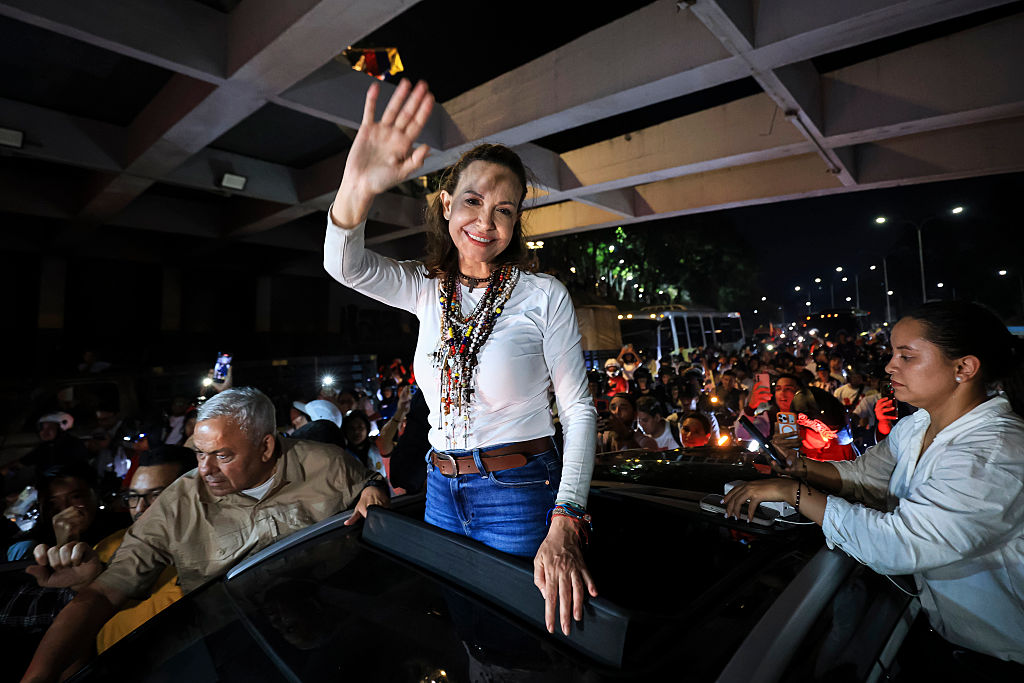
Opposition leader María Corina Machado greets the crowd gathered around her vehicle amidst supporters in Caracas, Venezuela on Oct. 25, 2026 —Jesus Vargas—Getty Images
Machado, who was briefly detained in January 2025 following a protest against autocratic then-President Nicolás Maduro’s swearing-in despite a dubious election victory, went into hiding in Venezuela and emerged in December that year in Norway. Since then, she has been fighting for a return to democracy in her own country, demanding that, following the extraordinary American military operation that captured Maduro, Venezuelans get to have free and fair elections.
The social media accounts of her political movement, Vente Venezuela, as well as her campaign, posted images and videos of Venezuelans crowding the streets of Caracas to welcome her return. The New York Times reported that Machado entered Venezuela from Colombia, citing two anonymized government officials.
Edmundo González Urrutia, another key opposition figure, also posted on social media Sunday that Machado is “on Venezuelan soil” and that he would soon be with her “so that our country truly advances toward freedom.”
Machado’s return adds some urgency to the country’s democratic transition—which the interim Venezuelan government under acting President Delcy Rodríguez, as well as its apparent overseer, the U.S., have both promised. Rodríguez, who was formerly Maduro’s deputy, and U.S. President Donald Trump have both said that elections will be held in the country, but a date has yet to be finalized.
The 59-year-old Machado, meanwhile, has called for elections by July 2027, telling the Financial Times that there was “more than enough time” to prepare for one. She has also said she will contest the presidency. A majority of Venezuelans want her to be President, according to a poll from AtlasIntel and Bloomberg.
Following Maduro’s ouster, Venezuela’s highest court said Rodríguez’s interim presidential appointment could last for up to 90 days, with the National Assembly potentially extending her term for another 90. But the assembly, controlled by the ruling party, did not vote on extending her term, which officially expired in April.
It remains unclear how Machado could hasten elections, given the Venezuelan government is in talks with a different U.S.-backed faction of the opposition. A third round of talks ended this month without reaching a firm election schedule. Venezuelans have since grown impatient and have taken to the streets to protest the delays.
What the U.S. has said about Machado’s return
Asked about Machado’s return to Venezuela, Trump said Sunday he was unaware of it. “I think she's a very nice woman,” Trump told reporters. “She gave me her Nobel Prize, so how can I say anything else? And I hope she’s safe.”
Machado gave Trump her Nobel medal earlier this year in what appeared to be a push to hasten Venezuela's democratic transition. But since Maduro’s arrest and the U.S. elevation of a new Venezuelan government under Rodríguez, tensions between Trump’s Administration and Machado have increased.
The opposition leader has tried to return to the country multiple times, but she has claimed Venezuelan authorities have repeatedly blocked her. Machado has denied suggestions that the U.S. was blocking her return. But her insistence on returning reportedly roiled some in the White House who worry it could spark a political crisis.
U.S. Secretary of State Marco Rubio posted on X that the conditions that allowed Machado’s return to Venezuela were “the direct result of the U.S. supported reconciliation talks which has already seen hundreds of political prisoners freed and hundreds of political opposition figures return from exile.”
But Rubio also hinted that the U.S. expects no further interference in the ongoing discussions: “The United States expects the freedoms of all sectors of Venezuelan politics to continue to be respected. Likewise, we expect all political actors to support these talks which represent the best chance Venezuela has had in thirty years to peacefully achieve not just a free and fair election but an enduring democracy.”
Machado said earlier that, despite not being a part of the discussions between the Venezuelan government, legislative opposition, and the U.S., her movement will not hinder initiatives that “produce real progress.”
The U.S. has argued that Venezuela must ensure political and economic stability before it can hold elections. But critics and other observers have pointed out that the Trump Administration’s approach has instead prioritized doing business with Venezuela over facilitating democratic transition—with Washington announcing a major oil deal with Caracas amid the talks.
“She’s a very nice woman,” Trump said of Machado Sunday. “But we’re doing really well in Venezuela.”
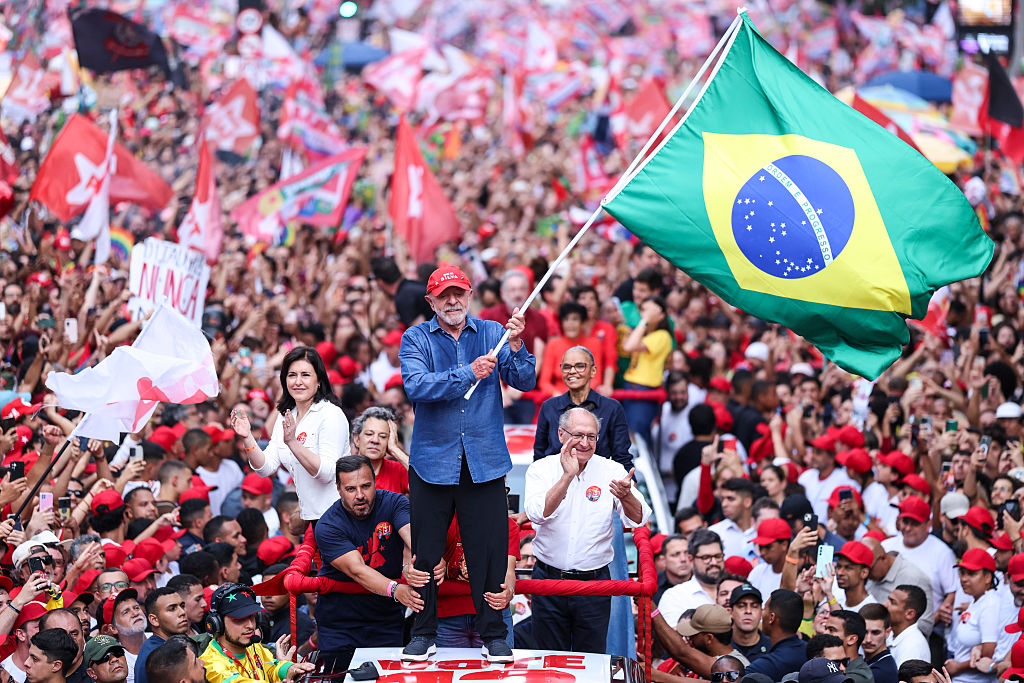
Luiz Inácio Lula Da Silva, incumbent president of Brazil and presidential candidate for the Workers' Party (PT), waves a Brazil flag during a rally ahead of the presidential runoff at Avenida Paulista in Sao Paulo, Brazil, on Oct. 24, 2026. —Alexandre Schneider—Getty Images
Luiz Inácio Lula da Silva has been re-elected to a historic fourth term as Brazil’s President after a tight race with far-right opponent, Flávio Bolsonaro, the son of former President and Donald Trump ally Jair Bolsonaro.
Lula won with 51.8% of the vote to Bolsonaro’s 48.2%, Brazil’s Superior Electoral Court announced. Sunday’s vote was a rematch after neither reached an outright majority in the first round on Oct. 4. Lula had trailed then, becoming now the first presidential candidate since Brazil’s return to democracy in 1985 to finish second in the initial vote and win the run-off.
The election also marks a remarkable win for the global left, as it bucks a trend of right-wing electoral victories across Latin America. Lula will serve for another four-year term beginning on Jan. 5, 2027.
“I want to thank the generosity of the Brazilian youth who took to the streets, who went to the streets to defend democracy,” Lula said in his victory speech on Sunday night. “I want to thank the elderly. I saw scenes today of people being carried by their grandchildren to vote, people unable to move around, people with cancer and other illnesses. And people went to vote because we managed to convince them that voting was very important to ensure democracy in the country.”
“This election was a defeat for denialism, a defeat for lies,” he continued.
Bolsonaro, however, said late on Sunday that he would not concede defeat to Lula and would seek an annulment of the result. The senator for Rio de Janeiro said a ruling by the Supreme Court to extend voting for two hours, citing public transport issues, was “unacceptable.”
Nevertheless, several liberal leaders around the world have already lauded the result.
“Long live democracy, the people of Brazil won,” Mexican President Claudia Sheinbaum said.
Canadian Prime Minister Mark Carney posted, “The relationship between Canada and Brazil has flourished under our partnership. Let’s seize this opportunity to make it even stronger, together — to create major new trade opportunities, protect the environment, and build greater prosperity for both our peoples.”
Lula’s campaign focused on labor reform, welfare benefits, and affordability. At a time when public debt as a share of GDP has risen to its highest level since the pandemic, Lula cited his achievements in lowering poverty rates, as well as reducing unemployment, illiteracy, and deforestation to record lows. He pledged to make public transit free on the weekends, a program that would need congressional approval. He also increased benefits under his signature Bolsa Família program and championed a landmark constitutional amendment shortening the working week, which Congress approved.
Bolsonaro, meanwhile, campaigned on harsher criminal penalties, tougher policing, lower taxes, and cuts to government spending. His campaign highlighted a corruption investigation involving Lula’s son and a pension fraud scandal that spanned both Lula’s and Jair Bolsonaro’s administrations.
Bolsonaro also called for amnesty for his father, Jair Bolsonaro, who is serving a 27-year prison sentence under house arrest after being found guilty of plotting a coup to overturn his defeat in the 2022 election.
In his election night speech, Lula pledged to strengthen federal involvement in public security, expand education and healthcare, and develop Brazil’s technological and artificial intelligence industries.
“This country will not be built by me,” he said. “But by you.”
A blow to the right
Lula’s win pumps the brakes on the broader political shift towards the right in Latin America. Colombia, Peru, Costa Rica, and Chile elected right-wing presidents in recent election cycles, reversing an earlier “pink tide” of left-wing governments.
Lula’s victory also denies Trump another political ally in Latin America, which include Argentinian President Javier Milei and Salvadoran President Nayib Bukele.
Bolsonaro had portrayed himself as an ally of Trump, courting closer ties with Washington and backing U.S. terrorist designations for Brazil’s major criminal gangs. Reuters reported on Saturday, citing current and former U.S. officials, that two U.S. State Department officials had pushed sanctions and other measures intended to weaken Lula and help return the Bolsonaros to power. The State Department did not comment specifically on the reported efforts but told Reuters that “all actions taken by the United States against narco-traffickers and to protect free speech are to defend the rights and lives of the American people. The Brazilian people have the right to choose their leaders through free and fair elections.”
Trump previously expressed support for Jair Bolsonaro and labelled Lula a “radical left lunatic” during Brazil’s 2022 presidential election. He also criticized the criminal prosecution of Bolsonaro, calling it a “witch hunt” and demanding it end.
Trump has not reacted to the election results as of early Monday. After Bolsonaro led in the first round on Oct. 4, Trump called the result “close, but a very, very big victory.” His son, Donald Trump Jr., posted earlier criticizing the Supreme Court’s decision to extend voting hours and what he described as the lack of American mainstream media coverage of it.
Lula had warned that Bolsonaro would surrender Brazil’s sovereignty to Trump.
At the same time, Lula has pursued closer ties with China, Brazil’s largest trading partner and the U.S.’s geopolitical rival, although he rejected subordination and said Brazil was not choosing between the two countries.
“This country will not accept being anyone’s backyard,” Lula said on Sunday night.
Analysts, however, warned that Lula’s political influence could wane despite his re-election. Earlier this month, Brazil elected its most conservative National Congress since the 1980s. Bolsonaro’s Liberal Party (PL) and allied parties could control majorities in both chambers, with more than 280 of 513 seats in the lower house and up to 50 of 81 seats in the Senate.
That could make it difficult for Lula to pass his legislative agenda, analysts said.
But Lula shrugged off those concerns and promised to work with the more conservative Congress to govern for all Brazilians.
“The day after tomorrow, the 27th, I turn 81 years old, and I want to make a commitment in front of the press and in front of you,” Lula said. “I will have the best term a President has ever had in the history of this country”

 Login