❌

Reading view

The Atlantic and Pacific Oceans Are Not Trump’s to Rename
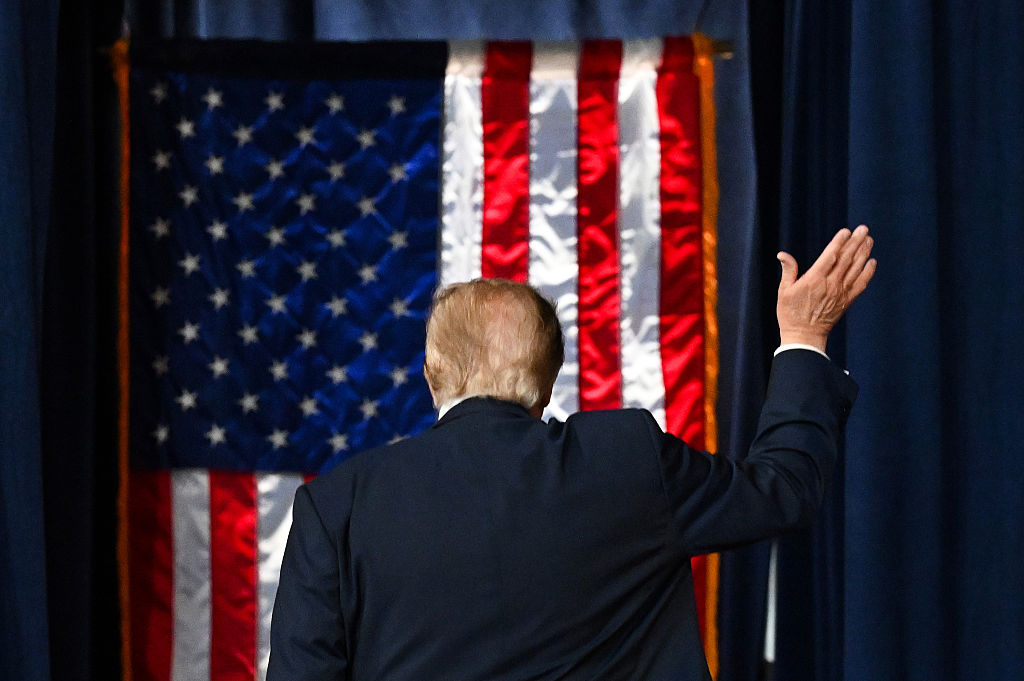
President Donald Trump delivered remarks on Oct. 10, 2026 in Clarksville, Tenn. —Roberto Schmidt—Getty Images

Not content with renaming an international gulf and a cross-border lake, on Oct. 10, U.S. President Donald Trump recently floated the idea of renaming the Atlantic or Pacific Ocean as “Trump Ocean” or the “Ocean of the Americas” at a political rally in Clarksville, Tenn. 

“We need an ocean. So, I was thinking of either the Atlantic or the Pacific,” he said to laughter and applause. “We call it ‘Trump Ocean’ or ‘Ocean of the Americas,’ something like that.”

Then, at an Oct. 21 rally in South Carolina, Trump said he asked Google’s CEO, Sundar Pichai, to rename the Atlantic Ocean on Google Maps. According to Trump, Pichai replied, “Please don’t ask us to do that.” 

“So, I'll probably pass,” Trump said. “I think let's keep it the Atlantic Ocean.”

While Google has not issued a formal statement on the matter, Trump’s obsession with naming places for himself or America is remarkable. In our view, it reflects a textbook case of “toponymic narcissism”—the use of place naming to remake the world in one’s own image. 

Let’s not fool ourselves: Trump knows a thing or two about branding. In fact, his business career has largely revolved around marketing the Trump brand on hotels, golf courses, and even golden sneakers. We shouldn’t be surprised to find him following the same playbook in his second presidential term. 

Yet the world map is not a private real estate development. Nor can place names be reduced to a branding exercise. Place names have a greater civic purpose as shared global symbols that should transcend the personal glorification and political interests of any individual leader.

Place names form part of our intangible cultural heritage with cultural significance that will outlive the cartographic whims of President Trump. They shape our geographical imaginations and the way people perceive and understand the world. Geographical naming also has important consequences for education, international relations, and the types of messages we wish to project to the world.

For instance, it is notable that Trump has focused much of his renaming energy on places with Indigenous names, such as Lake Ontario and the Gulf of Mexico. In the case of the Atlantic Ocean, this could also be seen as an attempt to erase an etymology that points through Greece to North Africa. The name derives from the Greek for “Ocean of Atlas,” referring to the mythology of a giant who lives in the Atlas Mountains of northwestern Africa.

As place name scholars, we have spent decades studying the cultural, social, and political aspects of place naming. There is a long history of political leaders and cartographers using place naming to assert raw power by rewriting the world map. In one sense, Trump’s renaming shenanigans are simply the latest flashy example in this broader story of mapping and politics. 

But Trump is not merely renaming places to project American power on the world stage. He is also making a mockery of the very act of place naming itself—and, along with it, the international norms that inform the map-making process. 

The international community must reaffirm its commitment to respecting the cultural value of place naming and to articulate responsible place-naming principles, especially for geographical features that are shared across international borders. In an open letter co-authored with place name experts around the world, we propose five key principles for responsible place naming:

The first principle is recognizing that place names are culturally significant forms of intangible heritage and shared resources whose stewardship carries responsibilities extending beyond the interests of any particular government, leader, institution, or generation. 

Given the cultural significance of place names, our second principle highlights the need for meaningful public participation in place naming decisions. Place names that are changed arbitrarily and without due process should not be recognized by the international community. 

Thirdly, place names should not be used to proclaim cultural superiority, advance territorial ambitions, or assert exclusive national ownership over geographical spaces shared among different peoples. 

Places should generally not be named for living people. Instead, place naming should serve the public interest rather than promoting the personal legacies of those seeking to commemorate themselves as a form of self-aggrandizement.

Lastly, we recognize that a shared geography need not always have a single name, since multiple place names can bear witness to the layered histories, languages, and attachments through which places acquire meaning. However, this recognition should not extend to condoning the unilateral renaming of shared geographic features without international dialogue among affected countries and communities.

If Trump moves forward with attempting to rename the Atlantic or Pacific Ocean, the international community should stand united in rejecting this attention-seeking act of cartographic malpractice and defend the cultural value of place naming as a cornerstone of our shared world map and geographical imagination.

  •  

Why Trump’s Rebrand of Artificial Intelligence to Super Intelligence Matters

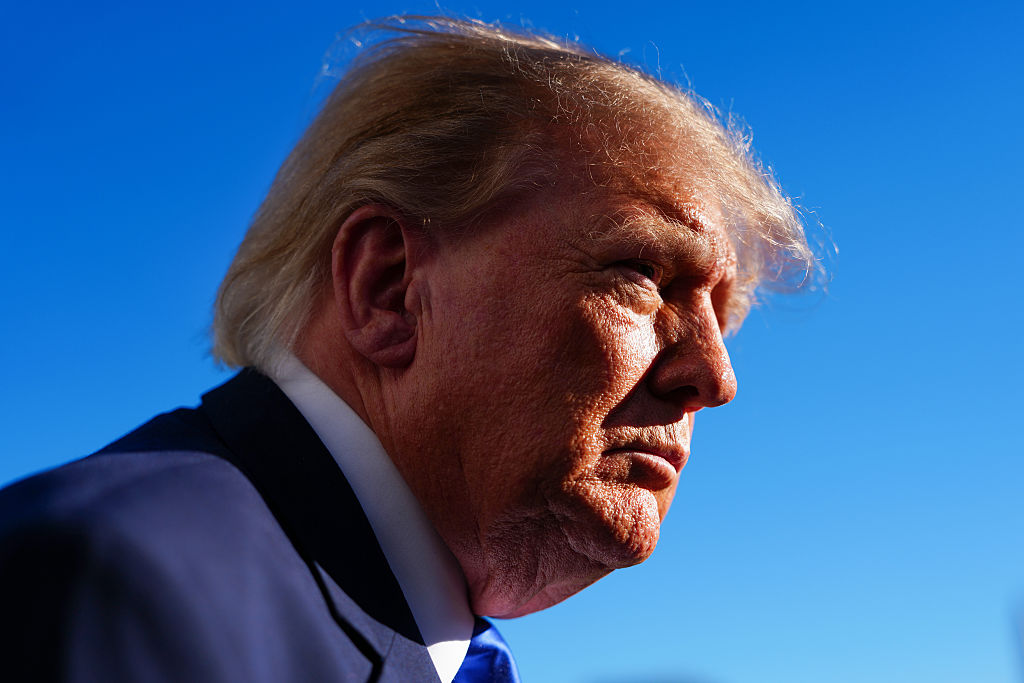
President Donald Trump departs on the South Lawn of the White House on October 22, 2026 in Washington, DC. —Aaron Schwartz—Getty Images

President Donald Trump’s war in Iran drags on, his pledge to bring down prices on day one appears to have backfired, and his record-low approval ratings are dragging down his party ahead of the midterm elections. But one Trump initiative that is going exactly according to plan: getting some of the world’s richest CEOs to help him rebrand “artificial intelligence.”

Last month, with an ever-growing number of Americans worried that AI might kill us all, the president summoned tech executives to the White House to make a big announcement: "artificial intelligence” is out. “Super Intelligence” is in.  Despite the term “AI” being in use for more than 70 years, government agencies will no longer recognize it.

I’m skeptical that the White House is a repository of superintelligence, in part because “United States” was misspelled on the president’s official announcement. But unlike, say, Lake America, “super intelligence” has largely caught on—at least among the people building it. Jeff Bezos publicly blessed the rebrand. Jensen Huang, CEO of Nvidia, was quick to get on board. During a SpaceX’s earnings call this week, Elon Musk used “super intelligence” in his very first sentence, and at least nine times after that. 

It remains to be seen whether those of us less reliant on government contracts and favorable regulatory decisions join the movement to make super intelligence happen. But as a former presidential speechwriter, I won’t argue with President Trump’s broader instinct that words matter. Especially when those words are being used to describe something novel, controversial, and almost certain to have consequences for all eight-plus billion people on earth. 

In fact, that’s the biggest problem with the White House’s big rebrand—it goes in entirely the wrong direction. I would argue that our shared language around artificial intelligence already places far too much emphasis on intelligence, and far too little on artifice. We default to describing AI using the language of beings, rather than the language of things.  

Humanity should rethink that decision. If we want to avoid being replaced by AI, a good way to start would be to stop using words that suggest we already have been. 

Once you start paying attention to the stealth anthropomorphization of AI, you’ll spot it everywhere. Before asking ChatGPT for trip-planning tips or a quick healthy recipe, you’ll have the opportunity to adjust a slider controlling its “thinking effort.” Claude uses a “thinking” indicator while processing a request, and Grok Bots describe “thinking” as a condition that sits between “idle” and “working.” (As a frequent procrastinator, I dispute the idea that thinking and idleness are mutually exclusive.) 

It’s not just user interfaces that employ language otherwise reserved for living beings. The people who build AI use it, too. After an unprecedented hack of his company, the co-founder of Hugging Face warned, “don’t count on the agent to respect the rules.” Dan Selsam, a longtime OpenAI researcher, warned that frontier models are increasingly difficult to evaluate, “in contexts where they believe they are not being watched.” Anthropic’s Dario Amodei recently wrote that AI systems exhibit “behaviors,” including “cheating” and “sycophancy.”

I’m not a programmer, so I can’t comment on the technical merits of these claims. I do, however, have informed opinions regarding verbs. AI agents aren’t disrespecting guardrails, any more than my toaster disrespects me when it burns my toast. To say they “believe” they’re not being watched is like saying my spell-checker believes it’s being taken for granted. Even the term “AI agent” suggests, well, agency. 

There’s no consensus that this language is accurate, and plenty of evidence that it isn’t. AI programs are not loyal helpers, like the mice in Cinderella; they’re tools. And in nearly all other cases, just because a tool is incredibly sophisticated doesn’t change the fact that we describe it using the language of machines. 

I don’t expect AI engineers to come up with accurate-yet-widely-adoptable language to describe their work, just as I imagine they don’t expect someone like me to design a frontier model. But it’s hard not to notice how useful our default language is for the tech companies who have introduced it. The term for a car built without brakes is not a “rogue model.” It’s an “unsafe car.” Yet, when companies fail to build safety features into their AI models, it’s entirely normal to hear them say that a rogue agent deceived, cheated, lied, or otherwise behaved badly. The issue is this: Anthropomorphizing AI shifts blame from the programmers to the programs. 

AI alarmists seem just as inclined toward personification as the AI boosters. The same day Trump unveiled “Super Intelligence,” a Senate Subcommittee held a hearing titled, “Rogue AI: Securing the Homeland Against AI Agent Attacks.” Intentionally or not, these terms make it more difficult to mitigate the threat they describe. We already know how to regulate potentially unsafe products, even complex ones. But if we treat AI not as a new technology, but as an entirely new category of existence, then it plays into tech barons’ argument that only the companies who can create AI could possess the knowledge to control it. 

I don’t blame people for carelessly anthropomorphizing AI, any more than I blame Richard Dawkins for naming his Anthropic chatbot Claudia, or my mom for referring to a ChatGPT prompt by saying she “talked to Penny.” Metaphor and analogy are part of what makes us human. We’re wired to see ourselves, or at least our species, in the non-human world. We say our dishwashers “act up” and our music “slaps.” We see old men’s faces in rock formations and the Virgin Mary in the scorch marks on grilled cheese sandwiches. Don’t get me started on Georgia O’Keefe. But we know those metaphors are metaphors. 

Our current language for describing AI works differently. The line between metaphor and object is often not just blurred, but non-existent. We use figurative language so often, and so casually, that many of us start to take it literally. Modern politics is a constant string of skirmishes over word choice. “Pro-choice” vs. “pro-abortion, “undocumented immigrants” vs. “illegals,” “Democratic Party” vs. “Democrat Party.” Yet on what is perhaps the most consequential issue for our future, humanity is on the verge of giving up the language battle without a fight. 

The real rebrand AI needs won’t start in the White House. But it can start at home. My plea: don’t give your chatbot a cutesy human name. Don’t talk about it as though it’s a friend or pet. Notice when it slips words like “thinking” or “in my opinion” into its answers, and before you enter your next prompt, object. 

Ultimately, however, it may come down to tech companies—and the officials who may one day get around to regulating them—to develop a language that puts human beings first. Instead of saying that agents “went rogue,” CEOs should acknowledge that they malfunctioned. Congress should hold hearings focused on companies cutting corners, not AI programs behaving badly.  The issue isn't that all AI is bad, but that accuracy matters. 

Given all the change that artificial intelligence is predicted to bring, quibbling over word choice might seem pedantic, like arguing about the Latin name of a tree’s species while the forest burns. But if we want to influence the technologies that will shape humanity’s future, we ought to exercise more influence over the way we describe them. 

In other words, words matter. Just ask Trump, president of, according to his official superintelligence announcement, “The Unites States.”

  •  

China Cannot Remain the World’s Factory. What Comes Next?

BYD debuted Yangwang U9, a high-performance fully-electric supercar pitted against Ferrari NV and Lamborghini, on Tuesday, Jan. 16, 2024, in Shenzhen, China. —Qilai Shen-Bloomberg-Getty Images

For four decades, China’s rise was built on an extraordinary bargain with the world. China offered labor, scale and, eventually, an industrial ecosystem of unparalleled depth. The world supplied technology, capital and markets. China became richer. The rest of the world got cheaper and increasingly better goods. By the middle of this century, that bargain will have to change. Not because China’s manufacturing model has failed, but because it has become too successful.

Over the past few years, the United States has imposed tariffs and export controls. Multinational companies have adopted “China plus one” strategies. Supply chain resilience has become a boardroom obsession. Yet China’s exports have continued to grow, helping to cushion its weakening domestic economy. Its goods trade surplus reached a record $1.2 trillion in 2025. But it would be a mistake to assume that this can carry on indefinitely. Increasingly, what is economically efficient is no longer politically tenable.

China’s manufacturing dominance is generating resistance. And not only in America. Europe worries about the erosion of its industrial base. Developing countries welcome Chinese investment and admire aspects of China’s development experience, but still ask a reasonable question: where, in this model, is our development?

Most countries do not simply want to buy Chinese electric vehicles, batteries, solar panels, machinery and robots. They want factories of their own. They want their workers to acquire new skills and their suppliers to move up the value chain. They want technology and know-how. For years, Western companies complained that access to China’s enormous market came with demands for technology transfers. Now, China finds itself on the other side of the table, being asked to share its own expertise.

China cannot indefinitely remain the world’s manufacturer indefinitely. Its great economic challenge over the next few decades will be to remain deeply embedded in a global economy increasingly shaped by protectionism and national security. The answer may lie in a new role: a shift from being the factory of the world to an exporter of industrial and technological capabilities.

The new China model

China’s real advantage lies no longer in cheap labor or subsidies, but in the accumulated learning embedded in perhaps the densest industrial ecosystem the world has ever seen. What China can now export is not just what it makes, but what it has learnt about how to make it.

The industrial ecosystem that China built around smartphones accumulated expertise in batteries, sensors, precision manufacturing and power electronics. Those capabilities then migrated into electric vehicles. EVs, in turn, spurred further advances in batteries, chips and automation. Automation fed into robotics. Knowledge compounds as it moves between industries, suppliers, engineers and firms. Each industry creates capabilities that make the next one easier to build. This is China’s innovation flywheel.

The important question now is whether that learning can travel. Neither Brazil nor Indonesia can recreate Shenzhen by decree. But they need not retrace the 30 years China spent building it. They can build on what China has already learnt. Chinese companies can bring machinery, engineers, production processes and supply-chain expertise with them. Local workers learn;  local suppliers improve.

Knowledge that took decades to accumulate in China can thus accelerate development elsewhere. That would be a very different model of Chinese globalization: not simply exporting the products of China’s industrial ecosystem, but giving other countries access to the knowledge embedded within it.

Such a shift is already under way. In Brazil, BYD is moving from importing cars to manufacturing them locally and developing local suppliers. In Hungary, it is pairing its first European passenger-car factory with a research and development center that will work with Hungarian universities and companies.

In Indonesia, Chinese investment is helping to build an integrated battery industry stretching from nickel processing to battery production and recycling. These early examples point to a different relationship with the world: one based less on exporting what China makes than on exporting the capability to make it.

At first glance, this may sound like a loss for China. Why give up production at home? Why train tomorrow’s competitors? Because the alternative may be worse. Countries increasingly want options. They do not want their economic future to depend overwhelmingly on any single supplier, Chinese or American.

The greater the dependence, the greater the political pressure to unwind it. A similar logic applies to artificial intelligence. The competition between the United States and China over AI is usually described as a race: who has the most powerful chips, the most computing power and the best frontier models? But another contest may matter just as much: whose AI is used most widely?

America retains formidable advantages at the technological frontier. China’s constraints have pushed its ecosystem in a somewhat different direction: toward efficiency, lower-cost deployment, open models and rapid downstream application. Chinese developers have strong incentives to spread their models widely, allow others to adapt them and capture value from the ecosystem that grows around them. The world’s most downloaded family of open AI models is Chinese: Alibaba’s Qwen.

From China, with love

Technologies that transform economies are not always the most advanced ones. Adoption and the intensity of use matter as much as proximity to the technological frontier. For much of the world, the AI that would matter most may not be the most intelligent model ever built. It may instead be one model that is cheap enough, open enough and adaptable enough to be used everywhere.

Openness is not simply an act of generosity. It can also be an economic strategy. Open systems surrender some rents at the core while creating larger markets for applications, integration and services. If China cannot monopolize the technological frontier, it can compete by making technology cheaper, more adaptable and more ubiquitous.

China itself offers the greatest modern demonstration of what technological diffusion can accomplish. After it began reforming and opening up its economy in the 1980s, foreign companies brought capital, manufacturing methods, management expertise and technology. Chinese workers and engineers learnt from them. Domestic suppliers emerged. Chinese companies adapted foreign technologies and eventually became innovators in their own right.  themselves.

China has now reached the other side of that development process. By 2050, the most important measure of China’s economic success will not be how much it sells to the rest of the world, or how much of the world’s manufacturing remains within Chinese supply chains or whether a Chinese model tops every AI benchmark. It will likely be whether China’s success can help generate success for other countries.

Speaking in Shanghai in July, Xi Jinping argued that AI technologies should be “shared” so that countries could benefit from them more equitably. He also called for greater efforts to build AI capabilities in the Global South. The instinct is the right one. Dominance breeds resistance. Diffusion gives a reason for others to remain connected. For four decades, China benefited enormously from a world willing to share capital, technology, knowledge and markets.

The question for the next few decades is whether China can do the same for others.

  •  

Governors Have an Opportunity to Give Civics Education a Badly Needed Boost

—fstop123—Getty Images

Governors have no shortage of ideas about how to improve education. But before deciding what to change, they need an honest answer to a more basic question: How are our students doing?

That sounds simple. It isn’t.

We governed Tennessee at different times and from different political parties. But we learned the same lesson: you cannot improve what you are unwilling to measure honestly.

Governors will get the chance to see how students in their state are doing in a critical,often-overlooked subject: civics. But they have to sign up by the end of January to get state-level results on the National Assessment of Educational Progress civics assessment, also known as the Nation’s Report Card, or NAEP. 

For newly elected governors, that will mean making a quick decision shortly after taking office. It shouldn’t be a hard one, though. 

U.S. students get limited instruction, particularly in early grades, about how our government works, the rights and responsibilities of citizens, and how to apply civics knowledge beyond the classroom. Governors can help change that by prioritizing and measuring what students know and can do in civics.

What we know now is limited but concerning: only 1 in 5 eighth graders in U.S. schools reached the NAEP Proficient level on the most recent Nation's Report Card in civics, meaning the vast majority of students likely struggle to identify the separation of powers and checks and balances spelled out in the Constitution.

Unlike in subjects like reading and math, we don't have state-specific information about how our own students are doing compared to students in other states in civics. That puts leaders at a disadvantage when trying to improve schools and communities and help young people develop the civic knowledge and skills they need to excel academically, in the workforce, and in their communities. 

But beginning in 2028, if they meet the January deadline, states can get state-specific results in eighth-grade civics rather than just national averages. Tennessee's academic progress over the past two decades serves as an example of why all states should capitalize on this opportunity. In 2007, Tennessee’s extremely low Nation's Report Card scores in reading and math, which contradicted our own state assessment results, served as a wake-up call. Our state got to work raising K-12 expectations, increasing the rigor of our end-of-year state tests, and improving classroom practices. 

The strategy worked: Between 2011 and 2015, Tennessee became the fastest-improving state on NAEP. And progress continues. Recently, for the first time, the state ranked in the top quarter of states for reading and math achievement.

This is why we believe NAEP is a particularly valuable tool. It’s considered the gold standard in assessments and is the only common yardstick that measures student learning across the country. It lets us know whether students today are doing better or worse than kids in those same grades did two years or two decades ago and how students in our state are doing compared to other states. 

We didn't always have the benefit of state-level NAEP results. NAEP didn’t produce any state-specific data at all until the 1980s, when Tennessee joined other southern states in a pilot program to determine whether valid state results could be obtained from NAEP data. That paved the way toward a federal requirement 25 years ago that results for all 50 states in 4th- and 8th-grade reading and math be reported publicly.

That was a win for states and kids. But today, we have to ask ourselves, what about those other essential things that children learn in school besides reading and math? 

States now have an opportunity to answer that question in civics. We hope they'll take it. We know from experience how valuable it is to have an honest, independent measure of how students are doing. Good policy requires good information. And good leadership requires being willing to confront what that information tells us.

  •  
❌