❌

Reading view

Bangladesh’s Vital Garment Industry Struggles Amid Global Energy Crunch
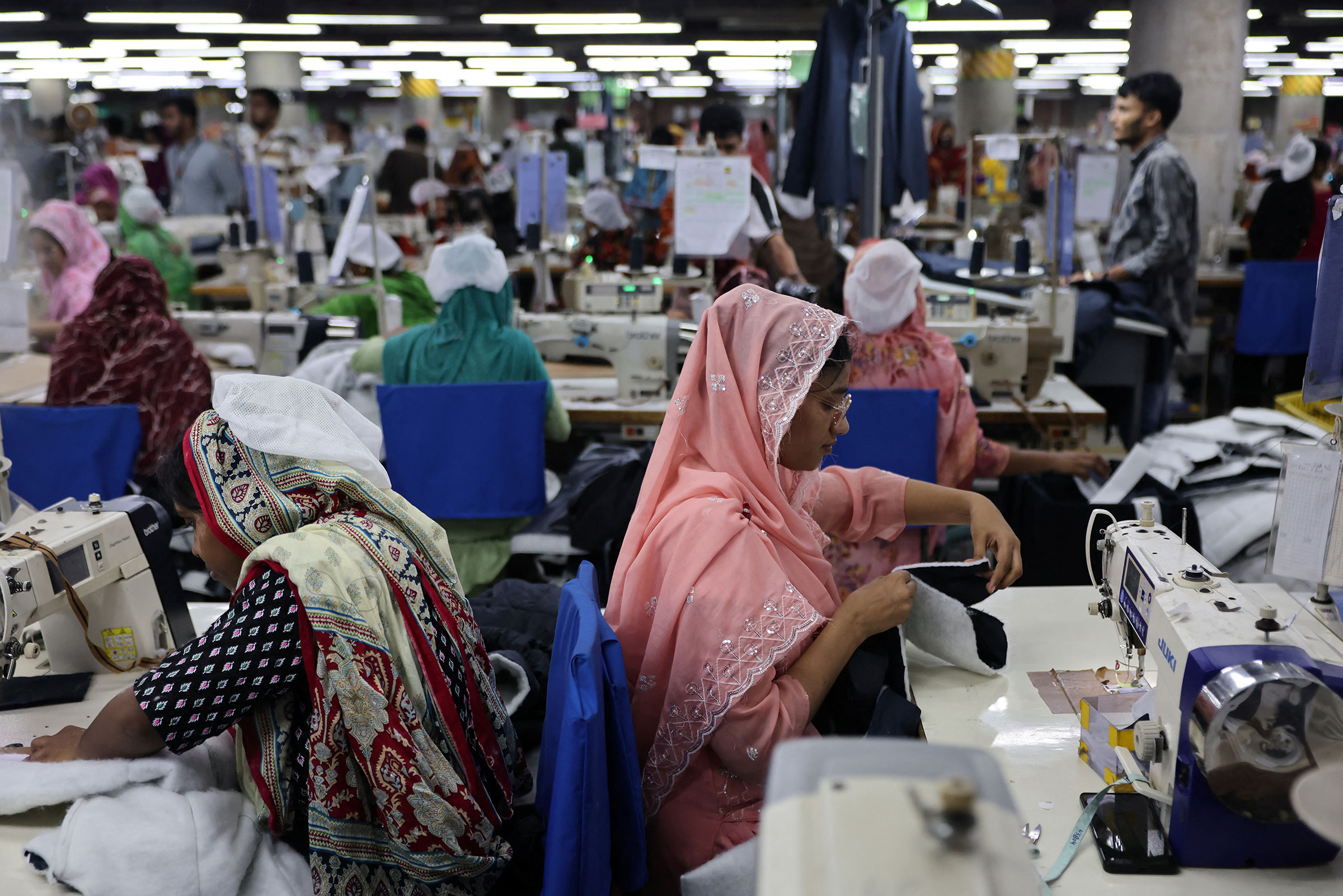
Employees work in the sewing section at the Yarn Dyeing Limited factory, amid the energy crisis, in Savar, on the outskirts of Dhaka, Bangladesh, on Sept. 17, 2026. —Mohammad Ponir Hossain—Reuters

It’s 11 a.m. at Ha-Meem Group’s Ashulia garment factory north of Dhaka and every floor is a whirlwind of feverish labor. Industrial jigsaws slice stacks of denim into precise panels, which nearby seamsters then stitch into jeans, skirts, and jackets. 

Next comes washing, ironing, and affixing buttons and zips before the brand labels are attached—Gap, American Eagle, and JCPenney are major clients—and the finished garments are stacked into boxes by some of the group’s 90,000 staff, who together produce 9.3 million apparel items every month.

Read more: What Bangladesh’s New Leader Tarique Rahman Means for South Asia and the World

But suddenly the lights flicker, the workshop dims for a moment, and then full illumination returns accompanied by four cacophonic British-made diesel generators, which automatically splutter into life whenever the gas supply weakens.

“In Bangladesh, the grid electricity is bad, there are frequent interruptions,” says Tanul Chakraborty, head of power, energy and environmental sustainability for Ha-Meem Group. “After gas the most reliable energy in Bangladesh is diesel. Grid electricity is third. Almost the entire economy moves on diesel.”

It’s a startling admission given that Bangladesh’s economy is worth $510 billion, South Asia’s second-largest after India. But the nation is in the grip of a severe power crunch, as wars in Ukraine and Iran expose the fragility of its growing dependence on imported fuel. Since Russia’s invasion, industrial gas prices have risen by 150%, and diesel by about 70%. Since the Iran war began, the cost of spot liquefied natural gas (LNG) has nearly tripled.
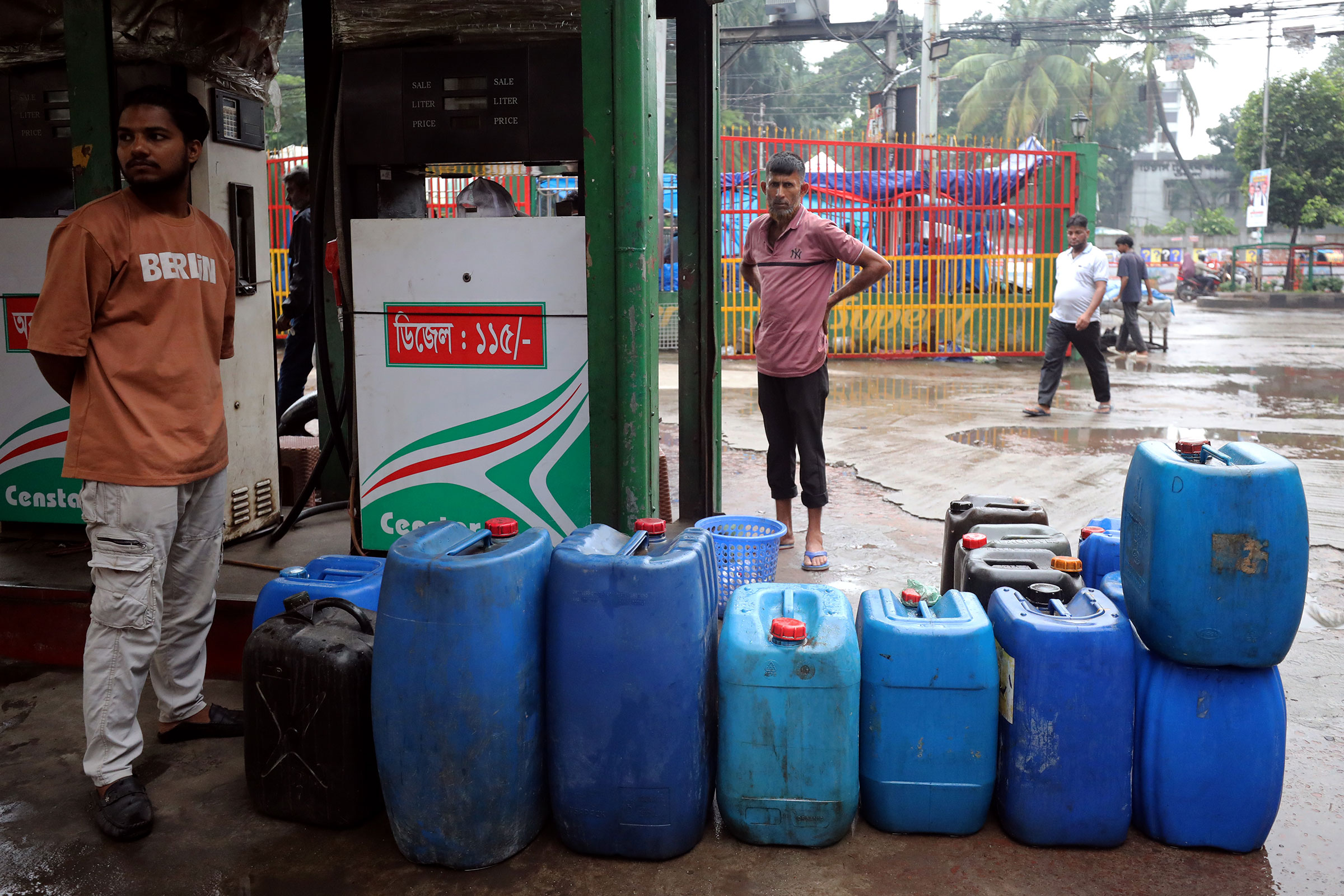
People line up at a petrol station in Dhaka, Bangladesh, on Sept. 1, 2026, to purchase diesel for generators as an alternative source of electricity amid the power shortage. —Maruf Rahman—NurPhoto/Getty Images

That’s bad news for a garment industry that is the country’s largest source of formal employment, directly providing 4 million jobs and supporting countless more livelihoods, while generating $38.7 billion last year—over 80% of export earnings. (Ha Meem alone accounted for $1 billion of exports.)

But the strain extends across the Global South, where developing nations struggle with a prolonged energy crisis that disproportionately squeezes the planet’s most deprived. In the Philippines, heavy dependence on imported Gulf oil has forced emergency conservation measures, including four-day working weeks, restrictions on official travel, and flight cancellations. Diesel prices have risen 86% in Nigeria and more than 50% in Tanzania and Ethiopia, driving up the cost of farming, trucking, and electricity from generators—and, in turn, the price of staples such as rice and corn.

“The poorest people, who spend the highest share of their income on food and fuels, will be hit the hardest,” Indermit Gill, World Bank Chief Economist, warned in April.

In Dhaka, a sprawling megacity of almost 40 million that is usually defined by relentless momentum, the nights have grown eerily dark. With the national power shortfall exceeding 3,000 megawatts, the government has imposed sweeping cuts, exempting only essential services such as hospitals and pharmacies. Illuminated billboards along busy commercial corridors now dim soon after sunset, while shops close an hour early. The burden is even heavier in rural villages, where residents have recently endured blackouts lasting as long as 16 hours a day.

For ordinary citizens, daily life has become a relentless calculus: Residents are forced to rise before dawn in the hope that their stove's gas pressure might be strong enough to cook. Other quandaries include how long they can run a fan against the suffocating humidity, and how far the queues will stretch at the gas station. As businesses flounder, a secondary crisis looms: global malnutrition monitors warn that 18.1 million Bangladeshis may soon face food insecurity.

Internal missteps have only tightened external bottlenecks. The country of 175 million drastically underinvested in both transmission infrastructure and domestic gas fields, meaning today it relies on imports from the Middle East for almost half of its energy. But between July and August, imports of LNG plummeted 83% largely owing to disruption around the blockaded Strait of Hormuz as well as a blaze that temporarily disabled one of its two floating regasification terminals.

Last month, thousands of opposition supporters staged a long march to pressure Prime Minister Tarique Rahman—who only took office in February, just weeks before the Iran war broke out—to do more to tackle soaring fuel costs. “Energy is the biggest test for the new government and has become a galvanizing point for the opposition,” says Michael Kugelman, resident senior fellow for South Asia at the Atlantic Council.


While the global energy crisis is tied to geopolitics, Bangladesh’s woes are uniquely entwined. Rahman’s Bangladesh Nationalist Party took power following the popular ouster in 2024 of autocratic former Prime Minister Sheikh Hasina, whom India granted sanctuary, deepening the rift between the neighbors.

Bangladesh imports roughly one-sixth of its electricity from India, which hasn’t been shy in wielding that strategic vulnerability as diplomatic leverage. Compounding the disruption, many of the key architects of national energy policy over Hasina’s 15-year reign have been placed on special duties ostensibly due to their ties to her Awami League party.

Bangladesh also finds itself hostage to shifting Great Power rivalry beyond its neighborhood. Dhaka invested $12.65 billion—chiefly via Moscow-backed loans—in its first nuclear power station in the town of Rooppur built by Russian energy giant Rosatom. The plant was supposed to begin operations in July 2024 but faced repeated delays due partly to the Ukraine war, which complicated payments to Russian banks and blocked the arrival of air and maritime cargo. After finally completing its first controlled nuclear reaction on Oct. 11, it is now expected to go into service in December, although months of staged testing will be required before it reaches a touted output of 1,200 MW.

Complicating matters, the U.S. Sanctioning Russia and Iran Act comes into force on Oct. 18, with provisions including sanctions on senior Russian officials and businesses supporting Russia’s energy sectors. This could mean Dhaka has to secure specific U.S. Treasury waivers or approved payment channels to service its plant debt and buy nuclear fuel.

Meanwhile, Washington is dangling its own alternatives. On Sept. 25, Bangladesh and the U.S. signed a memorandum of understanding (MoU) on strategic civil nuclear cooperation that focuses on small modular reactors. That comes on top of an Agreement on Reciprocal Trade inked in February that committed Dhaka to massive purchases of U.S. commodities, including $15 billion worth of U.S. energy products over a 15-year period.

But Bangladesh is also looking to Washington’s superpower rival. Rahman’s first overseas trip in June was to Malaysia and China. In Beijing, the two nations signed 17 agreements and other instruments to mark a “new era” of bilateral relations, with one explicitly covering renewable energy cooperation. But two of the agreements involved corporate groups subject to U.S. sanctions, and the growing ties between Dhaka and Beijing have caused consternation in Washington, State Department sources tell TIME. Bangladesh is also in advanced negotiations with a Chinese state-owned firm to build a third floating LNG terminal.

Seemingly pulled in every direction, Dhaka is desperate to instill more energy independence. The government recently launched a special incentive package for rooftop solar, slashing import duties on solar equipment from 17% to 1%, while particularly encouraging systems paired with battery storage. Bangladesh added some 200 MW of solar capacity to the national grid over the first half-year, according to government figures. However, that rate must be ramped up sixfold to have any hope of achieving ambitious five-year targets.

“We are actually looking into diversification, new areas where we can source energy from,” Shama Obaed Islam, State Minister for Foreign Affairs, told TIME as part of a panel at the 2026 Bay of Bengal Conversation last week. “We have [also] been looking into solar energy [and] making every citizen self-sufficient in energy.”

But while rooftop solar may work well for homes, it is far less useful for energy-intensive factories. Ha-Meem has 29.2 MW installed on its roofs—one of the largest private solar installations nationwide—though Chakraborty says it is only helpful for perhaps four hours per day when the sun is highest at a factory complex that operates around the clock.
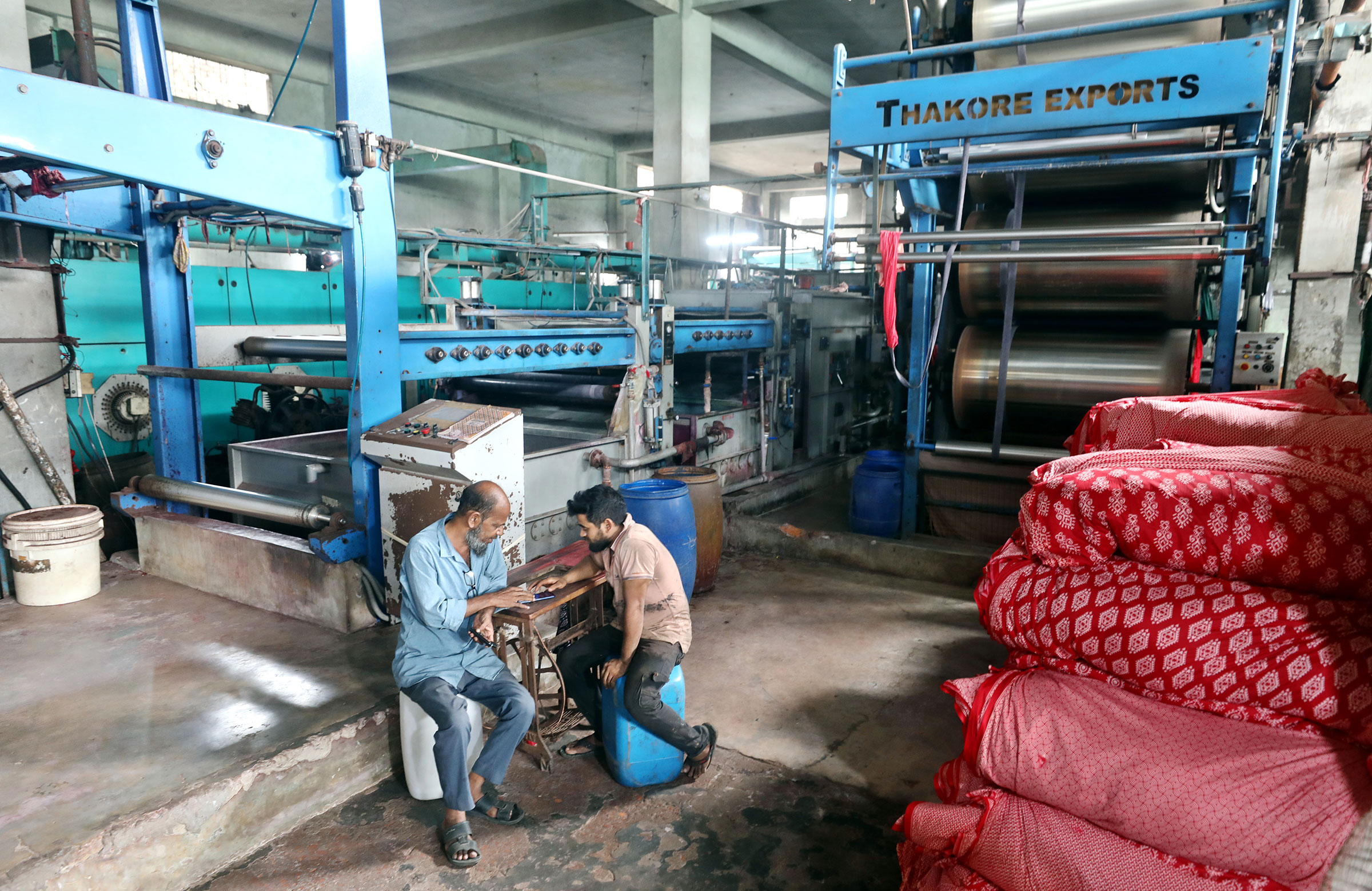
Production remains suspended at the dyeing unit of Siba Textile Processing Limited in the Shyampur industrial area of Dhaka, Bangladesh, on Aug. 3, 2026. —Sony Ramani—NurPhoto/Getty Images

Paradoxically, Ha-Meem has seen demand increase since the energy crisis. It has absorbed orders from some of the more than 400 smaller factories forced out of business in the three years till June (as well as from customers shifting production out of China to skirt Trumpian tariffs.) But with Ha-Meem’s energy bills rising from roughly $200,000 to $300,000 every day, and clients refusing to budge on prices, there is a relentless drive to boost efficiency.

In the office of Ha-Meem Senior Executive Director Brig-Gen (Ret.) Mohammad Abdul Moeen, a computer spreadsheet maps every employee against hourly targets. Workers who fall behind are counseled by managers—“maybe she had some problem with the machine,” says Moeen. “She may have just been tired”—and offered additional support and training. Those who consistently fall short are replaced by some of the dozens of applicants clutching résumés who queue up at the factory gate each morning.

“We may be facing some kind of energy crisis but that’s more reason why we cannot compromise with productivity,” says Moeen.


Moeen’s relentless focus on efficiency is easy to fathom. The garment industry is ruthlessly competitive and manufacturers fear that any rise in costs or supply disruption could see orders shift to rival Vietnam, Cambodia, or Pakistan. However, simply securing energy is not alone sufficient; with many Western brands making ambitious sustainability commitments that rely on shifting away from fossil fuels, how power is generated is also a key concern.

And if preserving Bangladesh’s dominant role in global garment production is precarious, diversifying the economy is harder still. The nation has ambitious goals of ramping up existing pharmaceutical and leather industries, and even moving into autos, medical devices, and semiconductors. But competition is tough, and few serious investors are charmed by candlelight meetings.  

Last month, Bangladesh unveiled a new energy roadmap that aims to add 12,940 MW of generation capacity via new solar installations and coal-fired projects, alongside modernization of grid distribution networks and a total of 300 new exploration wells to firm up domestic gas supplies (31 have already been drilled.)

“We are satisfied with that plan,” says Mohammad Hatem, president of the Bangladesh Knitwear Manufacturers and Exporters Association, which represents over 2,500 garment factories. “Within three or four years, maybe there will be no more electricity crisis.”

For now, however, Bangladesh’s garment workers—and billions across the Global South—have little choice but to endure given scant signs of relief in oil markets. In recent days, Yemen’s Houthis have intensified missile and drone attacks on Saudi airports, cities, and oil infrastructure, killing civilians in Riyadh, disrupting flights, and provoking Saudi-led strikes that have stoked fears of a wider regional war.

“It’s a difficult situation for the present government,” says Fazlee Shamim Ehsan, managing director of Fatullah Apparels Ltd., which produces 22,000 finished garments per day. “It would be much better if there was no war in the Middle East.”

—With reporting by Zia Chowdhury/Dhaka

  •  

Alberta Voted to Stay in Canada. That Doesn’t Quite Settle the Separatist Debate

A "Forever Canadian" lawn sign during a referendum vote in Edmonton, Alberta, Canada, on Oct. 19, 2026. —John Diep—Bloomberg/Getty Images

Albertans voted overwhelmingly to remain in Canada on Monday, but the result may do little to quiet the separatist movement that helped bring the question to the ballot.

Preliminary results early Tuesday showed that roughly 76% of voters rejected beginning the process toward a future binding referendum on separation. While approval would not have authorized Alberta’s independence from Canada, it would have allowed the province to take the next steps in the process of separation.

Even before the vote, most Albertans expected the debate to continue. Polling from the nonprofit Angus Reid Institute, released last week, found that 62% of people in the province think that “there will never be an end to the separatist movement.”

Responding to former Alberta Premier Jason Kenney’s suggestion that the movement should end if the referendum were to fail, Keith Wilson, one of the most prominent separatist leaders, said at a rally on Oct. 17, “That’s not happening."

“We are going to build on our successes, build on our relationships," he added.

Speaking to TIME before the results came in on Monday, Jared Wesley, a professor of political science at the University of Alberta, said that even if the referendum were to fail, “it seems unlikely that separatism as a political strategy, if not an actual objective, is going anywhere soon.” 

He added that the next provincial general election is next year, so it’s possible that voters could be faced with a similar question on the ballot then.

“The country is very familiar with western alienation and western grievances—that is a very long-standing political phenomenon in Canada,” Andrew McDougall, an associate professor of political science at the University of Toronto Scarborough, tells TIME. “There’s been a long history of regional tensions in Canada where the west feels disaffected from what, historically, has been the larger and, in many ways, sometimes more prosperous central Canada.”

“The idea, though, of having a vote on separatism—that is a little bit new,” he continues.

The Alberta independence campaign got more traction after the Liberal Party, headed by Prime Minister Mark Carney, won the federal election last year, with many Albertans expressing frustration that their views aren’t sufficiently represented by the Liberal government.

That dissatisfaction, driven in large part by the federal government’s energy policies, comes as Canadian leaders are placing particular emphasis on national unity.

Why did Alberta hold this referendum?

Alberta is an oil-rich province; mining, quarrying, and oil and gas extraction made up about a quarter of the province’s GDP in 2025. But Albertans have expressed dissatisfaction with the level of support the industry has received from Ottawa, criticizing the federal government for blocking pipeline projects, among other industry initiatives.

The feeling among some residents in the province, McDougall says, is “that central Canada is taking advantage of Alberta; that the central government has, at times, through environmental regulations, for example, hindered the development of the oil resources that exist in Alberta.”

He adds that the independence campaign may also have been fueled by Albertans’ dissatisfaction with representation in the federal government. 

Alberta is considered a conservative stronghold, but the Liberal Party has led the country for over a decade. The western province has about 5 million residents, compared to 16 million in Ontario and 9 million in Quebec, which means “it could be difficult sometimes for the West to get representation in the government,” McDougall says.

At the beginning of May, separatists turned in a petition with hundreds of thousands of signatures to push for a vote on leaving Canada, while opponents collected signatures in support of staying. A court ruling on May 13 complicated matters: A judge halted the petition, finding that the province could not advance the discussion without consulting First Nations.

The government instead asked voters whether it should take the steps needed to hold an independence referendum later, leading to this month’s vote. Alberta Premier Danielle Smith supported staying in Canada.

Polling suggests that, for many voters, support for the referendum was not necessarily about wanting to leave Canada—it was a way to underscore dissatisfaction with the federal government. 

The Angus Reid Institute found that 60% of respondents who were in favor of holding a future independence referendum said their motivation was sending a message to Ottawa, compared with 37% who wanted Alberta to take the necessary steps toward secession.

As early results emerged Tuesday, Wilson, the separatist leader, observed: “It’s fair to say that at least a quarter of Albertans feel that Alberta needs to be treated better.”

Carney stressed unity amid tensions with U.S.

Alberta’s independence referendum came as Carney’s government promotes national unity amid a trade war with the U.S.

McDougall says that the issues behind the referendum are "longstanding grievances,” but the fact that it advanced at a time of strong pro-Canada sentiment is “a little out of step with the times.”

The trade dispute escalated after negotiations between the two nations broke down in August. On Sept. 8, Canada responded to new tariffs from the U.S. with matching, retaliatory levies.

Tensions have continued to escalate in recent weeks as Trump repeatedly insists that Canada is ripping off Americans and should join the U.S. He said at a rally in Arizona on Oct. 14 that Canada will “end up being the 51st state, because it’s the only way it works.”

The following day, Carney spoke at a rally in Calgary, emphasizing the importance of Canadian unity amid outside tensions, though he did not explicitly reference Trump’s remarks.

“The stakes are high. This referendum, it comes at the worst possible time. The world has become more dangerous and divided," Carney said. “There are some outside our borders who are working to break us, so they can own us.”

The speech was another effort by the Carney government to promote national unity, just days before the referendum in Alberta. 

The message became especially poignant that weekend when four service members died in a fire at a military base in Alberta. The nation came together to provide resources and support for the province. At a press conference on Sunday, Carney emphasized that “Canadians come together in crisis.”

Wesley says he believes that “the vast majority of Albertans are viewing this referendum through a broader global lens.”

“They know their votes send a message—not just to governments here in Alberta or Ottawa, but to Washington,” Wesley says. “Albertans are overwhelmingly opposed to Trump’s trade war and even more averse to becoming the 51st state. They know that voting to destabilize Canada makes it harder to weather the economic storm and easier to fall into the American orbit.”

“Albertans made a clear choice,” Carney said Tuesday after preliminary results became available. “They chose unity, to build together, and to take care of each other. Above all, Albertans chose Canada.”

  •  

Why Young Indians Are Fearful About the Future of the World’s Largest Democracy

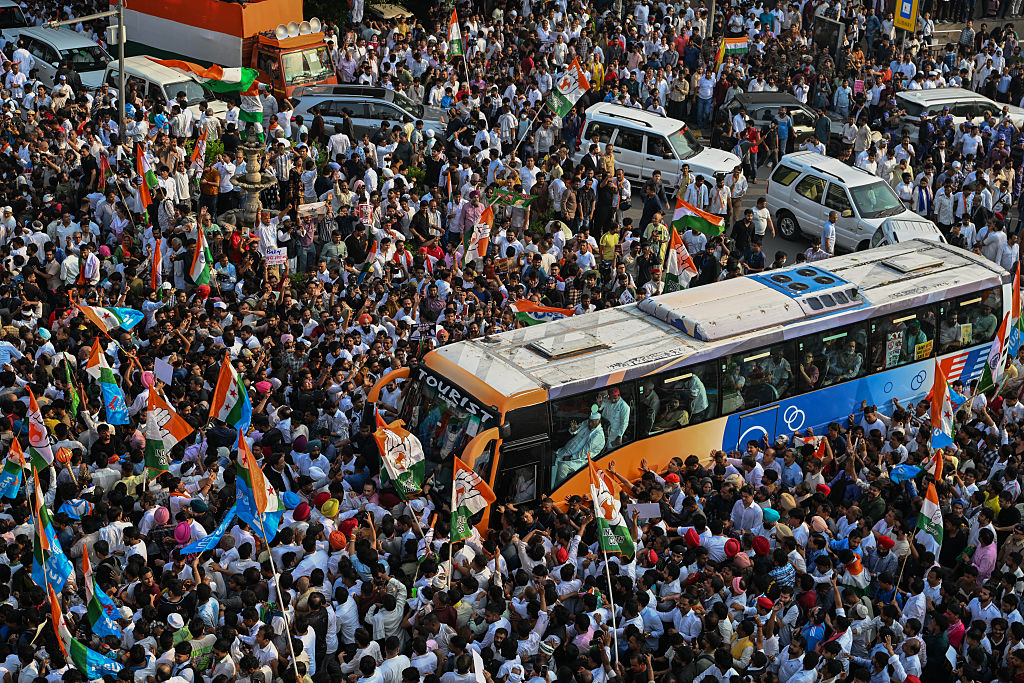
Protesters gather around a bus carrying Leader of the Opposition Rahul Gandhi during a demonstration on October 12, 2026 in New Delhi, India. —Ritesh Shukla—Getty Images

Demonstrations have swept across India in recent weeks, fueled by anger over what protesters say is a politically motivated purge of electoral rolls. 

The protests were sparked by the removal of some 130 million names from the rolls by election authorities, who have defended the process, saying the exercise was intended to weed out ineligible voters. 

But critics of the process, known as the Special Intensive Revision, said it was designed to bolster Prime Minister Narendra Modi’s Bharatiya Janata Party (BJP). They have demanded the resignation of the chief election commissioner, Gyanesh Kumar. 

The demonstrations have been met with a heavy-handed response from Indian authorities, who locked down the capital, New Delhi, and detained leaders of the burgeoning Cockroach Janta Party (CJP), a youth-led movement that emerged earlier this year. An Indian court on Monday extended the detention of two Cockroach movement leaders, Ashutosh Ranka and Saurav Das.

The movement proved itself a powerful force in Indian politics this summer when it successfully campaigned for the removal of Education Minister Dharmendra Pradhan, who resigned on July 25. 

To discuss the protests and what they mean, TIME spoke with Mukul Kesavan, a historian, novelist, and one of India’s best-known writers. 

This interview has been condensed and edited for clarity.

Q: What are these protests actually about? Are they a natural progression from the Cockroach movement’s earlier protests, or something different?

MK: It’s related to the Cockroach movement (CJP) sit-in at Jantar Mantar [a traditional site of protest in the Indian capital] that led to the resignation of the education minister, in that the sit-in created a space for dissent by making Modi’s government back down. But [the Oct. 12 march] was distinct because it was organized by the Congress Party along with other conventional political parties. The CJP had no hand in organizing it, though one of its progressive/left stars, Neha Bora, participated in the march to the Supreme Court. It was also about a distinct issue: the Election Commission’s fiddling with voter rolls. 

Q: Police detained the movement’s leaders before the October 10 rally, then detained two of them again at Jantar Mantar days later. What does that tell you about how the government sees this movement?

MK: There has been a reversal of the government’s attitude towards the CJP. At Jantar Mantar 1.0, the government underestimated the cockroaches, thinking it was a sit-in that would peter out. They were ambushed by the massive turnout of the young on July 20. The lesson the government learned from the police violence that discredited it was that it couldn’t afford to let the cockroaches occupy a space where massed citizens confronted the police for phone cameras to record. We’re seeing a strategy of pre-emptive detention to head off that possibility. 

Q: India’s elections have long been a source of national pride. Has this episode damaged that image, at home or abroad?

MK: India’s elections were a bit iffy until a man called T.N. Seshan became chief election commissioner in the early 1990s. He was an awkward egomaniac who took his office seriously enough to clean up the whole election process. The Election Commission became a three-member body that was more or less impartial till the Modi government passed a law that gave the government the majority in the three-member panel that appoints the election commissioners. Gyanesh Kumar has been grotesquely partisan and the Special Intensive Revision has so obviously tried to shape the electoral roll to favor the BJP that the institution has been publicly discredited. India begins to resemble electoral autocracies elsewhere like Turkey. 

Q: What do these protests tell you about Modi’s position?

MK: It’s the conventional thing to say, but it’s palpable that Modi’s aura of menace and authority has dissipated. The mockery and rudeness of young cockroaches, especially the young women who crowded into Jantar Mantar, did something that solemn ideological opposition had failed to do: it made him seem ridiculous, old and out of touch. I don’t know if the protests tell us anything about his electoral reach: we’ll have to wait for an election to find out. Opposition parties have to find a way of turning this fizz into votes. 

Q: Modi has now been in power for 12 years. What are his real achievements? What will historians credit him with?

MK: Some achievements in infrastructure: road building, airports, etc. The kind of things authoritarians do well. It’s hard to know what the economic growth figures mean in terms of general wellbeing. Geopolitically, his time in office has been a disaster: India is on bad terms with all its neighbors, in denial about China and in the doghouse with Trump. It might be more useful to talk about how he has degraded the republic’s institutions—the press, the courts, the election commission—than his achievements. His greatest "achievement" has been to normalize the rhetoric of Hindu supremacy. 

Q: India has one of the largest young populations in the world, yet the quality of its education and the prospects for its young people are grim. How does the situation compare to other places where young people are protesting? 

MK: With the possible exception of Sri Lanka, all South Asian countries, including the ones that have seen youthful insurrections in recent times like Nepal, Bangladesh and India, have school and university systems that are generally poor, with a few exceptions: elite institutions. This would be bad in itself, but the success of China in improving its educational system at every level makes our failure demoralizing.

  •  

Trump Open to ‘Denuclearization’ Summit with Putin and Xi

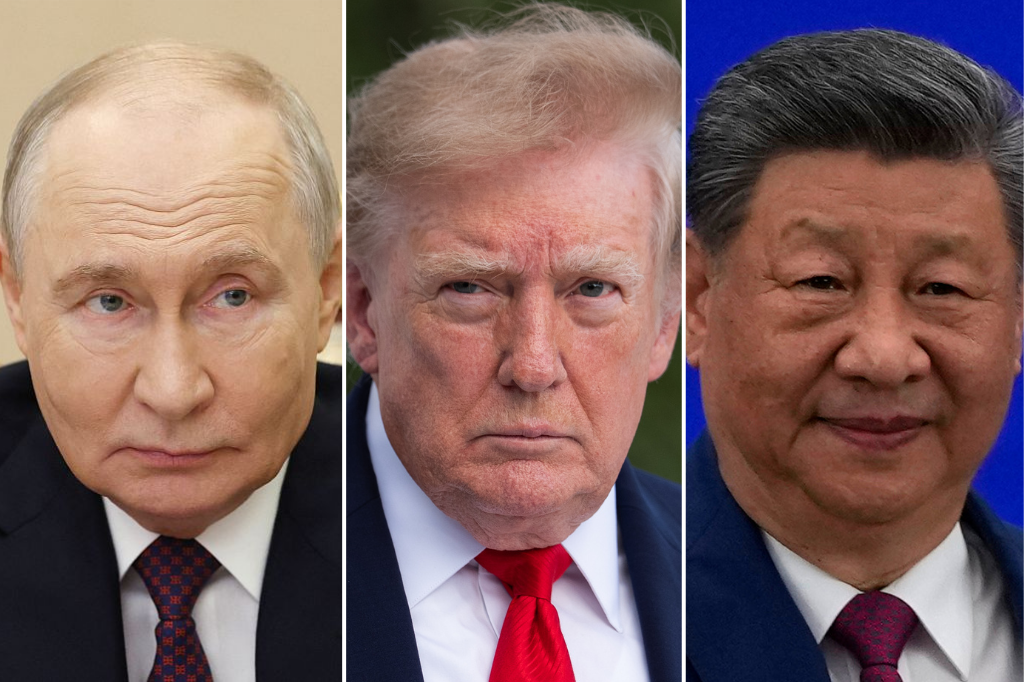
Russian President Vladimir Putin, U.S. President Donald Trump, and Chinese President Xi Jinping. —Vyacheslav Prokofyev—Pool/AFP/Getty Images; Aaron Schwartz—Getty Images; Ng Han Guan—Pool/Getty Images

President Donald Trump said on Monday he wants to hold a trilateral summit with Russia’s President Vladimir Putin and Chinese leader Xi Jinping in China to discuss “denuclearization.”

Speaking to reporters at the White House, Trump said such a meeting, which would be the first time the three leaders met outside of a larger multi-leader gathering, would be a “very positive thing for the world.” The U.S. President added: “If they’d like to have it, I think it would be held in China.”

The three leaders are expected to attend the Asia-Pacific Economic Cooperation summit next month in Shenzhen, the southern Chinese tech hub.

Trump was responding to Putin’s reported proposal for a three-way meeting with Trump and Xi. The Wall Street Journal reported, citing unnamed sources familiar with discussions, that Putin suggested the idea to Trump in an Oct. 9 call, seeking the summit to potentially broker an end to the war Russia started in Ukraine more than four years ago, without having a Ukrainian representative at the table. 

Kremlin spokesperson Dmitry Peskov confirmed to the Journal that discussions of a potential meeting were underway, and U.S. Secretary of State Marco Rubio also suggested publicly that talks about a meeting were happening.

Trump, however, said that a trilateral summit would focus less on Ukraine: “We would have it to talk about nuclear weapons and denuclearization.”

Since his first presidential term, Trump has mused about scaling back the three countries’ defense spending. In a 2018 social media post, Trump said that he was “certain that, at some time in the future, President Xi and I, together with President Putin of Russia, will start talking about a meaningful halt to what has become a major and uncontrollable Arms Race.” He’s also made clear a goal to “de-nuke the world.”

A possible summit of the 3 biggest nuclear powers

According to the Stockholm International Peace Research Institute (SIPRI), of the estimated 12,187 nuclear warheads in the global inventory as of January 2026, about 9,745 were in military stockpiles for potential use. Of these, Russia has the world’s largest, with the U.S. a close second—together making up 83% of the global stockpile.

China is third with more than 600 nuclear warheads, representing only 6% of the global stockpile, though SIPRI notes Beijing is “expanding its nuclear arsenal faster than any other country.” 

The research institute says Russian and U.S. deployments of new nuclear warheads “are likely to rise in the years ahead,” with Moscow’s increase mainly due to military modernization allowing missiles to carry more warheads. Washington’s increase, on the other hand, “could happen as a result of more warheads being deployed to existing launchers, empty launchers being reactivated and new non-strategic nuclear weapons being added to the arsenal.”

Future nuclear proliferation in the U.S. and Russia is also uncertain after the bilateral Treaty on Measures for the Further Reduction and Limitation of Strategic Offensive Arms (New START) expired in February this year. That treaty placed verifiable limits on all Russian and U.S. deployed intercontinental-range nuclear weapons. 

“The whole thing is a shame, because I’d love to denuclearize if possible,” Trump told Newsmax on Oct. 15. 

In the interview, Trump said the U.S. was discussing denuclearization with Russia and China, but he added that Beijing “was probably less inclined.” During his first term, amid negotiations to extend the New START pact, Trump tried—and failed—to bring China into nuclear arms reduction talks. The U.S. is trying to bring China into the fold again, but Beijing has rejected past U.S. efforts, arguing that the U.S. and Russia must first reduce their larger arsenals.

A possible summit on Ukraine, without Ukraine

Putin’s suggestion of a trilateral summit on Ukraine would leave out a key player in the ongoing war: Ukraine, which unsurprisingly rejected the idea.

“A trilateral meeting between the leaders of Ukraine, the U.S., and Russia could help end the war sooner,” Ukraine’s foreign minister Andrii Sybiha posted Monday on X. “A trilateral meeting between the leaders of Russia, China, and the U.S. would do only the opposite: encourage Putin to continue this war.”

Speaking to reporters Monday, Peskov, the Kremlin spokesperson, said a final peace deal would obviously involve Ukraine​: “Of course, a final settlement is impossible without the participation of someone in Kyiv who is prepared to take responsibility.”

But the proposal comes as Russia increasingly appears to be in Trump’s favor. Trump unveiled a diesel deal with Russia earlier this month in an attempt to lower fuel prices, and he also stopped implementing scheduled sanctions on Russia—moves that his allies have criticized. Meanwhile, Trump has pushed Kyiv to stop striking Russian refineries, one of its advantages in the war. He’s also blamed Ukrainian President Volodymyr Zelensky for rising diesel prices and has called on Ukrainians to replace him.

  •  
❌