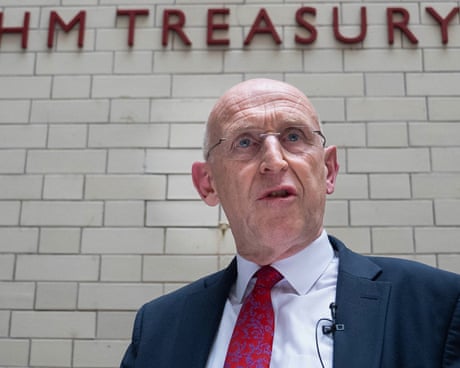
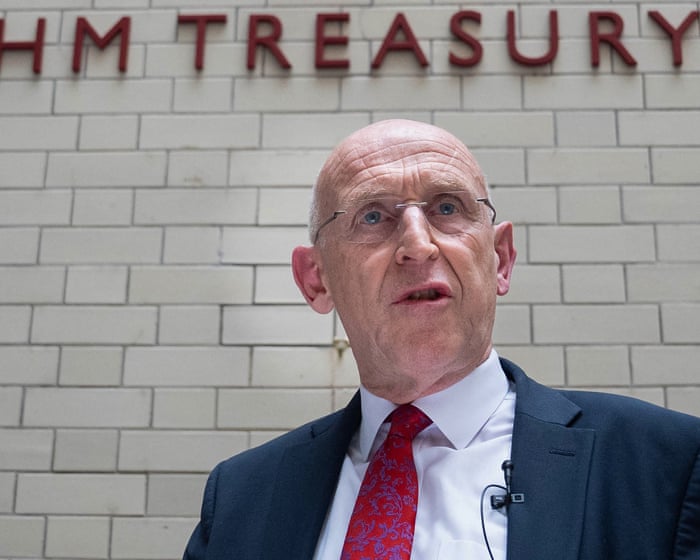
The chancellor’s headroom against Labour’s fiscal rules could be almost halved at his first budget if the current global bond sell-off persists into the autumn, economists say.
The UK’s long-term borrowing costs jumped to their highest level since early 1998 on Tuesday as investors dumped government bonds, betting on higher inflation.
Prime minister starts statement to MPs with tribute to his predecessor, saying he gave Labour a platform ‘and we will use it well’
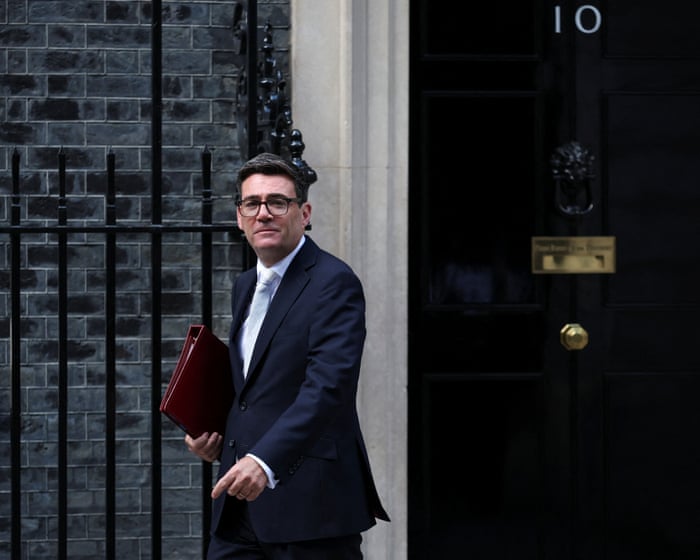
My colleague Richard Partington, the Guardian’s senior economics correspondent, grew up, like Andy Burnham, in the Warrington suburb of Culcheth. He has been home to find out what people there are saying about the new PM.
Yesterday, Kemi Badenoch announced a reshuffle, replacing Mel Stride with Andrew Griffith as shadow chancellor and Priti Patel with Tom Tugendhat as shadow foreign secretary.
We send our love and support to the Jewish community in Manchester and beyond who last night gathered to remember Melvin Cravitz and Adrian Daulby, who were killed defending their synagogue last year. My thoughts are with their families and all those who have been affected by the attack.
I know for many Jewish people, the sorrow and fear from that day has not lifted and I know we must do more to protect communities across the country.
Britain is poorer than we often think. We won’t get richer based on higher public spending alone, and we can’t tax billionaires who don’t live here.
We shouldn’t rely on public spending as a route to some romantic version of making Britain great again as we look in the rearview mirror for a great history that is no longer available to us. We must face the future, and I know my colleagues are up to the challenge.
Crucially, we must create the right conditions for a dynamic, thriving market. This includes getting ahead of what artificial intelligence will mean for our services-dominated economy.
Politically, we shouldn’t see conflict between growth and fairness, or business and workers, or the market and the state. These are false choices.
In-store inflation rises to an annual 1.5% in August, according to a survey for the British Retail Consortium
The pace of price rises in UK shops rose to its highest level in two years in August, a trade body index shows, with higher energy costs pushing up the price of food and AI chip demand making technology more expensive.
In-store inflation stepped up to 1.5% year on year in August, up from 0.9% in July, led by prices for tinned and packaged food which increased by 2.5% against 1.1% in the prior month, according to data from the research company NIQ for the British Retail Consortium.

 Login
Login