Login
Login
What should we do with Trump’s monstrous architectural legacy? | Jan-Werner Müller
Questions over Trump’s ballroom and other structures might not feel urgent. But when his reign ends, Trumpism must be repudiated
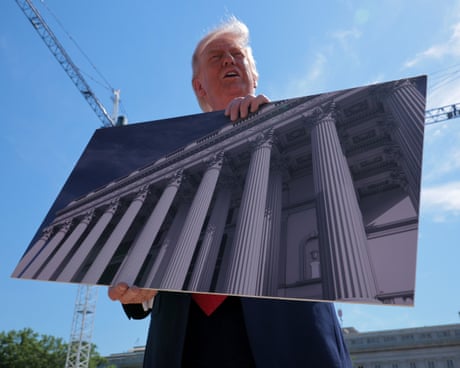
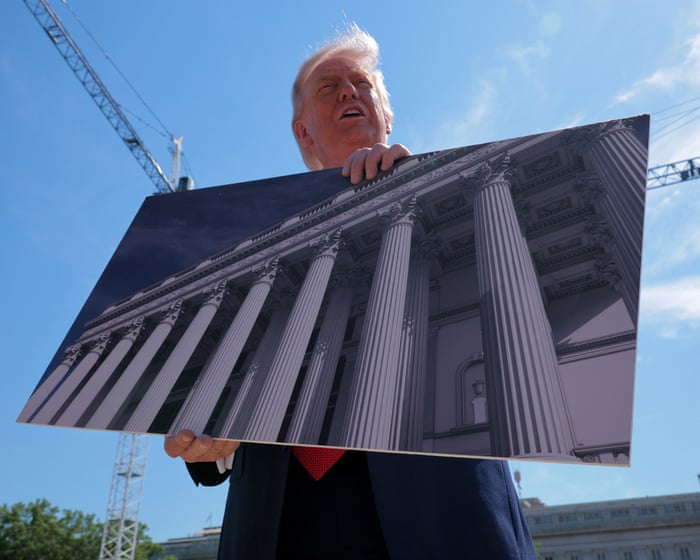
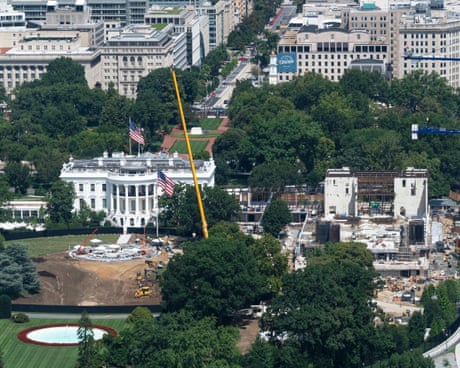
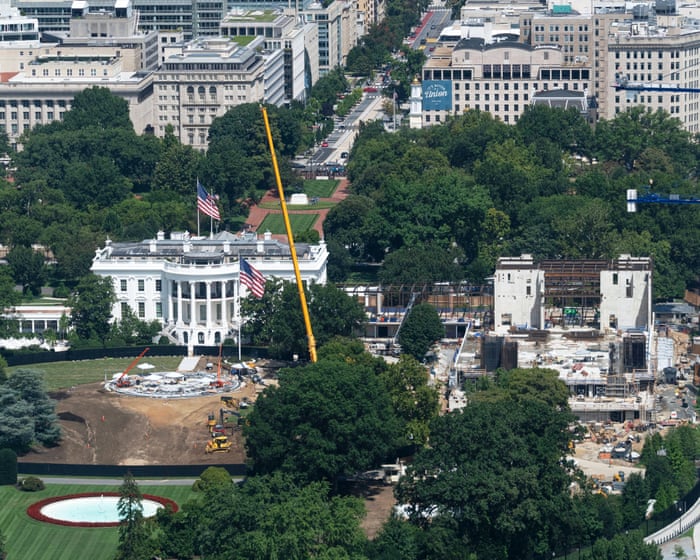
On Monday, a majority on the supreme court found a technical way to overrule a lower court’s imperative to stop work, while not taking a stance on whether the whole enterprise might be illegal to begin with. Preservationists, the majority held, appear to lack legal grounds for filing a suit blocking Trump’s ballroom; that means construction will proceed, even if none other than John Roberts, in a dissent, held that “those responsible” were breaking the rules in deciding “what to build up at the People’s House”. The solicitor general, John Sauer, is on record claiming that 65% of the project is completed (of course, he might have exaggerated – such things are known to have happened in Trump administrations). Either way, it is thus likely that there will be a massive structure next to the original White House; and, given that the ruling will embolden the president dramatically to change Washington DC’s landscape by spending money never approved by Congress, we might be cursed with a triumphal arch as well. All of which raises the question: what to do with a monstrous architectural legacy in post-Trump America?
Some might dismiss the question as a bit of a luxury problem. After all, a war that also demonstrates the ongoing disempowerment of Congress keeps dragging on; ICE continues its cruel day-to-day work; Trump is trying every tactic to make the midterms go his way. But the built environment, and especially the civic landscape of a capital, is never just an afterthought. Buildings and monuments make values visible, as the philosopher Susan Neiman once put it. And the decision to leave Trump’s structures in place as if his reign had just been another normal era in US history is not neutral – just like leaving Confederate monuments in place is not neutral.
Jan-Werner Müller is a Guardian US columnist and a professor of politics at Princeton University
Continue reading...
© Photograph: Manuel Balce Ceneta/AP
© Photograph: Manuel Balce Ceneta/AP
© Photograph: Manuel Balce Ceneta/AP