Navigating app surpasses Google and Apple Maps on top-downloaded US chart after posting ‘we’re not changing it’
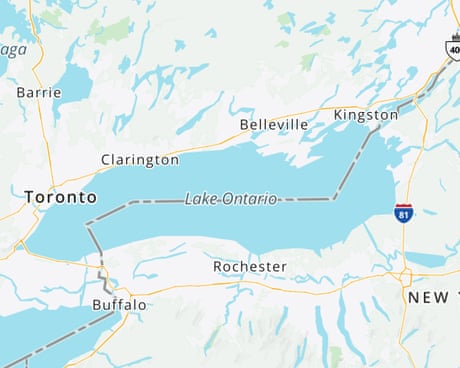
A pioneering online mapping app that defied Donald Trump by refusing to rename Lake Ontario has become the most in-demand navigation tool in the US.
MapQuest, which was openly dismissive of the president’s 27 August executive order directing federal agencies to refer to the smallest of the Great Lakes as “Lake America” amid a tradespat with Canada, leapfrogged rivals Google Maps and Apple Maps to top the most-downloaded list, as first reported by TechCrunch.
Navigating app surpasses Google and Apple Maps on top-downloaded US chart after posting ‘we’re not changing it’
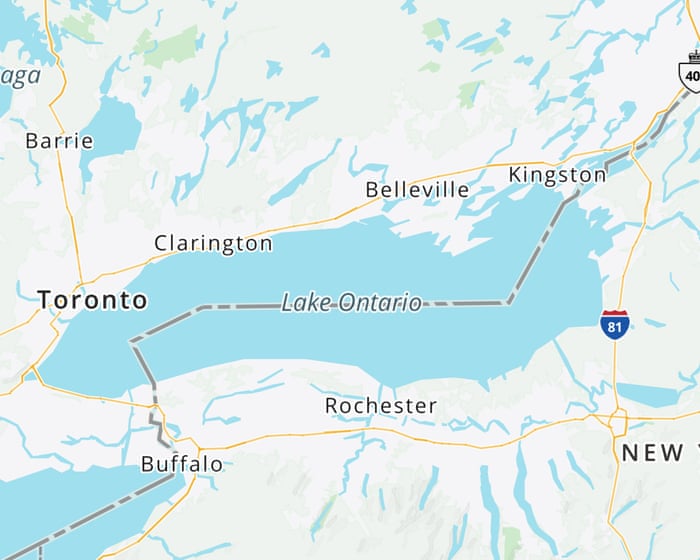
A pioneering online mapping app that defied Donald Trump by refusing to rename Lake Ontario has become the most in-demand navigation tool in the US.
MapQuest, which was openly dismissive of the president’s 27 August executive order directing federal agencies to refer to the smallest of the Great Lakes as “Lake America” amid a tradespat with Canada, leapfrogged rivals Google Maps and Apple Maps to top the most-downloaded list, as first reported by TechCrunch.
Questions over Trump’s ballroom and other structures might not feel urgent. But when his reign ends, Trumpism must be repudiated
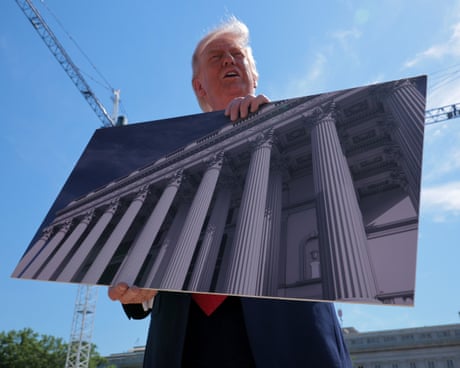
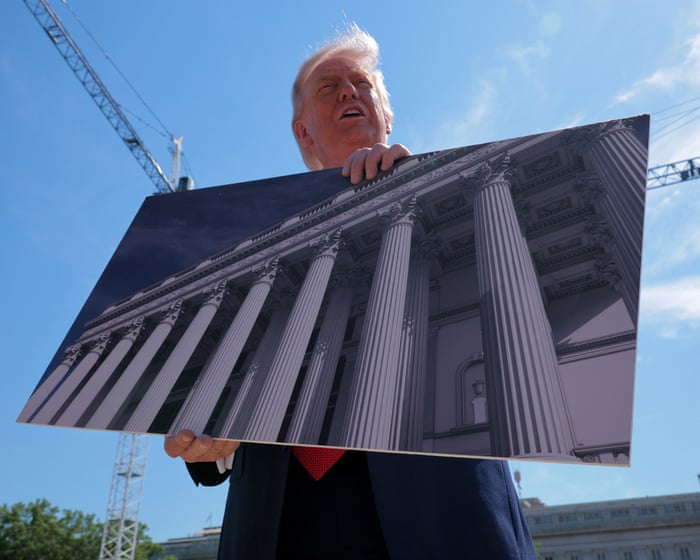
On Monday, a majority on the supreme court found a technical way to overrule a lower court’s imperative to stop work, while not taking a stance on whether the whole enterprise might be illegal to begin with. Preservationists, the majority held, appear to lack legal grounds for filing a suit blocking Trump’s ballroom; that means construction will proceed, even if none other than John Roberts, in a dissent, held that “those responsible” were breaking the rules in deciding “what to build up at the People’s House”. The solicitor general John Sauer is on record claiming that 65% of the project is completed (of course, he might have exaggerated – such things are known to have happened in Trump administrations). Either way, it is thus likely that there will be a massive structure next to the original White House; and, given that the ruling will embolden the president dramatically to change Washington DC’s landscape by spending money never approved by Congress, we might be cursed with a triumphal arch as well. All of which raises the question: what to do with a monstrous architectural legacy in post-Trump America?
Some might dismiss the question as a bit of a luxury problem. After all, a war that also demonstrates the ongoing disempowerment of Congress keeps dragging on; ICE continues its cruel day-to-day work; Trump is trying every tactic to make the midterms go his way. But the built environment, and especially the civic landscape of a capital, is never just an afterthought. Buildings and monuments make values visible, as the philosopher Susan Neiman once put it. And the decision to leave Trump’s structures in place as if his reign had just been another normal era in US history is not neutral – just like leaving Confederate monuments in place is not neutral.
Jan-Werner Müller is a Guardian US columnist and a professor of politics at Princeton University
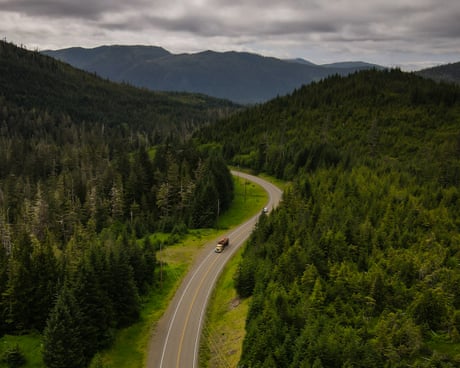
Rollback of ‘roadless rule’ expected to benefit companies US Forest Service chief, Tom Schultz, previously lobbied for
Donald Trump this month announced plans to rescind a landmark rule that has protected old-growth forests in the US for 25 years. If finalized, the rollback is expected to benefit the companies that Tom Schultz, chief of the US Forest Service, represented in his previous roles as a timber industry lobbyist and executive, according to research by consumer advocacy non-profit Public Citizen.
The Roadless Area Conservation Rule, more commonly known as the “roadless rule”, was adopted in 2001 to limit development in roughly 45m acres of national forest. Industry interests and Republican representatives have long lobbied for the rule’s rescission, which would open up those swaths of untouched land to road construction, drilling and logging.
Democratic senator Chuck Schumer is introducing a bill that would reverse Donald Trump’s most recent tariffs, among them the new %50 duty on Canadian goods, MS Now reported.
While the Senate minority leader’s proposed legislation has virtually no chance of becoming law, Schumer hopes that his proposal shows that Democrats are actively fighting the affordability crisis. Schumer first shared his proposed legislation with MS Now.
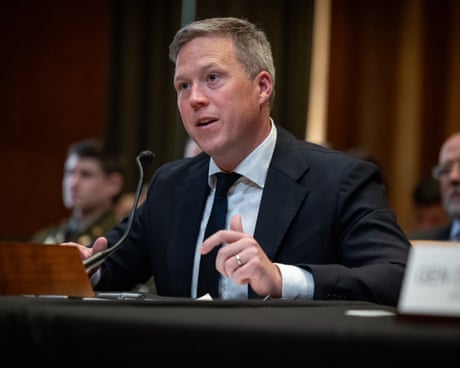
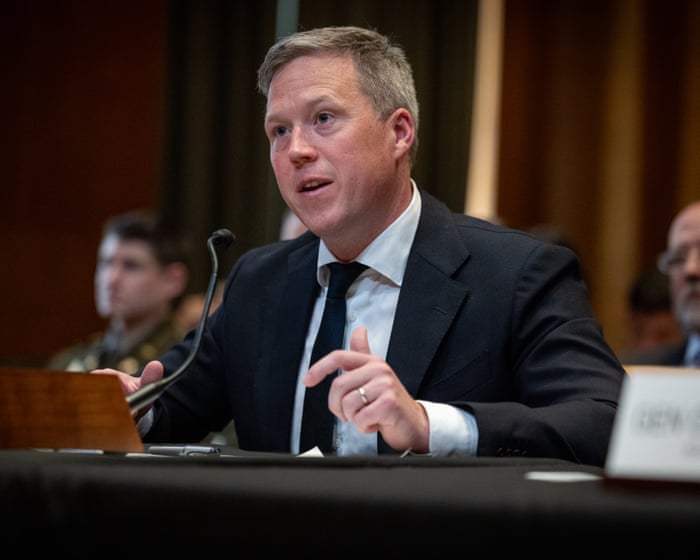
Resignation comes after months of turmoil at Pentagon, from leaked investigation to ousting of senior officials
The army secretary, Dan Driscoll, has handed his resignation to Donald Trump, the White House said on Monday, becoming the latest high-profile figure to depart the defense department.
The army official, who is second in line to the defense secretary, Pete Hegseth, had reportedly been eyeing an exit from the Pentagon amid apparent friction with the secretary.
A year on from the purge, with thousands of jobs cut and billions in foreign aid lost, a former leader reflects on the sorry saga – and why it would never happen to Nasa
A year has passed since I and thousands of colleagues lost our jobs at USAID. Asking myself “Why us?” I have come to the conclusion that the American public had very little idea of what we were doing and why.
Resignation comes after months of turmoil at Pentagon, from leaked investigation to ousting of senior officials
Army secretary Dan Driscoll has handed his resignation to Donald Trump, the White House said on Monday, becoming the latest high-profile figure to depart the defense department.
The army official, who is second in line to defense secretary Pete Hegseth, had reportedly been eyeing an exit from the Pentagon amid apparent friction with the secretary.
Letter from chair of joint chiefs of staff addresses concerns over Trump officials using military to interfere with vote
The highest‑ranking US military officer says there are no plans to deploy troops to polling places during the November midterm elections – responding to Senator Elissa Slotkin’s request for information amid concerns about whether the Trump administration might send service members to election sites.
In a letter obtained by the Guardian, first reported by the Associated Press, Gen Dan Caine, chair of the joint chiefs of staff, told Slotkin “the Joint Force has no plans to send Federal military personnel or Federalized members of the National Guard to polling places during the 2026 elections”. He added that there are also “no plans to use such personnel to seize ballots, voting machines, or other election‑related material”.
Justices’ 5-4 ruling permits Trump administration appeal to block lower court order halting above-ground work
A divided US supreme court has permitted Donald Trump to continue building his controversial $400m White House ballroom despite legal challenges, raising the likelihood it will be completed.
In a 5-4 ruling, the justices permitted the Trump administration’s request to block a lower court order that had halted above-ground construction of the project while a lawsuit by a historic preservation group seeks to block it.

 Login
Login