Reading view

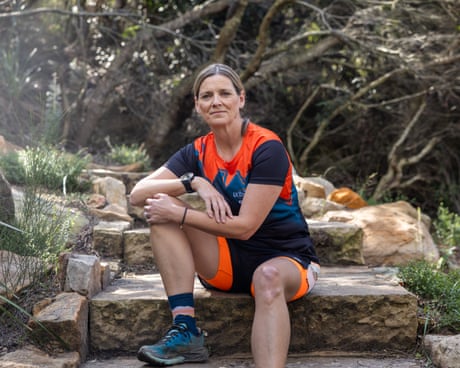
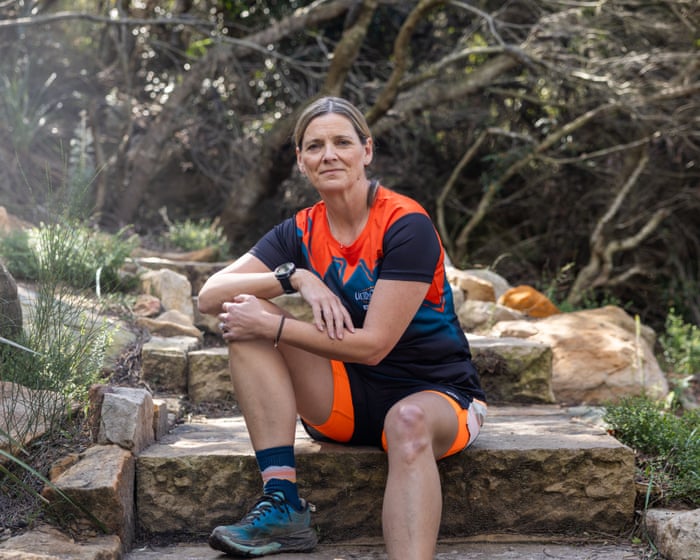
Ultramarathon runners train for months, sometimes years. But what happens when they don’t finish a race?

DNF stands for ‘did not finish’ – the acronym no ultrarunner wants assigned to their race result. For amateurs, DNFing is loaded with emotion – but attrition rates are extremely common

Drenched, freezing, utterly miserable and with a GI catastrophe ready to blow, my internal conflict of quit/don’t quit was in full force. I was at about kilometre 56 of my 100km ultramarathon. After a cascade of bad decisions and worse weather, totally wretched, I shuffled and sobbed my way through the dark to the next checkpoint. By the time I got there at 62km, the resignation of dropping out had settled in. Months and months of training had come to nothing.

Inside the checkpoint, soaked runners and their besieged crew were crowded into what resembled a field hospital triage unit. In the chaotic throng I found my crew, slumped down on to a bench and said: I’m pulling out.

Continue reading...

© Photograph: Blake Sharp-Wiggins/The Guardian
© Photograph: Blake Sharp-Wiggins/The Guardian
© Photograph: Blake Sharp-Wiggins/The Guardian

  •  

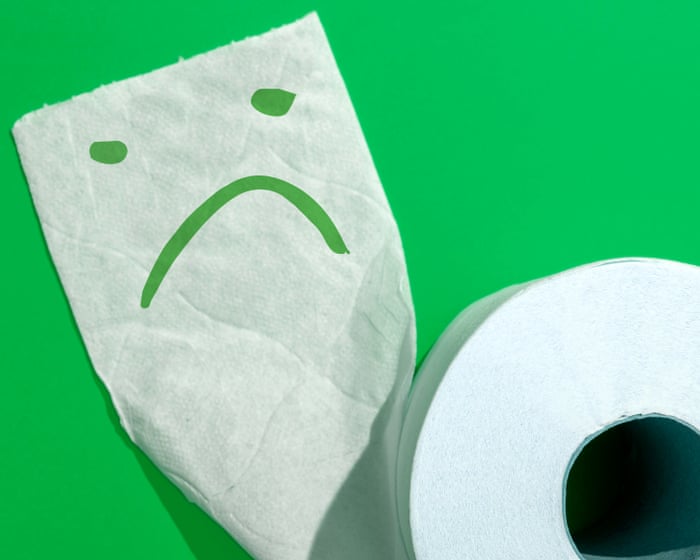
So you have diarrhea. Here’s what to do and when to seek care

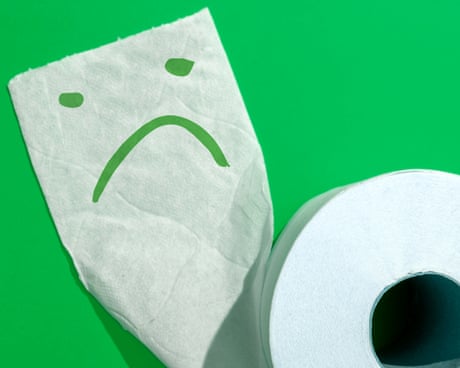
The discussion about diarrhea has increased lately, especially with the rise of cyclosporiasis. Although unpleasant, it is manageable and can be treated at home

In the US, people are discussing diarrhea more than usual. As of late August, more than 17,000 people across the US have had cyclosporiasis, a parasitic infection often traced to contaminated produce. But tens of millions of diarrhea cases occur in the US every year, caused by lots of other factors.

Some causes, such as cyclospora infection, benefit from antibiotic treatment. But most episodes of diarrhea go away by themselves and don’t require treatment apart from staying hydrated, says Benjamin Levy, a gastroenterologist at the University of Chicago.

Continue reading...

© Composite: The Guardian/Getty Images

© Composite: The Guardian/Getty Images

© Composite: The Guardian/Getty Images

  •  

People’s bodies are changing in the age of Ozempic. How are we meant to talk about it?

Discussing people’s bodies can be fraught. We asked eating disorder experts how to do so – or not – responsibly

In the age of Ozempic and people being open about plastic surgery, discussion about people’s bodies is rife. At the same time, nobody seems quite sure how to talk about them, as shown by recent coverage of celebrities like Ariana Grande.

It is a fraught topic. We asked eating disorder experts for guidelines to follow when talking about other people’s bodies, and how to do so without doing harm.

Continue reading...

© Illustration: LUVLIMAGE/Getty Images

© Illustration: LUVLIMAGE/Getty Images

© Illustration: LUVLIMAGE/Getty Images

  •  

Smelling test: children need education in sniffing aromas, scientist says

Exclusive: Dr Will Tullett says better understanding of scents can improve wellbeing and perception of the world

Children need a better education in sniffing aromas, a leading historian of smells has said, noting it may improve their wellbeing and help them understand the world around them.

Dr Will Tullett, of the University of York, said pollution had been found to impair people’s olfactory abilities, while many objects and substances today – from margarines to car interiors and even our own homes – were stripped of their original smells and “reodourised” with synthetic scents.

Continue reading...

© Photograph: Inti St. Clair/Getty Images

© Photograph: Inti St. Clair/Getty Images

© Photograph: Inti St. Clair/Getty Images

  •  

Smelling test: children need education in sniffing aromas, scientist says

Exclusive: Dr Will Tullett says better understanding of scents can improve wellbeing and perception of the world

Children need a better education in sniffing aromas, a leading historian of smells has said, noting it may improve their wellbeing and help them understand the world around them.

Dr Will Tullett, of the University of York, said pollution had been found to impair people’s olfactory abilities, while many objects and substances today – from margarines to car interiors and even our own homes – were stripped of their original smells and “reodourised” with synthetic scents.

Continue reading...

© Photograph: Inti St. Clair/Getty Images

© Photograph: Inti St. Clair/Getty Images

© Photograph: Inti St. Clair/Getty Images

  •  

‘I organised my spices – and feel happy every time I cook!’ 12 readers on their most rewarding tiny accomplishments

Forget writing that novel: the most satisfying tasks are often the smallest. From batch cooking and bird feeding, to filling a kettle with meticulous precision, our readers reveal their favourites

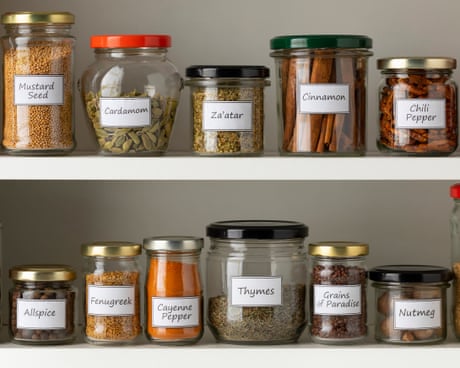
Sometimes, it’s the smallest accomplishments that bring the biggest feelings of joy. You don’t need to run a marathon or write a novel to get a sense of achievement; something as simple as reorganising your cutlery drawer or repairing a garden fence can prove surprisingly satisfying. Here, readers share the modest achievements that have brought them great pleasure.

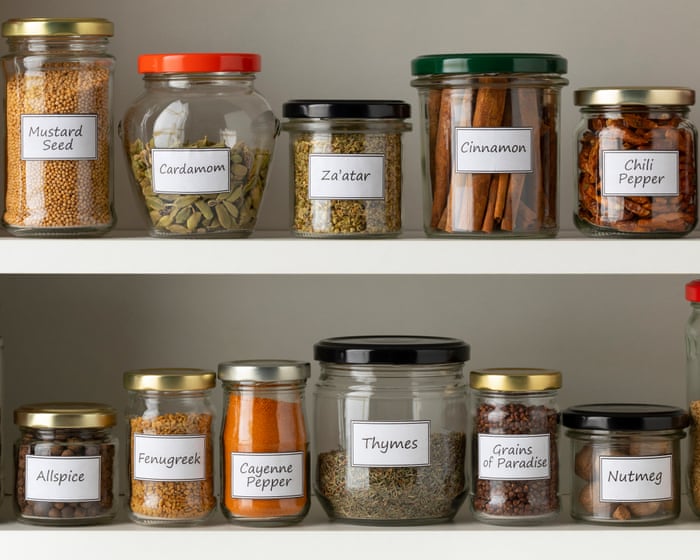
I really enjoy cooking and have a large collection of spices. Recently, I bought a few dozen glass bottles and organised my herbs and spices in a drawer, with labels on the lids and sides. Every time I cook, I feel pleasure from being able to instantly put my hand on the requisite spice without fumbling through piles of little boxes, and having to open and smell them to be sure which is which. Anna Smith, musician, Utrecht, the Netherlands

Continue reading...

© Photograph: PicturePartners/Getty Images/iStockphoto

© Photograph: PicturePartners/Getty Images/iStockphoto

© Photograph: PicturePartners/Getty Images/iStockphoto

  •  

I’m giving birth as a battle rages over maternity care in Ireland. We shouldn’t have to pay to feel safe | Caelainn Hogan

An unfair two-tier system is, at last, giving way to universal state care. But private interests and highly paid doctors are resisting

There were no chandeliers in the public ward where I spent my first days as a mother, at the oldest continuously operating maternity hospital in the world. The room echoed with cries, the well-worn floor bouncing under footsteps, the windows looking out on Dublin’s city centre.

Now the Rotunda hospital, where I’m due to give birth again soon, is counting down to its 1 millionth baby. It is also at the centre of a bitter debate over plans to reform Ireland’s two-tier state healthcare system, so that those who pay to “go private” in public hospitals no longer gain an unfair advantage over those who don’t.

Caelainn Hogan is a journalist and the author of Republic of Shame: How Ireland Punished ‘Fallen Women’ and Their Children

Continue reading...

© Photograph: Posed by models; Halfpoint Images/Getty Images

© Photograph: Posed by models; Halfpoint Images/Getty Images

© Photograph: Posed by models; Halfpoint Images/Getty Images

  •  
❌