Fraudsters are exploiting enterprise chat apps like Teams and Webex to trick Chinese victims into transferring large sums of money, fueling a wave of complaints.
Campaigners say ‘seismic shift’ follows years of pressure to sever ties with oil and gas firm
The London Science Museum has ended its decades-long partnership with the oil and gas company BP in what has been described as a “seismic shift” for the museum.
The Science Museum Group academy, which was established in 2018 to provide training and resources, announced on Friday that it would be ending its partnership with BP. In a statement, the director and chief executive of the Science Museum Group, Sir Ian Blatchford, said the partnership had “drawn to a close at the end of the current contract term”.
However, Kevin Warsh didn’t say if interest rates would change in coming months, as inflation remains stubborn
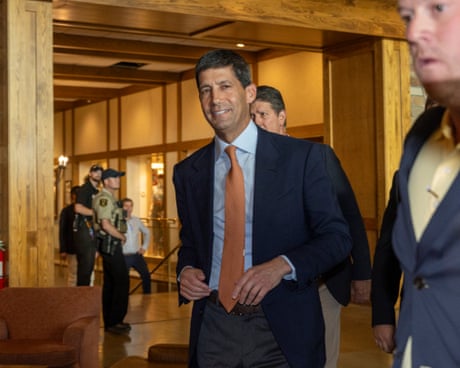
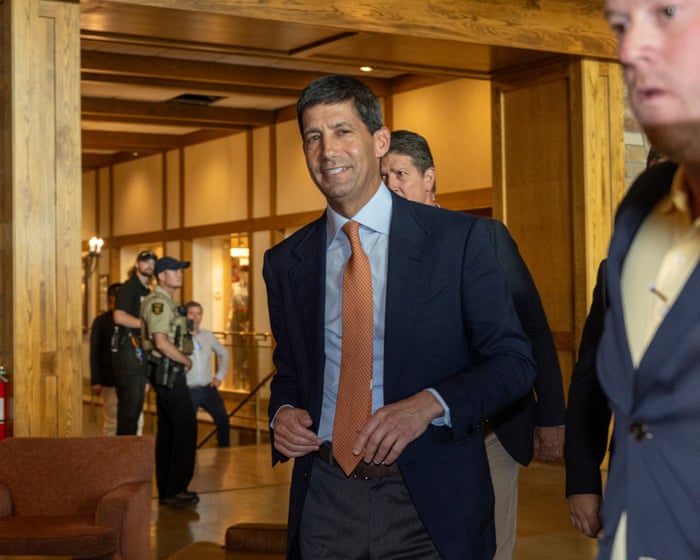
The US Federal Reserve is not done fighting high inflation, its chair, Kevin Warsh, said in his first major speech in the role on Friday, emphasizing that it was “the Fed’s job to deliver stable prices”.
Warsh did not indicate where the Fed will take interest rates in the coming months, despite US inflation remaining stubbornly above the central bank’s 2% target amid the war in Iran. But his speech was taken by markets as a signal that rates may rise in the coming months, a move that may put him at odds with Donald Trump, who has aggressively called for rates to be cut.
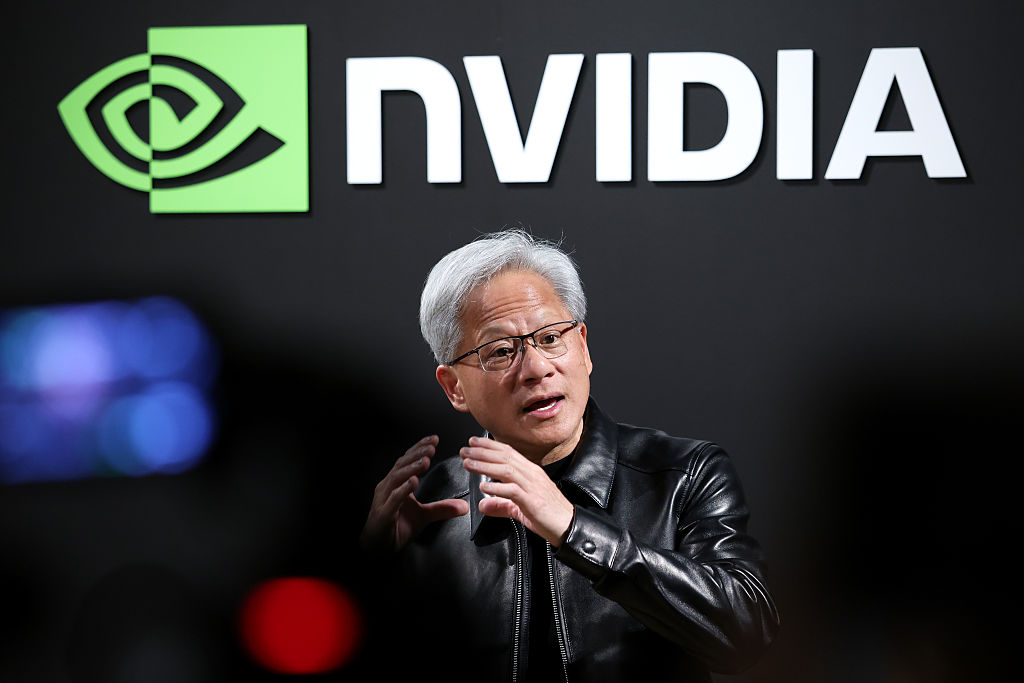
Jensen Huang speaks to members of the media in Tokyo on July 16, 2026. —Kiyoshi Ota—Bloomberg/Getty Images
Nvidia has reportedly agreed to buy popular AI library Hugging Face for $12.9 billion. The deal is partly a hedge against an emerging threat: AI companies which consume enormous quantities of Nvidia hardware are increasingly developing chips of their own. In a future where AI becomes centralized in a small group of players with their own chips, those companies could demand lower prices from Nvidia or bypass it altogether.
Hugging Face, an online hub where developers share open AI models and datasets, gives Nvidia a stake in an alternative future, where downloadable AI models allow startups and governments to build systems of their own. Few would have the scale to develop custom chips. (Nvidia and Hugging Face did not respond for comment.)
With roughly 85% of the AI chip market, Nvidia’s share has only one way to go. But a smaller slice of a much larger market could still mean more sales, says Umesh Padval, a Managing Partner at Seligman Ventures. “If the deal goes through, I think it’s a brilliant chess move.”
Nvidia has thrown its weight behind open-source AI in recent months. It successfully lobbied Washington to loosen restrictions on selling its chips to China, which leads in open AI development. More recently, it struck a $6 billion deal with Poolside, to develop an American open alternative. In July, Nvidia helped lead an open letter defending open-source AI and urging Washington not to restrict it. “Open models strengthen safety and cybersecurity, accelerate innovation and diffusion, and enable sovereignty,” Nvidia boss Jensen Huang wrote in his first post on X.
Meanwhile, Google now exclusively uses its custom TPU chips to train its Gemini AI models. In August, Anthropic hired, Amir Salek, a former TPU team-lead at Google to spearhead a new in-house chip division. The same month, OpenAI shared the first results from its custom chip, Jalapeño. SemiAnalysis, the firm which conducted tests on OpenAI’s chip, said it beat “every Nvidia, AMD, and Google chip we have been able to test.”
“There’s kind of this two-way strategic battle,” says Richard Clode, a technology portfolio manager at Janus Henderson. “On the one hand, Nvidia doesn’t want to be reliant on just three customers, so [it] is deliberately trying, with financing and allocation of chips, [to] encourage other players and neo-clouds. And then vice versa, those hyperscalers don’t want to be completely reliant on just one compute provider.”
Nvidia’s 75% margin means that other firms’ in-house chips do not need to match its performance to save large customers money. Custom silicon has other benefits, too. Nvidia has previously given smaller cloud providers early access to its newest chips, ensuring that the largest players do not dominate supply. Developing chips in-house reduces exposure to those allocations, Clode says, while allowing AI companies to tailor hardware to their specific workloads.
AI companies are not developing these chips completely alone. Google, OpenAI, and Meta have partnered with Broadcom to help turn their specifications into custom silicon.
Those efforts are yet to make a dent in Nvidia’s bottom line. In August, Nvidia reported a blockbuster earnings report with record revenue of $96.2 billion, more than doubling year-over-year and beating Wall Street expectations. Companies like Google and OpenAI continue to buy large quantities even as they develop alternatives. They’ve “poured a lot of infrastructure capex into the existing infrastructure,” says Sriram Viswanathan, a founding managing partner at Celesta Capital and a former Intel executive. Moving to a different architecture, he said, is “a huge lift-and-pour-concrete situation. So I think it’s going to happen over a period of time, but not in one fell swoop.”
He points to Apple as a warning. Apple first developed chips for the iPad and iPhone while continuing to buy Intel processors for Macs. As its expertise matured, its silicon moved into Mac computers and Intel was cut out.
“Nvidia is executing like crazy, so in some ways it’s theirs to lose,” says Sean Lie, co-founder and chief technology officer at AI chip company Cerebras. “But I think we’re seeing a lot of cracks in that armor.”
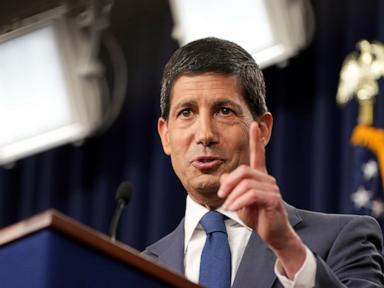
Federal Reserve Chair Kevin Warsh says inflation is still too high and suggested the central bank may have to raise interest rates in the coming months to bring it down, a clearer signal than he has sent before about his economic outlook
Unpopular new policy comes as midterms loom and control of Congress could be decided by several Michigan races
Every day $1bn worth of goods crosses the river dividing Detroit, Michigan, and Windsor, Ontario, two largely blue-collar US and Canadian cities that have come to act as one in the creation of North America’s auto industry.
News this week of Donald Trump’s escalating trade spat with Canada has everyone worried. Political and economic leaders and observers labeled the move an act of “hubris” , blamed Trump’s “ego”, and called the escalation “insanity”.
Unpopular new policy comes as midterms loom and control of Congress could be decided by several Michigan races
Every day $1bn worth of goods crosses the river dividing Detroit, Michigan, and Windsor, Ontario, two largely blue-collar US and Canadian cities that have come to act as one in the creation of North America’s auto industry.
News this week of Donald Trump’s escalating trade spat with Canada has everyone worried. Political and economic leaders and observers labeled the move an act of “hubris” , blamed Trump’s “ego”, and called the escalation “insanity”.
The company is testing robots that can swap cables, reset servers, and take on other tasks performed by technicians, fueling concerns among some workers that their jobs could be at risk.
Anthony O’Neal, personal finance expert and author of “Stop Living Paycheck to Paycheck,” shares tips to avoid financial stress if your paycheck isn’t getting bigger.
 Login
Login