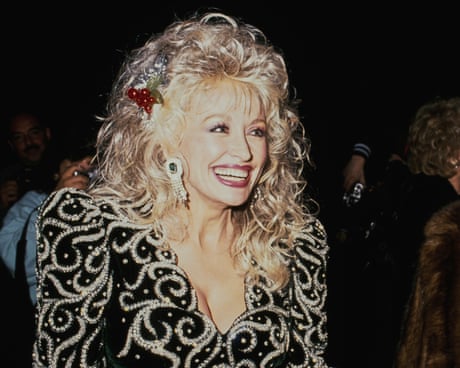
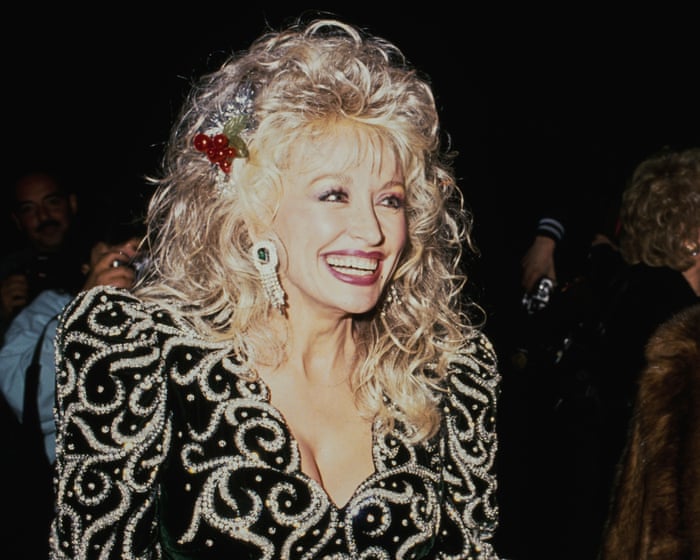
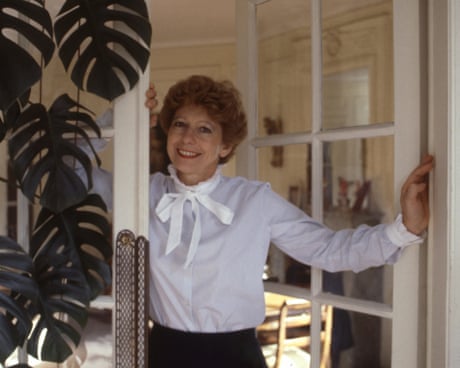
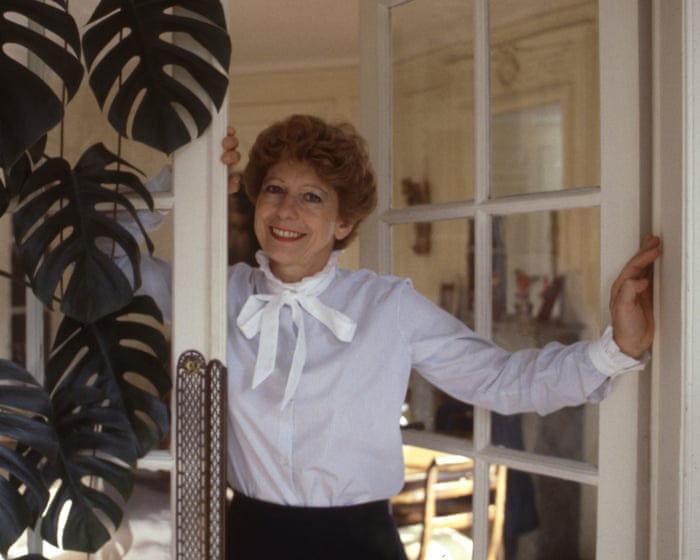
Dolly Parton may have had a record 25 US country No 1 singles, released 66 studio albums and earned six Golden Globe nominations, among many other achievements, but the Tennessee-born star also had an incredible number of fashion moments. “It costs a lot of money to look this cheap”, she famously quipped when asked about her style. As we bid her farewell, six Guardian writers reflect on their favourite Dolly looks.
Paul Greengrass drama The Uprising was supposed to be a historical epic about the Peasants’ Revolt of 1381 – but a strange new campaign has inserted a surprising figure
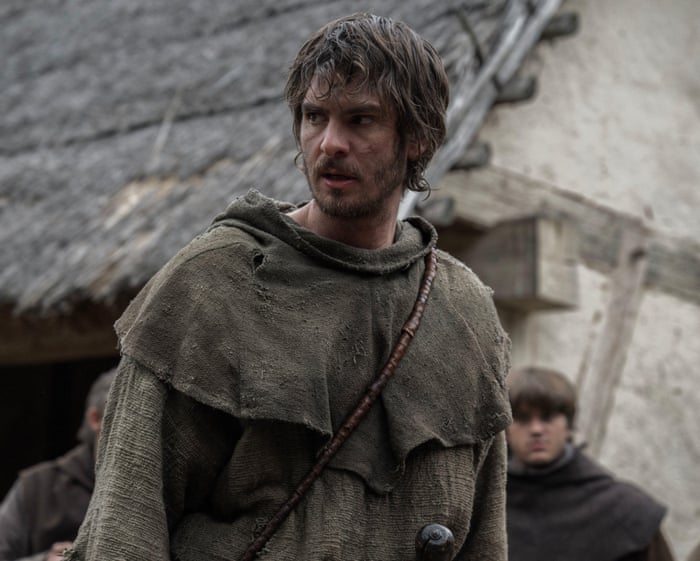
Nobody likes to have the full plot of a movie spoiled before they’ve even seen it. However, sometimes this can be taken to the extreme. Take the new Paul Greengrass movie, The Uprising, for example. It is two weeks away from its US release and not only does nobody know the plot, but nobody seems to know what it is even about. Seriously, nobody at all. The film’s distributors just spent yesterday squabbling in public about whether Robin Hood was in it or not.
Here’s what we know so far. Initially, all the trailers and promotional materials made The Uprising look like a film about the Peasants’ Revolt that tore through England in 1381. And this was very exciting, since the revolt was a thrilling moment in history that has been bizarrely underserved by Hollywood over the years. Most exciting of all, though, it sounded like it fit exactly into Greengrass’s wheelhouse: full of action and realism and political awareness.
PlayStation 5, Xbox Series S/X, PC; Asobo Studio The medieval franchise is transplanted to Crete, conjuring action-adventure magic from familiar ingredients
The path in Resonance: A Plague Tale Legacy is a familiar one. Amid ancient ruins and sun-dappled gorges, a young woman, Sophia, dutifully treads the same footsteps as a Minoan warrior from millennia ago, one with whom she seems to share a visionary connection. The “resonance” between these two characters is made clear by their echoing actions – a crank pushed in the bronze age that still works in the medieval present, for example. Through these spliced timelines, it becomes clear that Sophia, compelled by her supernatural gift, possesses little agency. Destiny beckons her forwards.
This is a smart meta concept for a game that, at its most basic level, boils down to keeping your left thumb planted firmly on the analogue stick, always pushing Sophia onwards in linear fashion. You jostle her through ornate corridors rendered as higgledy-piggledy pirate camps and cobbled Venetian streets. For the greater part of the game, you propel her through the Minoan remains of Crete, which harbour a dark and terrible secret. It is classic third-person action-adventure fare, building on the template laid down by the likes of Tomb Raider and then refined and complicated by titles such as The Last of Us. Little, from an interactive perspective, surprises: you dash, vault and swing between teetering podiums, squeeze through tiny gaps in rock and crouch behind conveniently placed walls to avoid enemies.
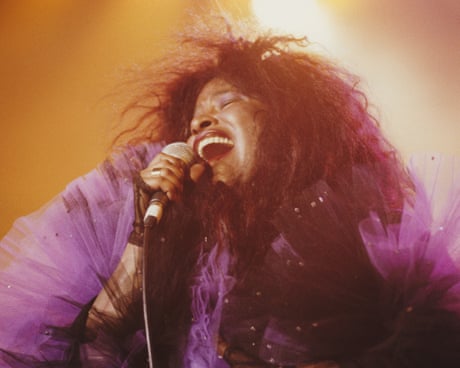
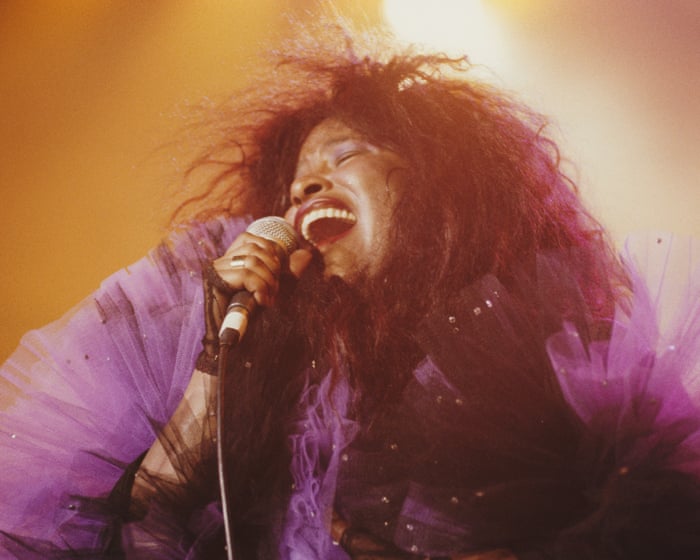
Ahead of the release of her 13th solo album, the fantastically titled Chakzilla, we rank the best of a sublime catalogue of funk, slow jams and tears-on-the-dancefloor disco
Chaka Khan had harsh words for the “assholes” at her then record company, Warner Bros, who she felt under-promoted 1992’s The Woman I Am, her first album in four years. Listening to Love You All My Lifetime’s cocktail of funk and contemporary R&B, you wonder if she didn’t have a point. There’s no obvious reason why it wasn’t huge hit.
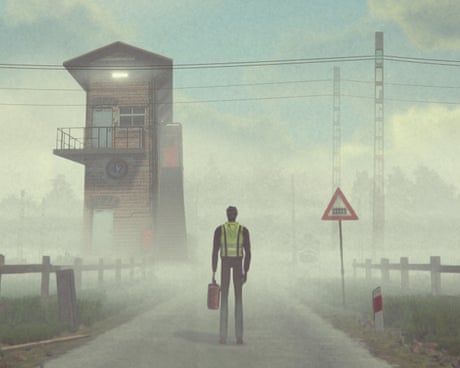
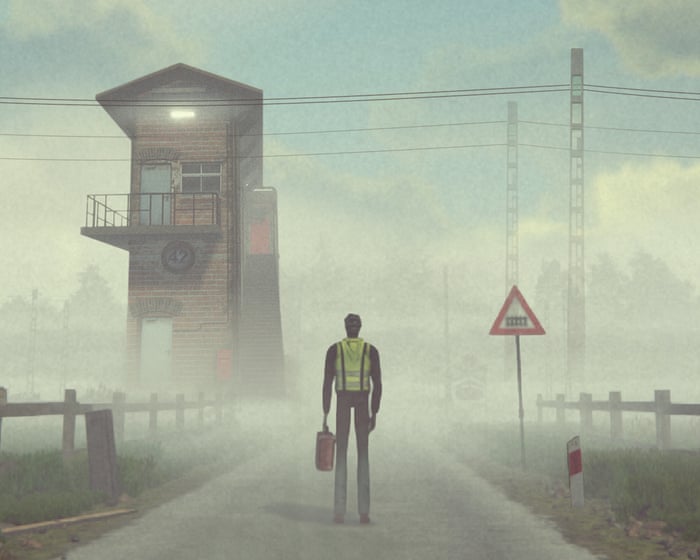
The flat routines of a dead end railway job screen out an approaching menace in a quietly intriguing game from the indie developer of Cat Lady and Lorelai
Lonely jobs have provided excellent material for independent video games over the years. From Papers, Please to Firewatch to The Stanley Parable, players have been happy to spend hours dwelling in depressing cubicles or rural hideaways, usually because there is an intriguingly hidden point to it all.
In Trainwatch, a character named Troy has taken a seemingly godforsaken job as a railway worker in an unnamed desolate backwater. His main task over the course of a single month is to manage a level crossing, closing the gate whenever a train comes, while also carrying out daily chores such as cooking and washing. It sounds serene, but Troy is also running away from something. The other stipulations are that he stays sober and calls his wife every night. And there is something lurking in the fog at the edges of the fields – one day he must face it.
The author of The Adversary and Yoga unearths a history that includes the Nazis, Russia, and the Académie Française
When Emmanuel Carrère’s mother, Hélène, died in 2023, at the age of 94, President Macron spoke at her memorial. She had been “perpetual secretary” of the Académie Française, in effect its head, and 200 people gathered at Les Invalides in Paris to pay tribute. Emmanuel’s father, Louis, was there too, in a wheelchair, only half aware of what was going on. This 400-page memoir, translated into English by John Lambert, is a homage to both parents and the unlikely history that brought them together. It’s also an act of reparation towards Hélène, whom Emmanuel worshipped as a child but upset as an adult by publishing a book that she’d forbidden him to write.
Hélène grew up in stateless poverty in Paris, the daughter of Georges Zourabichvili, whose parents had fled Georgia in 1921, and Nathalie von Pelken, who as a child had six governesses, one for each day excluding Sunday. Though “the magical world of the fallen Russian aristocracy” was the backdrop, conditions were tough, not least after Georges disappeared in 1944, murdered by partisans for alleged Nazi collaboration. Hélène was 15 at the time and unsuccessfully tried to hide the truth about George’s death from her younger brother, Nicolas.
Dolly Parton proved that helping others is not only easy to do, but can be a lot of fun. | Katherine Bomboy/NBC
Dolly Parton was on her way to the studio to polish off “Blue Smoke” when the SUV she was riding in collided with a sedan in a Nashville intersection in 2013. At the hospital, she struck an unlikely friendship with her physician, Naji Abumrad, who, like Parton, was raised in a misty mountain village, hers in East Tennessee and his in Lebanon.
“It’s just like how you meet people in your life. You just click, you just feel like you know them,” Parton once told his son, Jad Abumrad, a public radio host who interviewed Parton for a nine-part series on her life. “There are just some things that, you know, you just can’t explain it. You just be it, you just live it, you just know it, and you just feel it.”
The whole world, it seems, felt it — that inexplicably swift, sweet connection — with Dolly Parton herself, a light-filled, lifelong philanthropist in the truest, most etymological sense of the word: a lover of humankind.
Some seven years after their friendship began, Abumrad told Parton that his fellow researchers at Vanderbilt University Medical Center were looking into a possible vaccine for Covid-19, which had just begun to rage across the country. Without missing a beat, Parton wrote a check for $1 million, an early contribution toward what would eventually become the Moderna vaccine against Covid-19.
Her donation “made the research towards the vaccine go 10 times faster than it would be without it,” Abumrad later told the Washington Post, calling his friend “the kindest and most philanthropic human being” he’d ever known.
Parton, who died at the age of 80 yesterday, was raised with her 11 siblings amid poverty in the Smoky Mountains of Eastern Tennessee. She often credited her upbringing as a muse for both her music and her generosity. Just as integral to her persona as her kitschy high-femme glamour, her poofy hair and rhinestones, was Parton’s capacity for helping others.
With an infectious sense of joy and optimism, she proved that helping others is not only easy to do, but can be a lot of fun.
Parton’s most famous foray into philanthropy by far was her Imagination Library, which she founded in 1995 in honor of her father, who never learned to read or write. Since then, the initiative has doled out a jaw-dropping over 300 million free children’s books to young kids around the country and the world.
“I just give from my heart,” she remarked while accepting the Carnegie Medal of Philanthropy, a kind of Nobel Prize for giving, in 2022. “I never know what I’m going to do or why I’m gonna do it. I just see a need, and if I can fill it, then I will.”
After wildfires tore through her native Tennessee in 2016, she raised millions of dollars that she used to give thousands of dollars in direct cash payments to hundreds of families who’d lost their homes. In recent years, she’s given millions of dollars to families affected by Hurricane Helene, to pediatric infectious-disease research, and to children’s charities across Tennessee. Back in 1990, Parton helped open a sanctuary for injured eagles in partnership with conservationists at Dollywood, the Eagle Mountain Sanctuary, which was forced to close after a brutal storm earlier this year. (You can donate to the American Eagle Foundation, which is rehoming Dollywood’s eagles here.)
Parton, who had a net worth of about $450 million according to Forbes, may have given away many other donations privately. In 2006, when asked about the full scope of her donations, she told my former colleagues at The Chronicle of Philanthropy with her characteristic sass that “it’s none of your business. I have often said that I count my blessings a whole lot more than I count my money,” she said, “the same is true for the contributions I make.”
The world may have gotten a peek into her private giving a few years ago, when some savvy social media users helped break the news that Parton had been casually paying for band uniforms at high schools across Tennessee, and had been quietly doing so for decades. She also received $100 million as a recipient of Jeff Bezos’s Courage and Civility Award to give away as she saw fit. It’s unclear where she chose to spend that money, but it could certainly buy a lot of school band uniforms, children’s books, or pediatric hospital wings.
There was always something otherworldly about Parton’s kindness. It was as if the nicest person you’ve ever met found herself in possession of hundreds of millions of dollars in cash. But as serious as her contributions were — to the music industry, and to millions of children around the country — she never took herself too seriously, and maybe that’s what made it feel so enthralling to watch.
“I’m kind of addicted to the feeling of giving,” she told People in 2021, “knowing that I’m doing something good for someone else.”
And that’s a lesson that all of us, legendary multimillionaire country superstar or not, can use to help carry her legacy forward.

 Login
Login