
Reading view

U.S. Embassy Removes ‘Woke’ Painting by Artist Behind Barack Obama Portrait
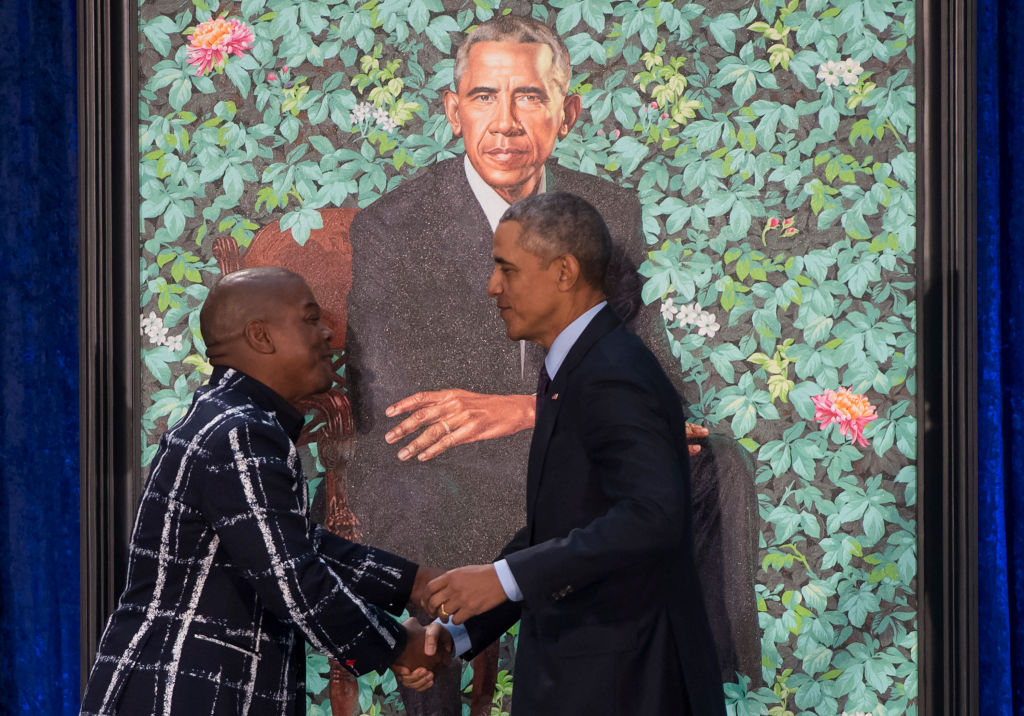
Former President Barack Obama shakes hands with his portrait's artist, Kehinde Wiley, after its unveiling at the Smithsonian's National Portrait Gallery in Washington, D.C., on Feb. 12, 2018. —Saul Loeb—AFP/Getty Images

The Trump Administration has removed a painting by artist Kehinde Wiley, who notably painted former President Barack Obama’s official portrait, from one of its embassies over what officials called its “woke ideologies.”

The painting was removed from the U.S. Embassy in Santo Domingo, Dominican Republic, earlier this month on ideological grounds. Commissioned by the State Department in 2013, the painting, “Young Artists After Siamesas 1960,” depicts four Dominican models against a floral backdrop in Wiley’s quintessential style.

The U.S. ambassador to the Dominican Republic Leah Campos posted a video of the painting’s removal on social media to the tune of heavy metal song “We’re Not Gonna Take It.” The video shows the painting covered in a tarp emblazoned with the American flag prior to its removal.

“In the Trump Administration and under my leadership we are turning away from globalist and woke ideologies and instead embracing American patriotism and the beauty of our great country!” Campos wrote.

The State Department is looking into whether it can legally sell the painting, which was paid for with taxpayer dollars, a spokesperson for the department told The New York Times on Monday.

TIME has reached out to Wiley for comment.

Renowned artist

Wiley is known for his large-scale portraits of Black subjects, whom he depicts in the style of classical European portraiture, often placing them against vibrant floral backgrounds. Art critics have described Wiley’s work as challenging traditional ideas of race and representation. He has described his own work as centering on “power and who has it.” His presidential portrait of Obama was unveiled in 2018 and hangs in the Smithsonian’s National Portrait Gallery.

For “Young Artists After Siamesas 1960,” Wiley collaborated with students from the Facultad de Artes and the Altos de Chavon School of Design, both prominent art schools in the Dominican Republic. The subjects in the painting were modeled by four local art students. The work drew inspiration from two Dominican art works, Celeste Woss y Gil’s 1940 painting “Desnudo Feminine” and Gilberto Hernández Ortega’s 1960 work “Siamesas.”

The painting was part of the embassy’s permanent exhibition, assembled through the State Department’s Art in Embassies program. Established in 1963, the program is aimed at fostering cross-cultural dialogue and diplomacy through art. In 2015, the State Department awarded Wiley its Medal of Arts in recognition of his contributions to the program.

But in recent years, Wiley faced criticism from conservative commentators over his 2012 painting “Judith and Holofernes.” The painting portrays a Black woman holding the severed head of a white woman, which Wiley later described as a play on the “kill whitey thing.” The work, currently on view at the North Carolina Museum of Art in Raleigh, reimagines a 17th century painting by Giovanni Baglione that depicts the biblical story of Judith beheading an invading general to save her town.

Wiley also faced scrutiny in 2024 for sexual assault allegations, which he denies.

The State Department spokesperson told the Times that “the work of an individual with such violent and racist words and depictions has no place in the America First State Department.”

In a recent interview with former White House Press Secretary Sean Spicer, Erin Scavino, director of Art in Embassies, called the painting “very woke” and “aesthetically terrifying.” Scavino became director of the program at the beginning of President Donald Trump’s second term after previously working as an attorney and appearing as a contestant on Trump’s reality show The Apprentice. She is also the wife of White House Deputy Chief of Staff Dan Scavino.

Art attack

As part of the Art in Embassies program, Scavino has emphasized acquiring and displaying works with patriotic imagery. Last month, she organized an exhibition in Washington titled “Passport to Patriotism: 250 Years of Diplomacy” that featured 68 representations of the American flag across 56 works.

Earlier this year, Scavino claimed her objections to so-called “satanic baby art” at the U.S. ambassador’s residence in Bucharest had forced Kathleen Kavalec from her post. The ambassador’s departure had previously been described as a planned retirement.

The State Department also changed its process for selecting the 2026 U.S. pavilion at the Venice Biennale, including replacing diversity language with requirements concerning “American values.” Critics described the process as politicized and opaque, pointing to the appointment of Jenni Parido, a reported friend of Scavino with no prior professional museum experience, as the pavilion’s commissioner. Last July, Parido founded the nonprofit American Arts Conservancy, which the State Department selected as the pavilion’s commissioning institution.

The Trump Administration has pursued similar changes across other federal cultural institutions especially in connection with the country’s 250th anniversary this year. In an executive order issued last March, Trump directed the Smithsonian to remove what he called “improper ideology” and “divisive narratives” and instead emphasize American greatness. The same month, his Administration sharply cut the federal staff responsible for preserving a collection of 26,000 publicly owned artworks.

The Trump Administration also canceled more than 1,400 humanities grants, but a federal judge permanently blocked the action in May. And the Administration proposed eliminating the National Endowment for the Arts (NEA) and National Endowment for the Humanities (NEH), independent federal agencies created to support cultural projects, in its budget requests for 2026 and 2027.
  •  

America's Best Colleges of 2026-2027

As jobs have become more technological, job markets have become more competitive, and the costs of tuition have risen, college students are increasingly considering the ROI of their education, or how efficiently it can be used to acquire a high-paying job post-grad. “We need to be more outcome-oriented, more career-oriented when we think about what we're recommending for students in higher ed,” says John Friedman, a professor of economics and international and public affairs at Brown University. “There are a lot of people who really do want to get career advancement, to get economic value out of the time and money they're spending in college, and we should help them do that.”

To highlight U.S. institutions that provide the best value for their students, TIME partnered with data research firm Statista on the inaugural edition of America’s Best Colleges of 2026-2027, ranking the colleges that excel at student outcomes, learning environment, and attractiveness to students.

Methodology: How TIME and Statista Determined America’s Best Colleges of 2026-2027

The search for high ROI education has led many U.S. college students to pursue STEM careers. According to a 2026 report from the National Science Foundation, the STEM workforce grew by 26% between 2013 and 2023 compared to the non-STEM workforce, which grew 9%—and STEM jobs are projected to continue growing at a faster rate than non-STEM jobs for the next decade or so. From 2021 to 2023, higher-education degrees awarded particularly in science and engineering reached record highs, and the U.S. was the most popular post-secondary STEM education destination for international students.

Schools with historically strong STEM programs—and pipelines into high-paying tech jobs—rank high on the list, like research universities Stanford (no. 1), known for its startup culture and connection to Silicon Valley, and MIT (no. 2), a patent powerhouse.

At no. 3 is Harvey Mudd, a small liberal arts college with a student population of around 900. It offers only majors in STEM—appealing to Gen-Z students who are increasingly turning to trade schools to learn technical skills—but competes with the big schools by encouraging students to be engaged in humanities, social sciences, and arts so they can understand the ethical impact of their work on society.

“If anything, this is the time that the world needs more liberal arts colleges, because we need people to question what's happening,” says Thyra Briggs, Harvey Mudd’s VP of admission and financial aid. “We hear from the graduate programs that admit our students and from the companies that hire them that they are often the translators in their office because they can do the very high level technical conversations that you would expect, but they also know how to translate that to people who may not have that same background.”

The school’s famous Clinic Program is a year-long capstone project developed in the early 1960s that has a team of students work directly with companies like Blue Origin, Sokil, and the Federal Aviation Administration to solve real-life research problems complete with a budget, a deliverable, a due date, and a corporate liaison. Very often, these projects can lead directly to jobs, Briggs says.

Of course, studying science and engineering is not the only option for students to get the most out of their post-secondary education. For example, Claremont McKenna (no. 9), part of the same liberal arts college consortium as Harvey Mudd, offers a wider range of non-STEM majors. Its career center provides career resources for “interest clusters” to help students think about potential post-grad pathways and give them relevant organizations to explore. In a post last year, Claremont reported that over 96% of the recent graduating class had defined plans and a median salary of $80,000. “There are going to be a lot of different fields that provide ROI,” says John Friedman, a professor of economics and international and public affairs at Brown University. “If you look within particular fields, there's often a ton of variation between what people get paid.”

While data shows that STEM jobs tend to pay off, there are also benefits to studying in fields that are undersupplied and growing; but research into more niche high-earning career paths can be more sparse, and sometimes students don’t realize which fields are high-earning or ways in which they can apply their degree creatively.

For students who want certainty of outcome, sector-specific workforce training programs have been found to be most successful in increasing people’s earnings because they train people for a particular job at a company. Some colleges are catching on to the need to link the skills learned during class to what jobs require. For example, Fashion Institute of Technology (no. 51) is partnering with Lightcast to display data about career outlooks, job availability, salary potential, and hard and soft skills required for the niche majors they offer like technical design, spatial experience design, packaging design and toy design.

See the full list of America’s Best Colleges of 2026-2027 below:

  •  

Tens of Thousands of Nevadans Evacuated in Latest Wildfire of Record-Breaking Year

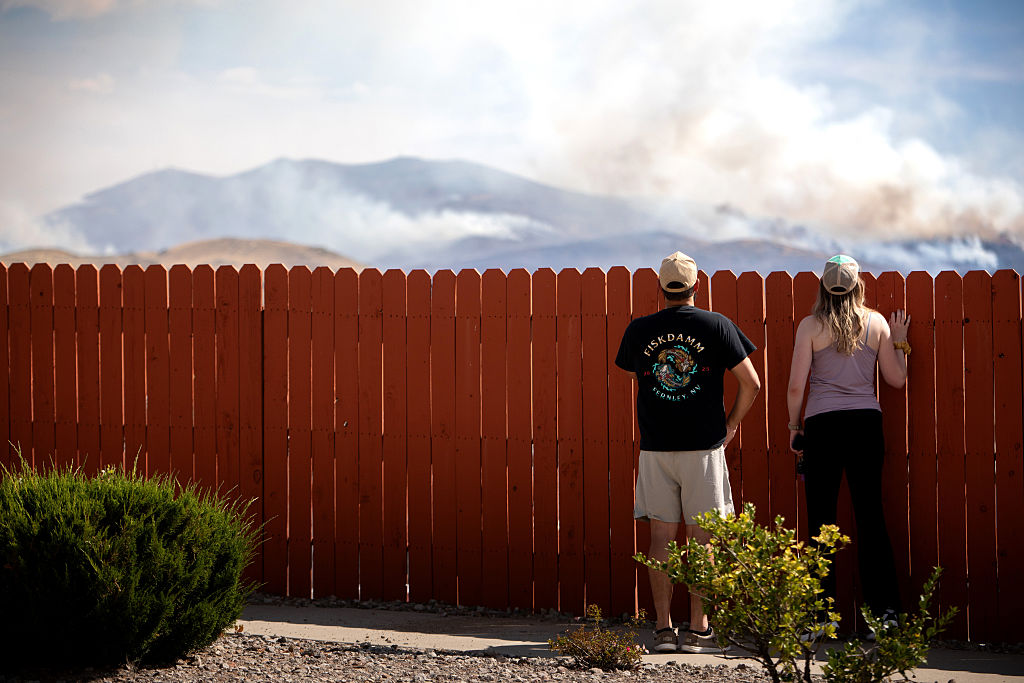
Local residents look over a fence at the Hawk fire burning in Reno, Nevada, on August 23, 2026. —Trevor Bexon—Getty Images

The ongoing “Hawk” fire outside the city of Reno, Nevada, has prompted the evacuation of tens of thousands of people in yet another devastating blaze contributing to one of the worst U.S. wildfire seasons in recent history. 

Roughly 42,000 people have been evacuated around Reno, while an additional 45,000 were warned that they may also have to flee. The evacuation is among the largest prompted by a U.S. wildfire this year, following the fires around Spokane, Washington, in early August during which roughly 60,000 people were evacuated.

The Reno evacuations mark another flashpoint of a record-breaking fire season. The fire is dwarfed in acreage by larger blazes from this year, at roughly 15,000 acres burned so far, but its direct effect on civilians is one of the largest in recent years, and demonstrates the potential risk that worsening wildfires may have on people and their communities in years to come.

Here’s how fires around the U.S. have set new records, and why they have been so bad this year.

More acres burned and more entrapments

Compared to the past 10 years, more acres have been burned this year in the U.S. to date.

The National Interagency Fire Center (NIFC) posted on Monday that firefighters have responded to 50,784 wildfires that have scorched over 7.8 million acres this year: 168% of the 10-year average for acres burned, and 129% of the average for total fires.

Around the same time last year, roughly 4 million acres had been burned, around 50% of the current acreage for 2026 so far, according to NIFC tracking.

The U.S. has also been at the highest level of “fire preparedness” for 38 days, since July 18th, at a five out of five, which means that federal resources are strained and may not be available to address every new fire.

Read More: The U.S. Is Now At Its Worst Level of Wildfire Preparedness. What Does That Mean?

The 10-year average for fire preparedness in August is four. The last time the fire preparedness level was at a five for the entire month of August was in 2021.

Meanwhile the 10-year annual average for days spent at level four and five combined is 48 days, and so far, the U.S. has already spent 57 days within that range, after reaching level four in late June.

There has also been a 20-year high of firefighter entrapments, life-threatening situations in which firefighters’ safety zones and escape routes are compromised. According to a Reuters report, there had been 12 entrapments in 2026 as of Aug. 13, more than the year-total average of nine in the last 20 years. This year’s entrapments also marked the highest year-to-date figure since 2006.

Six out of 13 firefighter deaths have involved entrapments, the report shows. An average of 17 firefighter fatalities occur each year from wildfires.

Hotter, drier, and windier conditions

Wildfire trackers often use the “30-30-30” rule to identify conditions that can lead to extreme wildfires. The rule refers to when the temperature is at least 30 degrees Celsius (86 Fahrenheit), humidity is at 30% or lower, and wind speeds are at 30 kilometers per hour or more (roughly 19 miles per hour). When combined, these hot, dry, and windy conditions can produce extremely large and destructive fires, as they have this year.

Reno has experienced an average daily high temperature of 92.8 degrees Fahrenheit (33.7 Celsius), 27% humidity, and 18 miles per hour (29 kilometers per hour) daily maximum wind speed over the last 10 days, including the week before the “Hawk” fires began on Saturday and the three days since as the blaze continues.

Although the 30-30-30 rule is a metric for local weather conditions’ effect on wildfires, increases have been exhibited this year compared to past years across the U.S. in each of its categories—temperature, dryness, and wind speed.

When it came to temperature, the average in the contiguous U.S. from January through July was the second warmest in 132 years, at 4.2 degrees Celsius (55.5 Fahrenheit), according to the National Oceanic and Atmospheric Administration (NOAA).

July in particular was the hottest month on record in the U.S., with an average of 76.9 degrees Fahrenheit (24.9 Celsius). Nevada specifically had one of its warmest July’s on record, according to NOAA.

Read More: What Living Through the Hottest July Ever Looked Like Across the U.S.

The U.S. also had its driest January-July since 2012, according to NOAA. And as of Aug. 4, nearly half of the contiguous U.S. was experiencing drought, including across much of the West.

Wind speeds generally fluctuate the most by region, but from January through June of this year, they averaged 0.5% above the 20-year average during 2005-2024, according to an S&P Global analysis.

These hotter, drier, and windier conditions have set the stage for an active wildfire season.

One underlying explanation for increasingly fire-prone conditions is climate change, which has contributed to longer-lasting fire seasons, now lasting for six to eight months in some areas, compared to what used to be roughly four months in past decades.

“Generally we're having drier summers and higher winds,” Peter Sunderland, professor of fire protection engineering at the University of Maryland, previously told TIME. “We are seeing more and more climate extremes.”

  •  
❌