Data centers are being opposed by Democrats and Republicans in key 2026 elections. | Sarah Rice/Bloomberg via Getty Images
This story appeared in Today, Explained, a daily newsletter that helps you understand the most compelling news and stories of the day. Subscribe here.
Do the words “data center” make you want to drop everything and call your congressional representative? You’re not alone, if we judge the nation’s mood by the actions of politicians who poll-test what they eat for breakfast (and there are worse ways).
This looks like the week that the data center backlash broke containment and became the defining issue of this political moment.
In the Texas governor’s race, Democrat Gina Hinojosa went up with an ad against Republican Gov. Greg Abbott over data centers with the punchline: “Greg Abbott is selling you out.” In a critical toss-up House race, Rep. Marcy Kaptur (D-OH) launched an attack against her Republican challenger over his support for data centers. Pennsylvania Gov. Josh Shapiro, a likely contender for the 2028 Democratic presidential nomination who had previously touted data center investments, signed an executive order to limit their construction. He also bashed his opponent on data centers in a new campaign ad — a response to the Republican attacking him over those same facilities.
In my home state of Ohio, national Republicans are so worried about data centers damaging Sen. Jon Husted’s reelection chances that they sent a memo this week to top AI companies to warn that they could lose the seat because of the issue. And Mike Rogers, the Republican trying to win the Michigan Senate race for the GOP, went so far as to endorse a moratorium on data center building.
Go a little deeper
In one image, this is why politicians are screaming at anyone who will listen that they loathe these data centers just as much as you do and want to stop Big Tech from building any more. It is a stunning turnaround: The percentage of Americans who “strongly oppose” a data center being constructed in their area has more than doubled in a single year.
As Molly Taft documented in a recent feature story for Wired, the relationship between the ubiquitous data-center backlash and the fears about AI is becoming hard to ignore: Most people still say they oppose data centers even when they don’t live anywhere near one, and most people opposed to data centers are also more likely to be skeptical of AI. And those sentiments are clearly bipartisan, which is why you have a Democrat and a Republican in the Michigan Senate race striking the same tone on data centers.
The merits of both sides in the data-center debate are probably more nuanced than the political slogans popping up around it. But this phenomenon is clearly about something bigger than the brick-and-mortar buildings that have become these political boogeymen. As Marina Bolotnikova put it in a story for Vox earlier this summer: Americans don’t know how to fight AI. So they’re fighting data centers instead.
And now the politicians are following their lead.
One link for later
➨ Print your photos like it’s the 1990s. When everybody carries a camera in their pocket and snaps candids as casually as taking a sip of water, it’s easy to become jaded about all those pictures. Don’t be. The best way to appreciate them, Adam Clark-Estes argues in his latest piece on living in our tech-dominated world, is to print those images out like you did a few decades ago. Cherish your memories by holding them in your hands.
Before you go…
Did you know…Cuba has more than twice as many doctors per capita as the United States? But that hasn’t stopped the island nation’s healthcare system from deteriorating to the point of crisis, as Ananya Rupanagunta writes for Vox.
Today’s trivia: What’s the insect stage after larva? (You can find this and other brain puzzles in Vox’s daily crossword. Look for the answer in tomorrow’s edition.)
Yesterday’s trivia: Yesterday we asked you for the name of the Survivor contestant who holds the franchise’s record for most appearances. That would be Cirie Fields, who appeared on six seasons between 2006 and 2026.
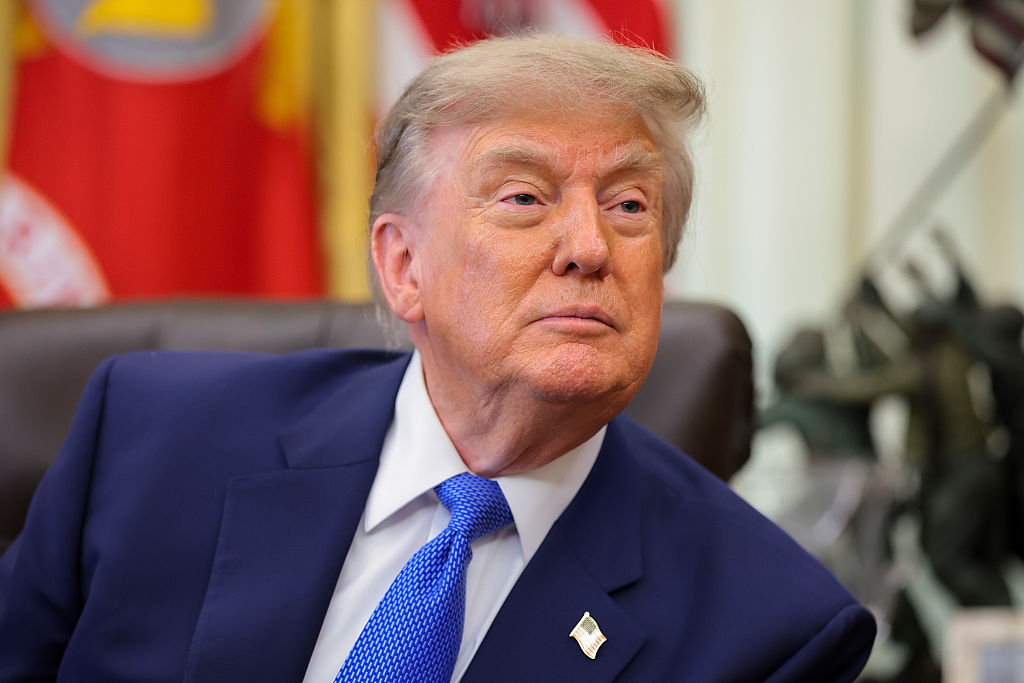
President Donald Trump takes a question from reporters during an event in the Oval Office of the White House in Washington, D.C., on Aug. 10, 2026. —Anna Moneymaker—Getty Images
President Donald Trump announced on Friday that he has coordinated a new deal to lower beef prices in the U.S.
“Today, I concluded a deal to substantially lower the price of ground beef for working American families,” he said in a Truth Social post. “For the next 90 days, the United States will allow up to 300,000 metric tons of product for ground beef to be imported with no out of quota tariff. We have a commitment that this beef will be sold at 25 percent below current market prices.”
“This deal will reduce prices for Americans while giving space for our Great American Beef Herd to grow again,” he continued.
An “out of quota tariff” is a higher tariff that is triggered if the amount of a product imported into the U.S. exceeds a certain quantity.
It’s unclear who the deal is with or which countries will be importing the beef into the U.S. A White House official told TIME that Trump secured an agreement with foreign beef exporters to sell beef at a 25% discount, which will be passed on to American consumers, in exchange for Trump lifting the out of quota tariff on lean beef trimmings that will be used for ground beef production. The White House official added that the President plans to sign an Executive Order regarding the deal within the next couple of weeks.
Both Trump and the White House official cited the soaring price of beef as the motivation behind the new deal. Last month, the average price of ground beef for American consumers was about $6.885 per pound—a jump of roughly 57% from just five years earlier, according to data shared by the Federal Reserve Bank of St. Louis. The price of uncooked ground beef went up by 9% in July, compared to the same time last year, according to data released by the U.S. Bureau of Labor Statistics last month.
Beef prices have skyrocketed in large part because of supply shortages: American cattle herd sizes are at a low not seen in years, even as consumer demand for beef remains high in the country.
The American Farm Bureau Federation reported last month that, while the total cattle inventory went up a bit at the start of July for the first in eight years, the beef cow herd dropped to 28.5 million head, decreasing by about 1% compared to the same time last year, making it the “smallest July inventory on record,” with data dating back to 1973. Experts attribute the pressure on herds largely to droughts driven by climate change.
The deal that Trump announced on Friday isn’t the first time his Administration has made efforts to try and address the soaring price of beef for consumers. The President also signed an Executive Order earlier this year aimed at increasing the amount of lean beef trimmings imported from Argentina by 80,000 metric tons per year.
Experts, however, cast doubt on whether boosting beef imports from Argentina will be effective at lowering the cost on Americans, saying that the boost in imports would make up too small a portion of the overall supply in the U.S. to have a significant impact. And the cattle industry has objected to such efforts in the past, expressing concerns that those moves would undermine producers within the U.S.
Colin Woodall—the CEO of the National Cattlemen’s Beef Association, a trade association for cattle farmers and ranchers—said in a statement on Friday that he was “disappointed” by Trump’s announcement.
“While America’s cattle producers share the goal of keeping groceries affordable for consumers, flooding the market with government-subsidized, below-market beef is not the way to rebuild the American cattle herd,” Woodall said. “We are already working to rebuild after years of ongoing drought, high input costs and other challenges that have reduced U.S. cattle numbers. Today’s announcement and other market interventions throw cold water on the prospect of herd expansion and sacrifices long-term stability for short term messaging.”
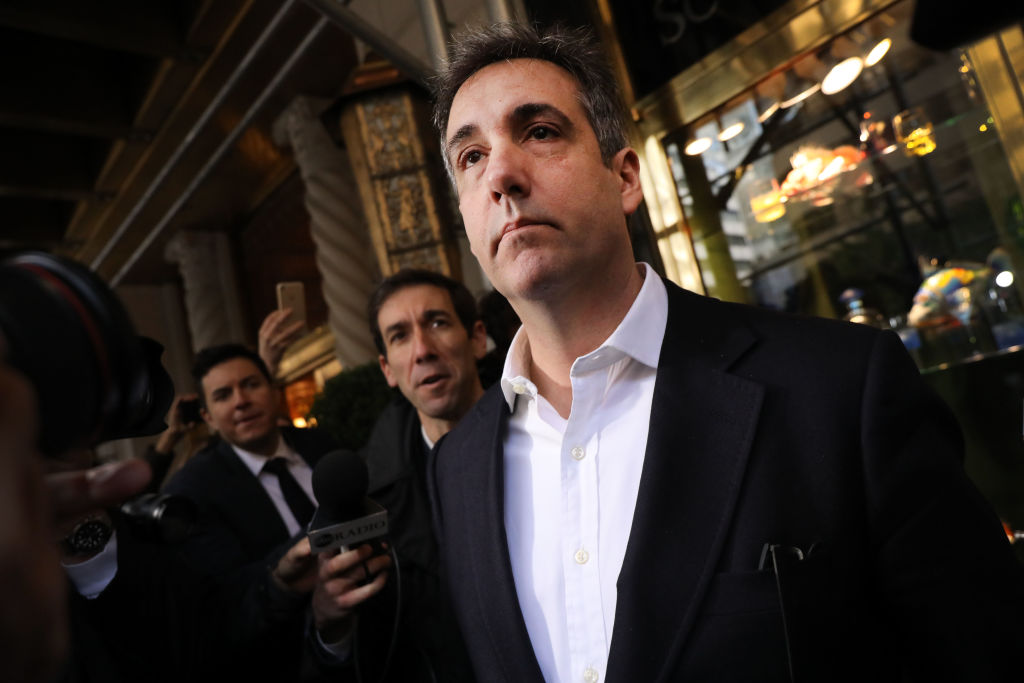
Michael Cohen, the former personal attorney to President Donald Trump, departs his Manhattan apartment for prison on May 6, 2019. —Spencer Platt—Getty Images
President Donald Trump on Thursday buried the hatchet with his former attorney Michael Cohen, appearing on Cohen’s radio show in what was the first public exchange between the two men in eight years.
Trump and Cohen have a tumultuous history. Cohen worked as Trump’s personal lawyer dating back to the mid-2000s. But he severed ties with Trump around 2018, when he pleaded guilty to federal crimes, including campaign finance violations, and said he had made payments to two women at Trump’s direction in an effort to keep them from speaking publicly about alleged affairs with the then-presidential candidate. He went on to serve a three-year sentence following his guilty plea. Cohen later made a number of explosive claims about Trump in testimony in front of Congress, and served as a key witness in the criminal hush money trial that resulted in Trump’s conviction on 34 felony counts.
“You and I have obviously traveled a pretty rocky road together,” Cohen said to Trump on his radio show 77 WABC-AM in New York on Thursday. The program will air in its entirety on Sunday.
Trump did not dwell too much on the past during the portion of the show that aired on Thursday, but voiced sympathy and appreciation for Cohen.
"They weaponized you like nobody's ever been weaponized, like few have been," Trump told his former lawyer. “They weaponized a lot of people, and I respect the fact that you recanted everything you said. And that’s a big — that’s a big thing that you did. That’s a very big thing.”
The men’s conversation also criss-crossed through a range of other topics related to Iran, the economy, and Democrats.
Cohen appeared on CNN ahead of the airing of the program and commented on his relationship, and conversation, with Trump.
“How is it possible after all of what took place? All of the name calling, the years of the public war, the verbal missiles that we threw at one another. How is it possible that the two of us can ever sit down again?” Cohen told CNN anchor Jake Tapper. “The answer is that we forgave.”
When asked to define the current state of his relationship with the President, Cohen remarked, “it’s being resuscitated.”
Cohen was also pressed on whether he has asked Trump for a pardon.
“I have not,” Cohen first responded. But he went on to clarify that he did submit a pardon application to President Joe Biden, which he later altered after Trump took back office.
“What I did is I took that same application with the same documentation, and I just rewrote the cover letter, removing the name of President Joe Biden and inserting the name President Donald Trump,” Cohen said.
Cohen also took to his Substack on Thursday to speak about making amends with Trump, which he said made people “furious.” Referencing the Bible, Cohen asserted that Colossians 3:13—a passage that reads, ”Forgive as the Lord forgave you”—was the “foundation” of what transpired between him and Trump.
“We forgave,” Cohen wrote. “Forgiveness doesn’t require amnesia. It requires the courage to stop allowing yesterday to dictate tomorrow.”
Cohen’s remarks ring in stark contrast to previous words he has offered about the President.
In 2019, after pleading guilty, Cohen was called by the House Oversight and Reform Committee to further detail his role as Trump’s attorney and said Trump “is a racist. He is a conman. He is a cheat.” When asked how many times Trump had asked him to threaten an individual or entity on his behalf, Cohen responded that Trump had done so on over 500 occasions throughout their professional relationship.
The following year, Cohen published Disloyal: A Memoir: The True Story of the Former Personal Attorney to President Donald J. Trump, a 432-page tell-all about the years he spent as Trump’s lawyer and fixer.
“I knew Trump better than anyone else did,” Cohen wrote at one point in the book. “I knew him better than even his family did, because I bore witness to the real man, in strip clubs, shady business meetings, and in the unguarded moments when he revealed who he really was: A cheat, a liar, a fraud, a bully, a racist, a predator, a con man.”
And in 2024, Cohen was the prosecution’s main witness in Trump’s criminal trial over charges of falsifying business records related to hush money payments made to Daniels when Trump was running for President for the first time in 2016.
“What I was doing, I was doing at the direction of and benefit of Mr. Trump,” Cohen said on the stand in 2024.
Demonstrators outside the US Supreme Court in Washington, DC, on October 15, 2025. | Eric Lee/Bloomberg via Getty Images
On Tuesday, a federal appeals court struck down a South Carolina law that permits all voters over age 65 to vote by mail but allows younger voters to do so only if they meet a set of specific criteria. The United States Court of Appeals for the Fourth Circuit’s decision in Grant v. Belangia held that the state’s law violates the 26th Amendment.
But three different federal appeals courts have now splitthreeways on how to read it, which makes it likely that the Supreme Court will have to step in soon and determine, for the first time, what a relatively new constitutional amendment actually means. And if that happens, it will have significant implications for the increasingly partisan war over how difficult it should be to vote by mail.
Key takeaways
The Supreme Court has never interpreted the 26th Amendment, which limits age discrimination in voting.
Three courts, however, have now split on whether it allows states to make it easier for older voters — and only older voters — to vote by mail.
This issue has significant partisan stakes because Democrats are more likely than Republicans to vote by mail.
The Fourth Circuit’s opinion in Grant holds that the 26th Amendment prohibits “unequal allocation of voting access based on age,” and thus, if elderly voters can vote by mail, younger voters must be allowed to do so as well. Both the Fifth and the Seventh Circuits, which previously ruled on similar challenges to Texas and Indiana absentee voting laws, disagree with this view.
The question of whether states may have different absentee voting rules for older voters first flared up in 2020, during the Covid-19 pandemic. Many voters were afraid to go to the polls, for fear that they might become infected if they voted alongside others in an indoor polling place. And this led to a pair of lawsuits claiming that Texas must allow younger voters to vote absentee, lest they be effectively denied the ability to safely cast a ballot altogether.
Ultimately, however, the Fifth Circuit, which oversees federal litigation out of Texas, rejected the claim that only allowing older people to vote by mail violates the 26th Amendment.
The stakes of this fight have diminished, since few voters are still afraid to physically go to the polls in 2026, but they are still significant. During Covid, many Democrats got in the habit of voting by mail, while President Donald Trump campaigned against mail voting. So Democrats are now more likely to cast mailed ballots than Republicans, and any law that makes it easier to vote by mail is thus likely to benefit the Democratic Party, at least around the margins.
Indeed, the Republican Party understands this imbalance as well as anyone. While Trump spreads false claims that “mail-in voting means mail-in cheating,” his party was busy urging the Supreme Court to toss out thousands of mailed ballots in future elections.
The question in Watson v. Republican National Committee (2026) was whether federal law requires ballots that are mailed prior to Election Day, but that arrive shortly thereafter, to be trashed. The GOP’s legal arguments in Watson were risible — Republicans claimed that it’s actually been illegal to count these ballots since 1845, and they just happened to discover this 181-year-old legal requirement at the exact same time that Trump decided that voting by mail is bad — but it’s notable that Watson was a 5–4 decision despite the implausibility of the GOP’s arguments.
Four justices, all Republicans, would have given their party what it asked for in Watson.
Given these partisan stakes, it’s likely that lawyers from both parties will push the Supreme Court to interpret the 26th Amendment in a way that favors their clients’ interests — with Democrats pushing for an expansive interpretation of the right to vote and Republicans pushing for as many restrictions on voting by mail as possible. And it is equally likely that the Court will have to take up this issue soon, because the justices are especially likely to take up legal disputes that divide federal courts of appeals.
The three-way split on how to read the 26th Amendment
The 26th Amendment emerged from the crucible of the Vietnam War and a draft that conscripted many young people into combat who could not vote. Many of the amendment’s proponents chanted the slogan “old enough to fight, old enough to vote,” and this message swayed lawmakers across the country. According to the Fifth Circuit, the amendment was “approved by Congress in March of 1971 and ratified by June,” making it the “most quickly ratified constitutional amendment in our history.”
The broad initial support for this amendment may explain why there’s been so little litigation over what it means. Pretty much everyone agrees that it permits Americans as young as 18 to vote, so young voters typically haven’t had to file lawsuits to gain access to the ballot.
But the Amendment is also broadly worded, providing that the right to vote “shall not be denied or abridged” based on age — at least for voters who are at least 18. That raises a difficult legal question: What happens if a state does not outright prohibit young people from voting, but it makes it more difficult for them to do so than it does for older voters?
The Fourth Circuit’s answer to this question is straightforward. Grant reads the 26th Amendment as a broad prohibition on age discrimination. If a 70-year-old voter is allowed to cast a ballot in a particular way, then a 19-year-old voter must be allowed to do the same.
As Grant notes, the 26th Amendment’s “denied or abridged” language mirrors several other amendments, including the 15th Amendment, which provides that the right to vote shall not be “denied or abridged” because of race, and the 19th Amendment, which says it shall not be “denied or abridged” based on sex.
Both of these amendments have historically been understood to broadly ban discrimination. A state could not permit white people to vote by mail, but not Black people, nor could it apply a similar regime to men but not women. So that suggests that the 26th Amendment applies a similarly broad ban on age discrimination in elections.
The Fourth Circuit also points to the Supreme Court’s decision in South Carolina v. Katzenbach (1966), which said that the 15th Amendment invalidates “state voting qualifications or procedures which are discriminatory on their face or in practice.” So that also suggests that the words “denied or abridged” should be read to broadly ban discrimination.
Meanwhile, the Seventh Circuit’s decision in Tully v. Okeson (2023) reached a different conclusion. Tully notes that, two years before the 26th Amendment was ratified, the Supreme Court held that laws limiting who can vote absentee “do not themselves deny” voters “the exercise of the franchise,” as voters who cannot vote by mail may still be able to vote by other means.
The Seventh Circuit also pointed to the Supreme Court’s decision in Harman v. Forssenius (1965), which construed the 24th Amendment’s statement that the right to vote “shall not be denied or abridged … by reason of failure to pay any poll tax or other tax.” Harman states that the right to vote is “abridged” when a state imposes “onerous procedural requirements which effectively handicap exercise of the franchise,” and that state election laws are unconstitutional when they impose a “material requirement” solely on people who refuse to pay a poll tax.
Thus, according to the Seventh Circuit, mere discrimination against younger voters isn’t enough to violate the 26th Amendment. A state must impose a sufficiently “onerous” or “material” requirement on them, and Tully concluded that a restriction on absentee voting wasn’t enough if the state also provides sufficient avenues where a voter can cast their ballot in person.
The Fifth Circuit’s decision in Texas Democratic Party v. Abbott (2020) resembles Tully, but with some subtle differences. That Court held that the right to vote is “denied” only if the law “absolutely prohibits them from voting,” and it held that a law “abridges” a person’s right to vote only when it “makes voting more difficult for that person than it was before the law was enacted or enforced.”
To justify this interpretation, the Fifth Circuit points to the Supreme Court’s decision in Reno v. Bossier Parish School Board (2000), which said that “it makes no sense to suggest that a voting practice ‘abridges’ the right to vote without some baseline with which to compare the practice.” Bossier Parish established that, at least in some circumstances, that baseline should be “the status quo” that existed before a state amended its law to insert a provision that is being challenged in court.
So it’s safe to say that the Supreme Court’s past decisions construing the words “deny or abridge” point in several directions. Proponents of the Fourth, Fifth, or Seventh Circuit’s divergent approaches to the 26th Amendment can all find support for their proposed rule in the Court’s precedents. And the Court has never definitively ruled on how to read the words “deny or abridge” as they are specifically used in the 26th Amendment.
That means that, when the justices do take up this question, they have more or less maximal discretion. A justice who wants to read the 26th Amendment expansively will have no trouble finding authoritative sources that they can cite in their opinion, and a justice who wants to limit access to voting by mail will also be able to find plenty of sources that they can cite to justify a narrow reading of the 26th Amendment.
So how is the Supreme Court likely to read the 26th Amendment?
Realistically, this Court is likely to construe the 26th Amendment narrowly. This is, after all, a 6-3 Republican Court.
Indeed, the question of whether states may discriminate in favor of older voters did reach the Supreme Court during the pandemic. After the Fifth Circuit construed the 26th Amendment narrowly in a preliminary ruling in the Texas Democratic Party case, Democrats asked the justices to issue a temporary decision that would have expanded absentee ballot access during the pandemic, but the Court denied the request.
The fact that the Court denied this temporary relief does not necessarily mean that it will embrace a narrow reading of the 26th Amendment once it gives the issue a full hearing. But it does suggest that most of the justices weren’t troubled by age discrimination in absentee voting, even at the height of the pandemic when there were serious concerns that people denied absentee ballots may not be able to safely vote.
The 5-4 vote in the Watson case is also an ominous sign for anyone hoping that the Court may make it easier to vote by mail, as it is difficult to exaggerate just how weak the Republican Party’s arguments were in Watson, but four justices voted to invalidate lawfully cast absentee ballots regardless.
In Watson, the Republican Party claimed that three federal laws setting the date for federal elections, the oldest of which was enacted in 1845, prohibited states from counting ballots that are mailed before Election Day, but that arrive afterwards. States have counted late-arriving ballots since the Civil War, and, as Justice Amy Coney Barrett pointed out in her majority opinion, there are several federal laws that simply assume that states are allowed to decide whether to count late-arriving ballots.
The fact that four justices voted in Watson to limit absentee balloting, despite the fact that the GOP was barely able to articulate an argument for its position, suggests that these four justices would also vote to limit absentee balloting in a 26th Amendment case. So that means that proponents of a narrow reading of this amendment only need to pick up one more vote. And, unlike in the Watson case, there actually are legal arguments in favor of the more conservative position on the 26th Amendment. The Fifth and Seventh Circuits both made plausible, if not exactly airtight, arguments for reading this amendment narrowly.
Still, the Fourth Circuit’s more expansive reading of the amendment is also quite plausible. So it is at least possible that the five justices who formed the majority in Watson could agree with the Fourth Circuit’s reading. Given that the Court has previously said so little about the 26th Amendment, we’re essentially in uncharted territory — on an issue that could potentially shape the outcomes of future elections.
Sailors prepare to assist an F/A-18 Hornet jet for takeoff while steam billows from the catapult aboard USS Theodore Roosevelt in the South China Sea on April 10, 2018. | Ted Aljibe/AFP via Getty Images
This story appeared in The Logoff, a daily newsletter that helps you stay informed about the Trump administration without letting political news take over your life. Subscribe here.
Welcome to The Logoff: The Trump administration’s meddling with the US military is getting more direct — and potentially more dangerous.
What’s going on? Fresh on the heels of coverage last week about the plight of the USS Abraham Lincoln (now on its way home), a flurry of recent stories underscores just how much the Trump administration is micromanaging the Pentagon.
Last week, President Donald Trump directed the Defense Department to overhaul the aircraft carrier mechanism for launching jets — by reverting from electromagnetic catapults to old-fashioned steam catapults.
And on Thursday, the Wall Street Journal reported that the Army is axing its new drone assault battalion, which was established in January. The decision to do so comes from Defense Secretary Pete Hegseth’s new acting chief of staff of the Army, who took over the role after Hegseth forced out its previous occupant this spring.
What’s the context? Neither of these moves seem poised to help the military succeed at its core objectives. As naval expert Bryan Clark pointed out Wednesday in the Washington Post, the catapult switch won’t only limit the next generation of aircraft carriers, but cost an exorbitant amount of money — contrary to Trump’s insistence that steam is “much less expensive” — and delay the rollout of new ships (badly needed, as the Lincoln debacle proves). Trump may also name one after himself.
If possible, the demise of the drone unit makes even less sense. Innovative drone designs and tactics are revolutionizing warfare in Ukraine and elsewhere; being ahead of the curve on these changes has allowed Ukraine to hold its own against a numerically superior opponent.
And it’s very clear that the US hasn’t mastered these tactics yet: As the Journal reported last week, Ukrainian drone operators flattened the US in war games held earlier this year.
Why does this matter? To be clear, Trump is the commander in chief. None of this is beyond his authority as president. But the steam catapults in particular are a strange obsession that would normally be well below his pay grade, and none of it gives the impression of a steady hand at the rudder.
And with that, it’s time to log off…
Here’s some good news from my colleague Constance Grady: The kids might be all right. Or at least, they might be reading more thanks to a new generation of “middle-grade books,” and that’s a step in the right direction. You can read her story about what those are and what’s changing here with a gift link.
Thanks for reading, have a great evening, and we’ll see you back here tomorrow!
A sign displays the national debt at a bus stop in Washington, D.C. on August 20, 2026. | Anna Moneymaker/Getty Images
This story appeared in Today, Explained, a daily newsletter that helps you understand the most compelling news and stories of the day. Subscribe here.
America’s national debt cleared $40 trillion for the first time ever on Wednesday, a number so comically large as to feel imaginary. Seriously — look at it in all of its comma-strewn glory: $40,203,821,194,241. And because the US racks up tens of thousands of dollars of new debt every second, that number was outdated even as I typed it.
On some level, the steady ballooning of the national debt is basic math, familiar to anyone with a budget of their own. The government’s expenses — particularly the costs of Social Security and Medicare — are growing, while successive rounds of tax cuts have reduced the revenue available to cover them. As the government accumulates more debt, it also has to spend more just to cover the interest.
But national debt also functions very differently from household debt, because a government is very different from an individual or family. For one thing, it doesn’t have a set lifespan or retirement age, which means it can roll its debt over indefinitely. For another, government borrowing can boost the economy’s productivity in the future, which changes some trade-offs. Rising national debt isn’t a big deal if the economy is growing alongside it.
That isn’t the case right now, though…and it hasn’t been for a couple of years. America’s debt is outpacing its economic growth, with increasingly tangible consequences for your personal finances.
How the national debt makes your life more expensive
The mechanisms here are a little wonky, but — in short — when the federal government borrows more money, it tends to push up borrowing costs for businesses and consumers. Government deficit spending can increase competition for loans — because the government is now borrowing more in addition to individuals and businesses — as well as prompt investors to demand higher rates on long-term loans and contribute to inflation, which can lead the Fed to nudge rates higher.
As a result, mortgages, car loans, credit cards, and business loans all become more expensive. The Yale Budget Lab estimates that the increase in federal debt over the past decade has added roughly $2,500 a year to the cost of a mortgage on a typical home.
That’s not a trivial amount of money. And over the life of a 30-year loan, it adds up to roughly $76,000, which — if HGTV does not deceive me — is enough for a down payment on a modest lakefront home.
Unfortunately, the solutions for slowing the growth of the national debt are not terribly popular. You could hike taxes, for instance. Or you could overhaul Social Security, which runs $1.38 trillion a year. But few politicians have historically had the stomach for the combination of spending cuts and tax increases that righting this ship requires.
One link for later
➨ Put a price tag on your memories. (Or maybe…don’t?) In the era of super-pricey concert tickets, some fans are shelling out tens of thousands of dollars to see live shows. Vox spoke to one man who’s spent $15,000 on Beyoncé tickets alone. “My mom’s big motto in life was, ‘We’re making memories,’” he said, by way of explanation.
Today’s trivia: Which competitor from the reality TV show Survivor holds the record for most appearances in the long-running franchise — though she’s never actually won? (You can find this and other brain puzzles in Vox’s daily crossword. Look for the answer in tomorrow’s edition.)
Yesterday’s trivia: Yesterday we asked you for Jackie Robinson and Jackie Joyner-Kersee’s shared alma mater. Both trailblazing athletes attended UCLA, albeit 40 years apart.

 Login
Login