Reading view

Americans Are (Still) Drinking Less than Ever Before

In a new Gallup poll, 54% of Americans said they drink alcohol, tying last year’s record low. —Getty Images

Americans continue to drink less alcohol than ever before, according to a new Gallup poll.

Only 54% of U.S. adults surveyed by the analytics firm in July said they ever drink alcohol—the same share as last year and the lowest recorded since Gallup began surveying Americans on this topic in 1939, says Lydia Saad, Gallup’s director of U.S. social research.

“We saw a significant decline in people’s use of alcohol last year, but whether that was a one-time reaction or a trend, we had to wait and see,” Saad says. “This year’s result tells us that whatever is happening out there is a sustained change. Drinking has gone down across all age groups.”

More public awareness of alcohol’s health risks could be prompting Americans to drink less, the poll results suggest. A little more than half of Americans surveyed this year said that alcohol is “bad for health,” compared to the less than 30% of people who said that a decade ago; and 86% of people polled said they had heard of recent studies about the long-term health effects of alcohol—a 7% increase from 2024. Drinking alcohol has been linked to several forms of cancer, as well as higher risks of liver and heart disease, among other health effects.

“The decline in alcohol use coincides with a sharp increase in concern about the health risks of drinking,” Saad says. 

https://x.com/Gallup/status/2090452609316335964?ref_src=twsrc%5Etfw

But researchers who study alcohol say the poll results don’t provide a complete picture of alcohol use in America. While drinking might be declining overall, alcohol remains the country’s second-deadliest drug, behind tobacco. Alcohol kills about 178,000 people yearly, and harmful drinking remains a challenge for many people. 

“Many people are changing their attitudes towards drinking and intoxication for health reasons, which means that the number of people who say they drink may be declining because lighter drinkers who are more health conscious and more capable of changing their drinking are maybe choosing to cut back or not drink at all,” says Thomas Babor, a professor emeritus at the University of Connecticut School of Medicine who studies alcohol and alcohol addiction.

“But the rates of drinking and drinking problems remain unacceptably high” among some groups, including college students and older people, Babor says. “The big picture is: alcohol consumption is one of the biggest risk factors for chronic diseases and many other health conditions.”

According to the 2025 National Survey on Drug Use and Health (NSDUH), 44% of U.S. teenagers and adults who drank alcohol said they had engaged in binge drinking in the past month, and about 10%—about 14.5 million people—said they engaged in heavy drinking, defined as binge drinking on 5 or more days in the past 30 days. 

NSDUH results show that the numbers of binge and heavy drinkers declined overall since 2021. But percentages for binge and heavy alcohol use among underage drinkers didn’t change from 2021 to 2025. Among people aged 65 and older, about 10% in 2025 said they engaged in binge drinking, compared to about 12% in 2021.

In the new Gallup poll, people were asked if they “sometimes drink more alcoholic beverages than you think you should.” Some 13% of respondents said yes to that question, another record low, according to Gallup. 

More research is needed to better understand why people are drinking less, says Traci Toomey, a public health policy expert at the University of Minnesota who studies alcohol and cannabis. Health concerns are likely a factor, but there may be other reasons too, she says.

It isn’t clear if an increase in cannabis use, for example, is driving some of the decline. “We don’t know if it’s a substitution, but that’s a question we need to answer,” Toomey says.

Use of GLP-1 drugs, which studies suggest may help reduce alcohol consumption and craving in people with alcohol abuse disorder, along with higher alcohol prices and policies to curb harmful and underage drinking, may also be playing a role, she says.

Saad, of Gallup, says there could be political factors at play too. According to the new Gallup poll, alcohol use has declined significantly among Republicans and Independents, while Democrats’ alcohol consumption has remained virtually unchanged since 2023. 

“It could be worth looking into what kind of political messaging is going on, and if it’s more effective among Republicans and Independents than Democrats,” Saad says. 

She notes, however, that “we haven’t seen strong anti-alcohol messages out of the [Trump] Administration.” In January, the administration released updated dietary guidelines that no longer specified a daily limit for alcohol consumption. 

Dr. Mehmet Oz, who leads the Centers for Medicare & Medicaid Services, said at the time that alcohol is a “social lubricant that brings people together.” 

“In the best-case scenario, I don’t think you should drink alcohol, but it does allow people an excuse to bond and socialize, and there’s probably nothing healthier than having a good time with friends in a safe way,” he said. The World Health Organization, supported by emerging research, has asserted that no amount of alcohol is safe for health. 

  •  

Here's What a Leading Lettuce Breeder Wants You to Know

Closeup of heads of Romaine lettuce near Five Points, San Joaquin Valley, Calif. —Ed Young/Design Pics Editorial/Universal Images Group—Getty Images

In the town of Nipomo on the central coast of California, in Bill Waycott's fields, lettuces of the future are taking root. Red-furled or dark-leaved, these rosettes of crunchy goodness might someday make it to a store near you. 

Waycott is an independent plant breeder, one of the small community of dedicated folks who devote their time and effort to the reproduction of a given plant or plants. For decades, he's focused mainly on breeding better lettuces, and he spoke to TIME about what could be in America's salad bowls in coming years and just how damaging the recent Cyclospora outbreak, traced to a farm run by greens behemoth Taylor Farms in Mexico, has been for lettuce growers.

TIME: How did you intertwine your fate with that of lettuce?

Waycott: My introduction to agriculture occurred as a Peace Corps volunteer in India in the ‘70s. When I came back from that assignment, I wanted to dedicate myself to agriculture. It was the most amazing thing that could ever have happened to me—a California surfer goes to India and learns how to survive in a language, in a culture, in a food system that I had no clue about. I got a job at the [U.S. Department of Agriculture] and the first year and a half it was a sugar beet breeding project. When the lettuce position opened up, I jumped on it.

We were trying to slow down the process of early flowering in lettuce. You probably know that it doesn't last very long in a garden during warm temperatures. It goes to seed pretty quickly. But then we had George Bush Senior come across and clear the deck. I was laid off at that point with a lot of my colleagues back in the '90s, and that's when I went to work for a private breeding company.

In your decades of making lettuce better, what’s been the main focus? 

Well, you know it's 96% water to start with, so you don't have a lot to work with. My focus has been as much as possible on disease resistance—developing lettuces that can stand up to plant diseases that can wipe out a crop—and improved nutrition. Since so many people eat salads these days, even if we were able to improve the nutrition by 5 or 10%, that's a huge impact on the North American diet.

At Nipomo Seeds, which is a company my wife and I started in 2014, we’re working on a lettuce we have nicknamed “Spinach Lettuce,” because it resembles spinach both in the way it grows and also its taste (a softer, spongier, and slightly bitter eating experience). The nutritional values for most of the important nutritional components in lettuce are high in the Spinach Lettuce, especially when compared to iceberg; there’s a lot more fiber, protein, calcium, iron, vitamin C, and vitamin A.

There are others; we have some new lettuces that we're hoping growers will take an interest in. We've been growing field trials, and Chef Dan Barber from Row 7 Seeds has come out to California and looked at them. I think in September we're going to have somebody from Whole Foods come over and have a look.

What’s the biggest challenge facing lettuce breeders these days?

I have to say, I am just flabbergasted by the number of diseases that have come in in the last five to 10 years, and the rapidity with which they're mutating and forming new races. Example: I have been testing for plants that can resist Fusarium oxysporum, which is a fungus of the roots and vascular tissue. The plant's growing along, it's getting close to harvest, and then it just sort of wilts. Pull up the roots, and you see this discoloration. I really did my best to come up with resistance to that issue over the last five or so years. But in the last two years, the disease has changed and formed a new what we call variant race. So all the seed that I produced for that particular issue is no longer interesting to my customers because it doesn't have the brand-new race resistance.

Right now we have three fungi, one bacterium, and one virus here in California lettuce that are wreaking havoc and making life very difficult. In the past, there was one major issue at a time that we could hopefully solve in five years of breeding. Now I'm working on five issues, six issues in tandem. 


How has the Cyclospora outbreak, linked to Taylor Farms’ operations in Mexico, affected the lettuce industry?

Oh, it's disastrous. I've heard sales are at least 30% down, and not just in lettuce. Anything that's green is suspect to some people. If you can't cook it, or buy it out of a can, it’s not on the list. There are fields of mature lettuces being plowed under constantly now that have no value because they can't sell. 

But this isn’t the first time. In 2006, there was a big E. coli outbreak with spinach. That started the whole system of trying to evaluate the product before it was cut. Nowadays, at least north of the border, there are companies that go into every field and sample methodically across the field. Maybe every 30th row or every 50th row, they sample and send these samples into a lab, and it's checked for pathogens. 

Is there a safer way to grow lettuce? Hydroponically, with filtered water?

The hydroponic systems are so expensive—if they were really going to change things, it would have happened by now. 

But there isn't really that much difference; the plant is exposed to the atmosphere, and whatever's in the atmosphere is going to somehow affect the plant. Open field production is the cheapest way to go. Using water, either from wells or from canals, is really the only system available. And when you're looking at production the size of what North America requires, there's nowhere [big enough where] you can filter that water and create a sterile environment for the plant to grow in. It's impossible. But you can at least sample all those components that are going into it, and try your best to avoid any major contamination. 

What are you looking forward to in the future of lettuce?

I hope that we can slowly get to the point where we're improving nutrition. The world right now is pretty chaotic. How does diet fit into all that? How do people make decisions about what they're going to eat? What is the ratio of home cooking to restaurant dining, and financial stability—how does that influence the diet that they choose to use? It is tough. So working on making things more nutritious is an important factor. Hopefully, the growers and the shippers and the marketers agree, and we will bring healthier food into the system, so that people don't even have to decide at the moment of purchase if they should or not, because it's already more nutritious. 

  •  

TIME's Longevity Leaders Are Racing to Add Good Years to Your Life

Click here to see TIME's full list of Longevity Leaders

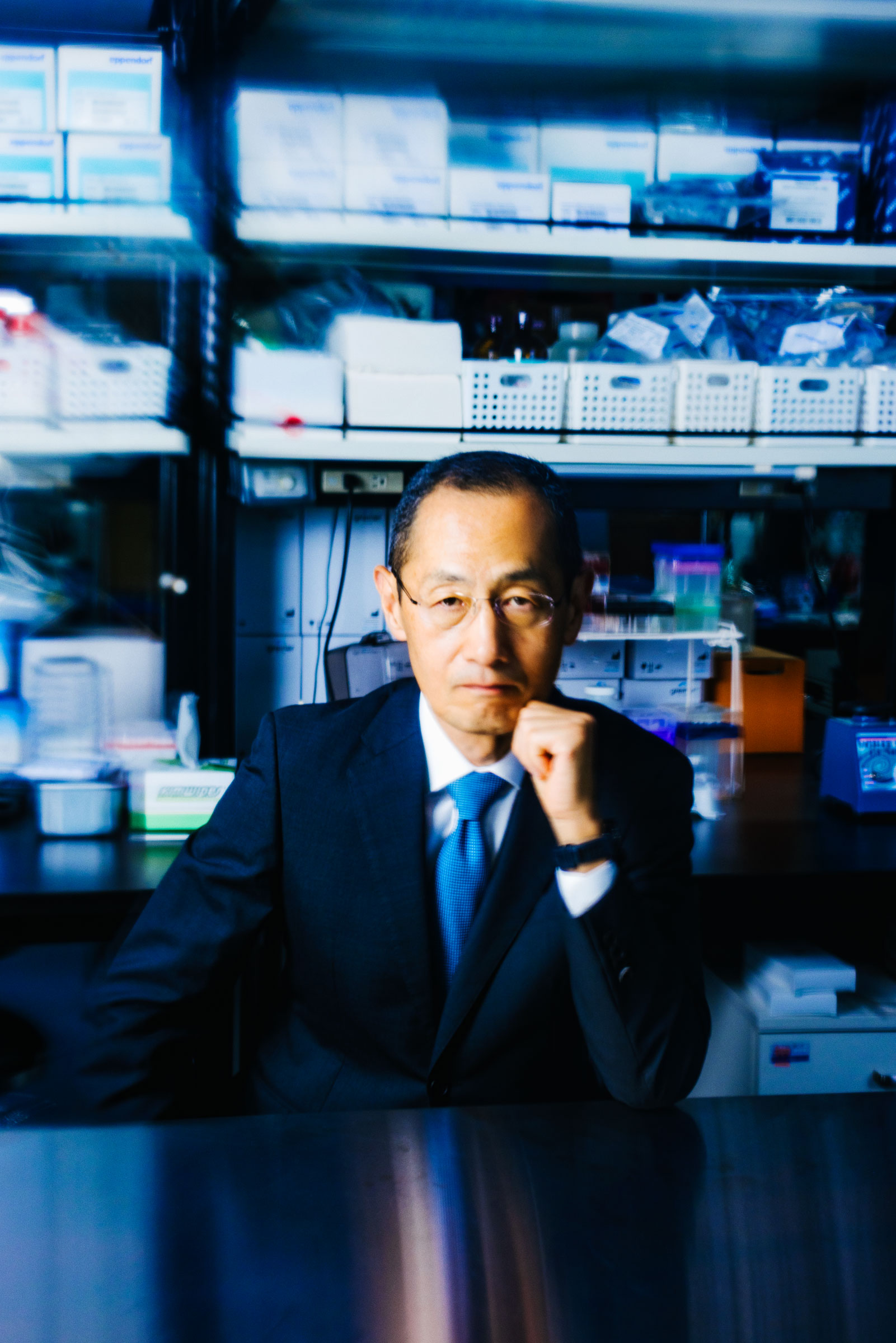
Shinya Yamanaka goes for a run almost every morning. So do a lot of people—but the habit carries extra weight when done by a Nobel-winning scientist whose discovery forms the foundation for one of the most exciting areas of longevity research today: reprogramming human cells to make them act younger. When someone like that makes a daily habit of anything, you take notice. 

Yamanaka had just come back from a run in late July, during one of Kyoto's worst heatwaves, when he sat down with senior health correspondent Alice Park to talk about his career and the influence he’s had on the rapidly expanding longevity field 20 years after his landmark discovery. He is one of TIME’s 2026 Longevity Leaders highlighted in this week’s issue: 12 trailblazers marking the way to a longer, healthier life.

We set out to find some of the most innovative leaders who are starting to show concrete results in helping us to live longer, better. A few pioneering scientists—like Harvard geneticist David Sinclair and Altos Labs’ Juan Carlos Izpisua Belmonte—have put their own spin on Yamanaka’s discovery. They’re on a mission to reverse cellular aging in different parts of the human body. Others have stepped up to separate snake oil from legitimate science. Jamie Justice, for instance, runs XPrize Healthspan, a $101 million longevity science fair that is funding the most promising research around the world. And some are addressing the equally important question of how our society should change to accommodate an older population. AARP CEO Myechia Minter-Jordan, for example, is leading the group into a new era of aging advocacy. 

We are squarely in a longevity boom, and the field is now well established as serious science. But we are still near the beginning. Right now, there is no proven longevity drug you can take to make yourself live longer. (That we know of: Nir Barzilai, who thinks some existing drugs could be repurposed as longevity-boosting treatments, is eager to change that.) Some things are within your control, however. You can exercise, like Yamanaka; build muscle, which Dr. Gabrielle Lyon calls the “organ of longevity”; and strengthen your social ties, which Dr. Robert Waldinger has learned are crucial from directing the world’s longest study of human happiness. TIME’s 12 Longevity Leaders know that all of these approaches—medical, physical, social—are key in the quest to live as well as possible for as long as possible.

  •  

The future of medicine is video games

Doctor wearing VR googles
A physician in Italy dons a VR headset before performing surgery. | Fabrizio Villa/Getty Images

If you’re like me, and you grew up in a house where your mom refused to let you get a video game console, because she believed sitting and staring at a TV was bad for you, you might think of video games as antithetical to health. And there is plenty of research about the ways in which gaming too much can harm your physical and mental well-being. I don’t think anyone would argue that eight hours of Call of Duty every day is doing your body or your mind much good.

But the old caricature of video games as simple brain rot is increasingly out of date. Even some normal, non-educational games can help with brain function (as long as they are played in moderation — and some games are better than others). 

Beyond that, what if we could take something that is wildly popular (there are 3 billion gamers worldwide, 190 million in the United States) and reimagine it in a way that goes beyond just entertainment? Gaming tech has advanced to the point that we can put people into hyperrealistic virtual realities or use AI to create new personalized gaming apps with a brief voice prompt. These and other capabilities are unlocking new ideas from ambitious physicians and game developers that would have sounded like science fiction when I was a teen.

There’s increasing evidence that these platforms can be adapted to do genuinely incredible things to benefit our health. Here are just two ways in which video games are poised to change medicine — including one that allows any of us to game out in the name of advancing science. I can’t wait to tell my mom.

Video games could solve some big challenges in caring for kids

My perspective on video games in medicine started to change when I learned about one specific use: as an alternative to anesthesia for children and adolescents.

Here is a genuine clinical problem: For years, doctors have had few options beyond general anesthesia for kids who need to undergo imaging or minor surgeries. An MRI, for example, really only works when the patient is able to stay completely still and, as anyone who has spent a single minute around a child can attest, that’s hard for kids to do. So, children have been put under during routine MRIs or minor procedures that, when they’re performed on an adult, require only local anesthesia or no anesthesia at all.

Sign up for the Good Medicine newsletter

Our political wellness landscape has shifted: new leaders, shady science, contradictory advice, broken trust, and overwhelming systems. How is anyone supposed to make sense of it all? Vox’s senior correspondent Dylan Scott has been on the health beat for a long time, and every week, he’ll wade into sticky debates, answer fair questions, and contextualize what’s happening in American healthcare policy. Sign up here.

But giving children general anesthesia comes with health risks. The FDA warns against repeated or lengthy use of general anesthesia for children 3 and younger because of the risks to their growing brains and future learning development. Other studies have suggested that general anesthesia also poses some risk to the development of older children, and its use should be minimized as much as realistically possible.

Enter virtual reality video games.

“Games and VR can be especially effective for reducing pain and anxiety during pediatric procedures, including burn care, needle procedures, and other medical treatments,” Dr. Kimberly Hieftje, co-director and co-founder of XR Pediatrics and the Yale Center for Immersive Technologies in Pediatrics, told me over email. “If we can help a child get through a procedure comfortably without sedation, that’s a significant benefit. Sedation and anesthesia carry risks, and minimizing unnecessary or repeated exposure is particularly important in children.”

Several small-scale studies have examined using virtual reality games as an alternative to general anesthesia for minor and routine surgeries and for MRI imaging — with promising results. In one 2024 experiment, more than 100 kids (average age of 11) wore a mobile VR headset during a minor procedure (most frequently a hormone implant) and played a relaxing game such as Pebbles the Penguin (in which players navigate a snowy world and collect pebbles) or Space Pups (in which they play as a canine soaring through outer space and eating treats) while doctors performed the operation.

The surgical team kept general anesthesia on hand in case it was needed, but none of the children involved in the experiment required it or any other kind of sedation. They were also able to follow simple directions from their physician during the procedure. Their post-surgery reports of pain were similar to patients who did receive anesthesia, and they had shorter recovery times.

Likewise, a study out of Canada published in December 2025 tested how younger patients responded to VR as an alternative to anesthesia when they needed an MRI. It was a small study of only 18 patients, but, once again, the results were encouraging. The kids (average age of 5) went into a VR game prior to the MRI scan, learning about the procedure while collecting magic fairy dust. Then, they went into the actual MRI. And all of the kids who had played the VR game prior to the procedure were able to complete the imaging scan without any additional sedation or anesthesia.

A child in all black clothing wears a white VR headset

The foundational idea here is: Kids are not little adults. It’s harder for them to sit still. They get anxious about even imaging scans. “We create for adults and, then, put kids in it,” Hieftje said, “and we need to think backwards.”

Video games can help kids stay calm and stop moving — or, for kids with different medical needs, start moving. As any parent knows, children also aren’t very good at following directions or being self-motivated to exercise — even if it would be good for their health, like if they have Type 1 diabetes, for example. That’s why a group of researchers from Yale, as described in a study published earlier this year and which Hieftje co-authored, experimented with introducing kids with Type 1 diabetes to a virtual reality video game that coached them through exercises. 

It was a small group — 17 adolescents, an average age of 15 — but patients who participated were motivated to play the game, followed through with their routines, and even registered a small but detectable decrease in their blood sugar levels. The researchers are hoping that larger studies could demonstrate the program’s effectiveness and continue taking it mainstream.

The list goes on: Hieftje said their work uses games and immersive technologies to address everything from substance use and human trafficking prevention to mental health, child loss and grief, and infection prevention for infants in a natal intensive care unit.

But video games are doing more than changing clinical care for challenging patients. They are also unlocking the basic science that leads to new breakthroughs in treatment for everybody.

Video games could allow all of us to contribute to future scientific advances

When I think of massive multiplayer online games, I think of my friends and I camping out in somebody’s basement to play Halo against strangers for hours on end. But Attila Szantner, the co-founder and CEO of Massively Multiplayer Online Science, has found a more productive use for these remarkable platforms that can connect hundreds of people from all around the world.

What his company has done, in tandem with academic scientists, is integrate important but tedious basic research tasks into the gameplay of popular commercial multiplayer games like Borderlands 3. When I attended the Aspen Ideas: Health summit this summer, Szantner presented a demo of one of his company’s modules. What appeared to be players sorting colorful tiles in gameplay that would look familiar to anyone who’s played Tetris, he said, was actually players — normal people with no special training — helping to sequence DNA samples for people’s gut bacteria. Players in the game learn the task from a Borderlands character — including its ultimate scientific aim — and, then, complete the puzzles that the scientists have set up.

“Games are the absolute masters of engagement. They found the magic formula to make repetitive tasks feel fun,” he said. “In citizen science, people have intrinsic motivation to help, but standard tasks get monotonous and people drop off. Games solve that completely.”

They’ve turned the boring but vital work of number crunching and sequencing into gameplay — and convinced millions of their fellow citizens to help. In a paper published in October 2024 in Nature Biotechnology, Szantner and his co-authors described a project that involved more than 4 million individuals completing more than 135 million science puzzles in order to align a million human microbiome sequences. They found that the players’ collective contributions led to better sequencing than the current state-of-the-art computational methods. In another project, they turned some basic cellular analysis tasks into gameplay on the multiplayer game EVE Online that, once again, performed better than what is now the standard.

We have only scratched the surface of gaming’s awesome potential. Clinicians are also optimistic about gaming’s ability to preserve the cognitive health of aging adults and coach them through exercise routines (much like the kids in that Yale experiment), especially as the native gamer generations get older. Video games could revolutionize trauma care by placing burn victims inside of a cold VR environment — and what if you could reduce PTSD by playing Tetris? In 2020, the FDA approved the first video game for ADHD treatment: EndeavorRx. Experts confronting a male loneliness epidemic believe they can use video games to bring young men together. These programs could also transform medical training and allow surgeons to preplan and practice surgeries using their patient’s unique data to produce a bespoke virtual reality practice module.

The point is: The caricature of video games as a gateway to couch potato-itis is a relic of the past. Gaming could help all of us stay healthy — seriously.

  •  

How Climate Change Is Messing With Your Blood

—Photo-Illustration by Chloe Dowling for TIME (Source Images: quantic69/Getty Images, Luke Sharrett—Bloomberg/Getty Images)

Rising carbon dioxide levels in the atmosphere do a lot of damage—heat waves, droughts, wildfires, superstorms. Now it appears there’s another knock-on effect that had never before been measured. According to a new study in the journal Air Quality, Atmosphere and Health, the changing chemistry of the atmosphere could be leading to changing chemistry in our blood—with potentially dangerous effects.

If CO2 is indeed messing with our blood, it’s no wonder. During the early rise of Homo sapiens, carbon dioxide levels in the atmosphere measured a consistent 280 parts per million (ppm). Those conditions prevailed until roughly the middle of the 18th century when the Industrial Revolution began pouring greenhouse gasses into the air from factory smokestacks.  By 1900, CO2 levels had risen to nearly 300 ppm; by 1980, that figure had jumped to nearly 330 ppm. Since then the numbers have exploded, standing at 425 ppm today.

That’s very bad news for the health of the planet—and equally bad for the health of our bodies. Every breath we take—indoors or out—draws in more carbon dioxide than our bodies were originally adapted to cope with. To determine just what the impact of this is, environmental geoscientist Phil Bierwirth, of Australian National University in Canberra, and environmental health scientist Alexander Larcombe, of Curtin University, took advantage of a 21-year survey—from 1999 to 2020—conducted by the U.S. National Health and Nutrition Examination Survey (NHANES), during which government investigators sampled the blood of 7,000 subjects every other year to see how the body responded to all manner of environmental pollutants. 

The period the NHANES researchers surveyed was a particularly bad one for the planet when it comes to carbon dioxide emissions, since in just those 21 years, U.S. CO2 levels rose from 369 ppm to 420 ppm. In their work, Bierwirth and Larcombe were looking for rising levels of serum bicarbonate, a chemical marker associated with rising levels of CO2—and they found just that, with a 7% jump in bicarbonate over the 21 years.

Much in the way oceans can become more acidic as they absorb more carbon dioxide, the same can be said for blood. “Bicarbonate,” said Larcombe in an email to TIME, “is the body's main chemical ‘shock absorber’ for keeping blood from becoming too acidic, and a rising level is an indicator of the body compensating for more CO2.”

But bicarbonate can do only so much, and even over relatively small stretches, higher levels of CO2 in the blood can take a toll. “From short-term studies at moderately elevated CO2 (the sort of levels common in poorly ventilated rooms),” wrote Larcombe, “that means headache, tiredness, and declines in concentration and decision-making. Over longer periods, animal studies raise the possibility of oxidative stress, inflammation, tissue calcification in the kidneys and arteries, and effects on bone.”

At the same time bicarbonate levels have been rising in the blood, calcium and phosphorus levels have been falling, the study found. In addition to producing higher levels of bicarbonate, the body responds to rising carbon dioxide by drawing CO2 molecules out of the blood and storing them in bones in the form of carbonate—an ion composed of one carbon atom and three oxygen atoms. Phosphorus and calcium, which assist in this process, are drawn from blood into bone as well.

“Falling calcium and phosphorus in blood is what you'd broadly expect if that [CO2] storage process were being asked to do more work,” says Larcombe. Here too, bodily functions may suffer. “Low calcium (hypocalcaemia) produces muscle cramps, lethargy, numbness and tingling in the fingers, and disturbances of heart rhythm. Low phosphorus (hypophosphataemia) can lead to weakness, fatigue and impaired oxygen delivery.” The good news is, we’re not there yet, with Larcombe stressing that such symptoms would occur only at “much higher CO2 concentrations than today’s atmosphere.”

What’s more, at the moment, our bodies are doing a good job of adjusting to the level of CO2 that does exist in the atmosphere—even if just barely—since most people are not experiencing the warning symptoms Larcombe describes. But the famed CO2 hockey stick—the y-axis graph that shows greenhouse gasses and global temperatures steadily rising—is pushing us ever further into the danger zone. 

As with so much concerning the environment, it will be young people who will pay the highest price for the mess preceding generations have made. Not only are growing bodies more susceptible to environmental toxins, but babies born into the current world will be alive for more of the latter decades in which atmospheric CO2 will be at its highest—assuming more stringent curbs on greenhouse emissions are not put in place now. Most projections call for atmospheric CO2 concentrations to reach 500-plus PPM by mid-century, a level that will exceed tolerable carbon dioxide levels in the blood, Larcombe says. 

The answer—again and always—is to undertake the hard work of curbing greenhouse gas output before anything like those astronomical levels of CO2 are reached. That’s not a job many decision makers in high-polluting countries have shown any consistent willingness to take on—the result being that the world has now briefly breached well-intentioned stop signs like the Intergovernmental Panel on Climate Change’s proposal to limit global temperatures to no more than 2°C above those of pre-industrial levels. The problem is emissions and temperature limits are not the only ones in play here; so too are biological ones.

“I think that what we are seeing is because our bodies are not adapting,” said Bierwirth in a statement that accompanied the release of the study. “Maybe we can never adapt.”

Correction, Aug. 20

The original version of this story misspelled a scientist's surname, and misstated his university affiliation. It is Alexander Larcombe not Lacrombe. He works at Curtin University, not the University of Western Australia.

  •  
❌