Reading view

What to Say to Someone With Terrible Table Manners
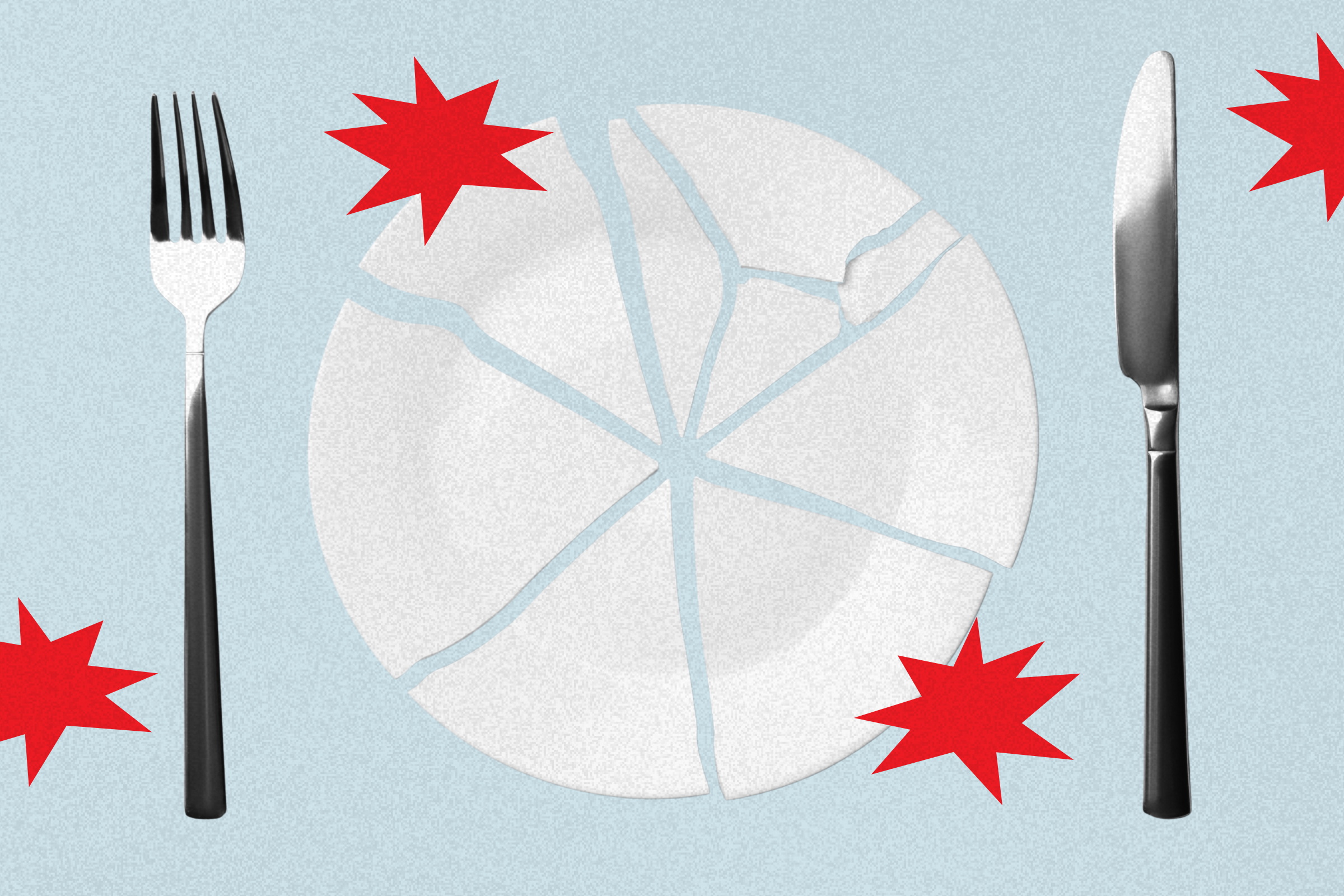
—Photo-Illustration by TIME (Source Image: Liudmila Chernetska—Getty Images)

At one of their first dinners together, Lindsey Hall watched the man she was dating take enormous bites, talk with his mouth full, and—horror of horrors—burp loudly without seeming to register it. The evening was supposed to feel romantic. Instead, Hall remembers thinking: “Have I made a mistake?”

She tried to dismiss his behavior as a minor incompatibility. But it continued, meal after meal, and gradually soured her feelings and attraction toward him. Table manners had never seemed like a priority until then. “I didn’t realize how important it was to me until I dated someone who just … doesn’t have it,” Hall says.

Terrible table manners might sound like a trivial complaint. But eating is one of the most routine things we do with other people, and a habit that inspires disgust three times a day can quickly become difficult to shrug off. The challenge is figuring out whether—and how—to address bad dining habits without making the person feel humiliated.

Here’s what psychologists and etiquette experts suggest.

First, consider whether the behavior is actually rude

Table manners can feel like universal rules, but they’re shaped by culture, family, and upbringing. “We talk about them as though they’re laws of physics,” says Gwenhwyfar Dunne-Henry, a psychologist in Dubai and author of Unbind Me: How to Break the Rules That Keep You Small. “They’re not. They’re social agreements.”

Before correcting someone, think about whether they’re being inconsiderate or simply behaving differently from the way you were taught. Slurping noodles, eating with your hands, and keeping your elbows on the table, for example, can carry different meanings depending on where and how someone grew up.

That doesn’t mean you have to enjoy every habit you encounter. Talking while chewing, spraying food, or sharing utensils while sick can interfere with other people’s comfort or hygiene, says Virginia Chow, a clinical psychologist in Montreal. The point is to understand exactly what’s bothering you—and avoid turning a difference in upbringing into a judgment about someone’s character.

That’s especially important because people rarely react only to the offending behavior. “We argue about what we think it means,” Dunne-Henry says. Someone chews with their mouth open, and you might start thinking they’re selfish, oblivious, or disrespectful. “If they don’t notice this,” she says, “what else don’t they notice?”

Sometimes the habit also becomes a symbol of every other irritation in the relationship. Perhaps the person also interrupts you, leaves messes behind, and routinely takes the last helping without asking. Suddenly, as Dunne-Henry puts it, “the bread roll is carrying a lot of emotional responsibility.”

Hall experienced that escalation firsthand. Once her former partner’s table manners began bothering her, she started noticing every other habit that irritated her. “I think you just start becoming hypercritical,” she says—a reaction she disliked in herself. 

Decide whether it’s your place to say something

Correcting another adult’s table manners is inherently awkward, so Stayce Wagner, a business-etiquette consultant in Jacksonville, Fla., recommends letting an isolated lapse go. Everyone occasionally speaks before swallowing or reaches all the way across the table for something. A repeated habit is different—but even then, your relationship with the person matters most.

A partner or child is one thing. A close relative or trusted friend might also appreciate knowing, particularly if you have the kind of relationship in which you would alert each other to spinach in your teeth. But correcting an acquaintance, coworker, or stranger is rarely worth the embarrassment it could cause.

“Correcting the terrible table manners of someone who isn’t your partner—or your child—is social and relationship dynamite,” Wagner says. Most people ultimately decide whether they can tolerate the habit, find a way around it, or stop sharing meals with the person.

Chow suggests asking yourself whether the behavior is truly affecting you or merely annoying you. “Not every annoyance requires a conversation,” she says. With a stranger, speaking up generally only makes sense when there’s a legitimate health or safety concern—someone who is visibly sick using a shared serving utensil, for example. In that case, focus on solving the immediate problem rather than critiquing their manners: “Would you mind using a clean serving spoon? I’d really appreciate it.”

Bring it up away from the table

If you do decide to say something, resist correcting the person in the moment—particularly if other people are present. “It’s a soul-crushing experience for most people to have their manners corrected in public,” Wagner says.

Instead, choose a private, neutral moment when neither of you is eating. Ask permission to broach an uncomfortable subject, and then describe one specific behavior. Avoid sweeping declarations like “Your table manners are disgusting” or “You eat like an animal.” Those statements turn a changeable habit into an indictment of the entire person.

Chow suggests phrasing it like this: “Can I mention something a little awkward? I don’t know if you’ve noticed, but sometimes when you’re talking while eating, a bit of food comes out. I figured you’d probably want to know because I’d want someone to tell me.”

That wording assumes the person isn’t doing it intentionally and gives them a face-saving reason to hear you out: You’re sharing information they might want to have, not delivering a verdict on their upbringing.

When the habit is directly affecting your ability to enjoy meals together, Wagner recommends being honest about it—without describing the person as repulsive. Try: “I know you don’t realize it, but sometimes you talk with food in your mouth, and I find it affects my ability to enjoy the meal. Would you be open to me pointing it out when it happens?”

The distinction is small but important: You’re explaining how the behavior affects you, rather than insisting that your standards are objectively correct.

Hall says she wishes she had been that straightforward. At first, she tried making jokes or telling her partner that she couldn’t understand him while his mouth was full—an approach she now suspects sounded passive-aggressive. “I wish I had been a little bit more direct about how much it was affecting my attraction,” she says. 

Agree on how you’ll handle it next time

Table manners are habits, which means one conversation probably won’t make a lifelong behavior disappear. If the person is receptive, ask how they’d like you to alert them if it happens again. You might agree on a word, gesture, or subtle signal that won’t embarrass them in front of other people.

In less intimate relationships, Wagner recommends finding subtle, polite ways to avoid encouraging the behavior. If someone begins answering a question immediately after taking a bite, for example, you could say: “Take your time and enjoy your food—I can wait.”

What’s unlikely to help, meanwhile, is glaring, recoiling, kicking someone under the table, or making snide remarks. “Jokes, sarcasm, public corrections, or visibly expressing disgust probably won’t change the behavior in the long run,” Wagner says. “But it will damage the relationship.”

Even the most tactful conversation might embarrass the person; there’s no magic phrase that makes criticism delightful to receive. “The goal is to not intentionally embarrass or insult them,” Wagner says.

Know when to adapt instead

Sometimes the kindest and easiest choice is to work around the behavior. Wagner has encountered friends and colleagues who double-dipped, for example, but she never corrected them. She simply ordered her own appetizer or transferred what she wanted to a separate plate before they began eating. The behavior bothered her, but she decided the relationships mattered more.

That calculus changes when the offender is a partner and the habit makes you dread eating together. If you’ve raised the issue respectfully and the person repeatedly dismisses your discomfort, the problem may no longer be their chewing. It may be that you don’t feel heard or considered—and that’s a larger conversation.

That, Hall says, was ultimately the problem in her relationship. Her partner didn’t merely struggle to change an ingrained habit; he dismissed her concern as evidence that she was too demanding. “He didn’t really value how I felt about it,” she says.

Etiquette, after all, isn’t really about mastering a complicated rulebook. Instead of tallying another person’s violations, Dunne-Henry suggests asking yourself a simpler question: “How easy am I to share a meal with?” That standard applies to everyone at the table. It means extending some grace when another person’s habits annoy you—and caring enough to listen when someone you love tells you that one of yours is making meals difficult. 

  •  

Promising Results for mRNA Cancer Vaccine from Moderna and Merck

Moderna headquarters in Cambridge, Mass. —Boston Globe / Contributor—Getty Images

Cancer treatments have been veering toward more personalized approaches that recruit the immune system, and the latest results involving an mRNA-based therapy and an immunotherapy show that combining them may result in significant benefit for certain cancer patients.

In a release, the two companies report that people with melanoma who received intismeran, jointly developed by Moderna and Merck, and Merck’s pembrolizumab (Keytruda), lived longer without any recurrence of their cancer, as well as had fewer incidences of their cancer spreading, compared to those receiving Keytruda alone, which is the current standard treatment. Combining the two therapies seems to lead to better outcomes in this later-stage trial. Intismeran is not yet approved, while Keytruda was first approved to treat melanoma in 2014, and in 2019 to treat melanoma in people after tumors were removed. The current study included people in this latter group with stage 2 to stage 4 melanoma who were treated with either intismeran and Keytruda or Keytruda alone after surgeons removed the bulk of their tumors.

“What we’re trying to do here is to tell the immune system that it missed the signature of the tumor cell if you have cancer,” Moderna CEO Stephane Bancel tells TIME of intismeran. “This product basically allows us to teach the immune system about the mutation in your cancer that allows the cancer to grow.”

The study involved 1,137 people with stage 2 to stage 4 melanoma who received surgery then were randomly assigned to receive either the combination of therapies or Keytruda for just over a year. Intismeran is the first of its kind autogene therapy that relies on studying a patient’s cancer mutations, making mRNA sequences of those mutations and giving them back to the patient in so their immune systems can recognize the tumor signals in the same way it would a virus—in what's known as a therapeutic vaccine. One of the advantages of the mRNA platform is its ability to generate such genetic sequences relatively quickly, in a matter of weeks, which is essential for scaling up more personalized cancer treatment approaches. Keytruda works by unveiling the cancer cells, which can often hide from the immune system since they start out as normal cells before picking up mutations that make them grow out of control.

The companies did not provide specific details about the recurrence or survival rates, but earlier this year reported at ASCO, a major cancer conference, from an earlier stage study that showed that the combination lowered the risk of recurring melanoma by 49% and lowered the risk of distant spread of the cancer or death by 59%.

The latest results bring some good news to Moderna, which has seen its stock drop after reaching highs during the COVID pandemic following development of the first mRNA vaccine, against SARS-CoV-2. In 2025, Bancel laid off 10% of the workforce, amounting to 500 to 800 employees worldwide, after a combination of sagging sales from the COVID shot and loss of important government contracts to develop pandemic flu vaccines based on mRNA technology. In August, the U.S. Food and Drug Administration (FDA) approved the first mRNA flu shot, developed by Moderna, but only after initially refusing to review the company’s submission.

Bancel says that Moderna is also exploring using intismeran alone, perhaps in earlier stage cancers. For the current trial, because intismeran is still an experimental therapy under study, and an approved therapy, Keytruda, does exist for melanoma patients, regulators at the FDA were more comfortable with combining the drugs so every patient received at least the standard of care and therefore would not be additionally harmed by joining the study. “It would be unethical for us to tell people to come on a study of something that we don’t know if it works, when people are fighting for their lives,” he says. “That’s why we did the study together with Keytruda, which can improve outcomes, and we tried to show that the combination was better, and we did.”

Bancel’s teams are already studying intismeran in stage 1 lung cancer, to see if using it earlier, and priming the immune system, can lead to equally beneficial outcomes for those people. In lung cancer, standard treatment involves surgery and careful monitoring for any signs of returning cancer, so doctors can ethically study how adding intismeran for some patients affects their cancer outcomes compared to those not receiving it. While that study is still in early stages, Bancel is optimistic since “from a scientific standpoint there is no scientific sense that it would work in melanoma and not work in another tumor type,” he says of the mRNA-based approach. “I think it will be transformational. Think about if you get a screening X-ray and find stage 1 lung cancer. Then you get intismeran, which is like a vaccine so you have no severe toxicity like with other immunotherapy. Think about getting this product on your way to work, or even [potentially] at your local pharmacy—that would be an incredible change in care. And it can help reduce the risk of metastasis, and have a profound impact on patients, as well as prevent people from getting very severe disease.”

Moderna is also studying intismeran in stage 3 lung cancer, and hoping to see similarly encouraging results as they did in melanoma patients. And its scientists are studying the compound in kidney, pancreas, and bladder cancers in nine ongoing studies, says Bancel.

“Because of all the things we learned over the years in the field of immunology, we believe this molecule will be used in many different cancer types,” he says.

Correction, Aug. 19

The original version of the story misstated which companies developed intismeran. It was jointly developed by Moderna and Merck, not solely by Moderna.

  •  

Cuba has plenty of doctors. So why is its healthcare system collapsing?

A child lies in a hospital bed next to their caregiver at a pediatric hospital in Pinar del Rio, Cuba.
After months of fuel and water shortages, Cubans are facing a dire public health crisis. | Yamile Lage/AFP via Getty Images

Since January, many Cubans have lived a life of near-constant darkness. The Trump administration’s oil blockades have led the country into a worsening energy crisis, collapsing what was already an eroding national power grid. 

Daily blackouts have plunged the Cuban nationalized, universal health system, once the pride of the country, into a humanitarian crisis. For months, hospitals have been without necessary power and ambulances strapped for fuel. Piles of trash line the streets, increasing the risk of disease. Cold storage issues threaten lifesaving vaccines, and a combination of the frail economy and US sanctions has left pharmacy shelves almost empty. 

The public health crisis exposes an often overlooked aspect of the way we tend to think about the promise of universal healthcare. Having accessible and free medical services is only one part of the solution. While Cuba’s once-vaunted health system is bound up in its own history and national context, it still demonstrates that public health of all kinds can only be as resilient as the electricity, water, transportation, refrigeration, supply chains, and institutions that enable it. 

An old prototype for universal healthcare 

Not long ago, Cuba’s health system was seen as a promising model for successful free universal healthcare. In the years following Fidel Castro’s rise to power, health authorities focused on the integration of healthcare delivery models into a single public system. The Castro government aimed to expand services once concentrated in Havana into rural areas, such that the entire population would have access to basic care services. In 1974, the government launched community-based polyclinics that placed primary care specialists in almost every Cuban community. 

This story was first featured in the Future Perfect newsletter.

Sign up here to explore the big, complicated problems the world faces and the most efficient ways to solve them.

Over the decades that followed, that widened access to healthcare led to significant, measurable returns. Infant mortality in the country has dropped from 37 per 1,000 live births right after the revolution to seven per 1,000 live births in 2024. Infectious and parasitic disease mortality also improved, dropping from a rate of 45.4 per 100,000 inhabitants in 1970 to 9.8 per 100,000 inhabitants in 2019, according to data reported by the Cuban Public Health Ministry. 

It’s not entirely surprising that the successful Cuban national health model has been the site of curiosity and enthusiastic scrutiny in American health equity circles, despite vast differences in state ideologies. The US has never ensured that every citizen has affordable access to healthcare, and large disparities persist in low-income and rural populations. The chokehold of private insurance has ensured that, unlike nearly every other country in the world, the US has largely rejected the prospect of universal care. Even historic gains in insurance coverage have faced rollback threats under the One Big Beautiful Bill. 

On certain key metrics, the US also falls far behind Cuba, which boasted 9.5 physicians to 1,000 people in 2021. That same year, the US reported just 3.7 physicians to every 1,000 people. The 2019 measles epidemic demonstrated a gap in childhood vaccination rates as well: 92 percent of children ages 13 to 17 in the US received two doses or more of the measles, mumps, and rubella vaccine. In Cuba, the childhood completion rates were well over 99 percent, and the country has not seen a measles outbreak since 1993. 

From its early years, the Cuban health system has functioned against a background of economic decline particular to the country, one attributable to a complex combination of external pressures, among them US blockades, a complicated economic reliance on Venezuela, a struggling state-run economy, and a flailing industry heavily impacted by the Covid-19 pandemic. 

While other sectors faced attrition, Cuba’s health system, at least, appeared capable of weathering these crises. During the pandemic, the country proved to be a model in global health, having developed a homegrown Covid-19 vaccine rapidly and reaching a 95 percent vaccination rate. Its robust supply of trained health professionals made headlines when Cuban healthcare workers provided essential pandemic aid to a small town in Italy.

 So why has this system proved to be so fragile now? 

New blockades deal the final blow after Hurricane Melissa 

Torrents of rain and flooding from the Category 3 Hurricane Melissa hit Cuba in October of last year, affecting much of the island’s eastern provinces. More than 735,000 people were evacuated, and the environmental disaster has put the country’s basic health infrastructure in a precarious state. 

In the storm’s wake, a combination of flooding and damaged water systems increased the spread of viral infections of arboviral diseases such as dengue and oropouche. A report by the Pan American Health Organization published in March placed water, food, and vector-borne diseases in the “very high” health risk categories. Apart from damaged water and sanitation infrastructure, the report describes how disruptions to health service access, routine surveillance of disease vectors, and environmental conditions that breed mosquito-borne disease outbreaks have dramatically increased the risk of infectious disease spread. 

Hurricane Melissa arrived during a recovery period from earlier storms, such as Hurricane Rafael in late 2024, as well as sporadic earthquakes in recent years. These natural disasters also heavily damaged health facilities, leading to collapsed roofing, damaged roads and cables, and the loss of supplies and equipment. 

For years, Cuba’s economy was propped up in large part by its relationship with Venezuela. In exchange for support from Cuba’s highly trained professionals — especially healthcare workers — Venezuela long provided a critical supply of crude oil, which helped the country keep the lights on even in the face of US sanctions. 

That partnership ended in January after the nighttime capture of former Venezuelan President Nicolás Maduro, and the sweeping Trump oil blockade soon after has dealt a challenge too difficult for the energy infrastructure to withstand. 

Already struggling to recover from other disasters, Cuba plunged further into its present crisis. Mario Cruz Peñate, Pan American Health Organization representative for Cuba, said that while the public health situation has been evolving for a while, he has seen more acute upheavals as sanctions persist, causing mass blackouts that have made it impossible to sustain vital health services and emergency care.

Disease control continues to struggle post-Melissa, with aid organizations worrying about communicable food- and water-borne diseases, such as hepatitis A and diarrhea, that can be caused by unrefrigerated food. On the administrative level, limited transportation resources and electricity have led to a dearth of vaccine supplies, which typically require cold rooms for transfer and storage. 

Continuity of care, in particular, has been affected for the worse. More than 100,000 elective and reconstructive surgeries have been postponed, for example, because of a lack of supplies and a backlog of emergency surgeries. At a briefing in May, representatives of the UN Office for the Coordination of Humanitarian Affairs and the World Health Organization reported that over 32,000 pregnant women faced limited access to diagnostics and limited amounts of the stable electricity needed to sustain neonatal units. Prenatal care faces delays because of the lack of everything from testing supplies to available facilities. And now, even once successful improvements in health indicators have fallen: a report from the Center for Economic and Policy Research measured an increase in infant mortality rates from 4.0 to 9.9 per 1,000 births between 2018 and 2025. 

For humanitarian aid organizations, alleviating this health crisis also poses a stark challenge. Cruz Peñate ascribes this to availability, timing, and opportunity to distribute aid supplies, all of which have been made inconsistent by the ongoing blockade. 

“The response to the situation in Cuba has to increase; we have to scale up the response. All the support we can manage to receive will be important,” Cruz Peñate said. “Here in Cuba there is really a situation that needs attention.”

Is Cuba now an outdated prototype for universal healthcare? 

While Cuba’s healthcare system was never bound to map precisely onto the US, some of its most notable successes — the high physician-to-patient ratio, the almost entirely vaccinated population, the ample health screenings — still remain desirable. And yet those very accomplishments have crumbled under the threat of extreme weather events and the country’s inability to restore its broken power grid.  

Trump targeted even more petroleum suppliers in his latest round of sanctions on July 23, leaving Cuba scrambling still further to revitalize its energy sector. Those same sanctions also took aim at the Cuban healthcare export economy, alleging that it involves forced labor. 

Earlier this month, Cuba’s government loosened constraints on a handful of private operations, including pharmaceuticals and elder-care facilities, in response to the shortage of medicine in the country.  With state-stocked shelves running empty, the new decree allows private pharmacies with Cuban health registration to fill in the medicine gap. Similarly, privatized elder facilities are also allowed to operate at a capped rate of 60 people per home, with mandatory visits from state physicians. 

The government still prohibits private sector medical and dental care, and Cuban officials remain adamant that the “socialist state enterprise keeps its central role,” so it’s difficult to claim that the country’s medical model is being pressured towards privatization. But the erosion of some of its elements still speaks to a state-run health system under strain. 

We often think of healthcare itself as an equation of medical services along with healthcare personnel and the authorities — government, industry, or both — that control it. But the crisis facing Cuba gets at the dependence of all of these factors on the broader energy ecosystem. Even a once-promising healthcare model can quickly collapse when a crucial component is missing: fuel.

A version of this story originally appeared in the Future Perfect newsletter. Sign up here!

  •  

How to Recover From an Embarrassing Faux Pas

—Photo-Illustration by TIME (Source Image: monkeybusinessimages/Getty Images)

Lizzie Post still remembers the time she walked into a party and an acquaintance greeted her with exciting news: “You had a baby!”

“Nope,” Post said.

“You got engaged!”

Nope again.

“You got married!”

“I’m going to the bar,” Post replied.

Post, co-president of the Emily Post Institute and Emily Post’s great-great-granddaughter, knew the woman meant well. She had apparently heard that something momentous had happened—it hadn’t—and cycled through three incorrect milestones trying to identify it. Fortunately, she eventually stopped guessing: a relief for everyone involved.

Life is full of faux pas, but even when you’re the one making it, you can dig your way out of social quicksand most of the time. Here’s what psychologists and etiquette experts suggest saying, plus when to stop talking.

First, take your foot out of your mouth

Your immediate reaction after saying something you regret might be to turn fire-truck red. Then comes the urge to reach for the very thing that got you into trouble in the first place: more words. People often try to explain, defend, or excuse their misfired remark, says Karina Schumann, a social psychologist and associate professor at the University of Pittsburgh who studies apologies and conflict resolution. The instinct is self-protective: They’re frantically trying to repair their image in the other person’s eyes.

“What actual repair looks like is to shift the attention to the other person,” Schumann says. “Put aside this very strong need that you have to repair your self-image, and instead think: ‘If I were on the receiving end of this, what would I need to hear?’” 

Pause, acknowledge the impact of what you said, and take responsibility. She suggests phrasing it like this: “I’m sorry. I shouldn’t have assumed.” Or: “I can see that my joke was insensitive. I apologize.” 

Then take a breath. More words will still be available later, should the situation require them.

Match the apology to the offense

A minor blunder and a painful faux pas shouldn’t trigger matching productions of remorse. Forget an acquaintance’s name? A quick “I’m sorry—please remind me” may be enough. Ask when someone is due when she isn’t pregnant, or make a joke that accidentally lands on a painful subject? That calls for a direct acknowledgment of the harm, without trying to laugh it off, and perhaps a longer conversation if the other person wants one.

The person responsible isn’t always the best judge of what it will take to repair the situation. Schumann points to a phenomenon researchers call the “magnitude gap”: People who cause harm tend to view it as less severe and less damaging to the relationship than the people on the receiving end do. The offender may think, I apologized; this should be over. The other person may still be wondering how the offender could fail to understand how much it hurt. 

Don’t turn an apology into an autobiography

An apology doesn’t require an origin story, a director’s commentary, or a guided tour of everything happening inside the offender’s head.

“Blame is like a hot potato,” says Jennifer Thomas, a psychologist and co-author of The 5 Apology Languages: The Secret to Healthy Relationships. Defensive responses—including “I was only joking,” “I didn’t mean it that way,” and “Why did you take it so personally?”—toss it back to the injured person. They minimize the harm, gloss over the offender’s intentions, or suggest the other person is simply too sensitive. 

An explanation can sometimes make what happened easier to understand, Schumann says, but it has to provide context without weakening responsibility. Lead with: “I shouldn’t have done that. There’s no excuse for it.” Then ask whether an explanation would be helpful.

A digital faux pas calls for the same restraint. If you send a text to the wrong person with information you wouldn’t have divulged to them otherwise, Post suggests writing: “I’m so sorry. Clearly that text wasn’t meant for you—and I probably shouldn’t have been sending it anyway.” Then leave it at that.

Resist the apology encore

For a minor, accidental blunder—maybe you stuck your toe in your mouth instead of your whole foot—one sincere apology is generally enough. “The more you apologize, the more it’s about you,” Post says. That means no apology cookies, no anguished message the following morning, and no campaign to extract an official declaration that everything is fine.

Serious harm is different. Schumann cautions against treating every apology as a “one-shot thing,” as though finding the perfect words should settle the matter. The other person may need a longer conversation, an effort to make amends, or simply more time.

“The timing of any forgiveness should stay wholly in the hands of the person who was hurt,” Thomas says. An apology offers them a choice, not a deadline.

What if you don’t realize you made a faux pas until hours or days later? It’s usually better to address it than hope the other person forgot, therapist Elika Dadsetan-Foley says. Try: “I’ve been thinking about what I said yesterday. I realize it may have been insulting, and I’m sorry I didn’t recognize that in the moment.”

The next time you meet, act normal

The next time you run into the neighbor you assumed was sick but who had merely gone makeup-free, or the acquaintance who received a text that was definitely not meant for them, offer a friendly greeting. Avoiding the person can make one uncomfortable exchange feel like a permanent rupture; bringing it up again can give a dying embarrassment fresh oxygen.

Keep the story to yourself, rather than retelling it as evidence of what a hopeless fool you are. “You may think that’s you throwing yourself under the bus, but you’re dragging the other person with you,” Post says. Your self-deprecation may get a laugh, but it also makes the other person’s embarrassment public.

Fortunately, most faux pas don’t require a lifelong of self-flagellation. If you’ve apologized sincerely and the other person seems ready to move on, follow their lead. “We all get stuff wrong from time to time,” Post says. Sometimes recovering gracefully means making amends. Other times, it means saying sorry—and letting everyone get on with the party.

  •  
❌