❌

Reading view

How Europe Is Defying Trump by Rallying Around the ICC
U.S. President Donald Trump takes a meeting at Turnberry, south west Scotland, on July 27, 2025. —Brendan Smialowski—Getty Images

As the Trump Administration forges ahead with its campaign to dismantle the International Criminal Court (ICC) “brick by brick,” Europe is publicly showing a steady stream of support for the institution.

The E.U. last week awarded the court and its officials the Sakharov human rights prize, commending “the important work ​of the court in upholding international law and justice.” The prestigious recognition came after former ICC judge Navanethem 'Navi' Pillay on Oct. 9 was awarded the 2026 Nobel Peace Prize—an honor long coveted by President Donald Trump. Jørgen Watne Frydnes, chair of the Norwegian Nobel Committee, acknowledged the award was intended to send a “message to those who are attacking, undermin[ing]... the international rules-based system.” Hours after Pillay’s win, U.S. Secretary of State Marco Rubio announced sweeping new sanctions against the ICC. While previous U.S. sanctions had targeted the institution's prosecutors and judges, the new measures were aimed at “cutting off [the court’s] resources” by severing U.S. transactions with the court.

Experts warn that the sanctions could have “extremely disruptive” implications for the court, especially in regards to financial support for case work, travel to the U.S. for judges, and the core functions of the institution itself. “Leaving the political dimension to one side, the rule of law and the just resolution of disputes depends, to a large extent, on the body in question having all available evidence,” says Nabil Khabirpour, an affiliated lecturer in E.U. law and jurisprudence at Cambridge University. “Organizations that are involved in working with witnesses, both on the ground and within the legal infrastructure, are likely to be affected.”

The latest sanctions, which were announced with a six-month initial grace period, are part of a broader push by the Trump Administration to dismantle the institution it accuses of unfairly targeting the U.S. and Israel. The Trump Administration has staunchly criticized the ICC over arrest warrants issued for Israeli leaders, including ​Prime Minister Benjamin Netanyahu, and former investigations into the actions of American soldiers in Afghanistan. The ICC is recognized as the world’s highest criminal court. It draws its jurisdiction from the Rome Statute, a treaty that went into effect in 2002 and is ratified by 125 countries. Neither the U.S. nor Israel is a state party to the Rome Statute, and therefore they do not recognize the jurisdiction of the court.

Trump has long complained that the ICC oversteps its authority and should not claim jurisdiction over U.S. citizens. He amplified his campaign against the organization at the United Nations General Assembly in New York last month, taking time out of his 45-minute speech to publicly call on “all nations that are members of the ICC to officially resign from this rogue institution, immediately.” He said the U.S. is “opposed to the out-of-control institution known as the ICC” and “will never allow U.S. service members or anyone else to be investigated or given show trials by an anti-American tribunal with no jurisdiction over us.”

His call to action was swiftly rejected by European leaders.

German Foreign Minister Johann Wadephul, shortly after the speech, said: "We will, of course, not be doing that." In an interview with Germany's Deutschlandfunk radio station, he described the court as "an important institution” and said the issue is "one of the areas where we do indeed have to acknowledge a regrettable difference in policy from the U.S. Administration."

Netherlands Prime Minister Rob Jetten also defended the ICC, asking how can anyone “possibly be opposed to prosecuting the very worst crimes?”

“​I ⁠believe there can be only one response,” he continued, in his own U.N. address. “To say: 'hands off' the ICC, and all those other institutions that protect the international legal order.” The remarks drew loud applause from attending delegates.

Similarly, European Council president Antonio Costa stressed that the E.U. stands “firmly behind” the ICC and argued it’s “unacceptable to threaten or attack the International Criminal Court, its officials, and its staff.”

The European Union as an organization has since strongly criticized the U.S. sanctions against the ICC. In a speech on Oct. 20, E.U. policy chief Kaja Kallas said the most recent “misguided” measures were “against” European interests. 

“The U.S. has already adopted individual sanctions, including against nine judges and the chief prosecutor of the ICC. The latest U.S. announcement [on Oct. 9] to impose institutional sanctions puts the entire court at risk,” she argued, adding that Brussels will use the next six months "to open dialogue and look for solutions.” 

European lawmakers call for “concrete” action against U.S. sanctions

The European Commission’s choice to take time to consider how to counter the U.S. sanctions has fallen short of what many European lawmakers have called for.

Several leading MEPs, including Germany's David McAllister, chair of the Committee on Foreign Affairs, and France's Mounir Satouri, chair of the Subcommittee on Human Rights, issued a public statement on Oct. 9 calling for the Commission to activate a legislative shield referred to as the “blocking statute,” which would essentially prevent E.U. firms from complying with U.S. sanctions.

“The European Union must now demonstrate unwavering solidarity with the ICC and its personnel—not only with words, but also with concrete acts,” the leading Members of the European Parliament (MEPs) said in a joint statement. “The European Commission must immediately trigger the E.U. blocking statute, shielding the court and European actors from the extraterritorial reach of these sanctions. Europe must stand firm in defence of international law and the rule of law."

This request was bolstered as 58 MEPs reportedly sent a letter to European Commission president Ursula von der Leyen for the Commission to activate the measure.

According to the Commission, the purpose of the European Union’s blocking statute is to “protect E.U. operators from the extra-territorial application of third country laws.” The blocking statute came into force in 1996 in direct response to the U.S. sanctions against Cuba. The aim of the measure was to protect economic operators within the E.U. from the effects of such extraterritorial sanctions, according to the Norton Rose Fulbright law firm. As such, the blocking statute shields European economic operators from the application of the U.S. legislation and sanctions specified in the Annex to the E.U. blocking statute. More recently, the E.U.'s updated blocking statute entered into force in response to U.S. sanctions on Iran after the U.S. withdrew from the nuclear agreement in 2018. 

Kallas has expressed an openness to the measure, but also advised caution when delivering her statement on European support for the ICC. “We should keep all options on the table. If we use the blocking statute, we have one shot and we should do it well. So, it should be well prepared," Kallas said, urging companies “not to over comply” with the sanctions, as they are not yet in effect.

ICC prosecutor Nazhat Shameem Khan told the Guardian last week that some ICC staff are already facing "banking difficulties," despite the grace period before the sanctions come into effect. Khan said the banks were “over complying” to minimize risk amid uncertainty over the scope of the measures. She said the court's work has not been hindered.

TIME has reached out to the ICC for comment.

If the E.U. were to activate the blocking statute, it would be a “very important gesture” that could show the Trump Administration how “Europe is serious about protecting the court and that it is prepared to take real steps in that direction,” says Sergey Vasiliev, a professor of international law at Open University Netherlands. But he warns that some may view it as a “very extreme or radical measure, that could perhaps anger the Trump Administration even more” at a time where U.S.-Europe relations are already strained.

Meanwhile, some ICC officials have suggested alternative measures in an effort to mitigate the expected impact of the U.S. sanctions. Osvaldo Zavala Giler, the court's registrar, told Politico that “comfort letters” could be sent out, reassuring firms that they needn’t comply with the U.S. measures.

But Vasiliev argues that this “will not necessarily solve the problem, because businesses are expecting clear assurances of protection… the only such assurance can be provided by the actual triggering of the blocking statute.”

Could the ICC row further escalate U.S.-Europe tensions?

Relations between Europe and the U.S. have been under increasing strain since Trump returned to office in January 2025.

Trump has introduced various waves of tariffs on international trading partners, and has threatened further levies on the E.U. and member states in response to divisive issues.

When Trump’s pursuit of acquiring Greenland as a U.S. territory reached a critical point in January, Trump threatened to tariff European countries that opposed his campaign—a move that earned him strong rebuke from within his own party.

Last month, when von der Leyen invited Canada to work toward becoming the European Union’s first “associate member,” in what she described as an “urgent” reimagining of partnerships, Trump again threatened economic pressure. He called the proposal “laughable” and threatened to “put very serious ​tariffs or stop trading with Europe on many things” if such an idea were to go ahead.

The Trump Administration has also clashed with its NATO allies. Earlier this year, Trump refused to rule out leaving the alliance over Greenland disputes, and since the start of the Iran war, the President has hit out at NATO countries for refusing to get actively involved in the conflict.

Should Brussels and Washington continue to clash on the ICC sanctions, “this could risk accelerating certain destabilizations, such as what we've seen with the trade wars,” says Khabirpour. International organizations will ultimately stand to suffer if the two remain at odds, he adds.

  •  

Spanish Train Crash Death Toll Rises to 69 as Rescuers Work to Identify Victims

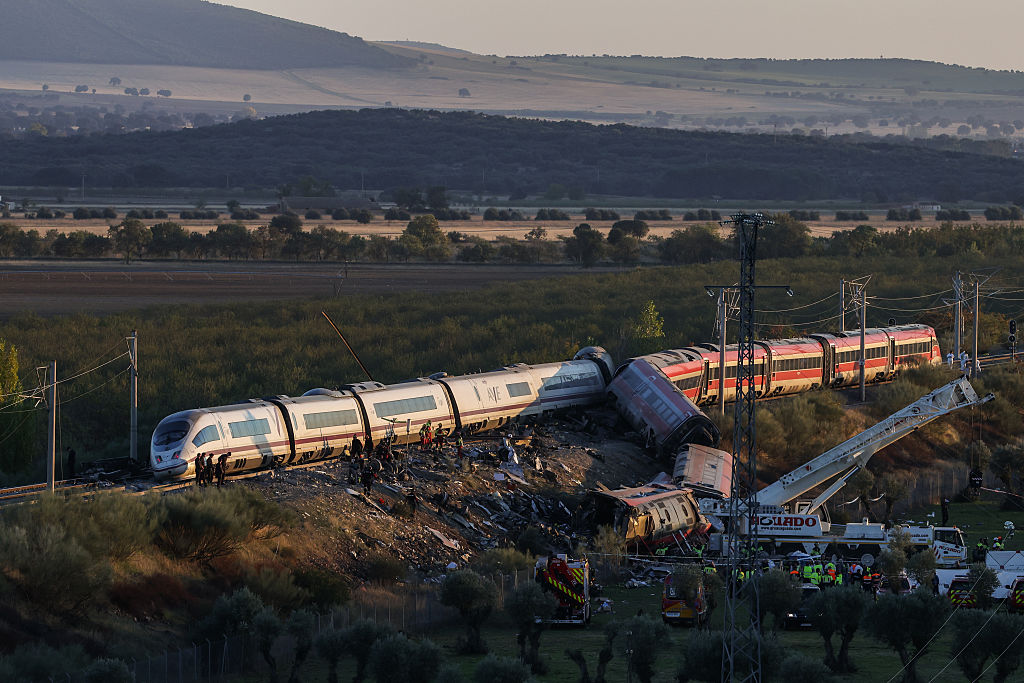
Emergency services at the scene of a train crash near Urda, Toledo, Spain, on Oct. 28, 2026. —Alejandro Martinez Velez—Europa Press/Getty Images

Spain's Transport Ministry has increased the provisional death toll from Wednesday's high-speed train collision to 69. The number of people injured is pending confirmation.

Police have appealed to family members of the crash victims to provide DNA sampling to help with the identification process. The Transport Ministry's website briefly raised the provisional death toll again to 74 late Thursday afternoon, before revising it back to 69.

Spanish Prime Minister Pedro Sánchez said that authorities are "working day and night, not only to provide a response to the victims and their families, but to clarify every last detail of this tragedy and to strengthen security so that it never happens again."

As the country's top institutions continue investigating the cause behind the collision, Transport Minister Óscar Puente has suggested that a combination of “inexplicable” human error and a computer failure was likely behind the tragedy, which occurred near Urda, Toledo, more than 80 miles south of Madrid.

Puente said in a press conference that the state-operated Renfe train slamming into the rear of a stationary private train operated by Iryo was due to an “inexplicable” order from a command center for Spain’s trains. Puente noted that the center had a computer malfunction before the order.

“It was the control center, through its operators, that made the decision to resume traffic, under circumstances that, from our point of view, are inexplicable,” Puente said. He added later: “Clearly, it was a wrong decision.”

Puente said that they have identified the person who decided to let the Renfe train continue moving even though the Iryo one had already stopped, but he has not spoken to the control center operator. “This person is subject to whatever the investigation determines,” Puente said in the press conference.

Renfe said train services between Madrid, Ciudad Real, and Andalusia have been suspended.

The Wednesday collision is now the deadliest train crash in the country since a 2013 incident in Santiago de Compostela that killed 80 people. But the latest collision follows a similarly deadly train crash in January, which involved high-speed trains operated by the same two companies. In that crash, which occurred in Adamuz, Córdoba, 46 people died and 122 sustained injuries. 

Sánchez, who visited the crash site, said his government would declare three days of mourning in response.

Despite the accident, Puente insisted that the Spanish rail system is “safe and comparable to that of other countries in our region.” However, while there are “very clear” regulations and protocols in place, he admitted, “failures can obviously occur.”

What happened?

The crashes involved a Renfe high-speed train bound for Seville with 393 people on board, and an Iryo train carrying 151 passengers. The Renfe train departed Madrid at 8:00 a.m. local time, while the Iryo train left a little earlier at 7:54 a.m., plying the same route.

Spain’s rail infrastructure uses the German LZB (Linienzugbeeinflussung) system, a railway safety technology that monitors train speeds and sends traffic instructions to the driver’s cab. Operations are meant to revert to manual control when the automated safety system fails.

Puente, in the press conference, said that at around 8:30 a.m., three computers on the railway network experienced a communication failure, taking the LZB control system offline along a 63 km (39 mi) stretch of the track. This automatically stopped about six trains traveling on that section, Puente said. The central command center would assume manual management of rail traffic.

By 8:36 a.m., the command center authorized the Renfe train to continue its journey “normally,” even though Puente says internal protocols dictate otherwise and that a “red signal” should have prevented the journey from resuming. The Renfe train had 25 km (15.5 mi) to travel before it struck the Iryo train, roughly 17 minutes later, at 8:53 a.m. The speed it reached before the impact is still unknown, but it could reach up to 200 km/h (124 mph) for that stretch of track.

What to know about Spanish high-speed rail

Spain is among the world leaders in investing in domestic high-speed rail infrastructure—defined as rails for trains that can travel 250 km/h (155 mph) and over, according to the European Commission’s Ninth Rail Market Monitoring report last year. The report shows that of European Union countries, Spain allocated the most to high-speed rail between 2018 and 2022, averaging €1.5 billion (around $1.67 billion) per year.

Latest data from the International Union of Railways shows that Spain has laid nearly 4,000 km (2,400 mi) of high-speed track, second only to China, which has laid more than 47,000 km (28,000 mi).

The European country only legally opened its domestic commercial high-speed passenger rail market to private competitors in December 2020, and Iryo became one of the commercial high-speed operators in Spain in 2022.

Spanish news outlet El Debate reported, citing data from the State Railway Safety Agency, that the number of “significant accidents” on the country’s rail network has increased over the years.

  •  

As Israelis Await Final Election Results, Netanyahu and Rival Face Tough Path to Power

Israel's Prime Minister Benjamin Netanyahu casts his ballot, alongside his wife Sara, at a polling station in Jerusalem on Oct. 27, 2026. —Yonatan Sindel—AP

Israel appears to be on the brink of a political deadlock, with neither Prime Minister Benjamin Netanyahu nor his main rival, former Israel Defense Forces chief of staff Gadi Eisenkot, projected to gain a parliamentary majority.

While partial results show that Netanyahu's Likud party has edged ahead slightly, if the embattled leader is to forge a path for another term, he will likely need to secure a coalition. Such alliances can take weeks or months to form, meaning the future leadership of Israel’s parliament, the Knesset, remains unclear.

As of Wednesday evening in Israel, authorities had counted more than 88% of ballots cast at polling stations across the country. Another set of ballots logged at special polling sites, including military bases, have yet to be counted. Authorities estimate that somewhere between 430,000 and 480,000 votes were cast in this way. As such, it could still take another day or two for the final election results to be released.

Israel's three leading broadcasters have projected that Netanyahu's bloc of right-wing parties is on course to win 53 seats in parliament, with the opposition ‌bloc of Eisenkot looking at 48. Both are short of the 61 seats required for a majority. Parties representing Arab Israelis are projected to secure 19 seats.

Once all the votes have been tallied, Netanyahu looks set to remain as caretaker while President Isaac Herzog holds consultations with all the political factions to determine the formation of the next government—a process that could take weeks.

"Next week, I will invite the representatives of the factions to consultations ahead of assigning the mandate to form the next government," Herzog said on Wednesday. "With the publication of the results, I ask one important thing from everyone who arrives—arrive with an open mind."

Both Netanyahu and Eisenkot have stated their own intentions to form the next coalition.

In a defiant speech made after the polls closed, Netanyahu called for a "strong, right-wing" government."

Eisenkot, in a social media update late Wednesday, said: "Long workdays still await us, but we are focused on the heavy task entrusted to us—bringing change to Israel and establishing a Zionist mobilization government."

While results remain inconclusive, Netanyahu’s longstanding ally, U.S. President Donald Trump, who gave a last-minute endorsement to the longest-serving Israeli premier, already appeared to take credit for Netanyahu’s election performance.

“You know, it's pretty close, which was very well,” Trump said when asked about it by reporters early Wednesday. “Because I think when the endorsement went out, it helped him a lot, but I actually heard he did pretty well. It might be winning or tie. The tie is sort of considered a win in that case because it’s a big chess match.”

As the vote count continues, here’s what to know about the pivotal election—and what comes next.

How Israel's election day unfolded

Israelis flocked to polling stations on Tuesday to decide Netanyahu’s political fate. The election was widely seen as a referendum on Netanyahu’s leadership and Israelis’ willingness to change course amid uncertainty.

It was the first election in the country since the Oct. 7, 2023 terrorist attacks by Palestinian militant group Hamas and the subsequent Israeli war in the Gaza Strip. Since then, Israel under Netanyahu has pursued an aggressive military campaign across the Middle East—going to war with Iran, backing settler attacks and displacement in the West Bank, and carrying out strikes against militant groups in Lebanon and Yemen

From 7 a.m. to 10 p.m. local time on Tuesday (1 a.m. to 4 p.m. EDT), Israelis were able to cast votes for representatives in the Knesset. Numbers from Israel's Central Elections ​Committee reflected a strong turnout, with 77.7% of eligible voters reported to have cast their ballots by 10 p.m., local time—the highest turnout logged since 1999.

Netanyahu was joined by his wife Sara as he cast his own ballot at a polling station in a Jerusalem school. “This is a very moving and fateful moment. My wife and I are truly overwhelmed,” Netanyahu told reporters after voting. “We know what is at stake, and since I am not allowed to say things explicitly, I will say: Vote correctly.”

Not long after, Netanyahu told his supporters that "buses are heading to the polling stations and huge lines are being reported in the Arab settlements." Complaining that "the right-wing strongholds are not waking up," he again urged people to go out and vote.

Netanyahu’s Likud party said in a statement that it had submitted a request to the Central Elections Committee to extend voting hours past 10 p.m. The committee later announced it would not be extending voting hours past the scheduled closing time.

Read More: Israel's Choice

Who is in the running?

Two main political blocs are contending to form Israel’s next government. The first is the pro-Netanyahu coalition led by Netanyahu’s Likud party. The coalition includes far-right and ultra-Orthodox parties, such as Otzma Yehudit (Jewish Power) led by national security minister Itamar Ben-Gvir and Religious Zionism-Zehut led by finance minister Bezalel Smotrich. Their ultranationalist policies have found an audience in younger right-wing Israelis.

On the other side are the Jewish-led opposition movements—with Eisenkot and the centrist Yashar (Straight) party at the forefront. Eisenkot, who entered politics in 2022, joined Netanyahu’s emergency war cabinet after the Oct. 7 attack on Israel. But after having lost a son in combat in Israel’s wars, Eisenkot left his post in 2024. Two of his nephews also died fighting in Gaza, a prominent campaign talking point.

The opposition also includes a joint ticket led by former Prime Minister Naftali Bennett and Knesset opposition leader Yair Lapid, the secular nationalist party Yisrael Beiteinu (Israel Our Home) led by former finance minister Avigdor Lieberman, and the Democrats led by former IDF deputy chief of staff Yair Golan.

The Democrats party on Tuesday said Golan had been “approached in a threatening manner” by a man who was found to be carrying a knife. The lawmaker was attending a voting-day mobilization tour in Tel Aviv's HaMesila Park at the time of the incident.

"Golan’s security guards blocked the man, and as they moved toward him, a large knife slipped from beneath his clothing and fell to the ground," the party said in a statement shared with the Guardian. "Police were called to the scene and arrested the suspect." Golan, in his own statement, vowed that "incitement and violence will not deter us" and encouraged people to go out and vote.

Meanwhile, some polls had suggested that Eisenkot’s Yashar party may garner slightly more support than Netanyahu’s Likud, but they also projected that neither the Prime Minister’s right-wing bloc nor the opposition were likely to win the 61 Knesset seats needed to form a government.

Including Arab parties such as United Arab List (Ra’am) and the Joint List, or fringe parties, could be necessary to form a government. Both pro-Netanyahu and anti-Netanyahu coalitions have so far ruled out teaming up with the Arab-led parties. Arab citizens of Israel make up about 20% of the population, though they receive fewer government services and endure higher poverty and unemployment rates. Discrimination and disappointment have historically depressed Arab-Israeli voter turnout. However, on Tuesday, there appeared to be strong turnout in some of Israel’s largest Arab-majority towns.

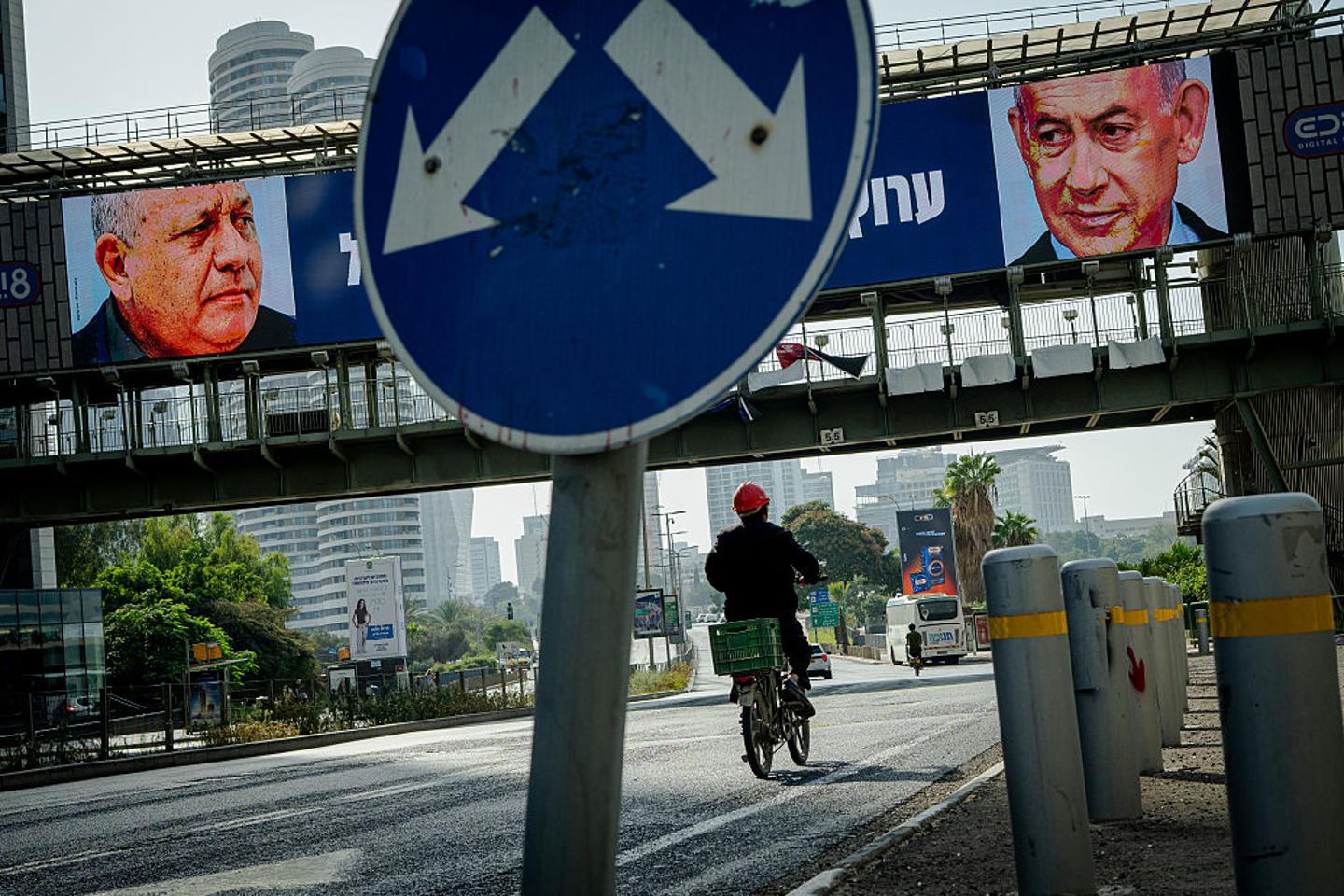
A cyclist rides beneath a pedestrian bridge displaying electronic election billboards showing former IDF chief of staff Gadi Eisenkot (L) and Prime Minister Benjamin Netanyahu (R) in Tel Aviv, Israel, on Oct. 23, 2026. —Erik Marmor—picture alliance/Getty Images

Netanyahu touts Trump endorsement

Netanyahu has brought attention to the support he received from Trump, who only announced his endorsement days before the election as conflict in the Middle East has tested their friendship.

In a late-night TV appearance on Oct. 25, Netanyahu boasted of Trump’s endorsement and said that Trump was willing to take action “that would finally, finally, remove the Iranian threat” so long as Netanyahu stayed in power. Netanyahu added that he has already instructed Israel’s national intelligence agency Mossad as well as the IDF to “bring down” the Iranian regime. Trump remains very popular in Israel.

By contrast, U.S. Vice President J.D. Vance declined to endorse Netanyahu for re-election, just a day after Trump put his “complete and total” support behind the Israeli leader.

“The President has the most effective endorsement in American, or international, political history,” said Vance, when asked in an interview if he would also be extending an endorsement of his own. “I endorse American candidates and that’s where I'm focused on, is the midterms, so I'm not getting involved in the Israeli elections.”

When pushed for an answer, Vance added: “I'm not anti-endorsing [Netanyahu], I'm not pro-endorsing him.”

A high-stakes election for Netanyahu

At stake for Netanyahu could be more than his continued leadership. The premier faces an international arrest warrant for alleged crimes related to the Israeli military campaign in Gaza. And even domestically, critics have demanded an inquiry into Netanyahu’s decision-making around Oct. 7. The attack, which resulted in over 1,200 people in Israel killed and around 250 hostages taken, is considered by many to be indicative of a major security failure.

The Gaza health ministry reports that since Oct. 7, 2023, more than 74,000 individuals have been killed. In the absence of independent monitoring on the ground, Gaza’s health ministry is the primary source for casualty data relied upon by humanitarian groups, journalists, and international bodies. Its figures do not differentiate between civilians and combatants and cannot be independently verified by TIME.

Another issue driving the election is public fury over ultra-Orthodox communities’ exemption from military conscription for men engaged in religious studies. Despite a shortage of soldiers, less than 10% of eligible ultra-Orthodox men enlist, amid demands from Netanyahu’s allies to exempt them. Eisenkot, Netanyahu’s main rival, has promised to end the de facto exemptions. 

Netanyahu’s repeated attempts to reform the judiciary have also factored into this election, with critics slamming his undermining of democratic institutions and connecting it to his legal interests. Netanyahu is in the middle of a yearslong corruption trial, which he and his allies—including Trump—have claimed is politically motivated. He sought, but didn’t receive, a presidential pardon from Herzog.

When will we know the results?

About 7.3 million Israeli citizens were eligible to vote on Tuesday. The election fills the Knesset’s 120 seats through proportional representation—which means parties, not personalities, are on these voters’ ballots. 

After polling stations closed at 10 p.m. (4 p.m. EDT), local media broadcasted initial exit polls. The final vote tally is expected by Oct. 30, with official results published on Nov. 4. 

But getting a clear picture of the Israeli government is likely to take longer.

No single party has ever claimed 61 seats to form a government, meaning Israel has always been governed by coalitions. What those coalitions may look like will depend on the election outcomes for smaller parties, which each need 3.25% of the votes to secure a seat in the Knesset.

Once the election winners are determined, President Herzog ⁠will refer to party leaders to choose a preferred Prime Minister and will ask the strongest candidate to form a government within 42 days. If a coalition cannot be formed after multiple attempts, the current Likud-led coalition government will continue to serve as caretaker before another round of elections is held in the coming months.

  •  

Vance Declines to Endorse Netanyahu for Re-Election, Breaking With Trump

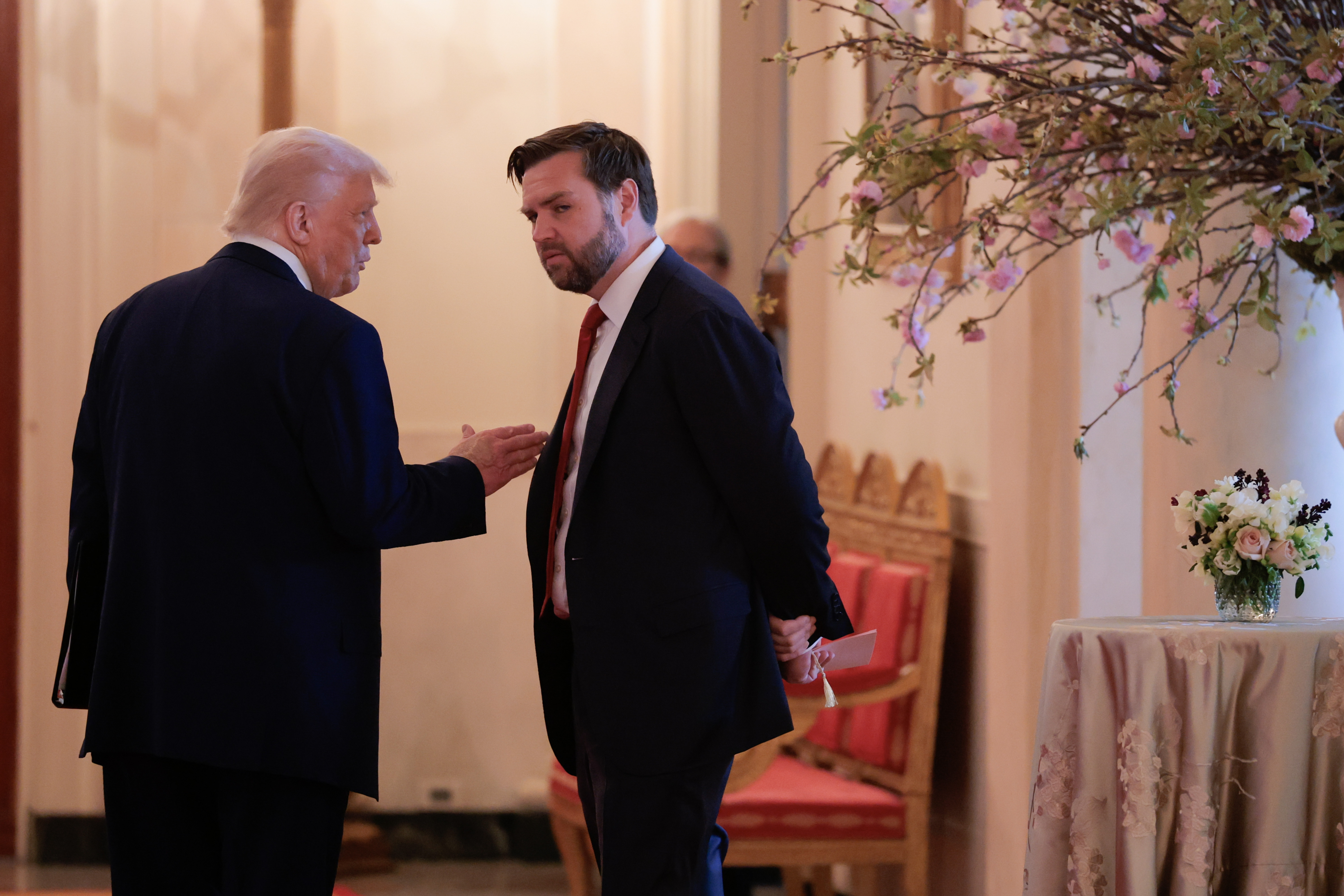
President Donald Trump and Vice President J.D. Vance speak together during an event at the White House on May 8, 2025. —Anna Moneymaker—Getty Images

Vice President J.D. Vance on Monday declined to endorse Israeli Prime Minister Benjamin Netanyahu for re-election, a day after President Donald Trump publicly backed the embattled leader.

“The President has the most effective endorsement in American, or international, political history,” said Vance, when asked in an interview if he would also be extending an endorsement ahead of the election on Oct. 27. “I endorse American candidates and that’s where I'm focused on, is the midterms, so I'm not getting involved in the Israeli elections.”

When pushed for an answer, Vance added: “I'm not anti-endorsing [Netanyahu], I'm not pro-endorsing him.”

Vance’s response stood in stark contrast to Trump's endorsement, as he put his “complete and total” support behind the Israeli leader, while praising his endurance as a “great warrior” Prime Minister. 

Referencing the Iran war, Trump said: “If Israel has the wrong leader, which would be anyone other than Bibi [Netanyahu], America will have to do this work ourselves, and I am not inclined to do so.” He went on to say that Netanyahu has been “strong, brave, and brilliant in the face of tremendous opposition, including that coming from even Israel” and “despite all of that, he has endured.”

Many are viewing the Israeli election as a referendum on Netanyahu, who has faced heavy criticism over his handling of the Hamas-led attack against Israel on Oct. 7, 2023. The subsequent Israel-Hamas war has led to a humanitarian crisis in Gaza. Netanyahu’s government has also been called to task over the reports of settler violence against Palestinian villages in the occupied West Bank.

Read More: How Oct. 7 Changed Israel

Ahead of the elections, Defense Secretary Pete Hegseth reportedly met with Netanyahu on Monday during an unannounced visit to Israel, Axios said, citing two sources with knowledge. 

The Pentagon declined to comment when contacted. TIME has also reached out to the Israeli embassy and Netanyahu’s office for comment.

Vance, meanwhile, has previously issued warnings to Israel regarding its relationship with the U.S. In June, he chastised members of Bibi’s cabinet who had voiced disapproval over Washington negotiating with Tehran to end the Iran war, which started in February with joint U.S. and Israeli strikes. 

“Donald J. Trump is the only head of state in the entire world who is sympathetic to the nation of Israel at this moment in time. And he happens to be the head of state of the world’s superpower,” Vance said as he led a White House press briefing. “If I was in the Cabinet of the Israeli government, I might not be attacking the only powerful ally that I have anywhere left in the entire world.”

While Vance has said his focus is on American candidates ahead of the U.S. midterms, he has previously campaigned avidly overseas.

Vance’s campaigning for international candidates

Vance traveled to Hungary in April ahead of parliamentary elections as the Trump Administration put its full support behind then-Prime Minister Viktor Orbán, who was up for re-election against opposition leader Péter Magyar. (Pro-European conservative Magyar went on to win the election, ending Orbán’s 16-year rule.)

“Together the President of the United States and the Prime Minister of Hungary have been able to do amazing things,” Vance told reporters at a press conference in Budapest. “We want to build upon those amazing things. And of course, I want to help as much as I possibly can, the Prime Minister, as he faces this election season.” Vance later delivered remarks at a rally for Orbán.

Vance also notably met with Alice Weidel, co-leader of the far-right Alternative for Germany (AfD) party, in February 2025, days before a German election.

During that trip, Vance spoke at the Munich Security Conference and used the platform to voice his concerns about Europe, claiming that free speech across the continent was “in retreat.”

He criticized what is known as the “firewall” approach in Germany—the agreement among other political parties that they will not work with the AfD. “Democracy rests on the sacred principle that the voice of the people matters. There is no room for firewalls,” he said.

President Trump’s complicated relationship with Netanyahu

Trump’s endorsement of Netanyahu comes after the pair have shared an, at times, contentious relationship in recent months.

Asked about possible endorsement last week, Trump told reporters “we haven’t even thought about it,” prompting many to wonder if he may stay silent ahead of the consequential Israeli election. 

Trump and Netanyahu have clashed, particularly over Israel’s war against the Hezbollah militant group in Lebanon. 

In June, Trump told reporters that Netanyahu has to be “more responsible with respect to Lebanon,” amid concerns the renewed fighting with Hezbollah could derail the U.S.-Iran peace agreement. (Which later collapsed in light of continued clashes over the Strait of Hormuz.)

“I'm not happy with the way Israel has handled themselves with Lebanon and with Hezbollah,” Trump told reporters at the G7 summit in France. “It just goes on forever,” he continued, seemingly referencing the exchanging of strikes between Israeli forces and the Hezbollah militant group. “When that happens, it throws a negative light on the big deal, the deal with Iran.”

Trump said he has an “unbelievable relationship” with Netanyahu, but claimed “Israel would have been blown up a long time ago, had I not gotten involved.”

Days before his public remarks, Trump reportedly called Netanyahu “f-cking crazy” during a fraught phone call after Netanyahu ordered an attack on a Hezbollah stronghold in Beirut in retaliation for alleged attacks on Israel by Hezbollah. 

  •  

Carney Warns U.S. Is Trying to ‘Break’ Canada as Trump Revives ‘51st State’ Threat

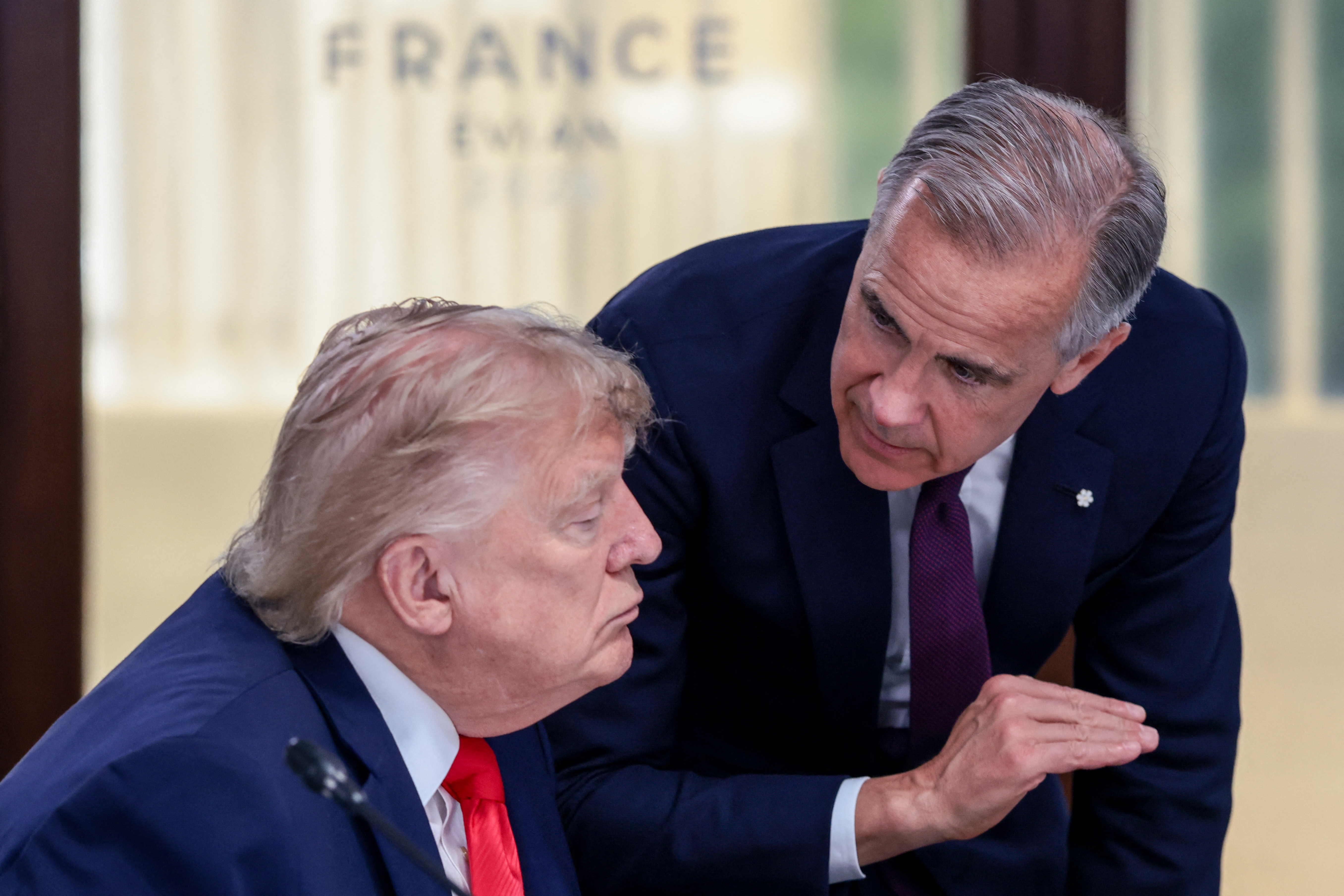
U.S. President Donald Trump and Canadian Prime Minister Mark Carney at the G7 summit, in Evian, France, on June 16, 2026. —Evelyn Hockstein—Getty Images

Canadian Prime Minister Mark Carney on Thursday warned that the United States is trying to sow discord as he urged Albertans not to vote for a separation referendum.

“The stakes are high. This referendum, it comes at the worst possible time. The world has become more dangerous and divided,” Carney said at a rally in Calgary ahead of Monday’s vote, which will see residents decide whether the oil-rich province should hold a referendum on independence. “There are some outside our borders who are working to break us, so they can own us.”

While Carney didn’t explicitly name the U.S., the remarks echoed his previous warnings of the dangers of American dominance. Carney's statement came a day after U.S. President Donald Trump revisited his ambitions to annex Canada, telling the crowd at a rally in Arizona that the country will “end up being the 51st state, because it's the only way it works.” Trump again accused Canada of treating the U.S. “very badly” and vowed he won’t allow it to happen anymore as “it’s a whole different ballgame now [that] Trump is in town.”

The U.S. and Canada remain in a contentious trade standoff after negotiations collapsed in August. Canada’s retaliatory tariffs came into effect last month, matching the economic pressure imposed by the U.S. Carney has encouraged Canadians to band together and take back their economic power by choosing Canadian products over those made in the U.S. The trade tussle comes after months of Trump repeatedly threatening Canada’s sovereignty—a move that has stoked tensions between the U.S. Administration and Canadian officials.

In light of Trump’s most recent remarks about possible annexation, Canada’s former deputy Prime Minister Chrystia Freeland said it would be dangerous to deepen or maintain close economic ties with a neighbor that “openly says they want to take you over.”

Carney admitted in an interview with the New York Times last month that he had studied the risk of a U.S. invasion, given Trump’s charged rhetoric. “I think you have a responsibility in these roles to look at extreme tail risk,” he said. “That’s just risk management. That’s not a base case, but it would be irresponsible not to [prepare].”

Amid the U.S.-Canada tensions, Carney is desperately trying to promote his “Canada Strong” strategy—one that he hopes will very much include Alberta. Polling conducted by 338Canada suggests that as of Oct. 11, 75% of Albertans would vote to remain part of Canada. But Carney’s resolve is being tested on more than one front, after the separatist Parti Québécois won Quebec's provincial election earlier this month. Incoming Premier Paul St-Pierre Plamondon has already stated his intention to hold a referendum on Quebec independence. While he has vowed not to initiate a vote so long as Trump is in office, the looming presence of a separatist movement undoubtedly complicates matters for Carney at a time when he is striving to show that Canada is strong enough to prosper without relying on the American market.

With the U.S. and Canada locked in a trade stalemate, and with annexation threats once again dominating the conversation, here’s a look at the reality Carney is facing as he deals with both domestic and international pressures.

Trump's remarks complicate Carney’s unity efforts

Trump’s accusations that Canada has taken advantage of the U.S. on matters of trade and security date back to before Carney became Prime Minister in March 2025, meaning the friction we’re currently seeing goes deeper than a simple clash between Trump and Carney. Trump would often refer to Carney's predecessor Justin Trudeau as the "governor" of the "great state of Canada."

In terms of any physical threat facing Canada, Patrick Leblond, a professor of public and international affairs at the University of Ottawa, says that Carney “put it best when he talked about tail risk” in his interview with the Times. “It’s the financial term for something that has potentially high impact, but low probability,” Leblond explains.

Trump’s economic actions and threats have proven to be far more damaging than his annexation remarks, experts note.

“He has weaponized market access to the U.S.,” says Leblond. “What we can expect is more economic pressure from the White House in the coming months. Trump and his acolytes certainly [appear to] see Canada as a small, weak country that the United States should try to squeeze further.”

The U.S. is Canada’s largest trading partner, with almost $2.6 billion worth of goods and services passing across the border daily in 2024. According to the Office for the U.S. Trade Representative, trade between the two was down 4.6% from 2024 to 2025, but still saw $872.3 billion worth of goods and services cross the border.

Still, there are concerns that any suggestion of annexation, however unlikely it may be, could damage Carney’s high-stakes domestic campaign to unite the country.

On the home front, the success of a separatist party in Quebec is another threat to the unity that Carney is striving for. However, despite the Parti Québécois' victory (they fell five seats short of securing a majority government), the desire for separatism among Quebec residents remains low—with only 31% in favor of sovereignty for the province, according to data from 338 Canada released on Oct. 11.

“If Quebec is on a path to separation or not, it would never be because they were looking for further alignment with the United States,” argues Lori Turnbull, a professor in political science at Dalhousie University. “Quebec has a variety of cultural protections in the Canadian federation. They would have none of that in the United States.”

The more immediate risk for Carney lies in Alberta, with residents preparing to vote on whether the province should hold a referendum on independence.

Carney, who was raised in Edmonton, Alberta, on Thursday framed the referendum as an opportunity for voters to “stand up for Alberta, the heart of Canada” and “recognize that we're all responsible for each other.”

Ahead of the vote, residents express their views with signs outside their homes in Edmonton, Alberta, on Sep. 28, 2026. —John Diep—Getty Images

How Trump’s threats could also help Carney

The pressure and rhetoric from the U.S. could actually work in Carney’s favor, experts tell TIME.

“The effect of Trump's comments has been unifying,” says Turnbull. Despite discussions of independence in Alberta and Quebec, she says “there isn't widespread panic that the country is coming apart.”

In fact, research conducted by the Environics Institute for Survey Research in 2025 found that “in almost every province, the proportion of residents who are very attached to Canada is greater than the proportion who are very attached to their province.”

Between Trudeau’s resignation on Jan. 6, 2025, and a federal election in Canada months later on April 28, Carney’s Liberal Party went from 20% to 42.8% in the polls, according to CBC, with Carney’s message of defiance in the face of Trump proving to be a rallying point.

This falls in line with depleting favorable views of the U.S. among Canadians. In July, 44% of Canadians had a favorable opinion of China compared to 33% of Canadians who held the same view of the U.S., according to a Pew Research Center survey. “When China is more popular than the U.S. in a country like Canada, you have to ask yourself: ‘What's going on?’” says Leblond.

Continued annexation threats could bring Canadians even closer together.  “Already, trust is very low, and [more threats] would confirm even more that the United States is [perhaps] not a trustworthy partner at this time,” Leblond argues.

Since the U.S.-Canada trade war reignited in August, Carney has seen his domestic approval rating bounce back up. On Oct. 15, it stood at 62% according to Poliwave, compared to 56% in mid-July. Carney’s resistance against American economic pressures could help his cause, particularly in possible separatist provinces.

“In August, when Carney walked out of the negotiations with the U.S., the highest levels of support for him were found in Quebec,” says Leblond. Indeed, Carney’s approval rating in Quebec grew from 76% to 80% between Aug. 17, and Sep. 7, the highest in any province, according to Liaison Strategies.

Turnbull says the support behind Carney’s decision to walk away from negotiations prompted a strong sense of “patriotism and loyalty.” 

That attitude among Canadians has been reflected in the burgeoning “Buy Canadian” movement, in which consumers across the country have joined a boycott of U.S. products in an effort to feed back into the Canadian economy. 

Carney strengthens international alliances to end reliance on American market 

In September, European Commission president Ursula von der Leyen invited Canada to work toward becoming the bloc’s first “associate member,” in what she described as an “urgent” reimagining of partnerships.

While addressing the European Parliament as a guest of honor in Strasbourg, France, Carney insisted “Europe and Canada are stronger together” and said “Canada and the European Union can anchor our ground to hold our values while forming a protective canopy under which our citizens can thrive.”

Trump called the unique membership proposal “laughable” and has threatened economic punishments if the E.U. moves forward with von der Leyen’s plan.

Carney’s shift towards other partnerships “doesn't mean that Canada is not going to do business with the U.S., but it's no longer a preferred partner,” says Leblond, noting that Carney wants to build relations with partners that “share the same values in terms of rules-based trade and investment.”

In January, after meeting with Chinese President Xi Jinping, Carney announced a new strategic partnership with China, focused on “energy, agri-food, and trade.” Carney agreed to cut his country’s 100% tariff on Chinese electric cars in return for lower tariffs on Canadian farm products, including canola seeds, a major Canadian export.

These stronger international ties that diversify trade and security away from the U.S. are proving popular on the homefront, according to data. 

According to Abacus Data, a survey conducted in September found that 49% of Canadians would support Canada joining the E.U. An Ipsos poll conducted in January, in light of Carney’s visit to China, found that 54% of Canadians also said they support stronger trade ties with China.

  •  

Who Are the Houthis and Why Are They Attacking Saudi Arabia’s Airports?

Supporters of the Houthis gather during a protest against Saudi intervention in Yemen, in Sanaa, on Oct. 9, 2026. —Mohammed Huwais—Getty Images

The European Union and Gulf Cooperation Council on Thursday announced the postponement of a joint summit set to take place in ‌Saudi Arabia next week, amid safety concerns prompted by Houthi attacks on airports in the kingdom.

Citing the “continued attempts by the terrorist Houthi militia to target the Kingdom of Saudi Arabia and its civilian infrastructure, which threatens the security and safety of innocent civilians,” the council said the Gulf-European Summit will be rescheduled.

The postponement comes after Yemen’s Houthi rebels on Wednesday vowed to forge ahead with the attacks on Saudi Arabia’s airports and oil facilities, just hours after striking oil giant Saudi Aramco’s headquarters.

“Operations toward Saudi depths will continue in the coming days,” said Houthi military spokesman Yahya Saree, describing the locations as “legitimate targets” and framing their attacks as a direct response to Saudi strikes on Yemen. Saudi-led forces said they had intercepted a ballistic missile fired by the Houthis towards Riyadh on Wednesday and local journalists reported hearing “loud blasts” in the Saudi capital.

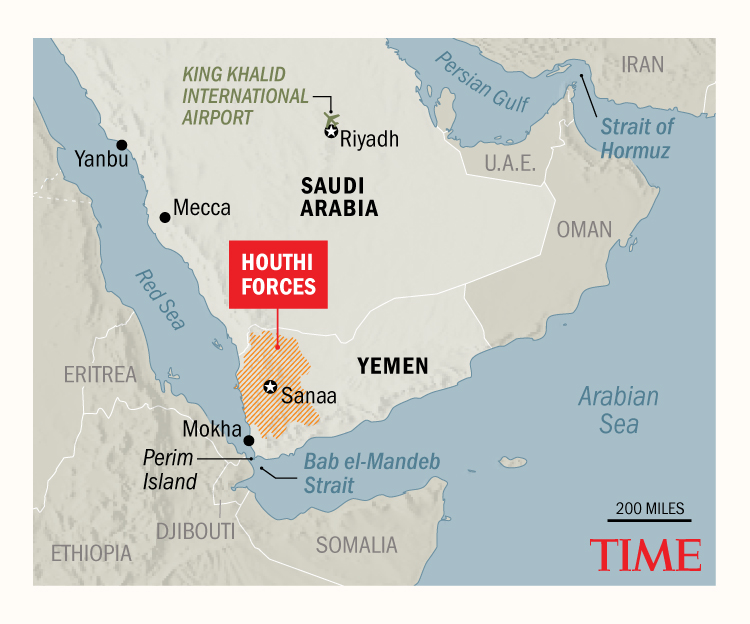
The escalation follows weeks of fighting between the Iran-backed Houthis and the Saudi-backed government of Yemen, shattering a four-year informal cease-fire in the country's civil war. The conflict reignited amid the widespread fallout of the U.S.-Iran war, bringing further instability to the Gulf region. In September, the Houthis said they had captured the strategic Perim Island that sits in the Bab el-Mandeb Strait, a critical maritime chokepoint. They also seized other islands in a bid to tighten their grip on the Red Sea coastline. Amid fears that a stronger Houthi position along the coast could further constrain global energy supplies, Saudi-backed forces recaptured key areas around the strait in early October. The Houthis have since ramped up their focus on Saudi Arabia’s airports and energy infrastructure.

Tuesday night’s attack on Aramco’s executive offices in the eastern city of Dhahran caused a limited fire, Saudi’s Ministry of Energy confirmed. No injuries were reported. TIME has reached out to Aramco and the Saudi government’s media office for further information. Saudi authorities said several missiles and drones had been intercepted elsewhere, and that falling debris injured four people in the capital of Riyadh. Saudi Arabia launched strikes on an oil depot on the outskirts of Yemen’s capital Sanaa on Tuesday, as the tit-for-tat attacks escalated.

The Saudi strike on the oil depot appeared to be in response to the Houthis’ attack on King Khalid International Airport in ​Riyadh on Saturday that killed 13 people and left over 300 injured. A projectile hit that same airport on Sunday, killing one person, Saudi Arabia's General Authority of Civil Aviation (GACA) confirmed. The week before, an attack on Abha International Airport killed two people and wounded 28, said GACA.

Saudi Arabia is the world’s top purchaser of American weapons, according to the Stockholm International Peace Research Institute. However, it is struggling to defend itself against the Houthis, who are positioned to strike deep into the kingdom. The Saudis are currently investigating how their defense systems failed to stop the deadly attacks. Experts cite the vast mass of Saudi land as one reason why defensive measures may have failed. The Saudi border with Yemen stretches more than 800 miles. “Expecting a country the size of Saudi Arabia to intercept every missile is simply unrealistic. No defense can guarantee complete protection,” said Ali Shihabi, a Saudi analyst, in an online post.

Operations at King Khalid remain suspended in the wake of the attacks. Etihad Airways, Qatar Airways, and Philippine Airlines are among the carriers to announce a suspension of flights to ​Riyadh.

The U.S. embassy in Riyadh has warned Americans in the country of “potential flight cancelations, airspace closures, and travel disruptions,” stipulating that U.S. government employees now require “special authorization” to use any airport in the country.

President Donald Trump on Tuesday said the Houthis “are behaving very badly.” In a Truth Social post, he continued, “I thought they learned their lesson a year ago when we bombed the hell out of them and, at their request, stopped,” seemingly referencing the U.S. strikes between March and May last year, which came in response to the Houthis attacking vessels in the Red Sea and disrupting global trade. Weeks after the strikes began, a cease-fire between the U.S. and the Houthis was reached via Omani mediations.

On Saturday, Trump suggested that the U.S. may join Saudi strikes on the Houthis. Asked about the possibility of U.S. strikes, a senior U.S. official told TIME that Washington is “in continuous dialogue with Saudi Arabia and the Republic of Yemen Government regarding regional stability and we will always fulfill our commitments to our partners.”


As tensions in the region continue to escalate, here’s what to know about the Houthis, their history with Saudi Arabia, and why they are attacking airports.

Who are the Houthis?

The Houthis are a political and armed group in Yemen that first emerged in the 1990s and have been fighting the country’s internationally recognized government for around two decades. The group is a revivalist movement for Zaidism, a branch of Shi‘ite Islam. The Zaidi muslim population in the country represents around 35% of the Yemeni population.

The Houthi movement was largely born from a transformation of the Believing Youth Forum (BYF), according to the Carnegie Endowment for International Peace. The group became known as the Houthis in honor of their founder and leader, Hussein al-Houthi. Before he was killed by Yemeni forces in 2004, al-Houthi had developed the group into a more militarized movement. The group is now led by his brother, Abdul-Malik al-Houthi.

Civil war broke out in 2014 after the Houthis seized Sanaa, forcing the government to flee to the southern city of Aden. Since then, the group has been engaged in fighting against a Saudi-led coalition supporting Yemen’s government. The Houthis currently have control of most of the country’s west, including Sanaa. 

Experts compare the Houthis to authoritarian regimes on account of the social restrictions imposed in areas under the group’s control and alleged human rights abuses. 

“The Houthis are dominated with very ideological and radical ideas, like a Zaidi ISIS. They have similarities also with the Taliban in terms of social control," says Mahmoud Shehrah, a Yemeni political analyst at London-based think tank Chatham House. 

How are the Houthi rebels linked to Iran?

The Houthis hold strong ties to Iran, often taking action in line with Tehran’s objectives. 

“Since 2009, Iran [has] started to speed up weapons supplies, training, but also a lot of funding to the Houthis,” says Farea Al-Muslimi, a Yemeni research fellow at Chatham House, noting that links between the two began as early as the 1990s.

The Houthis are often considered part of Iran’s proxy network, known as the “Axis of Resistance,” which also includes Hezbollah in Lebanon, the Islamic Resistance network in Iraq, and previously the Assad regime in Syria, until its collapse in December 2024.

In response to the Israel-Hamas war, the Yemeni militia launched several strikes on shipping vessels in the Red Sea, disrupting global trade in late 2023 and the early months of 2024. The U.S. and U.K. joined forces in January 2024 for a series of strikes on Houthi targets across Yemen in retaliation for the attacks on unarmed vessels. The U.S. carried out an additional campaign against Houthi targets later that year.

The Houthis entered the Iran war in March by firing a barrage of ballistic missiles at southern Israel. In the months since, the group’s advances along the Red Sea are widely considered to serve the interests of Iran. A Houthi blockade in the region against Saudi Arabia was declared in July, and several vessels have been attacked. The threat that the Houthis could bring another critical maritime chokepoint to a standstill, much like Iran has done with the Strait of Hormuz, could give Tehran significant leverage in its negotiations with Washington.

However, experts say it’s not entirely accurate to call the Houthis a direct proxy.

"The Houthis are one of the more independent regional allies of Iran in the Middle East. They have their own independent interests, even though their interests converge regionally and globally,” says Fawaz Gerges, a professor of international relations at the London School of Economics.

Even so, the Houthis have become increasingly vital for Iran. “With the fall of Assad, with the weakening of Hezbollah, the Houthis became the most important regional ally Iran has,” says Al Muslimi, pointing specifically toward the Houthis' ability to disrupt trade in the Red Sea.

What do the Houthis want?

The group’s goals have changed over time, as regional developments have unfolded, experts note.

“The Houthi's ultimate goal is to be a regional power,” says Al-Muslimi. With regard to the reignited civil war, the Houthis ultimately want an end to what they call a Saudi blockade of ports and airports in their territory.

“The Houthis want to have the skies and the ports of the country open for trade, for goods and services,” says Gerges. “They want money to flow into the coffers of the Houthis.”

The civil war has had a disastrous effect on Yemen, with nearly half of the population in government-controlled areas facing high levels of acute food insecurity, according to the United Nations. “The current situation is very dire for the Yemeni population, but also for the ability of the Houthis to rule Yemen effectively,” says Gerges.

“The Houthis want to consolidate rule and regime. They want to be recognized as the legitimate government in Sanaa, as opposed to being considered a non-state actor,” he adds.

When did the Houthis and Saudi Arabia begin fighting again?

A cease-fire brokered by the United Nations in April 2022 largely held for over four years, before collapsing in July. The Houthis claimed Saudi Arabia had launched strikes on Sanaa Airport, targeting a Houthi delegation returning from Iran. In a move they framed as retaliatory, the Houthi rebels launched ballistic missiles toward Saudi Arabia. 

“The Houthis saw this as a golden opportunity to change the balance of power against Saudi Arabia and Yemen itself and launch a lightning offensive,” says Gerges.

Following further strikes on Houthi targets later that month, the militia group began striking oil refineries in Saudi Arabia, belonging to the state-owned petroleum company Aramco.

In September, strikes on oil refineries and other related facilities ramped up, and Saudi Arabia’s airports became a target.

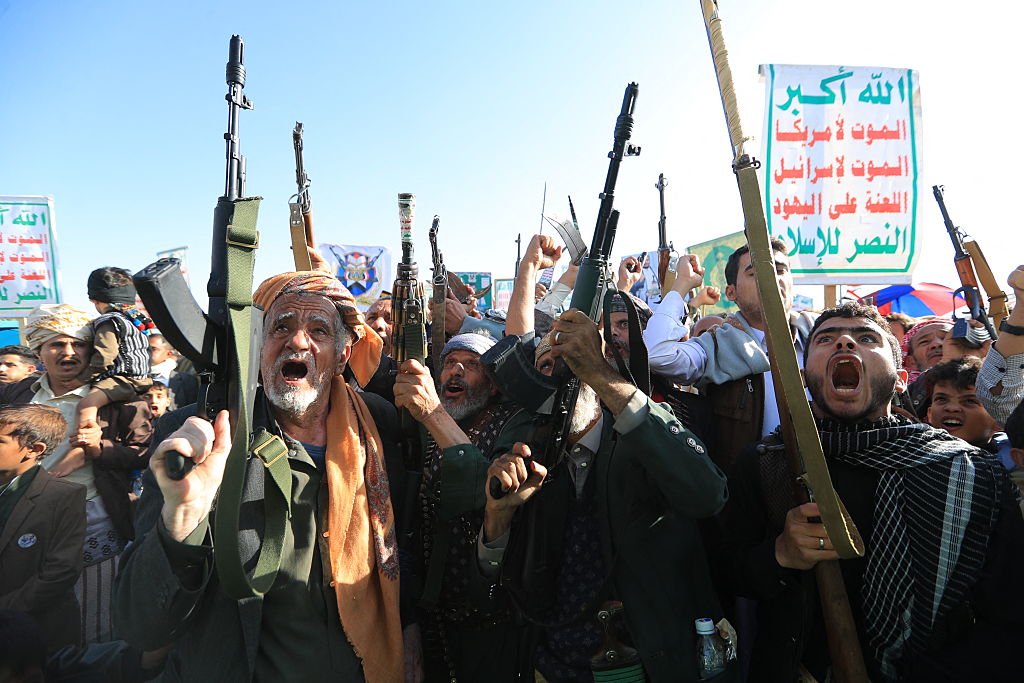
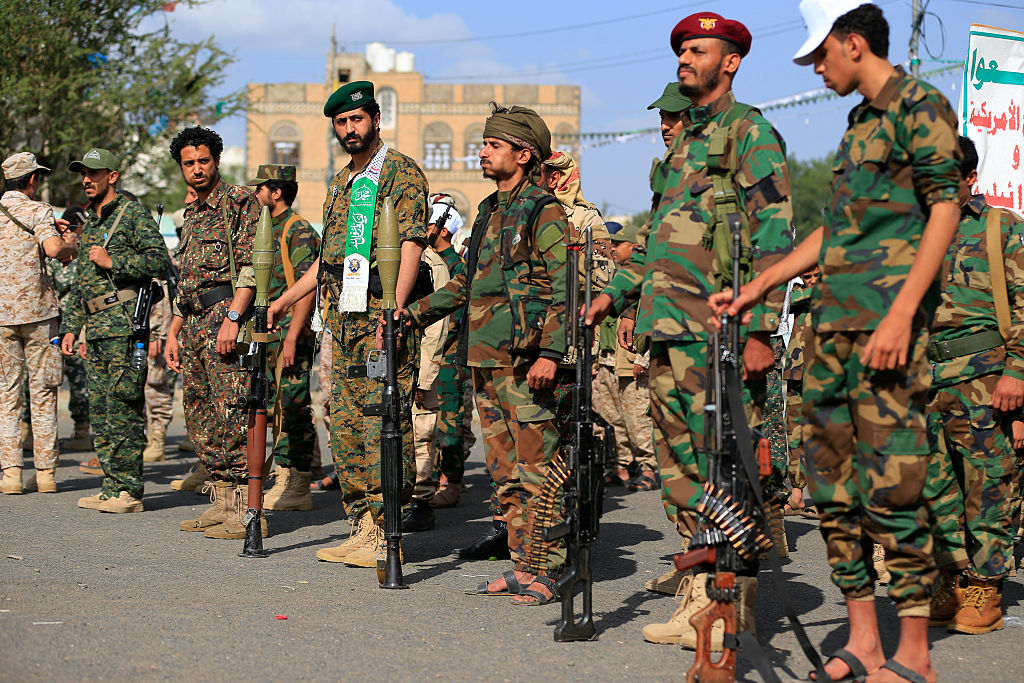
Fighters loyal to the Houthi militant group during a rally in Sanaa, Yemen, on Sep. 10, 2026. —Mohammed Huwais—Getty Images

Why are the Houthis attacking Saudi airports?

Prior to the 2022 cease-fire, attacks on airports were largely considered a signature move of the Houthis.

In a highly-publicized attack, the group struck Abha International Airport in June 2019, injuring at least 26 people, Saudi authorities said. The strike earned international condemnation and was deemed a possible war crime by Human Rights Watch.

Now, after fatal strikes on ​Riyadh’s King Khalid International Airport, the Houthis have threatened to keep targeting airports. The main motivation behind these attacks is the economic and geopolitical pressure they apply to Saudi Arabia, experts say.

“The Houthis want to put severe pressure on the Saudi Arabia economy, airport infrastructure, and security,” says Shehrah. “They want to squeeze Saudi Arabia's arms to push them to a political settlement.”

The unrest threatens to have a strong economic and political impact on Saudi Crown Prince Mohammed Bin Salman's governance. The disruption is “costly” to him, says Al-Muslimi, who notes that Bin Salman is eager for Saudi Arabia to be seen as a “safe harbor.” 

The financial and reputational damage of these strikes has also put the Saudi public on the frontline of the conflict. It’s a “shock, because it's the first time in years that such major attacks have targeted deep inside Saudi Arabia,” says Gerges.

“The Houthis are trying to exert tremendous pressure on the leaders of Saudi Arabia to force them to accept conditions for lifting the blockade on Yemen and recognizing their legitimacy,” he continues. “Although, I doubt that the Saudi leadership will concede to Houthi demands… this would be seen as a surrender and humiliation."

  •  
❌