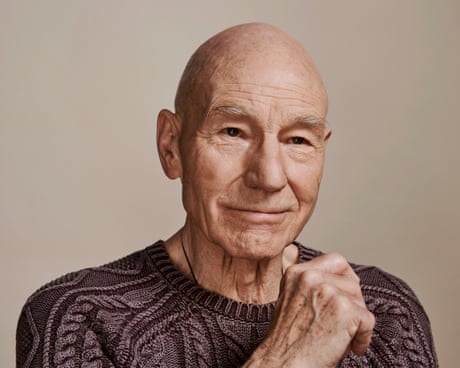
Patrick Stewart, the acclaimed British stage and screen actor renowned for both Shakespeare and sci-fi, has died. He was 86.
The Star Trek: the Next Generation and X-Men star died on Wednesday at his home in Los Angeles after “a brief and poignant journey with Alzheimer’s disease and Lewy body dementia”, said Kelly Bush Novak, his longtime spokesperson, to the Hollywood Reporter.
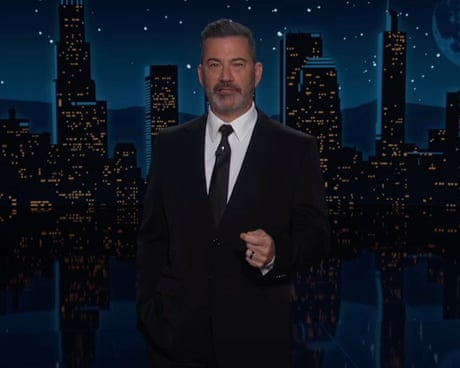
“Why are you telling these people who gathered to see you in their Chinese-made, American-flag, Hawaiian shirts that they can’t afford to eat at your house?” Jimmy Kimmel asked.
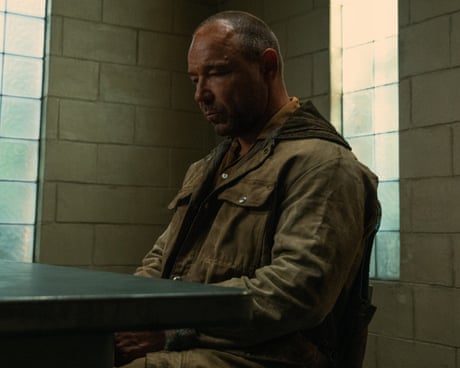
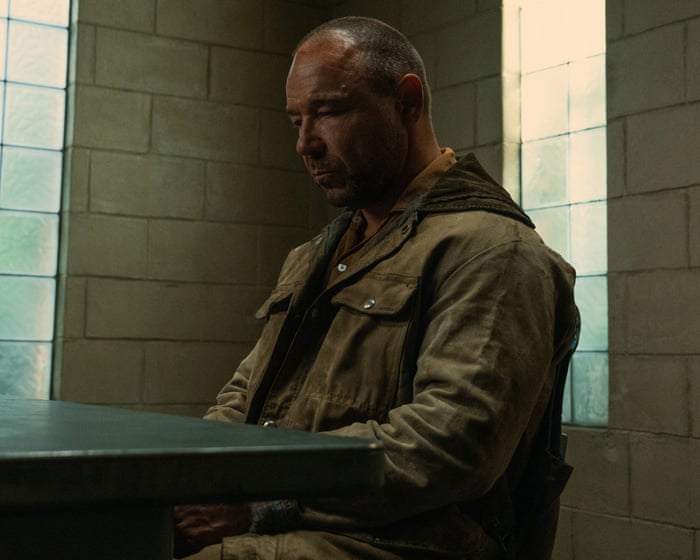
The star plays a sadistic murderer still pulling the strings from behind bars. With his high-pitched giggles and fatal whispers, it is a perfectly terrifying show for Halloween
It has taken a while, but I think the torch may finally have passed from Anthony Hopkins as the screen’s most profoundly unsettling and instantly-absorbed-by-the-cultural-imagination serial killer. From Hannibal’s hitherto unfailing hands it has been thrown to Stephen Graham, who plays multiple murderer Jurek Walter in the new 10-part psychological thriller Nocturne.
Walter, who draws out the deaths of his victims in order to torture their families as much as the individuals themselves, is incarcerated for life in the bowels of Riverside psychiatric hospital in Pittsburgh, Pennsylvania. He passes the time by doing push-ups, stashing contraband behind his toilet bowl for as-yet-unspecified purposes, and driving fellow inmates to suicide by whispering to them through the pipes. Graham – muscle-bound, preternaturally still and occasionally emitting a high-pitched giggle – is mesmerising and utterly terrifying.
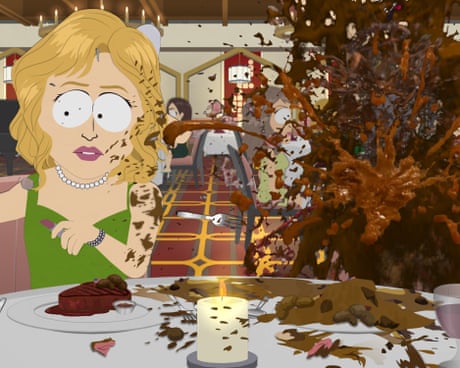
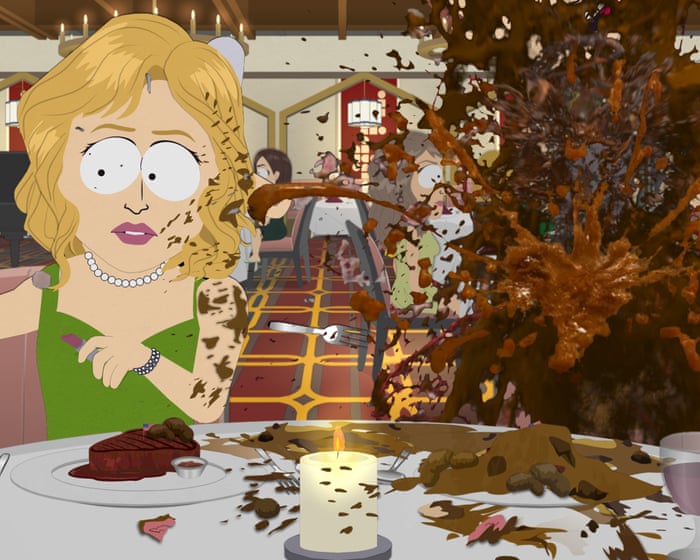
The 29th season has begun to slightly spin its wheels, but this poo-splattered episode suggests an imminent story arc: the release of Grand Theft Auto VI
Are record beef shortages simply not that rich a topic for South Park to riff off? The show’s 29th season had its first outright middling episode this week with a zigzaggy outing that gestured vaguely toward the performative eating of particular foods, nodded slightly at a father-son story development, and wound it all up by repeating and amplifying a funny season-long running gag that increasingly seems like it will actually serve as a makeshift story arc.
But let’s jump back to the beginning, perhaps the most laugh-out-loud moment of the episode: Cartman in a fugue of delight over the impending meal of sloppy joes at the school cafeteria, to which he forms a tribute in the form of a sloppy-joe-themed version of Gary Glitter’s Rock and Roll Part Two – a music clearance reaffirming that Trey Parker and Matt Stone don’t care if a song choice might make people tut-tut (because the singer is a serial sex offender) or just annoyed (because that song sucks). Cartman’s infectious glee is short-lived, however, when he’s informed that the lunch special for the day isn’t a sloppy joe after all, or anything beef-related, but cuy – Guinea Pig on a stick.
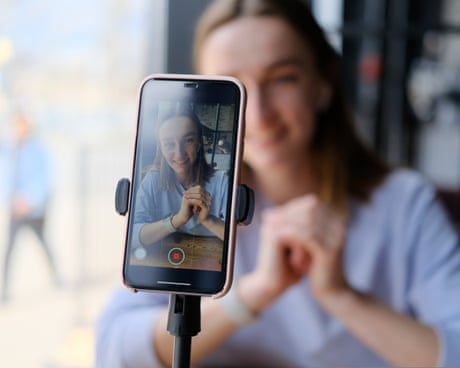
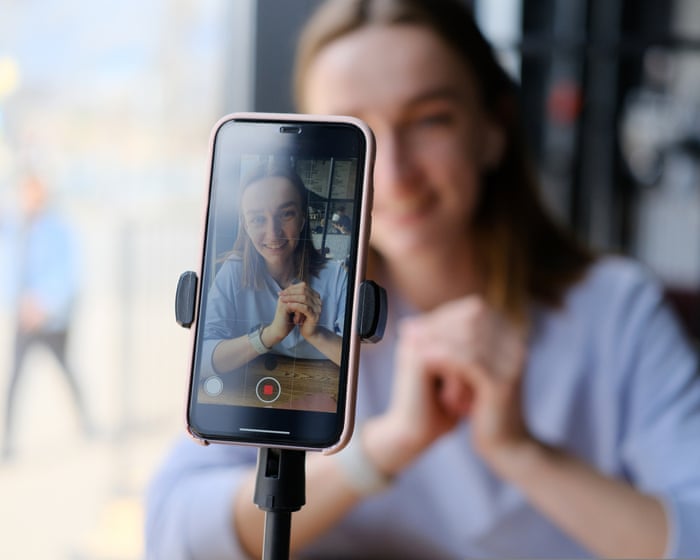
Before mobile phones, being filmed was very rare – and if you were, you acted naturally. Today, our relationship to the camera is very, very different
Not for the first time, I got something wrong. As someone who made a living being on camera, I developed theories about what it takes to be yourself on screen. My main thought was that everyone in the world would soon be able to do it, because they’d be getting so much practice.
Once upon a time, hardly anybody was filmed or videoed. When the head of my middle school announced in assembly one morning that there would be television cameras in the dinner hall at lunchtime, every child woke up. For once the headteacher had our full and undivided attention. Consternation was in the air. This would have been about 1979. Regional television news probably needed pictures to cover a story about school dinners or something. Nobody, but nobody, in the school that day missed that evening’s edition of Midlands Today. It was a big deal. I saw the back of my head, and was agog.
Billed as the first end-to-end AI-created series on a major streaming service, this Turkish show looks like the result of the prompt ‘make it cinematic’
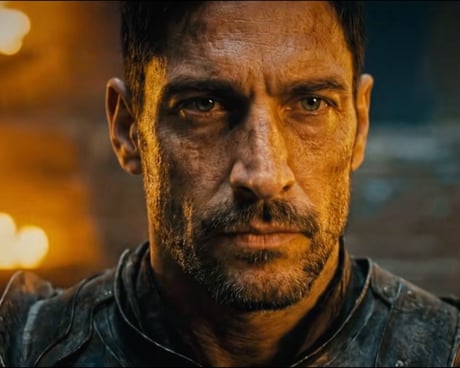
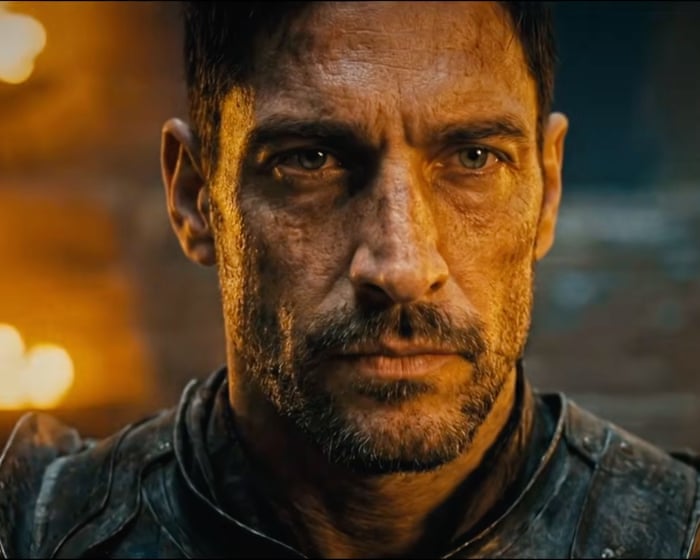
Just as the world reels from Elon Musk’s AI-powered The Odyssey remake – though “remake” feels rather generous for a seven-minute splat of synthetic sludge – another bucket of AI gunk is dropped on to our faces. For Prime Video’s AI-generated TV series Castle Walls, produced by Turkish production studio Ay Yapım using a melange of generative video tools, has arrived, billed as the first end-to-end AI-created series to premiere on a major streaming platform.
It’s certainly more epic than Musk’s production, consisting of two 17-minute episodes. Set in the 11th century, the show revolves around the historic Alamut Castle, although it’s entirely absent of any real sense of time or place. I was briefly intrigued by the opening images, with their bold palette of blues and mustard browns and yellows – but as soon as the “people” appeared, looking like Vaseline-smeared Madame Tussauds creations slowly melting in the sun, everything came crashing down.
That ’70s Show actor was sentenced to 30 years in prison for two counts of rape against two women, who were also Scientologists
Danny Masterson has lost the appeal of his rape conviction, meaning his 30-year prison sentence has been upheld.
The actor, best known for his role on That ’70s Show, was convicted in 2023 of two counts of rape against two women in 2003, while a third charge relating to a third plaintiff, who alleged she was raped by Masterson in 2001, was quashed.
Information and support for anyone affected by rape or sexual abuse issues is available from the following organisations. In the US, Rainn offers support on 800-656-4673. In the UK, Rape Crisis offers support on 0808 500 2222. In Australia, support is available at 1800Respect (1800 737 732). Other international helplines can be found at ibiblio.org/rcip/internl.html
In a long career, she was best known for starring opposite Jane Curtin in “Kate & Allie,” a 1980s sitcom about two divorced women raising three children in New York City.
Susan Saint James in 2025. Kate McArdle, her character on “Kate & Allie,” was “a free spirit caught up in the radical movement” of the 1960s, a publicist said, while Allie (Jane Curtin) was a “traditionalist.”
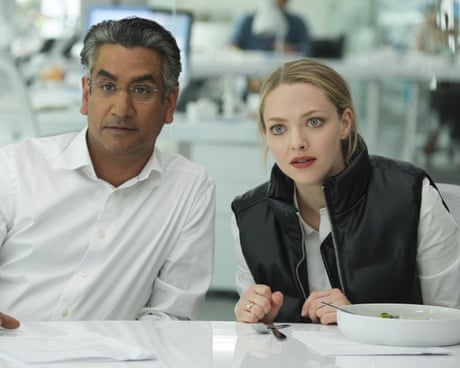
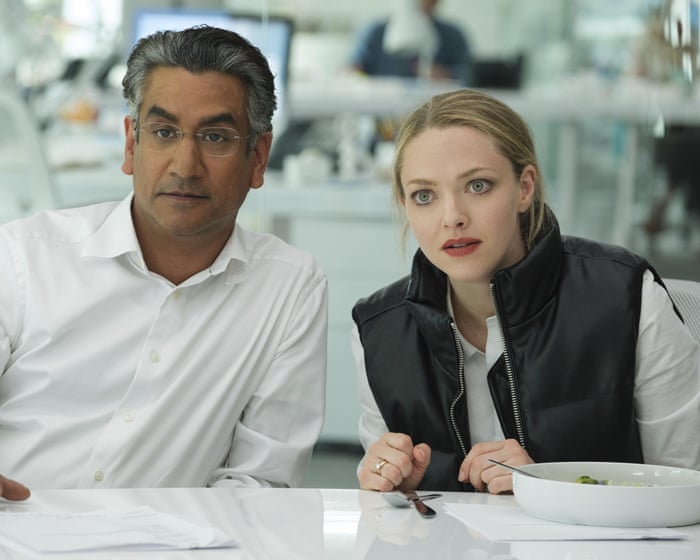
The Theranos fraudster is the subject of Nathan Fielder’s mind-bending You Can See Everything documentary. It is now driving audiences to watch Disney/Hulu’s 2022 series, The Dropout – and they’re seeing it in a whole new light
There are surprise smash hits, and then there’s You Can See Everything, Nathan Fielder’s documentary-cum-psychodrama about the disgraced US entrepreneur Elizabeth Holmes. It arrived in US cinemas with much buzz: this was, after all, an A24 production, helmed by one of TV’s leading performance-art pranksters. But You Can See Everything has surpassed all expectations to become an undeniable hit, and is now the highest-grossing US documentary in 15 years just two weeks after its release.
Co-directed by Lance Oppenheim, it is a surreal and masterly epic; at a press screening in London, the audience appeared to be alternately spellbound by its comedic elements and repulsed by the sheer grossness of some of its characters. That grossness, it should be mentioned, doesn’t pertain only to Holmes, who was sentenced to more than 11 years in prison (this has since been reduced several times) for defrauding investors, after the collapse of her sham blood-testing startup Theranos). It has also – perhaps unsurprisingly – led audiences towards other media inspired by Holmes’s downfall. Journalist John Carreyrou’s book, Bad Blood, has returned to the bestseller lists; the ABC News podcast The Dropout, hosted by Rebecca Jarvis reported a 900% surge in listeners; while the Disney/Hulu TV series of the same name enjoyed a 700% bump in viewers, and is now ranked #47 on IMDb’s “Most popular TV shows” list, despite having been released in 2022.
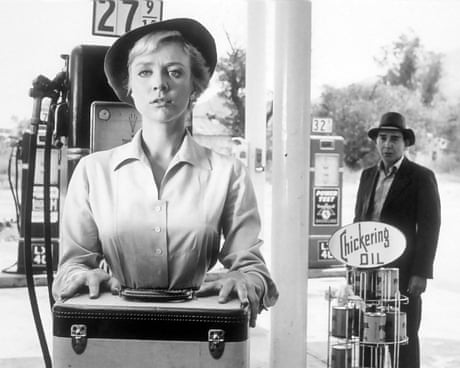
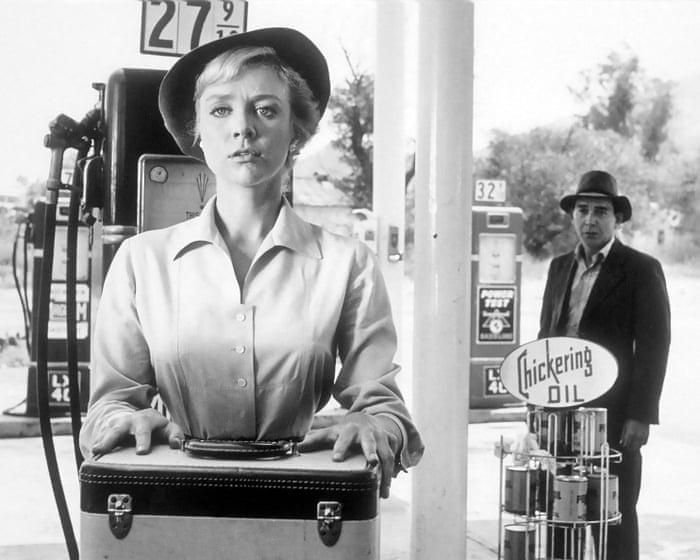
There are ghouls, gremlins and the grotesque but through its five seasons the anthology show really focuses on the human condition
A man with a stern expression and a shock of slick black hair, wearing a crisp black suit, cigarette in hand, approaches the camera. In his clipped, precise patter, he’s about to welcome you … to The Twilight Zone.
This is how each episode of The Twilight Zone typically began, with its creator, Rod Serling, delivering a brief, cryptic opening monologue before throwing to a stand-alone story.
“There is only one way to settle this: roast battle on the White House lawn, live,” Kimmel offered, after former President Barack Obama mocked President Trump.

 Login