❌

Reading view

Daylight Saving Time Ends This Week. Here’s How to Best Prepare Yourself for the Time Change

The clocks in most of the U.S. will fall back an hour this weekend as Daylight Saving Time comes to an end and Standard Time begins. —Kinga Krzeminska—Getty Images

The clocks in most of the U.S. will fall back an hour this weekend as Daylight Saving Time once again comes to an end.

Early Sunday morning, most of the country will switch back to observing Standard Time, resulting in earlier sunrises and earlier sunsets. The looming clock change comes as some lawmakers, with the backing of President Donald Trump, have been trying to push a bill through Congress that would make Daylight Saving Time permanent and end the biannual time change. But the bill has been met with pushback from other lawmakers and sleep experts.

Here’s everything you need to know about the clock change this fall, and the state of the bill that’s trying to put a stop to the cycle of changing the clocks twice a year.

When do the clocks fall back in 2026?

Daylight Saving Time will end on Nov. 1 at 2 a.m. local time. At that time, the clocks will fall back an hour, to 1 a.m. local time.

How can I prepare for the clock change?

Dr. Alex Dimitriu, a psychiatrist and sleep medicine physician, likens the practice of changing the clocks twice a year to “an hour of jet lag,” adding that it can be an adjustment for many people. But the transition to Standard Time also means that people will gain an extra hour of sleep.

“Typically, moving to Standard Time is actually in sync with our circadian rhythm,” says Dr. Andrea Matsumura, a sleep medicine physician and spokesperson for the American Academy of Sleep Medicine. “Most people have a fairly easy transition into Standard Time; it’s the Daylight Saving Time that you have to do a lot more work to adjust [to] losing an hour of sleep.”

In the days leading up to the start of Daylight Saving Time—which will happen next March—Matsumura typically advises that people start going to bed a little earlier to help make the time change “a little less painful.” But there’s less preparation needed in the days leading up to Standard Time; in fact, Matsumura recommends that people simply stick to their regular sleep schedule ahead of Nov. 1. 

Matsumura does suggest that people continue to take steps that normally help improve sleep, such as getting some daylight when they wake up in the morning and not drinking caffeine too late in the afternoon. Similarly, Dimitriu recommends that people do some physical movement in the morning, such as going for a walk, and avoid eating food too late in the evening.

What’s the status of the bill that would make Daylight Saving Time permanent?

Most states in the U.S. change their clocks twice a year: once in March as Daylight Saving Time begins, and again in November for Standard Time. Under the current federal law, states are permitted to opt out of Daylight Saving Time and remain in Standard Time year-round. Hawaii and most of Arizona have chosen that option, and so observe Standard Time throughout the year. Federal law does not, though, allow states to remain in Daylight Saving Time year-round.

A bill known as the Sunshine Protection Act, if passed by Congress and signed into law by the President, would change that. The measure would result in the country observing Daylight Saving Time year-round, though individual states could choose to forgo that path and instead stay in Standard Time permanently.

The Sunshine Protection Act passed the House with bipartisan support in July. But the measure is facing an uncertain fate in the Senate. Earlier this month, Senate Majority Leader John Thune told POLITICO that “there’s no clear path forward or consensus” on the bill yet.

Some lawmakers in the upper chamber, such as Sen. Tom Cotton of Arkansas, have criticized the proposal. Critics have argued that permanent Daylight Saving Time would mean much later sunrises in some parts of the country, resulting in people going to school and work in the dark.

Sleep experts, including the American Academy of Sleep Medicine, have also objected to the bill because they say that Standard Time aligns better with people’s circadian rhythms.

Still, Trump has slammed critics of the Sunshine Protection Act and continued to push for the bill. At the beginning of October, he accused Cotton of “holding up” the bill, and urged his followers on Truth Social to “call Tom on his cellphone” to express support for the Sunshine Protection Act.

  •  

MAHA Leader Calley Means Steps Down from Trump Administration Health Advisory Role

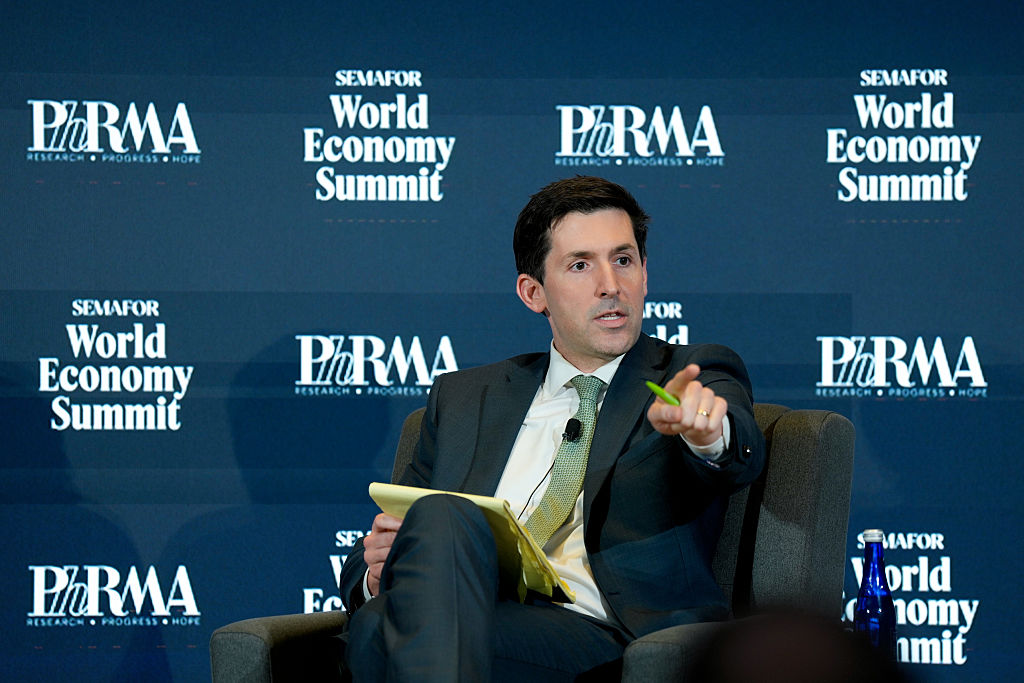
Calley Means, senior advisor at Health and Human Services (HHS) and co-founder of TrueMed, at the Semafor World Economy Summit during the International Monetary Fund (IMF) and World Bank Spring meetings in Washington, D.C., on April 25, 2025. —Kent Nishimura—Bloomberg/Getty Images

Calley Means, one of the key figures in the Make America Healthy Again (MAHA) movement, said on Thursday that he was stepping down from his role as a senior health adviser in the Trump Administration.

In a post on X, Means said that he was resigning “with tremendous respect” for President Donald Trump and Health Secretary Robert F. Kennedy Jr.

“They laid out a vision of combatting the entrenched, dark forces in DC that profit from Americans getting sick,” Means said. “More policy and cultural change has happened around these goals in the past 2 years than any time in history—and I know this movement is just getting started.”

News outlets including the New York Times and POLITICO, citing anonymous sources with knowledge of the situation, have reported that Means was becoming increasingly frustrated because he felt that there was little movement on issues central to the MAHA agenda—for instance, on the issue of defining and regulating ultraprocessed foods.

Means, who was pivotal in coordinating an alliance between Kennedy and Trump during the 2024 election cycle, has championed the Administration's food-policy agenda, including efforts to persuade manufacturers to stop using artificial food dyes in their products and to restrict the purchase of soda with Supplemental Nutrition Assistance Program (SNAP) benefits in some states.

In his social media post, Means heralded those actions, as well as his efforts to reform dietary guidelines and his push for research into psychedelic medications.

“It was an honor to advocate for MAHA moms in the administration,” Means said.

Means is the latest figure in the Trump Administration, and specifically in the Department of Health and Human Services, to resign or be ousted from their role over the past year. In May, Dr. Marty Makary stepped down as the head of the Food and Drug Administration amid pressure from within and outside of the Trump Administration. Last year, the White House fired Susan Monarez as director of the Centers for Disease Control and Prevention.

In April, Trump withdrew his nomination of MAHA leader Dr. Casey Means—Calley Means’ sister—for the position of U.S. Surgeon General after the nomination failed to garner enough support in the Senate.

  •  

The 7 Key Governor Races to Watch in the Midterm Elections

Dr. Amy Acton, Ohio Democratic gubernatorial candidate, speaks at a rally on April 28, 2026, in Cincinnati. —Jon Cherry—Getty Images

As Election Day looms, much of the national focus is on whether Democrats will win control of Congress. But in several states, the race for governor is among the tightest, and most consequential, races on the ballot.

The party in control of the White House typically fares poorly in midterm elections. While that usually translates most clearly into losing congressional seats, true “wave” elections often lead to similar shifts in state governments as well. 

Multiple states could see the party in the governor’s seat flip. Voters in Ohio, Alaska, and Texas might end up electing their first Democratic governors in decades. In Oregon, the reverse could pan out, with a Republican in contention to upend a Democrat’s hold on the office for the first time since 1982. 

Read More: Republican Panic Sets In Over Prospects of a Massive Blue Wave

Here are seven races for governor to watch on Election Day.

Ohio

Ohio's governor's race was thrust into the national spotlight this week after Republican Vivek Ramaswamy's campaign released an ad featuring the estranged mother of his Democrat opponent Amy Acton. Acton’s mother lost custody of Acton and her brother after their stepfather was arrested and indicted on a charge of raping Acton when she was a child.

The ad immediately drew widespread outrage, the latest twist in a race that Republicans had thought they were well positioned to win after Trump won the state by 11 points in 2024. Many Republicans had been expected to vie to replace Gov. Mike DeWine, who couldn’t run again because of term limits. But Trump’s endorsement of Ramaswamy essentially cleared the field for him. 

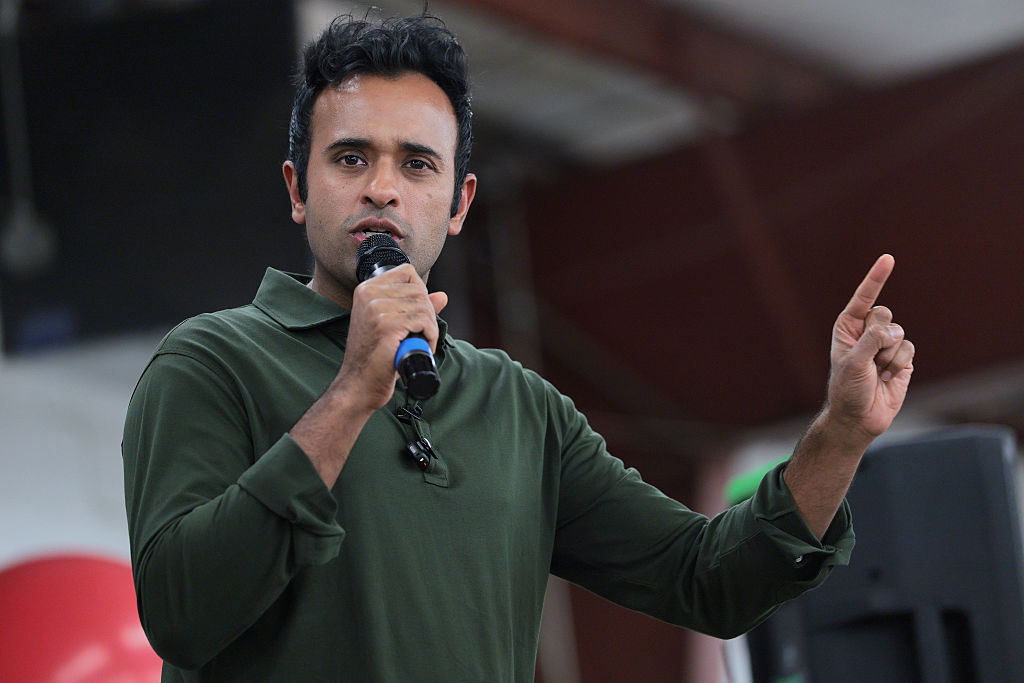
Ohio Republican gubernatorial candidate Vivek Ramaswamy speaks during the Darke County Republican Party Hog Roast on Oct. 18, 2026 in Greenville, Ohio. —Michael M. Santiago—Getty Images

Now Ramaswamy is in a very tight race against Acton, who previously led the Ohio Department of Health during the Covid-19 pandemic. While the Cook Political Report previously marked the Ohio gubernatorial race as “Lean Republican,” it later shifted its rating slightly in favor of Democrats, to “Toss Up.”

Read More: Ramaswamy Facing Tougher Fight Than Republicans Had Expected in Ohio

Many polls show Acton with a narrow lead, but a few suggest that Ramaswamy has a razor-thin lead. 

If Acton ultimately wins, it would be the first time in 20 years that Ohio voters had elected a Democrat as governor.

Alaska

The Cook Political Report recently changed its rating for the race in Alaska from a “Toss Up” to “Lean Democrat.” Alaska’s current governor, Republican Mike Dunleavy, is prohibited from running again because of term limits. The open race to replace him includes one Democrat, Jonathan Kreiss-Tomkins, and three Republicans: Bernadette Wilson, a business owner who has received the backing of President Trump; Dave Bronson, the previous mayor of Anchorage; and Treg Taylor, a former state attorney general.

Kreiss-Tomkins, who was previously a state legislator, finished the state’s open primary race in August in the top spot, with another Democratic candidate, Tom Begich, in second place. In Alaska, the top four candidates in the open primary move on to the general election. But Begich later announced that he was dropping out of the race and endorsed Kreiss-Tomkins, allowing Taylor to land a spot in the general election ballot. 

“The data we’ve seen makes clear that the strongest path to winning in November is not two Democratic candidates competing for the same donors and resources—it’s bringing those people together behind one ticket,” Begich said in a video announcing the suspension of his campaign in August.

Many recent polls show Kreiss-Tomkins leading his three opponents. This month, Trump expressed frustration with all the Republicans still in the race, noting on Truth Social that he had urged Bronson to drop out.

“All Bronson and Taylor will do is take away Votes from the Candidate that has, by far, the best chance of winning,” Trump said in his post. “Now is the time for all Republicans to unite behind Bernadette to ensure she has a tremendous Victory in November!”

Texas

The last time Texas Gov. Greg Abbott ran for re-election in 2022, he won by double digits. He now may be facing his most competitive re-election fight yet; some polls show him holding a slim lead over Democratic state Rep. Gina Hinojosa, while others show Hinojosa ahead by a small margin. 

“This is an unusual situation in Texas politics,” Joshua Blank, the research director of the Texas Politics Project at the University of Texas at Austin, previously told TIME. “It’s rather uncommon to see any Democratic candidate leading in anything other than a single outlying poll leading up to the election.”

If Hinojosa were to win, it would be the first time voters chose to put a Democrat in the state’s governor’s mansion in more than three decades. The tightness of the race mirrors that of the state’s Senate race, where Democrat James Talarico and Republican Ken Paxton are locked in an expensive fight.

Read More: Could Texas Elect a Democratic Governor for the First Time in More Than 30 Years? Polls Show a Tight Race

Still, the Cook Political Report suggests that the odds are in Abbott’s favor, rating the race as “Lean Republican.”

Oregon

Amid talk of a national blue wave, the race for governor in Oregon may prove to be a bright spot for Republicans. Gov. Tina Kotek, a Democrat, is trying to fend off a challenge by Republican Christine Drazan, a state senator. Some polls show Kotek ahead by a narrow margin, while others show Drazan in the lead by a similarly small measure. The Cook Political Report previously rated the race as “Likely Democrat,” but has since shifted it slightly in Republicans’ favor, to “Lean Democrat.”

The Cook Political Report says the battle “is one of the rare races moving in Republicans’ direction.” If Drazan were to defeat Kotek, it would mark the first time since 1982 that Oregonians have elected a Republican to the governorship.

Georgia

Georgia is shaping up to be one of the tightest gubernatorial races in the country. It’s one of four that the Cook Political Report has marked as a “Toss Up.” Republican Gov. Brian Kemp couldn’t run for re-election because of term limits, leaving the field open for another member of his party, billionaire Rick Jackson, and Democrat Keisha Lance Bottoms, the previous mayor of Atlanta. Polls suggest the race is essentially tied, with some indicating Jackson has a razor-thin lead.

A win by Bottoms would mark a significant shift in the southern state’s politics. While both of Georgia’s current Senators are Democrats, it has been led by a Republican governor since 2003. It would also mean the breaking of a national barrier: Georgia would be the first state in the country to have elected a Black woman as governor.

Nevada

A perennial swing state, Republicans are vying to hold on to its leadership of Nevada’s government. Gov. Joe Lombardo is fending off a challenge from Democratic Attorney General Aaron Ford. Polls are split over who’s in the lead—some showing Lombardo while others showing Ford, both by slim margins. The Cook Political Report rates the race as a “Toss Up.”.

Wisconsin

The race to lead this swing state became a wide open free-for-all last year, when Democratic Gov. Tony Evers announced he wasn't running for another term. The race was on the verge of becoming a marquee one for democratic socialists, with progressive Francesca Hong leading in the polls ahead of the Democratic primary, before she ultimately lost the nomination to Milwaukee County Executive David Crowley, a moderate.  

Crowley is now vying for the job against Republican Rep. Tom Tiffany in a race where campaign funding has become a prominent issue, as Tiffany’s bid has been largely bankrolled by three billionaires.

While the Cook Political Report rates this a “Toss Up," multiple recent polls show Crowley with a small lead over Tiffany.

  •  

Alberta Voted to Stay in Canada. That Doesn’t Quite Settle the Separatist Debate

A "Forever Canadian" lawn sign during a referendum vote in Edmonton, Alberta, Canada, on Oct. 19, 2026. —John Diep—Bloomberg/Getty Images

Albertans voted overwhelmingly to remain in Canada on Monday, but the result may do little to quiet the separatist movement that helped bring the question to the ballot.

Preliminary results early Tuesday showed that roughly 76% of voters rejected beginning the process toward a future binding referendum on separation. While approval would not have authorized Alberta’s independence from Canada, it would have allowed the province to take the next steps in the process of separation.

Even before the vote, most Albertans expected the debate to continue. Polling from the nonprofit Angus Reid Institute, released last week, found that 62% of people in the province think that “there will never be an end to the separatist movement.”

Responding to former Alberta Premier Jason Kenney’s suggestion that the movement should end if the referendum were to fail, Keith Wilson, one of the most prominent separatist leaders, said at a rally on Oct. 17, “That’s not happening."

“We are going to build on our successes, build on our relationships," he added.

Speaking to TIME before the results came in on Monday, Jared Wesley, a professor of political science at the University of Alberta, said that even if the referendum were to fail, “it seems unlikely that separatism as a political strategy, if not an actual objective, is going anywhere soon.” 

He added that the next provincial general election is next year, so it’s possible that voters could be faced with a similar question on the ballot then.

“The country is very familiar with western alienation and western grievances—that is a very long-standing political phenomenon in Canada,” Andrew McDougall, an associate professor of political science at the University of Toronto Scarborough, tells TIME. “There’s been a long history of regional tensions in Canada where the west feels disaffected from what, historically, has been the larger and, in many ways, sometimes more prosperous central Canada.”

“The idea, though, of having a vote on separatism—that is a little bit new,” he continues.

The Alberta independence campaign got more traction after the Liberal Party, headed by Prime Minister Mark Carney, won the federal election last year, with many Albertans expressing frustration that their views aren’t sufficiently represented by the Liberal government.

That dissatisfaction, driven in large part by the federal government’s energy policies, comes as Canadian leaders are placing particular emphasis on national unity.

Why did Alberta hold this referendum?

Alberta is an oil-rich province; mining, quarrying, and oil and gas extraction made up about a quarter of the province’s GDP in 2025. But Albertans have expressed dissatisfaction with the level of support the industry has received from Ottawa, criticizing the federal government for blocking pipeline projects, among other industry initiatives.

The feeling among some residents in the province, McDougall says, is “that central Canada is taking advantage of Alberta; that the central government has, at times, through environmental regulations, for example, hindered the development of the oil resources that exist in Alberta.”

He adds that the independence campaign may also have been fueled by Albertans’ dissatisfaction with representation in the federal government. 

Alberta is considered a conservative stronghold, but the Liberal Party has led the country for over a decade. The western province has about 5 million residents, compared to 16 million in Ontario and 9 million in Quebec, which means “it could be difficult sometimes for the West to get representation in the government,” McDougall says.

At the beginning of May, separatists turned in a petition with hundreds of thousands of signatures to push for a vote on leaving Canada, while opponents collected signatures in support of staying. A court ruling on May 13 complicated matters: A judge halted the petition, finding that the province could not advance the discussion without consulting First Nations.

The government instead asked voters whether it should take the steps needed to hold an independence referendum later, leading to this month’s vote. Alberta Premier Danielle Smith supported staying in Canada.

Polling suggests that, for many voters, support for the referendum was not necessarily about wanting to leave Canada—it was a way to underscore dissatisfaction with the federal government. 

The Angus Reid Institute found that 60% of respondents who were in favor of holding a future independence referendum said their motivation was sending a message to Ottawa, compared with 37% who wanted Alberta to take the necessary steps toward secession.

As early results emerged Tuesday, Wilson, the separatist leader, observed: “It’s fair to say that at least a quarter of Albertans feel that Alberta needs to be treated better.”

Carney stressed unity amid tensions with U.S.

Alberta’s independence referendum came as Carney’s government promotes national unity amid a trade war with the U.S.

McDougall says that the issues behind the referendum are "longstanding grievances,” but the fact that it advanced at a time of strong pro-Canada sentiment is “a little out of step with the times.”

The trade dispute escalated after negotiations between the two nations broke down in August. On Sept. 8, Canada responded to new tariffs from the U.S. with matching, retaliatory levies.

Tensions have continued to escalate in recent weeks as Trump repeatedly insists that Canada is ripping off Americans and should join the U.S. He said at a rally in Arizona on Oct. 14 that Canada will “end up being the 51st state, because it’s the only way it works.”

The following day, Carney spoke at a rally in Calgary, emphasizing the importance of Canadian unity amid outside tensions, though he did not explicitly reference Trump’s remarks.

“The stakes are high. This referendum, it comes at the worst possible time. The world has become more dangerous and divided," Carney said. “There are some outside our borders who are working to break us, so they can own us.”

The speech was another effort by the Carney government to promote national unity, just days before the referendum in Alberta. 

The message became especially poignant that weekend when four service members died in a fire at a military base in Alberta. The nation came together to provide resources and support for the province. At a press conference on Sunday, Carney emphasized that “Canadians come together in crisis.”

Wesley says he believes that “the vast majority of Albertans are viewing this referendum through a broader global lens.”

“They know their votes send a message—not just to governments here in Alberta or Ottawa, but to Washington,” Wesley says. “Albertans are overwhelmingly opposed to Trump’s trade war and even more averse to becoming the 51st state. They know that voting to destabilize Canada makes it harder to weather the economic storm and easier to fall into the American orbit.”

“Albertans made a clear choice,” Carney said Tuesday after preliminary results became available. “They chose unity, to build together, and to take care of each other. Above all, Albertans chose Canada.”

  •  

Can the Public See DOGE’s Records? The Supreme Court Takes Up a Key Fight

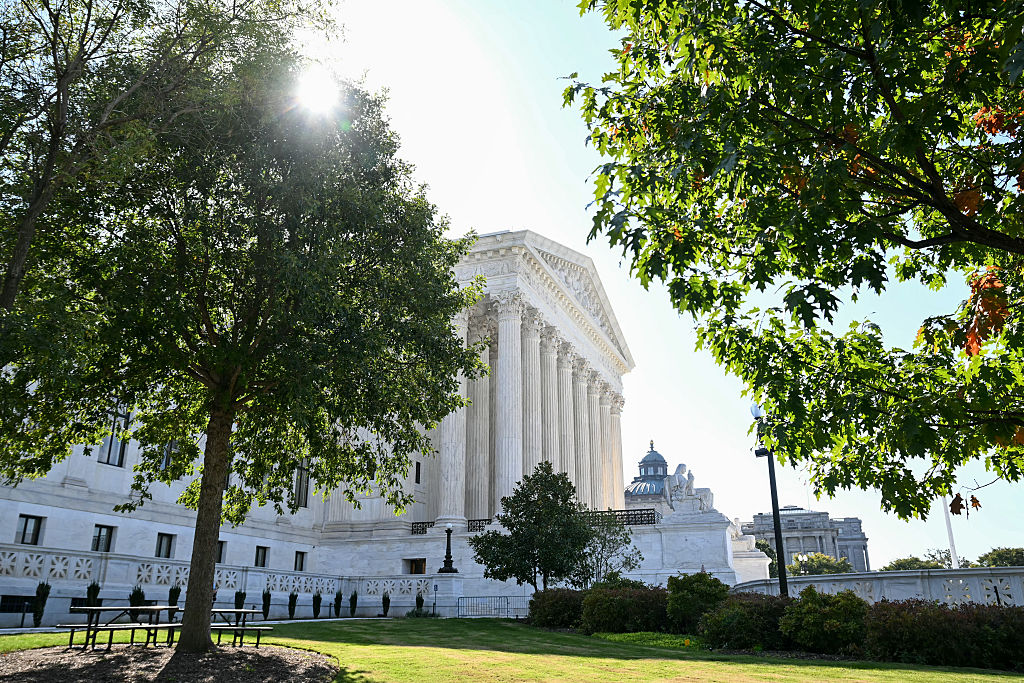
A view of the U.S. Supreme Court in Washington, D.C., on Oct. 14, 2026. —Saul Loeb—AFP/Getty Images

The U.S. Supreme Court said Tuesday that it will take up a case to decide whether a watchdog organization can obtain information to help establish whether the now-defunct Department of Government Efficiency (DOGE) is subject to a federal public records law.

It’s the latest update on a lawsuit filed by a nonprofit called Citizens for Responsibility and Ethics in Washington (CREW) that argues DOGE, the initiative that was spearheaded by Tesla CEO Elon Musk, is subject to the Freedom of Information Act (FOIA). 

The Trump Administration has argued that FOIA does not apply to DOGE because it was not a federal agency—it was a presidential advisory body.

Signed into law in 1966 by President Lyndon B. Johnson, FOIA grants “the public the right to request access to records from any federal agency,” according to the federal government’s website. Johnson said at the time that he hoped the government would, in upholding the law, weigh national security, individual privacy, confidential government deliberations, and the benefit of a well-informed constituency.

“The founding principle of FOIA is that it’s crucial in a democracy to have an informed citizenry,” says Sara Creighton, an associate professor at Georgetown Law and the former Deputy Chief Counsel at American Oversight, a government transparency nonprofit. “The whole idea is that we need an informed voting public.”

Justices have agreed to hear arguments over whether, and to what extent, discovery can proceed for CREW v. DOGE Service. This phase of the legal process allows opposing parties to collect information, including records and depositions, with which to make their cases.

Experts say this decision will not only affect the pending lawsuit, but may also have ramifications for the future of government transparency.

How did the DOGE records case reach the Supreme Court?

CREW filed an FOIA request seeking expedited processing for information about DOGE on Jan. 24, 2025, seeking insights about its structure and communications with other agencies. When it didn’t receive the documents it requested, the organization sued.

“The law is clear about how government records should be preserved so that, when the public requests them, they are easily and readily accessible. If the administration valued transparency, following records laws would be a priority,” CREW President Noah Bookbinder said in a statement announcing the lawsuit on Feb. 20, 2025. “Instead, US DOGE Service and OMB are acting as though the law does not apply to them. It does.”

“The fight ultimately in the DOGE case, and what CREW was hoping to test with its litigation, was whether DOGE [is] subject to FOIA,” says Ryan Mulvey, a senior policy counsel at the Americans for Prosperity Foundation.

On April 15, 2025, Judge Christopher Cooper ruled on behalf of the U.S. District Court for the District of Columbia that the case could proceed to discovery. The Department of Justice, however, filed an emergency appeal in May 2025 asking the Supreme Court to intervene. The Supreme Court paused the discovery orders on May 23, 2025. On June 6, 2025, it directed the appeals court to narrow the requests, finding that those concerning DOGE’s recommendations and whether agencies followed them were “not appropriately tailored.”

CREW then pared back its requests for discovery, and the U.S. Court of Appeals for the D.C. Circuit upheld them. The Trump Administration again filed a request to the Supreme Court, arguing that the lower court was not adhering to the previous ruling by granting “wide-ranging and intrusive discovery.”

In response, the Supreme Court agreed this week to take up the question of whether the case can proceed to discovery. It’s unclear at this point when oral arguments would begin, but a ruling is expected by the end of term in late June or early July 2027.

What could the Supreme Court’s DOGE ruling mean for public access?

The Supreme Court’s ruling will determine if CREW can access the information that could help it make its case that DOGE acted as a federal authority that is subject to FOIA, according to Creighton. If not, the nonprofit may have difficulty pursuing its argument. 

“Because so much about how DOGE operated … was not publicly explained, discovery is the only way to unearth key facts about DOGE’s operations and exercises of authority,” says Margaret Kwoka, the Frank R. Strong Chair in Law at Ohio State University’s Moritz College of Law, who joined a brief supporting CREW as an outside legal expert. “Those details will illuminate whether it is in fact exercising independent authority or whether it is acting as an advisor to the President.”

The outcome of the case could have implications beyond the current Administration, Creighton says.

“Whether an entity is subject to FOIA really determines how much information the public gets to know about it, and whether [entities] have any obligation to disclose their documents to the public,” Creighton says. 

The current issue before the Supreme Court pertains to discovery, but Creighton warns that if the Supreme Court ultimately rules that DOGE is not subject to FOIA, that could potentially “open the door for future presidents to create entities inside the Executive Office of the President that do significant work—even potentially work relating to the work of agencies who are usually subject to FOIA—but allow that work to be outside the scope of FOIA.”

CREW did not respond to TIME’s request for comment, but it has previously said that government transparency is at stake.

“The lower courts have uniformly ruled that CREW is entitled to discovery in this case to help the court determine whether DOGE wields the type of authority that would make it subject to FOIA,” CREW’s chief counsel, Nikhel Sus, told POLITICO in a statement on Tuesday. “We will continue to pursue transparency for the American people, who deserve to know the details of the Trump Administration’s efforts to unilaterally remake the federal government.”

Solicitor General D. John Sauer, meanwhile, argued in his filing to the Supreme Court that the appeals court ruling “intrudes into the autonomy and confidentiality of presidential advisors and augurs time-consuming and burdensome discovery litigation.” 

He further claimed that the lower court decision “threatens to burden future presidential administrations” with similar legal cases.

The White House referred TIME to the Department of Justice, which did not immediately respond to a request for comment.

What other records lawsuits has the Trump Administration faced?

The DOGE dispute is among several legal battles over access to, and preservation of, government records under the Trump Administration.

In 2025, American Oversight filed a lawsuit asking the court to order multiple national security officials to preserve official communications that were exchanged on the encrypted messaging app Signal. The request was filed after it came to light that the officials were exchanging messages regarding planned military strikes in Yemen. The case is still ongoing.

In April, the same group, along with the American Historical Association, sued the Trump Administration over a legal opinion released by the Department of Justice that claimed the Presidential Records Act—which stipulates that presidential records be preserved and transferred to the National Archives when the President leaves office—is unconstitutional. That case is also ongoing.

While those cases remain ongoing, American Oversight has secured a win in another records dispute. In August, a federal judge struck down an Energy Department policy that would have permitted it to close pending FOIA requests filed earlier than Oct. 1, 2024, unless requesters reaffirmed their interest within 30 days. The court sided with the watchdog group.

  •  
❌