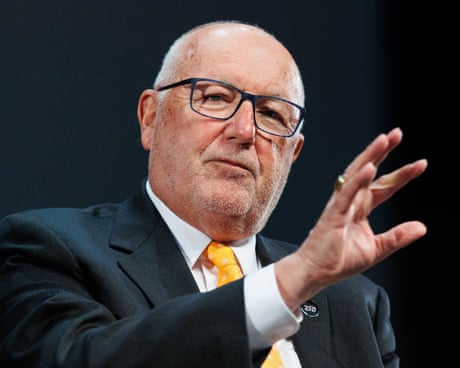
Pete Hoekstra, controversial US ambassador to Canada, has also accused Canadian officials of interfering in US elections
The US ambassador has suggested Canada could be blamed if Republicans perform poorly in next week’s midterm elections, the latest intervention from a controversial figure who has been accused of inflaming a bitter dispute that has angered and baffled residents of both countries.
On Wednesday, CTV news reported that Pete Hoekstra told business leaders at a closed door meeting that if a number of swing races – including Maine and Michigan – go to the Democrats, it could make things harder for Canada because Donald Trump might try to blame the loss on it.
Texas Senate candidate James Talarico, a Democrat, speaks at a public exhibit about the Epstein files in Dallas. | Chitose Suzuki/The Dallas Morning News via Getty Images
This story appeared in Today, Explained, a daily newsletter that helps you understand the most compelling news and stories of the day. Subscribe here.
Eighteen years after his first conviction, and seven years after his much-debated death, the ghost of the convicted sex offender Jeffrey Epstein is suddenly inescapable again.
He’s the subject of scores of midterm campaign ads, each more lurid than the last. A second bill mandating the release of the Epstein files is currently kicking around Congress. And on Monday, House Democrats released a new report alleging that the Justice Department helped cover up details of Epstein’s relationship with President Donald Trump, calling — very aspirationally! — for an independent criminal investigation.
Of course, no one really expects Trump’s attorney general to name a special counsel to investigate the Trump administration. In a statement, one White House spokesperson panned the report as “a desperate attempt by crazed Democrats to distract Americans.” (The timing, just one week before the midterms, does seem pretty fortuitous.)
The document, which runs to 50 pages, draws on public accounts and staff interviews with an unspecified number of survivors, including a former pageant queen who alleges that Trump raped her in 1993. The woman had previously accused Trump of groping her, which a Trump spokesperson dismissed at the time as “fake.”
When it comes to Epstein, however, Democrats don’t need a lot of new material to damage Trump. The scandal, and his administration’s handling of it, continue to cast a long, dark shadow over Republicans.
That’s surprising to me, candidly, because the decades-old dealings of even a very despicable sex offender don’t have any bearing on Americans’ day-to-day costs or experiences. And Trump has been able to brush off a lot of other unsavory behavior and associations.
Many of these young voters “resent the fact that Trump’s basically become part of the establishment” and see the Epstein files as evidence of that, the political analyst Rachel Janfaza recently told Vox. Some also feel burned by Trump’s campaign promise to release the government’s investigative files on Epstein…and his about-face once in office.
Democrats, sensing an opening, are hammering the issue. Relentlessly so. According to data from the tracker AdImpact cited by NBC News, there are currently more than 500 campaign ads airing across the country that include the words “pedophile” or “predator.”
Many of them reference Epstein or the so-called Epstein files, and three-quarters are backed by Democrats. One recent ad featuring an Epstein survivor, and targeted at Kansas Republican Roger Marshall, slams the incumbent senator’s September 2025 vote to block a procedural measure that would have released the Epstein files. (The Senate later moved to release the files by unanimous consent.)
Another ad, this one in Maine, claims that Epstein’s “business partner” funneled $3 million to Sen. Susan Collins’s super PAC. (Importantly, the connection between Epstein and this purported partner is so tenuous as to be nonexistent.)
These ads will fade after Tuesday, of course. But you haven’t heard the last word on this. Should Democrats win control of either chamber, they’ll gain the power to subpoena witnesses and documents for yet more Epstein investigations.
Some Democratic leaders in the House are already salivating over that prospect.
One link for later
➨ Ask better questions than “what do you do?” Small talk is often dominated by idle chatter about traffic, weather, or jobs. To actually get to know your conversation partner, try leading with questions that get at their interests: what a friend’s friend is reading, for example, or what a barista’s favorite beverage is. You can even draft a little list of go-to questions in advance to deploy in conversation when you need them. Just don’t treat the exercise like a checklist. The real key to better small talk is being curious.
Before you go…
Did you know…that concrete is the second-most-used material on Earth? (The first is water!) Mixing and pouring concrete is responsible for a huge share of global emissions, but there are efforts underway to make it more sustainable.
Today’s trivia: An arroyo is a stream — or at least, a streambed — found in what type of environment? (You can find this and other brain puzzles in Vox’s daily crossword. Look for the answer in tomorrow’s edition.)
Yesterday’s trivia: Yesterday we asked you for the name of the lovable yellow dog in the comic strip Garfield. That would be Odie, whose look evolved over the years as illustrator Jim Davis sought to distinguish him from his iconic canine rival Snoopy.
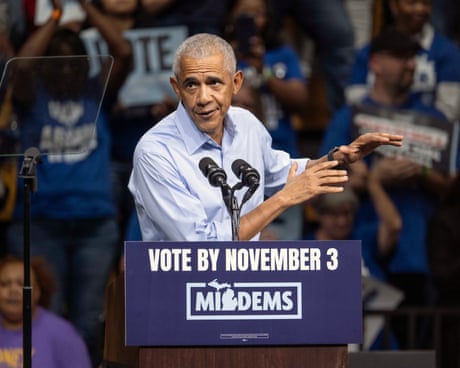
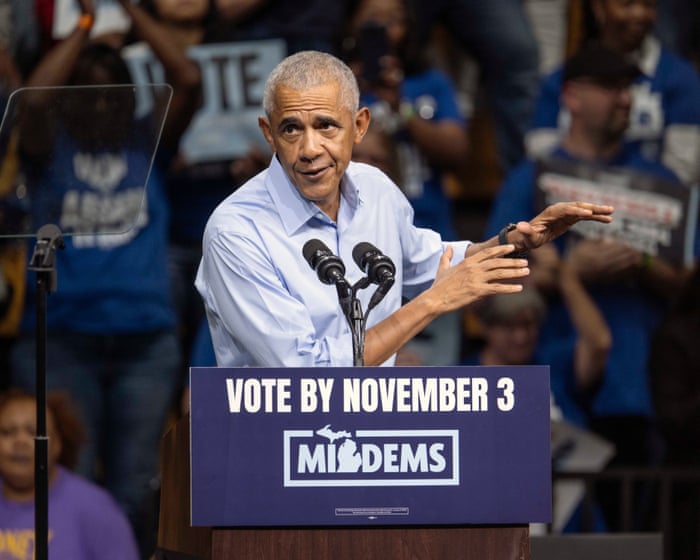
Barack Obama versus Donald Trump. It is the presidential election that never happened but has come to define an era of US politics.
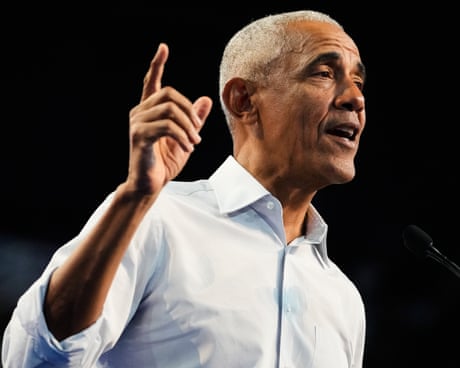
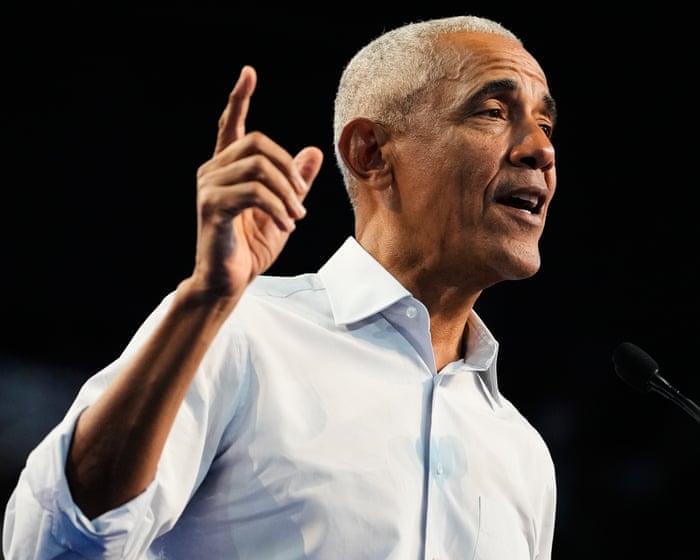
Obama is back on the campaign trail for the midterms, still electrifying crowds, earning shouts of “We love you!” and skewering his successor. “What’s up with the gold?” he asked a crowd in Detroit. “I mean, he’s got the White House looking like Saddam Hussein opened a Cheesecake Factory.” This has, predictably, set off a mini culture war involving questions of elitism and the tastefulness of chain restaurants.
The luxury MV Odyssey ship slated for a years-long voyage around the world suspends operations amid high fuel prices
A luxury cruise ship that had embarked on a years-long voyage around the world was forced to suspend its operations and leave passengers stranded in Cambodia because of high fuel prices.
The ship, known as the MV Odyssey, had been carrying 203 passengers, mostly Americans, along with 156 crew members, Cambodian officials told the Associated Press. The ship has a 650-passenger capacity.
For months, Mary Peltola’s campaign for Alaska’s Senate seat has denied any connection to a separate campaign launched by a man who, coincidentally, shares the exact same name as Peltola’s Republican opponent, Dan Sullivan.
New reporting from the New York Times undercuts that claim. The outlet reported, based on interviews, obtained text messages and legal filings, that the Peltola campaign had not only recruited Mr Sullivan (not the Republican), but had sought out a number of Dan Sullivans across the state for potential candidacy, as well as others who could peel votes away from Peltola’s main opponent.
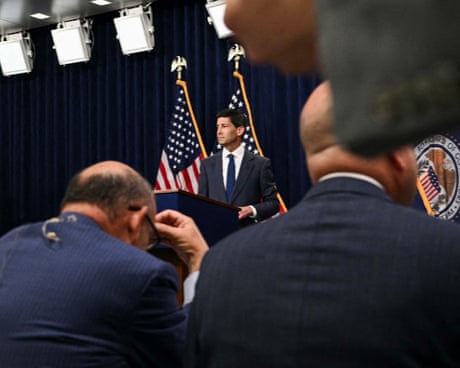
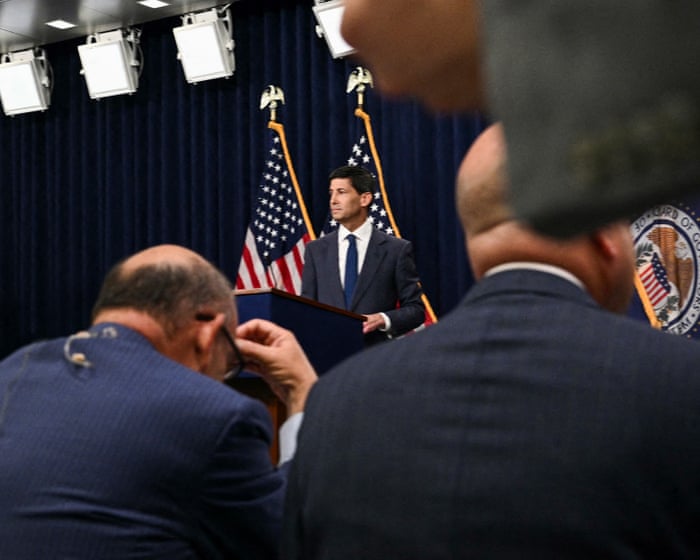
Fed chair Kevin Warsh said politics played no role in pause of interest rate hikes, despite inflation remaining above 3%
The US Federal Reserve left interest rates unchanged on Wednesday during its last board meeting before the midterm elections, keeping rates at one of the highest pre-election levels seen in over 20 years.
Two out of 12 board members voted against the pause, preferring to raise rates by a quarter point this meeting, the Fed board said in a statement.
Critics warn of climate danger as president in Texas claims change will save companies and consumers billions
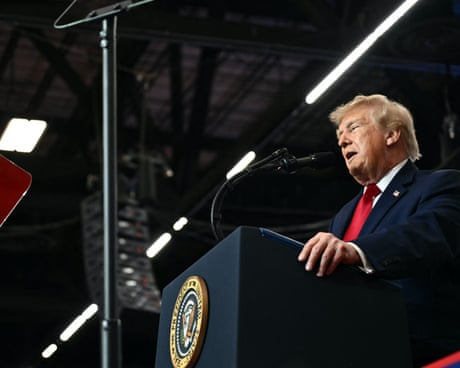
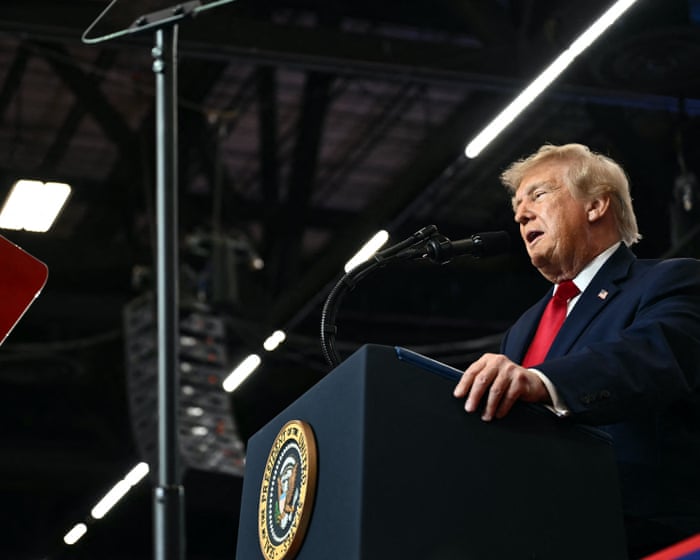
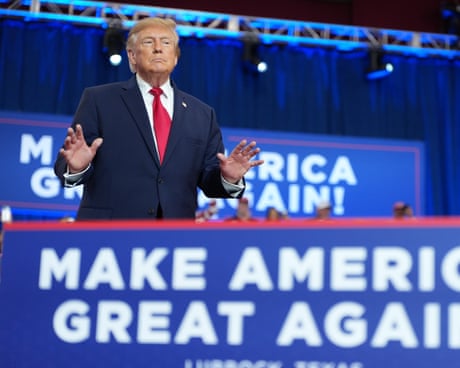
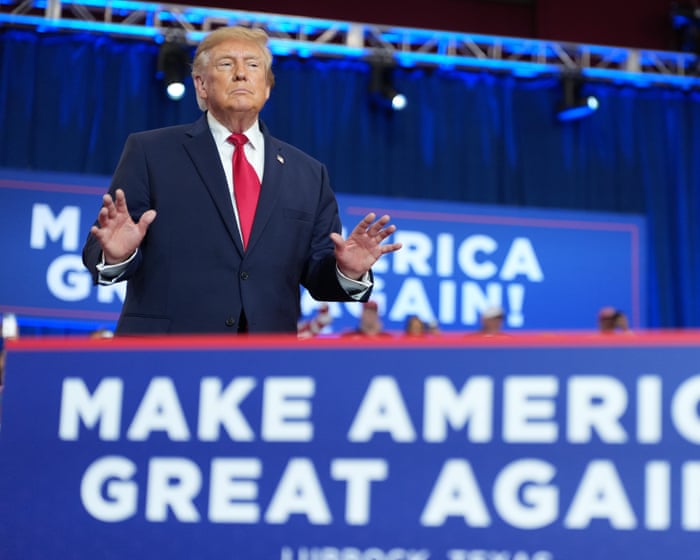
Donald Trump said his administration is “terminating” Biden-era regulations holding oil and gas companies accountable for large leaks of planet-warming methane during a rally in Lubbock, Texas, on Tuesday evening.
“Tonight, I’m officially terminating Biden’s expensive and unnecessary methane regulations to save consumers and energy producers,” Trump said, lifting what he called “crippling regulations on methane that caused prices to skyrocket” for small oil and gas operators. The change would save consumers and energy producers $45bn and unlock 210m barrels of oil, he said, which is equivalent to about 10 days of US petroleum consumption.
President at Texas campaign rally hails deal struck with post-Maduro government as ‘greatest oil victory in history’
Donald Trump suggested Venezuela would become the 51st state of the United States on Tuesday as the president showed off a tanker he claimed had “one million barrels of oil on it” from the country, nine months after deposing its president.
At a campaign rally in Corpus Christ, Texas, Trump touted a US oil deal with Venezuela, which the US attacked in January, capturing its long-serving leader Nicolás Maduro.
James Comey speaks onstage at an event in New York City on May 30, 2023. | Dia Dipasupil/Getty Images
This story appeared in The Logoff, a daily newsletter that helps you stay informed about the Trump administration without letting political news take over your life. Subscribe here.
Welcome to The Logoff: Donald Trump’s revenge campaign is getting increasingly desperate.
What’s happening? On Monday, we learned that Trump’s Justice Department is criminally charging former FBI Director James Comey for a third time, in the latest installment of Trump’s ongoing efforts to prosecute his enemies.
Unlike two previous instances, the charges are not in the form of an indictment. Instead, the DOJ filed a two-count criminal information, which allows prosecutors to lodge charges without getting a grand jury involved (but, crucially, does not allow the government to try Comey on those charges unless he waives his right to a grand jury).
What is Comey charged with? The charges allege that in October 2016, Comey unlawfully transmitted national security information about US email surveillance to a journalist. They were filed earlier this month on October 5, exactly 10 years after the alleged disclosure, after which point the statute of limitations would have expired.
Comey denies the charges, and said in a video posted Monday that the case “would almost be funny if it weren’t such an appalling abuse of the Department of Justice.”
What’s the context? Comey, whom Trump fired as FBI director in 2017, has long been at the top of Trump’s second-term enemies list. He was indicted on scanty allegations of lying to Congress in September 2025, and again this spring for an alleged threat against Trump, in the form of a photo of seashells arranged to spell “86 47” (“86” is broadly understood to be service industry slang for rejecting or removing something or someone).
The first set of charges quickly fell flat after a judge found that the US attorney who brought them — former Trump lawyer Lindsey Halligan — was illegally appointed. Comey is still seeking to have the second set dismissed.
What’s the big picture? It’s unclear if this third set of charges will stick, though the Trump administration says it still plans to seek a grand jury indictment. But their existence underscores how dramatically Trump has succeeded in politicizing the Justice Department.
And with that, it’s time to log off…
How does creativity work? My colleagues at Vox’s Unexplainable podcast went looking for answers in a fascinating recent episode. You can hear all about what they found here.
As always, thanks for reading, have a great evening, and we’ll see you tomorrow!
Speaking to reporters on the tarmac before departing for a campaign event in Michigan, JD Vance responded to a question about President Trump’s remarks branding Democratic Senate candidate Abdul El-Sayed as a “jihadist.”
Vance, who has sparred with the progressive El-Sayed repeatedly on the campaign trail, took a somewhat softer tone. But he didn’t walk away from Trump’s remarks.
Rubio’s decision not to meet Narendra Modi last week was seen by some as a snub – but by focusing on business leaders and oil, the secretary of state made American priorities clear. Plus: the artist bringing a female perspective to men’s clothing
When the US secretary of state, Marco Rubio, visited India for the second time this year, headlines concentrated on who he met and where he went.
The fact that Rubio bypassed New Delhi and did not meet the prime minister, Narendra Modi, during his trip last week, and instead traveled to the financial capital, Mumbai, where he met India’s foreign minister, Subrahmanyam Jaishankar (pictured top with Rubio), and business leaders, did not go unnoticed. Nor did his decision to travel to Jamnagar, the small Gujarati town that is home to Reliance Industries’ colossal oil refinery complex.
The day after former President Barack Obama and Michigan Senate candidate Abdul El-Sayed campaigned together in Detroit, President Donald Trump launched an anti-Muslim attack against El-Sayed. | Emily Elconin/Bloomberg via Getty Images
This story appeared in The Logoff, a daily newsletter that helps you stay informed about the Trump administration without letting political news take over your life. Subscribe here.
Welcome to The Logoff: Donald Trump’s midterm barnstorming is getting uglier and more desperate.
What’s happening? At a campaign rally in Port Huron, Michigan, on Sunday, Trump launched a new round of anti-Muslim attacks against Michigan Democratic Senate nominee Abdul El-Sayed, describing him as a “jihadist” who “should never be allowed inside the halls of our great beautiful Capitol.”
“If Abdul and the Democrats win,” Trump told supporters, “they will open the floodgates and invite hordes of jihadists to our shores, creating a nightmare of violence and terror until you cannot even have a Christmas.”
What’s the context? Trump’s speech marks the crescendo — so far — of what has become an increasingly Islamophobic midterm campaign by the Republican Party, centered on El-Sayed.
Former Rep. Mike Rogers, Michigan’s Republican Senate nominee, has repeatedly tried to link El-Sayed to the Muslim Brotherhood, and Republicans have also attempted to wield Islamophobia against the Democratic Party as a whole.
On Sunday, Texas Gov. Greg Abbott told Fox News that his Democratic opponent, Gina Hinojosa, “supports Sharia law,” while at the Republican midterm convention in September, Texas Sen. Ted Cruz said that “communism” and “Islamism” were allying against Republicans.
What’s the big picture? In addition to his overt Islamophobia, Trump’s presence on the campaign trail in the final few weeks of the midterm elections has been decidedly strange and surprisingly heavy on physical descriptions of Sen. Jon Husted (R-OH).
Now, with just eight days to go, Trump’s itinerary features rallies in Mississippi, Texas, Ohio, South Carolina, and Florida — all Republican states where the party has found itself, to one degree or another, with a tougher-than-expected Senate race on its hands.
It’s hardly the travel schedule of a president who feels good about his party’s chances— such as in Michigan, where El-Sayed is leading in most recent polls.
And with that, it’s time to log off…
US elections may not be until next week, but two other countries held theirs over the weekend: Serbia and Brazil. As my colleague Caitlin Dewey reports in Vox’s Today, Explained newsletter, both resulted in surprise victories over right-wing nationalist parties, with Serbia ousting its incumbent strongman, Aleksandar Vučić.
Brazilian President Luiz Inácio Lula da Silva’s victory over Flávio Bolsonaro is also especially good news for the climate: As the New York Times reported earlier this month, the fate of the Amazon rainforest may well have hinged on the outcome of the election.
Thanks for reading, have a great evening, and we’ll see you tomorrow!
Florida A&M University students of Alpha Phi Alpha, Inc. walk to the election polls on October 15, 2026, in Tallahassee, Florida. | Jeffery D. Adams/Florida A&M University via Getty Images
If there is a Democratic wave in next week’s midterm elections, one of the biggest reasons for that will be young voters.
While voters of all ages have soured on President Donald Trump and the Republican Party since his 2024 victory, polls show that the decline has been particularly pronounced among the young people who’d backed him in surprising numbers just two years ago. That election result prompted endless conversation about a “vibe shift” among Gen Z, and whether younger voters had turned against “woke” progressives, become radicalized by “manosphere” podcasts and TikTok algorithms, or lashed out against Biden-era gerontocracy.
But the story looks very different heading into November. A Pew Research Center poll released earlier this month found that, of people aged 19–34 who voted for Trump over Kamala Harris, only 49 percent approve of his job performance as president. (In contrast, among Trump 2024 voters aged 50 and above, about 75 percent still approve of him.)
Pew also found earlier this year that partisan identification among young adults has shifted — or, rather, reverted.
In 2022 and 2023, Democrats had a 17-point advantage among adults aged 18–29 — 55 percent of them said they were Democrats or leaned toward Democrats, while just 38 percent said they were Republican or leaned toward the GOP.
In 2024, that gap closed, and Republicans actually took a slight edge, 47 percent to Democrats’ 46 percent. But now, in 2026, Democrats are back to a 16-point advantage, getting 54 percent of young voters compared to the GOP’s 38 percent.
And it isn’t just that fewer young people are saying they’re Republican. Those who remain Republican are also saying they’re less likely to vote this year.
According to the Harvard Youth Poll released last week, 50 percent of Democrats aged 18–29 say they’ll definitely vote, but only 34 percent of Republicans in that age range say the same. That’s a 16-point partisan gap; the biggest this poll found in recent midterm cycles.
The core reasons for all this in a sense aren’t too surprising. Like older voters, young voters say they’re most concerned about issues like the cost of living, corruption in government, overseas wars, and the cost of health care.
But the swings — and the feelings of betrayal and disappointment among prior Trump supporters — have been particularly dramatic among the young, which raises the question of what about their experience and outlook is influencing their politics in particular.
To answer that, I spoke to advocates and political consultants focused on young voters. Here’s what they see as the origins — and limits — of the coming youthquake.
How to think about the Gen Z “Trump regretters”
Rachel Janfaza, founder of the Gen Z-focused strategy firm The Up and Up, told me that we should think about young people who voted for Trump in 2024 as really three separate cohorts.
First, she said, are the “hardcore MAGA young people who still stand by the president, just like the older MAGA folks.” They supported him in 2024, and they still do.
Second, she said, are the young people who “are very much on the America First train” but who “resent the fact that Trump’s basically become part of the establishment, whether it comes to building a White House ballroom, or the Epstein files, or starting new wars” — and have moved away from him as a result.
These young people are much less likely to move toward Democrats, but many of them could be disillusioned and not bother to vote this year.
Third, she said, is “a large cohort of young people, predominantly young men, who were never hardcore MAGA, but who voted for Trump in 2024 because they were frustrated by the political conversation at large.”
“They were frustrated by their economic situation; they were tired of political correctness and the pendulum swinging too far in the direction of ‘wokeness,’” Janfaza continued. These people, she said, now feel “politically homeless.”
Tina Tang of the Democratic-aligned firm Navigator Research has conducted many focus groups interviewing young people who now regret voting for Trump. She told me that many of those “Trump regretters” said they’d initially hoped he would bring change to the political system generally, and that he’d deliver on his promises about the economy and jobs.
“Young voters are especially worried about jobs right now,” Tang said. “That was actually one of the biggest frustrations we heard from young voters this time around: frustration with the job market. We hear a lot about how he promised a lot of things; he promised the economy was going to get better, that costs were going to come down, that there would be more jobs.”
Young people are pragmatists. They’re losing faith in the system because they think it isn’t delivering.
Several of those I interviewed also urged caution about the common trope that young people tend to be strongly progressive or liberal, a longtime assumption that led many observers to be caught off guard by their swing toward Republicans in 2024.
Indeed, the Harvard Youth poll released this week found that 25 percent of 18- to 29-year-olds thought of themselves as liberal, 23 percent as conservative, and about 46 percent as something in between.
Santiago Mayer, founder of the progressive youth-focused group Voters of Tomorrow, told me that while Gen Z voters often have liberal values and policy views, they often didn’t define politics in ideological terms: “I think for a lot of things many of us would consider progressive, for them, they are common sense, and they’re not necessarily analyzing these issues through a political lens.”
Indeed, Mayer said that while the politicians who are most appealing to young voters can vary in ideology, “the one thing they have in common is that they are very pragmatic and very practical. They are talking about how they’re going to improve things today and how they’re actually going to create material, tangible change in young people’s lives.”
Tang of Navigator Research concurred, telling me that young people are “absolutely still very skeptical of both parties.” She added: “What we hear from young people a lot is: they want to see results.”
And the results they crave are, above all, about the economy and cost of living. Janfaza told me that there’s been a longtime misconception among pundits that young voters are obsessed with identity and the culture war — but, she argues, that was never quite true, and it’s even less true now.
“Now, climate and abortion do not even make it into the top issues that young people are saying they care about,” Janfaza said. “And it doesn’t mean that they don’t care about those issues, but the economic concern just ranks much higher.”
Indeed, she believes that the “flirtation with socialism” among some young voters is really more about policies such as affordable housing, affordable health care, and affordable education — as well as a promise to break with the status quo. “That’s really what young people are hungry for.”
Key to young people’s worldview is that they’re feeling increasingly pessimistic about that status quo. One striking finding in the Harvard Youth Poll was that, when asked whether they expected to be financially better or worse off than their parents when they reach their age, more said worse — a first-time finding for the poll.
“I think you see that in the numbers that there’s a level of nihilism amongst young voters,” Mayer said. “They’re basically giving Democrats another chance. But I worry that this is kind of our last chance to get them to believe in democracy.”
And, he worried, if Democrats don’t deliver actual improvements to their lives, “they’ll be gone for good.”
Former Rep. Mary Peltola, a Democratic from Alaska and US Senate candidate, speaks during the 2026 Alaska Fisheries Debate with Senator Dan Sullivan, a Republican from Alaska, not pictured, in Kodiak, Alaska, on September 12, 2026. | Nathaniel Wilder/Bloomberg via Getty Images
President Donald Trump’s Justice Department filed a lawsuit on Thursday seeking to block former Democratic Rep. Mary Peltola’s victory in the 2026 US Senate election. If you’re confused by this development, you should be. Because the election won’t happen for more than a week.
The case arises out of an odd candidacy that might undercut incumbent Republican Sen. Dan S. Sullivan’s reelection bid against Peltola. A man named Dan J. Sullivan also secured a spot on the ballot, and Republicans fear that the not-Senator Sullivan’s presence on the ballot might trick voters who wish to vote for the incumbent into voting for the not-senator instead.
In the abstract, it’s a fair concern. But there are two reasons to doubt that not-Senator Sullivan will attract many voters who actually wanted to vote for the Republican. According to a sample ballot published by Alaska’s Division of Elections, Sen. Sullivan will be identified as a “Registered Republican” and as the “Incumbent,” so voters will be told which Dan Sullivan to vote for if they wish to reelect the one who is actually a senator.
Additionally, Alaska uses ranked-choice voting, a system where voters rank candidates in order of preference, and votes cast for losing candidates are redistributed to voters’ next choice. So an Alaska voter who wants to reelect the Dan Sullivan who is actually a senator, but who is confused as to which Dan Sullivan is the incumbent, can simply rank both Dans Sullivan as their top two choices, and the ranked choice system should ensure that their vote is counted as a vote for Senator Sullivan (and against Peltola).
The question of whether not-Senator Sullivan may appear on the ballot, moreover, has already been litigated. Initially, the Alaska Division of Elections, which is led by a Republican, attempted to disqualify the not-senator because it concluded that he did not seek election to the Senate in “good faith.” Not-Senator Sullivan sued, and an Alaska court ordered him reinstated as a candidate because “the Division’s decision to exclude Mr. Sullivan from the primary ballot was based on a ‘good-faith’ requirement that does not appear in the U.S. Constitution, the Alaska Statutes, or the implementing regulations adopted by the Division” — that is, there is not actually a law that prevents the not-senator from running, even if he is intentionally running as a spoiler candidate.
This lower court order was affirmed by the Alaska Supreme Court last June. If Republicans thought that this decision violates federal law, they could have asked the Division of Elections — which, again, is run by a Republican — to appeal to the US Supreme Court.
Instead, they appear to have let the issue lie until less than two weeks before Election Day, when Trump’s Justice Department filed a new, federal lawsuit claiming that not-Senator Sullivan’s presence on the ballot is somehow illegal, and asking a federal court to preemptively block a Peltola victory in the upcoming election. Trump says that he personally told the Justice Department to file this suit.
It is difficult to find an actual legal argument, much less a persuasive one, anywhere in the Trump DOJ’s complaint initiating the lawsuit. Trump’s lawsuit also runs afoul of something called the “Purcell principle” — a concept that, ironically, the Supreme Court reaffirmed the same day that the Trump administration filed its suit — which says that federal courts should be reluctant to intervene in election-related disputes when the election itself is about to happen.
It is likely, in other words, that the Trump administration’s attempt to overturn a Democratic victory that hasn’t even happened yet will fail. But the mere existence of this new lawsuit, which is known as United States v. Alaska, is an ominous sign that the Trump administration will use every tool in its shed to overturn Democratic victories in the upcoming election.
So what are the actual legal arguments in the Alaska case?
It is a bit of a stretch to even describe the Justice Department’s complaint in this case as a “legal” document, as the complaint does not so much as point to any law that either not-Senator Sullivan or the state of Alaska may have violated, and instead vaguely alludes to legal sources that use terms like “integrity.”
Specifically, the Justice Department points to a federal law which says that it has four purposes, one of which is to “protect the integrity of the electoral process.” It also points to the Supreme Court’s decision in Bullock v. Carter (1972), which said that “a State has an interest, if not a duty, to protect the integrity of its political processes from frivolous or fraudulent candidacies.”
But the statute that Trump’s lawyers quote, the National Voter Registration Act of 1993, does not concern which candidates’ names should appear on the ballot. As its name suggests, it is a law about voter registration, and it imposes requirements on states, such as requiring them to register voters when those voters obtain a driver’s license.
Similarly, while Bullock does include a single line indicating that states may enact laws targeting “frivolous or fraudulent candidacies,” nothing in the opinion suggests that sharing another candidate’s name makes someone’s candidacy frivolous or fraudulent. The decision itself concerned unusually high fees charged to a candidate for public office in Texas, and the Court concluded that Texas’s fees were unconstitutional.
The line about “frivolous or fraudulent candidacies,” meanwhile, was included to clarify that states still have some power to regulate ballot access. While Bullock concluded that Texas’s fees were excessive, the opinion also suggests that states may impose more reasonable filing fees on candidates to discourage unserious candidates from seeking office. Alaska, for example, charges a modest filing fee of $100 to US Senate candidates.
The Trump DOJ’s entire argument, in other words, appears to turn on the fact that it identified two legal sources that use the word “integrity” in contexts that bear little resemblance to the Alaska case.
Nevertheless, Trump’s lawyers claim that the court must prevent Alaska from certifying a Peltola victory “pending an investigation to determine whether votes cast for Daniel J. Sullivan were meant to be cast for Senator Sullivan.”
This lawsuit also cannot be squared with one of the Republican Party’s favorite legal doctrines
Even if Trump’s Justice Department had a persuasive argument that leaving not-Senator Sullivan on the ballot is illegal, they should still lose Alaska because they waited too long to file the case.
In Purcell v. Gonzalez (2006), the Supreme Court warned that “court orders affecting elections, especially conflicting orders, can themselves result in voter confusion and consequent incentive to remain away from the polls,” and it added that this “risk will increase” as Election Day draws closer. More recent decisions, many of them joined only by the Court’s Republicans, have read this “Purcell principle” quite expansively to forbid federal courts from issuing election-related decisions in the months leading up to an election. Justice Brett Kavanaugh has even claimed that Purcell prevents federal courts from issuing election-related decisions as soon as nine months before the general election date.
Supreme Court decisions invoking Purcell to shut down lower court orders altering a state’s election rules are now very common in the weeks leading up to an election. On Thursday, for example, the Court relied on the Purcell principle to block a lower court order that would have made it easier for college students to vote in New Hampshire. The Court began its decision with this line: “This Court has repeatedly emphasized that lower federal courts should ordinarily not alter the election rules on the eve of an election.”
Trump’s DOJ, meanwhile, did not even file its lawsuit seeking to preemptively invalidate a Peltola victory until less than two weeks before Election Day. If Purcell means anything, it must mean that a federal court cannot force Alaska to kick a candidate off the ballot mere days before a federal election.
President Donald Trump and Sen. Dan Sullivan (R-AK) at a campaign rally in Wasilla, Alaska, on October 13, 2026. | Kent Nishimura / AFP via Getty Images
This story appeared in The Logoff, a daily newsletter that helps you stay informed about the Trump administration without letting political news take over your life. Subscribe here.
Welcome to The Logoff: The Trump administration is getting a head start on litigating the midterms.
What’s happening? The administration is asking a federal district court in Alaska to potentially block the certification of Alaska’s US Senate race, should incumbent Sen. Dan Sullivan, a Republican, lose to his Democratic challenger, Mary Peltola.
It’s the first major lawsuit of the 2026 midterms aimed at directly challenging the results, and very likely a sign of things to come after polls close on November 3.
What is the administration arguing? Sullivan is currently in a close race against Peltola, a former US representative who polls suggest may hold a slight lead. But the race is complicated by the presence of a second Dan Sullivan, Daniel J. Sullivan, on the ballot (no relation).
According to the lawsuit, which names Alaska’s state elections director and several state elections entities as defendants, the election could be “tainted by the inclusion on the ballot of Daniel J. Sullivan.”
The suit asks that “Defendants not certify any election result that may be impacted by voter confusion,” which it defines as a loss by the incumbent Sullivan in the event that the other Sullivan attracts enough votes to alter the outcome of the election.
What’s the context? The second Dan Sullivan’s appearance on the ballot has already been litigated. After he was initially disqualified from the ballot, the Alaska Supreme Court ruled that he should be included, and he finished third in the state’s August primary (the top four vote-getters appear on Alaska’s general election ballot).
How worried about this should I be? For now, not very. Trump filing lawsuits disputing election results was all but inevitable, even if it’s surprising to see him start this early.
None of that means he’ll succeed: Trump and his allies filed dozens of election lawsuits in 2020 and were largely laughed out of court. (Plus, this particular lawsuit has been assigned to a judge appointed by President Barack Obama.)
And with that, it’s time to log off…
Hi readers, happy Friday! Here’s some good news to add to a recent string of encouraging headlines about cancer treatment: A new vaccine may reduce the risk of melanoma, the deadliest form of skin cancer, by more than 40 percent, according to the Washington Post. You can read all about it here with a gift link.
Thanks for reading, have a great weekend, and we’ll see you on Monday!
Donald Trump speaks during an RNC fundraising event at Mar-a-Lago on October 16, 2026. | Eric Lee/Getty Images
This story appeared in The Logoff, a daily newsletter that helps you stay informed about the Trump administration without letting political news take over your life. Subscribe here.
Welcome to The Logoff: President Donald Trump is cozying up to Russia again.
What’s happening? On Wednesday, Russia released an American prisoner, 74-year-old retired teacher Stephen Hubbard, back to the US. The US, Trump said in a social media post, “out of respect for President Trump, was not required to give anything in return.”
Hubbard’s release is unquestionably good news. But Trump is wrong: In just the last month, his administration has delivered for Russia in more ways than one, often inexplicably and despite bipartisan condemnation.
What is Trump doing for Russia? Late last week, he waived upcoming economic sanctions on Russia that he had only recently signed into law after they passed Congress with overwhelming bipartisan support. He also:
Announced — seemingly without talking to either party — a Russia-Ukraine “energy ceasefire” favorable to Russia (which has since fallen apart);
Temporarily interrupted US intel sharing with Ukraine and played a role in interfering with Ukraine’s access to Starlink, which helps power the country’s drone warfare against Russia; and
Called on Ukrainian President Volodymyr Zelenskyy to be replaced.
Last month, Trump also invited Russian President Vladimir Putin to the annual G20 summit later this year, which would mark Putin’s first appearance since 2019.
What does Trump get out of all of this? There’s Hubbard’s release, but taking that on Trump’s own terms (muddled though they are), the US didn’t give anything to secure it — which means that all of those favors have amounted to not much at all, other than papering over Russia’s role as an international bad actor and breaking with US allies in Europe.
Why does this matter? Trump’s Russia embrace comes at an awful time for Ukraine, which, as the New York Times reported earlier this month, is facing a Russian campaign to “freeze Ukrainians into submission” as winter approaches. Nevertheless, on Wednesday, Trump envoy Steve Witkoff called Putin a “humanitarian.”
And with that, it’s time to log off…
I was delighted to learn about the US’s new national park yesterday, its 64th. Chiricahua National Park — until Tuesday, only a national monument — is the first new park in six years. Located in southeastern Arizona, it’s also called the “Wonderland of Rocks,” according to the Washington Post; you can read more about it here with a gift link.
Have a great evening, and we’ll see you back here tomorrow!
If Sen. Susan Collins loses reelection, “a lot of it will be put at the feet of President Trump,” Washington Post reporter Dan Merica told Vox’s Today, Explained. | Graeme Sloan/Bloomberg via Getty Images
With two weeks until the midterm elections, Democrats are comfortably favored to take the House. Their path to Senate control, though, is harder — and it could run through Maine, where longtime Republican Sen. Susan Collins is in a tight race against former state Senate president Troy Jackson, a Democrat.
When Collins first ran for Senate in 1996, she pledged to serve only two terms in the Senate. But 30 years later, she’s still in office despite the odds, as Maine has grown more blue around her.
One secret to her political durability is her success in “bringing in the bacon” for Mainers: Her official Senate website features a map of projects that she says she helped fund as chair of the Senate Appropriations committee, including hospitals, bridges, affordable housing, public transportation, and water systems.
This year, though, all of that money might not be enough for Mainers to look past their frustration with another Republican: President Donald Trump.
To learn more about what Maine voters are thinking as they prepare to head to the polls, Today, Explained co-host Sean Rameswaram spoke with Washington Post reporter Dan Merica, who’s on the ground reporting from Maine, about why some Mainers who backed Collins before are now reconsidering their support.
Below is an excerpt of their conversation, edited for length and clarity. There’s much more in the full podcast, so listen to Today, Explained wherever you get podcasts, including Apple Podcasts, Pandora, and Spotify.
Tell me how this race got to be so fascinating.
Maine this cycle was going to be interesting no matter what. Susan Collins is the only Republican senator who is running for reelection in a state that Kamala Harris won in 2024 this cycle.
But since the outset, it has really defined, I think, these midterm elections. The rise of Graham Platner, the oysterman turned politician, really hinted at the populist anti-establishment fervor that was in the Democratic base. That fervor was so strong that it prevented the sitting incumbent Democratic governor from winning the primary here in Maine to challenge Susan Collins. I think that said a lot about the Democratic Party.
But then you have the Collins angle of it, and she is really the poster candidate for a Republican who, in this election where Donald Trump’s approval rating is so low, is having to basically suspend political gravity in a state that really does not approve of the job that he’s done as president.
I want to ground this conversation in how voters in Maine feel about him right now because I know you’ve been talking to voters. What is the vibe out there? Are people mad?
There’s a lot of anger for the president here. Maine is in a unique position where it’s been on the receiving end of a lot of what those people who are mad at Trump would say is harm that he has caused.
It’s a border state. It borders Canada. There’s a ton of cross-border relationships. And so his attacks on Canada, his suggestion that it’s going to be the 51st state, has really hurt the state of Maine because it’s hurt tourism in the state. Many Canadians come down south to vacation in Maine. And there’s been a drop in tourism because of that fight with Canada.
The tariffs have hurt Maine because so much of the wood and the lumber that is grown and cut here in Maine is actually shipped up north to Canada to be processed, and then what it is processed as is shipped back across the United States. The tariffs have been incredibly harmful for the state.
And then you have ICE. I’m in Biddeford. There was a shooting of an individual here in Biddeford. That has been an issue in this race as well.
So there’s a lot of anger at the president, and it’s very easy to feel that when you’re talking to voters. I actually just spoke with a voter who voted for Troy Jackson, dropped his ballot in an early voting box. And I just asked him, “What did you vote for? Who’d you vote for? Why did you vote?” And he got visibly emotional when he started talking about the Trump administration and how scared he was for the future of democracy and that was why he was voting for Troy Jackson.
I’ve also talked to voters who supported Susan Collins just six years ago at the end of the first Trump administration. They voted for her back then and they feel like the last six years have made it impossible for them to vote for her again. And then on the other side, you have people who are hardcore die-hard Trump supporters and they actually think that Susan Collins has been too hard on the president.
She’s in a really tough spot politically where on her left, there are a lot of voters, including some who have voted for her recently, who are furious with her, who don’t think she stands up to the president enough. And then on her right, there are voters who think that she stands up to the president too much.
It’s funny to think about these two figures representing the same political party because while they might agree on a few issues here and there, they couldn’t represent more different brands of Republicanism. What’s the truth of how much Susan Collins sides with Donald Trump?
She has sided with the president at times. She has voted against the president at times. I was struck that, in the debate on Thursday, she said, “I have been a senator under five different presidents.” I don’t exactly remember what her number was, but she noted that she had only endorsed one Republican president and that was George W. Bush.
I was just in Kennebunk, which is right next to Kennebunkport, which is a historical location for the Bush family. They have a large home at Walker Point. There is some relationship between the Bush family and Maine, [and it] makes sense that Susan Collins really does kind of line up more with the Bush-style Republican Party than she does the Trump-style Republican Party.
What’s her actual relationship with the president like? And surely he’s well aware that she was one of the few Republicans who voted to impeach him over the January 6 insurrection. Does that get in the way of their relationship?
I think he’s very well aware when somebody breaks with him. I would have to imagine he’s aware of that.
“It was a fascinating comment that there are rules for Republicans who are running across the country, but that maybe Susan Collins doesn’t exactly have to adhere to those rules.”
I was actually told by a Republican early in the campaign that President Trump demands loyalty from people that he supports, but this person actually said that there are rules for Republicans and that there are rules for Susan Collins and that Republicans were willing to kind of give her some leeway, which is actually an acknowledgement that they know the bind that she is in.
They know that she’s running for reelection in a blue state, in a state that the president lost, in a state that is very hostile right now to the president. It was a fascinating comment that there are rules for Republicans who are running across the country, but that maybe Susan Collins doesn’t exactly have to adhere to those rules.
Affordability is a huge issue in Maine, right? And Donald Trump hasn’t exactly helped…
That has really heightened the competitiveness of this race. The same race is always going to be competitive, but the fact that gas prices are where it’s at, the fact that we’re going into winter, it’s starting to get cold up here. Home heating oil prices are above $6 a gallon.
I think about 80 percent of homes that are heated by home heating oil are in the Northeast, a large portion of them probably in Maine and New Hampshire, two states with Senate races in November. It’s been a huge issue up here.
The Trump administration has actually tried to get rid of a low-income program to help with home heating oil that helps a lot of folks in Maine. You’ve seen Republicans, from the gubernatorial candidate to congressional candidates, break with the president on that because they know it’s a huge issue.
So when you talk about affordability, yes, we’re talking about the price of beef, the price of groceries, the price of gas, but there’s also these localized issues in a state like Maine, in particular. And I think home heating oil actually could be a really fascinating, underappreciated issue in this race. If you grew up or live in Arizona or Nevada or California, you’re not thinking about the oil that you need to heat your home. That could be a real issue here in a state like Maine.
Collins is a political survivor. For all of it to come crashing down because of, essentially, who the president was — is that a bit of a sad ending to this political story for her? Do you think she’d maybe have regrets about how she approached Donald Trump?
It’s certainly possible. And you’ve seen other senators who have bucked the president and have then retired and not run for reelection. I’m thinking of Thom Tillis, for example, in North Carolina. There is this fascinating case study in how the Republican Party has changed when you look at Susan Collins and you look at Donald Trump.
Someone like Susan Collins in an earlier iteration of the Republican Party would’ve had a lot of success and would’ve probably stayed onside the Republican Party in a way that she just hasn’t done under Trump. She represents a different kind of era of the Republican Party.
I think there was a time when bringing home the bacon to a small state really worked politically. I’m thinking about Harry Reid, for example — he represented Nevada. In 2010, he faced a really difficult reelection campaign and his entire campaign was bringing home the bacon to Nevada, a similarly small state, and he won reelection in 2010.
I think if Susan Collins wins reelection in 2026, it’ll prove that there’s still a lot of goodwill for politicians who can deliver funding projects for states like Maine, states like Nevada, smaller states that maybe don’t get the kind of national attention that others do.
If she does lose, a lot of it will be put at the feet of President Trump. I’ll be fascinated to talk to her if she does lose, because I do think she will have a lot to say that she probably hasn’t said yet, but I think that’s an if, and I think we have two more weeks to find that out.
A man clears debris at the site of an air attack in Kyiv on October 19, 2026, amid the Russian invasion of Ukraine. | Oleksii Filippov/AFP via Getty Images
This story appeared in Today, Explained, a daily newsletter that helps you understand the most compelling news and stories of the day. Subscribe here.
You can’t quite say that President Donald Trump is “turning” on Ukraine President Volodymyr Zelenskyy, because he never truly seemed to have Zelenskyy’s back.
There was that time Trump panned Zelenskyy as a “modestly successful comedian.” Or that excruciating meeting where Trump and Vice President JD Vance harangued Zelenskyy for inadequately “thanking” them.
But over the past week, Trump has dropped even the meager niceties he sort of faked before. On Monday, he blamed Zelenskyy for failing to end Russia’s invasion…and suggested it was time for “somebody else” to take over negotiations.
Three days earlier, he delayed a package of tariffs and other sanctions designed to pressure Russia to end its four-year onslaught in Ukraine. And a week before that, Trump announced — after an apparently chummy phone call with Russian President Vladimir Putin — that the US would reopen its market to Russian diesel, reversing a ban imposed shortly after the invasion.
All this diplomatic whiplash comes as Russia continues to bombard Ukraine with drone and missile strikes, killing hundreds of civilians in September alone and leaving hundreds of thousands of people without power. The first two weeks of October ranked among the deadliest periods for civilians in the country since 2022, according to UN monitors.
But while those escalating strikes threaten both human lives and long-standing international norms around territory and sovereignty — norms that actually matterquite a lot to American security, long-term — there’s another issue that Trump is more concerned with right now: Ukrainian strikes on Russian oil refineries.
Those strikes drive up the cost of gas, and those prices are, of course, of profound concern to American voters, who are paying near- record highs for gasoline and diesel fuel (…primarily due to the war in Iran, I am obliged to note). More than any other issue, high living costs threaten to hamstring the GOP in next month’s midterm elections.
Trump has, perhaps predictably, pursued a Russia policy that he says could ease prices at home. In addition to allowing imports of Russian diesel, Trump has demanded that Ukraine stop targeting Russian oil refineries and ramped up pressure on Zelenskyy to negotiate an end to the war.
In either case, it will likely take more than arm-twisting to make the whole situation go away for good. As Vox’s Josh Keating laid out earlier this year, the US does have quite a lot of leverage over Ukraine — and Trump could very well pressure Zelenskyy to accept a peace deal with no real assurance that Russia won’t just invade again.
But we’ve all seen this movie before, as recently as 2014: Without credible guarantees, Putin could catch his breath, regroup, and return to Ukraine in a few months or years to take even more land.
The real, long-term threat there is that a stronger Russia would be even better positioned to menace the rest of Europe. And America’s power could suffer as its allies look elsewhere for less fair-weather friends.
But uh…diesel might be a bit cheaper? Thank God for small mercies, I guess.
One link for later
➨ May we suggest a truly miserable read? My colleague Marina Bolotnikova calls The Opposite of Happiness: How Bad Feelings Make and Break Us “a bracing, useful, and even comforting lens on what it means to be alive.” The recent book, by the noted economist George Loewenstein, examines the (necessary!) role of negative emotions in our lives and civilization…and suggests, albeit indirectly, some paths for making peace with them.
Before you go…
Did you know…that Turkey is the world capital of hair transplants? There are at least 500 clinics for that purpose in Istanbul alone, beloved by medical tourists.
Today’s trivia: What’s the currency of Poland? (You can find this and other brain puzzles in Vox’s daily crossword. Look for the answer in tomorrow’s edition.)
Yesterday’s trivia: Yesterday we asked you for the mass-market beer named after a Dutch river. That would be Amstel. The city of Amsterdam is also named for a dam on the same river.
According to a Washington Post-ABC News poll, including a substantial minority of Republicans, almost two-thirds of Americans believe President Donald Trump is using the presidency for personal profit. | Chip Somodevilla/Getty Images
This past January, when the New York Times asked President Donald Trump about concerns he was blatantly intermingling his family’s business interests with the presidency, he had a pithy response. During his first term, Trump said, he learned that “nobody cared.”
But after a seemingly endless set of headlines about influence-peddling and profiteering involving Trump or people close to him, voters care now.
A Fox News poll asked voters how concerned they were about more than a dozen issues, and “corruption in government” ranked at the very top. In Gallup polling, the amount of respondents saying they thought government corruption was widespread reached 89 percent — a record high. Almost two-thirds of Americans believe Trump is using the presidency for personal profit, according to a Washington Post-ABC News poll, including a substantial minority of Republicans.
Even Trump seems a bit more worried than usual. Earlier this month, he distanced himself from two of his top political advisers’ foreign consulting work and threatened to fire them if it presents a conflict. Vice President JD Vance was questioned in a CBS town hall that aired Saturday about whether he’d witnessed any potential corruption in the White House (he said he hadn’t).
Accordingly, corruption has emerged as one of the key themes in Democrats’ closing midterm message, with candidates of all kinds hammering it in ads, debates, and interviews. And party strategists have landed on a particular argument about it: They want candidates to link it to Democrats’ message about voters’ other top concern, affordability.
That is, things aren’t just expensive because of government incompetence — it’s actually powerful interests conspiring to rip you off with the help of politicians compromised by campaign donors and personal conflicts.
Georgia Sen. Jon Ossoff has been hammering this theme all year, listing eye-popping improprieties among what he calls the “Mar-a-Lago Mafia,” while also arguing that pharmaceutical companies and corporate landlords are corruptly driving up your prices. Texas Senate candidate James Talarico, too, regularlyargues that “we have an affordability crisis because we have a corruption crisis.” In Kentucky’s Sixth District, House candidate Zach Dembo put out a reform plan while warning “corruption has cost our families, driven up our prices and enriched politicians more interested in their own bottom lines than us.”
Indeed, the Washington Post and Politico report that candidates across the country are being egged on by Democratic messaging firms urging them to make that link. One memo from the Democratic group Senate Majority PAC recommended arguing that corruption “drives up the price of everyday goods: gas, groceries, utilities, housing.” Republican strategists have also noticed voters making a connection between corruption and prices in battlegrounds like Ohio, according to CNN, suggesting their efforts may be breaking through.
“Voters care about corruption right now because it explains why their lives keep getting more expensive while the Republicans are creating a separate class of people who act as if the rules don’t apply to them,” Lauren French, a spokesperson for Senate Majority PAC, told me.
This marriage of affordability and corruption is in part one of convenience — voters are mad about both things, so why not link them together?
And Hakeem Jeffries, the potential next speaker of the House, said this week that corruption would be at the top of the party’s 2027 agenda alongside affordability and healthcare: “We’re going to hold the crooks accountable who’ve visited unprecedented corruption on the American people — beginning on day one.”
This marriage of affordability and corruption is in part one of convenience — voters are mad about both things, so why not link them together? If you’re already going to attack the other side for cutting taxes for big business while slashing healthcare, it’s not a huge leap to name donors or candidates who might benefit and suggest a connection.
“Voters are asking: ‘Why is life getting harder when I’m doing everything right?’” Democratic strategist Jesse Ferguson told me. “The answer is: Because somebody paid to make sure it would.”
The message is clear enough. But what would these candidates actually do about it?
In practice, the strategy is a consequential victory for the rising progressive wing of the party, which has long argued that Americans’ economic problems are the result of corporations’ and billionaires’ greed and corruption. And it’s leading candidates to embrace many ideas that have long been pushed by progressive advocates — some of which involve “good government” reforms to block conflicts of interest, and others of which involve taking on big business and the ultra-wealthy.
While enacting some of these ideas may be difficult, there’s little doubt they’ll be a priority in the near future — and some might even draw bipartisan support. Here’s what they’re proposing.
Democrats’ 3-part anti-corruption agenda
Under the broad umbrella of “corruption,” we can think of three basic categories of ideas that Democrats are embracing.
The first category is: investigating Trump and other people in and around his administration for potential malfeasance.
In such a target rich environment, one question will be what to prioritize. Another will be: How can these investigations best be designed to achieve actual results? But Democrats are vowing that they will use the powers of congressional majorities to investigate corruption vigorously on many fronts.
The second category: proposing broader ethics or government reforms to the system as a whole.
Progressive advocates have long had a set of favored reforms around this front, such as restricting dark money, super PAC, and corporate spending on elections, as well as requiring greater transparency around donors. Populists on both the left and right have supported banning stock trading by members of Congress.
It would be challenging for a new Democratic Congress to pass any of these reforms into law (for one, they’d need Trump’s signature or a veto-proof two-thirds majority of both chambers). Furthermore, several of these ideas — particularly on campaign finance and term limits — would almost surely be deemed unconstitutional by the current Supreme Court majority. So the path to success on this front is more challenging; unless a particular idea can strike a chord and win broad bipartisan approval.
The third category, then, would be on policies that would actually seek to deliver on that promised link between affordability and corruption — policies that seek to drive down voters’ healthcare costs, utility bills, and grocery prices by challenging malfeasance from corporations or special interests.
The people in the Democratic coalition that have ideas for this are predominantly associated with the progressive wing of the party and specifically the “anti-monopoly” movement. These progressives tend to argue that behind almost every high price is a corporation trying to get one over on consumers, via price fixing or some other monopolistic behavior.
The new messaging linkage of corruption and affordability boosts these progressives’ credibility inside the party — because it’s exactly what they’ve been saying for years. So expect new Democratic majorities to pursue investigations into and propose legislation about pharmaceutical companies, utilities, tech giants, food conglomerates, and more.
To this end, Talarico has proposed breaking up “healthcare monopolies,” Michigan Senate candidate Abdul El-Sayed has proposed to “break up corporate concentration in agriculture” by challenging “consolidated seed, fertilizer, and chemical market monopolies,” and Peltola wants to block “anti-competitive” mergers of grocery chains that drive up prices.
Still, there’s a debate among Democratic wonks and commentators over whether taking on corporate villains and unwinding mergers is actually likely to succeed in delivering lower prices for consumers.
Skeptics on the party’s center left argue that broader economy-wide forces are more important than individual cases of corporate wrongdoing. They argue that President Joe Biden already pursued a strategy of “turning to the federal government’s antitrust authorities to try to tame red-hot price increases,” as the New York Times put it in December 2021, and it failed to rein in inflation.
Other policies candidates have sometimes mentioned in their corruption and affordability combo platter could more directly address costs — scrapping tariffs, undoing health care cuts — but also might add to deficits, putting more pressure on inflation, which could in turn keep interest rates higher on mortgages and auto loans. So there may not be any easy choices for Democrats if they gain control of government after 2028, and the most effective message might not necessarily be the most effective policy.
But the momentum for change is there inside the party. Just as the first post-Watergate midterms ushered in a generation of politicians determined to enact new good-government reforms, it’s likely there will be significant energy from Democrats behind both corruption and affordability issues for the foreseeable future. If they win congressional majorities, and especially the presidency in 2028, they’ll get to put their theory to the test.

 Login